
In June this year our Newsletter contained the following interesting article by Gareth Brown on the acclaimed artist Margaret Lindsay Williams. Since then some more information has come to light concerning her birthplace and other aspects of her family life. Transcribing Gareth’s original article into an online blog had enabled the new information to be added as well as providing links to where examples of her pictures can be found etc. The new information has been added to the article is in italics.
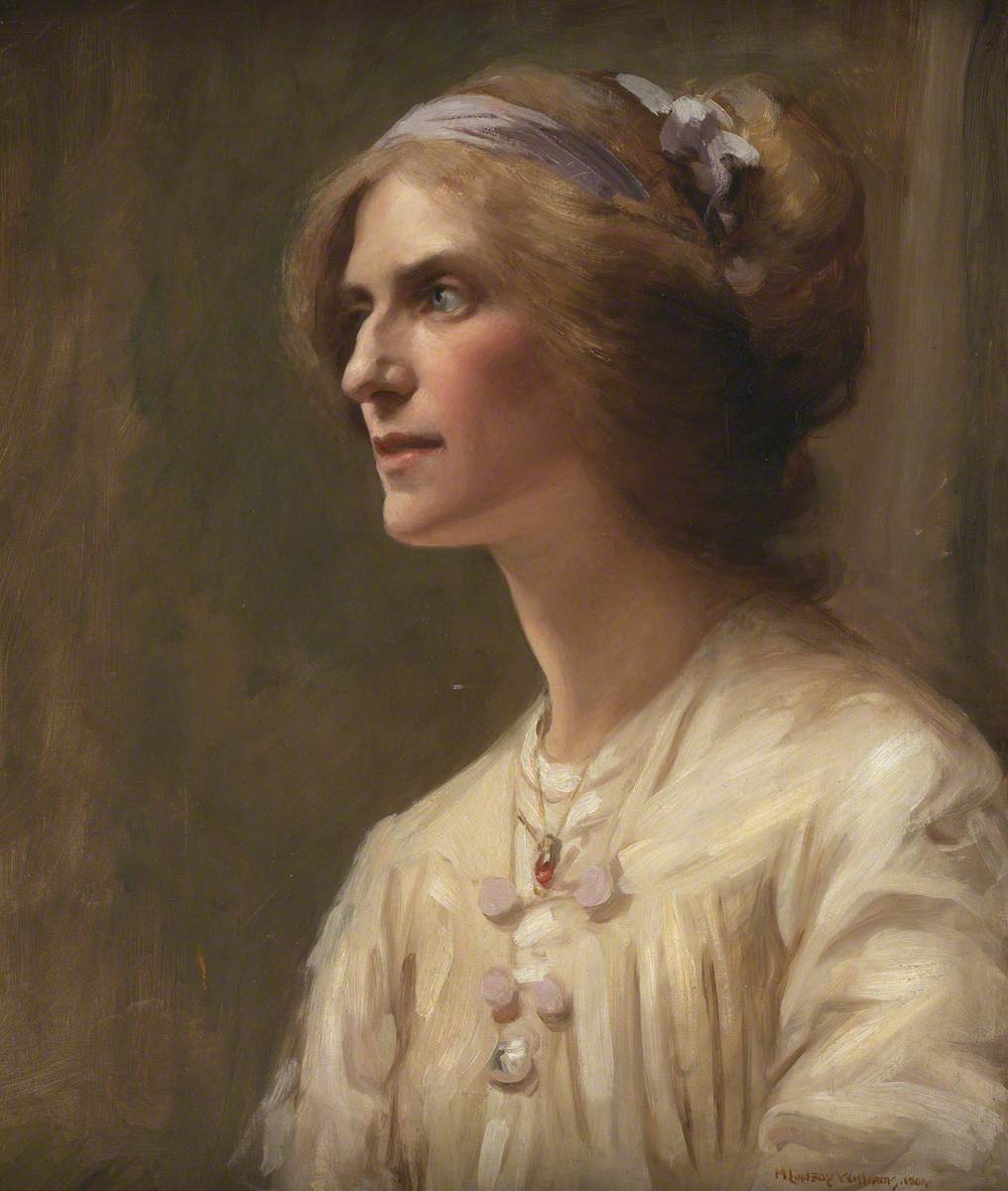
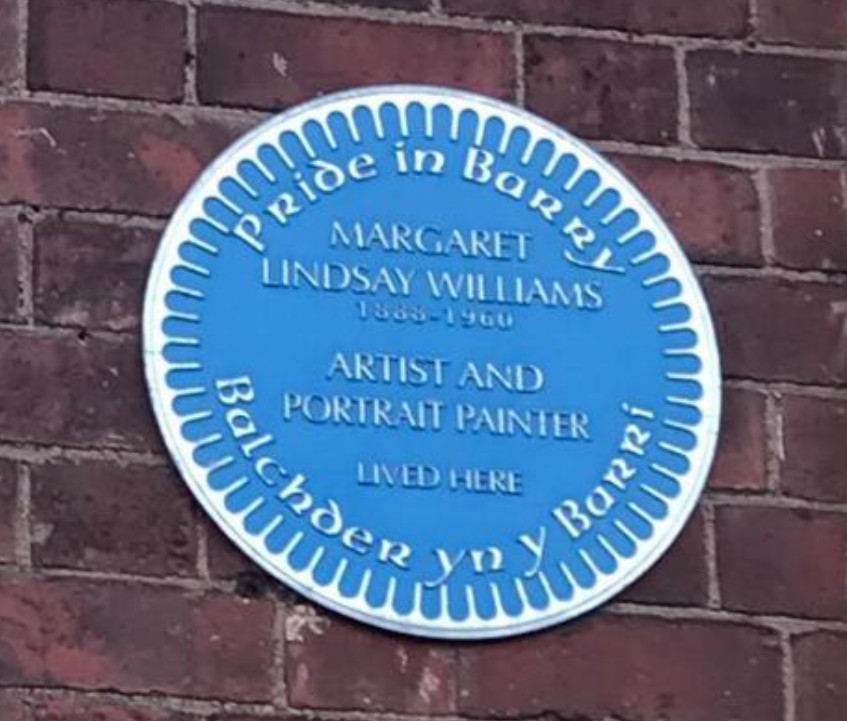
Margaret Lindsay Williams was a childhood prodigy as an artist and became well known as a portrait painter, whose subjects included the Royal family, politicians and leaders of industry and commerce. Yet these days she is barely known by the public of Barry, let alone Wales or Britain. The Pride in Barry/ Balchder yn y Barri blue plaque reads “Margaret Lindsay Williams 1888-1960 artist and portrait painter lived here.”
I first read about this lady when I prepared to give a talk in Capel i Bawb at Cardiff Royal infirmary in November 2022. I gained my initial information from Wikipedia and other internet sources. I learned that she was born in Cardiff on 18 June 1888 and died in London, probably in the St Marylebone district on 4 June 1960.

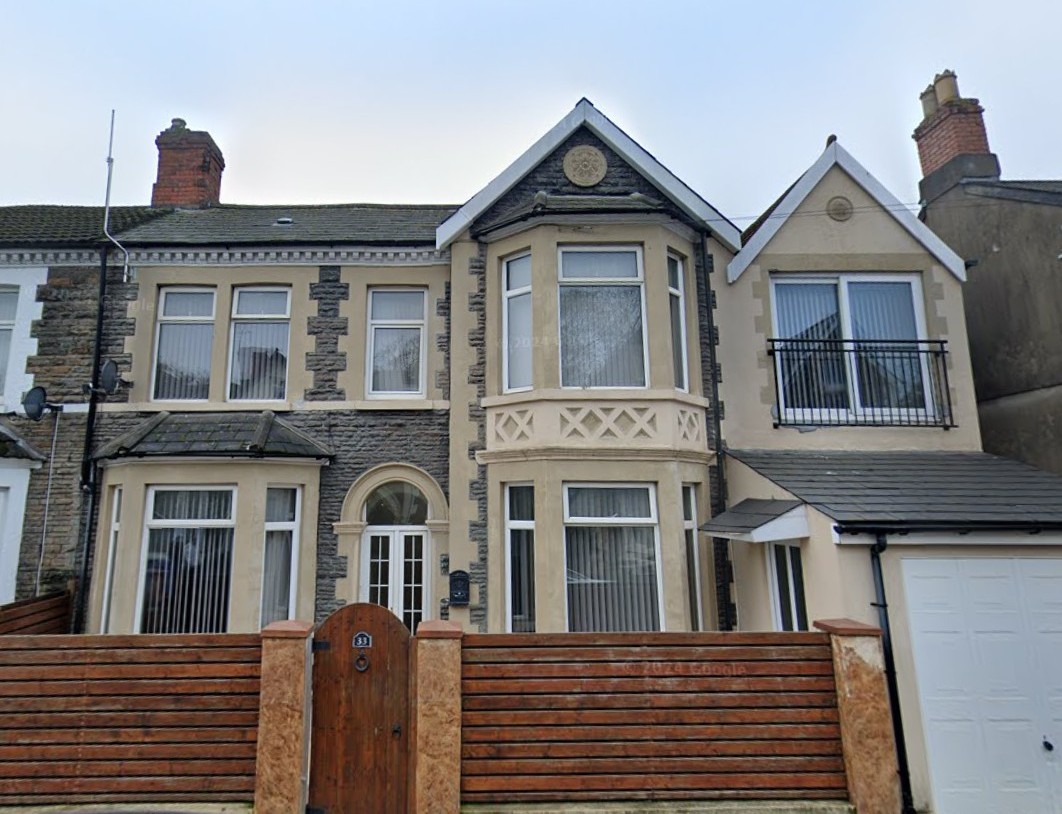
Margaret was born at 33 Gordon Road which is off Richmond Road in the Tredegarville area of Cardiff.
I also learned that her father, Samuel A Williams, was a shipbroker at Barry docks and had moved from Cardiff, having been born in Neath. Her mother was Martha Margaret, née Lindsay, of Scottish descent and was born in Newport and that Margaret was the eldest of 2 daughters. I assumed, therefore, that Samuel had started his career as a shipbroker in Neath, then moved to Cardiff and then subsequently to Barry. However, after attending an excellent talk in the St Francis Millennium Hall in October 2024, organised by Art Central Friends entitled ‘Life is my Canvas’ and given by Dr Jonathan Hicks, ex headteacher at St Cyres Penarth, I learned that my knowledge was incomplete and rather inaccurate. Dr Hicks had researched the topic thoroughly and presented his findings excellently. His mission was to provide a headstone on the grave of this remarkable lady who had been in an unmarked grave in Barry cemetery until recent times, when a temporary marker was placed there. It is intended that a headstone on the grave will be unveiled at 12 midday on 21 June 2025, preceded by an introductory talk by Dr Hicks in the nearby community hall.
Armed with the additional family history given by Dr Hicks, I did my own genealogical research and confirmed that Margaret Lindsay Williams’ parents were married in the district of Cardiff in the 3rd quarter of 1884.
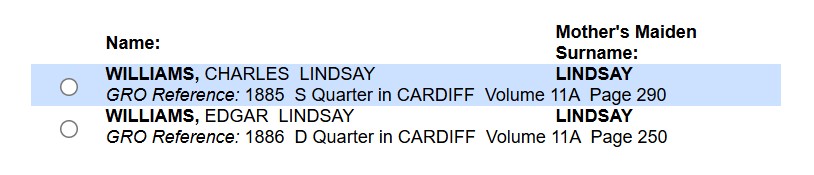
Dr Hicks said that the family history was rather tragic and that two sons had been born but died before Margaret’s birth. I thought I would unable to find out their dates of birth and death and their names, particularly because the surname Williams is very common and a thorough search of birth and death records not knowing their Christian names would be exhausting and very expensive. But by chance I came across a Charles Lindsay Williams who died aged 0, registered in the death records in Cardiff in the 4th quarter of 1885 whose birth was registered in the 3rd quarter. As all the other children of Martha and Samuel had the middle name of Lindsay, this had to be one of Margaret’s brothers, as was Edgar Lindsay Williams whose death was registered in Cardiff in the 1st quarter of 1887 and birth registered in the 4th quarter of 1886.
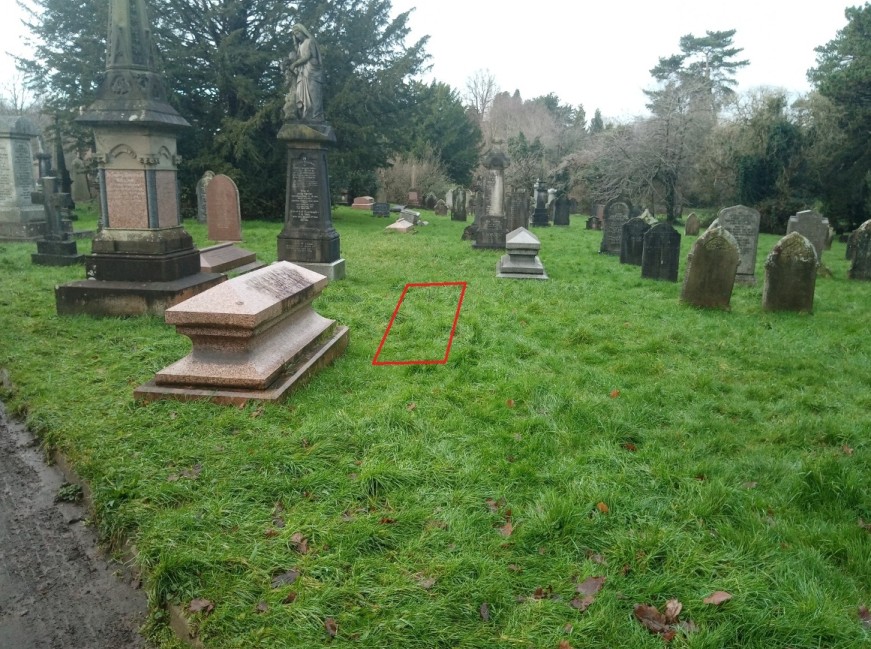
Charles Lindsay Williams died aged just 11 weeks and is buried in Cathays Cemetery (plot M330). Burial records show he was buried on 24 Oct 1885 and record that he was son of Samuel Arthur & Martha Margaret Williams – Commission Agent of Gordon Road. The plot is adjacent to one of the main paths in the cemetery but it is not marked with a headstone. In all likelihood, the other brother Edgar Lindsay Williams who died in the first quarter of 1887, is buried in the same plot.
Charles Williams – grandfather of Margaret Lindsay Williams:
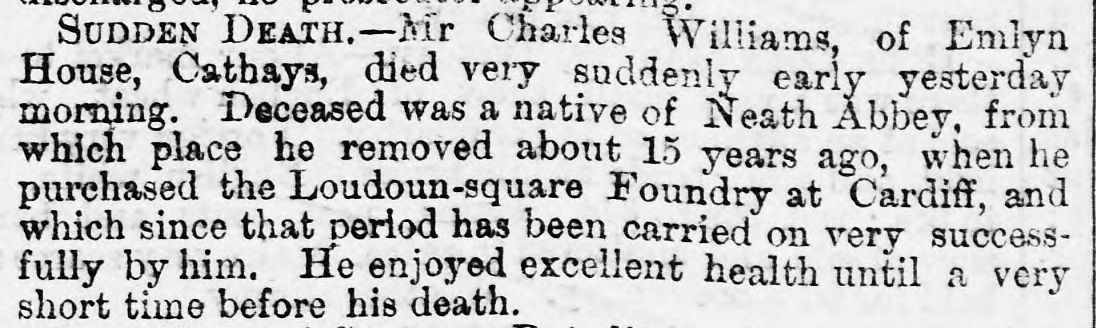
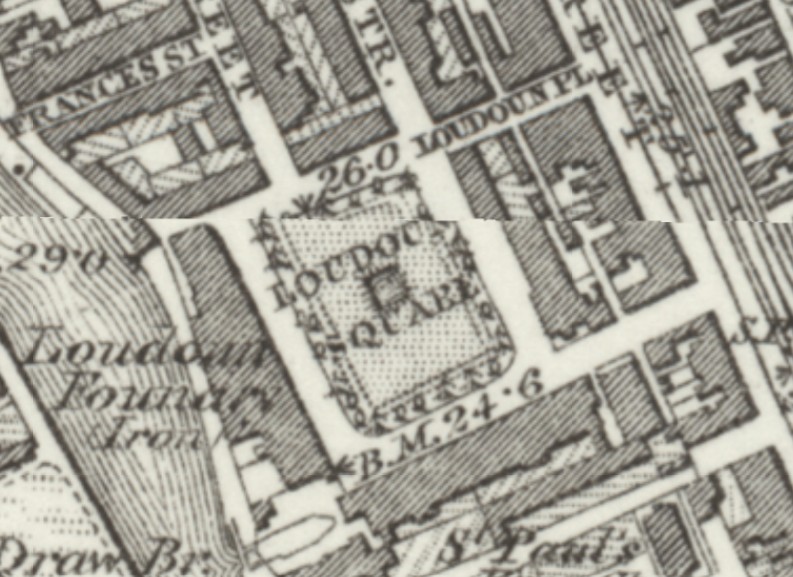
Samuel’s father Charles (grandfather of Margaret Lindsay Williams) died aged 52 in Cardiff and was buried in the parish of Cadoxton juxta Neath on 8 June 1877. He owned Loudoun Iron Foundry which was just to the west of Loudoun Square in Butetown.
In the 1881 census Samuel Williams (Margaret’s father), aged 20, was living as a boarder at 13 Longcross Street Cardiff. So we have a Roath or Adamsdown connection here! He is described as a shipbroker, born in Neath and there was a John Williams living as a boarder at the same address, a clerk ship broker, aged 22, also born in Neath. They are likely to be brothers. The head of household is William Lindsey, aged 54, a boilermaker born in Scotland. His wife is Margaret, aged 52, born in Scotland and their daughter Martha is 18 and born in Newport, Mon. The birth records include the birth of Martha Margaret Lindsay at Newport, Mon in the 4th qtr 1862. She was Samuel’s future wife. There is also a servant, Ann Davies, aged 15, born in Cardiff and another boarder, Benjamin Williams, 18, a butcher born in Aberdare.
In the 1871 census the Williams family were living at 5 Loudon Square, St Mary. Cardiff. Samuel’s parents Charles and Elizabeth were both 46 and born in Neath. Charles was an iron and brass founder. Their 20 year-old daughter Elizabeth was a labourer, as was their 18 year old son Charles. Miriam,15, was a scholar and then came John, 13, Samuel, 10, and Benjamin, 8. So it seems that this is likely to have been 18 yr old Benjamin the butcher in Longcross St in 1881. A nephew George Williams 20 was also there. All were born in Neath, apart from Benjamin who was born in Cardiff rather than Aberdare, according to this census!
The 1861 census finds the family living in the hamlet of Dyffryn Clydach in the parish of Cadoxton, ecclesiastical District of Skewen, Neath. Samuel at 6½ is the youngest child and his parents and elder siblings are all there. Therefore it would seem that Samuel only became a ship broker when he was in Cardiff as an adult, and it is likely that he moved to Barry where there may have been greater opportunities for a young ship broker to establish himself.
My reading informed me that from the age of 9, Margaret Lindsay Williams lived at 9 Windsor Road. This is wrong. The 1891 census of Barry, a town only recently developing after Number 1 Dock opened in 1889, shows the family at 9 Windsor Road. Her father is the head of family aged 30, born at Neath a ship broker agent. Her mother Martha M is 28 and born in Newport, Mon and speaks English only. Maggie Lindsay Williams herself is 2, born in Cardiff, and English speaking. Her sister Dorothy Farquhar Lindsay Williams is 1 month old. Samuel’s father-in-law William J Lindsay, aged 60, a boiler maker born in Scotland, and mother-in-law Margaret Lindsay, 58, born in Scotland, are in the household along with Margaretta James, 21, a general domestic servant born in Cardiganshire. This goes to show that you cannot always believe what you read! It is always best to go back to source material to check facts.
Doctor Hicks told us of another tragic event which happened in the family. He said that Margaret’s baby sister Dorothy died when her nurse, possibly Margaretta the servant (my suggestion) slipped on the steps outside the house, dropping Dorothy, presumably on her head and Dorothy died of her injuries. I confirmed the death by checking the death records. A Dorothy Farquhar L Williams died in the third quarter of 1891 in the district of Cardiff. The 1891 census was carried out on the night of Sunday 5 April, so Dorothy was likely to have been born either in February or March of 1891. The third quarter of the year commences in July, therefore Dorothy would have been between 4 and 8 months old when she died.
In the 1901 census the family are still at 9 Windsor Road, Barry. Samuel is now 40 and born in Neath Abbey and is a ship broker and an employer, who can speak both Welsh and English. His wife, Martha M Williams is 38, born in Newport, Monmouthshire and speaks only English. His daughter, Margaret L, is 12, born in Cardiff and speaks English only. There is another daughter, Olwen L Williams, aged 1, born in Barry and speaks English. The birth records show that she was born in the 4th quarter of 1899 in the Cardiff district. Margaret Lindsay, Samuel’s mother-in-law is now a widow, age 75 and born in Scotland. Her husband, William John Lindsay, died in the district of Cardiff in the second quarter of 1895, aged 70. Apart from finding the birth record of Martha Margaret Lindsay in the fourth quarter of 1862 in Newport, Monmouthshire, I have been unable to find incontrovertible evidence of the Lindsay family in Monmouthshire or Glamorgan or elsewhere in Britain before 1881.
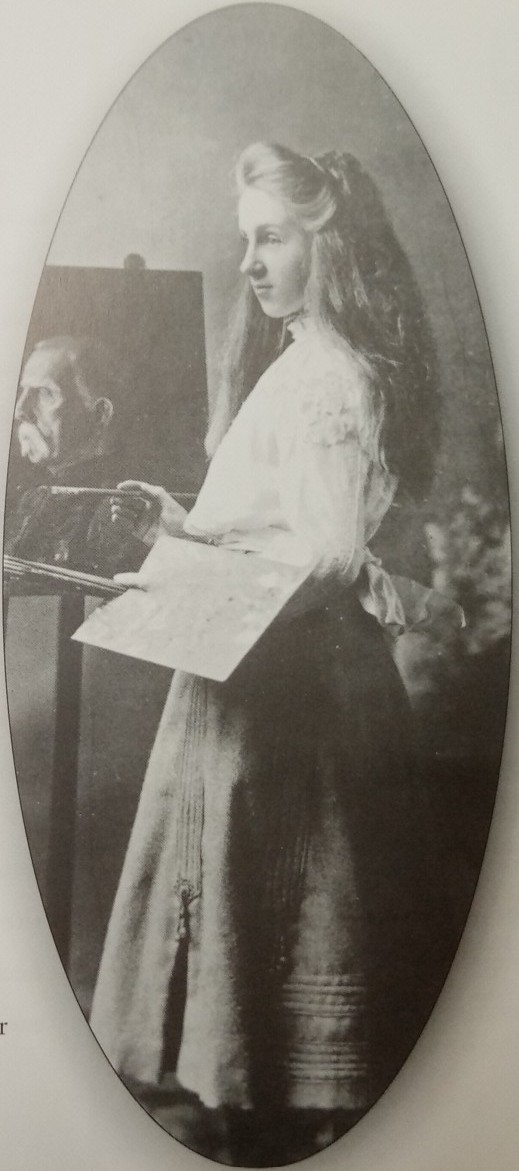
Margaret Lindsay Williams entered the Cardiff School of Art aged 13, the youngest female to do so and won a gold medal there for her work in 1904. In 1905 she enrolled at the Pelham Street School of Painting in Kensington to prepare for the Royal Academy which she entered in 1906. She won various prizes at the Royal Academy School and a gold medal for a painting, the City of Refuge in 1911.
At that time she was the youngest gold medal recipient and the only person from Wales. This was despite women students having an inferior teaching experience. They sat separately from the men and, if I recollect Dr Hicks correctly, they did not have such a varied course as the men and were not treated as equals. She won so many prize competitions that at one stage she was barred from entering to give others a chance, and I believe she was overlooked for exhibitions at some stages in her career.
In 1911 her father helped her as a student to fund her own studio in Eaton Terrace, St John’s Wood. In the 1911 census she is at Eaton Studio at that address in the parish of St Marylebone as the first entry on the form. She is single, 22 and an art student born in Cardiff, S Wales, whose nationality is Welsh. She, or someone else, has crossed out the description of Head next to daughter. Her mother is here named Martha Lindsay Williams, 47 and is described as mother with “Head” in parenthesis added next to mother. Martha had been married 25 years and had given birth to just 3 live children with 2 still living. She was born in Newport, Mon. Her nationality is “Scotch”. Olwen Lindsay Williams, daughter, is 11, born in Barry, S Wales and is Welsh. Note that Martha’s mother Margaret Lindsay is not here. A Margaret Lindsay, aged 85, died in the 2nd quarter of 1909 in the district of Cardiff.
Margaret Lindsay Williams’s father, Samuel A Williams, was a boarder, aged 50, living at 11 The Parade, Barry, a married man, a shipbroker and employer born at Neath Abbey and speaking both languages. Interestingly the section for married women was filled in by mistake. It says he was married for 26 years and had 5 children born alive with 2 children still living (Margaret and Olwen) and 3 had died (Dorothy and the two sons Dr Hicks mentioned, I assume). It would appear that Samuel stayed at Barry to look after his business while his wife and daughter Olwen went to stay with Margaret in London.
In 1912 Margaret won a travelling scholarship and spent 18 months studying in Italy and Holland as advised by John Singer Sargent. In March 1914 she had her first solo exhibition, showing 58 paintings at the New Galleries, Cardiff. Dr Hicks said these were in Queen Street. He also said that she was called back from Italy because her sister was seriously ill with poliomyelitis. Margaret was into spiritualism and attempted to remove the disease from her sister by massaging her from her back down the back of her legs to her feet. This went on for a number of weeks and, lo and behold, Olwen was cured. She accompanied Margaret back to Italy by sea, if I recollect correctly, but when they returned to Britain Olwen contracted pneumonia and died. So, Margaret had lost a second sister and was the only child of Samuel and Martha to reach adulthood.
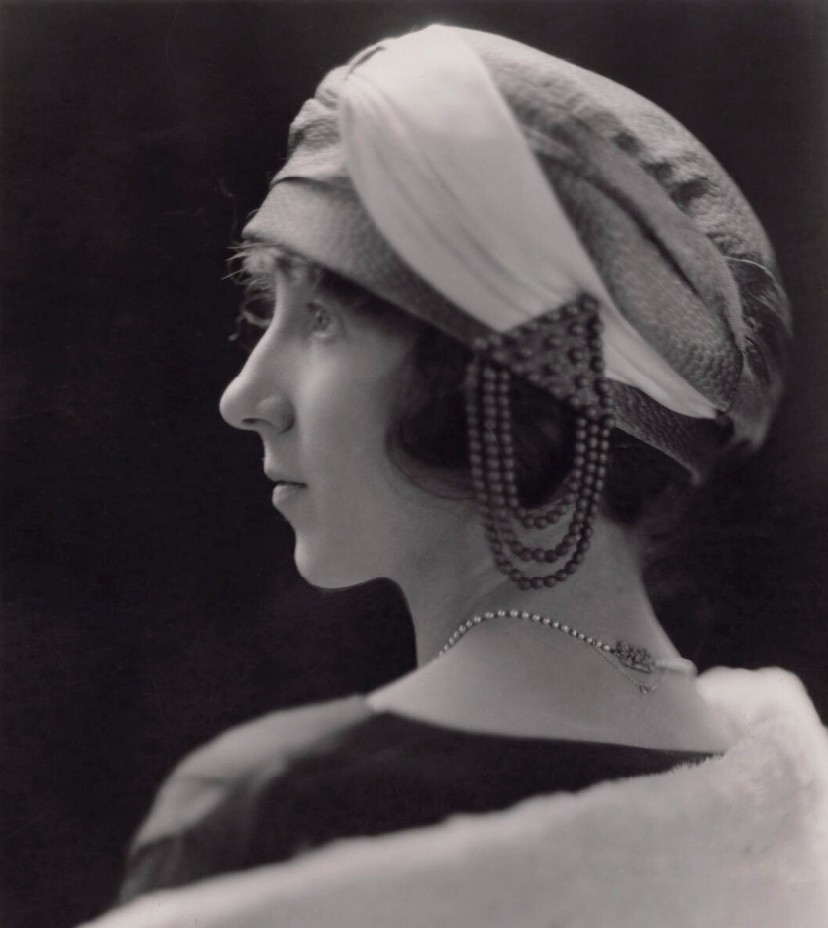
No 9 Windsor Road was broken into at one time, but none of Margaret’s paintings were stolen or damaged, although her paints were spilled. The family moved to no 11 or 12 Windsor Road some time after, and subsequently to Elm Grove in Dinas Powys. My recollection of the talk was that Margaret lived at these addresses in addition to 9 Windsor Road and in the 1921 census she is at Elm Grove, Dinas Powys, 31 and single, an artist whose workplace is at home. Her father, Samuel Arthur, is the head of household and is 60 and 10 months, a shipbroker born at Neath Abbey, whose place of work is at the Dock Chambers, Barry Docks. Her mother, Martha Margaret Williams, is 57 and 9 months. The three of them were at the same address on the electoral register in 1931. I am not sure if Margaret was living full time in Dinas Powys then or partly there and in London
At the outbreak of the First World War Margaret lobbied David Lloyd George to be an official war artist with the Welsh Division in France. He thought the idea of a war artist was good but refused her permission to go because she was female and being near the Front would not be a safe place for her. She had to be satisfied with providing illustrations for Margaret Lloyd George’s prose anthology to support the National Fund for Welsh Troops. These were themes from Welsh legends and she returned to these themes for work in 1916 and 1917. It is interesting that Christopher Williams originally of Maesteg and15 years her senior was also pursuing these subjects at that time. Were people in Britain let alone Wales more familiar with Welsh legends then than now? There were also some imaginative paintings with religious overtones through the war and the early 1920s such as’ The Devil’s Daughter, ‘the Triumph’ ‘The imprisoned Soul’ and one suggesting a male “spying” on a partially dressed young female.
In 1915 there was an exhibition of her work in Cardiff to raise money for the Netley Military Hospital and this led to her having commissions for large works including ‘Wounded soldiers at Cardiff Royal Infirmary during the Great War’ and ‘The scene at Cardiff City Hall’ when Lloyd George unveiled a number of marble statues of Welsh heroes. This latter painting included 114 individual portraits and she visited Downing Street several times to paint portraits of Lloyd George and cabinet members.
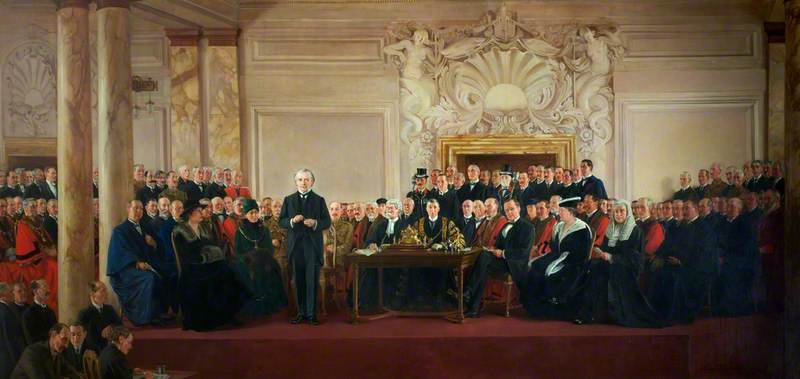

Her largest painting was of the Welsh National Service held in Westminster Abbey in June 1918 to support the Welsh POW fund. This included 150 portraits including ones of Queen Alexandra and Princess Victoria. It was commissioned by Lord Glanely, born William James Tatem and it may still be hanging in the Law Courts in Cardiff.
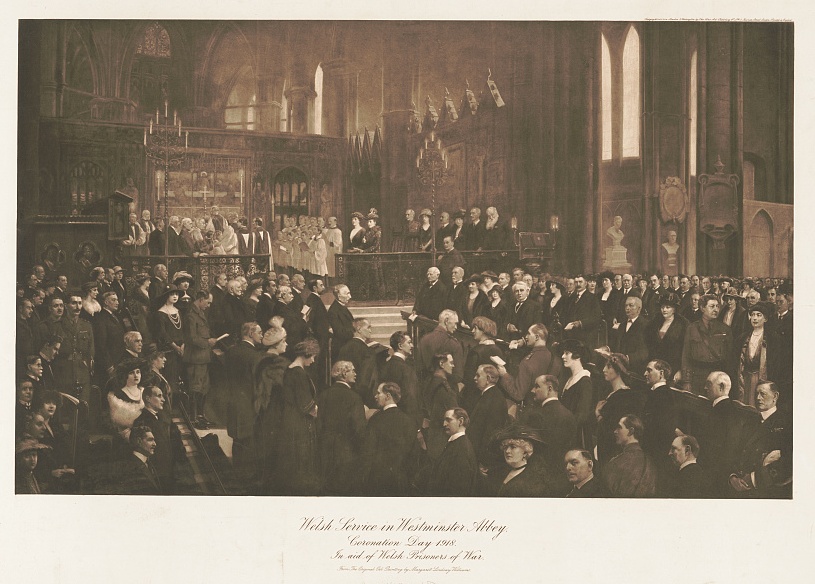
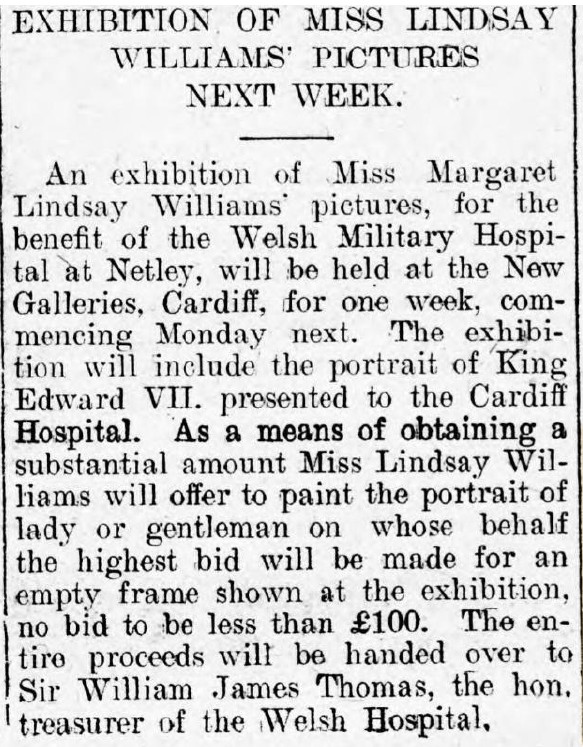
Link to picture of King Edward VII mentioned in article.
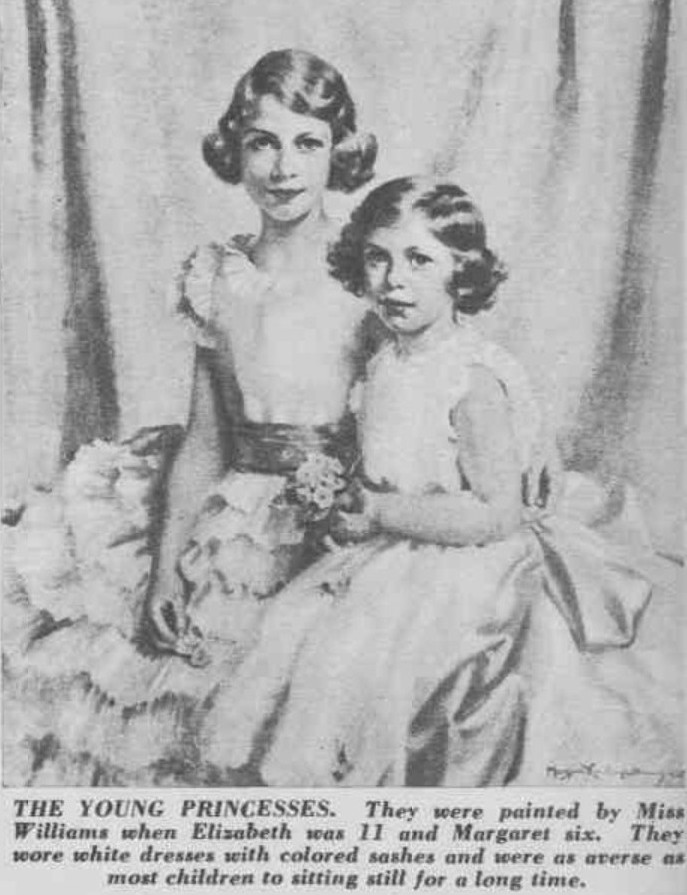
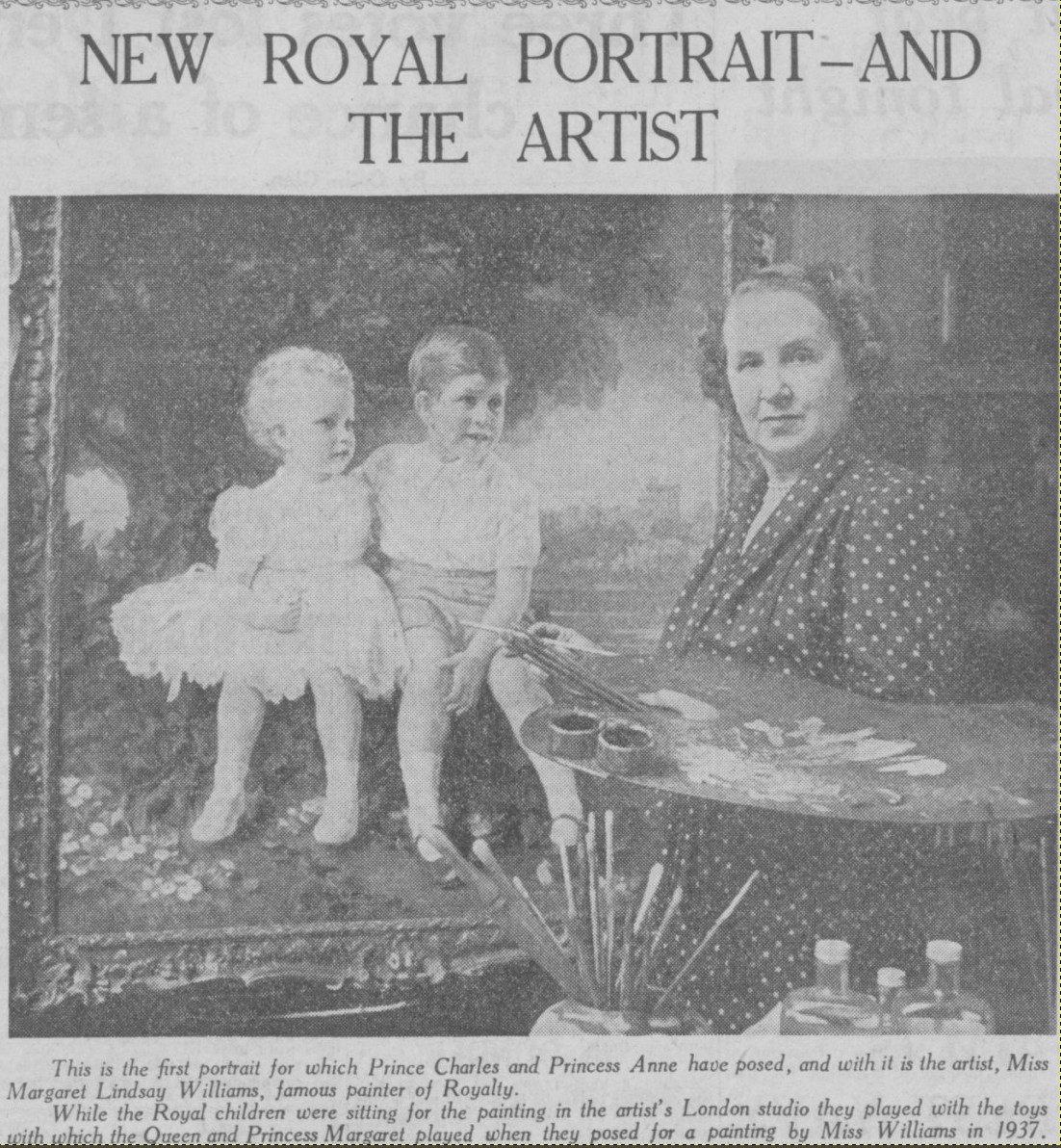
By the end of the war Margaret Lindsay Williams was a successful and established artist. From the mid-1920s she concentrated on portraiture. Although based in London she painted several generations of prominent Welsh families such as the David Morgan family of the department store in Cardiff and the Novello Davies family. Another large painting was of the St Paul’s Cathedral Thanksgiving Service to mark the reopening of the cathedral after 5 years of restoration. This was shown in the Royal Academy in 1933 and featured King George V and Queen Mary. She painted Queen Mary again in 1938, Princess Margaret, Prince Charles, Princess Anne and at least 5 portraits of Queen Elizabeth II, one as a young princess. She visited the USA 5 times and in 1922 painted a near life sized portrait of President Warren Harding and was deeply affected by his death despite him being regarded by some as the worst President of the USA. Other portraits included Henry Ford and General Slim of WW2 fame for his leadership in Burma. On one of the visits to the USA she was particularly treated as a celebrity, being interviewed possibly some on the radio on five consecutive days. People were fascinated by her fashionable clothing, particularly her boots.
She exhibited with the South Wales Art Society throughout her life and became a Vice- President in 1931. After her parents moved to London in 1934, I believe after Samuel retired, she visited Wales infrequently. My genealogical research suggests that her mother died aged 71, in St Marylebone, London in the 2nd quarter of 1934. In the 1939 register she was living at 108 Hamilton Terrace, single, an artist and portrait painter. Her widowed father, now a retired shipbroker, was with her and there was a jobbing gardener, single and aged 63 also there. Her father died aged 83 in the last quarter of 1943 in the same district, presumably at Margaret’s home and studio at Hamilton Terrace.
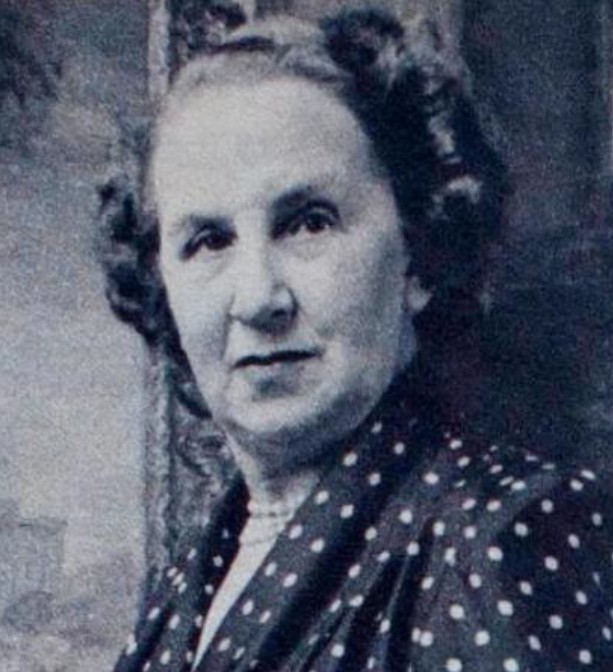
Margaret appeared to live a solitary life and never married. It is reported that she felt very alone. She did have parties and receptions for which she did all the catering and typically invited 700 people of whom about 500 attended over two days at her house in Hamilton Terrace but these were particularly when she had new work to show. As well as being an excellent artist and certainly one of the greatest portrait artists of her generation, she was a pioneer for women in the world of fine art and was an intelligent woman able to hold her own intellectually and in high society. Many people feel her best paintings were done as a youngster. Margaret Lindsay Williams was a lifelong Welsh Congregationalist and after she died in Marylebone in June 1960 her funeral was at the Windsor Road Congregational Church Barry before her burial in Barry Cemetery.
Additional information and references:
Video of the making of the new headstone for her grave in Barry by Mossfords.
ITV coverage of the new headstone in Barry: Artist to the stars: How one of Wales’ finest painters is finally being honoured
BBC story of painting in the Infirmary: How forgotten painting of an injured soldier inspired nurse’s career.
Barry & District News coverage of unveiling of new headstone: Headstone for Margaret Lindsay Williams unveiled in Barry
Link to Art UK page on Margaret Lindsay Williams and her paintings.
Dictionaly of Welsh Biography.
National Portrait Gallery – Margaret Lindsay Williams
BBC Story from 2018: Dyffryn Gardens’ ‘hugely significant’ paintings found
Dives and Lazarus painting in Barry Herald in 1910.
Painting of John Sankey, 1st Viscount Sankey, GBE, PC, KC (1866–1948); Lord High Chancellor of Great Britain (1929–1935), His story was covered in our blog Viscount John Sankey, Lord Chancellor – Roath’s top brief.
 Roath Local History Society
