Albany Road used to be called Merthyr Road but was renamed Albany Road in 1884 to commemorate the death of the Prince Leopold, Duke of Albany, son of Queen Victoria.
Prince Leopold, Duke of Albany
1880 and Merthyr Road, about to be renamed Albany Road looks pretty empty. Cross Cottage is at the corner of Penylan Road and a bit further East is Spring Cottage and Roath School. At the eastern end is Roath Court, the manor house of Roath. Note towards the bottom left is Plasnewydd, now the Mackintosh Sports Club.
Take a trip with us along Albany Road from west to east. Click on the links to take you to articles with more information:-
The start of Albany Road taken from Richmond Road in ~1910. Note the policeman on point duty on the junction before traffic lights were installed.
Photo taken in Richmond Road, looking towards Albany Road with Crwys Road leading off to the left and City Road off to the right. No lights, just a policeman on point duty. Photo probably dates from around WWI.
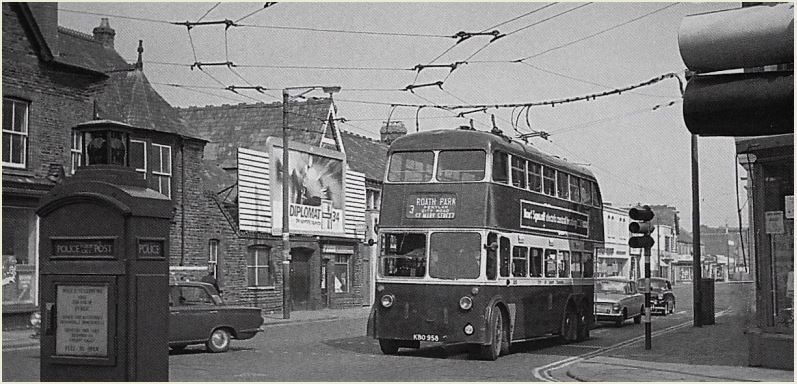
Corner of Albany Road and City Road in 1960s with what would have been Argyll Stores on the right hand corner. and the police box on the left.
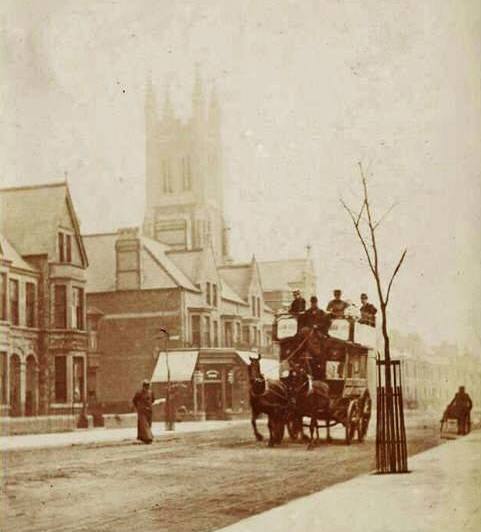
Albany Road 1905 with St Martin’s Church on right
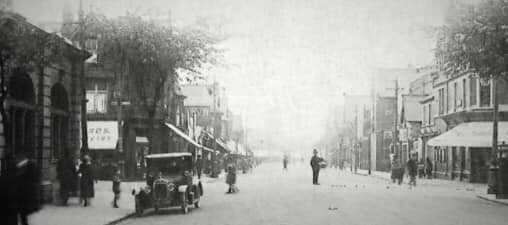
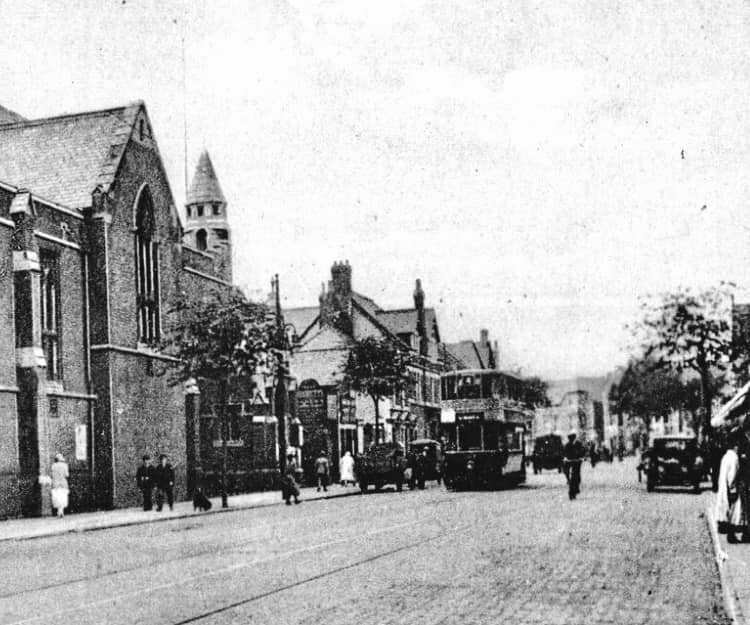
Albany Road looking towards Richmond Road around 1926 with St Martin’s church on the left
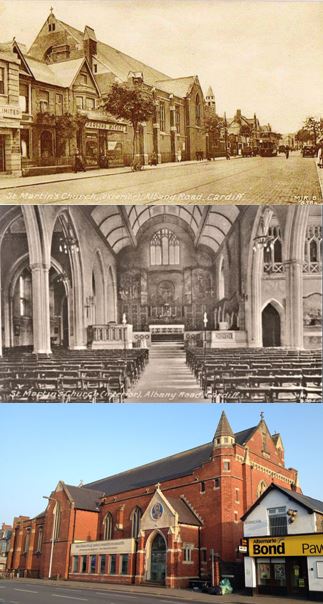
St Martin’s Church
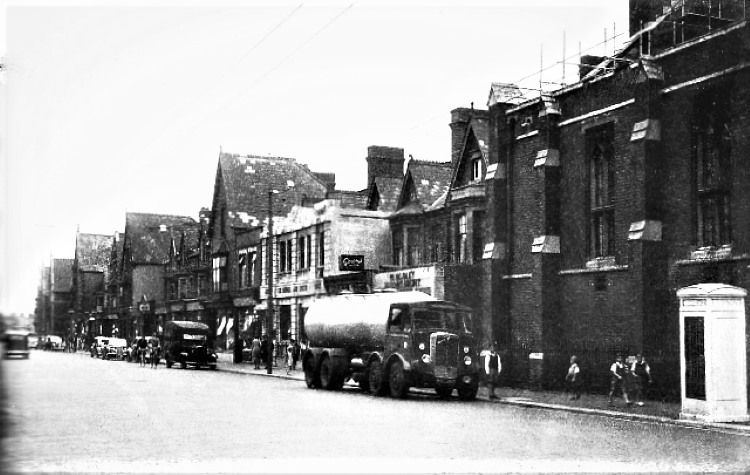
St Martin’s church is at the western end of Albany Road (CF24 3RP). The church was built in 1899 on land donated by the Mackintosh estate, to a design by Frederick R Kempson. The population of Roath was expanding fast at the time and a larger building was needed to replace the iron church on the site that had been built in 1886. The foundation stone of the new church was laid by the mayoress Mrs S A Brain, wife of the brewer. The brick built church in late Decorated Gothic style was opened in 1901 and St Martin’s became a parish in itself in 1903. Its original lady chapel was decorated by a Belgian refugee artist in gratitude for the kindness shown by the parishioners during the First World War. The interior of the church, described as one of the most elaborate church interiors in South Wales, was largely destroyed in February 1941 when it was it by an incendiary bomb. The church was restored and reopened in 1955. More of St Martin’s history is on their website.
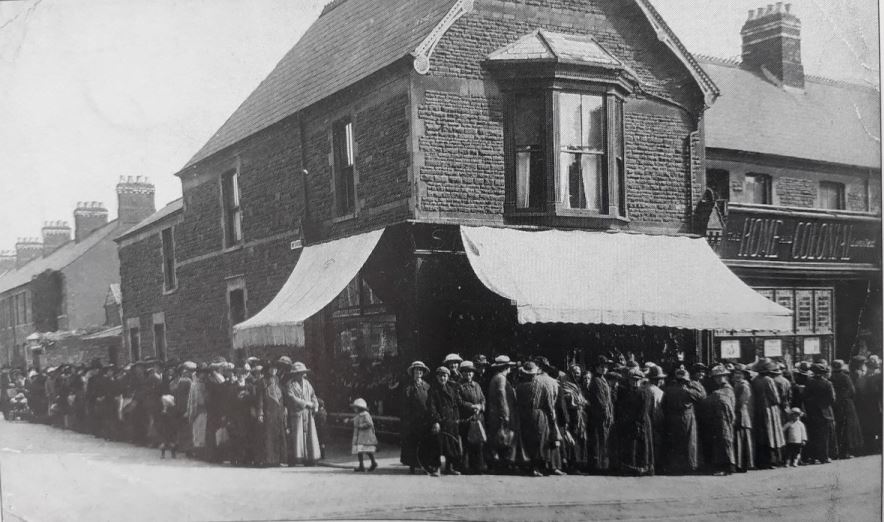
Albany Road with St Martin’s church missing its roof due to WWII air raid damageCorner of Inverness Place and Albany Road. Food rationing queues outside Home and Colonial Stores No13 Albany Road in 1914. No13 currently occupied by Tesco.
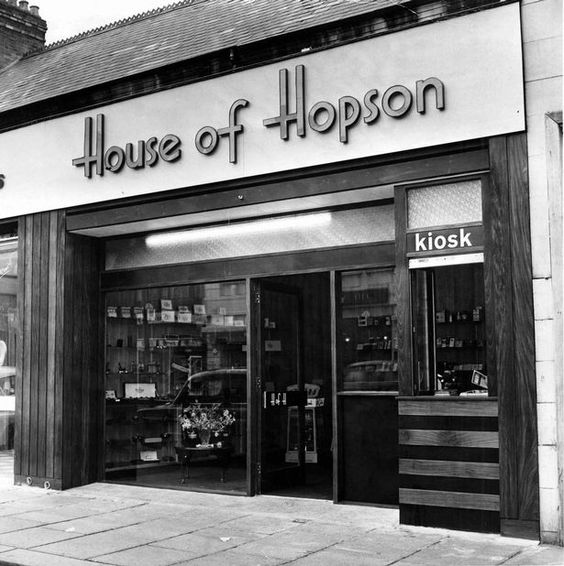
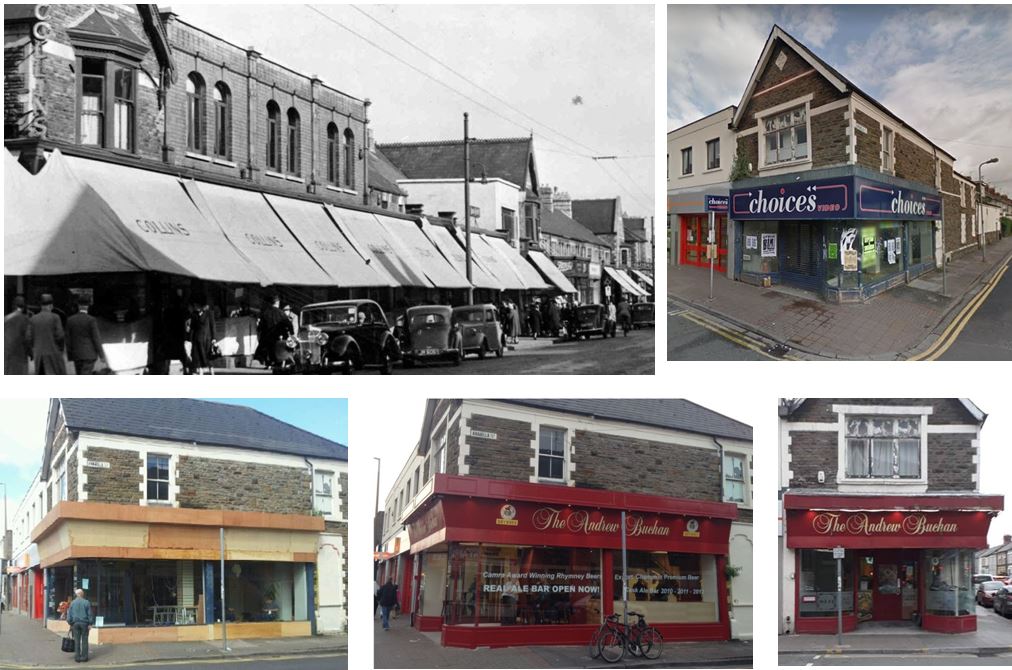
One of Roath’s newest pubs, The Andrew Buchan, opened in 2012 at 29 Albany Road on the corner of Arabella Street (CF24 3LH). The pub is named after the founder of the original Rhymney Brewery in 1839. The premises at 29 Albany Road has had an interesting history. In 1888 it was home of Issac Clarke, an egg merchant. In 1897 it was a grocery shop. By 1937 it was a hat shop. It then became part of the large Collins the Drapers business which owned not only 29 but also 11-25 Albany Road with Hopsons the tobacconists next door at No 27. In 1984 it was a Halfords shop. The last shop to occupy the site was a video rental shop. It then lay empty for a number of years before being converted to the Andrew Buchan in 2012. The pub hosts music and art displays, often by local artists. Andrew Buchan facebook page.
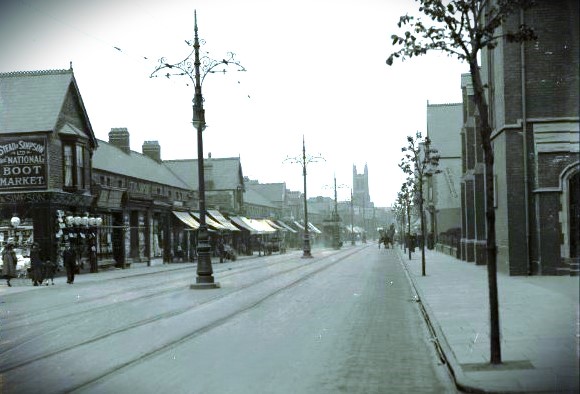
Albany Road in the early 1900s looking east with St Martin’s church on the right.
The 1911 Suffragette Protest
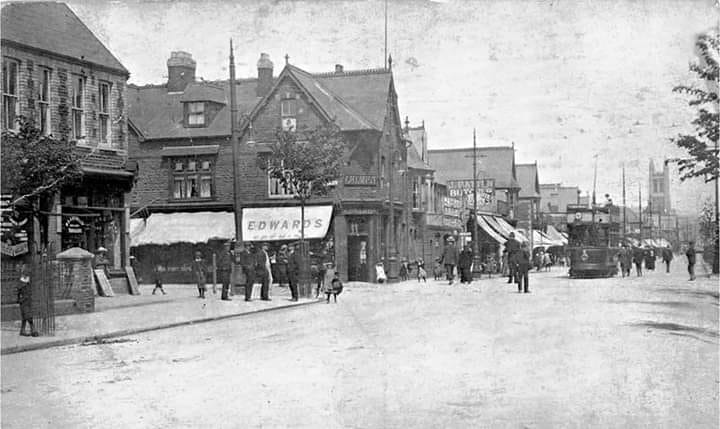
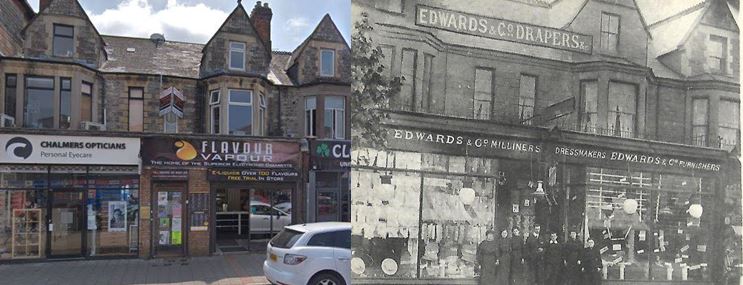
In 1911 a group of Suffragettes protested by barricading themselves in 34 Albany Road and avoiding the census. Edwards & Co Drapers had closed prior to 1911 and at the time of the census was lying vacant, but the picture probably still gives a good impression of what the premises looked like at the time. Today it is the Flavour Vapour e-cigarette shop. The story of their protest is told in a blog post here.
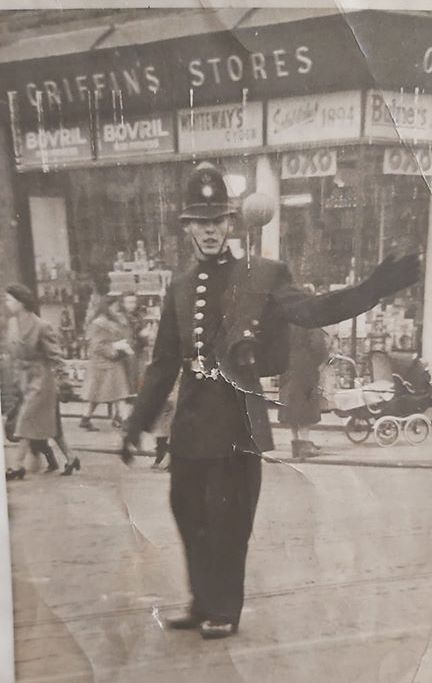
Griffin’s Stores was at 38 Albany Road on the corner of Plasnewydd Road (where Thresher’s wine shop occupied later). On the other hand the policeman may have been on point-duty at five ways junction at the start of Albany Road – does anybody recall Griffin’s stores relocating there? (pic donated by Owen Williams and the policeman was his father).
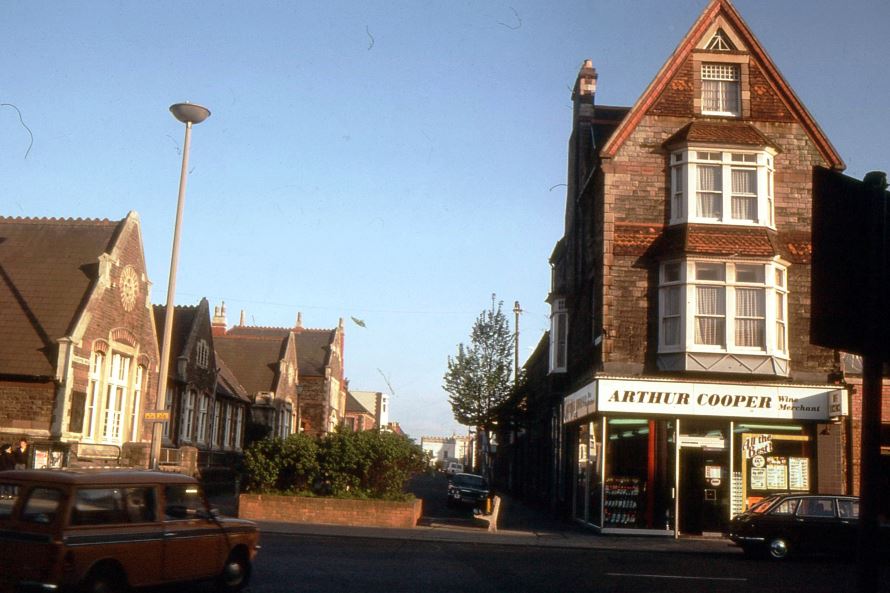
Albany Road with Albany Road School on rightAlbany Road, 1980, looking down Plasnewydd Road towards the Mackintosh Institute. Albany Road Primary School on left and Arthur Cooper Wine Merchant on right, now Chop Shop.
Albany Road Primary School
Albany Road Board School, now known as Albany Road Primary School (CF24 3RQ) was opened in November 1887. It was constructed on land owned by the Mackintosh Estate and cost £9,579 to build. Almost 300 pupils attended the school when it was first opened but by 1898 the school had been expanded and could accommodate 1643 pupils. When the school first opened it was noted that that the number of pupils not knowing their letters was high but by the end of the first year the school was being congratulated on its work and discipline which were described as excellent. The school was commandeered for use as a military hospital during WWI. The school is still very much open and now called Albany Primary
Albany Road School pictured around 1910
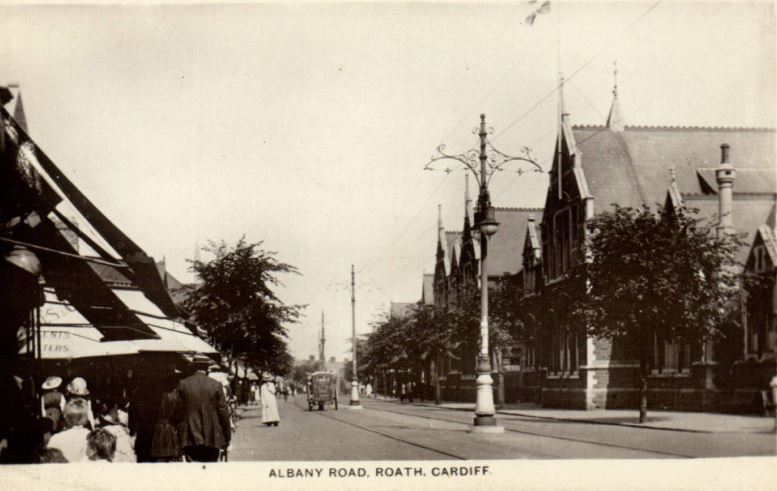
Albany Road in around 1910 looking east. Albany Road School can be seen on the right. The Wellfield Road junction is just beyond the church on the left.
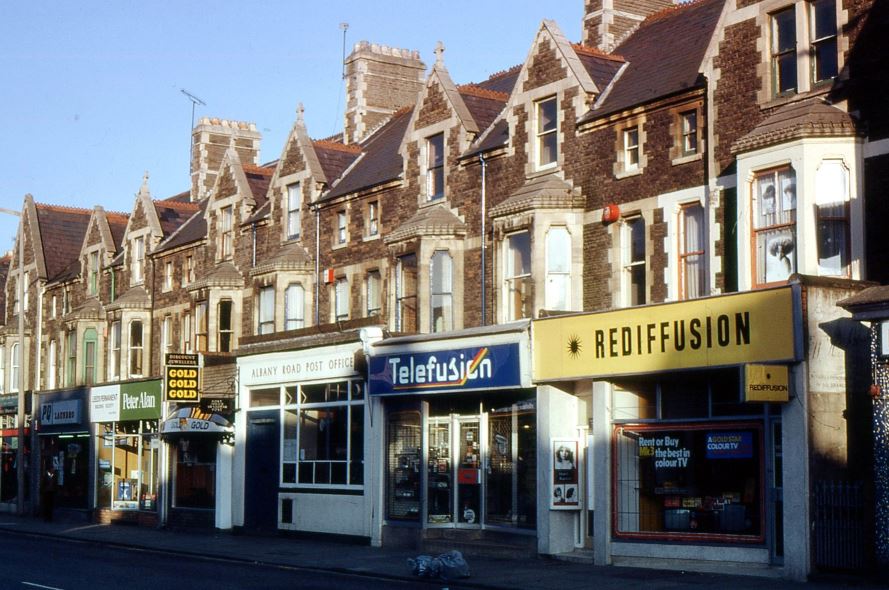
May 1980. 60 Albany Road – Rediffusion, Telefusion No.62, Post Office No.64 (photo credit Alec Kier)
1964 Albany Road. Chain Library was at No.84, corner of Alfred Street.
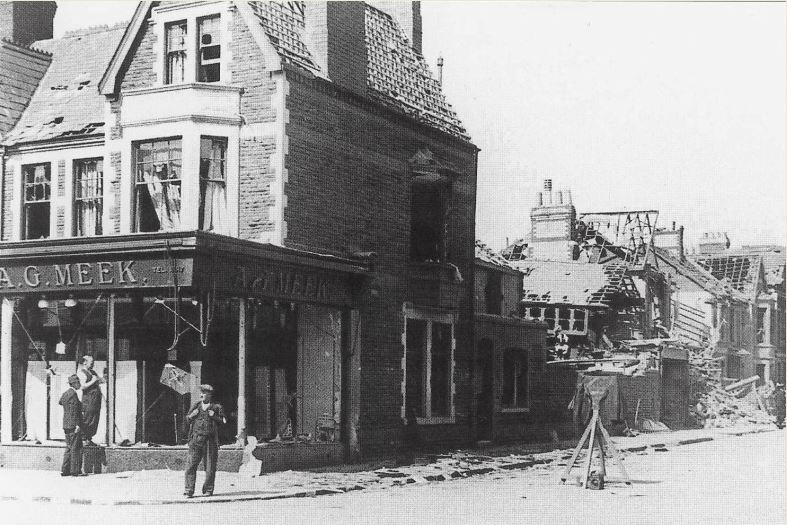
Albany Road looking towards Angus Street junction and Roath Park Methodist church (now Rainbow Bargain). Note the houses on the left had not yet been converted into shops. The corner property became A G Meeks (now Sainsbury’s).
A G Meek on corner of Albany Road and Angus Street following the bombing in September 1940
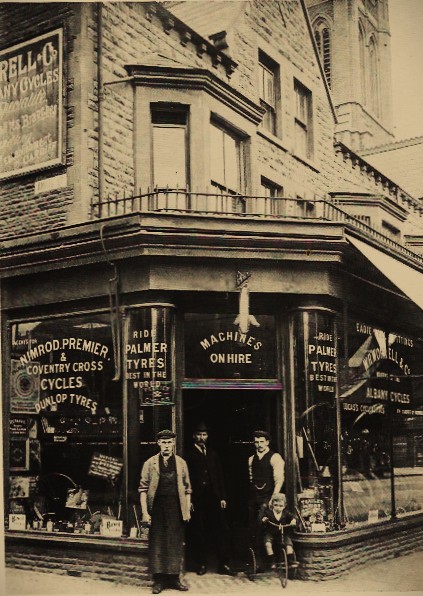
Worrell’s cycle shop 1900 , corner of Angus Street and Albany Road . Situated across the street from Meeks , building was totally destroyed in WWII . Darlow’s occupies rebuilt premises.
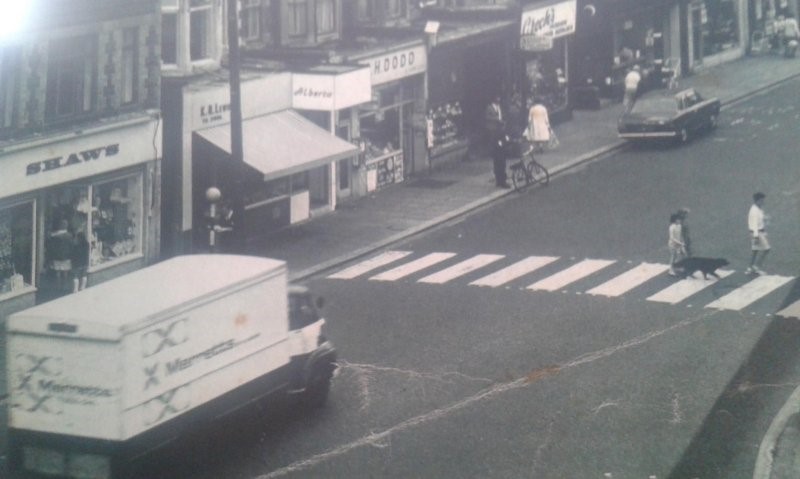
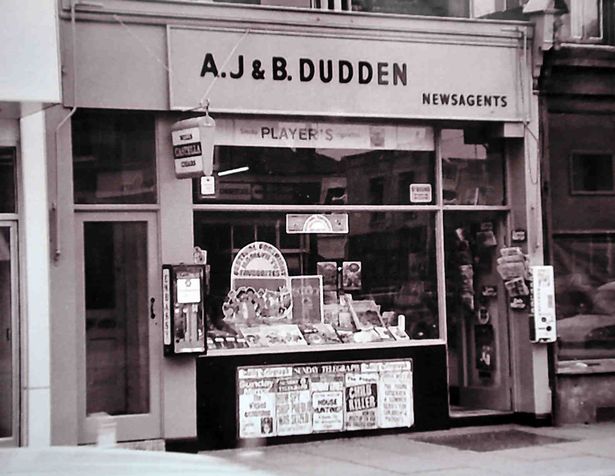
Albany Road near the Wellfield Road junction in the 1960s (Photo credit – Chris Warren)Albany Road 1960s.Taken from top room of the Globe CinemaDudden Newsagents run by Tony and Barbara Dudden retired in 2017 after 52 years. Their Albany Road shop at no.80 opened in 1965. Their story and more pictures in this Wales Online article.
Roath Park Wesleyan Methodist Church
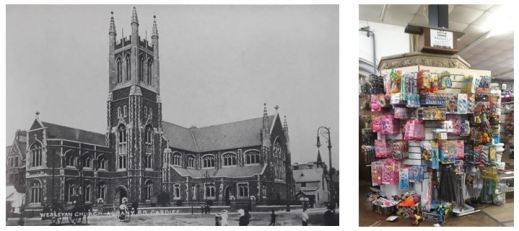
The church was on the corner of Albany and Wellfield Road. The building survives but the congregation left in 1990 and were for a time holding their services in the Mackintosh sports and Social Club. The church was built in 1898 to the design of architects Jones, Richards and Budgen of Cardiff. The chapel is described as stone built in the Gothic style with a long-wall entry plan, an integral tower and perpendicular leaded windows. It was extended and altered in 1911. Part of the ground floor of the original church building is today used by retailer Rainbow Bargain. Much of the interior survives including the stone pulpit now surrounded by bargains. The church had a roll of honour of all the 109 men who served in the armed forces in WWI which was thought lost but then found for sale and is now mounted in Roath Park Primary school. The war memorial tablet has also recently been found to be in safe storage at Thornhill Crematorium. The press reported in 2017 that the church building had been sold to a private buyer for £410,000.
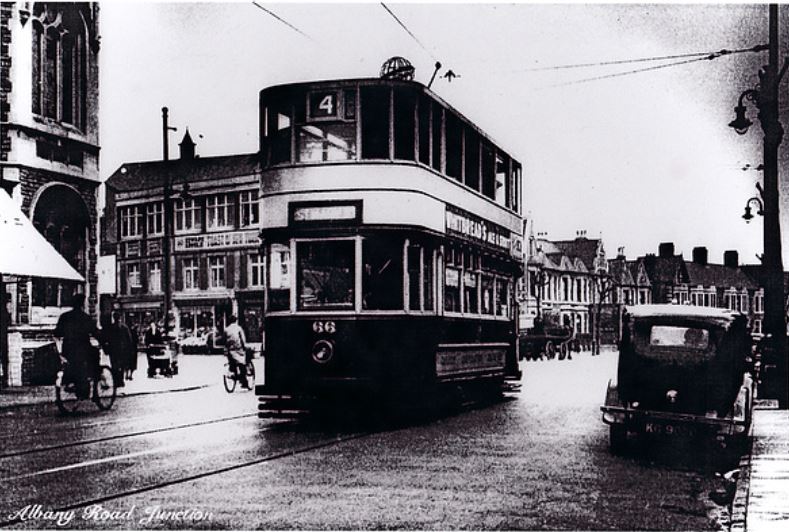
A tram on Albany Road, near the junction with Wellfield Road.
Globe Cinema
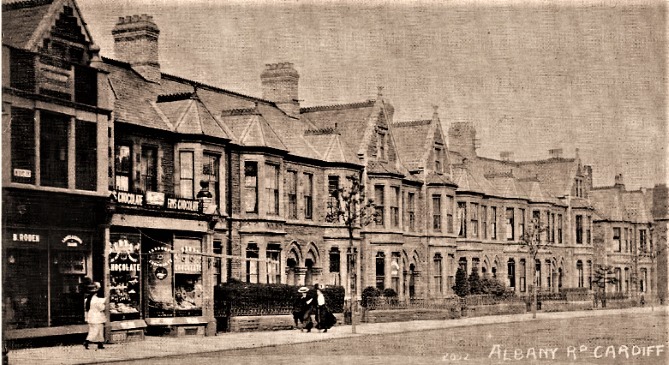
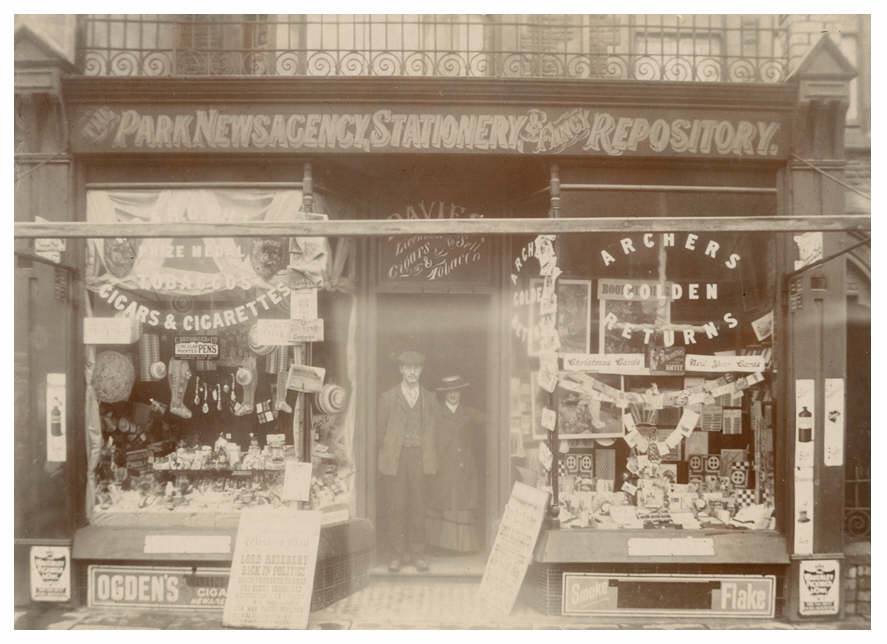
On the corner of Albany Road and Wellfield used to be the Globe Cinema. When it opened in 1913 it was called the Penylan Cinema. It closed in 1985. Now occupying the site is the Pear Tree pub. The is more about the history of the Globe cinema here.Albany Road at its junction with Wellfield road early 1900’s . The corner properties were demolished 1914 for construction of Penylan Cinema. Today only the three houses on the right of the picture remain, the one with the windows on the third level is Pizza GoGO.Tobacconist and stationery shop, Albany Road, Roath, Cardiff, 1901. (A.) Davies – The Park Newsagency, Stationery and Fancy Repository’ was located at 109 Albany Road, Roath, Cardiff, on the corner with Wellfield Road. The shop was located in a building which was originally built as a private house c. 1892. The ground floor bay window and forecourt were built out as a bungalow shop about 1900. The house, with the adjoining no.111, was demolished c.1913-14 for the construction of the Globe Cinema which has since been demolished.
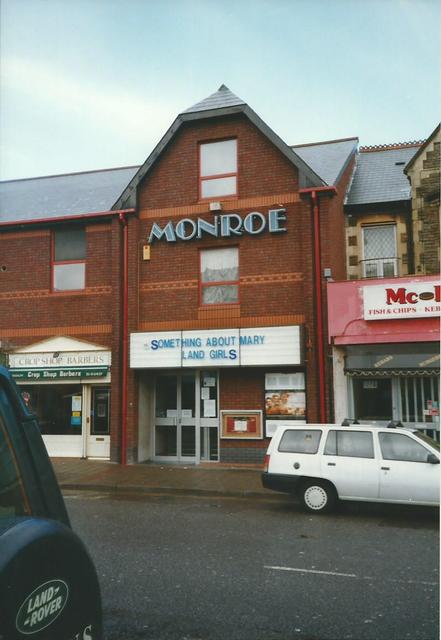
Monroe Cinema – opened in November 1988 with “A World Apart”, starring Barbara Hershey. This small cinema was situated above the shops which had been built on the site of the demolished Globe Cinema. It was operated by Circle Cinemas, who also operated the Monico Cinema. The Monroe closed in 2001.
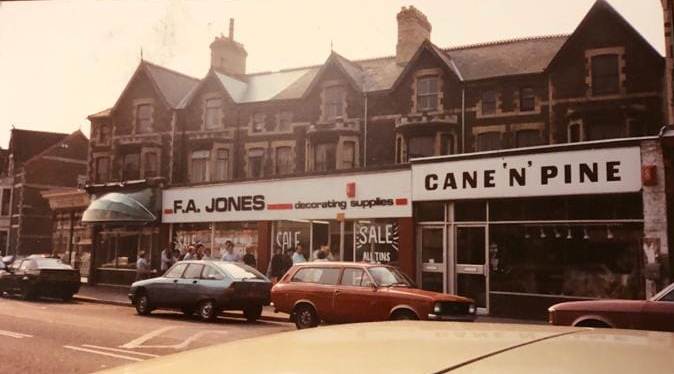
F.A.Jones Decorating Supplies and Cane ‘n’ Pine (102 Albany road). (Photo Credit: F.A.Jones)
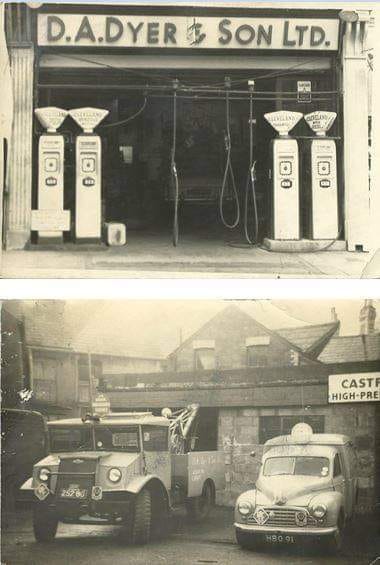
Dyer Garage – pumps on Albany Road and the entrance to the garage on Wellfield Place (photo credit: Sarah Dyer)
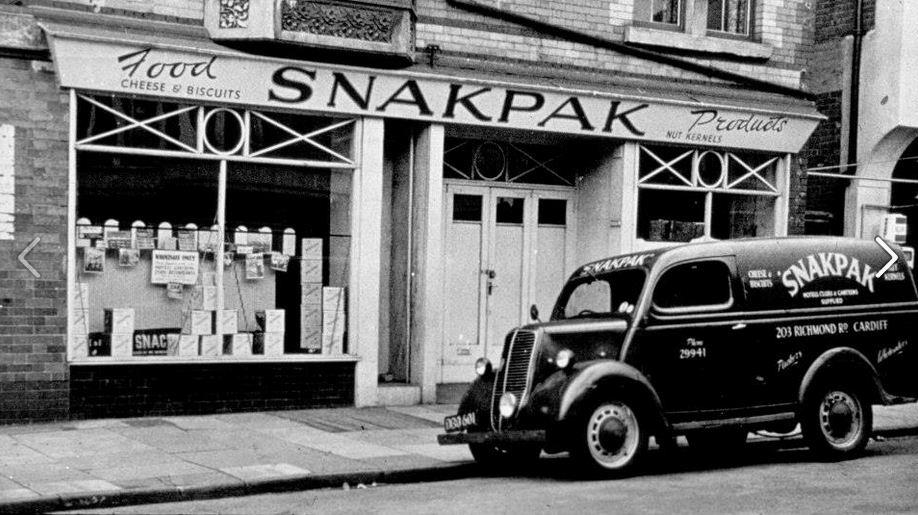
Cardiff was snacking years before the rest of the country. This was Snakpak at 128 Albany Road, next to the old petrol station, now apartments. They were also on Richmond and Penylan Roads and a factory on Newport Road.
Albany Road at junction with Penylan Road, probably 1980s. The church in the distance is visible following the demolition of the Globe Cinema and prior to the construction of the Globe centre / Pear Tree. Note the BP petrol station, Bill Thomas Motors, on the left was still operating.
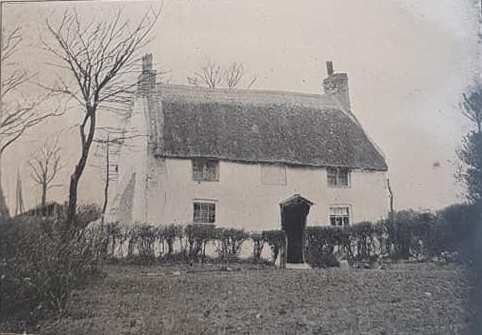
Cross Cottage, 1883, which used to be on the corner of Albany Road (Merthyr Road) and Penylan Road. It was demolished in 1899. Now occupying the space is De Mara restaurant and the Bottle Shop.
Claude Hotel
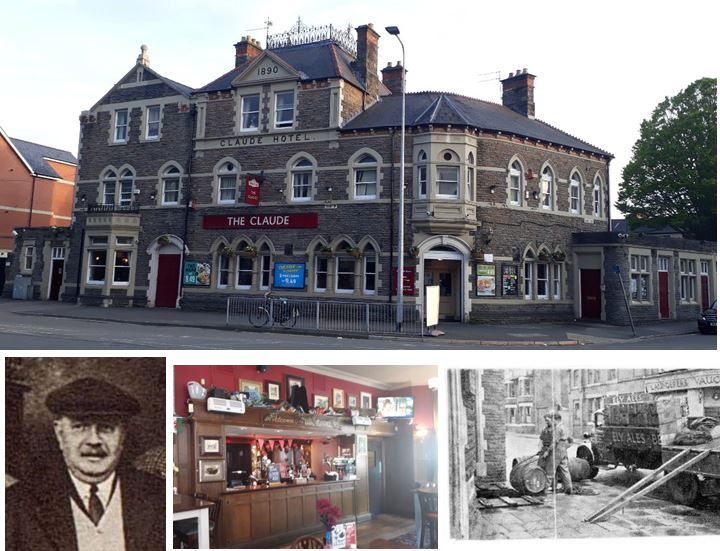
The Claude Hotel at 140 Albany Road in Roath (CF24 3RW) is a fine Victorian building, the exterior of which has changed little since it was constructed in 1890. The large bar area was the result of a refurbishment in 1994 and the amalgamation of the public bar, a ladies snug, the off licence and skittle alley at the rear. Regulars however have always insisted that the Oak Room, which was a men-only lounge up to the early 1970s, remain untouched. The name originates from Claude Williams of the Williams family who lived in Roath Court (now James Summers funeral home) and owned the Roath Court estate. When Charles Henry Williams was selling off bits of the estate for housing, various streets and pubs were named after family members e.g. Crofts, Rose, Claude.
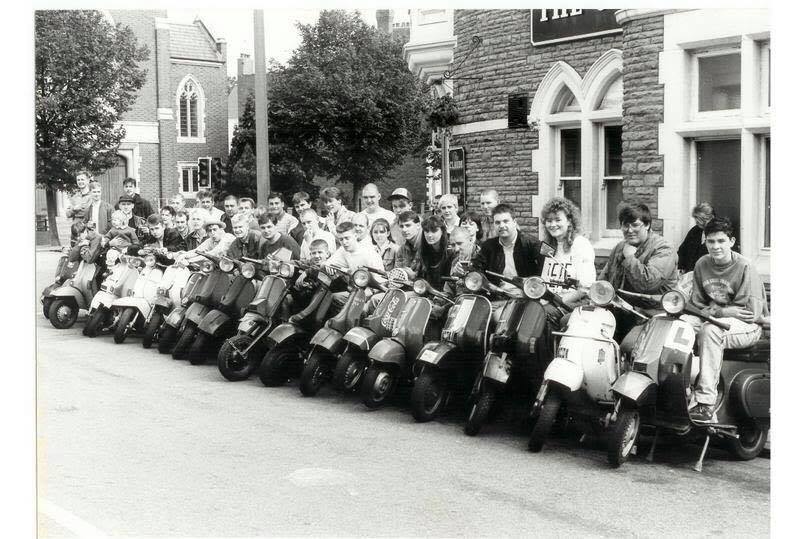
Photos: Claude Hotel (2019), Claude Williams of Roath Court in 1937, the Oak Room, fresh supplied being delivered to the Claude.Scooters outside the Claude hotel in 1985
Albany Road Baptist Church
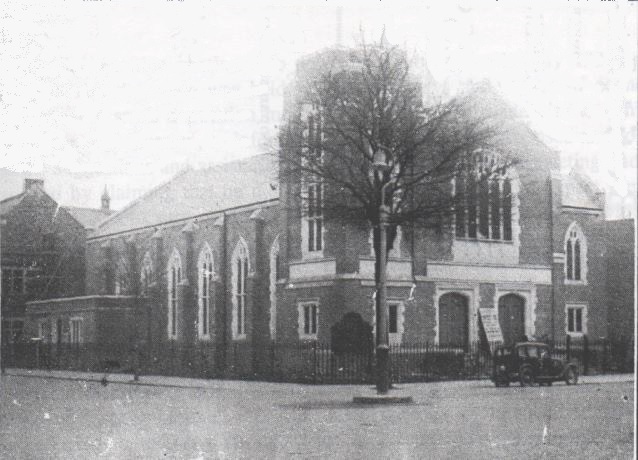
Albany Road Baptist Church at the time of opening in 1932. Note the railings around the church that were probably removed in WWII as part of the war effort.
Albany Road Baptist Church sits on the corner of Albany Road and Blenheim Road. It started life as Cottrell Road Baptist Mission in July 1893. In March 1898, the congregation moved to the school chapel, adjacent to the current church. The current church building opened in December 1932 after having been delayed by the war and lack of funds, but the perpendicular tower never completed. The old school rooms were modernised in 1971 and an extra floor added but the Renaissance style exterior maintained. In 1994 a glass-fronted entrance was added to the main church. The Bath stone on both buildings has recently undergone extensive cleaning and solar panels added to the church roof.
Roath Court Cottages
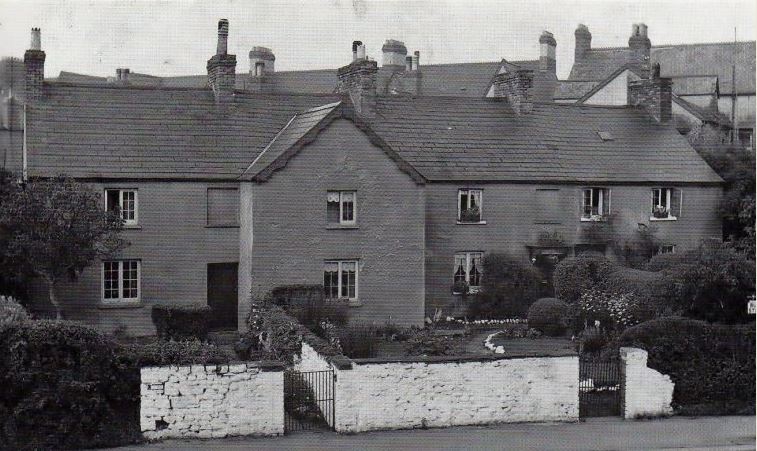
These cottages stood just east of the Claude Hotel. They were demolished in 1959. In 1958 they were collectively known as Roath Court Cottages. Previously they were known as, from left to right, Jessamine Cottage 1, Jessamine Cottage 2 and White Rose Cottage. The later was occupied in 1893-4 by James Raynor, coachman to the Roath Court Estate. After demolition the cottages were replaced by a petrol filling station which itself has now been demolished and replaced by flats called Pritchard Court.
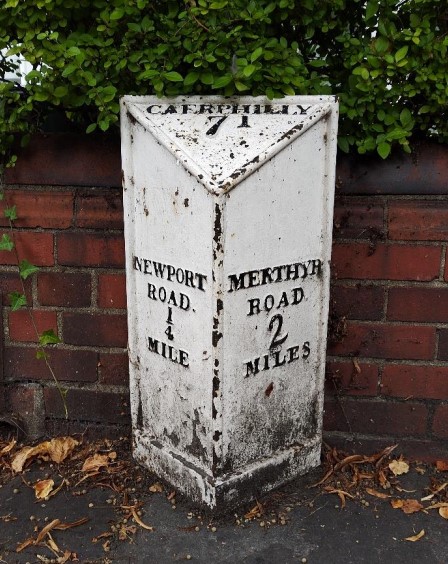
One of Roath’s smallest Grade II Listed Building. It’s a milepost outside 243 Albany Road and is only 0.75m high. The CADW listing describes its history as follows: Shown on the 1st ed. OS map of 1886, when the Albany Road area had yet to be developed for housing. Probably dating to the early/mid C19 and part of the Cardiff-Caerphilly turnpike operated by the Cardiff District Turnpike Trust under a Turnpike Act of 1827. Similar mileposts survive along the Turnpike network in Cardiff.
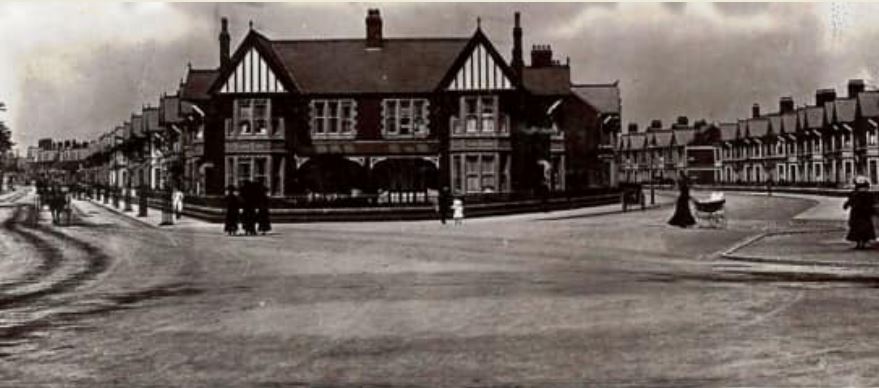
Albany Road Marlborough Road junction, where the roundabout now is.
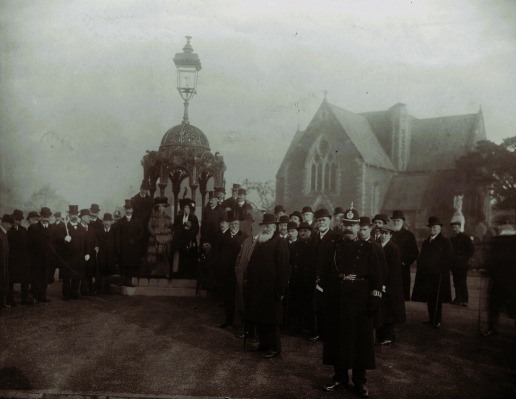
Drinking fountain outside St Margaret’s Church 1910 , on traffic island between Albany Road and Marlborough Road.
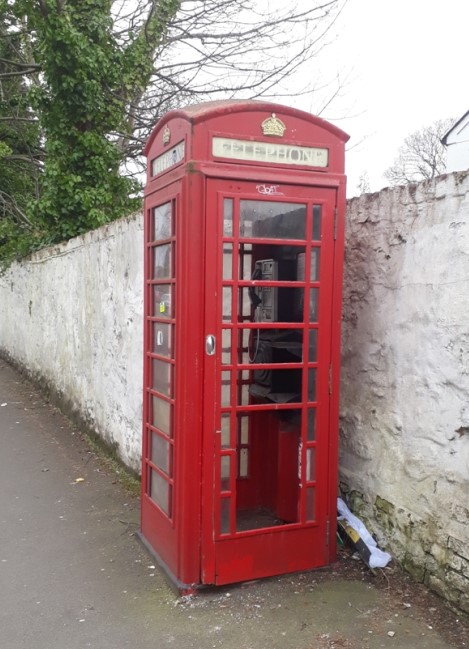
Albany Road telephone box in 2019
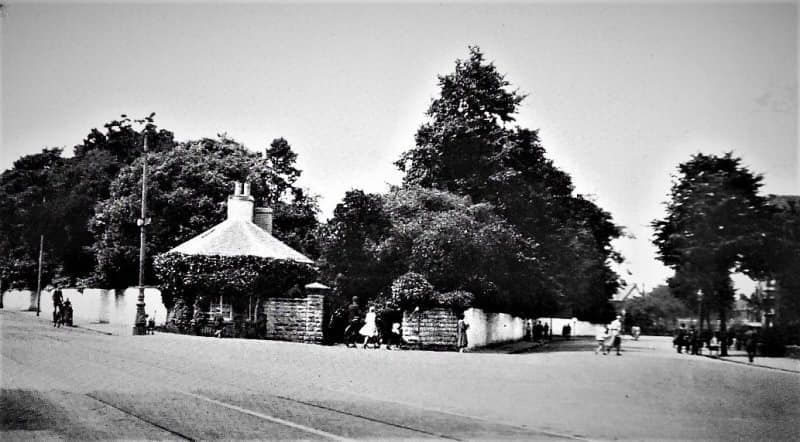
Roath Court lodge at the junction of Albany Road and Newport Road. The loge was purchased by the council in 1936 and later demolished as part of a road widening scheme.











 Roath Local History Society