
For casualties whose surnames begin with other letters of the alphabet please visit the main Roath Virtual War Memorial page.
IVOR LLEWELLYN DADDS
Second Lieutenant, Inland Water Transport, Royal Engineers
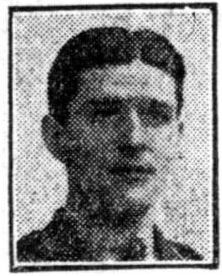
Ivor Llewellyn Dadds was born on 19 Feb 1887 in Cardiff to Samuel Llewellyn Dadds, a solicitor’s clerk and estate agent originally from Merthyr Tydfil and Elizabeth Dadds nee Davies originally from Canton, Cardiff. In 1891 the Dadds family were living at Oxford House, near Ely Rise, Canton. Ivor attended Radnor Road school before going onto Howard Gardens school in 1900. After leaving school in 1903he went on to become an engineer. In 1901 the Dadds family had moved to 304 Cowbridge Road and a few years later to Barry where Ivor trained as a marine and civil engineer. Ivor does not appear in the 1911 census, maybe away working somewhere. In 1915 he is aboard the steamship Frisia on route to Brazil recording his profession as engineer. He returns home and enlists with the Royal Engineers, Inland Water Transport division. The Dadds family were at this time living at 37 Park Place, Cardiff. He was made a temporary 2nd Lieut in Dec 1916. He served in Mesopotamia and died on 17 Jul 1917 aged 30. The newspaper reports that he died of heat exhaustion. He is buried at Basra War Cemetery (grave IV. D. 6.) in modern-day Iraq. He was remembered on a couple of war memorials in Cardiff; the Howardian War Memorial and a church memorial plaque currently of unknown origin but believed to be the Adamsdown/Splott area. Similarly his name appears on a Roll of Honour of unknown origin. Why his name appears on the church plaque is a bit of a mystery given he didn’t appear to live in the area. Commonwealth War Graves Commission record.
THOMAS LOUIS DANCER
Private, 1075th Mechanical Transport Company, Army Service Corps (Service Number: M2/188943)
Thomas ‘Tom’ Louis Dancer was born in Llanishen, Cardiff on 21 Nov 1897 to Thomas Louis Dancer, a hotel proprietor/publican originally from Maryleborne, London and Emily Jane Dancer nèe Trenberth, a bookbinder, originally from Dulwich, London. His father at the time was managing the Church Inn, Llanishen. In 1901 the Dancer family lived at the Adelphi Hotel, Bute Street. It appears the family then moved to Merthyr as Tom attended Abermorlais Elementary School before returning to Cardiff and living at the Crown Hotel, Bute Street in 1911 and attending Howard Gardens School and afterwards Blogg’s private school, Greyfriars Road. He was a Sever at St Mary the Virgin church, Bute Street. We also know from a newspaper report that he once fell into the Glamorganshire Canal and was rescued by his younger brother Willie. In WWI he served with the 1075th Mechanical Transport Company (Motor Ambulance Convoy Company), Army Service Corps and was later attached to the 9th London Regiment (Queen Victoria’s Rifles). He served for a short time with the RAF between Oct and Dec 1917 before returning to the ASC. He was killed in action on 20 Aug 1918, aged 20, on the Western Front. He has no known burial place but is remembered on the Vis-en-Artois memorial, France. He is also remembered on the Howard Gardens War Memorial plaque. Commonwealth War Graves Commission record. His younger brother, William Hector Trenberth Dancer, born 6 May 1899, joined the 1st Glamorgan Fortress Royal Engineers (Territorial Force) in 1913 on his 14th birthday and volunteered for the front on the outbreak of war, claiming to be the youngest Welsh Territorial at the Front. During the war his parents moved to manage the British Volunteer Hotel in The Hayes, Cardiff where they lived for the next 30 years, Thomas Dancer becoming vice-president of the Cardiff Licensed Victuallers Association.

THOMAS GEORGE DANIEL
Lieutenant, 22nd Battalion, attached to 19th Battalion, Royal Welsh Fusiliers
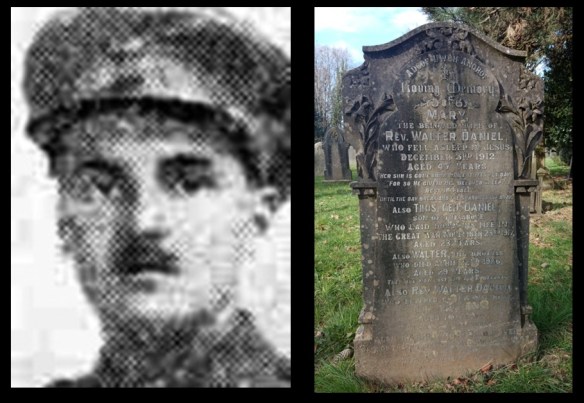
Thomas George Daniel was born on 8 Jul 1894 in Barry Dock to Walter Daniel, a Calvinistic Methodist Minister, originally from Tregaron, Cardiganshire and Mary Daniel nèe Davies, originally from Tonyrefail Glamorgan. At the time of the 1901 and 1911 census the family were living at 81 Splott Road and Rev Walter Daniel was the minister at Jerusalem Welsh Calvinistic Methodist chapel on Walker Road, Splott. Thomas George Daniel attended Splott Road Elementary School before moving up to Howard Gardens High School and then won a Craddock Wells scholarship to go to Cardiff University. His ambition was to become a preacher like his father. His mother passed away in 1912 and the family moved to Trehafod, Pontypridd. He enlisted in Sep 1914 and joined the Public Schools Battalion and was at Epsom for several months, then he went to Mansfield and from there he went to France. After having been at the front for some months he came back for his commission. He did his training at Oxford, where he spent some months. He left Oxford for Kimnel Park as Second Lieutenant and was placed in the same battalion as his brother Walter, that is the 19th. He went to France a little before his brother and had not been long there before he was made full Lieutenant. He had been head of a Training School in France for over a year. In the last big push he had to join his battalion. He had gone through the attack safely and was on his return to brigade headquarters when he was killed in action on 23 Nov 1917, aged 23. He has no known burial place but is remembered on the Cambrai Memorial in France. He is also remembered on the Howard Gardens War Memorial plaque, the Cardiff University War Memorial and the Pontypridd War Memorial as well as his parents’ headstone in Cathays Cemetery (grave S2778b). Commonwealth War Graves Commission record.
ALBERT DAVEY
Private, 101st Battalion, Machine Gun Corps (Infantry), (Service Number: 53460)
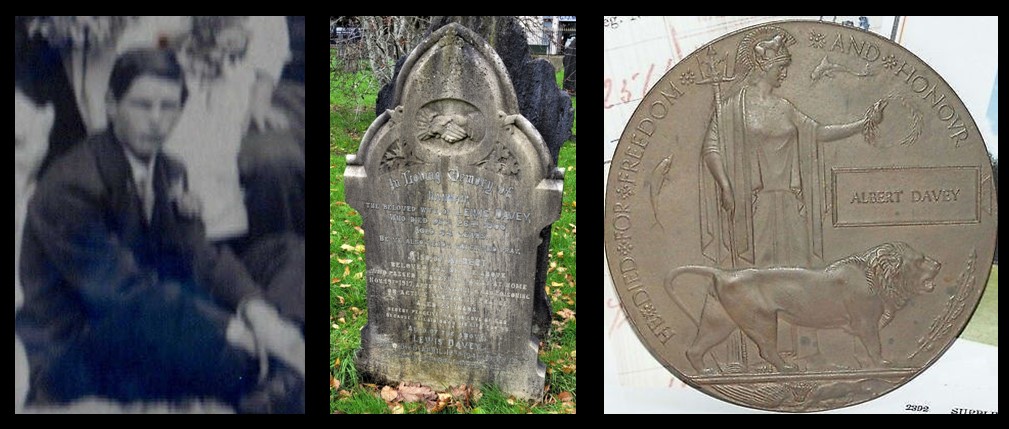
Albert Davey was born in Machen, Monmouthshire in 1892, one of ten children born to Lewis Davey, a tin plate worker and later a coal trimmer and Hannah Davey, née Rowlands, both originally from Machen. The family moved to Cardiff around 1895 and were living at 118 Railway Street in 1901 and 40 Moorland Road in 1911 when Bert worked as a railway porter. He enlisted in Jun 1915 and served with the 101st Battalion, Machine Gun Corps. He was discharged in Aug 1917 after suffering gas poisoning. Bert died at home on 19 Nov 1917 from bronchopneumonia aged 25. He is buried in Cathays Cemetery alongside his parents (plot Y806). Commonwealth War Graves Commission record. His brothers Harold and Alfred also died in WWI. All three Davey brothers are remembered on Splott Road Baptist Church war memorial and the Splott War Memorial outside St Saviour’s church.
ALFRED DAVEY
Private, 11th Battalion, Welsh Regiment (Service Number: 26571)
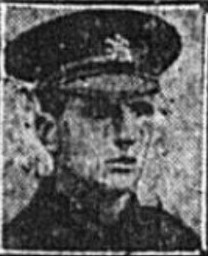
Alfred Davey was born in Machen, Monmouthshire in 1894, one of ten children born to Lewis Davey, a tin plate worker and later a coal trimmer and Hannah Davey, née Rowlands, both originally from Machen. The family moved to Cardiff around 1895 and were living at 118 Railway Street in 1901 and 40 Moorland Road in 1911 when Fred worked as a pulley and block maker. In WWI Fred served as a Private with the ‘Cardiff Pals’ 11th Battalion, Welsh Regiment. He first served in France in Sep 1915 before moving to the Balkans. He was killed in action on 18 Sep 1918 aged 25 in Salonika. He has no known grave but is remembered on the Doiran Memorial, Greece. Commonwealth War Graves Commission record. His brothers Harold and Albert also died in WWI. All three Davey brothers are remembered on Splott Road Baptist Church war memorial and the Splott War Memorial outside St Saviour’s church.
EDITH MAUD DAVEY
Civilian Casualty
Edith Maud Davey was born Edith Maud Lewis on 25 Mar 1894 to William John Lewis, a railway labourer and Ada Elizabeth Lewis née Hawkins, both originally from Cardiff. The Hawkins family lived at 26 Comet Street in 1911 and Edith worked as a restaurant waitress. She married William Charles Davey, (see below) in Roath parish church (St Margaret’s) Cardiff on 25 Sep 1915. At the time of her marriage she was living at 5 Spring Gardens Terrace. They had one son, Trevor William Charles Davey born in 1921. She was killed on 18 May 1943 aged 43 when a German bomb fell killing her at 8 Pen-y-lan Road. Her husband died of his wounds from the raid the following day. She is buried at in an unmarked grave at Cathays Cemetery (plot EI 4). Commonwealth War Graves Commission record.
HAROLD DAVEY
Private, 1st Battalion, Honourable Artillery Company (Service Number: 9444)

Harold Davey was born in Cardiff in 1898, one of ten children born to Lewis Davey, a tin plate worker and later a coal trimmer and Hannah Davey, née Rowlands, both originally from Machen, Monmouthshire. The family were living at 118 Railway Street in 1901 and 40 Moorland Road in 1911. Prior to the war Harold worked as a clerk. He enlisted in Cardiff in Jun 1916 aged 18 and served as a Private in the 1st Battalion, Honourable Artillery Company. He was in hospitalised with trench foot in Oct 1917. He died in France on 20 Nov 1918 of bronchopneumonia, aged 20, just a few weeks after the war ended. He is buried at Etaples Military Cemetery, France (plot L. E. 30.). Commonwealth War Graves Commission record. His brothers Albert and Alfred also died in WWI. All three Davey brothers are remembered on Splott Road Baptist Church war memorial and the Splott War Memorial outside St Saviour’s church.
WILLIAM CHARLES DAVEY
Civilian Casualty
William Charles Davey on 19 Nov 1893 at 59 Albert St, Canton, Cardiff to Charles Davey, a labourer, originally from Stoke Abbot, Dorset and Elizabeth Davey née Salter, originally from Wiveliscombe, Somerset. He was christened on Dec 13 in Canton. In the 1911 census, William is living at home with his parents in Harpur Street, central Cardiff and working as a hairdresser. He married Edith Maude Lewis (see above) in Roath parish church (St Margaret’s) Cardiff on 25 Sep 1915. At the time he married he was a soldier but we know no details of his military career. They had one son, Trevor William Charles Davey born in 1921. In 1939 the family are living at 8 Penylan Road and William working as a hairdresser in the shop below. He was killed on 19 May 1943, aged 49, after a German bomb fell on their house at 8 Pen-y-lan Road killing his wife Edith. He died of his wounds from the raid the following day at the infirmary. They are buried at in an unmarked grave at Cathays Cemetery (plot EI 4). Commonwealth War Graves Commission record.
THOMAS WILLIAM DAVID
Captain, 4th Battalion, Welsh Regiment
Thomas ‘Tom’ William David was born in Cardiff on 6 Aug 1891 to George David, a solicitor and the Official Receiver in Bankruptcy for Cardiff, originally from Pwllheli, Caernarvonshire and Annie Florence David née Jordon, originally from Newport, Monmouthshire. Thomas was baptised at St German church on 27 Aug 1891 and the David family lived at 126 Newport Road. Tom went to school at Arnold House, Knutsford, Cheshire before going on to study law at Keble College, Oxford. He was a good sportsman, playing rugby and cricket for his college and also cricket for both Cardiff and for Glamorgan Cricket Club. He obtained a commission as 2nd Lieutenant on 3 Nov 1914, was promoted Lieutenant on 3 Nov 1916 and Captain on 19 Jul 1917. He undertook training of recruits at Pontypridd and served with the Expeditionary Force in France and Flanders from 22 Feb 1917, being attached to the 15th Battalion, Welsh Regiment. Tom was killed in action on the Yser Canal, north of Ypres on 27 Jul 1917 aged 26. He is buried in Bard Cot Cemetery, Canal Bank, north of Ypres, Belgium (Grave III.G.31). His Commanding Officer wrote: ‘A German aeroplane with British colours dropped very close over the trench, lit a signal, and directed the German shell fire into the trench in which your brother was killed. He will always linger in our memories, and none of us will ever forget a good officer and a brave gentleman.’ He is remembered on the war memorials at St German church and Keble College, Oxford and Glamorgan Cricket Club Roll of Honour. Commonwealth War Grave Commission record.

ARTHUR DAVIES
Private,7th Battalion, Welsh Regiment (Service Number 1408)
Arthur Davies was born on 26 Sep 1895 in Cardiff to Philip Henry Davies, a clerk originally from Maesycwmmer, Monmouthshire, and Charlotte Sophia Davies née Elias, originally from Abercarn, Monmouthshire. In 1901 the Davies family lived in Diana Street. Arthur attended Albany Road school and in 1905 represents the school at the city school sports day. In 1907 he goes on to attend Howard Gardens secondary school. His father died in Jun 1910 leaving Arthur, the oldest of four children who leaves school in Jan 1911 and works as an office boy at Bute Dry Dock. By 1914 the family had moved to 33 Roath Court Road. He enlisted in the 7th Cyclists Battalion Welsh Regiment. It is unclear what service he saw as his records have not survived. He died at home on 13 May 1915 of sarcoma (cancer) of the face. He is buried in a family grave at Cathays Cemetery (plot B 663). He is remembered on the Howardian war memorial plaque now housed at Howardian Primary school. Commonwealth War Graves Commission record.

DAN DAVIES
Captain, 10th Battalion, Welsh Regiment
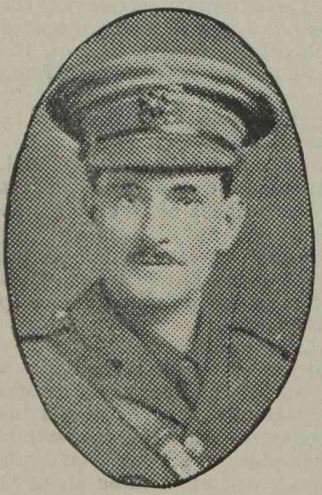
Daniel Davies was born in 1885 in Llanelly, Carmarthenshire to Herbert Davies, a commercial traveller, originally from Talley, Carmarthenshire and Mary Davies née Jones also from Talley. At the age of 15 he was already working as a print compositor. In 1897 he married Ellen Ann David in Llanelly. In 1901 we find Dan living with his elder brother William Davies in St John’s Crescent, Canton. Dan Davies worked as a linotype operator at the Western Mail. His bother William Davies was editor of the Western Mail and was later Knighted. In 1911 Dan and Ellen were living at 169 Inverness Place, Roath. They had nine children together, four of whom died in infancy. He enlisted with the Kings Royal Rifles at the outbreak of WWI but soon transferred to the Welsh Regiment where he was a machine gun officer. He had been in the territorial’s and was renowned for his excellent shot. At Mametz Wood half his men fell. He had good fortune for a time with one day a bullet grazing his hand and another day a bullet taking the skin off his nose. He was invalided home at one stage but later returned to the front. He died on 10 Sep 1917 aged 42 at the 131 Field Ambulance station in Belgium from wounds received in action. He is buried at the Bard Cottage Cemetery in Belgium (grave IV.H.1). The Western Mail published his last letter home, written two days before he died and describes capturing two German soldiers and having his Cook, who spoke German, question them. His obituary said he would be much missed in Welsh football circles. His son Horace Dudley Davies served in the Welsh Guards in WWI. Commonwealth War Graves Commission record.
DAVID DAVIES
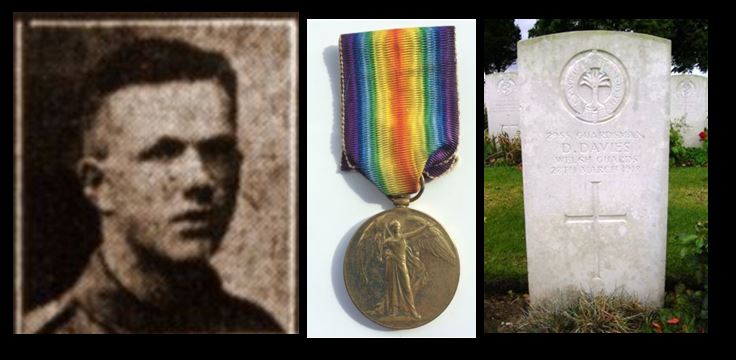
Private, 1st Battalion, Welsh Guards (Service Number 2955)
David Davies was born in 1898 in Cardiff to Joshua Davies, a ship’s carpenter, from Cardiff and Louisa Davies nee Gould originally from Chilcompton, Somerset. The Davies family lived at 4 Wimborne Street, East Moors. Before the war David was an employee of the Gloucester Wagon Works Company and was goalkeeper for the Moorland Road Boy’s Football team. David Davies was a Private in the 1st battalion Welsh Guards. He died of wounds received in action on 28 Mar 1918 aged 20 and within 24 hours of his brother Joshua who was in the merchant navy. Their mother learnt about the tragic loss of her two sons on the same day. He is buried in the Cabaret-Rouge British Cemetery in the village of Souchez, France (grave VIII. Q. 13.). He is remembered on the Splott War Memorial at St Saviour’s church. Commonwealth War Graves Commission record.
DENNIS DAVIES
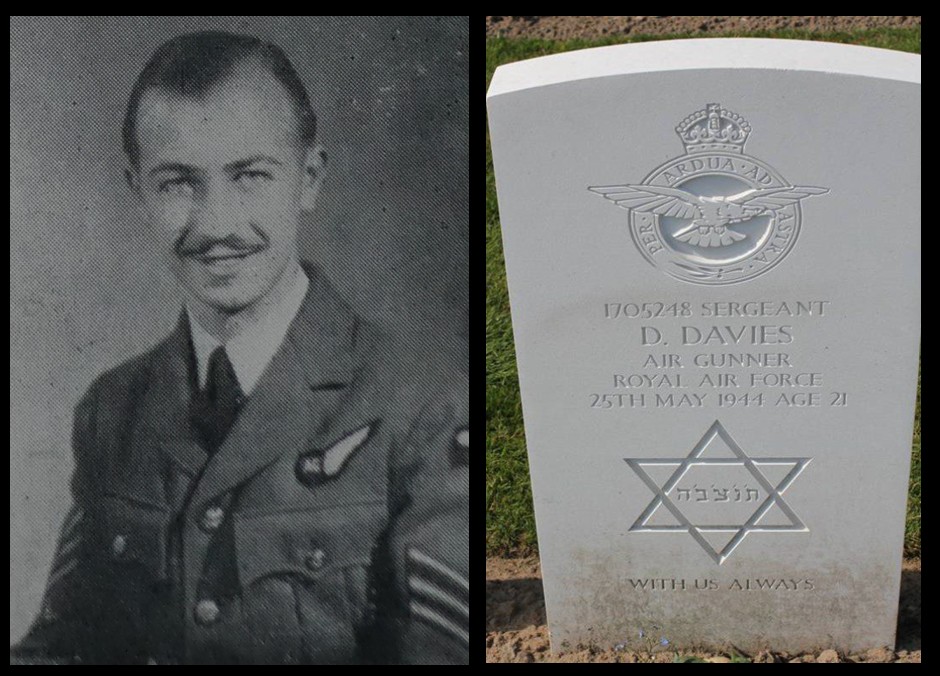
Sergeant, 158 Squadron, Royal Air Force Volunteer Reserve (Service Number: 1705248)
Dennis Davies was born on 10 Sep 1922 in Cardiff (registered at birth as Denis) to Mark Davies, who worked as an agent for a clean towel company and later as a tobacconist and Edith Alice Davies née Caldwell, both originally from Manchester. In 1939 Dennis was working as traveller (general fabrics) and living at Melrose Court, Penhill Road, Llandaff with his father. He later lived at 12 Insole Grove East. In WWII he served as a Sergeant with the Royal Air Force Volunteer Reserve. He was killed on 25 May 1944, aged 21. He was a rear gunner on a Halifax Mk III which had taken off from RAF Lissett, Yorkshire and intercepted and shot down at night 30 km north of Aachen. Three of the crew were killed and the other four taken prisoner. He is buried at Rheinberg War Cemetery (grave 11.C.21). He is remembered on a memorial at the Cardiff United Synagogue. Commonwealth War Graves Commission record.
GEOFFREY DAVID DAVIES
Lieutenant, 18th Battalion, Welsh Regiment
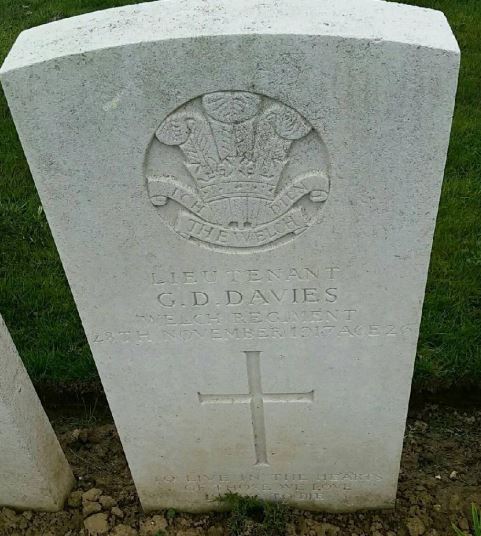
Geoffrey David Davies was born on 15 Jul 1891 in Dinas Powys to Owen William Davies, a slate merchant and Marion Jones, daughter of Cardiff Mayor Alderman David Jones. Geoffrey attended Albany Road School and then Howard Gardens School for a number of years (but he is not remembered on their war memorial plaque). The Davies family were living at 21 Dumfries Place in 1901 and at 23 Gordon Road in 1911. After leaving school Geoffrey worked as a clerk in the income tax office. He was initially a Private in the Glamorgan Yeomanry before becoming a Lieutenant in the 18th Battalion Welsh Regiment serving with the 119th Brigade of the Trench Mortar Battery. He died of wounds received in action at Bourlon Wood, part of the Battle of Cambrai, on 27 Nov 1917 in France aged 26. He is buried at the Rocquigny-Equancourt British Cemetery (Plot V.B.2). He is remembered on the Bethany Baptist Church memorial plaque. Commonwealth War Graves Commission record.
IVOR WILLIAM DAVIES
2nd Steward, S.S.Mattawa
Ivor William Davies, born 14 Jan 1894 in Cardiff, to John Daniel Davies, a print compositor, originally from Cardiff and Mary Davies nee Jones originally from Newport. He attended Albany Road primary school. In 1911 the Davies family were living at 30 Glenroy Street and Ivor was working as a clerk in a bonded store. Ivor William Davies died in the Colonial Hospital, Gibraltar, on 14 Mar 1919 aged 28. He died of Bright’s disease, a historical classification of kidney diseases that would be described in modern medicine as acute or chronic nephritis. He had been serving as 2nd Steward aboard the S.S.Mattawa, a Liverpool based cargo ship that was lost in WWII after being hit by a torpedo. He is remembered on the Woodville Road Baptist church war memorial plaque where his parents had been members for the previous twenty years. He does not appear to have a Commonwealth War Graves Commission record.
JOHN LLEWELLYN DAVIES
Major, 11th Battalion, Essex Regiment
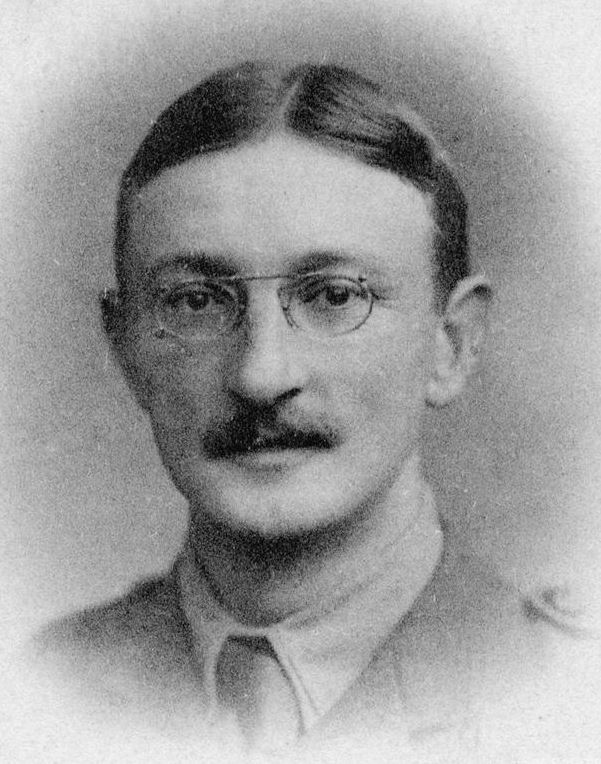
John ‘Jack’ Llewellyn Davies was born in St Ishmael, near Ferryside, Carmarthenshire on 10 Sep 1879 to David Jones Davies, a schoolmaster, originally from Llanarth, Cardiganshire and Catherine Davies nee Davies originally from St Ishmael. John was bought up in Neath where his father taught at Alderman Davies School and John also attended. After leaving school he went on to study chemistry at Aberystwyth University and then Emmanuel College, Cambridge. On leaving Cambridge, John went as lecturer to Carmarthen Training College (Trinity College) for a short period, and subsequently became science master at the Perse School, Cambridge. As well as having a passion for science, John Llewelyn Davies was dedicated to the military. Whilst teaching in Cambridge he spent seven years as a Lieutenant in the Officers Training Corps. When the war broke out he gave up his post at Perse School and joined the 11th Essex Regiment as Captain of A Company. In April 1915 he was promoted to the rank of Major. In May he was appointed as Headmaster of Cardiff High School. It was agreed that he would take up his post when the war was over. On 17th August 1915 he was married to Isabel Christina Jessie Fraser B.A. in Wrexham. Christina, a teacher, worked at the Training College in Bingley, Yorkshire. On 30 August 1915, just thirteen days after he was married, John Llewelyn Davies and his battalion landed at Boulogne, and proceeded to positions at Loos. On 25th September 1915, Major John Llewellyn Davies was wounded on the first day of the battle of Loos in France, one of the bloodiest battles of WWI where 60,000 British soldiers perished. It appears he may well have been taken a prisoner of war as he died in hospital in Wessel, Germany at a later date although his date of death is officially given as 25 Sep 1915. He was aged 36. One of his fellow officers wrote “He was very much a fine soldier and all had such implicit confidence in him. He was so capable and absolutely to be relied upon. The regiment feels very much his loss for he was one of the ablest officers”. He is commemorated on the Loos Memorial to the Missing, Dud Corner, France. He is also commemorated on war memorials in Aberystwyth University; Emmanuel College Cambridge; Perse School Cambridge; and the Royal Society of Chemistry, Burlington House, London as well as the Cardiff High School war memorial. Commonwealth War Graves Commission record. More information on John Llewellyn Davies is contained in our blog ‘The Cardiff Headmaster who never was’.
JOSHUA SIMEON DAVIES
Steward, Mercantile Marine, S.S. “T. R. Thompson”
Joshua Simeon Davies was born on 31 Aug 1888 in Cardiff to Joshua Davies, a ship’s carpenter, from Cardiff and Louisa Davies nee Gould originally from Chilcompton, Somerset. He was baptised at St German’s church in Adamsdown on 2 Oct 1890 and at one time attended Grangetown Elementary and Junior School. He married Elizabeth Ann Bryant in 1906 in Cardiff. They had three children together; Alice (b.1906), Joshua (b.1908) and Beatrice (b.1910) and lived in Barry. In WWI he served as a steward on board the S.S. ‘T.R. Thompson’. He drowned on 29 Mar 1918 aged 31 when the T.R.Thompson was torpedoed off the coast of Sussex by U-Boat 57. The SS T.R.Thompson was on voyage from Benisaf, Algeria to Middlesbrough with 5600 tons of iron ore. It was sunk seven miles south of Newhaven with the loss of 33 lives. Three people survived. His brother David died the previous day whilst serving on the Western Front. Their mother received the news that her two sons had died on the same day. Joshua is remembered on the Tower Hill Memorial for merchant seamen and Barry Merchant Navy Memorial created in 1996. Commonwealth War Graves Memorial record.
THOMAS JOHN CANTON DAVIES
Private/Aircraftman, Royal Air Force (Service Number: 234661)
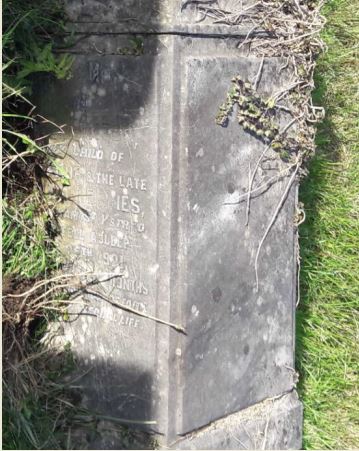
Thomas John Canton Davies was born on 21 Mar 1899 in Ystradyfodwg, Rhondda Valley, the only child of William Davies, a coal miner originally from Roch, Pembrokeshire and Eleanor Davies nee Canton originally from Llan Mill, Pembrokeshire. In 1911 the Davies family were living at 112 William Street ,Ystrad. When he enlisted in the Royal Navy Air Service on 1 Aug 1917 he gave his occupation as a school teacher. His records appear to show he was based with Squadron A at Dunkirk. He transferred to the RAF on 1 Apr 1918. He was medically discharged on 13 Feb 1919 with his disability quoted as nephritis (kidney disease). He died on 21 Oct 1921 at Clyne House Red Cross Hospital, 132 Newport Road, Cardiff aged 22 with the cause of death on his death certificate stated as chronic nephritis (3 years). His mother Eleanor was present at his death. He is buried at Trealaw Cemetery. He is remembered on the Red Cross Memorial at St Edward church, Pen-y-lan, Cardiff.
WILLIAM NORMAN DAVIES
Private, 15th Battalion, London Regiment (Prince of Wales’ Own Civil Service Rifles) (Service Number: 6139)
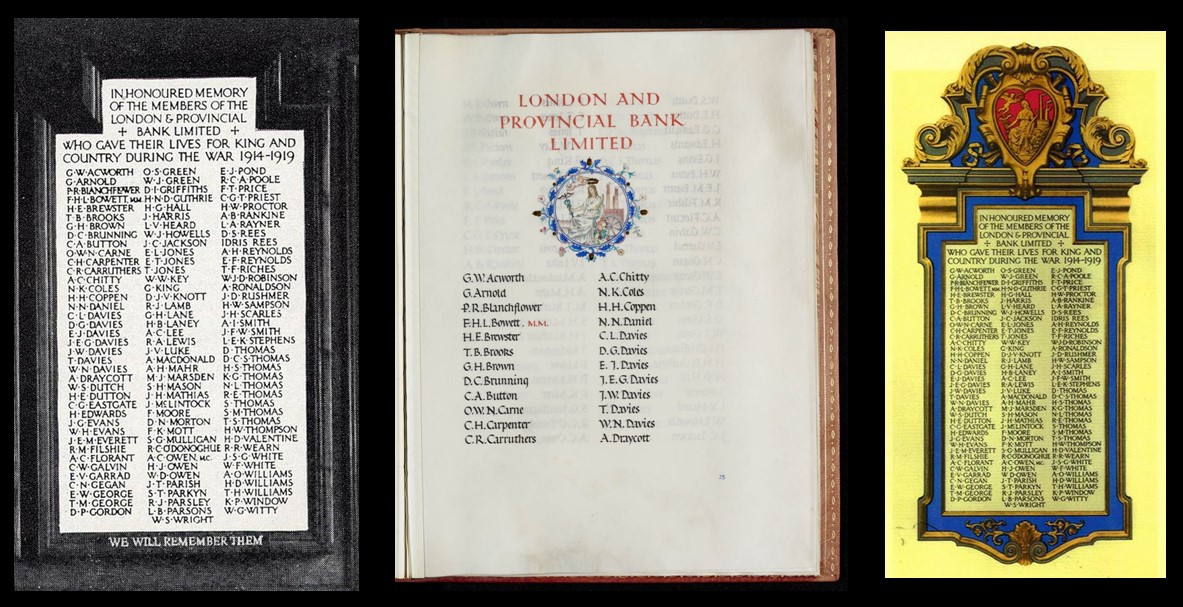
William Norman Davies was born on 7 Feb 1894 in Cardiff to Thomas Davies, a tailor, originally from Camrose, Pembrokeshire and Mary Ann Davies née Quick, originally from Rhymney, Monmouthshire. In 1901 the family were living at 36 Ninian Road. Norman entered Cardiff High School in Sep 1906. In 1911 they were living in the Lake Road East area and William was working as a student in an accountancy business. He later moved to Essex and worked for the London and Provincial Bank (later called Barclays Bank). When he volunteered, he was living in Westcliff-on-Sea, Essex. He enlisted in London and joined the 12th (Reserve) Battalion Essex Regiment. He was later attached to the 2/20th Battalion London Regiment which embarked from Southampton for France on 26 Jun 1916. On 12 Jul, the battalion took over trenches near Neuville Saint Vaast. Private William Norman Davies was killed in action on 30 Jul 1916. He was 22. He is buried near Neuville Saint Vaast at Ecoivres Military Cemetery, Mont-St. Eloi, Pas de Calais, France. He is commemorated on the Roath Park Wesleyan Church war memorial, the Cardiff High School Memorial and the London and Provincial Bank Ltd memorial/roll of honour. Commonwealth War Graves Commission record.
EVAN DEERE
Second Engineer Officer, S.S. Bradglen (Bideford), Merchant Navy
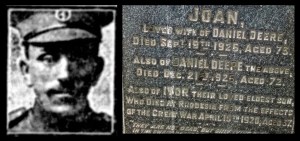
Evan Deere was born on 26 Dec 1888 in Cardiff to Daniel Deere, a railway engine driver, originally from St Athan, Glamorgan and Joan Deere nèe David, originally from Pyle, Glamorgan. In 1891 the Deere family had moved to live in Taff Street, Cowbridge, before they returned to Cathays and lived at 55 Coburn Street in the 1901 census. Evan attended Gladstone Primary School before moving up to Roath Park School. After leaving school he became a Marine Engineer and worked for John Cory & Sons. On 17 Aug 1917 be married Mary Isabel Nicholls at St Mark’s, Gabalfa when he was living at 93 Richards Street, Cathays. They moved to Penarth and lived on Plymouth Road and had two sons together; Denis Peters Deere, b.1918 and David Keith Peters Deere b. 1923. Evan died on 19 Sep 1941, aged 52, when the ship he was serving on S.S. Bradglen hit a mine off Harwich on passage from North America to London with a cargo of steel, resin and turpentine. She sunk with the loss of 9 crew. Evan is remembered on the Tower Hill Memorial for merchant seamen. Commonwealth War Graves Commission record. His son, Able Seaman Denis Peters Deere, also died in WWII, as a prisoner of war in the Far East on 11 Apr 1945 having been held for 3 years after HMS Exeter was sunk.

IVOR DEERE
Private, South African Infantry (Service Number: 14057)
Ivor Deere was born in Cardiff on 28 May 1882 to Daniel Deere, a railway engine driver, originally from St Athan, Glamorgan and Joan Deere, nèe David, originally from Pyle, Glamorgan. In Sept 1889 Ivor started at Crwys Rd School when the family lived at 19 Fitzroy St, Cathays. At the time of the 1891 census the Deere family were living in Taff St, Cowbridge but by 1901 had returned to Cathays and were living at 55 Coburn St and Ivor working as an engine fitter. In 1907 in Cardiff he married Edith May Williams, originally from Great Malvern, Worcestershire. In the 1911 census they are living at 19 Trinity St, Barry with Ivor working as a locomotive fitter for Barry Railway. Ivor then moved to Rhodesia and worked as an engineer for Umtali Railways and Mashonaland Railways. In Mar 1917 he joined the South African Infantry and was trained in England before going to France. He was severely injured in his legs in Oct 1917 at Ypres and returned to hospital in Richmond, England for treatment. He was invalided out of the army and on the SS Galway Castle returning to Africa when it was torpedoed in Sept 1918 approximately 160 nautical miles South-West by West of Fastnet. The SS Galway Castle limped back to port but with the loss of 143 lived. Ivor Deere later returned to Rhodesia and died in Umtali Hospital of peritonitis on 15 Apr 1920, aged 37. He has no Commonwealth War Graves Commission record but he is remembered on his parent’s headstone at Cathays Cemetery where it states he died ‘from the effects of the Great War’. His daughter Dorothy May Deere was born in Barry Dock in Jan 1919. His brother Evan Deere was a merchant seaman and was killed in 1941.
ELSIE MABEL DENMAN (SISTER TERESA)
Civilian Casualty
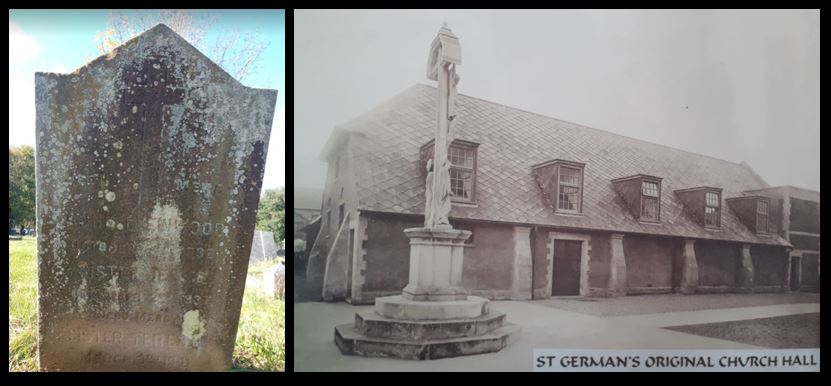
Edith Mabel Denman was born on 17 Jan 1910 in Copthorne, Surrey to James Denman, a forester, originally from Worth, Sussex and Keturah Elsie Denman née Barnett, originally from Alford, Surry. She joined the Society of St Margaret’s, an Anglican order of nuns centred in East Grinstead near where she grew up and adopted the name Sister Teresa. The Cardiff base for the nuns was originally St Teilo’s Priory near St Margaret’s church but they moved out of there in 1934. In 1939 Edith Denman is living with four other nuns at 56 Ruby Street. She lost her life on 3 Mar 1941 when a bomb fell on St German’s Church hall adjacent to the church, killing her, aged 31, and Ivy Sulley, aged 19. One recollection says they were sheltering in a Morrison shelter under the stage in the hall. Two other girls were rescued alive from the debris. Sister Teresa is buried at Cathays Cemetery, (plot EK687). She is remembered on the war memorial plaque in St German’s church. Commonwealth War Graves Commission record.
HENRY DESSINGTON
Pioneer, 3rd Provisional Company, Royal Engineers (Service Number: 119941)
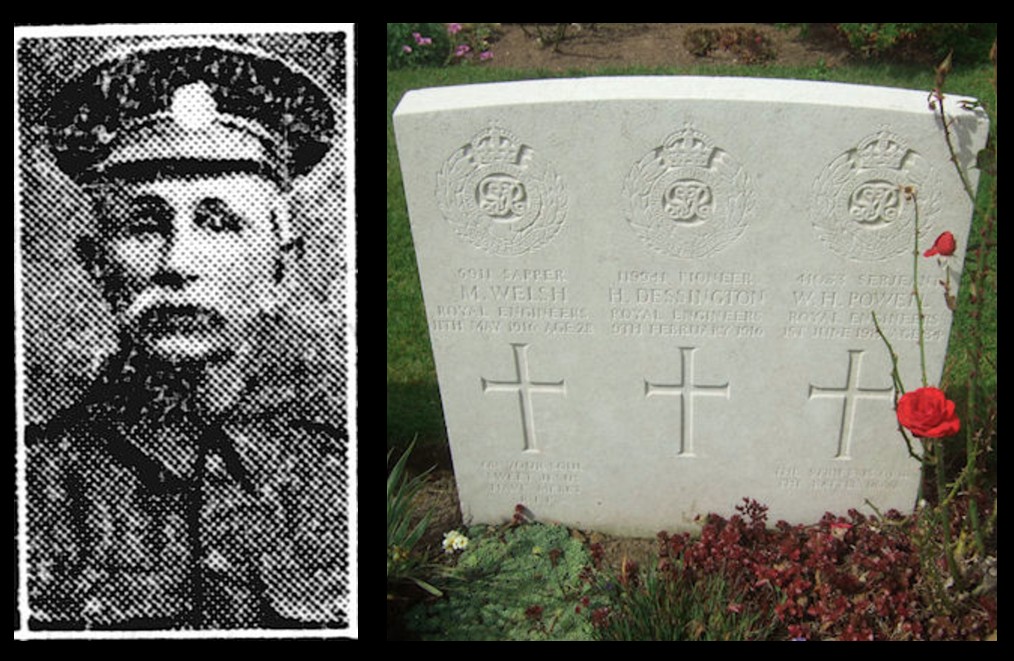
Henry Dessington was born Hans Anton Dissingthon in Oslo, Norway on 7 Jul 1859, son of Olaf Dissingthon, a fisherman from Hammerfest, Norway. Henry worked as a ship’s steward and later as a dock labourer and ship painter when he came to Cardiff. He married widow Eva Elizabeth Norman nèe Woods, originally from Bristol, in 1892, and they went on to have seven children together. In 1894 they lived at Brook Street, Riverside. Eva died in 1911. He remarried to widow Laura Wilkins nèe Jones on 26 Jun 1912 at St Mary the Virgin church. They lived at 38 Penarth Road. He was determined to fight in WWI despite being in his mid-50s. Henry initially enlisted in the Welsh Regiment in 1914, claiming to be 35, but was discharged as medically unfit. He then joined a Labour battalion in London, claiming this time to be 45 and left for the Western Front 24 Sep 1915. Henry transferred to the 3rd Provisional Company, Royal Engineers on 12 Dec 1915. He was wounded at Dickebusch and sent to hospital in Eastbourne. Pending discharge through medical unfitness, he was travelling on leave from St Mary’s Barracks, Chatham to Cardiff, when he fell out of the train near Sapperton Tunnel, Kemble Station, near Gloucester on 9 Feb 1916. He was 56 years old. He is buried in Cathays Cemetery (plot EB.26). Commonwealth War Graves Commission record. He is also remembered on the Grangetown War Memorial.
HERBERT EDWARD DICKS
2nd Steward, Merchant Navy on S.S. “Bayreaulx”
Herbert Edward Dicks was born in 1900 probably in 77 Alfred Street, Roath as that is where the family lived in 1901. His parents were Isaac John Dicks, a detective police sergeant, and Martha Jane Dicks née Young. Herbert Dicks joined the merchant navy and was 2nd steward aboard the S.S. Bayreaulx, which was a steam ship of 3009 tons operated by the Bay Steam Ship Company of Cardiff. He died, presumed drowned, on 20th October 1916 off the south coast of Ireland. The S.S. Bayreaulx had been travelling from Cardiff to Montreal carrying ballast, when she was intercepted and torpedoed by U63 under the command of Captain Otto Schulze. All 23 crew members were lost. He his remembered on the Tower Hill Memorial in London for Merchant Seamen. He was also remembered on the Mackintosh Institute roll of honour, now lost. The Commonwealth War Graves Commission record states his family address at the time as being 13, Diana Street, Roath.
ARCHIBALD DICKSON
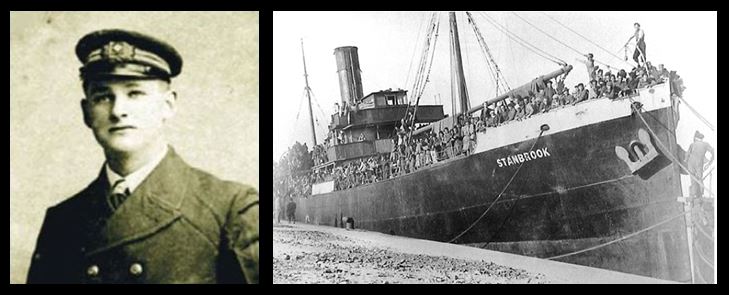
Master, SS Stanbrook, Merchant Navy
Archibald Dickson was born in Cardiff on 22 Jan 1892 to Robert Dickson, a stone mason, originally from Beer, Devon and Thirza Dickson née Hodges originally from Weston-super-Mare. He grew up in the Canton area. In 1907, at the age of 15, he joined the Merchant Navy and gained his First Mate certificate in 1913, aged 21. He served as a temporary Lieutenant in the Navy in WWI before being discharged in 1919. In 1925 we pick him up sailing to New York on board the Majestic. His profession at the time was Ship’s Officer and his address given as 9 Princes Street, Cardiff. He married Rebecca Phillips and they had three children together, one of whom sadly died in infancy. Archibald and Rebecca Dickson and his children lived at 77 Pen-y-Wain Road, Roath Park. During the Spanish Civil War he was Captain of the SS Stanbrook when in March 1939 he rescued 2600 refugees trapped in Alicante and took them to Oran, Algeria. Details of that rescue are detailed in our blog: Archibald Dickson – An Unsung Roath Hero. He was tragically killed later that year on 18 Nov 1939, aged 47, when the SS.Stanbrook was torpedoed in the North Sea on route from Antwerp to Newcastle. Archibald Dickson and 19 crew members were lost He is remembered on the Tower Hill Memorial for Merchant Seamen in London. Commonwealth War Graves Commission record.
EDWIN THOMAS DIGGORY
Quartermaster Sergeant, 1st/2nd Welsh Field Ambulance, Royal Army Medical Corps (Service Number: 845)
Edwin ‘Eddie’ Thomas Diggory was born on 9 May 1890 in Cardiff to Henry Richard Diggory, a railway clerk, originally from Hereford and Harriet Diggory nèe Shore, originally from Tredegar, Monmouthshire. In 1891 the Diggory family lived at 4 Tavistock Street, in 1901 at 3 Orbit Street, Adamsdown and in 1911 at 62 Longcross Street before then moving to 46 Albany Road. In 1904, at the age of 14, Eddie started work for Great Western Railway as a goods clerk. He was also a prominent member of the Marlborough Football Club. In WWI he served as a Quartermaster Sergeant with the 1st/2nd Welsh Field Ambulance, Royal Army Medical Corps. He entered the war in Egypt on 19 Jul 1915. He was killed in action on 20 Aug 1915, aged 25 when serving in Gallipoli, Turkey. The unit’s war diary states that ‘field ambulance peppered all day by shrapnel’. He is buried at the Hill 10 Cemetery, Turkey (plot I.C.3). He is also remembered on St Martin’s WWI War Memorial and the GWR Memorial at Cardiff Central station. Commonwealth War Graves Commission record.

HENRY GEORGE CHRISTOPHER DIMERY
Private, 21st Battalion, Manchester Regiment (Service Number: 51537)
Henry ‘Harry’ George Christopher Dimery was born at 134 Cairn St, Cathays in 1897 to Henry George Christopher Dimery, a wood machinist in a joinery works, originally from Cardiff and Mary Sarah Dimery nee Thomas originally from Newport. In 1901 the Dimery family were living at 71 Coburn Street and in 1911 they had moved to 25 Harriet Street, Cathays and later 46 Dogfield Street. On leaving school Harry worked as a reader at the Western Mail. Harry served with the 21st battalion, Manchester Regiment. The picture of Harry shows him wearing a Liverpool Regiment cap badge so maybe he served with them previously. In October 1917 Harry’s regiment was embroiled in bitter fighting at the battle of Passchendaele in Belgium, during which on the 4 Oct the battalion was involved in an operation to retake Polygone wood. The British army took nearly five thousand casualties that day and the 21 Manchester suffered 34 mortally wounded He was killed in action by a sniper on 4 Oct 1917 aged 21. Harry has no known resting place and is remembered at the Tyne Cot Memorial in Belgium. He is also remembered on the war memorial plaque at St Andrew’s and St Teilo’s church and on the Western Mail Ltd Roll of Honour. His family assembled and framed his medals as a tribute to their son. The framed collection is now on display that the Manchester Regiment museum in Ashton-under-Lyme, kindly donated by Ian Howell. Commonwealth War Graves Commission record.

VICTOR LEWIS DIMERY
Private, 1st Battalion, Welsh Guards (Service Number: 3489)
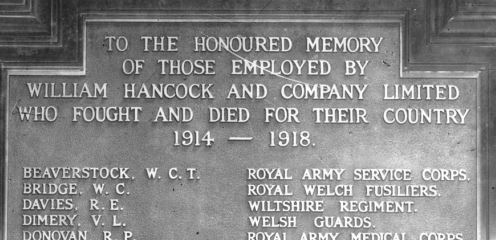
Victor Lewis (Louis) Dimery was born on 14 Feb 1881 in Cardiff to Henry George Christopher Dimery, a timber foreman originally from Berkeley, Gloucestershire, and Jane Elizabeth Dimery nee Partridge, originally from Stroud, Gloucestershire. The Dimery family lived at 84 Clifton Street in 1881 (probably where Victor was born) and at 51 Cecil Street in 1891 and 28 Longcross Street in 1901. Victor attended Stacey Road school and later Cardiff Technical School. In 1901 Victor was working as a spirit merchant clerk and in 1911 as a traveller for Hancock’s Brewery. He married Lily Constance Hopton in her home town of Newport in 1906. They went on to have two children, Doris Alice Jane Dimery (b.1908) and Lionel Hopton Dimery (b. 1914). In 1911 they lived 84 Mackintosh Place and later move to 5 Inglefield Avenue, Heath. Victor joined the 1st Battalion Welsh Guards but lost his life as a result of a gas attack. He died in a military hospital in France on 16 Apr 1918 aged 37. He is buried at the Etaples Military cemetery (grave XXIX. E. 5). Victor is remembered on the William Hancock memorial plaque (whereabouts unknown). His nephew Henry also fell in WWI. Commonwealth War Graves Commission record.
EDWARD DIMOND
Private, 2nd Battalion, Welsh Regiment (Service Number: 7971)
Edward Dimond was born in Cathays on 7 Sep 1884 to William Dimond, a blacksmith, originally from Taunton, Somerset and Susan Dimond née Jeanes, originally from Cardiff. In 1891 the family lived at 53 Hirwain Street, Cathays. Edward went to Crwys Road primary school followed by Crwys Road school for Boys. By 1901 the Dimond family had moved to 124 Cathays Terrace. In 1908 he married Beatrice Prosser from Bedwellty, in Cardiff. They went on to have four children together, three daughters and a son. In the 1911 census they were living at 4 Treherbert Street, Cathays, and Edward was working as a labourer for the signal department of Taff Vale Railways. In WWI he served as a Private with the 2nd Battalion Welsh Regiment. He entered into service on 13 Aug 1914. He was reported missing, presumed dead, on 31 Oct 1914. He has no known grave. He is remembered on the Ypres (Menin Gate) Memorial in Belgium. Commonwealth War Graves Commission record. His widow Beatrice later moved to Birmingham.
THEODORE GOTTLOB DREHER
Private, Labour Corps (Service number 128855)
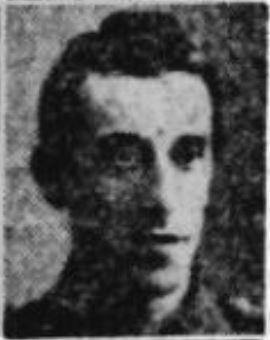
Theodore Gottlob Dreher was born on 2 Sep 1891 in Portishead, Somerset to Johann Gottlob Dreher, a watchmaker and jeweller and Maria Karoline Christiane Dreher nee Widmann, both originally from the Wurttemberg region of Germany. Johann and Maria emigrated to Britain soon after they were married in 1876 and their nine children were all born in the Bristol area, Theodore being the second youngest. His mother sadly died in 1895 when he was just four. Johann moved the family to Barry where he opened a jewellery business. Theodore won a scholarship to Barry County School in 1903. After leaving school he trained as a journalist at the Barry Dock News before joining the Western Mail in Cardiff. His father moved back to Portishead in 1910 but Theodore stayed in Cardiff. In 1911 he is a boarder in Gladstone Road, Barry. In the Western Mail he worked as a junior sub-editor and later as the Merthyr and Rhymney representative. He joined the army in the Army Service Corps in 1916 when he was living in Cathays. He also served with the Labour Corps. His health gave way early on and gradually grew worse but he wasn’t discharged until May 1919. He died in 18 May 1921 aged 29. He moved back to Portishead before he passed away from a ‘long and painful illness’. A report of his funeral in the paper stated it was attended by his fiancée Miss Doris Ayliffe from Cardiff. This is probably Eveline Doris Ayliffe, Sub Post-Office assistant, who lived at 74 Lisvane Street, Cathays and quite possibly where Theodore was living when he enlisted. He is buried in Portishead. He is remembered on the Western Mail Roll of Honour.
BETSY DRURY
Civilian Casualty
Betsy Otter was born in Lincoln on 15 Jan 1863 to John Otter, a joiner and carpenter, originally from Lincoln and Lavinia Otter nèe Blow, originally from Lincoln. In 1861, aged 18, Betsy was living with her parents in Grantham Street, Lincoln and working as a mantle maker. In 1885 she married Robert Drury, an auctioneer from Skellingthorpe, Lincolnshire. By 1811 they had moved to Cardiff, living at 8 St Mark Street, Riverside and Robert was working as a travelling carpet salesman. They had five children together including Robert Drury who was killed on the Western Front in WWI aged 29. In 1921 Betsy and her husband were living at 74, Paget Street, Grangetown. By 1939, Betsy, by now widowed, was living at 6 Talworth Street, Roath with her daughter Ethel. She was killed on 2 Jan 1941, aged 77, when a bomb landed on 6 Talworth Street killing her and two other residents of the same house, Lucy and Thomas Crayford. Betsy is buried in Cathays Cemetery (grave EK1751). Commonwealth War Graves Commission record.
ROBERT DRURY
Private, 1st Battalion, Lincolnshire Regiment (Service Number: 7001)

Robert ‘Bertie’ Drury was born in Lincoln on 6 Jul 1886 to Robert Drury, an auctioneer and carpet travelling salesman, originally from Gainsborough, Lincolnshire and Betsy Drury nèe Otter originally from Lincoln. In 1910 Bertie, aged 14, was living with his family at 27 North Marsh Road, Gainsborough and working as a fishmonger’s errand boy. By the time of the 1911 census he was serving with the 1st Battalion, Lincolnshire Regiment in India. When he returned home he joined his parents at their new address, 8 Mark Street, Riverside, Cardiff and he worked in the GWR Goods Department as a railway porter. He rejoined the 1st Battalion, Lincolnshire Regiment at the start of WWI and disembarked in France on 21 Sep 1914. He was killed in action on 4 Jun 1915 in Belgium, aged 28. Bertie has no known burial place. He is remembered on the Menin Gate Memorial in Belgium (panel 21). Commonwealth War Graves Commission record. He is also remembered on the Great Western Railway memorial plaque at Cardiff Central Station and the Grangetown War Memorial (his parent had moved to 74, Paget Street, Grangetown). His mother Betsy was killed in a bombing raid on Cardiff on 2 Jan 1941, aged 77, when living at 8 Talworth Street, Roath.
HARRY DUDDRIDGE
Private, 16th Battalion, Welsh Regiment (Service Number: 56512)
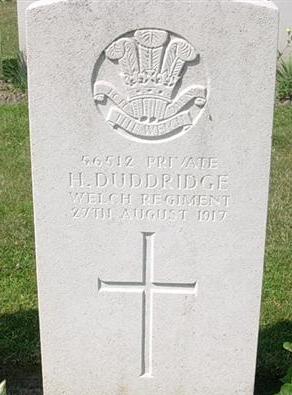
Harry Duddridge was born in 1897 in Cardiff to Joseph Duddridge, originally from Brompton Ralph, Somerset, a coal tip foreman at the Cardiff Railway Company, and Annie Duddridge née Hughes, originally from Plymouth. He was one of ten children. In 1901 the Duddridge family were living at 12 Edward Street in central Cardiff and by 1911 they had moved to 18 Kings Road, Canton. After leaving school he worked as a clerk at Spillers. Harry enlisted on 1 Feb 1915. He embarked for France at Southampton on 29 Jul 1916. He served with the 16th Battalion (Cardiff City) Regiment. Records show that he wrote home to his mother asking her to send his copy of Walter Scott’s Quentin Durward. He died 27 Aug 1917 aged 20 at the Battle of Passchendaele. He is buried at the Poelcapelle British Cemetery in Belgium (plot XXXIV. E. 19). His war records also show he was a Baptist by religion so we can assume that he is the Henry Duddridge on the Bethany Baptist war memorial plaque. Commonwealth War Graves Commission record
CLIFFORD MARTYN DUNN
Captain, 17th Battalion, Welsh Regiment
Clifford Martyn Dunn was born in 1892 in Cardiff, when the Dunn family were living at 108 Newport Road. He was born to John Tregerthen Short Dunn, a Stock and Sharebroker in shipping, originally from St Ives, Cornwall and Anna Maria Cecilia Dunn née Stallybrass, originally from Cardiff. By 1901 the Dunn family had moved to Radyr and in 1911 they were living at 74 Cardiff Road, Llandaff. By this time 18 year old Clifford was working as a clerk in the shipping industry. In WWI he became a Captain in the 17th Battalion Welsh Regiment and was twice mentioned in dispatches. He died on 24 Nov 1917 aged 23 on the Western Front in France. He is buried at the Anneux British Cemetery (grave I.E.31.). He is remembered on the Coal Exchange War Memorial plaque where he probably worked and a plaque at Llandaff Cathedral. Commonwealth War Graves Commission record.

THOMAS DUNN
Private, 1st Battalion, South Wales Borderers (Service Number 10869)
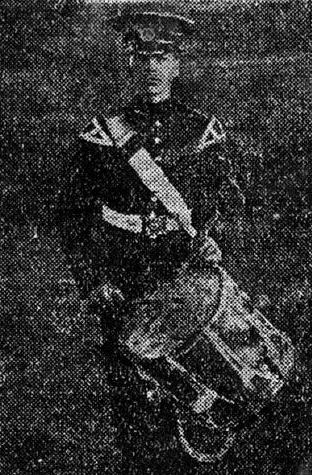
Thomas Dunn was born in Roath, Cardiff to Thomas Dunn, a dock labourer from Cardiff and Ellen Dunn née Crimmins, also from Cardiff. Before the war he worked as a mason’s labourer. He was killed in action in Vendresse, France on 26 Sep 1914. He is remembered on the La Ferte-Sous-Jouarre Memorial. His picture appears in the South Wales Daily News on 26 Oct 1914 captioned Cardiff Drummer Killed. His father is stated as being T Dunn, 9th Battalion, Welsh Regiment, whose home is at 33 Byron Street, Roath. It has not been possible to ascertain when Thomas Dunn was born. Commonwealth War Graves Commission record.
GEORGE THOMAS DUPE
Pioneer, No.1 Special Company, Royal Engineers (Service Number: 129758)
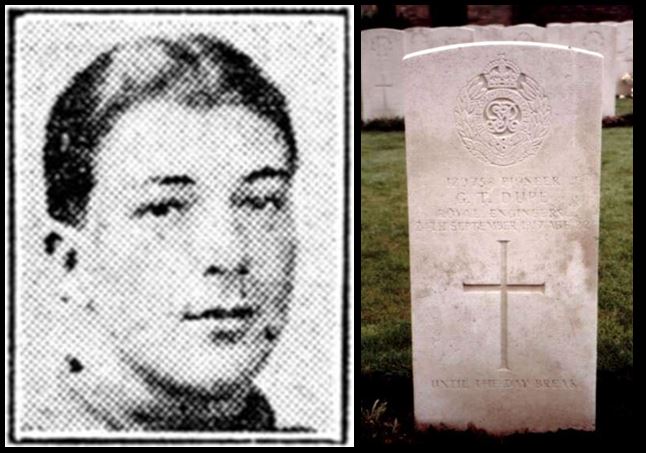
George Thomas (Tom) Dupe was born on 21 Sep 1895 in Cardiff to John Stowell Dupe, a wholesale tobacconist, originally from Evercreech, Somerset, and Mariah Hannah Dupe née Phillips. Tom was one of 12 children and in 1901 the family were living at 38 Moy Road. By 1911 they had moved to 279 Albany Road. Tom was baptised at St Margaret’s church, Roath on 9 May 1908 along with 7 of his siblings. After leaving school he was employed by Messrs Spillers and Bakers, the flour manufacturers. He served as a Pioneer in the Royal Engineers and was killed in action at the Battle of Passchendaele on 24 Sep 1917, aged 22. Tom was originally buried at the Oost Dunkerke Bains Military Cemetery before reburial at the Ramscappelle Road Military Cemetery in Belgium (plot VIII.A.3). He is remembered on the St Margaret’s War Memorial tower and the St Edward’s War Memorial plaque. Commonwealth War Graves Commission record.
JOHN DYCHE
Lieutenant, 8th Battalion, Royal Welsh Fusiliers
John Dyche was born on 6 Jul 1896 in Halifax, Yorkshire to William Dyche, a headmaster, originally from Ockbrook, Derbyshire and Annie Mary Dyche nèe Sirett, originally from Sowerby Bridge, Yorkshire. In 1901 the Dyche family were living at 18 Manor Drive, Halifax. By 1903 the family had moved to Cardiff and were living at 135 Albany Rd when John started Marlborough Road Elementary School. By 1907 he had moved up to Howard Gardens School, where his father was headmaster. By now the Dyche family were living at 36 Kimberley Rd. He remained at Howard Gardens School until 1913 when he left, having won a scholarship to go on to study Medicine at Cardiff University. On the outbreak of war he enlisted in the Royal Army Medical Corps and was attached to the 3rd Western General Hospital, Cardiff and acted as a x-ray orderly. He was granted a commission as Second Lieutenant with the 12th Battalion, Royal Welsh Fusiliers in 1915. He embarked on the ‘Royal George’ at Devonport and sailed for the Persian Gulf. He was wounded on 25 Jan 1917 and died of his wounds on 28 Jan 1917 in No 39 Field Ambulance in Mesopotamia, aged 20, when serving with the 8th Battalion. He is buried at Amara War Cemetery, Iraq. Amarah is 150 miles north of Basrah, Iraq. He is remembered on the Howardian War Memorial, the Cardiff University War Memorial, the Roath Park Wesleyan Church War Memorial, and the Borrowash Methodist Church War Memorial (where his father came from). Commonwealth War Graves Commission record. His medal card shows his father applied for him to have a 14 Star, awarded to those who served abroad in France or Belgium in 1914, but there is no indication it was awarded.

HARRY FRANK DYER
Second Lieutenant 1/6th Battalion Duke of Wellington’s (West Riding Regiment), 147th Brigade, 49th (West Riding) Division.
Harry Frank Dyer was born in Bridgnorth, Shropshire in 1886. He became assistant master at Cardiff High School till 1914 and lived at 83 Claude Road. He is remembered on the Cardiff High School Memorial plaque. Had moved away from Cardiff by the time WWI commenced and was at Giggleswick School, Yorks. He died 28th August 1917 aged 31 in northern France. A much more detailed biography of Harry Dyer, written by Gwyn Prescott, is given on the Cardiff High School war memorial page. Commonwealth War Graves Commission record.
EDWIN LEOPOLD ARTHUR DYETT
Lieutenant, Nelson Battalion, Royal Navy Division, Royal Naval Volunteer Reserve
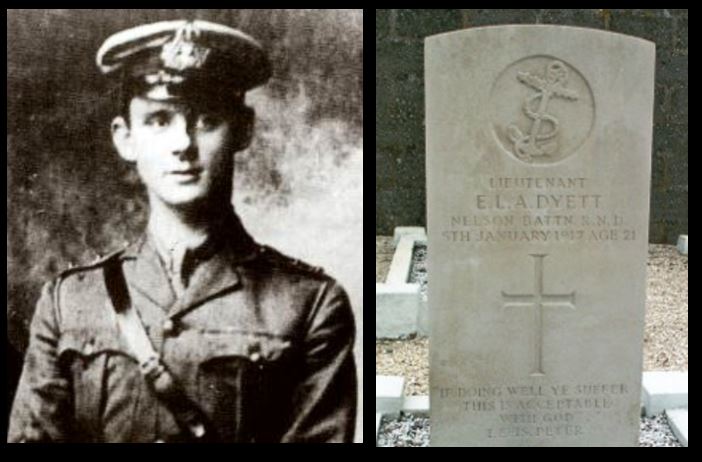
Edwin Leopold Arthur Dyett was born at 66 Albany Road, Roath on 7 Oct 1895 to Walter Henry Ross Dyett, a Master Mariner in the merchant navy, originally from Douglas, Isle of Man, and May Constance Kate Dyett née Bird, originally from Slough, Buckinghamshire. He was baptised at St Margaret church, Roath on 17 Jan 1896. By 1901 the Dyett family had moved to Dungarvan, County Waterford, Ireland. In 1911, Edwin enrolled as a student for Merchant Studies in Devon, presumably wishing to follow his father’s career path. Upon volunteering for service in 1915, he was commissioned as an officer despite his wish to serve in the ranks, and was not sent to sea but to the land-based Royal Naval Division. The RND took part in the Battle of the Ancre, part of the Battle of the Somme in Nov 1916. Within two days of the battle Edwin had been detained on suspicion of refusing an order. In Dec 1916 he was charged with having deserted during the Battle of Ancre. The court martial was convened on the 26 Dec at which he was subsequently found guilty. He was executed on 5 Jan 1917 aged 21. At his execution he cried out “For God sake put me out of my misery, this suspense is killing me” As he heard the rifles click his last words were “Well boys goodbye. For God’s sake shoot straight”. He was one of just over 300 British Army men executed in the Great War. Of these 15 were Welsh and he was the sole officer. He is buried at Le Crotoy Communal Cemetery, France. He is remembered on the Shot at Dawn Memorial at the National Memorial Arboretum, Staffordshire. Commonwealth War Graves Commission record. More information on the life of Edwin Dyett are contained in an article in our March 2023 Newsletter.
.
WILFRED HAROLD DYMOKE
Lance Corporal, 13th Battalion, Welsh Regiment (Service Number: 56647)

Wilfred Harold Dymoke was born in Roath on 1 Jun 1890 to William Dymoke, a carpenter at a motor garage, originally from Cranmore, Somerset, and Sarah Dymoke née Dowling originally from South Brewham, Somerset. The Dymoke family family lived at 169 Broadway and Wilfred attended Stacey Road School and later worked as a bookkeeper in Park Place, Cardiff. He enlisted in Cardiff with the Cyclists Battalion of the Welsh Regiment in 1914 and was posted to France in Jul 1916 with the 10th Battalion Welsh Regiment as a Lance Corporal and later transferred to the 13th Battalion. Wilfred died of wounds on 19 Apr 1918 at the 129 Field Ambulance in France aged 28. He is buried at the Warloy-Baillon Communal Cemetery Extension in NE France (grave IV.F.4). He is remembered on the Broadway Methodist WWI Plaque now housed at the Trinity Centre. Commonwealth War Graves Commission record. In later years (~1930s) a W H Dymoke is mentioned in newspapers as an employee of the South Wales Electric Power Company who had laid down his life in defense of this country (maybe he worked at Roath Power Station for a time?).
 Roath Local History Society