
I hadn’t come across Charles Leyshon before. In fact there isn’t a lot written about him. Much of the information in the following article comes from a series of tweets in May 2024 by Frederic Humbert @Frederic, Committee Member World Rugby Museum, which was supported by research from Herve Padioleau @HervP, historian of Stade Nantais, and Gwyn Prescott @rugbyhistorian who knows everything about Cardiff rugby, all to whom I am indebted.
In 1924 Welshman Charles Leyshon achieved his place in history by being the first referee to dismiss a player in a rugby test match.

The other remarkable, and much sadder bit piece of his history, is that he died in a German Concentration Camp in 1944 aged 69.
Charles Leyshon wasn’t a Roath boy but he did go to school here and lodged at Monkton House school, played rugby for Pen-y-lan juniors and married a Roath girl.
Charles Isaac Leyshon was born on 18 Sep 1875 (see footnote) at 4 Cardiff Road, Mountain Ash, one of four boys born to Charles Ralph Leyshon, a station master with Taff Vale Railway, originally from Pontypridd, and Margaret Mary Leyshon née Thomas, originally from Mountain Ash. In 1881 the Leyshon family were living in Windsor Villa, Miskin, Llantrisant. His mother tragically died aged 25 in 1882 when Charles was just seven.
Charles initially attended school in Pontyclun but then his father received promotion and became station master in Cardiff at the Taff Vale Railway Station, now called Queen Street station. In the 1891 census the family were living at 9 Howard Terrace. Charles and his brother however were boarding at nearby Monkton House School in 18 The Parade with the school’s headmaster and founder Henry Shewbrook.

Charles’s father died in Sep 1894. The newspaper reports that he was a much respected stationmaster. His funeral cortege, consisting of ‘a beautiful Victorian car bearing a huge oak and brass coffin followed by numerous mourning coaches’, left Howard Terrace heading for ‘the sequestered churchyard at Talygarn, Llantrisant’.
Charles continued to live in Cardiff. He played rugby for Pen-y-lan Juniors (1893-4) which used to play on Roath Park, and then Old Monktonians (1894-7) the club that later became Glamorgan Wanderers.
On 7 Nov 1897 Charles married Inès Clothilde Frédérica Griffiths at St Andrew’s church. She was born in Roath and lived at in James Street Roath, now called Talworth Street. Quite what inspired her parents to name her Inès Clothilde Frédéricais uncertain as her siblings have more conventional names; Mabel, Lillian, Charles and Eleanor. Charles and Inès had a daughter together, Mary Carmen Leyshon, born in Penarth in 1900, who was baptized at St Augustine Church in Sep 1900.
By 1901 they had moved to Llantrisant Road, Pontyclun, where Charles was worked as a railway clerk.
Sometime in the next six years they emigrated to France. In the 1907-8 season Charles played scrum-half for the Stade Nantes Université Rugby Club (SNUC) before moving into refereeing.
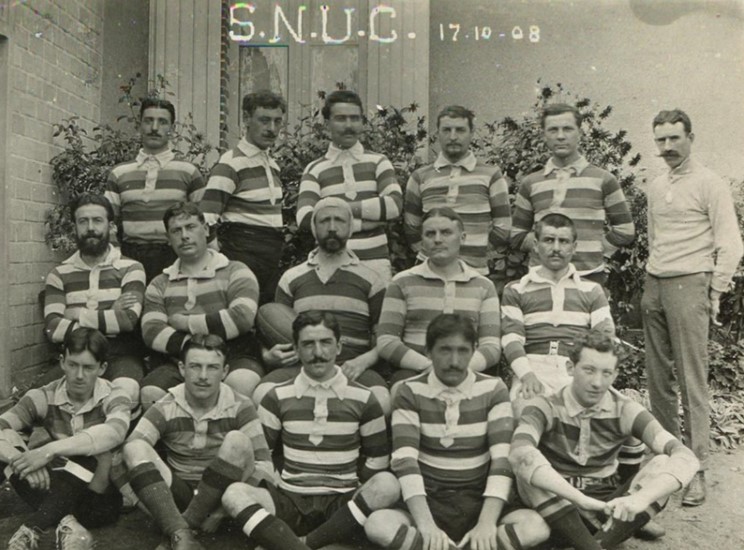
In 1910, he became a member of the SNUC committee, at the same time as the Welsh star of the team Percy Bush who arrived after him. Percy Bush had by that time won 8 caps for Wales and 4 for the British Isles.
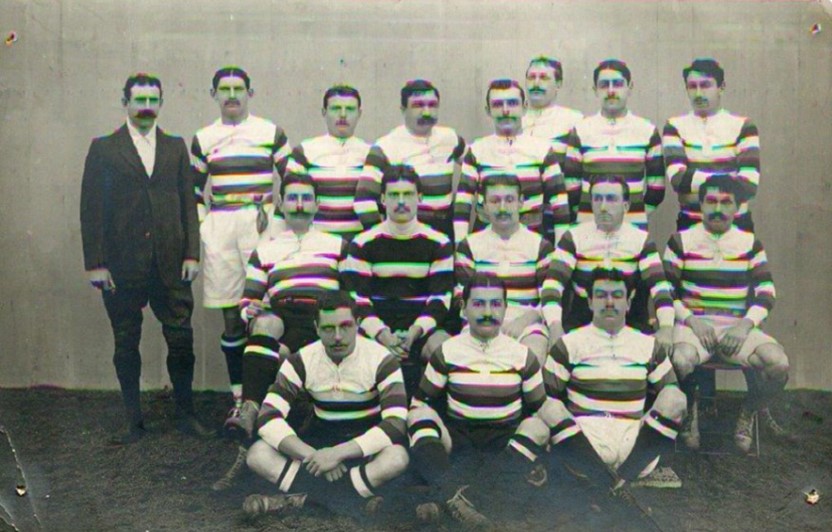
Charles Leyshon refereed matches in 1915 and 1916 suggesting he remained in France in WWI.
In 1918 he settled in Paris and continued his rugby refereeing, something he did until 1930. Quite what Charles Leyshon did for a living I have yet to discover.
In 1923 he was one of the founding members of the British Rugby Club of Paris which still exists today.
In 1924 he was a referee in the Paris Olympics and in the match USA versus Romania in Colombes and sent off American Ed Turkington who was the first person to be sent off in a rugby international test match. The newspaper reports that Turkington was sent off minutes before the final whistle for kicking a Romanian player whist the later was down. Turkington argued that the kick was unintentional. The USA ended up winning the game 37-0. Some British sources mistakenly indicate that the first expelled was the New Zealander Cyril Brownlie against England on January 3, 1925 but that was a year after the Olympics.

What surprised me was that it took until 1924 for a player to be dismissed in a test match considering rugby had been a popular sport for the previous 50 years. I may be missing the subtleties of what is defined as a Test Match, or maybe ‘sending off’ had more recently gained some official status in the rules.
Charles Leyshon was arrested in Jul 1944 and sent to the Buchenwald Concentration Camp in Germany. He died there of broncho-pneumonia and heart failure on Nov 19 1944, aged 69. The reason for his arrest and being sent to Buchenwald is unclear. The Buchenwald Archives reference card for Charles Leyshon states “”Polit. England”, which he interprets as “Political Prisoner – English”. It appears the family had already moved to the South of France to escape initial German occupation. Charles had been a Freemason when they lived in Paris, a member of the ‘Anglo-Saxon Lodge’ which may be a reason for his arest.
Or maybe there are some Jewish connections which could explain his arrest. Charles Leyshon was married in a Christian church (St Andrew’s) but his daughter Mary Carmen Leyshon is said to have married in a synagogue in Paris. She married Frenchman Rémi Louis Lamoureux and they had two children Gerard and Evelyn, but whether there are any Leyshon family still living in France is uncertain.
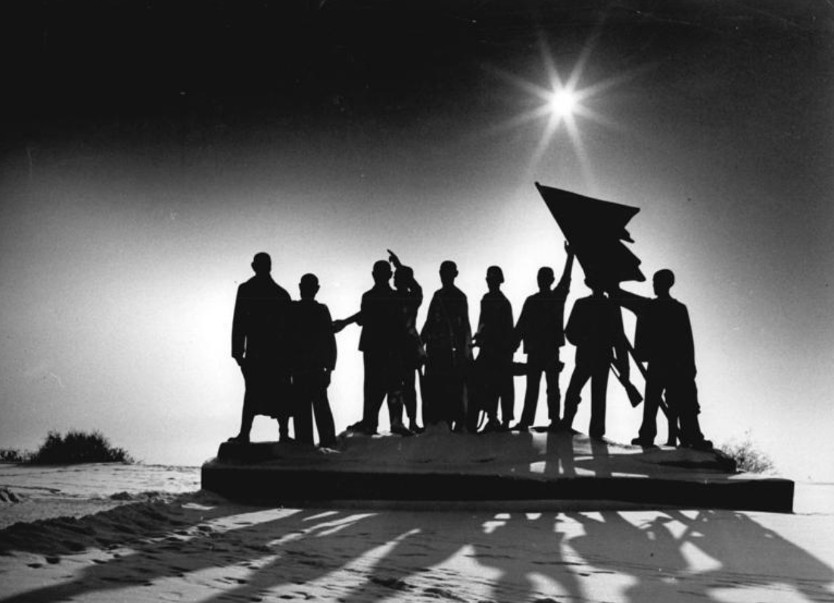
Although Charles Leyshon has no known grave there is a memorial at Buchenwald and he does have a Commonwealth War Graves Commission record. He has now been included on the Roath Virtual War Memorial.
And what of his three brothers?
- Edward Thomas Leyshon (1874-1949) was landlord of the Miskin Inn before later becoming a Director of the Ely Brewery in Cardiff. His son Trevor Leyshon became the brewer manager at St Austell Brewery which still going strong today.
- Thomas William Leyshon (1877-1910) also attended Monkton House school. He married in 1897 giving his profession as an architect. When he died in 1910 he was living at the Butchers Arms in Llandaff.
- Arthur Ralph Leyshon (1879-1940) married in 1898 but was widowed a decade later and moved to British Colombia, Canada and became a logger. In WWI he joined the Canadian Expeditionary Force in 1916 and was demobilised in 1919 before he moved back to the UK and lived in Surrey and was employed as a road worker.
Footnote
Charles’s birth certificate records his birth as 18 Sep 1875 although he always appears to have celebrated his birthday on 8th Sept. That is the day quoted on his school registration form in Pontyclun and his prisoner of war papers. Those same papers state he was born in 1873 rather than 1875 which appears to be an error.
More information
If anyone has any more information about Charles Leyshon then I would be interested to know as I’m sure would Frederic Humbert @Frederic
 Roath Local History Society