Memories of a Steelworks Electrician

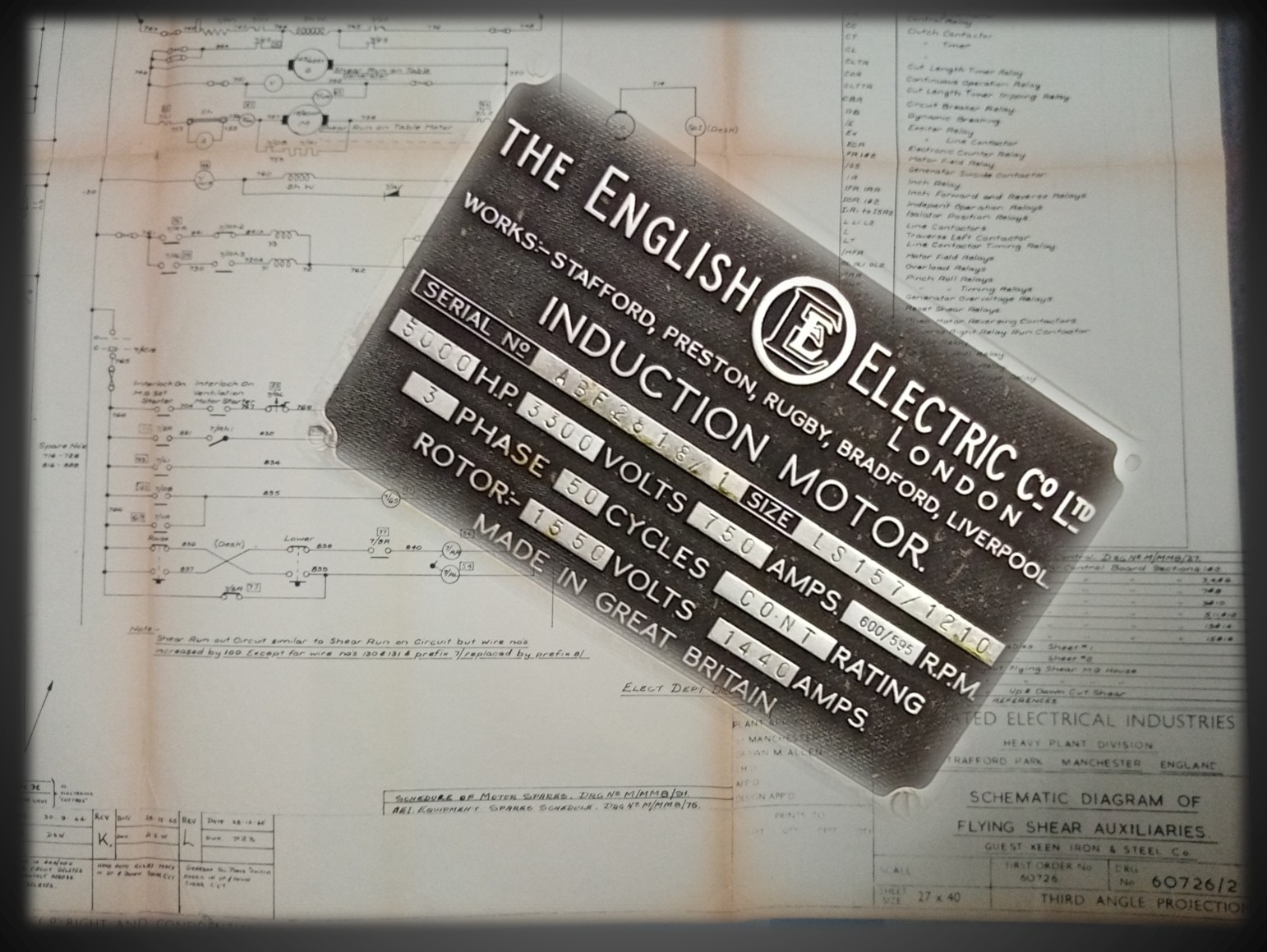
In February 2024 we had a lecture on East Moors and the South Wales Steel Industry from Professor Louise Miskell.  It was well attended, not just by our members but also by people who had connections with the steelworks including ex-workers themselves. The audience shared their recollections and a discussion ensued about how best to capture those memories. People were encouraged to write down their experiences and recollections.  Geoff Harris took up that challenge and has been busy recording his memories of working as a Steelworks Electrician.  Even better, he has agreed to share his memories with us in the form of an evocative document entitled ‘Memories of a Steelworks Electrician’.  Evocative may seem a strange word to use in connection with a steelworks but Geoff has certainly captured not just the history but the feeling for what it was like working there, the heat, noise and dusty environment. 

Geoff began life in Grangetown.  His father was in the merchant navy before he suffered an accident.  On recovering he got a job in the steelworks .  Geoff followed him into the steel works in 1961 began his career as a humble mail boy.  It wasn’t long before he commenced a 5 year electrical apprenticeship attending college at the same time, which finished at the age of 21. 

After training he declined a job in the drawing office preferring to be an electrician on the steel manufacturing plant itself.  Geoff became shift foreman, the youngest foreman they had ever had in the Engineering Department.

As an electrician Geoff worked throughout the steelworks, visiting every stage of the steel manufacturing process as equipment needed maintaining and repairing.  Geoff has a good clear memory.  We are taken on a virtual tour of the East Moors works from unloading of raw materials at the wharf through to the finished product via such stages as the coke ovens, blast furnaces, melting shop, various steel milling operations. We learn about the various pieces of electrical equipment including giant motors that need repairing or replacing in areas hard to access with hostile working environments.  Safety, or lack of it, is a concurrent theme as are environmental conditions.

Geoff’s memoirs begin with his memories of attending Ninian Park School before work and then a very successful career after leaving the steelworks in 1974 when the steel works closure was imminent.

Thank you Geoff for sharing your memories with us. We hope people get as much enjoyment out of reading them as we did.  Just click the link below.

Link to Memories of a Steelworks Electrician by Geoffrey Harris

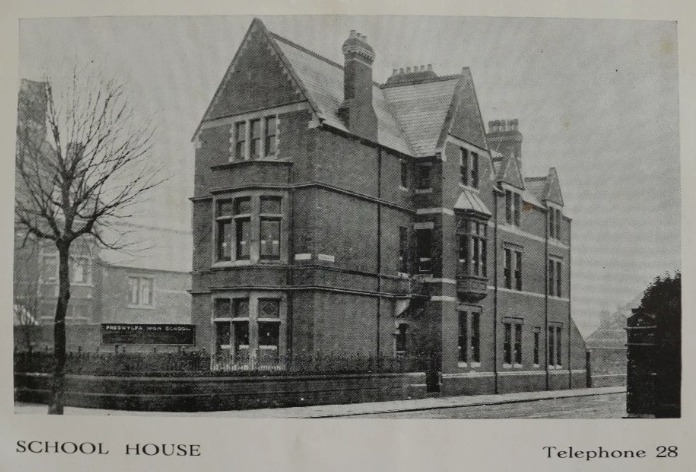
Preswylfa School, 82 Pen-y-lan Road,

Preswylfa School

Preswylfa School was at 82 Pen-y-lan Road, on the corner of Pen-y-Lan Road and Sandringham Road, Roath Park, a building still there to this day.

The first mention in the newspapers of the school appears to be 1910 when it was advertised as Preswylfa High School, a good Day and Boarding School for Girls.  Roath Park Terminus.  Principal: Miss Jones.  They had a second premises at 2 Newport Road (presumably catering for those who had missed the tram).

Western Mail 1910

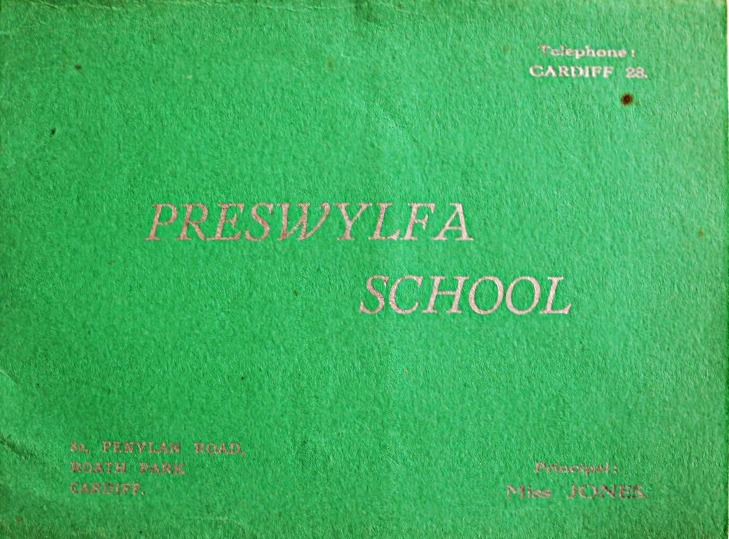
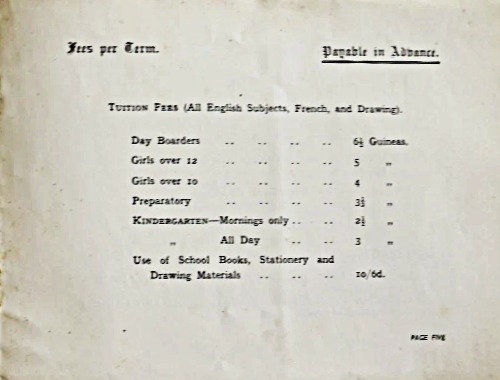
The booklet that recently appeared on e-Bay is of unknown year but probably soon after the school opened as it has Miss Jones as Principal. The Telephone number was 28 indicating their early take up of the telephone service. I wonder how many calls they received? The school included a kindergarten and also took boys up to the age of 10.  Day boarders were charged at 6½ Guineas a term and a terms notice was required if you wanted to withdraw your child.

In 1917 Preswylfa School had a second premises at 87 Ninian Road.

The curriculum was broad offering English Education, Religious Knowledge, Mathematics, Science, French, Latin, Music and Singing, Drill and Dancing, Plain and Fancy Needlework, Handwork, Swimming and Sports.

After all that education the pupils were ready to sit entrance examinations for Oxford, Cambridge , London and Welsh Universities, College of Preceptors (teacher training), Royal College of Music, Royal Drawing Society, Elocution, Shorthand, Royal College of Arts, Book keeping and Commercial Practice.  Later newspaper adverts included typewriter training.

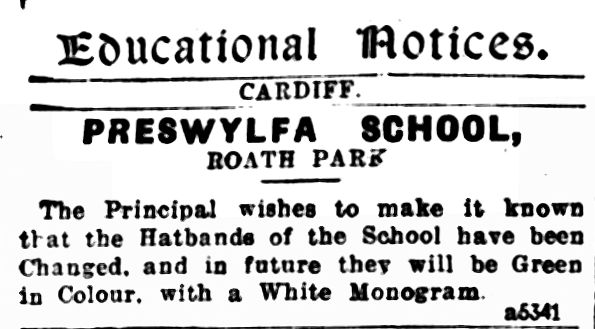
A notice from 1929 tells us that the colour of the hatbands has changed and will in future be green in colour with a white monogram.

Western Mail 1929

 In September 1939 the school was advertising vacancies for pupils unable to return to their own school and boasting a specially constructed ARP Shelter.

Western Mail 1939

The school ran up until the end of WWII.  Sometime after the war it was turned into the Penylan Hotel.  The building these days has yet another use and is the Penylan Residential Hotel Care Home.

References: Thanks to Ian Clarke on Cardiff Now & Then Facebook Group for posting the pictures from eBay and Find My Past for the Nwspaper Cuttings.

Confessions, Opinions and Autographs of my Friends: The Story of an Autograph Album owned by Alice Tovey

It was in the latter part of the wet winter in 1903 that Alice May Tovey may have been given the autograph book, most probably for her nineteenth birthday. No birthday cake nor ‘Happy Birthday’ would have been sung as these customs had yet to be established. We don’t know if she had a special afternoon tea in the parlour of 15 Partiridge Road, Roath, Cardiff but we do know she was quick to ask family and friends to write in her book, ‘Confessions, Opinions and Autographs Of My Friends’.

Autograph Book owned by Alice Tovey

This type of book had been popular since the 1860s but the fashion was beginning to decline by the time Alice received hers. The giver may have purchased it for a few shillings from The Park Newsagency, Stationery and Fancy Repository, on the corner of Wellfield Road and Albany Road. Alice asked thirty three people to answer the thirty eight questions; her siblings were the first, on Monday 9th March 1903.

  1. What characteristics do you admire most in a man? 
  2. What characteristics do you admire most in a woman?
  3. What would be your ideal life ?                                 
  4. What do you consider your best quality?       
  5. What do you consider your forte to be?                                
  6. If necessary to work for a living, what calling would you pursue?
  7. What do you consider your greatest failing?              
  8. What is your favourite pastime?        
  9. What gives you most annoyance?                             
  10. Are you a linguist and what is your favourite language?
  11. In what country would you prefer to live?                              
  12. What foreign land would you best like to visit?          
  13. Who do you consider has the greatest brain power, man or woman?
  14. Do you think women should take part in public life?  
  15. Do you believe in women’s suffrage?                        
  16. What colour do you think is most becoming to you?             
  17. Do you think dress influences character?      
  18. Describe the girl of the period                        
  19. Describe the young man of the day                           
  20. What is your favourite motto?                                    
  21. What is your favorite flower and what is  its meaning?
  22. Who do you consider is the best sovereign in Europe?
  23. What nation exercises most influence in the world?  
  24. Who do you consider the greatest politician in Great Britain
  25. Who do you consider the greatest artist of the present age?
  26. Who do you consider the greatest musician of the present age?      
  27. Who do you consider the greatest man of science of the present age?                       
  28. Who do you consider the greatest orator of the present age?
  29. Who do you consider the greatest author of the present age?          
  30. Who do you consider the greatest poet of the present age?
  31. Which is your favourite reading prose or poetry?      
  32. Name two poems that have given you great pleasure
  33. Name two books of fiction that have given you the most profit
  34. Who is your hero in life?                                            
  35. Who is your hero in fiction?                                       
  36. Who is your heroine in life?                                       
  37. Who is your heroine in fiction?                                   
  38. Name the composer whose music you most enjoy

Over the next few years the book was filled in by Alice’s friends and acquaintances. It can be surmised that some of the contributors were also friends of Alice’s siblings, such as the school mistresses and office clerks. Others may have been work colleagues of Alice when she was a grocer’s assistant. She may have had visitors as some entries were labelled, Port Talbot and Fishguard.


By 1911 Alice was a domestic servant to retired tobacconist William Bowles and his wife, Anna, at 140 Cathedral Road, Cardiff where two of their young nephews signed the book; two of their nieces had signed it in 1906, suggesting Alice was the Bowles’ servant by this time. The young priest at St Martin Church, Roath and his future wife, is an obvious connection but two brothers who lived in Newport and became meat traders along with an Italian born refrigeration engineer who lived in Lancashire, it’s harder to conclude what the links were; they are yet to be found.


After years of apparent abandonment the book was resurrected for the last time in 1923, when Alice was living at 118 Richmond Road, Cardiff, with her mother & sisters. In spite of WWI having been fought and some women gaining the vote in 1918 the answers were much the same as in 1903.

Here’s a broad summary of the most popular answers.

  1. What characteristics do you admire most in a man / woman? Stereotypical such as bravery & love respectively
  2. What would be your  ideal life?  Money                             
  3. What do you consider your best quality?  Many were too modest to answer     
  4. What do you consider your forte  to be?  Many were too modest to answer                             
  5. If necessary to work for a living, what calling would you pursue? Various
  6. What do you consider your greatest failing?    Temper, impatience          
  7. What is your favourite pastime?     Cycling & walking   
  8. What gives you most annoyance?    Other people                         
  9. Are you a linguist and what is your favourite language? English
  10. In what country would you prefer to live? England                             
  11. What foreign land would you best like to visit?    Switzerland      
  12. Who do you consider has the greatest brain power, man or woman? Man
  13. Do you think women should take part in public life?  No
  14. Do you believe in women’s suffrage?   No                     
  15. What colour do you think is most becoming to you? Various             
  16. Do you think dress influences character?   Yes   
  17. Describe the girl of the period  Various                      
  18. Describe the young man of the day   a toff                        
  19. What is your favourite motto?  Various                              
  20. What is your favorite flower and what is  its meaning? Various
  21. Who do you consider is the best sovereign in Europe? King Edward VII (almost unanimously)
  22. What nation exercises most influence in the world?  England, Great Britain (almost unanimously)
  23. Who do you consider the greatest politician in Great Britain? Joseph Chamberlain (almost unanimously)    
  24. Who do you consider the greatest artist of the present age? Various
  25. Who do you consider the greatest musician of the present age?  Paderewski    
  26. Who do you consider the greatest man of science of the present age?  Edison                     
  27. Who do you consider the greatest orator of the present age? Various
  28. Who do you consider the greatest author of the present age?  Various        
  29. Who do you consider the greatest poet of the present age? Tennyson

The rest of the answers were individual.

To conclude, as Alice and her siblings didn’t have any children there was no one to hand the book on to. It’s not known how the book came into the possession of its owner, Richard Adair;  he suggested  it was from a house clearance as his parents were antique dealers.  Richard is the author of ‘Courtship, Illegitimacy and Marriage in Early Modern England’ which may be of interest to some readers. Thank you Richard  for sending the images of the entries and collating the answers.

A full analysis and more details of the contributors can be found by clicking here.

Thanks to members of Roath Local History Society Research Group who have contributed to this.

Dorcas Frazer

Mary Traynor

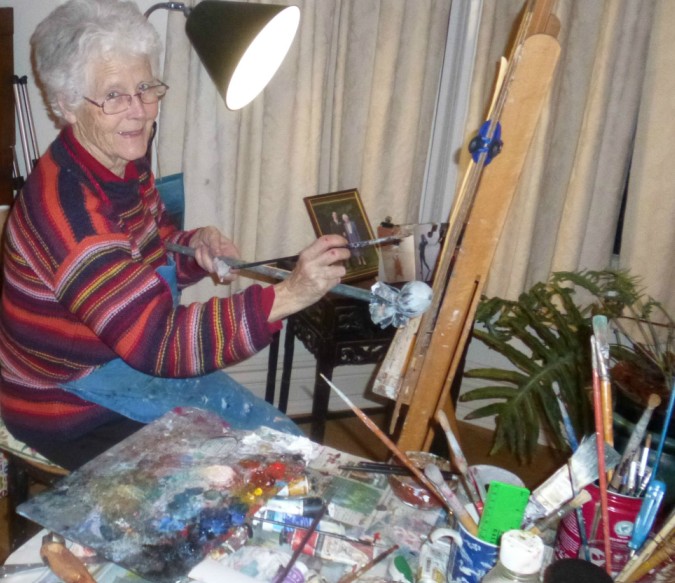
It is with sadness that we learnt recently of the death of Mary Traynor, at the age of 91.  Besides being a Society member and a long-time resident of Penylan, Mary was an accomplished artist, who depicted many of Cardiff’s notable buildings in her book Creating Cardiff.

Copies of her book will be available for sale at the AGM and talk on 10 September 2025.

Here is a profile of Mary, first published in the RLHS Newsletter in August 2020.

Some of my most treasured possessions are my sketchbooks. For me they are a record of things I have done, seen and visited over the years on family holidays in places like North Wales, Cornwall, Brittany and painting trips to Palma, Symi and Barcelona; not forgetting Australia and Vietnam where two of my children lived for a while. Being an artist is one thing that has kept me going and has given me pleasure throughout a long life. I have been a widow for many years. There is still a layer of sadness in me, but Brian was so supportive that l was compelled to continue painting, partly in his memory and have done so ever since, exhibiting and selling my work

A four- year course in Theatre Design at Birmingham College of Art & Crafts introduced me to architectural history and the challenges of drawing buildings, especially large historical ones. Perspective has always been difficult and I faintly ‘set square in’ a few vertical and horizontal lines as a guide. The Grade 1 listed art college was the ideal base from which to sketch the huge 19c buildings of the city centre. I then lived in Hammersmith, London for a while, spending my free time in sketching the Thames at Battersea Bridge, going to galleries and museums until I met Brian, a Cardiff man.

Adamsdown School

It was exciting to have the early sight-seeing trips of Cardiff: the gleaming white City Hall and Law Courts, the National Museum, Cardiff Castle, Castell Coch, the parks and in contrast the Docks and The Valleys which paid for all this building. We settled in Roath (this includes Penylan for convenience) and I have lived here ever since, in three different houses in one road! I raised a family and continued doing art through this time as most women artists blessed with children do. I usually love sketching children.

Roath Brook Gardens, from Westville Road

I have spent many happy years living in Roath – and here are some of my favourite places: firstly busy Albany Road and the network of streets surrounding it; the Mackintosh Institute or ‘The Mac’ an early 19c mansion in Plasnewydd Square, a thriving community centre and Farmers’ Market, not forgetting the arts centre opposite in the former Presbyterian Church where I much enjoyed dance performances by the young people of the Rubicon. There is a gruesome side to this as the Albany and Richmond Road crossroads is where Cardiff’s hanging field was! It is very sad that Grade 2 listed Globe Cinema was replaced and The Gaiety in City Road is making way for yet more student flats – how unnecessary is that?

Globe Cinema, Albany Road, Roath, Cardiff
A reconstruction based on sketches and photographs of how the cinema might have looked in the 1920’s. It opened in 1913 and was a listed Grade II building that was demolished to build The Pear Tree Cafe.

Top of my list of favourite Roath buildings is the Edwardian Roath Church House with its central panel elegantly carved with the name and 1914 which says it all. Opposite is Grade 1 listed St Margaret’s Church with the polychromatic interior that makes it so special. I felt that I should have painted the interior but the drawing does show patterned brickwork and different stones. I must go down after Covid-19 is over and subtly paint the shadowy interior. I enjoyed doing the front and back in their leafy settings. Nearby I like Willie Seager Cottages, a modern version of the original ones on Newport Road. Charming as they were, it must have been very noisy for the retired mariners living there.

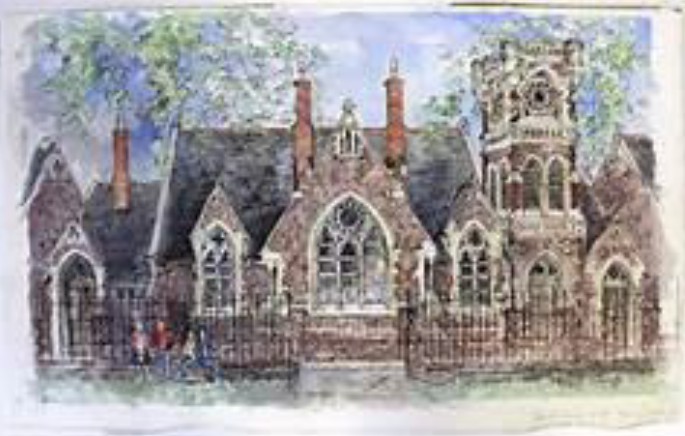
The East Cardiff Conservation Area which takes in the area encircling the parks starts at St Margaret’s and ends at the top of Roath Park Lake. As a representative of The Victorian Society I was on the advisory group. We helped keep the character of the area by vetting detrimental planning applications to both large and smaller houses, sometimes for extensions, more often for new inappropriate windows in the front or as dormers on the front roofs. One application was for another of my favourite buildings – listed Roath Park Primary School- to have replacement windows. We opposed this and the school remains as it was. I did a painting of it as a retirement gift from the school to its Headmistress enjoying putting in the proper windows and children in the playground. Roath Park, said by experts to be one of the country’s finest urban parks is of course of on my list. Scott’s Memorial Lighthouse was done in the raging blizzard of my imagination, instead of from outside! Finally, St Andrew’s United Reformed Church, its elegant spire marking Wellfield Road, the parks and playing field; is for me a reminder of Constable’s paintings of Salisbury Cathedral.

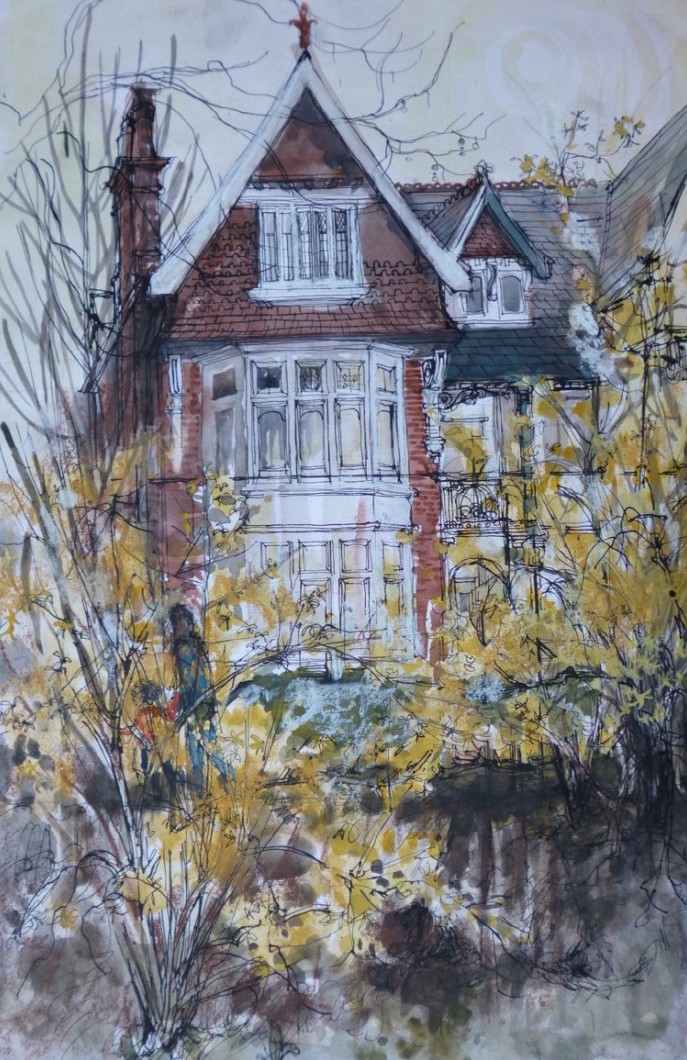
House in Ninian Road
Pen and Watercolour
Facing the Roath Recreation Ground, the houses in Ninian Road date from 1891 and completed 1910

Artists don’t retire if they can help it and I keep painting and drawing from my sketch books and photos during Covid -19. I am proud to be one of a group of at least five artists living quite near. For a few years an enterprising group of artists organised ‘Made in Roath’, taking place in October when artists, including me opened their studios to anyone who wanted to see them.

When I first started in the late ’60s and ’70s there were a lot of changes going on in Cardiff, such as the building of Boulevard de Nantes, the demolition of the houses at Dumfries Place and the splitting of the civic centre from the city centre. There was even talk of driving a road through Cathays Cemetery. Painting is what I do, so I would go and sketch buildings I knew were going to disappear – but I didn’t think I would still be doing it 50 years later. In January 2003 the Central Hotel was lost, when a huge fire swept through the derelict building. It was demolished in 2006 to make way for a new high-rise hotel. I have mixed feelings about the redevelopment of Cardiff over the years, some things I love – like the walkway around Cardiff Bay and the Millennium Stadium, which I think is fantastic – but other things I’m not so sure about. There does seem to be a bit more sensitivity now though in the way historic buildings are treated.

The climax of my work to date has been the writing of ‘Creating Cardiff’ done alongside my painting and drawing. The illustrations are taken from work done over many years and especially for the book. Now it is published I shall return to my latest project which is a very challenging commissioned painting of Roath Brook Gardens and then continue recording the different styles of the houses of Roath and Penylan.

In June 2014 Glamorgan Archives received a very interesting and unique deposit, when Mary gifted her collection of sketchbooks and loose works. They form an invaluable record and resource, both for researchers and as the basis for many exhibitions.

Creating Cardiff

  • ISBN: 9781845242961
  • Mary Traynor
  • Publication June 2020
  • Format: Paperback,
    150×155 mm, 168 pages
  • Price : £8.95

Cardiff became a city in 1905 and the capital of Wales in 1955. It has a castle, civic buildings and extensive parklands, docks, two cathedrals, three universities,concert halls and theatres and museums. A new rugby stadium and arts centre marked the millennium.

Author Biography: Mary Traynor is an artist with a vivid interest in architectural and historical subjects. She has spent a lifetime recording Cardiff buildings, many of which have been threatened and has campaigned to save them. All the images in this book have been sketched on site. Sadly, some have been demolished over the years. This book brings the memory of them back to life in the company of her present-day images of the capital.

To me, this beautiful book, honed over many decades, represents a love letter from Mary to Cardiff, for all to cherish. Elizabeth Morgan.

Military Trunk found in Coffee #1, Wellfield Road

We recently received an enquiry from someone who had visited Coffee#1 on Wellfield Road a few years ago and noticed an old military trunk on display.  They wondered if we knew anything about it.  Well, I didn’t but it certainly piqued my interest.

Captain B M Dunn trunk pictured by the enquirer a few years ago in Coffee#1 Wellfield Road.

I spend quite a bit of time researching people from the area who lost their lives in WWI and WWII and adding them to our Roath Virtual War Memorial.  I wondered if the war trunk had belonged to one of Roath’s fallen.

One of the first things I did was to suggest to my wife that we go out for a coffee and investigate if the trunk is still there.  She didn’t take much persuading.  Sure enough, there at the top of the stairs on the first floor we found the military trunk, two in fact, seemingly used for storing Christmas decorations.

The trunks pictured July 2025

The chest trunk in question was marked as belonging to ‘Capt B M Dunn MC, 2nd Bn, the Welch Regt’.  And no, that’s not a typo.  The Welsh Regiment used to be called the Welch Regiment around the time of WWI.

The first thing I did when I got home was to see if he had survived the war by looking to see if he had a Commonwealth War Graves Commission record.  I found none indicating he had survived.   

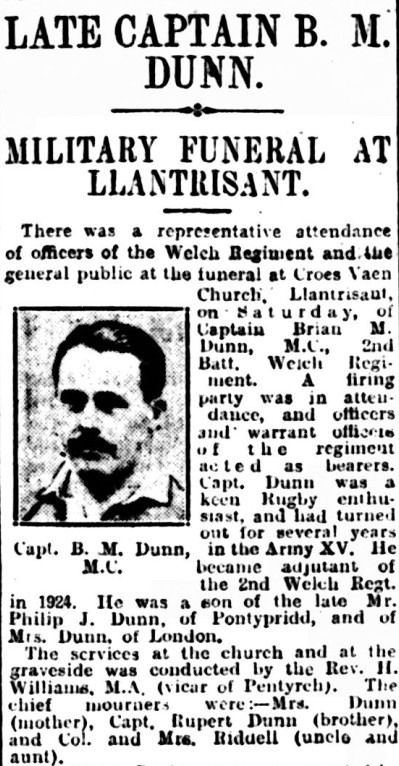
I search the newspaper archives and was soon able to identify him.  He was Captain Brian M Dunn from Groes-faen, near Llantrisant, who sadly passed away in Oct 1926. 

I had initially thought that if I discovered he wasn’t from the Roath area I would leave the enquiry there, but having read the interesting newspaper clipping I decided to keep going.  Here was a man who won a number of awards for gallantry and had had a Welsh Rugby trial.

It was time to call in some reinforcements.  I copied members of our Society’s research group.  I also contacted my friends Gwyn Prescott (military and rugby historian) and Ceri Stennett (military historian and all round good egg) who were a great help.  Between us all and our other contacts we managed to piece together the following:

Brian Morgan Dunn was born on 23rd March 1895, one of five children born to Phillip Dunn, a Justice of the Peace and Estate Agent, originally from Carmarthen and Anne Margaret Dunn nèe Morgan from Llantrisant.  The family lived at a large house called Crofta, on the outskirts of Groes-faen village.

Crofta on the outskirts of Groes-faen village

At the time of the 1911 census Brian is 16 years old and attending Uppingham School in Rutland.

Piecing together the military history of Brian Dunn has been difficult as is often the case with those of officer rank.   It appears he enlisted early in WWI and joined the 2nd Battalion, Welsh Regiment, was made a 2nd Lieutenant on 11 Nov 1914, temp Captain on 9 Jun 1915 and Adjutant on 1 Jul 1916. 

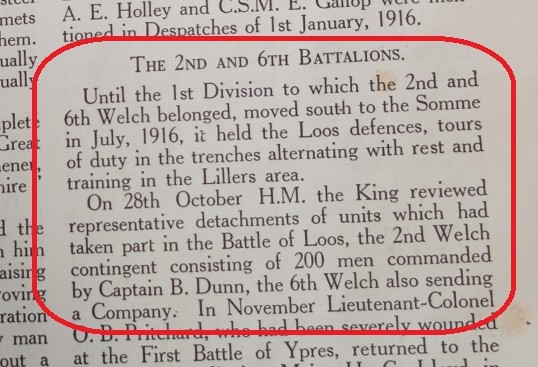
The war diary of the regiment records that on 17 Aug 1916 at Becourt Wood during reconnaissance of a new divisional front he was wounded and left the regiment for hospital.   On 28 Oct 1916 Capt B M Dunn led a review of a Company of 200 men from the 2nd Welch regiment which had taken part in the Battle of Loos, in front of the King.

The MC after his name on his military trunk is an abbreviation for Military Cross, awarded for acts of gallantry.  It is often possible to find a citation to the specific act for which a MC has been awarded but in the case of Capt Brian Dunn he was awarded it in the New Years Honours list (mentioned in the Edinburgh Gazette, 17 Jan 1916), probably for multiple acts of bravery.  He was also awarded the Croix de Guerre (Ref – London Gazette 14th July 1917), a French military award for acts of heroism.  

Capt Dunn survived the war and continued in the military afterwards.  At the time of the 1921 Census we find him at Richmond Barracks in Dublin.

He was evidently a gifted sportsman and well-liked.  Between the end of the war and his early death in 1926 we find references to him playing rugby at a high level.  He was the recognised hooker for the Army team and appeared in Welsh International trials but was never capped.  

B M Dunn wearing No.9 jersey Army v Navy 13.3.26

Here are some of his rugby highlights:

  • He was selected for Hampshire against Yorkshire in the final of the county championship in April 1926 but he did not play. Yorkshire won 15-14 and one report says his hooking was badly missed.
  • He was a member of the 2nd Welch (Pembroke Dock) team which won the Army Cup in 1919-20. He kicked a penalty in their 9-0 win over 2nd Life Guards.  Also played for United Services Portsmouth at one point.
  •  He played in a Welsh rugby trial for an Anglo-Welsh XV v the Probables in December 1925.
  • H played regularly for the Army for several seasons and was in the Army XV which won the Inter Services Championship for the first time in 1925-6 when they beat both Royal Navy and RAF at Twickenham in front of the King.
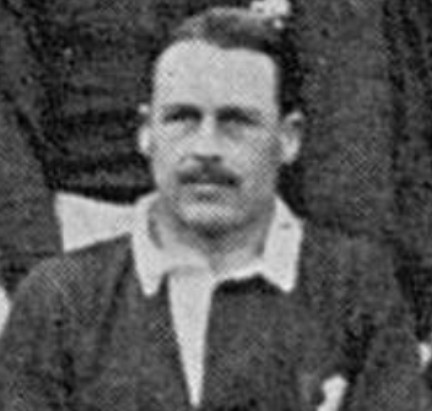
B M Dunn (2nd row third from left) Army v Navy 1926

He was still in the army when he died at Tidworth Barracks Hospital in Hampshire on 6 Oct 1926 aged just 31.  He was buried in the family grave at St David’s church, Groes-faen.  The papers report that it was a military funeral with warrant officers of the regiment acting as bearers with a firing party present too.

I visited St David’s, Groesfaen and found the grave.  It is the largest plot in the cemetery.  It appears that the wealthy Dunn family may well have been benefactors to the church at the time it was constructed in the early 1890s.

Dunn family headstone, St David’s, Groes-faen
Brian Morgan Dunn headstone, St David’s church, Groed-faen

Brian was one of five children, four boys and one girl, born to Philip and Anne Dunn.  All four brothers served in WWI and two were killed.  

The eldest brother, Captain Philip Morgan Dunn (b.1888) attended Clare College, Cambridge and then served with the 8th Battalion of the Royal Welsh Fusiliers.  He was killed in action during the advance on Kut, Mesopotamia on 3 Feb 1917, aged 28. He is commemorated  at the Amara War Cemetery, Iraq.  This was of personal interest to me as my grandfather served with the same battalion in Mesopotamia.

Another brother, 2nd Lieutenant Gwynne Morgan Dunn (b.1893), served in the 9th Battalion, Duke of Wellington’s (West Riding Regiment).  He died of wounds on 23 Feb 1917 at the Somme, France, aged 23, just 20 days after his elder brother died.  He is buried at Grove Town Cemetery, Meaulte, France.

The two brothers are remembered on an attractive plaque in the chancel at St David’s Church, Groes-faen, was well as on their parents grave.

The other brother, Rupert Morgan Dunn (b.1890) served as a 2nd Lieutenant in with the Royal Fusiliers and the Machine Gun Corps.  He survived the war, married in 1924 and worked as a safe deposit manager in London.  There don’t appear to be any offspring from that marriage. He died in London in 1953, aged 62.

The sister, Eileen Victoria Dunn (b.1897), never married and died in London, aged 85, in 1983.

Rupert and Eileen Dunn remembered on Dunn family headstone at St David’s church, Groes-faen

Having found the Dunn family grave and the resting place of Capt Brian Morgan Dunn, owner of the military chest in the coffee house, I was left wondering what had killed a seeming very fit young rugby player.  I ordered his death certificate which led to another surprise.  He died of gonococcal septicemia, a rare but serious complication of gonorrhea. That in itself isn’t a surprise given it was before the days of widespread use of barrier contraception and pre-antibiotics.  The surprise is more the reference to 1 month, 5 days, 10¾ hours.  Given the seriousness of this condition that is more likely to be the time since infection rather than the time since diagnosis.  It appears he shared some close personal information with the medical team at the military hospital.

Brian Morgan Dunn Death Certificate

I’m always surprised where some of the enquiries we receive via our website lead.  If ever you find yourself on the A4119 road from Cardiff to Llantrisant may I suggest you drop into see St David’s church in Groes-faen and have a wander around the cemetery.  The Dunn family grave is at the back (west side) of the church.   

How the trunk got to end up in Coffee #1 on Wellfield Road I don’t know. My guess would be that it was part of a house clearance sale at some stage.

My thanks goes to Jon Roberts and Jon Lloyd at Roath Local History Society, Gwyn Prescott, (military and rugby historian) and Ceri Stennett, (military historian and broadcaster)  as well as others for help with this research. And also of course Alex for making us aware of the military trunk in the first place.

Lord David Owen and his Cardiff connections

Lord David Owen – Official portrait, 2018 (souce: Wikipedia)

There’s little sign that 86 year old David Owen is winding down. The man who was Foreign Secretary in James Callaghan’s Labour government and who then went on to be a founder of the SDP party will be 87 in a few weeks time.  Yes, he retired from a House of Lords last year but is still a prolific writer and gives regular radio interviews offering his opinions on modern politics.  

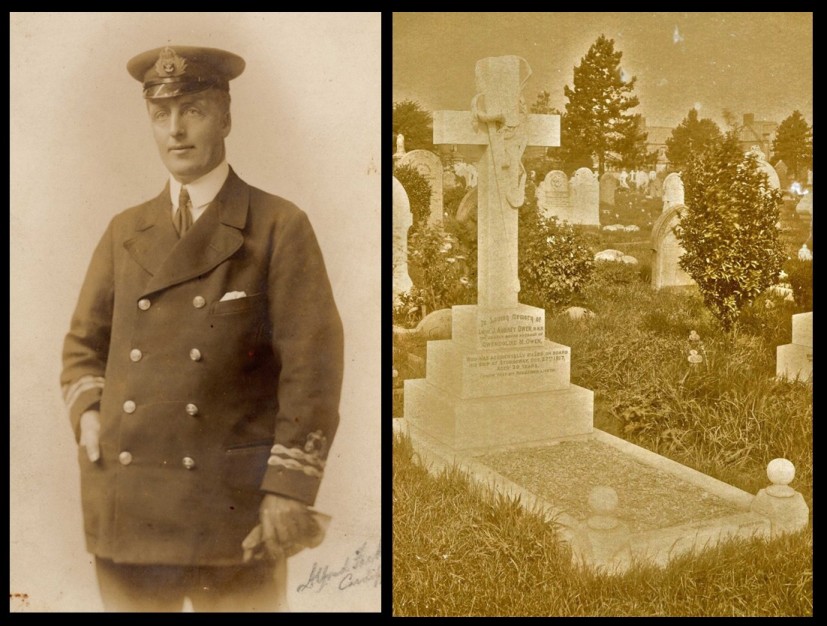
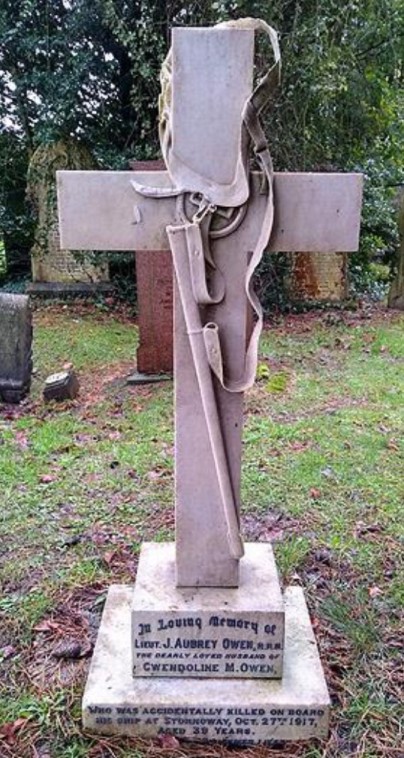
It wasn’t my intention to research David Owen and his Cardiff connections.  It was rather an accident. My attention had drawn recently to an unusual grave headstone at Cathays Cemetery.  It is unusual in it’s design.  Cathays Cemetery, the third largest Victorian in the country, still contains many examples of elaborate headstones despite a harsh clearance scheme that took place in the 1960/70s aiming to make cemetery maintenance easier.  There are still examples of Celtic crosses, obelisks, pedestals with urns, angels, broken columns signifying a life cut short and a couple of polished granite globes.  There is however only one example of a sword and belt draped around a cross.  It is the headstone of Lieutenant John Aubrey Owen.

Even this elaborately carved headstone may have suffered as a result of the clearance scheme.  Comparing the present headstone with a historical picture shows the kerbing is no longer present and the headstone itself is lower than it originally was.  Maybe this was as a result of the clearance scheme or just sinkage into the ground.  The elaborate sword and belt carving and cross too has suffered some damage over time.  The sword’s hilt is sadly no longer present.

Lieutenant John Aubrey Owen it turns out was Lord David Owen’s grandfather.  Not that David Owen ever knew his grandfather sadly.  Lieutenant Owen died during WWI as a result of an accident.

Lieutenant John Aubrey Owen headstone at Cathays Cemetery.

Having found that connection I did some research and ordered David Owen’s biography ‘Time to Declare’ (1991).  David Owen was born in Devon in 1938 but has a lot of Welsh blood in him.  His biography details how he spent time in South Wales when his father was away involved in WWII.  My intention here isn’t to repeat all his South Wales family history but to tease out his interesting connections to us here in Cardiff, starting with his grandfather. 

Lieutenant John Aubrey Owen (1876-1917) – Grandfather

John Aubrey Owen was born on 12 Jun 1878 at at 14 Park Street, Temperance Town, Cardiff to William Frank Owen, a coal merchant, originally from Cardiff and Selina Maud Owen nèe Rees originally from Bridgend, Glamorgan.  By 1881 the family were living at 9 Crwys Road, Cathays, which is now a hairdressers.  He was baptized on 18 Mar 1885 at St Augustine, Panarth and in 1891 the Owen family were living at 24 Pembroke Terrace, Penarth.  John joined the merchant navy as a boy sailor at the age of 16, working on the four masted ships sailing out of Cardiff docks.  In the 1891 census he is recorded as living at 10 Belle View Terrace, Penarth, aged 22, and a sailor. 

9 Crwys Road, Cathays where John Aubrey Owen was living as a child in 1881.

On 8 Nov 1905 John married Gwendoline Mary Morris, the daughter of a Congregational minister.  They may well have met each other as teenagers when they both lived on Pembroke Terrace, Penarth.  After getting married they settled in Cwmgwrach, in the upper Neath Valley and had two sons.

John’s career soon progressed in the merchant navy, gaining his First Mate’s certificate in 1905 and then his Master’s certificate in 1907.  John was employed by Messrs Evan Thomas Radcliffe and Co, Cardiff, one of the more prosperous and better-known of Cardiff-based shipowning companies.   John had had been in command of three of their steamers by the time the First World War arrived where he served in the Royal Naval Reserve and was made a temporary lieutenant in February 1917.  He served on H.M. Trawler ‘John Pollard’.  He however sadly died from a fractured skull on 27 Oct 1917, after falling from the upper deck of his vessel into the stoke hold, while the ship was docked in Stornoway on the Isle of Lewis in the Outer Hebrides.  He was aged 39.  He is buried in Cathays Cemetery (grave S 509A).  Commonwealth War Graves Commission record.

Lieutenant John Aubrey Owen and old image of his headstone at Cathays Cemetery, Cardiff..

David Lewis (1797-1860)  G-G-G-Grandfather – Mayor of Cardiff

Researching the Owen family history is made a lot easier, not only by David Owen’s autobiography, but by there being a very comprehensive family tree on Ancestry put together by another Owen family member.   In that family tree it details the life of David Lewis (1797-1860).  He married Margaret Aubrey, which is where the Aubrey name passed down through the family comes from.  In 1841 he lived on Quay Street, Cardiff.

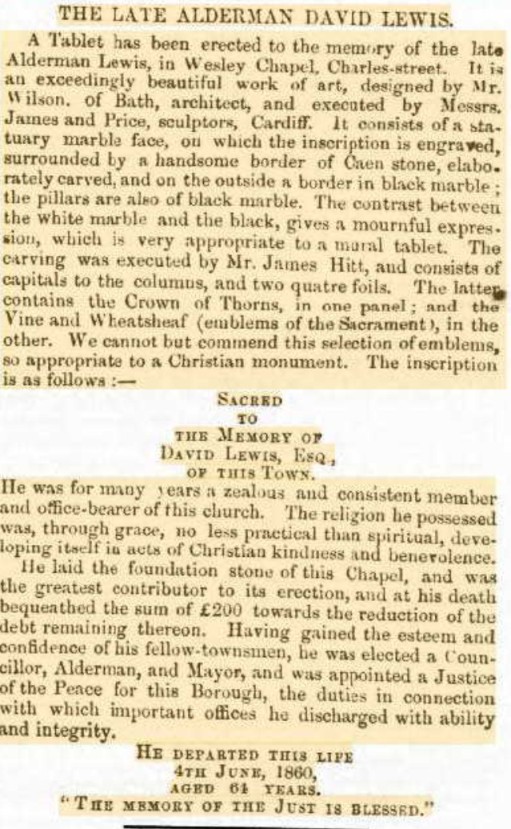
His lengthy obituary in the newspaper in 1860 details how he was a victualler, landlord of the Ship and Dolphin in Church Street, and afterwards became Master of the Ship on Launch, in Quay Street which was the favorite resort of the Cardiganshire seamen when they visited Cardiff.  He also speculated in coal and had a rope making business and donated money to the Wesleyan Chapel in Charles Street.  In 1854 he was Mayor of Cardiff.  He is buried at Llandaff Cathedral.

Wesleyan Chapel, Charles Street, Cardiff, opened 1850. The chapel was destroyed by fire in 1895 and then rebuilt. The rebuilt chapel was demolished in 1984.
The plaque to David Lewis (described below) could well be one of those in the sketch under the eaves of the balcony.
A plaque to David Lewis was erected in Charles Street Wesleyan Chapel after his death.

Alderman William Llewellyn (1850- 1923) – Maternal G-Grandfather

William Llewellyn was both a liberal politician and shopkeeper.  David Owen writes that ‘Alderman William Llewellyn, was chairman of Glamorgan County Council and chairman of the Bridgend Bench of Magistrates.  A staunch Liberal, he was a moving spirit in first the Mid-Glamorgan then the Ogmore Divisional Liberal and Labour Party, of which he also became chairman.  He had started life as a grocer and provision merchant in Ogmore, having moved there from Llantrisant. Over the years The Gwalia, as his shop was called, grew until it was described as `a mecca of the valley and neighbourhood’.  The shop used to be in Ogmore Vale but has been moved and many of you will have been there.  Gwalia Stores closed in Ogmore Vale in 1973 but was then moved and rebuilt at St Fagans National Museum of History in 1991.  The ground floor is set up as it would have been during the 1920s.

Gwalia Stores originally in Ogmore Vale now at St Fagans National Museum of History, Cardiff.

Dr Edgar Llewellyn (1890-1964) – G-uncle

Alderman William Llewellyn had eight children, or more accurately his wife Mary did.  One was George ‘Gear’ Morgan Llewellyn (1877-1951), David Owen’s maternal grandfather.  He was a blind church minister and lived at Llandow in the Vale of Glamorgan and a big influence on David Owen’s life.  David spent time living there as a child when his father was away in WWII.

Another son of Alderman William Llewellyn was Dr Edgar Llewellyn and it is he that has connections with our area.  He became a GP in Splott and had his surgery on Splott Road. He was Cardiff Commissioner of the St John’s Ambulance Brigade and the works’ doctor at Guest Keen steel works, and also became a Cardiff Councillor. 

In his autobiography David Owen recalls the following:

The brother whose career most closely paralleled my own was Edgar. He was a family doctor in Splott which is an area of Cardiff dominated by the steel-works.  He was a great character and adored by his patients His unique way of sorting out their ailments was, according to my mother, to go into his surgery and announce, “Those buggers who are ill can move to the right-hand side of the room and be seen now: those who are not can wait on the left and see me later or chance their luck tomorrow.’  After the war he became infuriated by the politicians on the City Council and so decided to join his wife who was already a Ratepayer Councillor. He was elected in 1951. A photograph of him in a pony and trap, bedecked in a massive rosette, electioneering shows the first combination of doctor-politician in the family’s history. His wife Jenny, who had first stood and won as a Ratepayer in 1946, was a strikingly good looking woman and a considerable character.  She was the first person in eighteen years to beat the Labour candidate in her Ward. She stood again in 1949 and won and then lost her seat three years later. The wish to be an independent in local government and to stand against party politics was later mirrored by my mother and, some will say, by me too.

Dr Edgar Llewellyn, Ratepayers Candidate in the Cardiff 1951 Local Government elections (picture credit: Cardiff Yesterday Vol XVI)
Dr Edgar Llewellyn of the Ratepayers Part campaigning in 1951 (Picture credit: David Owen’s biography ‘Time to Declare’ (1991))

What started as a bit of research into the grave of John Aubrey Owen at Cathays Cemetery turned up many interesting stories about the history of Cardiff. Fascinating stuff is histoy.

Red Cross Hospital, Newport Road – photographs from the David family photograph album

It’s great when people offer to share old photographs with us and with scanners and smart phones being able to take such good copies of old photos these days it’s never been easier.  If you have photos of Roath and surrounding areas you would be willing to make available to us just click or scan away and send them to us at roathhistorywebsite@gmail.com

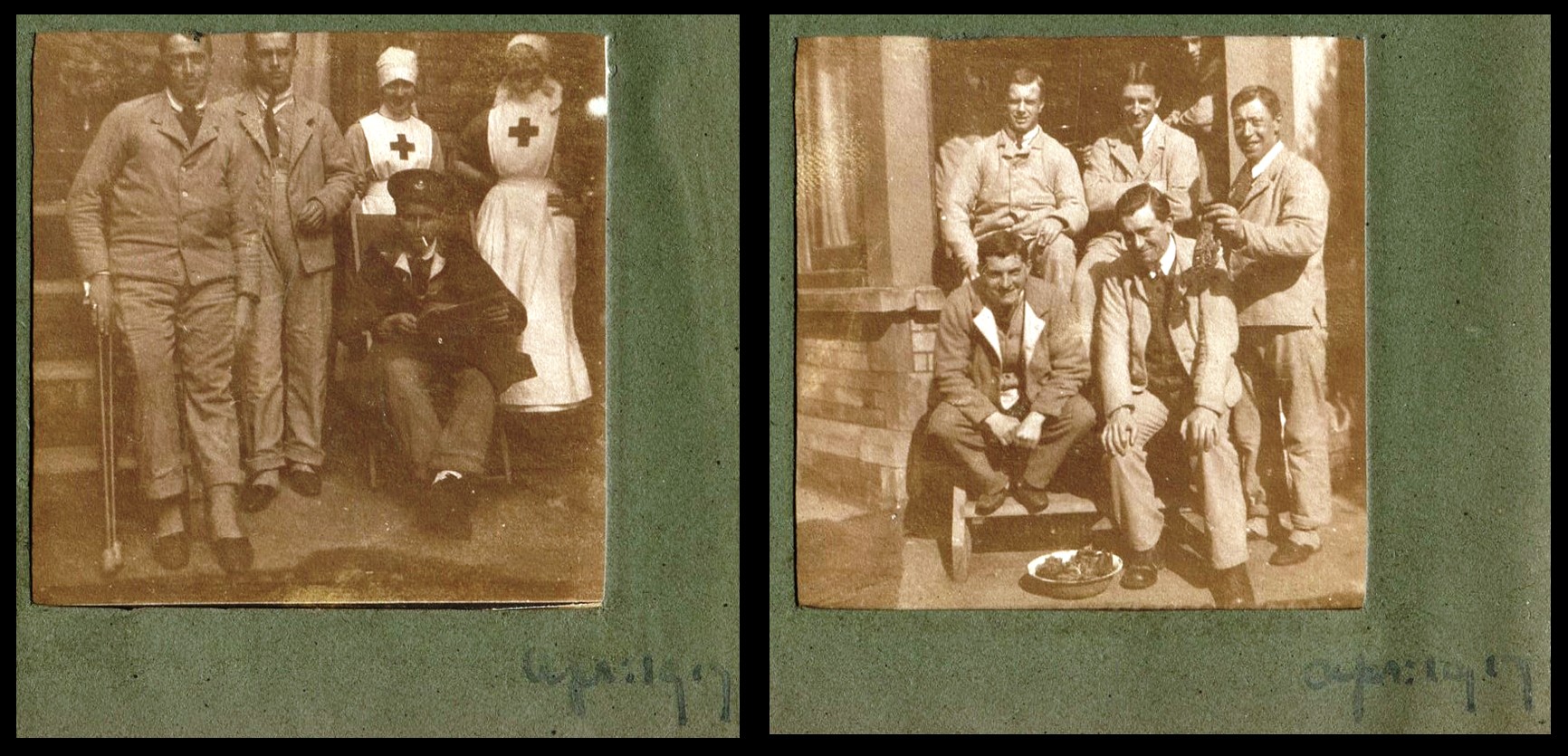
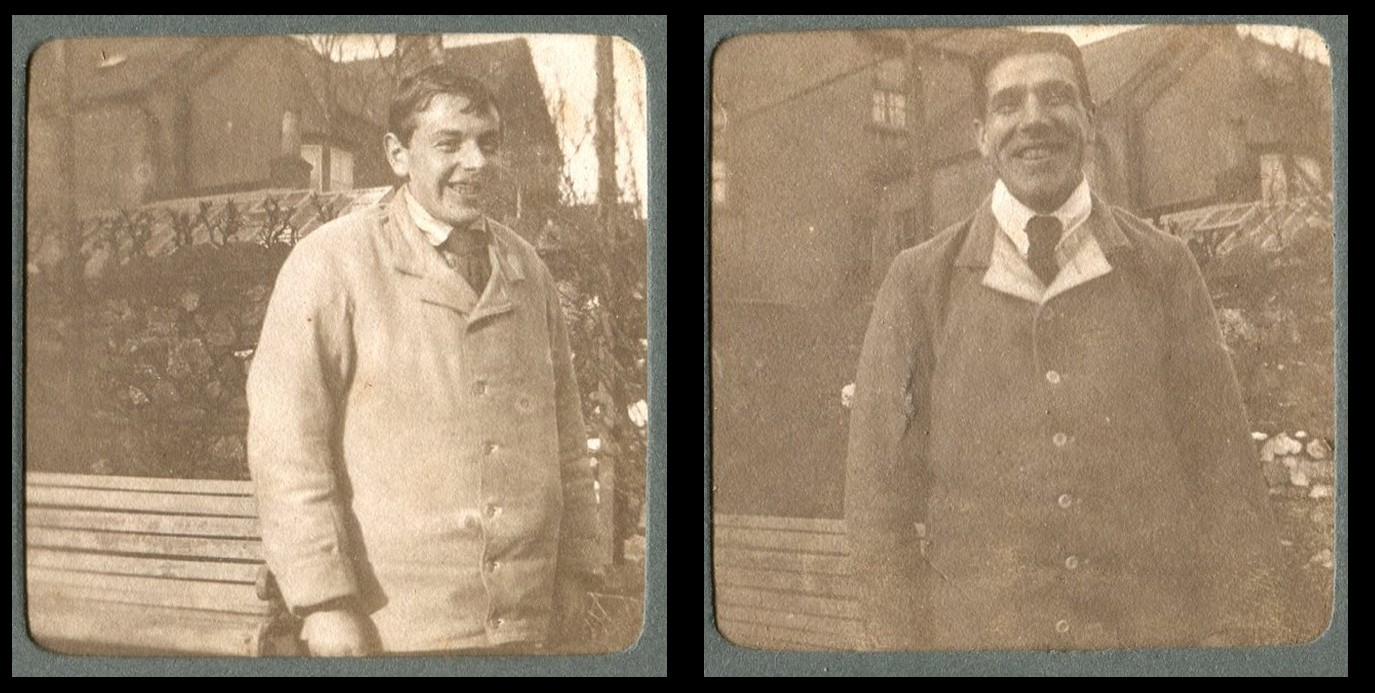
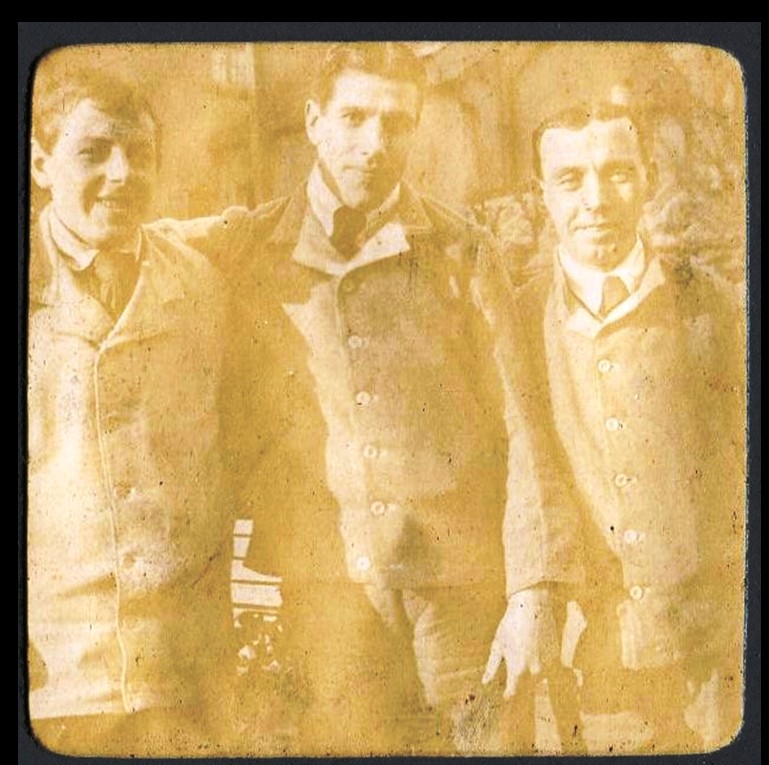
A while ago we were sent this batch of copies of historic pictures from the David family album.  We are hoping that someone may be able to help identify some of those in the pictures.

I had looked at the David family a number of years ago when I discovered Captain Thomas William David was killed on the Western Front in WWI.  His story copied below is now captured on the Roath Virtual War Memorial:

THOMAS WILLIAM DAVID

Captain, 4th Battalion, Welsh Regiment

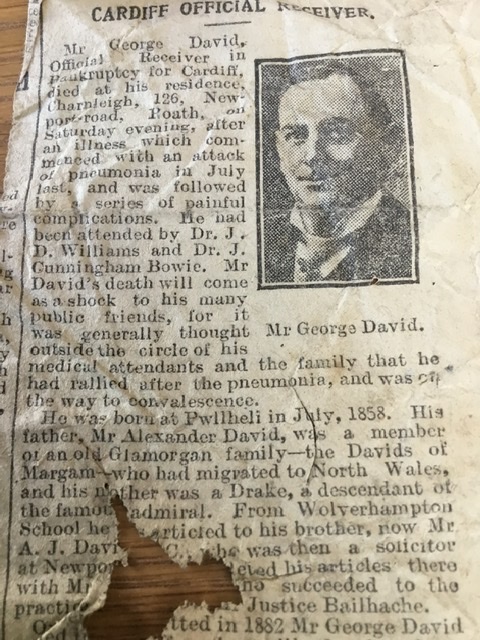
Thomas ‘Tom’ William David was born in Cardiff on 6 Aug 1891 to George David, a solicitor and the Official Receiver in Bankruptcy for Cardiff, originally from Pwllheli, Caernarvonshire and Annie Florence David née Jordon, originally from Newport, Monmouthshire. Thomas was baptised at St German church on 27 Aug 1891 and the David family lived at 126 Newport Road. Tom went to school at Arnold House, Knutsford, Cheshire before going on to study law at Keble College, Oxford.  He was a good sportsman, playing rugby and cricket for his college and also cricket for both Cardiff and for Glamorgan Cricket Club. He obtained a commission as 2nd Lieutenant on 3 Nov 1914, was promoted Lieutenant on 3 Nov 1916 and Captain on 19 Jul 1917.  He undertook training of recruits at Pontypridd and served with the Expeditionary Force in France and Flanders from 22 Feb 1917, being attached to the 15th Battalion, Welsh Regiment.  Tom was killed in action on the Yser Canal, north of Ypres on 27 Jul 1917 aged 26. He is buried in Bard Cot Cemetery, Canal Bank, north of Ypres, Belgium (Grave III.G.31).  His Commanding Officer wrote: ‘A German aeroplane with British colours dropped very close over the trench, lit a signal, and directed the German shell fire into the trench in which your brother was killed. He will always linger in our memories, and none of us will ever forget a good officer and a brave gentleman.’  He is remembered on the war memorials at St German church and Keble College, Oxford and Glamorgan Cricket Club Roll of Honour.  Commonwealth War Grave Commission record.


I’ve also recently learnt that there was a connection between Captain Tom David, Reverend Philip ‘Tubby’ Clayton and Talbot House, Poperinge.  A signed photo of Tom and a note from him are in the Talbot House Museum.

There is also a link between one of our previous blogs and the David family.  In our blog Viscount John Sankey, Lord Chancellor – Roath’s top Brief we learnt how John Sankey grew up on City Road and then lived on Newport Road, attending St Margaret’s church. He went on to become the Lord Chancellor, the top legal man in the UK government. Another solicitor who lived nearby on Newport Road at the time was George David, father of the aforementioned Captain Thomas David.  In fact John Sankey ‘had been a bar pup’ in George David’s office and George David gave him his first brief.

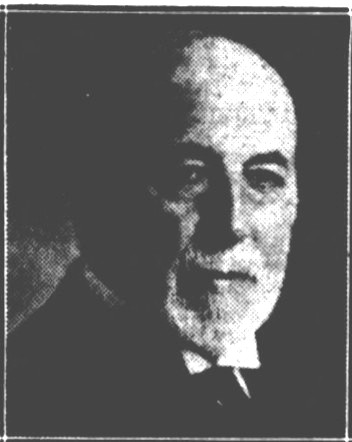
Here’s an obit of George David:

George David obituary

David Family Photograph Album

This first batch are pictures of patients at the St Pierre Hospital at 58/60 Newport Road, dated April 1917.  Two of Tom David’s sisters were nurses in this hospital and appear in the pictures. Some of the injured soldiers also appear in the pictures, taken in the back garden of 126 Newport Road, the David family home.

There is a Red Cross war memorial plaque remembering the men who died at St Pierre Hospital in St Edward’s church Penylan. One of the nursing sisters at the hospital who died in 1918 is also remembered on the memorial.  I wonder if she is pictured in any of these photographs.

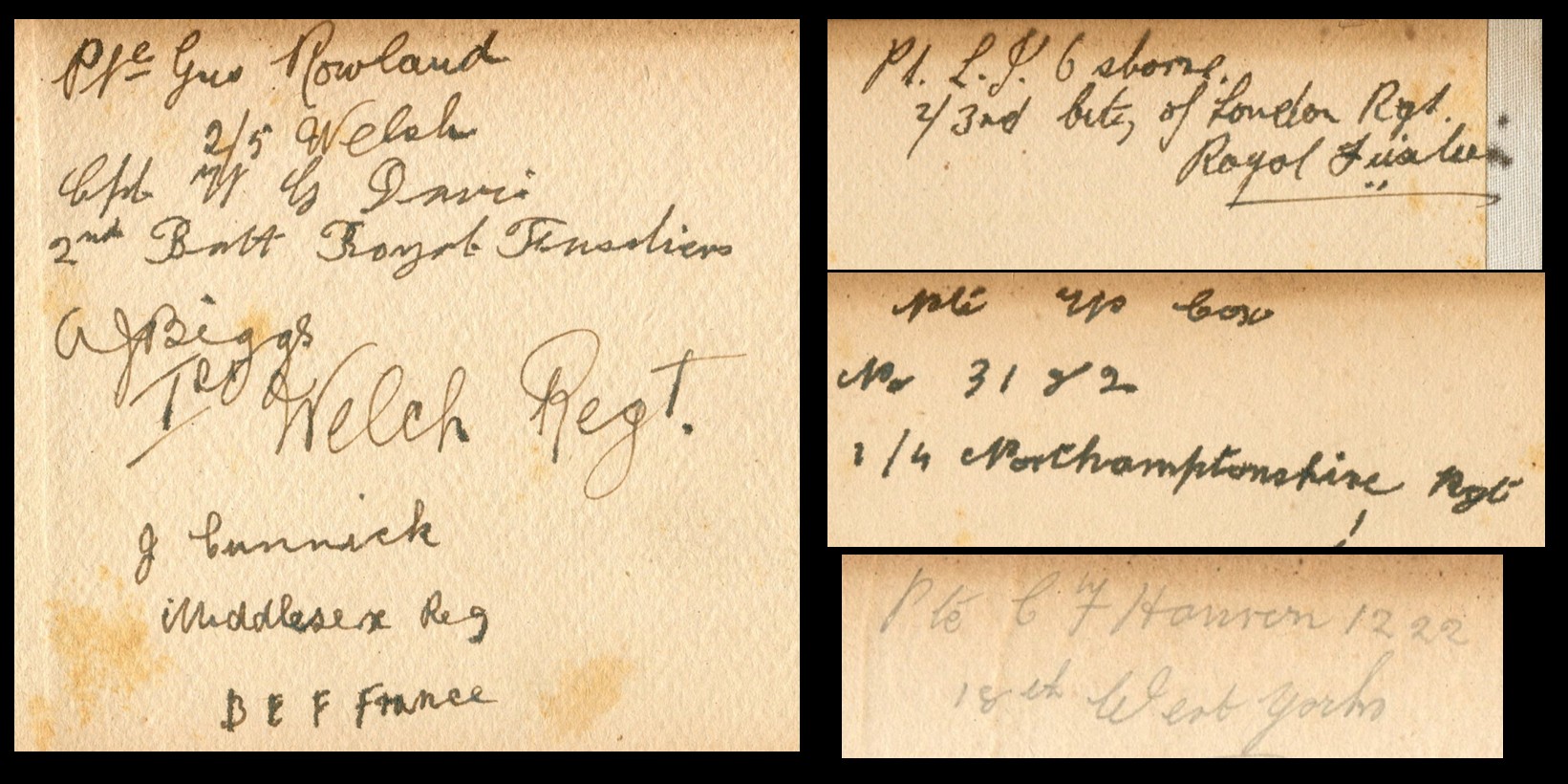
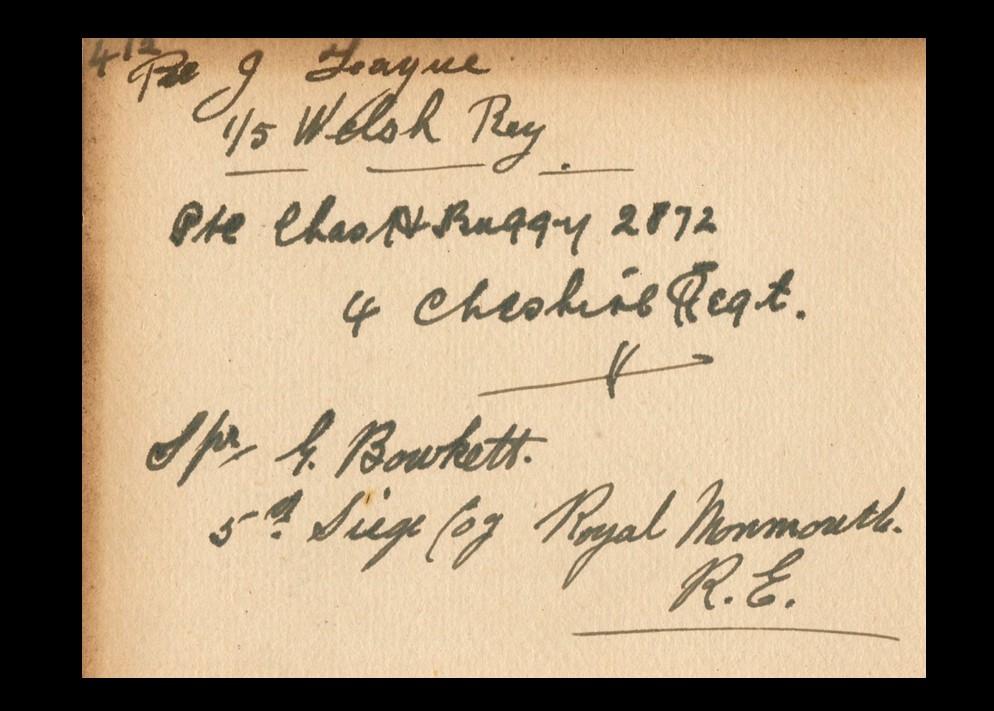
The next batch of photographs appears to be autographs of some of the soldiers who stayed at the hospital.

This last autograph included is a sketch of a ship at anchor but no further details of the vessel. The soldier seems to have been Lance Corporal W Dance? 1/2 Welsh Field Ambulance, ? M.C, Cardiff ?


This young woman isn’t a member of the David family. Her cap badge is that of a First Aid Nursing Yeomanry (FANY). The David family think she may be Elsie Agnes Courtis who was a FANY member. They have only been able to find a rather fuzzy, oblique image of Elsie among other FANYs and she hasn’t been definitely identified. The Courtis family lived in Hillside, Penylan and later Fairwater Croft in Llandaff.
The reason the family thinks it may be Elsie Courtis is rather circumstantial, she was a witness at a David family marriage and she is mentioned in family correspondence in the early 1920s.


And to finish with a couple of photos that I think we may have featured previously. The first is of a bridge that, according to notes, spanned Queen Street, Cardiff. The view is looking eastwards, out of town and the Cardiff University Queens building can be seen on the left. The second photo shows the plaque identifying the builder.

Searching for Theodora, Harold and Arthur

I spotted a post on social media last week from someone looking for the origin of the street name Theodora Street in Roath.  I already knew the basics but was keen to learn a bit more so set about doing some research.  Who would have thought it would lead to a lovely day out in rural Herefordshire.

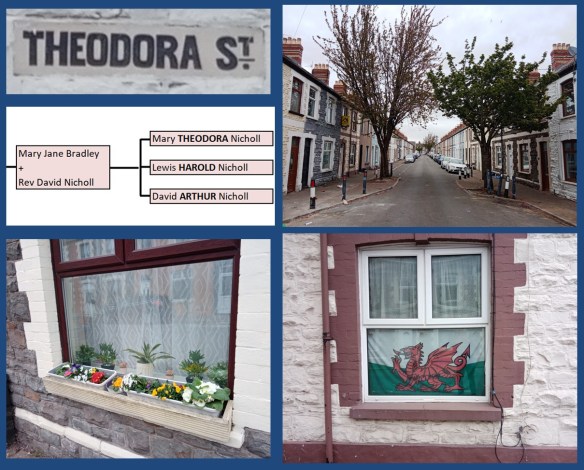
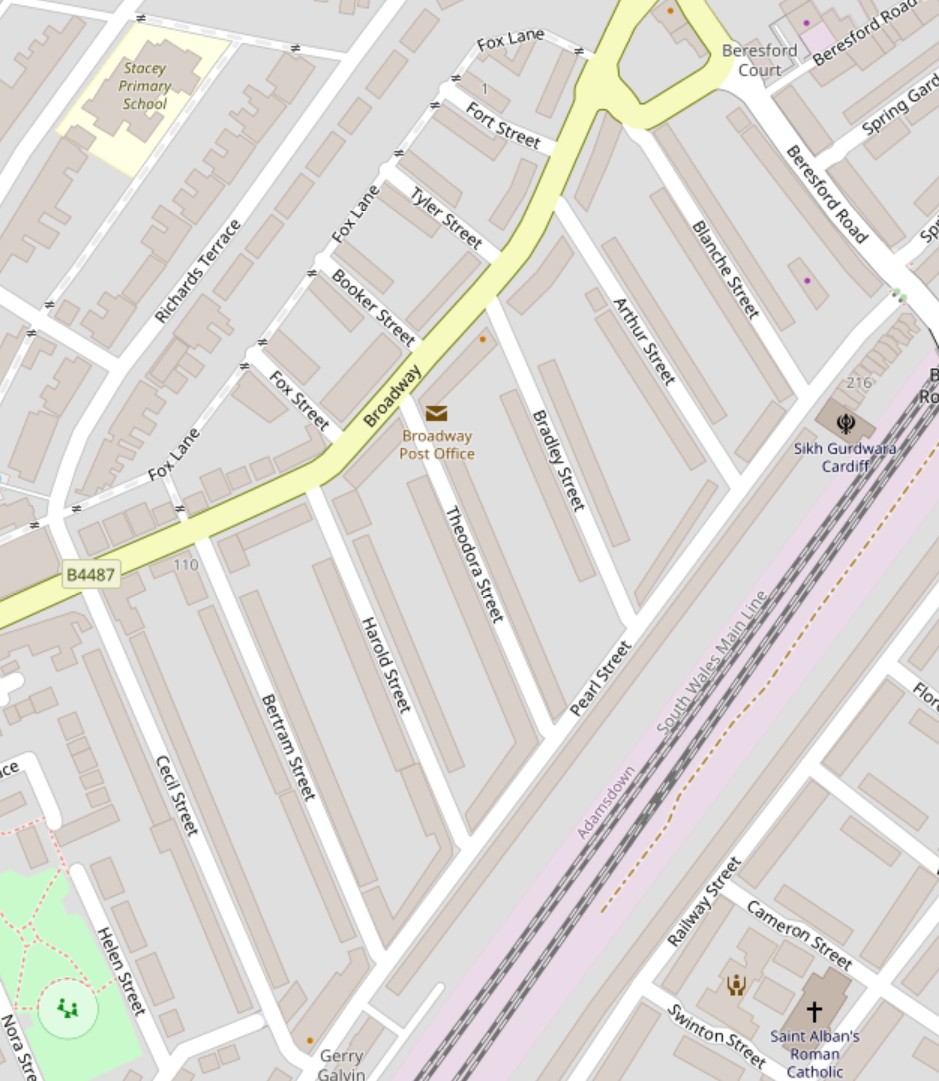
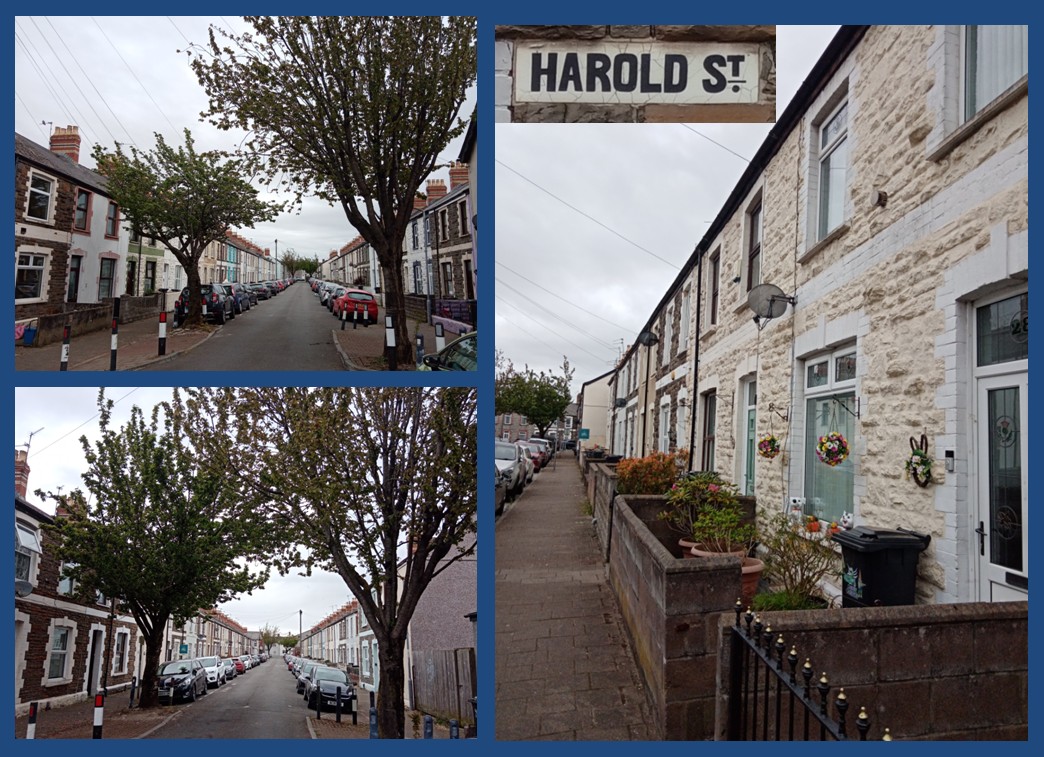
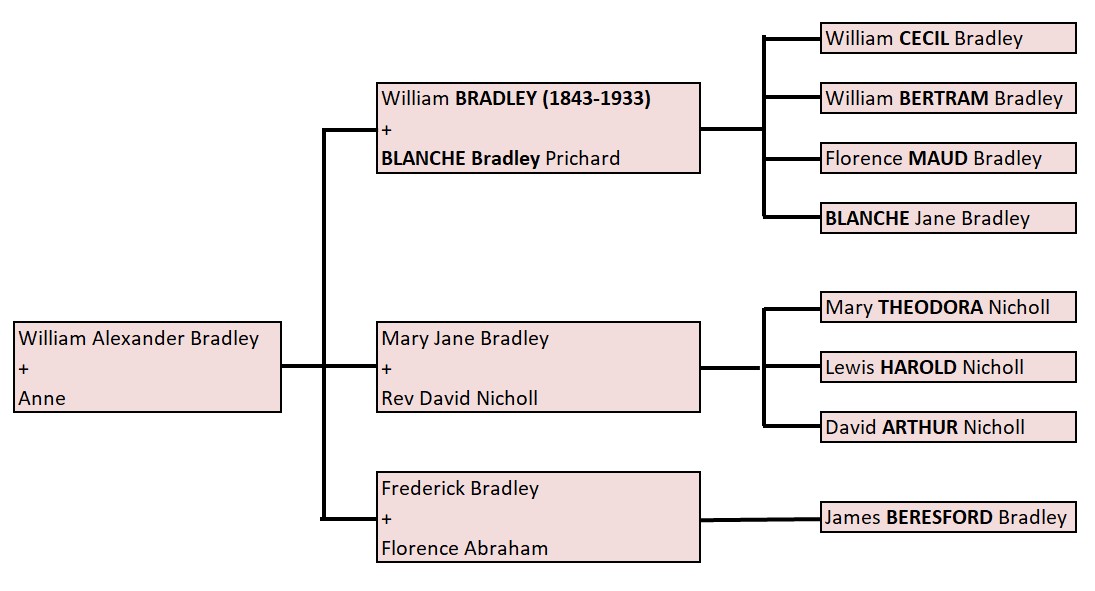
Theodora Street is one eight streets that run between Broadway and Pearl Street that were probably built in the 1870s.  The land was owned by William Bradley (1843-1933), a solicitor, who named the streets after his children, Cecil, Bertam, Blanche and Maud (later renamed Bradley Street).

William Bradley, Cardiff solicitor and landowner

 The problem was that he had more streets to name than he had children.

Bradley streets, Roath, Cardiff (Ref: Open Streetmap)

Instead, he turned to the using the names of his nieces and nephews.

Beresford Road it seems is named after his nephew James Beresford Bradley, child of Frederick and Florence Bradley.

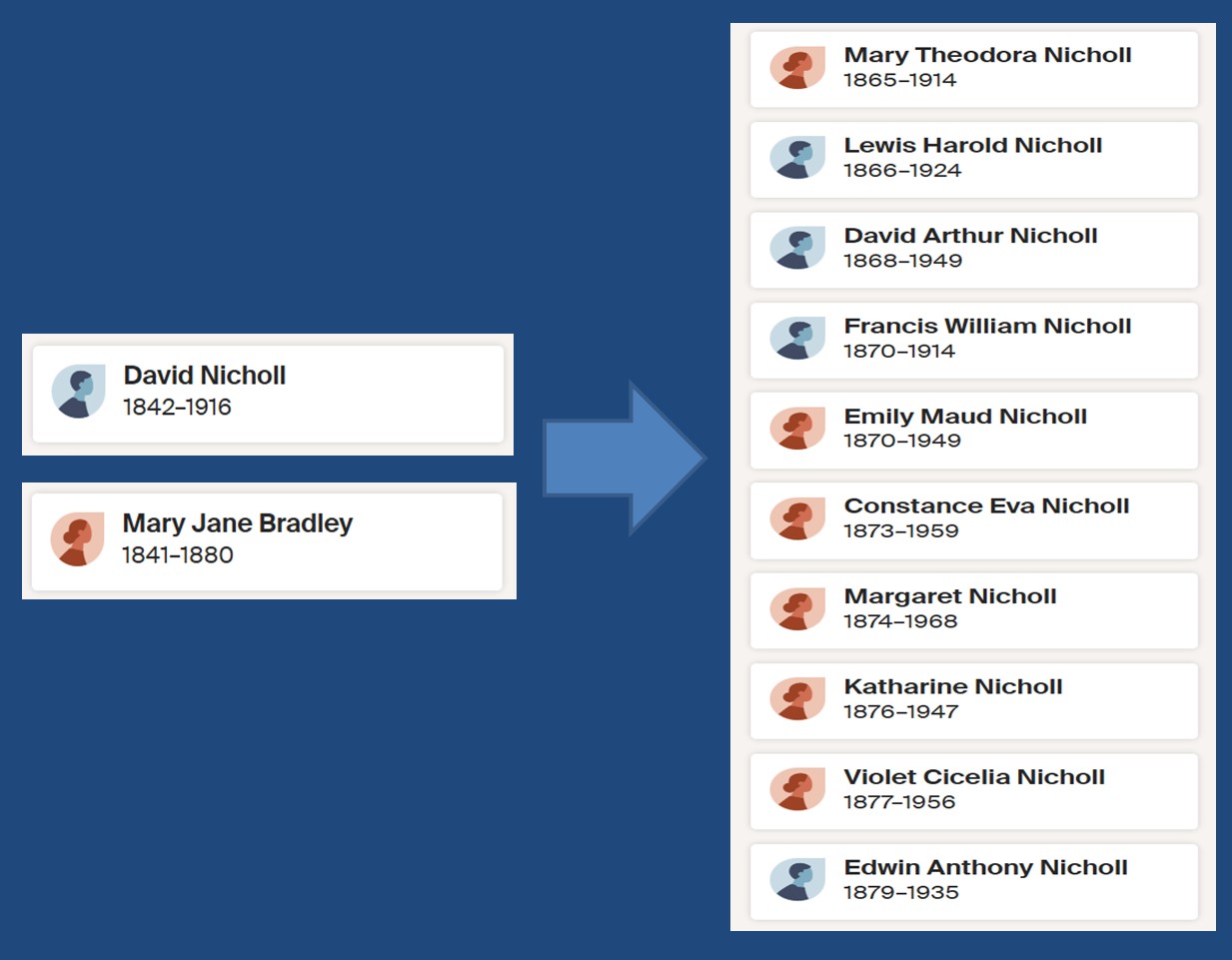
The three remaining streets, Theodora, Harold and Arthur Streets are named after three of his sister’s children.  She was Mary Jane Bradley (1841-80).  She married Rev David Nicholl (1842-1916), the rector of the church in St Brides Super Ely, just outside Cardiff, in 1863. In fact they had ten children together so her brother could have kept building streets – there were plenty of names in reserve.

After marrying Rev David Nicholl became a rector in Llanelli for a short time before they moved to the hamlet of Edvin Loach, Herefordshire where he became rector of St Mary’s church in 1873.  He was rector at St Mary’s for the next 40 years and lived in the nearby rectory.  Having now been there I can understand why he was in no rush to move on.  It’s remote and idyllic.  But then again I did visit on a beautiful spring day and there was a giant hare hopping around the graveyard.

Edvin Loach church, Herefordshire

The day before I visited I had spent researching the Nicholl family history.  It was quite intriguing.  The one thing I noticed when I put the Nicholl family tree together on Ancestry was that nobody else seemed to have researched them.  The reason for that slowly became evident.  Of the ten children Rev David Nicholl and Mary Jane had together, few married and even fewer had children.  I can only find two grandchildren and I think the Nicholl family line may be sparse or have even ended there.

Nicholl family tree (as built in Ancestry.co.uk)

Mary Theodora was the first of the ten children born to Rev David and Mary Jane Nicholl in 1865.  Mary Jane, her mother, tragically died in 1880, the year after her tenth child was born.  In the 1881 census we see Rev David Nicholl living in the rectory in Edvin Loach with the children and a governess and a servant.

One reason I had been keen to visit the church was that I could find no mention of Mary Theodora Nicholl in the newspaper archives.  She died in 1914 of heart disease, aged just 49, still living with her father in the rectory.  I assume that, as the eldest child of widowed Rev David Nicholl, she grew up filling the motherly and vicar’s wife role in the church, as would may have been traditional at the time.

I was interested in knowing if she is buried at the church. The pictures I had seen of St Mary’s church in Edvin Loach showed few graves and there weren’t many recorded on the ‘findagrave.com’ website either.  As I approached through the narrow lanes a small signpost directed to take a turning along a 200m unsurfaced track up to the church.

There are two St Mary’s churches on the site.  The original, which dated back to the 1100’s is now a ruin, owned by English Heritage. It is tiny, with herringbone stonework in the walls, low lintels and no roof.  The ‘new’ St Mary’s dates from the1860s.

Edvin Loach old church

After watching the hare make his/her escape through the fence into the field I set about looking at the headstones.  There were certainly more than I had expected looking at the photos online but the graveyard was by no means packed with headstones which meant some may have been lost over the years to weathering etc.

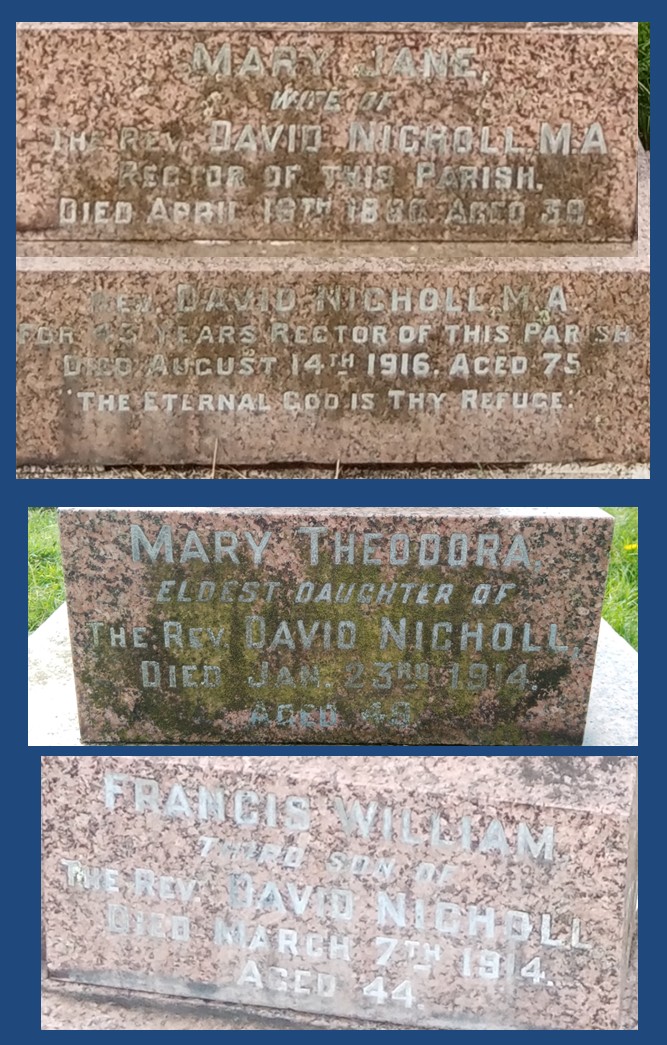
As I neared the church porch I struck lucky.  There was the grave of Rev David Nicholl and his wife Mary Jane who had predeceased him by 46 years.  Also buried in the grave is Mary Theodora. The pink granite headstone in the shape of a cross is in good condition.

Grave of Mary Theodora Nicholl at Edvin Loach with old Rectory where she lived in the background.

 The other burial in the same plot is Theodora’s brother Francis William Nicholl.  He was a solicitor who died the same year, 1914.  He had tragically taken his own life.  His inquest heard how he had been suffering pain due to a medical condition as well as having financial issues.   

Inscriptions on the Nicholl headstone

Having explored the outside of the church I tried the door and found it open.  It was lovely, with a vaulted timber roof, cream walls and a dozen pews as well as stain glass windows.  As I examined the plaques on the walls and I was in for another surprise.    There was a plaque to both Rev David Nicholl, his wife Mary Jane and on the opposite wall a plaque to Mary Theodora, perhaps signifying the prominent role she had played in the church after her mother’s death.

Rev David and Mary Jane Nicholl plaques in Edvin Loach church, Herefordshire.
Plaque dedicated to Mary Theodora Nicholl in Edvin Loach church, Herefordshire

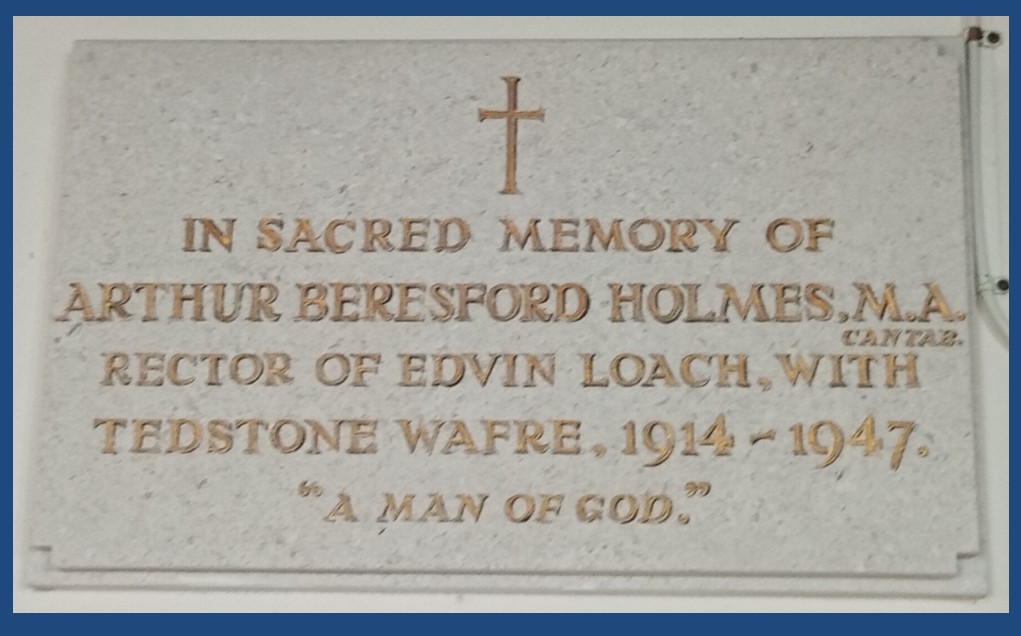
I was in for one more surprise.  There is another plaque in memory of the vicar who followed on from Rev David Nicholl.  He was Arthur Beresford Holmes.  Is it purely a coincidence that a man with the middle name Beresford went to live in the rectory where Mary Jane Bradley had lived, who had a nephew called John Beresford Bradley after which Beresford Road in Cardiff seems to be named?  I can’t find a connection but maybe a keen sleuther could turn something up.

Plaque dedicated to Arthur Beresford Holmes, Rector of Edvin Loach 1914-1947. A relative of Theodora or is the name Beresford just a coincidence?

 Edvin Loach seems a long way from Roath.  I was left wondering if Mary Theodora ever visited Cardiff to see the street named after her.

Theodora Street, Roath Cardiff and Mary Theodora Nicholl headstone in Edvin Loach church

Before I left this lovely location I had a few more things to see, not connected with the Nicholl family. When I’m not huddled up over a laptop doing local history research I’m often to be found out walking in the countryside.  To give me an excuse to visit new and different locations I visit hills, trigpoints, benchmarks and find geocaches that people have hidden.  It turned out that Edvin Loach had an example of all four of these. There is a cut benchmark on the wall of the new church, the church spire itself is a type of trig point (an intersected station) and the prominent position of the church classifies it as a TuMP (a hill with a 30m promontory).  There is even a tiny geocache hidden at the turn off to the church, which I must admit took me a while to find.  It hadn’t been found for over a year so was a bit of a challenge. Anyway, that’s enough of my nerdy hobbies.  After going to find a couple more trig points nearby and eating my marmalade sandwiches it was back to the local history.

Inside Edvin Loach church and the benchmark on the church wall outside.

My focus now was Lewis Harold Nicholl (1867-1924) after whom Harold Street in Roath is named.  Like his father and indeed his grandfather before him, he went into the church and became a rector. He was born in Bodenham, Herefordshire on 18 May 1866.  He attended Hereford Cathedral School before going on to St John’s College, Cambridge University and became a priest in 1890.  He held positions in the church in Thornbury, Gloucestershire, Ludlow, then Ribbersford, Worcs and Bewdley.  He was there for two years before his heath broke down and he sought warmer weather by going to France (1904-14) where he was Chaplain at the Church of England Christ Church, Pau, South of France.  At the outbreak of WWI he returned to England and became assistant curate in Clifton, Bristol before becoming Curate in Bredenbury, Herefordshire from 1916 until his death in 1924.

Harold Street in Roath, Cardiff

My next stop was therefore Bredenbury church to see if there was any mention of Lewis Harold Nicholl.  He had actually died in Bournemouth where he had gone to try and recuperate from another illness but had died on 21 Nov 1924.

Bredenbury Church, Herefordshire

St Andrew’s at Bredenbury is another lovely Herefordshire church.  The first thing I noticed was the large number of headstones in the graveyard so I wasn’t too confident about finding Harold’s grave.  Being the rector however I guessed he may have had a fairly prominent burial plot. I walked around the perimeter of the church and after a few minutes I spotted it, an unusual flat coffin-shaped stone slab with raised cross.  It looked rather splendid today surrounded by primroses and other spring flowers.

Lewis Harold Nicholl grave, Bredenbury church.

He had married Lilian Theodora Williams in Thornbury, Gloucestershire in 1893.  She passed away when they lived in Pau, France which probably explains why they are not buried together.

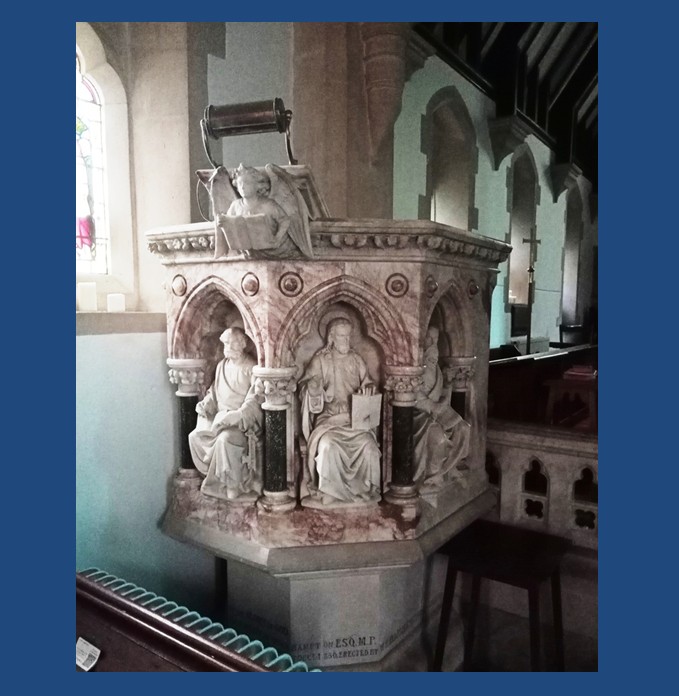
This church was also open.  The highlight here was a wonderful carved marble pulpit. Now that must have taken some time to do. 

Carved marble pulpit at St Andrew’s church, Bredenbury

My final stroke of luck for the day, at least from a local history point of view, was finding the brass wall plaque to Lewis Harold Nicholl.  It was good to see him remembered. His newspaper obituary records that ‘he was much respected by his fellow clergy in the Deanery and had endeared himself to his parishioners by his sincere and quiet manner. They found him a homely parish priest who shared with them alike in their joys and sorrows’.

Plaque to Rev Lewis Harold Nicholl at Bredenbury church

In the 1921 census records he was living next door to the church at the rather grand rectory with his two unmarried sisters Emily Maud and Katherine and two servants.

The Rectory at Bredenbury, home of Rev Lewis Harold Nicholl and two of his sisters in 1921.

To finish off a splendid day I took myself off to Bromyard Downs for a two mile walk and some more geocaching before heading home through the Herefordshire countryside.

So having found Theodora and Harold that just left Arthur but unfortunately I found little more than I already knew about him and again no picture.  Arthur Street in Roath is named after David Arthur Nicholl, nephew of the landowner William Bradley.  Arthur was born in Llanelli in 1868, son of church minister Rev David Nicholl and raised in the Bromyard area, Herefordshire. After leaving Hereford Cathedral school he went on to gain three degrees from Cambridge University including law.  He married Hilda Maude Chalmers-Hunt in London in 1913 but they appear not to have had children. His career was spent as a Solicitor and Town Clerk including at Scarborough (1900-12) and Wandsworth Council (1912-34) where he was awarded an OBE for his services. He died in 1949 in Bournemouth.

It seems a shame having looked at the Nicholl siblings who gave their names to three Cardiff streets not to briefly mention the other seven.

Nicholl family tree (as built in Ancestry.co.uk)
  • Francis William Nicholl was mentioned earlier, and is buried with Theodora at Edvin Loach.
  • Emily Maud Nicholl, lived until 78, and died in Staffordshire.  She never married.  She lived with her sister Katherine for most of her life in the Bromyard area.
  • Constance Eva Nicholl, died aged 84 in Staffordshire and again never married. She had a career in nursing all around the country, in both midwifery and as a general nurse. Her nursing records describe her as ‘an educated and refined woman, but not very suited to the work of a district nurse’.
  • Margaret Nicholl, had a career teaching in private schools and died unmarried in Malvern in 1968 aged 94.
  • Katherine Nicholl, died a spinster in Malvern in 1947, aged 71. There is no mention of her having a career. She lived with her parents then her brother then her sister.
  • Violet Cecilia Nicholl, married farmer Albert Bishop and lived in the Worcestershire area and died aged 75.  They had two children, Violet, who died unmarried and Edwin David Bishop who did marry and may have had children, the only possible offspring of the Nicholl family I could find.
  • Edwin Anthony Nicholl, married Isabel Frances Diver in 1916 when he was serving in the army.  After the war they ran a guesthouse in Lynmouth, Devon. They don’t appear to have had children. Edwin was tragically killed in 1935 as a result of a road traffic accident in Welyn Garden City.  He was heading to his allotment on his bicycle aand carrying a garden fork when he was in collision with a lorry.  Witnesses stated he had only one hand on the handlebars.

And on that sad note it is time to leave this insight into the three Nicholl children who gave their names to three Roath streets.

I would be interested in hearing from anyone who can add anything to their story.

If anyone ever does find themselves in the Bromyard area of Herefordshire I would encourage a visit to the churches in Edvin Loach and Bredenbury, in particular on a fine spring day.

William Bradley family tree and street names in Roath

Farming in Llanedeyrn

Under the feudal system the manor lands consisted of the lord’s demesne and the lands of the tenants. In addition there were woodlands, commons and wastelands which provided wood, turves and pasture for cattle.  The change to money rents, the growth of hired labour, the sale of produce and the extension of leasing all combined to hasten the decay of the feudal system.  This would seem to account for John, son of Richard de Sutton, Lord of Malpas, holding land and collecting rents in Llanedeyrn.

By the 16thC most men had gained their freedom, however a quit rent claim for land in Llanedeyrn owned by the Kemeys family shows that the old ways lingered on.  Graig y Llwyn, high up on the ridge in the north of the parish is the only farm known to belong to the Kemeys family from 1650 together with Cae Sir Howell, a small area of meadowland.  Ty Coch (south of Hollybush Road) seems to have belonged to the Kemeys family since 1702

In his list of things necessary for a good farm or dairy, Randall Holmes (c 1688) listed items for use in the barn, in the stable, in the cow house, in the cart shed and in the farmer’s house.  These included digging tools, shovels, spades, pickaxes and mattocks, various kinds of weeding tools, tools for cutting scythes, sickles and pruning hooks, bills saws and hatchets, sharpening and splitting tools, rakes, mauls and forks, flails, winnowing sheets and ladders. In the absence of oxen or horse power, various forms of wheel barrows were necessary.

In the middle ages young cattle were reared on the uplands before being fattened on the pastures in the lowlands.  It was this tradition which led to the practice of droving which was at its peak from the 17thC to the coming of the railways.  Both cattle and sheep were supplied from Wales.  They would walk along traditional routes, grazing at the roadside and in rented pastures as was probable at Cross Farm in Llanedeyrn.

The Kemeys Tynte estates were surveyed by William Jones in 1767 showing their holdings in the parishes of St Mellons, Llanedeyrn and Llanishen.  No acreages are given but the map shows 111 tenancies.  In Llanedeyrn these included Bridge Farm, Capel y Celin, Church Farm, Cwrt Tregarreg, Y Grose, Malt house Farm, Nant y Draenog, Pentwyn, Pont Brenni, Ty Gwyn, Tytomaen, Tyn y Ffynnon and Farm Shillian from 1788, 13 farms in total.

Between 1798 and 1828 H.A. and J.W. Beiderman of Tetbury in Gloucestershire were the principal land agents on behalf of the Kemeys Tynte family.   On 15 July 1803 H.A. Beiderman makes reference to the rebuilding of a stable at Cefn Mabli and on 3 Sept the Steward at Cefn Mabli, George Emerson is writing direct to C.J. Kemeys Tynte enclosing a rough sketch for building a stable and coach house for £128.  In 1807 H.A.Beiderman is writing to C.K. Kemeys Tynte Snr thanking him for his approval to exchange some lands “which will be a great acquisition to Cefn Mabli”.

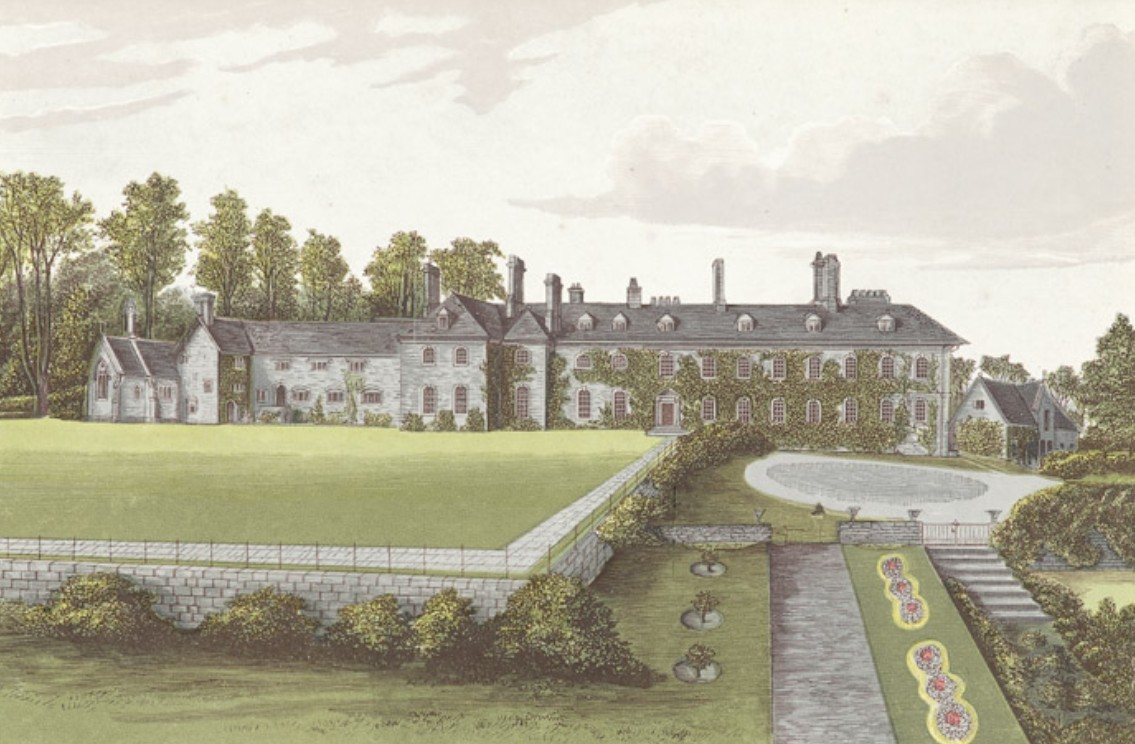
Cefn Mably House (National Library of Wales and Wikipedia – Public Domain)

In Jan 1824 J.W.Beiderman writes to C.J.Kemeys Tynte Snr that “those that had notice to quit, have paid their half years rent and have promised to be punctual in future”.  In Feb 1824 he writes again still worried by the uncertainties of being able to collect the rents and in July 1827 he is naming names and commenting “that it is to no purpose letting them go on any longer, and as the crops this year are very good it will be the only time to secure the rent due from them”.  Later Beiderman authorizes immediate expenditure on thatching following a severe storm and urges C.K.Kemeys Tynte Snr to improve the land drainage around Cefn Mabli House.  Other items refer to the repair of barns, the provision of new stables and a pigs sty (the latter urgent).  By 1847 he writes to say that” the greater part of the tenants paid their rents remarkably well at Keven Mably and I have remitted…for Miss Tyntes account £2000”.

In 1801 the Home Office organised a national survey by diocese and parish asking the clergy in each parish to note the acreage devoted to each crop, but were not concerned with pasture or meadowland. Unfortunately the returns for Llanedeyrn are missing but over Wales as a whole oats were grown on 38% of the arable land, barley 29%, and wheat 22%.  By comparison, most of the land was used for pastoral farming.

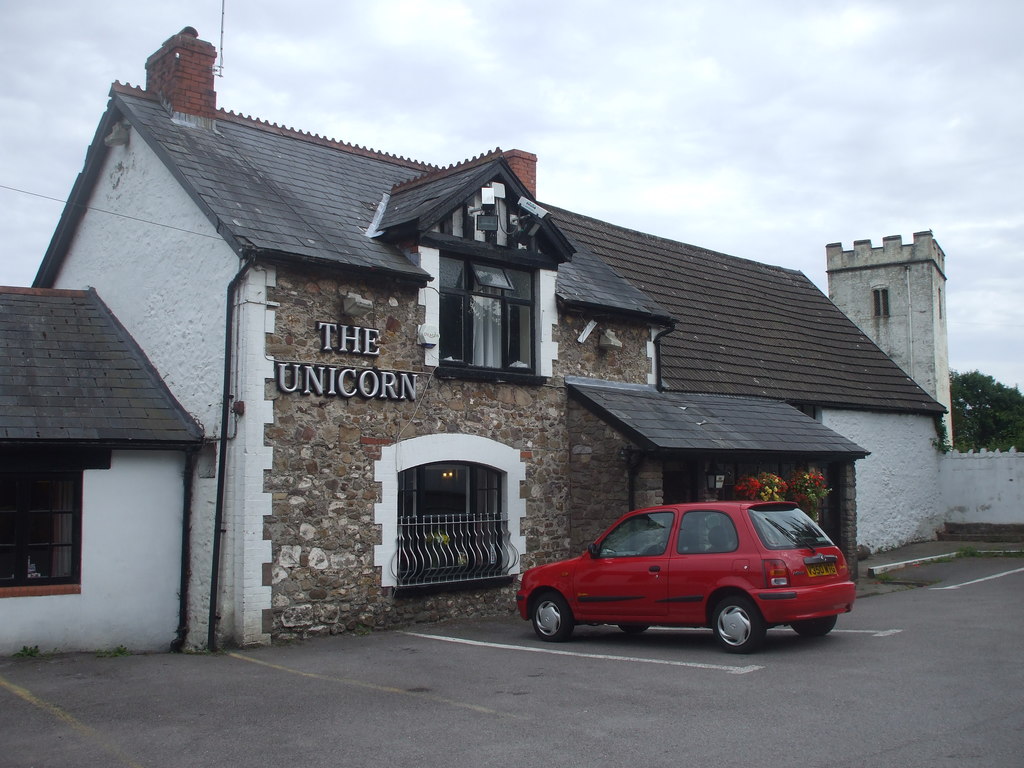
Evidence from the 1844 Tithe Award for Llanedeyrn shows that the 3 most important land owners held 88% of the total acreage, the remaining 12% being divided between 12 small landowners having between 10 and 15 acres each.  However these small land owners accounted for 55% (21) of the farms in the parish. Farms of less than 50 acres were generally cultivated by the farmer and his family who were likely to have other occupations. The 19 acres farmed by Thomas Roberts in 1844 supplemented his other occupation as landlord of the Unicorn Inn.  Often these small units were absorbed into larger farms, as was the case of Gwern Iddi, which had been amalgamated with Ty Draw Farm by 1844.  By 1873 out of a total of 28 farms 9 were under 50 acres in size, 14 were between 51 and 100 acres and 5 between 101 and 300 acres.

Unicorn Inn, Llanedeyrn in 2010 (Pic: Geograph.org.uk © Copyright John Lord and licensed for reuse under this Creative Commons Licence)

Family continuity in tenancies is a feature of large estates and the Cefn Mabli estate is no exception. David Jones held the tenancy of Pant Glas from before 1841 to 1851 by which time he was 80 years old. His son in law Edward Thomas had taken over the tenancy by 1861, and he was succeeded by his own son John Thomas who was still there in 1911.  At the time of the sale of the estate in 1920 his wife Ann appears to have purchased the farm and she remained there at least until 1937.  The farmhouse was located in North Pentwyn presumably part of the 30 acres of freehold land purchased by Cardiff CC for £200,000 in 1972.

Following the end of the Napoleonic wars in 1815, agriculture in South Wales was adversely affected by fluctuating wheat prices, wet harvests, and poor crops of potatoes culminating in a disastrous crop in 1846 coinciding with the Irish potato famine between 1845 and 1849.  The continuing bad weather and foreign competition led to arable land giving way to grass especially to dairy farming in South Wales.  On the basis of the tithe awards arable land accounted for 45% of the farmland on the Cefn Mabli estate between 1839 and 1846.  By 1920 this had declined to 29%.  Llanedarne Farm was even more dramatic falling from 40% arable land in1844 to having no arable land in 1920.

After a period of rent reduction, rents showed a steady rise between 1850 and 1860 and the growing interest in farm improvement is indicated by the rise in membership of the Glamorgan Agricultural Society from around 100 in 1830 to 350 in 1837. In 1831 64 (94%) of the 66 families in the parish were employed in agriculture either as farmers or as agricultural labourers.  Only 3 residents were employed in non-agricultural occupations.  By 1841 farmers and agricultural labourers formed 88% of the occupations, but only 14% by 1891.

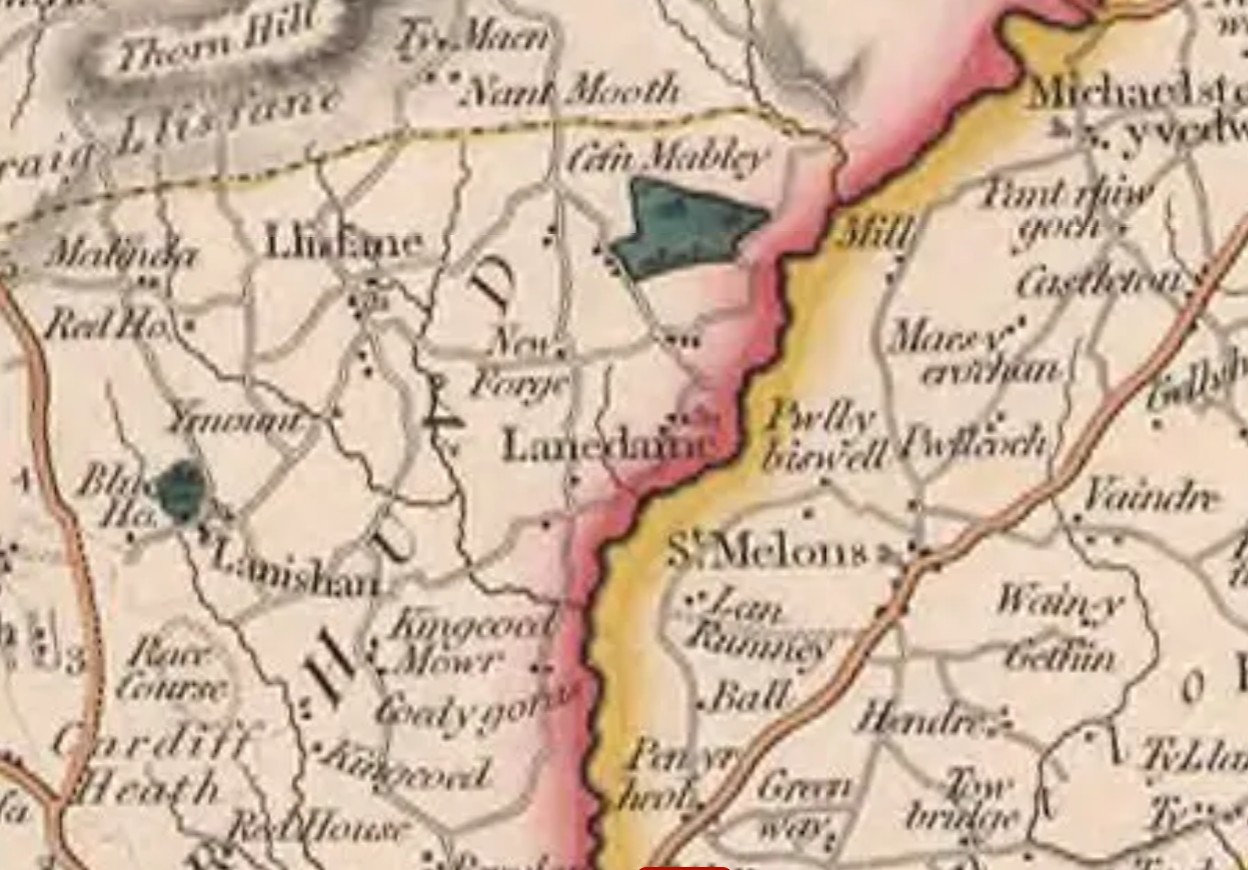
Carey’s Improved Map of England and Wales 1830

Cattle were valued for their meat and milk and oxen as draught animals.  Improvements of breeds were encouraged by the Agricultural societies.  Fox (1794) notes that “ towards Pontypool and Newport the dark brown Glamorganshire kind are much esteemed “. Because pigs were kept on a domestic basis, improved breeds did not appear so quickly as with cattle, sheep and horses.  In woodland areas common grazing rights often allowed pigs to feed on acorns and beech mast, but in dairy farming areas the fed on whey. B y 1920 most farms in Llanedeyrn had a pig’s cot.  All the farms had accommodation for horses having 2, 3 or 4 stalls and on the larger farms more than one stable.

Specialised dairy farming is known to have existed in the 17thC with butter and cheese being sent across the Severn estuary to the West of England markets.  Eight cowmen lived in the parish in 1861 and 4 Heads of households were described as milk farmers in 1891.  With the increasing conversion to dairy farming in the parish, the Kemeys Tynte sale catalogue (1920) itemises cow houses, dairies, calf pens, bull houses and fowl houses.  Nineteen farms had cow houses, the largest being at Pentwyn, Tytomaen and Maes y Bryn.  Few dairies were separately located in the farmyard.  Most farmhouses in Llanedeyrn fad a dairy inside the farmhouse as at Church farm, Gorswg and Bridge farms.  Hens were kept for their meat, eggs and feathers and other birds which might be kept were ducks geese and turkeys.  Keeping hens under cover was practiced from the 18thC.  The Kemeys Tynte sale catalogue (1920) lists pig’s cots with fowl houses above them (for warmth) at Pentwyn, Tytomaen, Tyn y Ffynnon, Cwrt Tregarreg and several other farms in the parish.

Changes in ploughing techniques began in the 18thC, when horses gradually replaced oxen. Improvements were also made to the plough, usually based on the design of the Rotherham Swing plough patented in 1730 which introduced a lighter wooden frame and an improved curved mould board.  A similar plough was built by John Aubrey at New Forge, Llanedeyrn and used at Cwrt Tregareg before finding its final resting place at the National History Museum at St Fagans. Cart sheds were found only on the larger farms before the 18thC.  Most were open building approached from the side as at the Home farm at Cefn Mabli where the construction was of timber and slate.  In Llanedeyrn they were sometimes called wagon sheds, often with a granary on the first floor as at Bridge farm and Pentwyn. Early horse engines were housed in a building adjacent to a barn.  Early designs needed 4-6 horses to drive a threshing machine, but with later improvements only 1 or 2 horses would be required.  Mobile steam engines came into general use after 1854, and engine driving as an occupation appears in the Llanedeyrn census returns for 1871 and 1891.

This is a previously unpublished research paper authored by the late Malcolm Ranson in 2013.

Trick Cycling on the Rec

The installation of the new cycle and pedestrian route in Roath Recreation Ground last year certainly raised some criticisms.

What many however may not realise is that the Rec used to have cycle lane around it.  Cycling was a popular a pastime at the turn of the 19th century.  In a letter to the editor of the South Wales Echo in 1897 one reader was encouraging cycling in one direction only and that children should keep to the grass.

I recently came across some pictures in a book Cardiff Remembered by journalist Brian Lee of Welsh Champion trick cyclist Billy Brian taken at Roath Park Rec. I thought I’d have a look to see if he had any local connections and sure enough he did.

Billy Brian prforming his balancing acts at Roath Park in 1905.

On 1st April 1904 it was announced that Billy Brian would be attempting to ride from Newport to the recently opened Moon & Stars Hotel, Roath and if successful be presented with a cup by C.F.Lee, (grandfather of Brian Lee the journalist previously mentioned I think).

Western Mail 1st April 1904

The attempt was indeed successful and Billy was presented with the cup on April 4th 1904.

The Moon and Stars was on Cyfarthfa Street and was a temperance hotel i.e. only served non-alcoholic beverages. It had a short lifetime and closed after about a year.  Mentions of the Moon and Stars in the press:

Western Mail 23rd May 1904
Western Mail – 13th Aug1904

Some of Billy Brian’s other feats:

Western Mail – 11 June 1906
Evaning Express: 11th Aug 1906
Evening Express: 4th Jul 1908

The above cutting refers to number of interesting aspects:-

Cycling backwards from Abergwynfi to Caerphilly, a distance of nearly 4½ miles in 13 minutes:  I don’t understand this as Abergwynfi and Caerphilly are more than 20 miles apart by road so it looks like the time and distance are incorrect or the names towns?

He won first prize at the Sophia Gardens sports when the famous comedian, the late Dan Leno, presented him with the prize. Dan Leno died in Oct 1904 so the presentation must predate this.

He cycled backwards from Newport to Cardiff…….. : Already covered previously.

He also rode backwards up Leckwith Hill and “Tumble Down Dick”:  I have never heard the Tumble referred to as Tumble Down Dick previously but it apparently comes from a story that it is where the stagecoach of Richard Cromwell (the son of Oliver Cromwell) struck a pothole with such a jolt that the impact threw him from his seat and out onto the road.

Brian gives exhibitions at local social functions, and is sometimes assisted by his nephews Charlie and Edward Brian, who are also very clever trick cyclists: I’ve researched the Brian family tree and one of Billy Brian’s nephews was Charles Phillip Brian b.1898, died in 1919 of pulmonary TB after serving in WWI and is buried in Cathays Cemetery. He is remembered on a memorial plaque thought to have been in Clifton Street Calvinistic Methodist chapel.  

He is trained by F.G.Churchill of Cardiff and has been training for about five years: This looks to be Frederick George Churchill, a sign writer living in Treharris Street, Roath in 1911.

When Billy Brian’s son, also called Billy, was interviewed in 1997, aged 84, he recalled that the great German trick cyclist Bud Snyder, who was appearing at the Empire Theatre at the time, begged his father to join him in his act. But he turned him down, and stayed with Spillers and Bakers where he worked as a clerk for 40 years.

Among other places Billy Jnr recalled his father trick cycling was backwards around Roath Park Lake and up Thornhill.  He said he continued trick cycling into his 50s and then took up the piano as he loved the idea of entertaining people.

Brian Family History

Billy Brian was born William O’Brien on 27 Aug 1881 at 11 Garth Street, Newtown, Cardiff.  He was the youngest of seven children born to John O’Brien, a labourer, originally from Clonakilty, County Cork, Ireland and Margaret O’Brien nèe Whelan also originally from Ireland.  

William O’Brien, Birth Certificate

Billy’s mother died when he was less than a year old and his father never remarried.  Billy it seems was bought up by his father and older siblings.  By 1891 the family had moved to 118 Cyfarthfa Street, Roath.  In 1901 the family were living at 25 Croft Street and by now William was working as a clerk in a flour mill.

The spelling of the family surname changed over the years, which wasn’t unusual at the time.  In the 1901 census it had changed from O’Brien to O’Brian.  Shortly afterwards it appears they dropped the ‘O’ and the whole family adopted the surname Brian.

Billy’s trick cycling exploits seem to have been around the years 1904-1908.  In the summer of 1910 he married Florence Thomas, originally from Newport. At the time of the 1911 census Billy and Florence were living at 92 Glenroy Street, Roath.  In 1915 they had a son, William Lionel Brian.  At the time of the 1921 census they were still living at 92 Glenroy Street and Billy working as a flour milling clerk for Spillers Industry Ltd in Bute Street.  By 1939 he had retired and was living at Heol Nest, Whitchurch.  He died in Cardiff on 8 Feb 1951 aged 69.

Billy Brian is buried at Cathays Cemetery.  After a bit of a search I managed to locate his grave (plot C2115) where the stonework is somewhat damaged but could still make out his name.

Billy Brian’s grave at Cathays Cemetery (plot C2115).

So next time you cycle or walk along the new cycle/pedestrian route on the Rec think of Billy and the awesome feats he achieved and that he practiced those skills here on Roath Recreation Ground.


Newspaper cuttings from Find My Past or Wales Newspapers Online.