Lynn Davies – A leap away from Roath.

I admit it is borderline whether we should include Lynn Davies as a person from Roath.  I was lucky enough to have a quick chat with him recently and by just by virtue of the fact that he is a thoroughly nice man I think we should do our best to include him.

The Olympic gold medal long jump winner in the Tokyo 1964 games was born in Nant-y-moel, near Bridgend in 1942.  The son of a coal miner, he went to Ogmore Grammar School before moving to Cardiff in 1961 to attend Cardiff Training College in Cyncoed.  He joined Roath Harriers which later merged with Birchgrove Harriers to become Cardiff Amateur Athletic Club with its base at Maindy Stadium, the history of which was covered in our last blog.

His training runs took in the streets of the area including Roth Park.  His coach and mentor was Ron Pickering, the Welsh national coach, who soon identified Lynn’s athletic skills.  Prior to that he’d had a promising career as a footballer and had had a trial with Cardiff City. Lyn said of his time in Cyncoed that “Suddenly I was in a place which had a running track, gym and excellent lecturers who helped me. At the end of those three years in May 1964 I was the fittest I had ever been.”

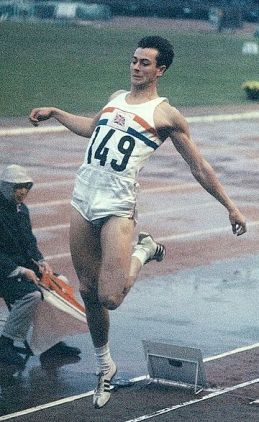
Lynn_Davies_1964

Lynn Davies winning gold in Tokyo 1964

Ron Pickering urged him to concentrate on long jumping and the rest as they say is history.   He won an Olympic gold medal in the long jump in 1964 with a jump of 8.07 metres (26 ft 6 in), making him first Welshman to ever win an individual Olympic gold medal. He was the only British man to win Long Jump gold at the Olympics till Greg Rutherford won gold in 2012.

Since winning gold Lynn Davies has had the nickname “Lynn the Leap”.   At the 1964 Olympics he also ran in the 100 metres and was a member of the relay team which reached the 4x100m final.  And let’s not forget he was a Roath Harrier at the time.  Lynn competed in the next two Olympics in Mexico City and Munich and in Mexico was flag bearer for the British team at the opening ceremony.

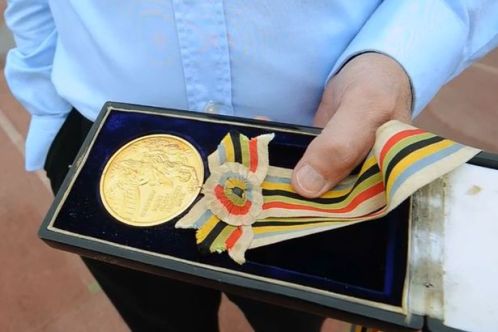
1Lynns-medal

Lynn Davies holding the gold medal he won in Tokyo 1964 (Pic: Western Mail)

So what of his non-Olympic achievements?  Davies was the 1966 European champion in the long jump and was the silver medalist three years later.  He was also twice the Commonwealth Games champion, winning titles in 1966 and 1970, becoming the first man to win that title twice.  He thereby became the first athlete to hold Olympic, European and Commonwealth titles at the same time.

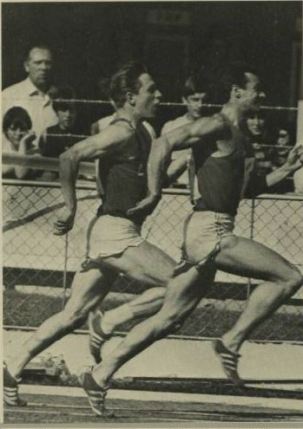
Lynn Davies on his way to win a 100 meters invitation race at the British Games, 1966 held at White City, London

Lynn Davies on his way to win a 100 meters invitation race at the British Games, 1966 held at White City, London (pic: London Illustrated News)

His personal bests were: 100 meters – 10.51s (1967); Long Jump – 27′-0″ (8.23m) (1968).  Lynn Davies’ long jump best of 8.23m, set in Berne in June 1968, is still the fourth best long jump of all-time by a British athlete – despite the improved facilities of today, where all-weather run-ups have replaced the soggy loose cinders that Lynn mostly competed on.  It is also still the longest ever jump by a Welsh athlete.

Lynn Davies was twice a winner of the BBC Wales Sports Personality of the Year award, taking the honour in 1964 and 1966.

After retiring from competitions in 1973 he became technical director of Canadian athletics until 1976 before returning to live in the Cardiff area where he has lived ever since.  He became British athletics team manager and took up  broadcasting career with BBC Wales.

Davies was created a CBE on 17 June 2006, having previously received an MBE in 1967.

He’s always been regarded as one of the sport’s finest ambassadors which no doubt led him to becoming President of UK Athletics, the governing body of the sport in Great Britain, a position he only stepped down from in 2015.

The college in Cyncoed where Lynn Davies started his athletics career was new in 1961 having previously been at the Heath. It has undergone many name changes over the years but he has maintained a strong association with it.  Not only was he a student there but has also been a Senior Lecturer and an ambassador.

Cardiff Met Cyncoed campus Lynn Davies Photo credit - Peter Creighton

The refectory wall at UWIC Cyncoed campus pays tribute to one of its former students.

I think but am not certain that the name changes have been:  1976 it became part of the South Glamorgan Institute of Higher Education, then in 1990 Cardiff Institute of Higher Education, in 1996 University of Wales Institute, Cardiff (UWIC) and finally in 2009 Cardiff Metropolitan University.

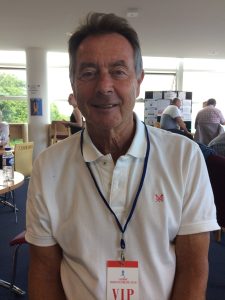
Lynn Davies in 2018 photo Dai Sport

Lynn Davies in 2018 (photo Dai Sport)

So why do I say its borderline whether he is famous Roath man? Well, the Cyncoed campus sits literally just outside the border of the old Parish of Roath.  Lynn, with one of his famous jumps could have leapt over the border and into Roath Paish, and probably still can. We will therefore include him on our Roath People page.

Roath Harriers – Athletes and Hounds

Roath Court Harriers

There were two types of Roath Harriers, those with two leg and those with four. I believe both may have their origin in the very heart of Roath, at Roath Court, where Roath Manor House once stood, a location which has a history dating back over a thousand years. Roath Court is now the James Summers Funeralcare Home on the junction of Newport Road and Albany Road.

Roath Court in 1800s

Roath Court 1826 – from a sketch by unknown artist.

In the 1800s the Williams family lived at Roath Court and owned the Roath Court Estate.  If I told you some of their family names were Claude and Crofts you can start to get a picture of how far their estate spread in the Roath area.

In the 1870s the head of the Williams family at Roath Court was Charles Henry Williams who, as well as being a JP and Chairman of the Roath Board of Health, was keen on sport, a huntsman and maintained a pack of hounds called the Roath Harriers.  I’d always thought a harrier was a bird. Well it is, but it’s also a type of hunting hound.  Just goes to show my urban upbringing and general ignorance I guess.

Charles Henry Williams - Master of Roath Court Harriers

Charles Henry Williams – Master of Roath Court Harriers (photo credit: Look and Learn)

The pack may have been kept at Roath Court itself or more likely they were kept at Ty-y-Cwn or Ty’n Cwn (the dog’s house)  which was a thatched house, opposite where the Claude on Albany Road.  It was demolished in 1898 and later Albany Road Baptist Church built on the site.

Ty-y-cwn, the dogs house

Ty-y-cwn, the dogs house, on Albany Road. Thought to be where the lord of the manor’s hounds were kept. Apparently the building dated back to the sixteenth century. It was demolished in May 1898. Albany Road Baptist School can be seen on the right of the picture.

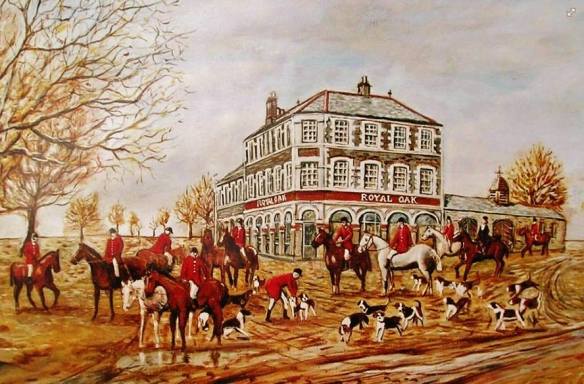
The painting of the Royal Oak pub by an unknown artist with horse and hounds outside is likely to be depicting the Roath Court Harriers.

A painting of the Royal Oak - CN&T FB

In 1878 we read in a newspaper report that a presentation was made to Charles Henry Williams for maintaining the Roath Court Harriers.  A year later there is mention in a Council report that the hounds have a case of hydrophobia amongst the pack.  That’s a term used for a fear of water, not debilitating in itself, but a symptom observed with dogs who have rabies. The pack seems to have survived because in a book published in 1903 there is reference to Charles Williams and his eighteen couples of twenty-inch cross-bred harriers.

The following additional informaiton and images was kindly provided to us by Tudor G. Thomas-Davies in March 2025:

Roath Court Harriers hunt button, as worn by Mr Williams in the photo earlier in this article.

A1905/06 entry in Baily’s Hunting Directory regarding the Roath Court Harriers hunt, with the information provided to them by Mr Williams. 


Roath (Cardiff) Harriers

When I was searching the newspaper archives for Roath Harriers and Roath Court in the 1880s period something strange appeared.  The mention of horses and hounds disappears and references to Roath Harriers the athletics club start to appear.

Lynn_Davies_1964

Lynn Davies at the 1964 Olympics in Tokyo.(photo credit: Wikipedia)

Roath Harriers was the first athletics club in Wales.  It was formed back in 1882. And a very successful club it was too.  Lynn Davies, the Olympic long-jump gold medal winner who leapt to victory in Tokyo in 1964 was a Roath Harrier at the time.  In 1966 he went on to win the European Championship in Budapest.

‘Lynn the Leap’ has long had a strong association with the area.  He attended Cyncoed Teacher Training College as a student and later as an employee as it went through various name changes over the years.  He pounded the streets of around Roath in his training regime. After all an all-round athlete and not just a long-jumper.

In 1938 Roath Harrier Jim Alford, from Llandough Street, Cathays, won the Mile Empire Games gold medal in Sydney, becoming the first athlete in a Welsh vest to strike gold in the Empire Games. After service with the RAF as a squadron leader during the Second World War, Jim went on to become the first national coach for athletics in Wales.

Jim Alford and his gold medal from Australia Empire Games (pic credit - Paul Alford)

Jim Alford and his gold medal from Australia Empire Games (pic credit – Paul Alford)

Another notable Roath Harrier was Brian Lee, winner if the EW O’Donnell Senior Cross-Country Championship Trophy in 1959.  Brian was a journalist and the man we are indebted to for publishing many books on the history of Cardiff.

In 1968 Roath Harriers merged with Birchgrove Harriers to form Cardiff Amateur Athletics Club.

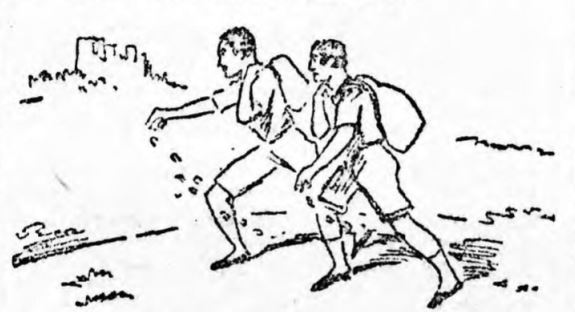
By now I was beginning to ask myself why so many athletics clubs have the name Harriers in their title, Roath Harriers, Birchfield Harriers etc.  I’d learnt that Harrier was a type of hound but this only partially explained things. The other reason is that prior to cross-country becoming  sport there was a paper-chase sport in which two runners called ‘hares’ laid a trail of paper in the countryside and runners called ‘hounds’ tried to follow them and catch them up before they reached home.  Sounds great fun.  Now why did that die out and why isn’t it an Olympic sport?  Hence many of the athletics clubs that originated from the sport of paper-chasing have Harriers in their name.

Paperchase 1891

The Roath Harrier ‘hares’ laying the paper-trail (South Wales Echo Nov 1891)

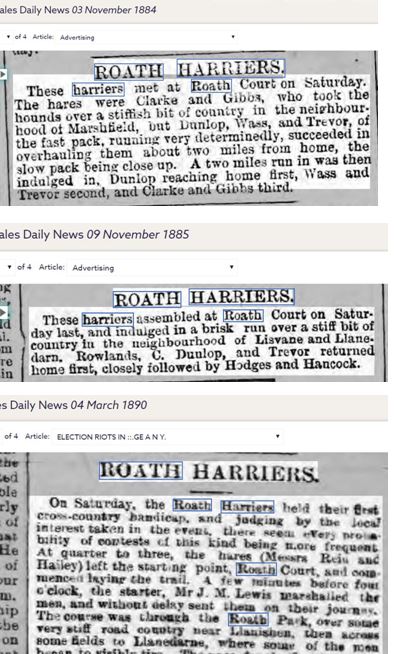
The first mention I find of the Roath Harriers athletes is in 1884 when they met at Roath Court and headed off to Marshfield.  From 1884 to Spring 1890 they seem to have assembled at Roath Court. Was Charles Henry Williams an athlete himself or just interested in the sport and benevolent enough to host the club?  Well, he certainly didn’t have an athletic appearance in pictures.

Roath Harriers 1884 to 1890

Newspaper reports of the Roath Harriers in the 1880s and 1890s describe the paper-chasing events in detail, the various routes that were taken and the adventures that ensued, leaping gates and falling into rivers. These routes are certainly interesting from a local history perspective.

Roath Harriers mishaps

Roath Harriers mishaps (South Wales Echo – Nov 1891)

The Cardiff Times on April 13th 1935 carried an article entitled: ‘Roath Harriers’ Club: How it was started fifty two years ago’, the first paragraph of which reads:

Fifty-two years ago three Cardiff Docksmen laid a wager that they would run from Cardiff to St. Mellon’s and back. Starting from a tree that used to stand in the middle of the road near Roath Court, they ran as they had planned. So intrigued were they with their first taste of running that they, with a few chosen friends, formed themselves into a club. This club became known as the Roath (Cardiff) Harriers. For three years the club was of a private nature, but from 1889 onwards it was Officially known as the Roath Harriers, and soon boasted a large membership.

This article appears to substantiate reports from the 1880s that the meeting place was Roath Court.

An undated cigarette card depicting the crest of the Roath (Cardiff) Harriers states the club was originally of a private nature, dating back from 1884, the oldest amateur organisation in South Wales.

Roath Harriers Cigarette Card - Ogdens

By October 1890 however a newspaper reports that they opened their season at their headquarters, the Royal Oak which is further east along Newport Road from Roath Court

In their AGM in Sept 1892 the Roath Harriers resolved to move their headquarters to the Claude Hotel and the newspaper reports later that year did indeed state that races started from the Claude.  In 1893 however the headquarters had been moved back to the Royal Oak.

In 1953 V.I.Pitcher published a short booklet,  ‘Roath (Cardiff) Harriers: A short history of the premier athletic club in Wales from its formation in 1882 to date’. Gone was any mention of a connection to Roath Court, or even paper-chasing for that matter. The opening paragraph reads:

Roath (Cardiff) Harriers, the first athletic club to be formed in Wales, came into being as the result of a wager. In the early 1880’s there were employed at the Cardiff Docks, in the offices of the various shipping factors, a number of young men who were proud of their athletic prowess, particularly at running. Over their morning coffee, these young “bloods” were apt to discuss their feats, with a result that challenges were forthcoming, and one Saturday afternoon, having solicited the aid of the landlord of the Royal Oak Hotel in providing changing quarters, these same young men fined up near the old oak tree in Newport Road, preparatory to deciding the issue once and for all in the only practicable way—by taking part in a race. The actual result of the ensuing struggle does not matter—what was important was the fact that the run was so thoroughly enjoyed, that they decided to hold runs every Saturday afternoon, and the Royal Oak Hotel was formally adopted as Headquarters.  Thus, in 1882, the first athletic club, catering solely for athletics, was formed in the Principality. Membership was by invitation only and confined to a limited number.

It may be that V.I.Pitcher had access to some very detailed early documentation regarding the club’s history or maybe there was some poetic licence being used.

The 1935 newspaper article makes reference to the race ‘starting from a tree in the middle of the road near Roath Court’.  I have studied old maps but can’t locate such a tree at either Roath Court nor the Royal Oak.  Of course the fact that the Royal Oak is named after a tree (having previously been called Spring Gardens), and that there is a tree edging into the left-hand side of the painting of the Royal Oak does somewhat edge the argument that way.

As someone interested in Roath history however I still like the notion that both sets of Roath Harriers, those with four legs and those with two, had their origin at Roath Court, the most historical location in Roath.

These links will take you to newspaper reports covering the paper-chases of Roath Harriers including participants getting covered in red-mud at the Penylan quarries: 23 Nov 1891   and  11 Nov 1895 .

Post Script

Roath Harriers 1923-1924 and the paperchasing bags of paper - photo shared by  Jon Morgan

Roath (Cardiff) Harriers 1923-1924 and the paperchasing bags of paper – photo shared by Jon Morgan

A smashing photo that Jon Morgan shared of the Roath Harriers in the 1923-34 season.  The sacks on the floor look to be the paper used in paper chasing seeming to prove that the sport of paper chasing lasted a fair number of years.

John Clements – the Roath Patriot

My research into Roath’s fallen of WWI and WWII continues.  I’m finding their stories enlightening and so sad at the same time. Their histories are recorded on our Roath Virtual War Memorial, sadly far from being completed.  In many ways I am using the research as vehicle into helping me learn more about the social history of the area; the housing, schools and employments of the time. I thought I would share with you the story of John Clements.

John Clements Russell Street Roath

John Clements – a Roath Patriot

John’s  father Walter Clements was a Corporation labourer, originally from Ledbury, Herefordshire and his mother Elizabeth Clements nee Brown originally from Overbury, Worcestershire.  By the time they moved to Cardiff in the early 1890s they already had three children.  John Clements was their fourth, born in Cardiff on 30 Jan 1896.

John Clements 1901

The Clements family in the 1901 Census.

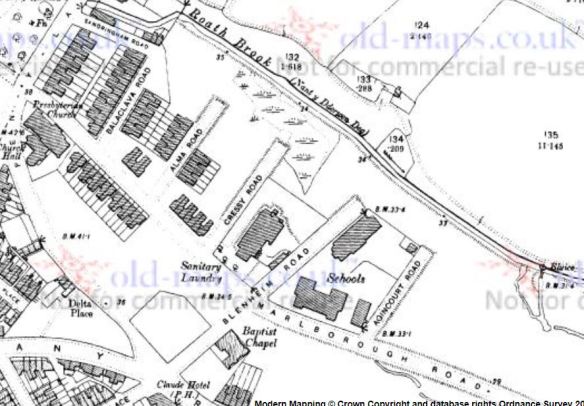
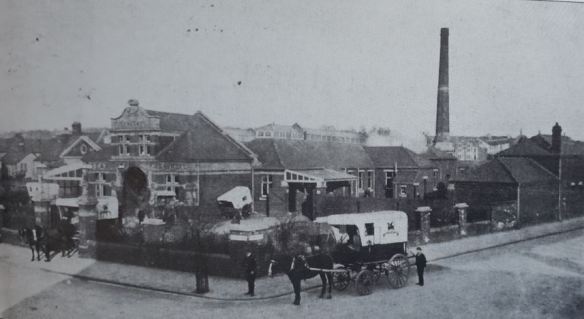
In the 1901 Census the Clements family are living in the ‘cottage behind the laundry’ near Sandringham Road.    This was the Roath Steam Laundry and established in 1899 on the corner of Blenheim Road and Marlborough Road. Their cottage was probably near the laundry chimney in the picture, and may even have been part of the laundry buildings itself as it doesn’t appear as a separate building on a map of the time. The other possibility is that it was the small building on the other side of Roath Brook, where St Edwards Church hall now stands.

Roath Laundry map 1901

Map of the area around 1901 showing Roath Laundry and Marlborough Road school (map from Old-maps.co.uk).


The laundry premises were later occupied by United Welsh Mills from c.1923 and much later by Marlborough Carpets and then Bedy Buys Ltd.  The buildings were later demolished and the land now occupied by Thomas Court retirement apartments built around 2013.

Roath Steam Laundry

Roath Steam Laundry


In August 1903 John is enrolled at Marlbourough Road school.  The family address in the register appears to be Penykiew Cottage, and quite possibly the name of the ‘cottage behind the laundry’ in the 1901 census.

Entry to Marlborough Road school

Entry to Marlborough Road school in 1903. The entry shows pupil’s name, date of birth, father and address.


In 1905 John is re-registered at Marlborough Road school  but the address of the Clements family is now given as Russell Street.  A note in the margin seems to indicate he later went to Tredegaville School which would make sense.

CBS23 Marlbourough Road board school

The original Marlborough Road Board School opened in 1900, on the corner of Blenheim Road and Marlborough Road.

After leaving school he was a general labourer before joining the 7th (Cyclist) battalion of the Welsh Regiment. He was then drafted into the 2/4th Oxford and Buckinghamshire Light Infantry – and he was one of thirteen men from the city who lost their lives whilst serving with that battalion.  On 21 Dec 1916 John was with his battalion in reserve when he was killed in action, aged 20, probably by German shellfire. The battalion war diary simply states ‘The Berks and Gloucesters again took first innings in the trenches, whilst the Bucks and ourselves stayed in support. Battalion Headquarters with A and B Companies were in Wellington Huts near Ovillers; C and D went two miles further forward to some scattered dugouts between Thiepval and Mouquet Farm’. His death did not warrant a further mention at the time.  He was buried in Ovillers Military Cemetery, Somme, France (grave I. D. 17).

John Clements medals

John Clements medals and war penny


John was not the only member of his family to serve in WWI.  His father Walter and brother Charles also served in the Welch Regiment.  He brother Walter Edward Clements took a different route and served 20 years in the Royal Navy.

So why have I referred to John Clements as a patriot?  Well the residents of Russell Street  unofficially renamed the street Patriot’s Avenue in honour of the fact that the total number of men that served in WWI and WWII at least equaled the number of houses in the street. A plaque commemorating the patriots was originally unveiled in 1995 at the New Park Liberal Club in City Road.  The plaque was unveiled by Terry Clements, a relative of John Clements.

Russell Street memorial

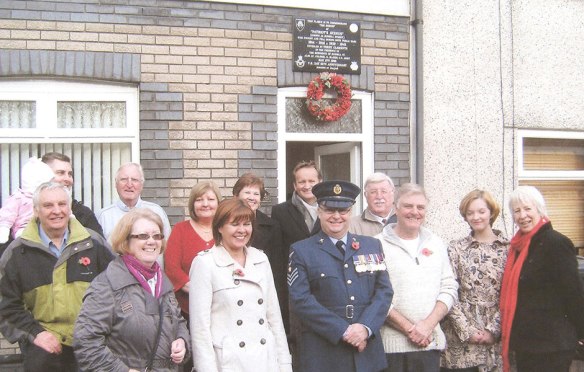
When the New Park Liberal Club was closed around 2012 converted into flats there was a need to re-home the plaque.  The plaque now hangs outside 34 Russell Street, the former home of our patriot John Clements and a property still owned by the Clements family over 100 years after they first moved there.


Memorial on house in Russell Street

Patriot’s Avenue plaque on John Clements house in Russell Street.

It was reported in the paper:

The re-homing and restoration of the plaque was done thanks to Mossfords Memorial Sculptors, who donated the original 17 years ago previously.

Terry Clements, who grew up on the street, said it was a relief to find a new spot for the tribute – on the wall of his sister’s house.

He said: “Sadly only about half a dozen people still live in the street since the street party in 1995 – but it still means a lot to find a place for it.”

Cardiff Central AM Jenny Rathbone said: “It is humbling to think that every house in this street saw a member of their family leave to go to war.”


The rededication of the Patriot's Avenue memorial plaque.

The rededication of the Patriot’s Avenue memorial plaque with Cardiff Central AM Jenny Rathbone on right.


The Patriot’s Avenue memorial is one of the very few war memorials in the area on public display.  There used to be a WWI memorial outside Roath Road Wesleyan church on the corner of City Road and Newport Road but that church was bombed in WWII and the memorial sadly eventually lost.  Splott War Memorial survives outside St Saviour’s church and has been restored.  Most of the others that survive are inside churches or alike. As I add the fallen to the Roath Virtual War Memorial I tend to post a few words on Twitter @RoathMemorial .  Feel free to follow updates there.


Captain Baselow Emigrates to Cardiff

We will probably never know quite why exactly Captain Baselow decided to relocate with his family to Cardiff from the German port of Rostock in the 1860s.  It is likely that he had heard of the burgeoning port of Cardiff and the economic opportunities that lay ahead.

By that time the two Bute docks had been constructed together with the railways bringing coal down from the mining valleys. Cardiff was beginning to boom and for people like Captain Baselow with maritime experience and his entrepreneurial skills great times lay ahead.

Roath Docks Cardiff

In the year 1870 there were 783 steam ships in all that called at Cardiff Docks. The same year there were 6129 sailing ships docking. By 1900 there were 6527 steams ships that docked and only 2617 sailing vessels.

I must admit that until a month ago I hadn’t heard of the Baselow family.  I suppose that’s not surprising.  They never turned out to be one of the great ship owning families of Victorian Cardiff such as the Seager, Readon-Smith or Radcliffe families.  The family does however contain some very interesting stories well worth sharing.

I probably wouldn’t have come across Captain Baselow at all had it not been for an enquiry from a member of ‘Living Lines’ – a group of writers affiliated to A48 Theatre Company. Every year this company put on performances in Cathays Cemetery called ‘Graveyard Voices’. Sadly the performances are unlikely to take place this June due to the Covid 19 pandemic, but the company are hoping to be able to tell the Baselow family story in September. Keep an eye on their website for updates.

Graveyard voices

Scenes from past performances of Graveyard Voices

More of the connections between the Baselow family and Cathays Cemetery and the Roath area later but in the meantime let’s see what we know about Captain Baselow.  It’s not a huge amount if I’m honest.  It’s more a case of piecing together the snippets we can find and going from there.

Captain Baselow

Captain Baselow, or to give him his full name, Captain Hans Henrich Jacob Baselow, was born in the port of Rostock, Germany on 26 Jan 1816. He went by the name of Henrich.  By the time he emigrated to Wales in the 1860s he presumably had lots of maritime experience to have the title of Captain.  In the 1871 census the Baselow family are living at 162 Bute Street.  He is a partner in a ship chandlers and sail making company Baselow, Gensz & Goulter.  He is also working in the maritime insurance industry.  In 1874 however Captain Baselow and his business partner Albert Goutler are declared bankrupt.

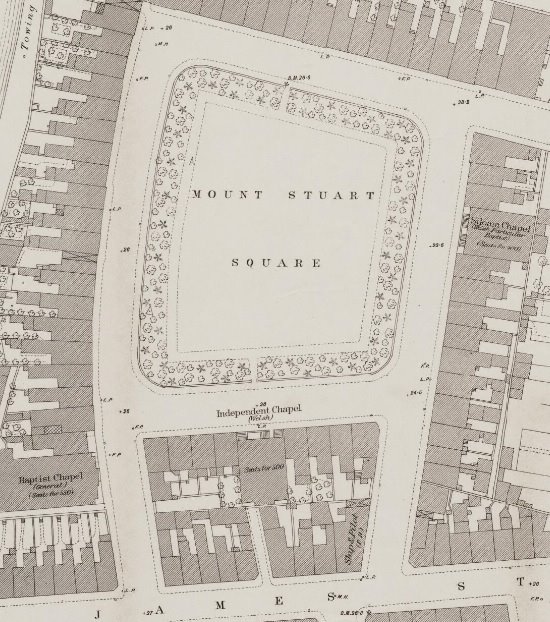
By 1880 his fortunes have evidently bounced back.  The Baselows had moved to 17 Mount Stuart Square, residences for the upwardly mobile overlooking the leafy green.

1876 Mount Stuart Square

The layout of Mount Stuart Square in the 1870s

Henrich was working as an agent for German Lloyd’s a company that existed till 2013.    Captain Baselow however died on 8 Sep 1881 aged 65. He is buried at Cathays Cemetery (plot L1276).

Mrs Baselow

Marie Henrietta Sophie Olerich was born in around 1826, also in Rostock, and went by the name of Sophie.  She married Henrich on 4 Dec 1846 in Rostock and went on to have four children before emigrating to Wales.

The 1891 census tells us that after Henrich died she continued to live on her own means at 17 Mount Stuart Square with her children and still employing a servant.  In 1901 however we find she  had moved to 1 Howard Gardens with her son, a house they called Rostock.  This was presumably because they preferred for their house to overlook a pleasant green rather than the Coal Exchange building which was built on Mount Stuart Square.

Sophie died on 9 Mar 1902 aged 76 and is buried alongside her husband Henrich in Cathays cemetery.

Captain Baselow and Sophie Baselow grave

The grave of Captain Baselow and Sophie Baselow at Cathays cemetery.


The Baselow children:

Henry Baselow, the German soldier and cigar manufacturer.

Henry David Frederick Baselow was born in 1848 in Rostock.  The newspapers provide an interesting insight into his life.  He fought right through the Franco-Prussian war of 1870 on the German side serving in the regiment of Fusiliers No.90, fighting in Sedan, Metz and Paris. He was to later deliver lectures in Cardiff on his experiences in that war.

He became a naturalised ‘Englishman’, as did all the Baselow family.  In the 1881 census he is in boarding house in Middlesbrough describing himself as an iron merchant.   In 1891 he married Alice Emma Bielski at Broadway chapel in Roath, Cardiff.  She was daughter of a Polish shipbroker and had grown up in the Roath area.  They went on to have four children three of which survived into adulthood.

Henry attended Broadway Wesleyan Methodist church and was evidently somewhat conservative in his views.  In 1894 he chaired a meeting of the Roath branch of the British Woman’s Temperance Association.  In 1898 he campaigned against the introduction of trams being allowed to run on a Sunday.

His business interests included running a large cigar factory in Mexico.  He even became the British vice-consul in Vera Cruz, Mexico.  His obituary stated that the adverse climate in Mexico undermined his heath leading him to relinquish his business in later years.

In the 1901 and 1911 census we find the family living in London where Henry describes himself as a cigar manufacturer.  When he dies however in 1913, the funeral takes place back in Cardiff officiated by the minister of Broadway and attended by the German Consulate and W H Seager the Cardiff ship owner.

Henry Baselow 23rd Feb 1893

In 1893 Henry Baselow lectures on his experiences in the Franco-German war.

After Henry dies, Emma Baselow returns with the children to live in Cardiff close to her family. They live at 55 Westville Road, Penylan.  Henry and Emma’s son, Henry Frank Baselow, worked in the accounts department of Morgan Wakely and Co, coal exporters, Mount Stuart Square.  He enrolled in the British army in 1915 and is sent to the Western Front but was killed in action on 5 Oct 1917 aged 20.  He is buried in Belgium but is remembered on a war memorial plaque that used to be in Roath Park Wesleyan Church (corner of Wellfield and Albany Roads).  When the church closed down the plaque was evidently removed for safe keeping.  It was discovered in recent years propped up against a wall in one of the chapels at Cathays Cemetery, nobody knowing its origin. In a strange sort of way it’s as if he was reconnecting with his grandfather, Captain Baselow, buried not far from the cemetery chapel.  The plaque is currently in safe storage at Thornhill Crematorium.

H F Baselow WWI

Henry Frank Baselow, grandson of Henrich Baselow, died in WWI on the Western Front in Belgium. His grave headstone in Belgium and his name on the war memorial plaque that used to be in Roath Park Wesleyan Methodist Church, Albany Road.

Frank Baselow – the flamboyant merchant

Franz ‘Frank’ Ernst Baselow was born in Rostock in 1852. After his father Captain Baselow died in 1881 he and his mother continued to live in Mount Stuart Square and Frank was a provisions agent supplying the constant stream of cargo vessels leaving Cardiff and taking coal around the world.

Again the newspapers provide some interesting snippets of maybe a flamboyant character. In 1888 he is advertising in the Lost and Found section of the paper for the return of a ‘massive gold watch seal with green and red stone’. The finder is promised to be handsomely rewarded.

1888 Frank Baselow lost watch

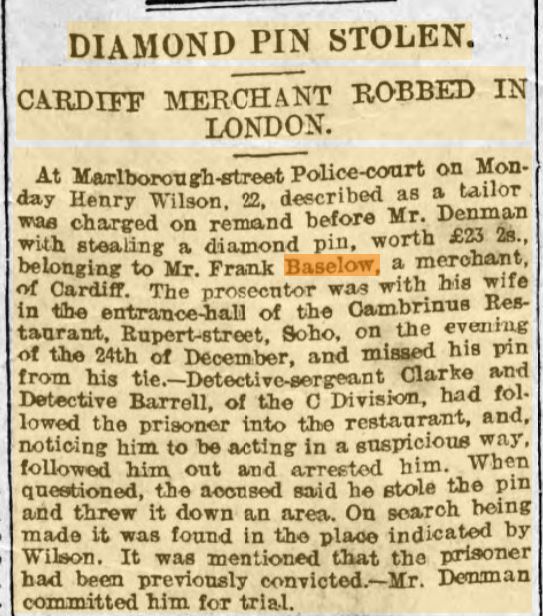
In 1907 he had a diamond tie pin stolen from outside a restaurant in Soho, London.  The pin was said to be worth £23, almost £3,000 in today’s money.

When he and his mother are living at ‘Rostock’ 1 Howard Gardens in 1901 it is Frank who is described as head of household.  His mother dies in 1902 and later the same year he marries Florence Lydia Smith from Buckinghamshire. They go on to have one child, Frank Thomas Henry Baselow.

Howard Gardens

‘Rostock’, No 1 Howard Gardens is at the far end of the terrace. The Victorian pillar box in the picture still stands there today.

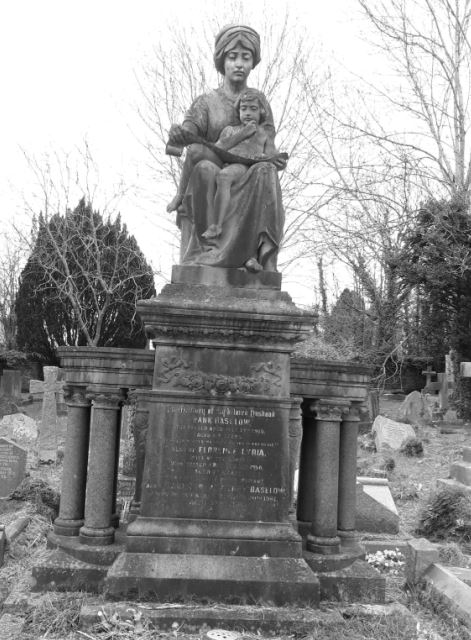
Franz ‘Frank’ Baselow dies in 1915 aged 64. His probate records that he leaves a surprising small sum of £105. I say surprising because his tomb at Cathays Cemetery is one of the most grand in the whole cemetery and perhaps depicts his flamboyant character and German heritage.  The tomb has a carved stone sculpture of a mother reading to a child.  This may depict his widow Florence reading to son Frank.

Frank Baselow Grave

The grave of Frank Baselow Grave at Cathays Cemetery.

Sophie Baselow – the shipbroker’s wife

Johanna Eliza ‘Sophie’ Baselow was Captain Baselow’s only daughter.  She married Carl Johann ‘Emile’ Martin in Cardiff in 1875.  Emile, was born in Oldenburg, Germany.  He was a shipbroker and similarly lived in Mount Stuart Square.

They went onto have eleven children, nine of whom survived into adulthood.  As their family grew they moved from Mount Stuart Square to Stacey Road in Roath.  Emile died in 1923 in Bath and Sophie in 1833 aged 81.  They are both buried in the same grave as Captain and Mrs Baselow at Cathays Cemetery.

Sophie and Emile Martin insription on grave of Captain Baselow

Sophie and Emile Martin insription on grave of Captain Baselow.

Arthur Baselow – the New York pharmacist

Arthur Jahanas August Baselow was Captain Baselow’s youngest child, born in 1862 in Rostock.  In the 1881 census he is living at home in Mount Stuart Square and working as a chemist’s assistant.  The profession seems to have appealed to him but Cardiff less so and in 1888 he emigrates to America.

On 1 Mar 1888 he  arrives in New York and works as a druggist (pharmacist) in Manhattan. He becomes an American citizen and married Joanna Salinger in 1897 and they have two daughters, Marjorie Louise Baselow and Dorothy Lorna Baselow.  I haven’t yet found if Joanna Salinger was related to the New York author J.D.Salinger but you never know.

In 1911 they were living on E 96th Street.  Arthur Baselow managed the Altamont Pharmacy on 7th Avenue in the very heart of Manhattan, a few yards from Times Square.  He died suddenly of a brain haemorrhage in 1914 in Manhattan aged 52, the funeral taking place at St Peter’s church, Manhattan.

So if you ever find yourself standing in Times Square, take a look up 7th Avenue and think of Arthur Baselow, born in Germany, grew up in Cardiff and died in New York.

Times Square, as it used to look

Times Square, as it used to look. Interesting scenes from New York in 1911 can be studied in this YouTube video: New York in 1911

The Baselow name lives on?

It looks like not. From Captain Baselow’s three sons there were only two male offspring.  One of them, died in WWI and the other never married.  Even more reason then that we eagerly await for an opportunity to hear the Baselow story to be part of the ‘graveyard voices’ depictions.  And there is much more information about Cathays Cemetery on the excellent Friends of Cathays Cemetery website.

Many thanks to Kathy Thomas of the ‘Living Line’s group in the A48 Theatre Company for her help in researching the Baselow family.

The pictures that never made the cut.

Invariably I gathered more pictures than I needed in researching the article so if you are still awake here are some more:

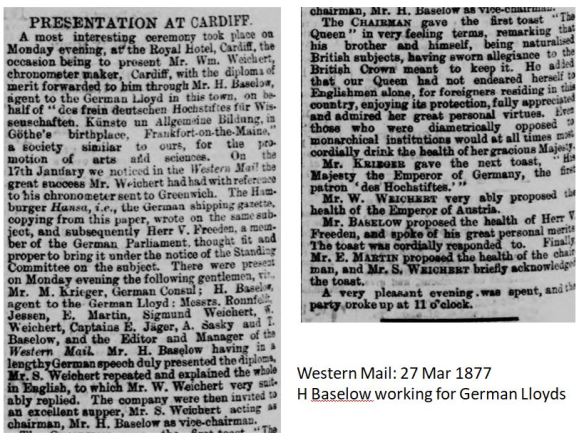
1877 H Baselow working for Geman Lloyds

Captain Henrich Baselow making a presentation in 1877

20 Oct 1894 Henry chairs meeting of Temprance Movement

20 Oct 1894 Henry Baselow chairs meeting of the British Woman’s Temperance Movement

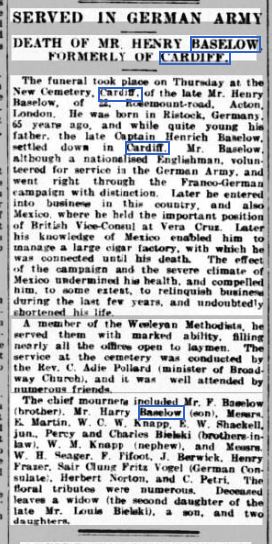
Henry Baselow Obit - 26 Sep 1913

Henry Baselow Obit – 26 Sep 1913

1907 Frank Baselow Diamond Pin Stolen

1907 Frank Baselow Diamond Pin Stolen

Howard Gardens and Mount Tabor church

Hopson & Son tobacconists, Albany Road

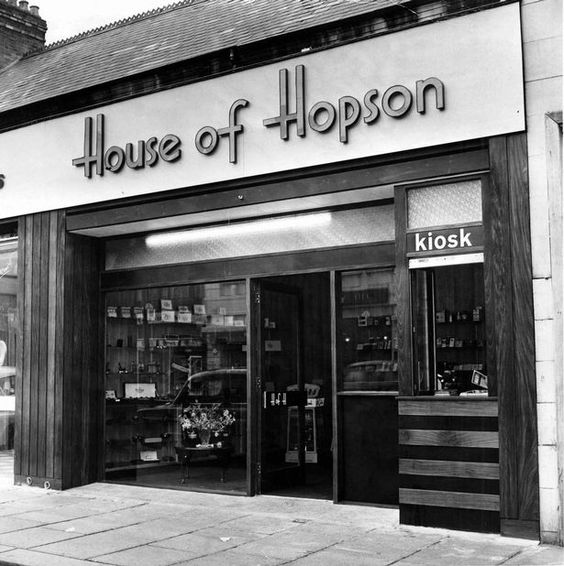
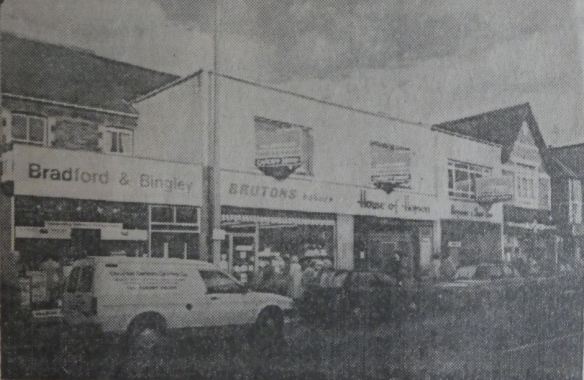
One of the businesses synonymous with Albany Road and no doubt still in the memory of many people who grew up in the Roath area would have been the tobacconists Hopson’s.  It was a lot more than just the tobacconist shop ‘House of Hopson’. It was the headquarters of a wholesale tobacco and confectionary business, Hopson and Son Ltd, the largest wholesale tobacconists in Wales.  Hidden behind the shop frontage of 27 Albany Road was a cigarette warehouse where orders were packed for delivery all over Wales and the West of England area to shops, pubs and clubs.

Albany Road had been a residential street called Merthyr Road when first constructed.  Slowly over the years the houses were converted to shop fronts.  The stretch between Inverness Place and Arabella Street was one of the first to see such a transformation.

Albany Road, Roath, Cardiff in early 1900s

Albany Road, early 1900s. H A Hopson, tobacconists, is the awning, just to the right of the lampost, where the man with the cart is standing. On the left is the bootmaker Stead and Simpson, on the corner of Inverness Place.  On the right is the original St Martin’s Church.

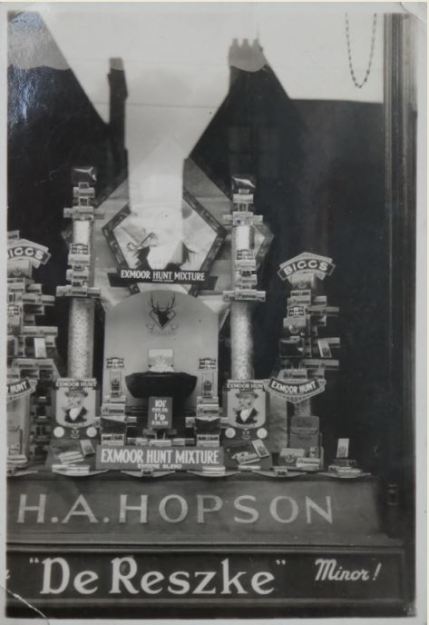
The business began in 1899 as a hairdressing and tobacconists shop. The profit at the end of the first year trading was 16s 1d.  In the 1913 Cardiff Trade Directory the business is described as ‘Hopson H.A – hairdresser, confectioner, newsagent and tobacconist’.   When the company first diversified into supplying cigarettes and tobacco to pubs, clubs and other shops the orders were delivered by bicycle and horse-drawn cart.

H A Hopson shop display

H A Hopson window display with Exmoor Hunt, Biggs cigarettes and De Reszke cigarettes named after Jean de Reszke (1850-1925), a famous Polish opera singer.

The shop had a touch of class about it, fitted out with walnut panelling that had been salvaged from the British Ocean liner RMS Olympic and had wall to wall red carpeting.   The shop also had a kiosk facing onto Albany Road to cater for the smoker in a hurry. In 1967 the shop used to stock almost 200 brands of cigarettes and 300 blends of tobacco.  The warehouse operation turned over 6 million cigarettes a week and had 110 employees.

Hopson, Albany Road, Roath, Cardiff, Hairdressing salon

The interior of the tobacconists shop with the entrance to the gentleman’s hairdresser at the rear.

What better way to get an insight into the history of the business than to look at the family history:

William John Hopson

The entrepreneurial spirit of the Hopson family can be traced back to William John Hopson.  In the 1871 census we find William, then aged just 16, living independently in Hereford and working as a gentleman’s hairdresser.  He was son of William Hopson, a trunkmaker, originally from Sedgeley, Staffordshire. William John Hopson marries Sarah Davis in Hereford when he is 19 and by 1881 has his own hairdressing business in Bedminster, Bristol. Ten years later, in the 1891 census we find he has decided to move to Wales and owns a gentleman’s hairdresser business in Treorchy in the Rhondda Valley.  They have five children, one of whom is Henry Albert Hopson b.1874 in Hereford.

Henry Albert Hopson

Henry Albert Hopson originally worked as a hairdresser in his father’s business in Treorchy.  He marries Katherine Saddler in 1898 in Cardiff.  In August 1899 he opens the gentleman’s hairdresser and tobacconist business at 27 Albany Road, no doubt with his father’s support.  In the 1901 and the 1911 census we find the Hopson family living at the Albany Road address. By 1934, when the business of Hopson & Son Ltd is registered, Henry is living at 13 Southcourt Road.  Henry Hopson passes away in 1936 and the business is passed onto his son Clifford Allison Hopson.

Wood lined Hopson and Son Ltd

The wood-lined Hopson tobacconist shop

Clifford Allison Hopson

Clifford Hopson was born in 1904 at 27 Albany Road.  He trained as a ship’s engineer and worked on vessels in Cardiff docks but gave it up when he was 32 and took over the family business when his father died young.  He expanded the business significantly, both via growth and acquisition.  Like many businesses of the time there were annual staff outings to places of interest such as Torquay, Windsor and Bude.  As well as the outings there was the legendary Christmas Dinner, traditionally held at the Angel Hotel, as a way of saying thank you to the staff.   He died in 1961 aged 57.

House of Hopson


Alan Clifford Hopson

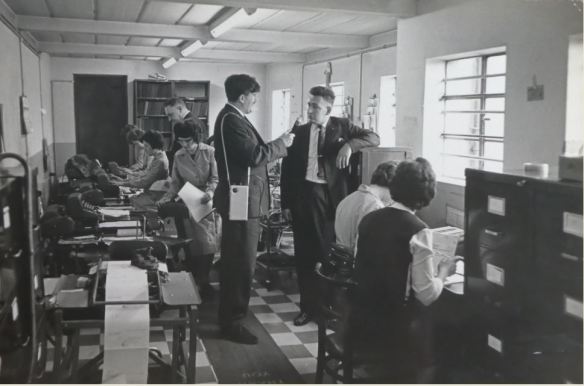
Alan Clifford Hopson was born in 1938 and takes over the reins of the business when he was just 22 years old. After leaving Cardiff High School at 16 his father had trained him up to run the business, sending him around different parts of the organisation and having him work in the packing warehouse. He was sent on courses and even over to Cuba to learn the fineries of cigar making etc. Alan’s father had already been diagnosed with the leukaemia hence the need and urgency to learn the business as his father’s health deteriorated.  When Alan took over the business continued to prosper but eventually in the 1980s external forces such as supermarkets being able to source cigarettes at discount prices from suppliers and the public’s growing awareness of the health issues began to impact trade.  The business went into voluntary liquidation in Nov 1986. The Albany Road shops and warehouse were sold and are now occupied by the Iceland supermarket.

Alan Hopson conducting an interview

A young Alan Hopson being interviewed in the office area

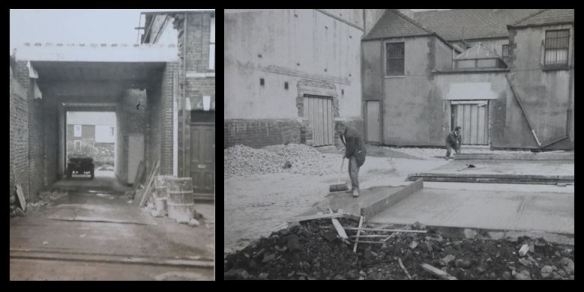
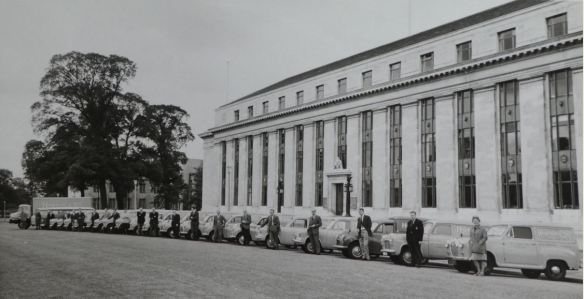
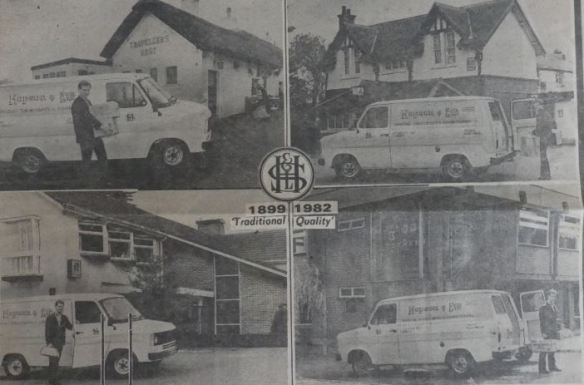
So what went on in that warehouse behind the tobacconist shop?  Early every morning a fleet of Hopson & Son white vans with their gold leaf lettering would load up in the yard before heading up to the valleys and further afield to make their deliveries.  Once they had departed it left room in the yard for the wagons from the cigarette companies to edge their way in through the arched entrance on Arabella Street, testing the driver’s manoeuvring skill to the maximum.  Whilst they went for a celebratory cup of tea an army of employees would speedily unload the wagon with the aid of rollers and neatly stack the boxes.  It’s hard to believe these days that some suppliers transported their cigarettes on flat bed wagons with just tarpaulin tied over the top of their valuable loads.

Back of 27 Albany Road being prepared for Hopson & Son

The yard behind the Albany Road premises being prepared including and entrance in via Arabella Street.

Later in the day the reps would arrive back from their rounds, clutching the orders that needed to be typed up by the office staff upstairs before being sent down to the warehouse for assembly.

Hopson fleet in Cathays Park

The Hopson & Son fleet lined up early one morning in Cathays Park

The Albany Road premises were just one of a number in the Hopson business  There were shops as well as smaller warehouses throughout Wales and nearby areas, including Chester, Haverfordwest, Newtown, Merthyr and Swansea.  Just off Newport Road in Cardiff  was the confectionary warehouse.

Publicity shot outside Hopson & Son, Albany Road, Cardiff

Rothman’s publicity shot with Alan Hopson in the white shirt.

And how do I know all this?  Well, I was fortunate enough to have a holiday job there for many years. It was there that I earned my first wage, £9.47 for a week’s work back in the 1970s, handed to me in a buff coloured packet and tiny wage slip and a national insurance number that has stayed with me all my life. Before I learnt to drive I worked in the warehouse assembling orders, unloading the wagons and running up and down stairs with the orders. After passing my test I was trusted with delivering the orders and filling in for drivers when they were away on their holidays.  It taught me a lot, not just the geography of South Wales.  You may go to school and college to learn the academic stuff but it was doing jobs like this that you learnt your life skills.

The packing room staff at Hopson & Son Albany Road, Cardiff

the packing room staff at Hopson’s on Albany Road

The business at the time was run by Alan Hopson, the third generation of the Hopson family to manage the business. He wasn’t one of those managers to hide away in an office. He would turn his hand to anything that needed doing and lead by example.  Outside work he was just as energised whether it be with youth work at Albany Road Baptist Church,  roadie for the local Unit 4 pop group or charity work with the Cardiff East Rotary Club where among other things he led an initiative to support disabled sports. As if his life wasn’t busy enough already you can add to that being a Director of the Paddle Steamer Preservation Society. He lived by the motto of ‘Service before Self’.  Alan sadly passed away in 2011, also from leukaemia.  Thank you Alan for teaching me so much.

Hopson deliveris being made

Deliveries being made to Cardiff pubs in the 1980s.

Hopson & Son up for sale, Albany Road, Cardiff

End of an era.  The Albany Road premises up for sale.

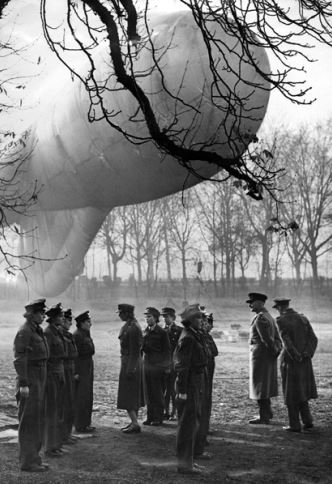
The WAAF Balloon Squadron casualties

A couple of months ago I published a blog post on the Pen-y-lan Road blitz victims.  Shortly after that I was put in touch with someone who remembered the night clearly and told me about another group who lost their lives that night.  They were members of the Women’s Auxiliary Air Force (WAAF) who were living in the newly built Lady Margaret’s school caretaker’s house on Colchester Avenue and managing a barrage balloon tethered nearby.  They were killed when the house took a direct hit from a German bomb.

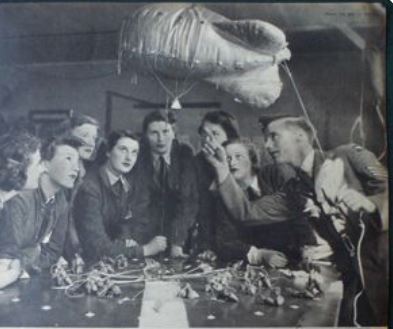
Training session

Much Googling later and I had failed to turn up any details. The internet seemed to be devoid of any information about the incident.  The casualties don’t seem to be on any Cardiff memorials and neither could I find them mentioned in the newspapers, which isn’t too surprising given the censorship in place at the time.  The civilian casualties of the Cardiff blitz bombings are listed but of course these were military victims and don’t appear on that list.  I tried looking at the Commonwealth War Graves Commission (CWGC) records but again drew a blank.  Then, last weekend I happened upon a folder on the Cardiff blitz in Cathays library and in there was a copy of a letter to the South Wales Echo in 1997 recalling the same incident.

Newspaper Article on Colchester Avenue WAAF Victims

The letter provided a lot of leads.  It pretty much mirrored what I had been told a few months earlier but not only did it list the names of the casualties and the injured but also information about a book written by a WAAF officer, Muriel Pusham, who was stationed at Cardiff Castle and one of the first on the scene afterwards.

WAAF Training
Training session for the WAAF balloon operators.

Now armed with names I could do a lot more research.  Three of the four women named in the letter I found listed on the CWGC website.  It soon became clear why I hadn’t found them earlier.   There was no mention of Cardiff on their records.  I discovered that their bodies, rather than being buried at Cathays cemetery, were transported back to their home towns and buried there.  Also, having found their names I could find their squadrons and more information about what happened on the night.  This is what I discovered:

  • 18/5  02.31
    The barrage was flying at 500′ when a “stand-by” followed by a “shine” at 02.34 was received from the Balloon Officer, 10 Fighter Group.
  • 18/5  02.41 to 03.35
    E/A attacked at varying heights from 1000′ to 10,000′ dropping flares, IB and HE.  At approximately 03.10 hours site 53/18 received a direct hit from an HE bomb which killed three WAAF balloon operators. Mary Askell (sic), Betty Stannard and Paddy (sic) Brand and wounded four others, Terry David, Cpl Lilian Ellis, Marjorie Oates and Betty Reynolds.  These were the first war casualties sustained by the Squadron.
  • 20TH MAY 1943
    The remains of three casualties, left for their respective homes. Each coffin accompanied by a W.A.A.F. Officer and N.C.O.
  •  
WAAF Balloon Squadron inspection

This is what I have been able to find out about the victims:

HELEN ROSS BRAND

Aircraftwoman 1st Class, 953 Balloon Squadron, Women’s Auxiliary Air Force (Service Number 2116411)

Helen Ross Brand was born in 1922 in Keith, Scotland to John Brand and Jessie Ross Brand nee Lobban. She died aged 20. She is buried in Keith (Broomhill) cemetery in Scotland (section B, grave 28). She is also remembered on the Keith War Memorial.  The newspaper article  reporting her death wrote she was due to be married in three weeks to a RAF Cadet.

Keith War Memorial Helen Ross Brand

MARY MACASKILL

Leading Aircraftwoman, 953 Balloon Squadron, Women’s Auxiliary Air Force (Service No: 2045888)

Mary MacAskill was born in c1921 to Norman and Joan MacAskill of Culrain, Scotland. Prior to enlising in 1942 she was training to be a nurse. She died aged 22.  She is buried at Kincardine Cemetery, Ross and Cromarty (grave 166) in Scotland. She is also remembered on the Ardgay War Memorial.

Mary MacAskill grave headstone

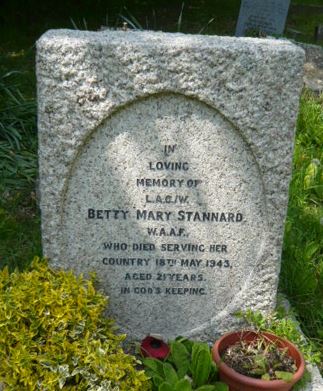
BETTY MARY STANNARD

Leading Aircraftwoman, 953 Balloon Squadron, Women’s Auxiliary Air Force (Service Number 2068971)

Betty Mary Stannard was born in Kent in 1922 to Albert James Stannard, an Estate worker from Monkton, Kent,  and Mary Eleanor Stannard nee Williams. (Her father Albert worked on the estate belonging  to Collingwood ‘Cherry’ Ingram, ornithologist and plant collector and son of Sir William Ingram, owner of London Illustrated News).   She died aged 21. She is buried at St George’s in Benenden, Kent (grave reference : Row 13. Grave 59).  Betty Mary Stannard is commemorated on the Benenden War Memorial in Kent.

Betty Stannard Grave

I have added their names to the Roath ‘Virtual’ War Memorial which now has almost 100 names on it, but a lot more to add.

Location

I examined old maps to see if I could work out exactly where the incident occurred.  I recall the caretaker’s house in Lady Margaret’s / Howardian school but it wasn’t necessarily rebuilt in the same place as the one that had been bombed.  On one of the old maps there are ‘ruins’ mentioned.  I wonder if this was the site.  If that’s the case then it would be on what is now Hammond Way, not far from the Colchester Avenue junction.  I am guessing this barrage balloon site was chosen to try and protect Roath Power Station from being bombed.

Ruin mentioned

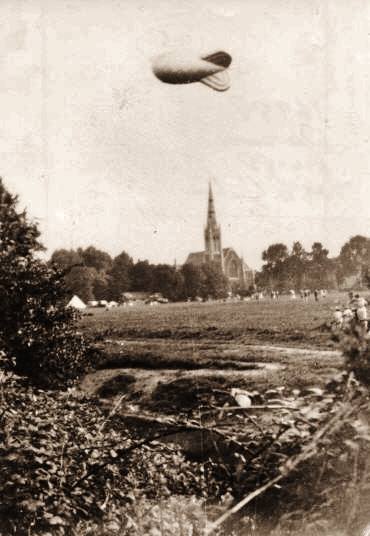
Cardiff had quite a lot of barrage balloon sites across the city. They were also flown from Splott park, Cathays park and Roath Park Recreation Ground.  I have read recently that the balloons were made and maintained at a base in Ely.

30441668_1676251789155099_8956204798797938688_n
Barrage balloon flying over Roath Park Recreation Ground – 1939

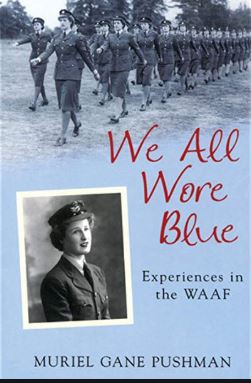
We All Wore Blue: Experiences in the WAAF by Muriel Gane Pushman

We all wore blue

This book adds some interesting memories to the incident described above though also contains some mysteries and be warned some gory bits.  The author was stationed in various parts of the country during her WAAF career so not all the book is about her time in Cardiff.

She describes there being eight balloon sites in Cardiff, ‘one being in the centre of the docks, the famous Tiger Bay area.’

‘….our headquarters were in the stables at Cardiff Castle’   ‘….. a solitary balloon was flying stoically from the keep.’

‘…..the men were responsible for the maintenance of the balloons and winches, and we were in charge of the girl operators.’

She describes the night of a raid and writes:

  • ‘It was not until daybreak that the full horror became known. One of our balloon sites up on a hill on the far side of the city had received a direct hit, blowing the Nissen hut to smithereens and instantly killing several of the girls.  The pretty young corporal in charge had her arm and shoulder blown off and suffered dreadful damage to one side of her face.  In this appalling condition, she had managed to crawl to the Pioneer Corps position – nearly a quarter of a mile away – to raise the alarm.  She had only been married the previous week, …..’
  • ‘Now, as I stood with the other officers while the parts of the bodies were collected, I found myself shivering despite the warm sunshine.’

She also describes attending the funerals:

  • ‘The next week was a blur. Nothing seemed quite real.  We were called upon to accompany the bodies to their respective home town and attend the funerals alongside the families.’
  • ‘I had never been to a funeral before and having to attend so many was physically and emotionally draining.’
  • ‘……. when the other WAAF officers returned from the funerals in Scotland’.

There were a couple of odd things that stuck me about the information in these quotes.  I don’t think I would describe the Colchester Avenue site as being ‘on a hill’.  Also she describes never having been to so many funerals before and the other WAAF officers returning from the funerals in Scotland. The three WAAF casualties I have identified, two were in Scotland and one in Kent.  So does that mean there are some not yet identified?  There is one more name in the letter that appeared in the Echo that I have not been able to trace but there may sadly have been more than that.

Barrage Balloons

A barrage balloon was three times the size of a cricket pitch. The balloons consisted of several panels of very tight fabric, at the back were three fins. The top of the balloon was filled with hydrogen, the bottom half was left empty, so when it was put up at a certain height it filled with natural air. If there wasn’t enough wind, the tail fins looked floppy but in time they filled with air. Balloons lost a certain amount of hydrogen when flying so they had to be topped up every day at the sites.

Crown Gardens 1939
The barrage balloon at Crown Gardens (Cathays Park) in 1939.

Balloons were held by cables which were fixed to winches on lorries. Cables were more important than the balloons as an aircraft had only to touch a cable and it would be destroyed straight away. If the balloon was shot it exploded, taking the aircraft with it.
The bombers had to fly over the balloons, so they couldn’t get any accuracy with their bombing, and they couldn’t dive bomb. It was dangerous to be near a cable if a balloon was shot down as the falling cable could kill a person. The winch has an altimeter which told you how high to fly the balloon, as they were flown at different heights. It was a hazardous job when you were winching up in a confined space, in wind and rain. If there was a strong wind the balloon would take itself off. It had to be handled with care because of the hydrogen.
The rope attachments consisted of metal rings which secured the balloon when it was down. Because of wear and tear the ropes were becoming dangerous so they were replaced with wire, and the metal rings were put on the wire.

There were over 15,000 WAAF barrage balloon operators throughout the country, operating 1400 balloons.

National Memorial Arboretum
Memorial to the Barrage Balloon Squadrons at the National Memorial Arboretum

(The photographs used in this article are not from the Colchester Avenue location.)

It would be interesting to hear from anyone who recalls this tragic incident. 

Postscript:

Steve Duffy, journalist and local historian, who has researched the Grangetown WWI victims, has turned up the following information in newspaper reports regarding a heroine from that night:

HEROINE When a bomb hit a balloon site during raid, killing three others, Leading Aircraftwoman Lilian Sarah Ellis, although seriously injured herself, organised relief parties and undoubtedly saved the life of at least one airwoman.” Throughout the raid,” says the citation accompanying the award to her the B.E.M. “she displayed outstanding leadership, coolness and courage.”

Liverpool Express, May 20th: When bombs fell near barrage balloon site in South Wales on Monday night killing three WAAF. crew and wounding others, Corporal Ellis, was in charge, who was herself injured, refused to accept assistance until attention had been given to her comrades, says Air Ministry News Service. When the raid started Corpl. Ellis ordered all the airwomen she could spare to shelter and had just put down the telephone after reporting to Headquarters when a bomb fell a few feet away, killing three airwomen wounding four, including Corpl. Ellis. Two airwomen who were injured went to the help of the others, although bombs were still falling. Men of the Pioneer Corps rendered first aid.

Another paper reported she had refused first aid herself, until the others had been attended to.

There are no clues in the reports as to who Lilian Sarah Ellis was or where she was from – one possible, a woman who had got married in the previous summer to a Charles Ellis – Lilian Sarah Humphrys and would have been 22 at the time and was from London. 

The Globe

It’s another one of those Roath buildings that tends to evoke lots of memories for people of a certain age.  Get into a conversation with another Roatharian about the Globe and soon you’ll be comparing what films you saw there and who with, whether you were a circle or a stalls person and what you bought from the usherette in the interval.    I think seeing The Graduate stands out for me.  Ahh, here’s to you Mrs Robinson.

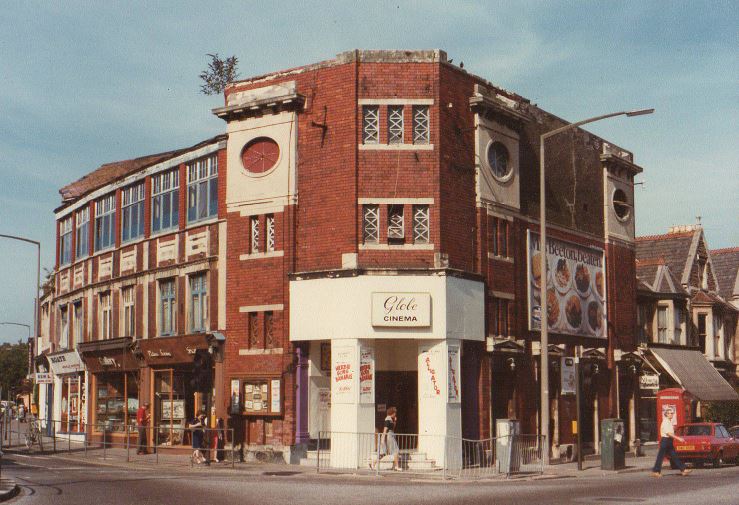
Globe Cinema Albany Road with globe on top.

Back in around 1913 someone had the foresight to look at the burgeoning population of Roath and the enthusiasm for silent movies and commission local architects Willmott and Smith too design a cinema building.

The Globe stood on the corner of Albany Road and Wellfield Road, where the Pear Tree pub now is.  It used to be called the Penylan Cinema, had a seating capacity of 542 and dated back to 1914.  In fact there is a reference to there being a cinema there as early as 1910 and called the Albany Cinema. The name the Globe derives from the fact the building used to have a globe sculpture on the roof. Look carefully at the old picture of the Penylan Cinema and not only will you spot the globe on the roof but also the two caryatids; Greek-like female sculpted figures acting as columns supporting the first floor.  These figures were later hidden behind boards advertising the programmes. It probably had a Wurlitzer organ too to accompany the silent movies.

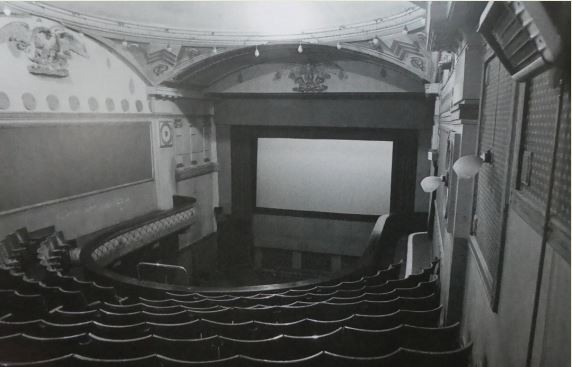
The interior was attractively decorated in classical style with eagles and the initials ‘PC’ (Penylan Cinema) near the domed roof.  Windows in the roof could be opened for ventilation to allow out the billowing cigarette smoke

Globe Cinema interior

Globe Cinema interior – taken after the cinema had closed down (photo credit: Steve Allison)

The cinema was renamed the Globe around the time it was rewired so that talkies could be shown in 1931. It was then owned by Rex Willis and operated with the Coliseum on Cowbridge Road and the Rialto in Whitchurch, often showing the same programme as one of these.

Globe cinema, Roath, Cardiff stalls and circle

Globe cinema, Roath, Cardiff stalls and circle (photo credit: Steve Allison)

In the 1950s the Globe specialised in showing foreign language films, usually subtitled, the only cinema in Wales specialising in such films.  The cinema was even called La Continentale at one stage. The papers of the time throw up some interesting stories. In Feb 1953 there was a private showing of the film Les Jeux Interdits for the Lord Mayor and the French and Spanish consuls.  In 1955 there was another private showing to the Watch Committee, this time of the film ‘The Stain in the Snow’. Only two members of the Watch Committee turned up, the Lord Mayor being one of them, and awarded it an X Certificate.

1955 Oct 26 western Mail X certificate


The Globe - La Continental

The Globe. Note how it appears to have been re-branded as La Continental at this time

In the early 1960s the cinema became a bingo hall for a short while but when that didn’t succeed it reverted to being a cinema sowing more mainstream films, often as double bills at reasonable prices.  In its final decades, the time many of us remember going there, it was a well-managed cinema owned by Mr & Mrs Wardle. Too much noise or sniggering and a torch light would highlight the offenders and order soon restored.

The curtains closed for a final time and the last choc-ice sold in the Globe cinema in 1985.  Sometime after it closed Steve Allison gained permission to take photographs of the interior of the building which he published in a nicely presented book ‘The Globe Cinema, Cardiff’ (ISBN-13: 978-0992989804), (available in Cardiff Libraries).

The Globe in later years

The Globe in later years

The building was demolished in 1987 even though it had had Grade 2 listed building status at some stage, subsequently revoked.  It was replaced by the Globe Centre, a collection of shops, a pub on the corner, originally called 42nd Street, then the Billabong and now the Pear Tree. The complex also would you believe contained a cinema, called the Monroe, which was later run by the Chapter Arts Centre and then became a Bollywood venture for a while before closing in 2001.  Today it is a successful music venue called, yes, The Globe.

Monroe

The Monroe – the last cinema on the site

So I’ll leave you reminiscing about your visit to the Globe, whether it be to see Blazing Saddles or something more refined like the Sound of Music.


A few extra pictures to bring back memories:

The Globe - the waiting area (photo credit: Steve Allison)

The couch in the waiting area where you would meet your fiends before the film began.


The Globe entrance prices

The Globe entrance prices (photo credit: Steve Allison)

David Hurn – The man who shot James Bond

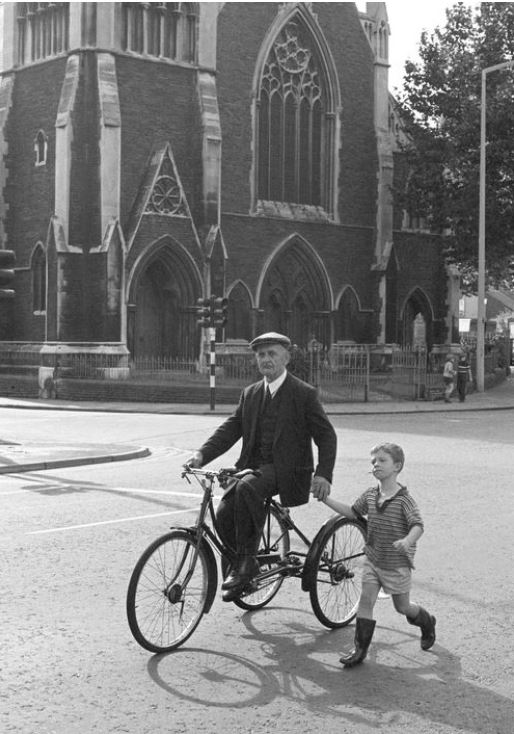
I first came across the work of David Hurn when reading the book ‘Cardiff – Rebirth of a Capital’.  The book contains many wonderful black and white photographs taken by Hurn but the one that caught my eye was one of a man on a tricycle and with a child in hand taken from outside Pen-y-lan library taken probably in the 1960s.  The church in the background is St Andrew’s URC church, where we hold our monthly meetings.

David Hurn - (photo credit - Wikipedia - Creative Commons)

David Hurn – (photo credit – Wikipedia – Creative Commons)

I was keen to see if we could use one of his photographs on our website and luckily in doing so managed to meet up with David.  He is both charming and forthright at the same time; there are few wasted words.

Penylan Road David Hurn 1973

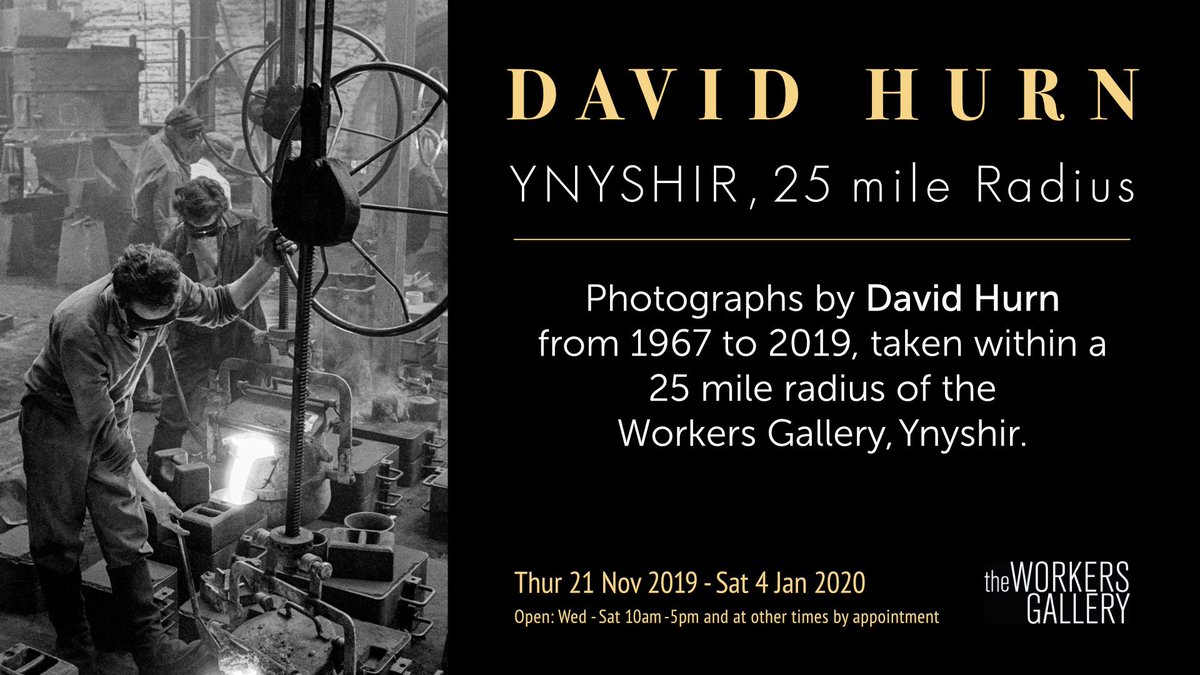
I saw David Hurn again recently when he opened an exhibition of his photographs at the Workers Gallery in Ynyshir.  There’s just time to catch it if you hurry.

EJKde2IXkAIAC6t

Hurn wasn’t born in Roath but he did grow up here.  He was born in Surrey on 21st July 1934 but shortly afterwards the family relocated to Cardiff.  In the 1939 Register he was at school and living at 3 Newminster Road but the house David remembers most vividly is 104 Marlborough Road.   He attended De la Salle School but his dyslexia made education challenging.  His father was in the military and David himself joined the military and attended Sandhurst where he first discovered a love of  photography.

Choosing photography over a military career he headed for London to doggedly pursue a photographic career.  It took time, he initially got other jobs to make ends meet but his big break came when he hitchhiked over to Hungary in 1956 to take photos of the uprising against the Communist regime.

Having got his photographs widely published he was much in demand, though not necessarily as a war photographer.  In the 1960 much time was spent snapping what we would now call celebrities; film stars, pop musicians and alike including the Beatles and Jane Fonda. He quickly worked out that when sent on an assignment there were four important shots to get that may end up differentiating you from your competition, a portrait, a close-up, a wide-angle and a shot in context.

One day when Sean Connery arrived at the studio for a shoot the publicist forgot to bring one important prop – a gun.  Fortunately David Hurn was keen on air pistol target-shooting and so they were able to use David’s pistols in the photographs.  The plan was to edit the photos afterwards to make it look more like a real gun before they were used on the bill-boards but that somehow got forgotten.

David Hurn is also known for his photographs of the Aberfan disaster in 1966.  He was one of the first photographers on the scene, and of course not necessarily that welcome.  Local miners were busy digging the bodies of the village children out of the suffocating coal slurry.  The photographs however acted as evidence of the tragedy and were shown in Parliament and played a small part in helping bring about change and preventing another similar disaster.

In 1967 he joined the prestigious Magnum photographic cooperative, a top accolade for a photojournalist.

Later in life however he left the world of photography journalism behind he returned to live in Wales where he set about recording the landscape and people of Wales. His collection must be the largest on record totalling over 50,000 shots of the nation and its people. Many of these have now been donated to the National Museum of Wales together with others that he swapped with fellow professional photographers over the years.

Also on return to Wales he ended up in 1972 setting up a course on documentary photography at Gwent College in Newport which was to become highly regarded.

He is a self-taught photographer. He very much believes in talking photographs of the world as he sees it rather than posed shots. He takes candid shots of life as it happens. His subjects are not asked if they want to be photographed.  He tends to concentrate on scenes he knows will not be there in another 20 years, capturing history as it happens as it were, always attempting to get the definitive picture of the time and place. He is however much more interested in tomorrow than he is in the past and his thirst for life is evident when he talks.

Asked what are the secrets of being a good photographer David will talk about hard work, lots of time spent doing research, tenacity and a good pair of shoes.  The photographer needs to be driven by curiosity and have a lot of patience. A lot is about positioning, working out when you arrive at a place the perfect place to stand and then waiting.   Very rarely would he spend less than 30 minutes at a place just waiting for that perfect shot.  His work ethic is ruthless.  He’s of the belief that anyone who spends less than 7.5 hours a day at it is just playing, but that time is not all about shooting; there is the researching and looking at the work of other skilled photographers.

So what makes a good shot of the community? Well, having a dog somewhere in the picture can add a lot of context he explains.  People making gestures too are very important.

His shots are never edited, they are just life as it happened to be at the time.  Even today in his eighties, David Hurn is taking 4000 photographs a year.  That gets followed by some ruthless selection procedure after which he would end up with just twenty or so to display at an exhibition.

He still has good things to say about his hometown of Cardiff, about its sense of community and the place itself though maybe like many feels there have been wasted opportunities in the architecture chosen for the centrepiece buildings along the waterfront in Cardiff Bay.

In 2001 he was diagnosed with colon cancer but has made a full recovery.  He now sees radiographers as a most important branch of photography and encourages youngsters with an enthusiasm in photography to consider this as a profession.

Today, David lives in Tintern and still spends time photographing the community in which he lives.  He often works closely with poets and his next project is to ask ten poets to write something about one of his pictures expecting it to demonstrate that we all see different things in the same picture.


Cardiff - Rebirth of a Capital

Cardiff – Rebirth of a Capital

PS.  With the help of the members of the Cardiff Days Gone By Facebook group, the scene of the ‘Walkers in Roath’ photo has actually been identified as Atlas Road in Canton at the junction with Denton Street.  The house which could be seen as bricked up in the photo has been demolished.

It’s Beginning to Look A Lot Like Christmas

Success! I’ve been searching for Christmas for over 20 years and have recently found him.

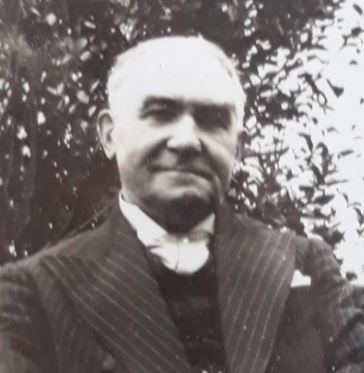
Evan Christmas Thomas

Evan Christmas Thomas (1866-1936)

My great-grandfather, Evan Christmas Thomas, was what we call in family history research something of a ‘brick wall’.  I could trace him back to around 1900 but any further back was presenting a problem.

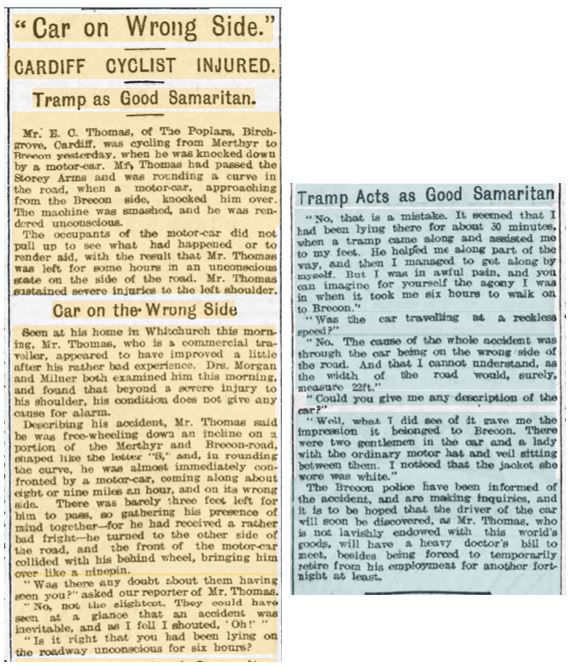
This year that brick wall came tumbling down and some interesting stories came to light.  How did the story of him possibly being Wales’s first hit and run victim not get passed down through the family?  There’s even an intriguing Roath connection – perhaps you can help solve that mystery.

The starting point to my research was information that had got passed down through the family.  I knew he was originally from West Wales and had lived in the village of Cwrt Newydd on the Carmarthenshire/Cardiganshire border. After coming to Cardiff I knew he and the family lived in Birchgrove and he worked as a commercial traveller for a paint company.

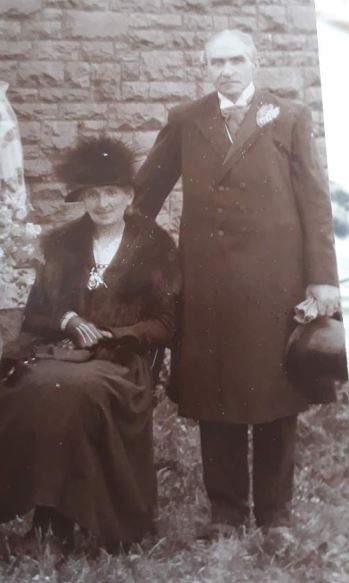
Evan Christmas Thomas and his wife

Evan Christmas Thomas with his wife Margaret

Twenty years ago the family historian tended to have to leave the house and visit places like libraries to further their research.  I was fortunate enough at the time to have a job which involved regular meetings in London onto which I could tag a visit to the old Family History Centre at Clerkenwell.  There droves of genealogists would move around silently examining the large weighty volumes of birth, deaths and marriages. There would be tutting, sighing and occasionally whoop of excitement to signify success but the sound was mainly the clatter of the metal reinforced volumes being re-shelved.

Obtaining the marriage certificate for Evan Christmas Thomas was straightforward enough. From that I could see he was a woollen manufacturer and did indeed live at Cwrt Newydd.  The wedding certificate gave his father’s name as James, a labourer. I also had a death certificate and the ages on both the death and the marriage certificates gave me a supposed year of birth.

Brick wall

Next job then to get the birth certificate.  With a year of birth and an unusual middle name of Christmas what could be difficult about that.  I searched and I searched but just couldn’t find him.  Letters were written to registry offices in West Wales and family history societies in the area but all came back negative.  There was no birth of an Evan Christmas Thomas registered.

When the 1901 census was released and up came Evan Christmas Thomas, owning his woollen mill in Cwrt Newydd giving his place of birth as Llandysiliogogo, Cardiganshire and speaking both Welsh and English.

I put the search for Christmas aside for a long time, concentrated on other strands of the family tree and then gave family history a rest all together for quite a few years.

When I picked it up again everything had changed.  It had all gone computerised.  I joined Glamorgan Family History Society and attended one of their ‘brick wall’ sessions at Cardiff Central Library – 10am to 2pm on the first Saturday of the month, non-members welcome, and free of charge! I went along armed with all I knew about Evan Christmas Thomas.

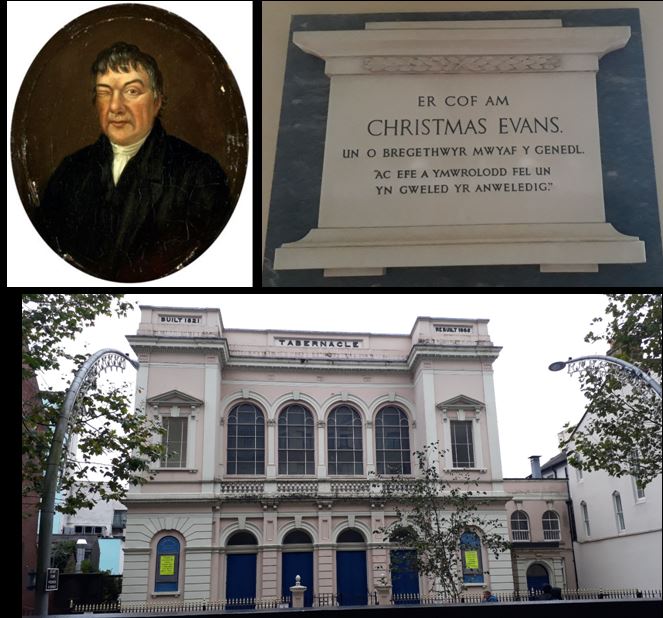
The wonderful Nick taught me so much and solved one mystery.  After also failing to find a birth of an Evan Christmas Thomas he pointed out of the library window at Tabernacle Church opposite and said my answer may well lie over there.  He explained that Christmas may well not have been my great-grandfather’s name at birth but one taken on later in life in adoration of Christmas Evans.

Christmas Evans

Christmas Evans (1766-1838) was a famous Welsh Baptist preacher, born near Llandysul, where my great grandfather also came from.  He was a giant of a man, blind in one eye and  much admired.  He worked around Wales and at one time was minister of Tabernacle Baptist in the Hayes Cardiff.

Christmas Evans at Tabernacle chapel, Cardiff

Christmas Evans from Llandyssil, minister at Tabernacle 1828-1832 (Portrait by William Roos, 1835. National Museum Cardiff )

That all sounded very plausible but now left the challenge me with the challenge of finding a birth for an Evan Thomas rather than an Evan Christmas Thomas.  Anyone with ancestry in the West Wales area will be familiar with such a challenge. There seemed to be a shortage of names, both first names and surnames, to go around.  You look at some census records and families living next door to each other all have virtually identical names.  Talk about keeping up with the Jones’s.

1911 Census

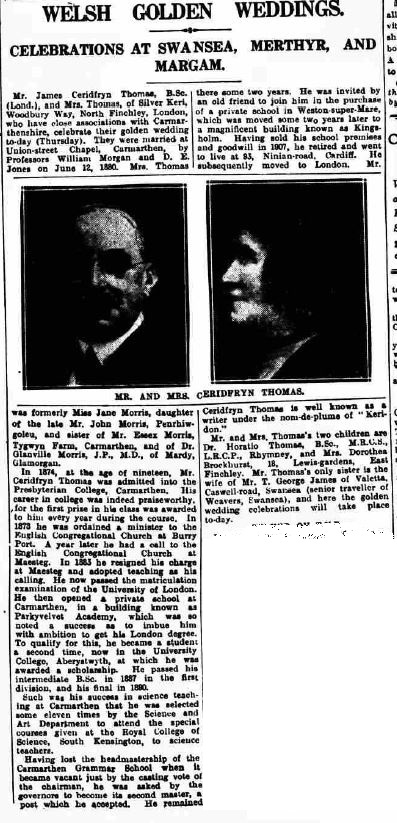
The other thing that had appeared in the intervening years was the 1911 Census.  Bizarrely this only served to confuse things rather than add clarity.  Evan Christmas Thomas was now calling himself something else!  Now he was Evan Ceridfryn Thomas. Yes, I’d never heard of the name Ceridfryn either.  In fact there’s only about three people ever been called Ceridfryn and one of them James Ceridfryn Thomas (1856-1932) lived in Roath and was also originated Cardiganshire with a mention in a book on the history of Llandyssil.

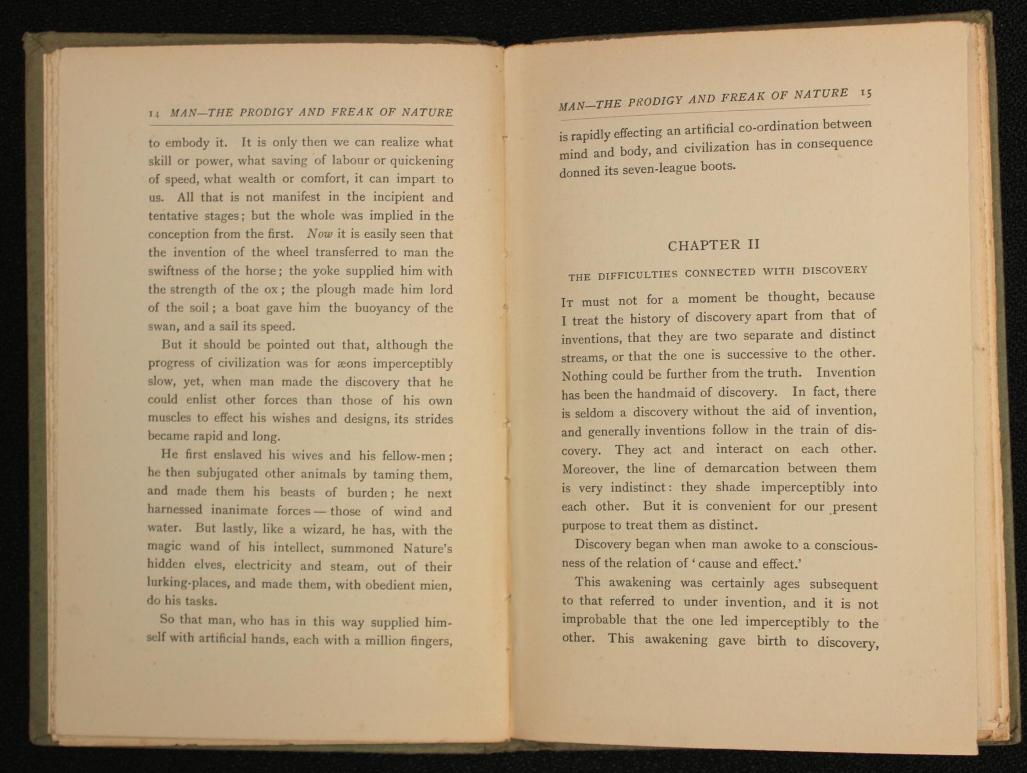
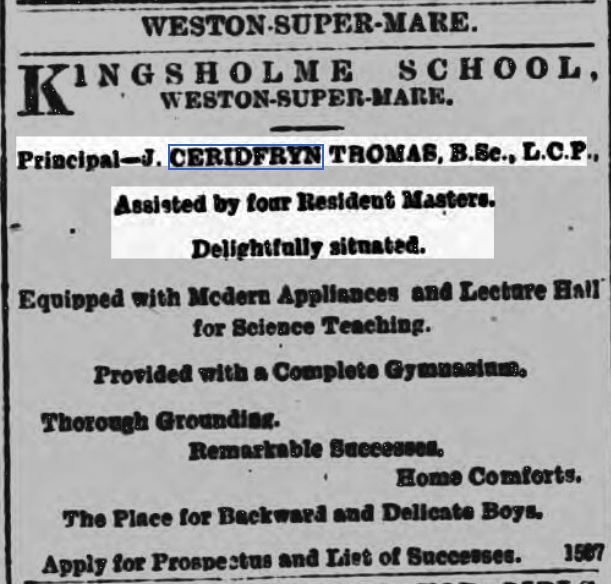
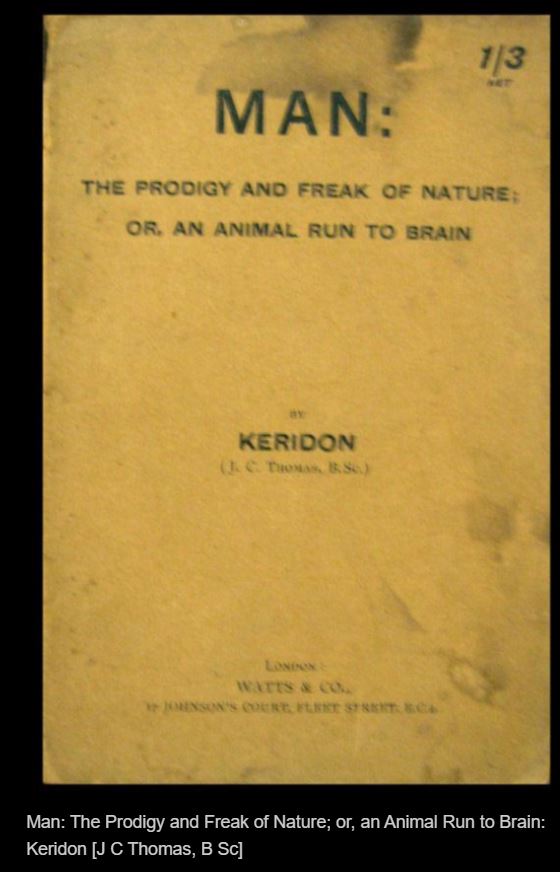
In 1911 James Ceridfryn Thomas BSc lived at 93 Ninian Road, opposite Roath Park Pleasure Gardens.  He was a retired headmaster having previously worked at Kingsholm School in Weston-Super-Mare.  He had a degree in science,  was also a minister and also an author, publishing books under a pen-name Keridon. He wrote in an erudite fashion on a wide range of matters much of it beyond my understanding.

Ceridfryn Thomas writting

Man – The Prodigy and Freak of Nature by ‘Keridon’  – James Ceridfryn Thomas

So why did my great grand-father suddenly take on the middle name of Ceridfryn? I think he probably would have known James Ceridfryn Thomas.  There was an active Cardiganshire Society meeting in the Cardiff at the time and maybe they knew each other through though Welsh chapel.  Was it an admiration of his preaching or his writing or did James Ceridfryn Thomas maybe help secure Evan Thomas a job when he came to Cardiff. I’ll probably never know.

Another thing I found this year was my great-grandfather’s grave.  It is in Pantmawr Cemetery in Whitchurch and on the headstone his middle name had reverted to Christmas once again.  It will be interesting to see what he entered his name as on the 1921 census which is released in a couple of years time.

Breaking the rules

This year it dawned on me that I had broken one of the first rules of conducing family history.  Whenever anyone starts looking at their family tree there are a few things to do prior to jumping online and immersing oneself in all the records.  The first is to talk to all living relatives (talking to the dead ones is a bit of a waste of time as they don’t have a lot to say for themselves).  Note down everything they say (apart from the bit where the offer you a cup of tea) .  It won’t all be true.  Some stories will have changed over time but there is usually an element of truth in each one.  The second thing to do is to go through all old photographs and documents and make sure as much information is recorded about them as possible; names, dates, plates etc.

F2 Evan Thomas 1894 bible inscription

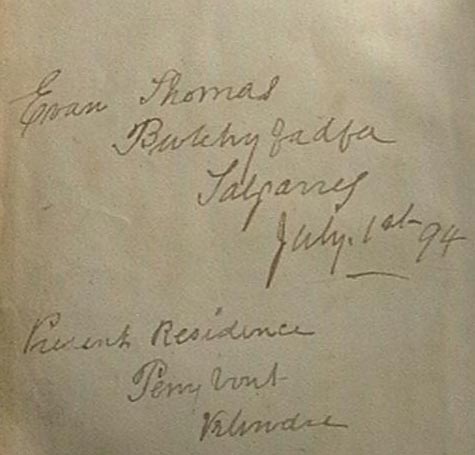
Do I keep to the above rules?  No of course I don’t.  This year I re-discovered an old bible belonging to Evan Christmas Thomas hidden away on our bookshelves.  This wasn’t one of those large family bibles with the family history all neatly written out on the inside front cover.  This was a small Welsh bible with Evan’s addresses inside and dated 1894.  It wasn’t from his childhood either.  Evan would have been 28 at this time. I realised that it was telling me his ‘present address’ of Penybont, Velindre and what was probably his ‘home address’ of Bwlchyfadfa, Talgarreg.

We happened to be holidaying in Cardiganshire this year so one day visited Bwlchyfadfa and the chapel and well-maintained graveyard.  I was particularly looking for a James Thomas that may have been Evan’s father.  There were lots of Thomas’s.  One James Thomas looked very promising though somewhat older than I expected.

Breakthrough

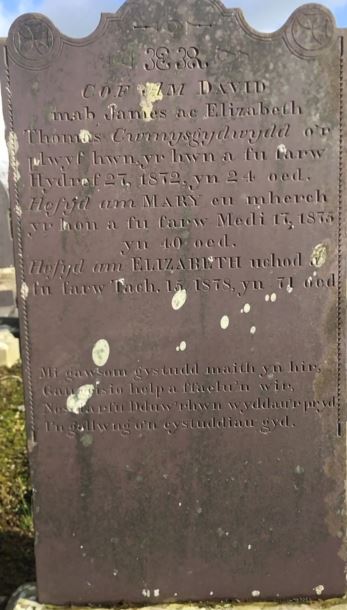
The next stage involved many hours pouring over census records, old maps and other various genealogy sources until yes, I eventually found Evan.  I could trace him back from 1901 as a woollen mill owner, to 1891 working as a woollen spinner to 1881 being a woollen spinner’s apprentice and in 1871 being in Bwlchyfadfa as a five year old grandson to James Thomas, aged 64, an agricultural labourer.   Also present in the house was an unmarried daughter Mary and an unmarried son David.  It was all beginning to make sense.

The next stage involved a leap of faith.  Spending the money and ordering what I thought was the correct birth certificate for Evan Thomas among all the Evan Thomas’s listed.  A tense week followed whilst I waited for the certificate to arrive.  Then bingo!   There he was, Evan Thomas, born to Mary Thomas, Bwlchyfadfa, an illegitimate birth, no father mentioned.  He was born on January 2nd 1866 so it was sort of a Christmas birth.

It was satisfying to find him eventually.  A number of things had obviously thrown me.  Christmas was not a name given from birth but one adopted later.  The James mentioned on his wedding certificate as his father was no doubt his grandfather that had helped bring him up in the absence of a father.  In fact Evan’s mother Mary dies when he was just nine after  long illness.  And the different birthplaces that kept being mentioned on census records i.e. Llandyssil and Llandysiliogogo, is explained by the fact that the parish boundary goes straight through the middle of the village of Bwlchyfadfa.

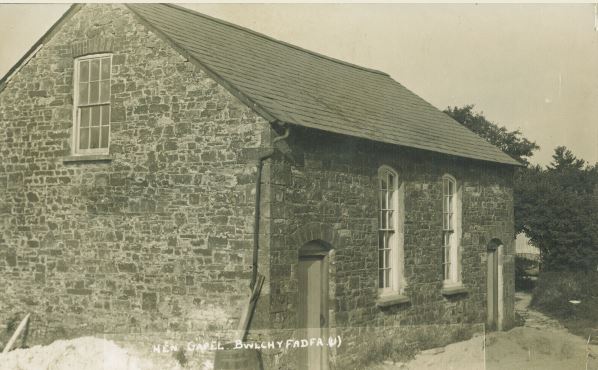
The old chapel at Bwlchyfadfa

The old chapel at Bwlchyfadfa, before the new one was built nearby in the 1890s.

Having pieced it all together I got in contact with Wyn Thomas, the minister at  Bwlchyfadfa Chapel to see if I could access any baptismal records etc.  I wasn’t necessarily expecting a positive response as such records are often missing or been transferred to record offices or the minister is just too busy.  Wyn however couldn’t have been more helpful and I paid another visit to the chapel to meet him.

Bwlchyfadfa is a Unitarian chapel.  Christening in such chapels weren’t as common as in other denominations or necessarily recorded and preserved.  Unitarianism was however big in the area with quite a lot of chapels and a magazine that went back to the 1800s.  One possibility was that there would be a mention in the magazine of the Thomas family.  The copies of the magazine stored at Bwlchyfadfa chapel didn’t go back far enough but Wyn had an idea, another chapel nearby may have the older copies of the magazine.

GelliAur Mill

Gelliaur Mill where Evan Thomas worked as a wool spinner

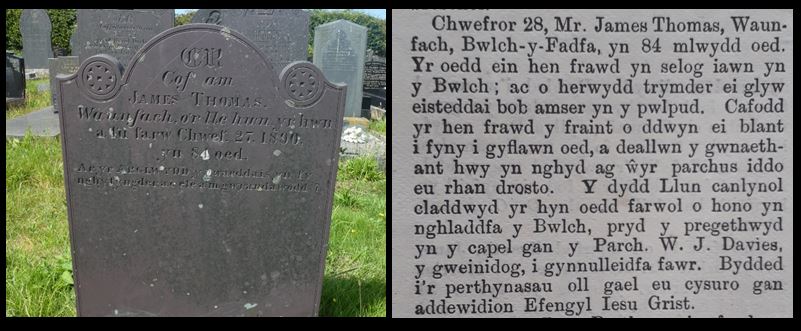
As we travelled though the lanes of rural Cardiganshire he pointed out the mill, Gelliaur, where Evan had been a woollen spinner in 1891, now converted into a house.  We arrived at the chapel and climbed up onto the balcony and there, sat in dusty piles, were copies of Ymofynydd magazines dating back 150 years.  A quick search and we found the obituary to my great-great-great-grandfather James Thomas.  It tells of a man strong in his faith but one so hard of hearing that he used to sit on the steps of the pulpit so he could hear the sermon.  So that’s where I get my hearing deficiency from!

James Thomas headstone and obit

Grave and obituary of James Thomas mentioning his respected grandson. Loose Google translation: February 28, Mr. James Thomas, Waunfach, Bwlch-y-Fadfa, aged 84 years. Our old brother was very zealous in Bwlch; and because of the hardness of his hearing he always sat in the pulpit. The old brother had the privilege of bringing his children up to a full age, and we understand that they, along with a respected Grandson, did their part for him. The following Monday his fatal death was buried at the Bwlch cemetery, when the Rev was preached in the chapel. W. J. Davies, the minister, to a large congregation. May all the relationships be comforted by the promises of the Gospel of Jesus Christ

Elizabeth, Mary and David Thomas headstone.

The obituary of Evan’s mother Mary was also in the magazine and makes harrowing reading.  Wyn later found her grave, her brother David and mother Elizabeth at Pantydefaid Unitarian Chapel, Prengwyn.  The inscription on the tombstone was also incredibly sad and roughly translates to ‘We suffered very long with illness, looking for help but failing, until God the one who knew when released us from our suffering.’

We should never forget what a wonderful invention pain relief drugs are.


A slight mishap

There was another shock to come.  Back home I continued to search for any mention in the newspapers of Evan Christmas Thomas and I stumbled upon a story of him I’d never heard.  In 1907 it is reported he was cycling on the road from Merthyr to Brecon when he was knocked off his bike by a car travelling at 9mph on the wrong side of the road and he was rendered unconscious.  The chauffer-driven car didn’t stop.  After regaining consciousness it took him six hours to wheel his damaged bike to Brecon where he caught a train back to Cardiff.

F2 E C Thomas 19 Jun 1907 Evening Express and Evening Mail

19th June 1907 – Evening Express and Evening Mail

There are so many questions I have over these reports.  What was he doing there.  He was a commercial traveller for a paint and varnish company. Was he working or a just very keen early cyclist?  I can’t imagine the roads were very good back in 1907.  And the big question – was he Wales’s first cycling hit and run victim?

And so there we have it.  Some of the life of Evan Christmas Thomas has slowly revealed itself together with his sick mother Mary and hard of hearing grandfather James.  A lot more stays hidden away waiting to be discovered.


Postscript: some additional information-

James Ceridfryn Thomas from Ninian Road, Roath:

1930 June 12th Western Mail

South Wales Daily News Sept 1902

Man

Carmarthen Weekly Reporter 1913

Evan Christmas Thomas – more reports of his mishap with a chauffeured driven car:

F2 Evan Christmas Thomas 22 Jun 1907 Weekly Mail - Cycling accident


A470 just past Storey Arms near milestone

I was walking down off Pen-y-fan last week when I realised I was approaching the very spot where Evan got bowled over – the A470 just past Storey Arms near where a milestone used to be till recently.

Norman Biggs – Welsh rugby international killed by a poisoned arrow.

Headlines

Norman Biggs portrait

There are so many headlines I could have used for this article such as ‘Wales’s youngest rugby international‘ or ‘The fastest man in the world?‘ or ‘Where’s his missing memorial?‘.  I was spoilt for choice.

I’ve been researching Norman Biggs now for a couple of years – a fascinating character.  It’s not just him – there’s a story to tell about the whole of the Biggs family, but let’s concentrate on Norman for now.

Norman’s early life

Norman Witchell Biggs was his full name.  Yes, I thought it was a misprint too and it should have been Mitchell, but no, it really was Witchell.   He was born in 1870 in St Andrew’s Place in the middle of Cardiff, to John Biggs, owner of the South Wales Brewery and Emily Sophia Biggs née Clark.  Norman was baptised a few months later in St Mary the Virgin church on Bute Street.  This confused me for a while as it’s not the nearest Anglican church to St Andrew’s Place until I found out that the Biggs family had strong associations with the church; there is a plaque in the church to Norman’s grandparents John and Eliza Biggs.  Perhaps they were benefactors when the church was being built.

In the 1881 census we find Norman Biggs in Lewinsdale School, Weston-Super-Mare.  I’m always amazed by how much travel there seemed to be between Cardiff and Somerset 150 years ago.   There is no sign of the school there nowadays, just Lewinsdale Lodge, now a B&B.

When Norman Biggs returns to live in Cardiff he attends Cardiff Proprietary School, also confusingly known as Cardiff College.   I say confusingly because the building was on Dumfries Place, and later went on the become part of the University and later still the Student’s Union.

Cardiff College

Cardiff College building on Dumfries Place, later became part of the University and later still the Student’s union (Pic credit: Cardiff Libraries)

Norman’s sporting prowess started to show though at a young age.  In 1884, aged just 13, he is playing for Cardiff College (Cardiff Preparatory School) against the University 2nd team and scores two tries. A year later the paper reports Norman, aged 14, playing cricket for Cardiff College versus Llwynypia 2nd XI.

International debut

In 1887 Norman Biggs plays first match for Cardiff on March 9th 1887, aged just 16 years 4 months and scores a try.  His speed makes him a natural winger.  He had a meteoric rise and a year later, he is picked to play for Wales against New Zealand. He becomes the youngest player to play for Wales aged 18 years 1 month 19 days. He held that record for 120 years until Tom Prydie made his Wales debut in 2010 at age of 18 years and 25 days.
Norman Biggs in Wales jersey

Norman Biggs in Wales jersey (pic credit: Wikipedia)

Norman’s first game for Wales didn’t go well. Although Wales won Biggs was ‘palpably nervous’.  The game was held in Swansea where the crowd was hostile towards Wales players from Cardiff and the east of Wales. Newspaper quotes include: ‘The crowd positively pooh-poohed Biggs’, ‘Biggs I am bound to admit disappointed me’, ‘He is a rattling good man, next to George Morgan, the best in Wales’.

A week later, on 29th December  1888, Norman Biggs faced the same tourists, this time as part of the Cardiff team. Biggs had been disappointing in his international debut, but regained his form on the pitch at the Cardiff Arms Park. Within 90 seconds of the start of the match, Biggs scored a ‘sparkling try’.  Biggs should have scored again, but dropped the ball after crossing the line in the slippery conditions.  Cardiff won by a goal and a try to one try.
1888-89New Zealand Native team

1888-89 New Zealand Native team

In January 1889 Norman is picked again to play for Wales, this time against Scotland, but pulls out as part of the ongoing dispute between east and west Wales clubs.

In March 1889 the papers report on Norman taking part in a debate at Cardiff University on smoking, speaking on the side that smoking causes harm and winning.  That’s pretty insightful considering it was 60 years before the link between smoking and ill health was proven scientifically.

On March 2nd 1889 he plays again for Wales in Swansea, this time against Ireland. Wales lost with Ireland scoring two unconverted tries.  Biggs had a bad game being at fault for at least one of the Ireland tries when an overhead pass of his was intercepted. Wales finished bottom of the table that year; bottom of three – England didn’t participate that season.

Let’s take another break from the rugby now for this story that demonstrates the athletic ability of Norman Biggs.  It is reporting on the Cardiff University sports day on May 11th 1889: ‘The lion of the day was Norman Biggs, well-known Cardiff Football player who pulled off the 100 yds, 220 yds, the quarter, the hurdles, the high jump, the prize for throwing the cricket ball, and then crowned a phenomenally successful day by bringing himself and partner in first at the three-legged race’. How many modern day rugby internationals would take part in a three-legged race!

Reports of him partaking in a fun three-legged race are somewhat contradicted by his appearance in team photos.  He always seems somewhat grumpy and surly.

Cardiff 1888-89 team Norman Biggs middle row 2nd from left

Cardiff 1888-89 team Norman Biggs, middle row 2nd from left. perching on a backwards facing chair (pic credit: Cardiff Rugby Museum)

Fastest man in the world?

Watching Norman Biggs sprint down the wing with ball in hand must have been an exhilarating experience given his outstanding pace. There’s even an argument for saying he could have been the fastest man in the world.   In 1889 Norman Biggs goes Cambridge University.  It is not clear what he studied or whether he ever graduated. Here’s an extract from an obituary of Norman Biggs:

“Leaving the Cardiff College he graduated at Cardiff and took up his residence at Trinity Hall.  Here one of his first accidents occurred.  In playing football he had a couple of ribs broken and the necessary rest robbed him of his blue. He however made a name in sprinting and it is on the record that he did the 100 yds in even time.  He had against him such fine flyers as Monypenny.  It was a remarkable thing that in the 100 yds Norman could beat Monypenny but in the 120 yds the latter could always reach the line first, the explanation being that Norman was the better starter.”

The Monypenny in the quote above was Charlton Monypenny.  Here’s what it says about him in Wikipedia: “While at Cambridge he achieved two running records, the World Record for the 150-yard dash (14.8 secs) and the Cambridge quarter of a mile track record (49.5 secs) which stood until 1931.  In 1891 Monypenny was recognised as the seconded fastest man in the world behind American Luther Cary, recording a time of 10.8 seconds in the 100-metre sprint on 22 July. The next year, although recording an identical time of 10.8 seconds, he was judged the joint fastest men in the world that year, along with American athlete Cecil Lee”

Put those two articles together, the fact that Biggs could beat Monypenny over 100 yds and the fact that Monypenny was judged one of the fastest men in the world, and it could be argued that Norman Biggs was possibly the world’s fastest.  An obituary and Wikipedia are hardly ‘primary sources’ for history researchers I admit but it makes you wonder. Add to it that he was only doing athletics because an injury prevented him playing rugby and those sprint times would have been made from a standing start rather than using blocks or spiked shoes and it is all pretty remarkable stuff.

International Success

Biggs plays again for Wales in 1892 against Ireland but again ends up on the losing side.  In 1893 however his fortunes change and he finds himself part of the first Wales team to win a Triple Crown. On January 7th at the Arms Park, Wales beat England 12-11 in what has become known as the ‘Devil’s match’ because fires were lit around the ground the previous night to keep the pitch frost-free and enable the game to go ahead. Biggs scored.  ‘After each of the three quarters had handled the ball, Norman Biggs having cleverly been given the ball by Conway Rees, sprinting away from Lockwood, got the better of Field, and scored a really fine try’.
Triple Crown medal belonging to Frank Hill in Cardiff Rugby Museum

Medal awarded to players of Wales’s first triple crown winning side. This one belonged to Frank Hill and is on display at Cardiff Rugby club Museum.

The following month Wales travel to Scotland and win 9-0 and again Norman Biggs scores a try. The 1893 away game against Scotland is described as Biggs’ best international match and ‘his speed and general play were the main factors in securing the first victory of the Principality over Scotland at Scotland’.

In March Wales play Ireland at Stradey Park, Llanelli.  Wales win 2-0 though a try from Gould.  Ireland fielded one more forward than Wales (it was a choice how many forwards and backs were playing at the time).  Quotes from the papers included: ‘Gould and Norman Biggs time after time stopped rushes, the later player saving his front rank by screw punting’, ‘the most uninteresting international contest for years past’.

Cricketing Skills

In the summer of 1893 Norman plays cricket for Glamorgan against a Cardiff team that includes his brother Selwyn, thereby becoming one of a select band of players to play both cricket for Glamorgan and rugby for Wales.  Selwyn in fact later goes on to play for Glamorgan and become their opening bowler for a number of years.

Club Loyalty

Club rugby was somewhat different in the 1890s. Players weren’t contractually bound to a club as they are now and sometimes turned out for other clubs if they found themselves in different parts of the country.  Norman Biggs played for London Welsh in matches against both Cardiff and Swansea in 1890.  He also plays a fair bit for Richmond over the years. At one time in 1893 he gets collared by a reporter on his return to Cardiff.  Norman explained ‘he was in London for a fortnight seeing a doctor every day, after he had an operation.  Playing for Richmond there was no need to exert himself and nobody cared who won’.

Conclusion of International Career

Norman Biggs plays two more matches for Wales.  In January 1894 against England at Birkenhead Park in front of a crown of 7,000 Wales suffered a heavy defeat, losing 24-3.  In a post-match interview Biggs was asked why he had failed to tackle Harry Bradshaw, who scored the first try; Biggs responded “Tackle him? It was as much as I could do to get out of his way!”

In March 1894 Wales beat Ireland 3-0 in a game where all the backs were from Cardiff.  The very next international saw Norman’s younger brother Selwyn selected for the first time, the brothers missing each other by just one match. Selwyn also goes on to have a very successful international career.
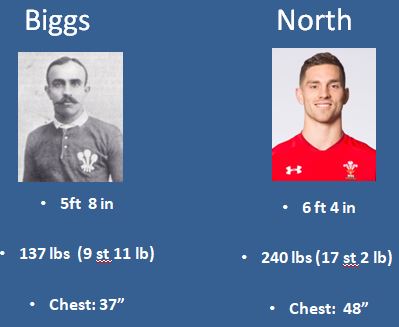
Norman Biggs George North comparison

Norman Biggs compared to today’s Wales winger George North – note the difference in weight!

Cardiff Captain

In the 1893-94 season Norman Biggs captains Cardiff.   During the season Biggs scored 58 conversions, 25 tries and two dropped goals bringing his points tally to 199 points, a record that remained till 1972–73 when it was surpassed by John Davies.

1893-4 Cardiff Rugby Club.  Norman Biggs captain with ball and Selwyn Biggs top right (picture credit: Cardiff Rugby Club Museum)

Biggs played for Cardiff from the 1886–87 season through to 1898–99.  He played in 166 matches for Cardiff, was one of the highest scoring players the club has produced. Biggs ended his Cardiff career with 107 tries, four less than another of his brothers Cecil. He scored five or more try conversions in a single match on seven occasions, six in the same season (1893-94), against Gloucester, Bristol, London Welsh, Penygraig, Exeter and Cardiff & D.R.U.

The last notable club Biggs represented was Bath.  He turned out in the 1886-89 seasons sometimes.  His decision to go to Bath was probably guided by the fact that his father’s brewery may have had an interest in the area. Some match reports also mention him and Selwyn promising to turn up but not and instead playing for Richmond.  Norman was said to be captaining the Bath senior team during the 1899–1900 season but did not appear in the match reports, instead diverted by the next stage in his life.


The Boer War

On 5th January 1900 he joined the Glamorgan Imperial Yeomanry, a volunteer force. In the British army at the time the officers were from the gentry and the professional middle classes and the recruits from the poorest sections of society. You wonder how much horse riding experience Norman Biggs had before joining the yeomanry.  It is true that the Biggs house Oldwell, Penylan, Cardiff did have stables so he had probably built up some experience.
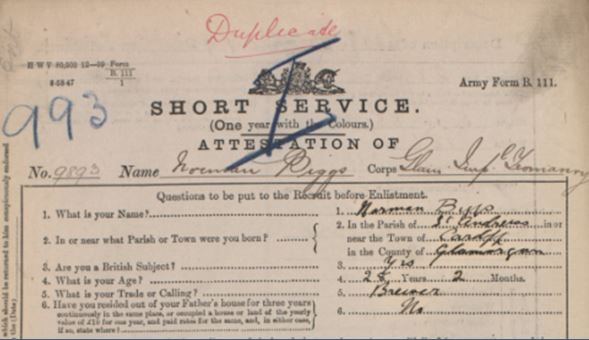
Norman Biggs signs up

Norman Biggs signs up

His exploits in the Boer War are relatively well reported in the papers.  People were naturally keen to hear how one of their rugby stars was fairing.  In May 1900 he had arrived in South Africa and sends a drawing home to his brothers which was published in the Western Mail.  The letter included a picture of the cook and wood gatherers.  At this time his unit was still undergoing training near Cape Town.  The papers also report Biggs was keen for a photograph he’d sent to be forwarded to the Conservative Club in St Mary’s Street, so we learn of his political affiliation.


By December 1900 his unit is on the front line.  A letter from R S Jenkin the old Swansea football forward describes how Norman Biggs the ex-international three quarter was wounded.  He says “Six miles from Vrede, our left rear flankers were fired on by almost a dozen Boers.  We on the right flank heard the firing and saw the state of affairs and opened fire.  Shortly the rearguard came back and things got interesting.  Norman Biggs, G F Williams (late of Llandovery) and Sergeant Thomas were in the centre and as soon as they heard the firing on the right they concluded that the right flank was in trouble.  They came across and Norman, mad like, went galloping towards the Boer fire, in spite of orders to the contrary being shouted to him. He having got the idea into his head that I and the others were concerned, and he meant to find out.  Anyhow, he got within a hundred yards and found things getting hot, when he was wounded in the uppermost part of his thigh.  He turned about but had only got a few yards when his horse was shot dead.  He lay down behind it, and was about to aim, when he saw the Boers mounting and getting into position to cut off his retreat, so he picked himself up and ran off.  He was shortly picked up by one of our officers, who put him on a horse and caught hold of the stirrup himself.  The horse shield (sic), and Norman once more embraced mother earth.  Then Major Wyndham-Quin put him on a horse, and this time he was taken in safety to the hospital.  He is now much better as it is only a flesh wound.”
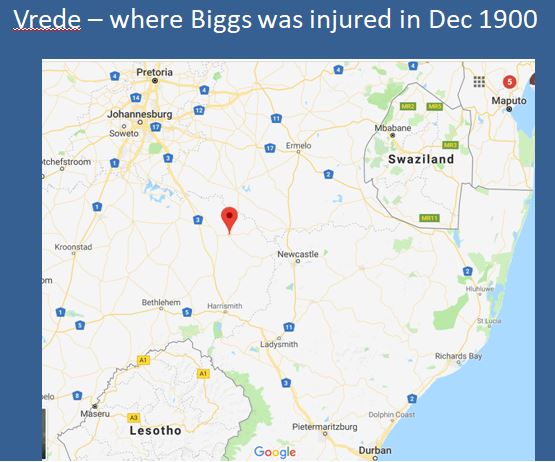
Biggs injured in 1900

map credit: Google

Norman was sent initially to the military hospital in Harrismith.   On December 19th 1900 he returns to UK on board the hospital ship Simla with 284 other men. It seems he was not home long.

Hospital ship Simla

Hospital ship Simla

In February it is announced he is to join ‘Paget’s Horse’, an elite horseback unit, as a Captain.  He returns to South Africa but in May we read he is in hospital in Winberg with fever.  In September he is discharged from hospital and in November fighting again. We don’t read much about him in the following year.  He arrives home in late 1902.
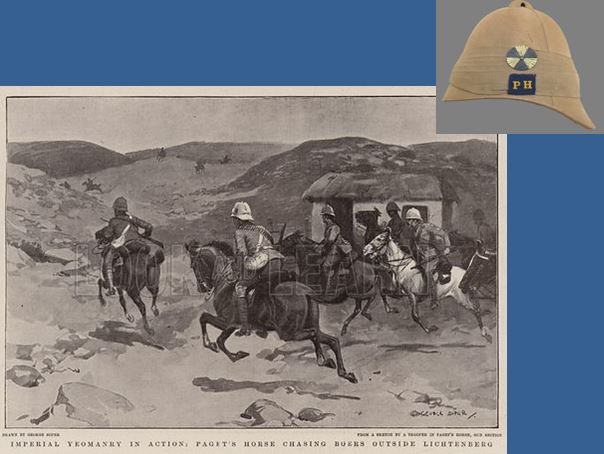
Paget's Horse Yeomenary

Paget’s Horse (picture credit: Look and Learn)

Extended military career

On returning home Norman appears to have made a decision to extend his military career rather than return to the family brewing business which by now was in its twilight years.  He joins the regular army.  He is initially stationed in Cardiff Barracks training recruits, then Aldershot, then Hythe where he takes a course in the School of Musketry.

He serves as the District Superintendent of the Northern Nigerian Constabulary. The papers say he returned to Nigeria in October 1907 having been on leave in England that summer, so must have been there previously at some stage.

Poisoned Arrow

He was killed 27 Feb 1908 at Chinuku, Northern Nigeria, after being hit by a poisoned arrow in a brush with natives whilst on patrol duty. Newspaper reports say he was trying to arrest some ‘Pagans’ who had been pillaging and were hiding in a village.  On approaching the village they were attacked.

Biggs did not reload but instead rode onto the next village to allay fears of the natives who would have seen the neighbouring village burning.  His intention was to warn them that their force had no quarrel with them and that they had nothing to fear.

The papers report that unfortunately his mission was misunderstood and before he could get close enough to explain his mission he was shot in the thigh by a poisoned arrow. Biggs pulled out the arrow and a fellow officer cauterised it with a red hot knife. Biggs was removed by horse to Sakaba, some 50 miles away but he died four days later. He was buried at Fort Sakaba with full military honours attended by 30 officers. It is theorised that his heart may have been weakened having had a couple of bouts of malaria.  The arrow was sent home for analysis, but I can’t find any record of the outcome of the analysis.

Nigeria and Norman Biggs place of death marked by red pin

Chinuku, Northern Nigeria (map credit: Google)

The poison used in poison darts varies throughout the world.  In South America it is often taken from a venomous frog, in southern Africa from a poisonous beetle and in Northern Nigeria from the plant Strophanthus.  Cardiac poisons tend to be fast-acting.  The fact that Biggs died four days after being hit by the arrow would seem to indicate to me he probably died of a resulting hemorrhage rather than the poison itself – but why spoil a good story.

Norman Biggs’s Grave

The grave of Norman Biggs is marked with a simple metal cross that is talked about in a YouTube video.  It looks in remarkable condition even after all this time.  The cross appears to read:  In loving memory of Norman W Biggs of Cardiff, Great Britain. Cpt 3rd Welch Rgt. DSG N Nigeria  Killed in action. Died 27 Feb 1908.

The cross on grave of Norman Biggs

The cross on grave of Norman Biggs

There is a fascinating YouTube video interviewing a local man who seems to be saying that it is thought they were missionaries but the locals thought they were cannibals. Click the CC button at the foot of the YouTube video to get the subtitles.

YouTube video stills

Cardiff honours Biggs

The news of the death of Norman Biggs was widely reported in the papers.  A large service was held in his honour on March 16th 1908 at St John’s church, Cardiff.  Mr W T Morgan and a large number of Cardiff Rugby Club assembled at the Drill Hall in Dumfries Place and marched along Queen Street to St John’s along with members of the Glamorgan Yeomanry and the Welch Regiment.  The members of the Wales rugby team were unfortunately delayed on the train on their return from Ireland so arrived 90 minutes after the service.

Norman Biggs Memorial Service

I always think it’s best to treat obituaries with a note of caution but they do make interesting reading.   One obituary says that at the age of 16 Norman Biggs was chosen to play for Wales but that his headmaster, Mr Birbeck Terry,  vetoed it on the grounds that he was not sufficiently well set to stand the gruelling game of twenty years ago. The obit says that he worked for his father initially at the Salisbury Road brewery and then at the Canton Cross Brewery.

Another obituary says Biggs had ‘a fund of humour yet could be caustic in his criticism of colleagues, but he was a good judge of character and seldom mistook his man, realising that an exaggerated compliment was the best way to bring out the best in some men and a whip of sarcasm the best for others’.

The Missing Memorial

A year later on March 27th 1909 the Weekly Mail reports of a meeting held at the Angel Hotel to discuss the idea of a memorial tablet to Norman Biggs and that St John’s or St Andrew’s church commended itself.  The meeting was attended by members of Cardiff Rugby and Cricket clubs, the Glamorgan Yeomanry and the Welch Regiment.  The vicar of St John’s was even on the committee.

I have visited both churches and never found a memorial tablet or memorial window.

Two years later another interesting snippet appears in The Clifton Society of May 16th  1912.  The idea now seems to be the idea is for a stained glass window at St John’s and it has been placed in the hands of Cardiff Football Club.
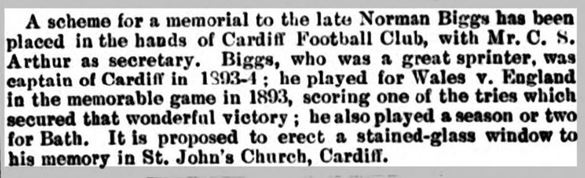
The Clifton Society May 16th 1912

It appears that this remarkable athlete is remembered by a simple metal cross in Nigeria but not in any way in his home city of Cardiff and am left wondering the reason for that.  Is it because the people of Cardiff were already beginning to question the actions that took place in Britain’s colonial past I wonder.


Many thanks to rugby and military historian Gwyn Prescott for his assistance, especially in the early days of my research into Norman Biggs.

I have a talk prepared on Norman Biggs and the Biggs family.  If you are a member of a group that may be interested in hearing the talk please don’t hesitate to get in contact.

Norman Biggs poster cropped