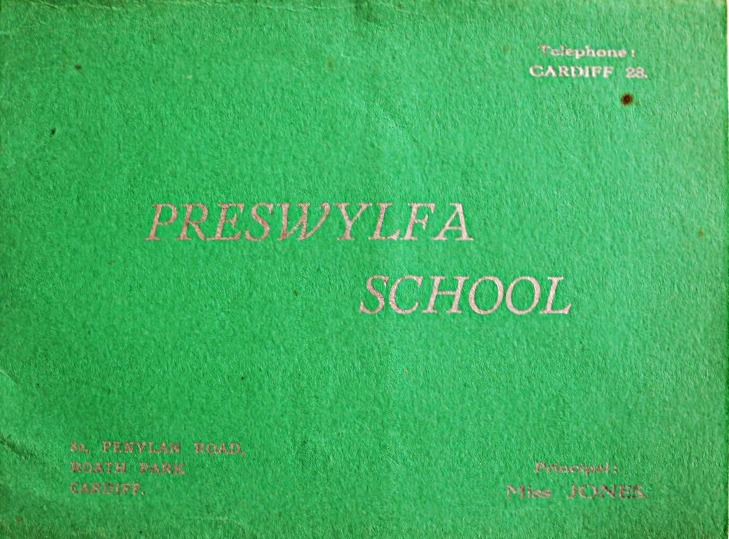
Preswylfa School, 82 Pen-y-lan Road,

Preswylfa School

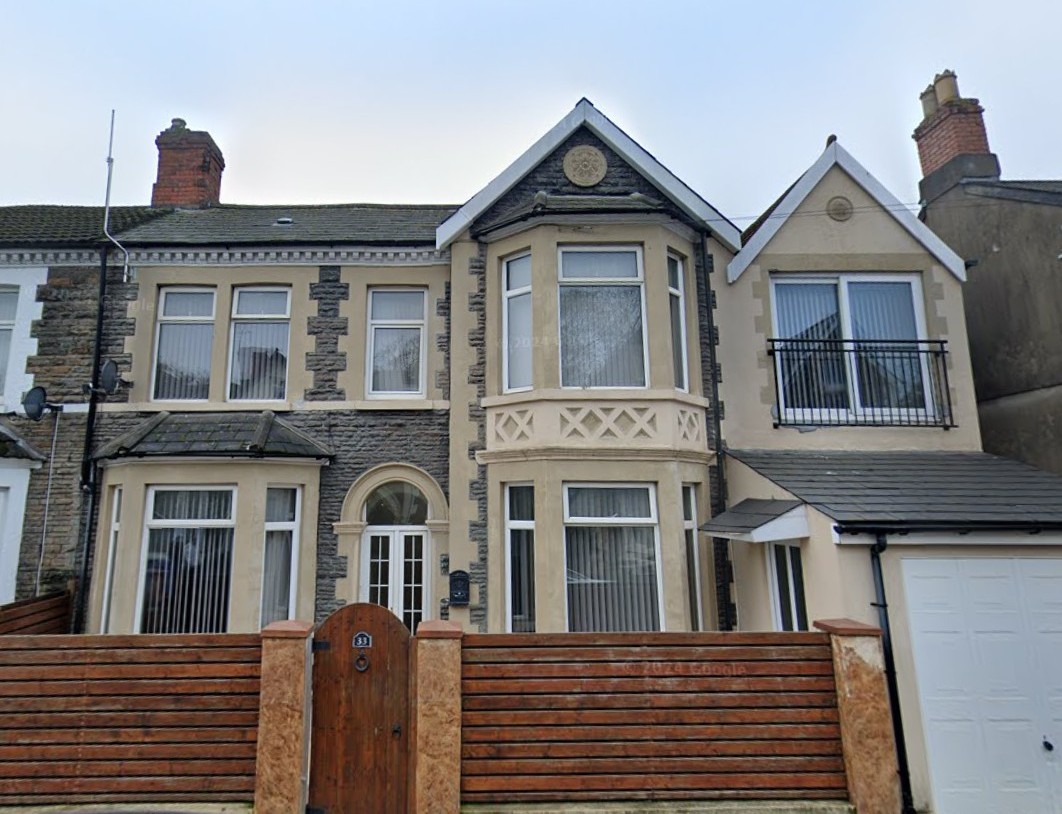
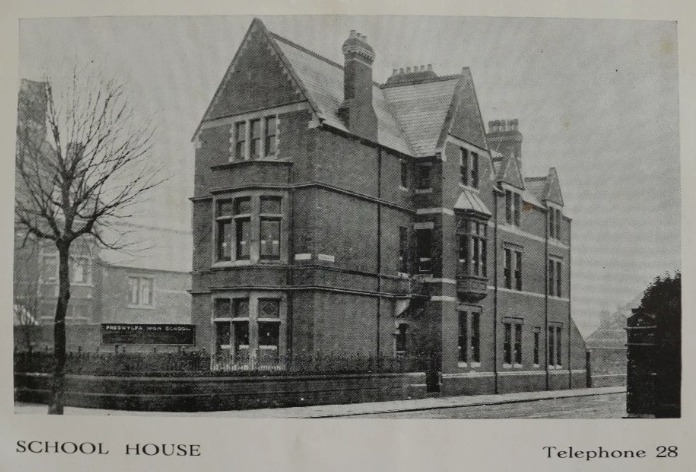
Preswylfa School was at 82 Pen-y-lan Road, on the corner of Pen-y-Lan Road and Sandringham Road, Roath Park, a building still there to this day.

The first mention in the newspapers of the school appears to be 1910 when it was advertised as Preswylfa High School, a good Day and Boarding School for Girls.  Roath Park Terminus.  Principal: Miss Jones.  They had a second premises at 2 Newport Road (presumably catering for those who had missed the tram).

Western Mail 1910

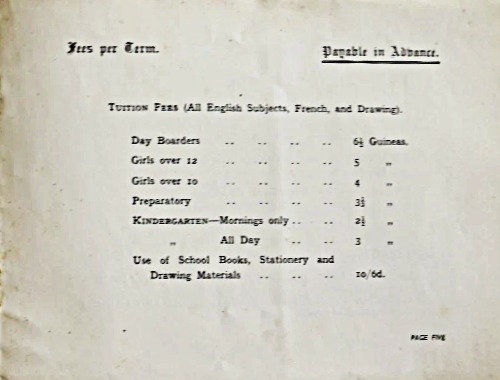
The booklet that recently appeared on e-Bay is of unknown year but probably soon after the school opened as it has Miss Jones as Principal. The Telephone number was 28 indicating their early take up of the telephone service. I wonder how many calls they received? The school included a kindergarten and also took boys up to the age of 10.  Day boarders were charged at 6½ Guineas a term and a terms notice was required if you wanted to withdraw your child.

In 1917 Preswylfa School had a second premises at 87 Ninian Road.

The curriculum was broad offering English Education, Religious Knowledge, Mathematics, Science, French, Latin, Music and Singing, Drill and Dancing, Plain and Fancy Needlework, Handwork, Swimming and Sports.

After all that education the pupils were ready to sit entrance examinations for Oxford, Cambridge , London and Welsh Universities, College of Preceptors (teacher training), Royal College of Music, Royal Drawing Society, Elocution, Shorthand, Royal College of Arts, Book keeping and Commercial Practice.  Later newspaper adverts included typewriter training.

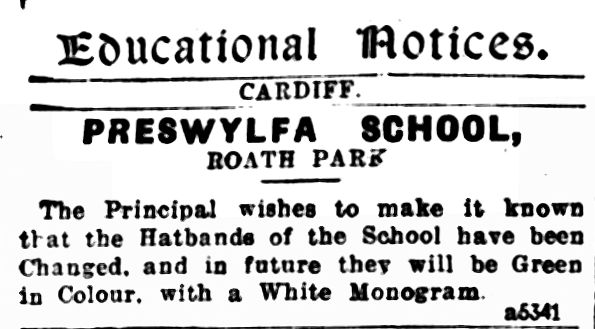
A notice from 1929 tells us that the colour of the hatbands has changed and will in future be green in colour with a white monogram.

Western Mail 1929

 In September 1939 the school was advertising vacancies for pupils unable to return to their own school and boasting a specially constructed ARP Shelter.

Western Mail 1939

The school ran up until the end of WWII.  Sometime after the war it was turned into the Penylan Hotel.  The building these days has yet another use and is the Penylan Residential Hotel Care Home.

References: Thanks to Ian Clarke on Cardiff Now & Then Facebook Group for posting the pictures from eBay and Find My Past for the Nwspaper Cuttings.

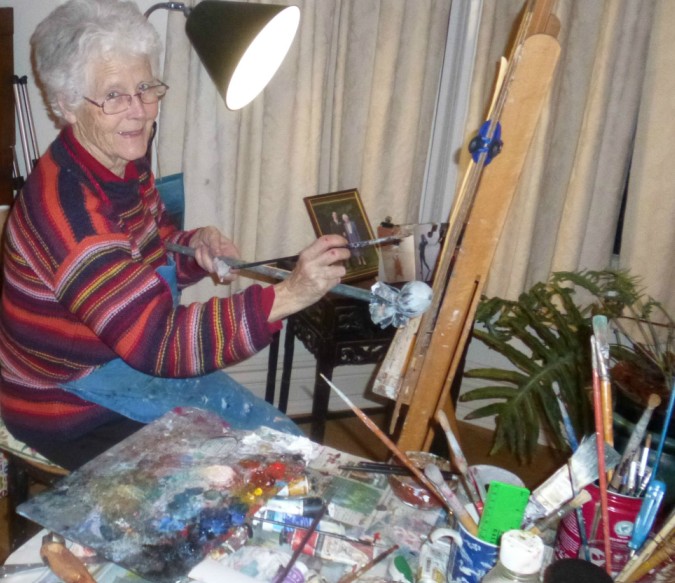
Mary Traynor

It is with sadness that we learnt recently of the death of Mary Traynor, at the age of 91.  Besides being a Society member and a long-time resident of Penylan, Mary was an accomplished artist, who depicted many of Cardiff’s notable buildings in her book Creating Cardiff.

Copies of her book will be available for sale at the AGM and talk on 10 September 2025.
Here is a profile of Mary, first published in the RLHS Newsletter in August 2020.

Some of my most treasured possessions are my sketchbooks. For me they are a record of things I have done, seen and visited over the years on family holidays in places like North Wales, Cornwall, Brittany and painting trips to Palma, Symi and Barcelona; not forgetting Australia and Vietnam where two of my children lived for a while. Being an artist is one thing that has kept me going and has given me pleasure throughout a long life. I have been a widow for many years. There is still a layer of sadness in me, but Brian was so supportive that l was compelled to continue painting, partly in his memory and have done so ever since, exhibiting and selling my work

A four- year course in Theatre Design at Birmingham College of Art & Crafts introduced me to architectural history and the challenges of drawing buildings, especially large historical ones. Perspective has always been difficult and I faintly ‘set square in’ a few vertical and horizontal lines as a guide. The Grade 1 listed art college was the ideal base from which to sketch the huge 19c buildings of the city centre. I then lived in Hammersmith, London for a while, spending my free time in sketching the Thames at Battersea Bridge, going to galleries and museums until I met Brian, a Cardiff man.

Adamsdown School

It was exciting to have the early sight-seeing trips of Cardiff: the gleaming white City Hall and Law Courts, the National Museum, Cardiff Castle, Castell Coch, the parks and in contrast the Docks and The Valleys which paid for all this building. We settled in Roath (this includes Penylan for convenience) and I have lived here ever since, in three different houses in one road! I raised a family and continued doing art through this time as most women artists blessed with children do. I usually love sketching children.

Roath Brook Gardens, from Westville Road

I have spent many happy years living in Roath – and here are some of my favourite places: firstly busy Albany Road and the network of streets surrounding it; the Mackintosh Institute or ‘The Mac’ an early 19c mansion in Plasnewydd Square, a thriving community centre and Farmers’ Market, not forgetting the arts centre opposite in the former Presbyterian Church where I much enjoyed dance performances by the young people of the Rubicon. There is a gruesome side to this as the Albany and Richmond Road crossroads is where Cardiff’s hanging field was! It is very sad that Grade 2 listed Globe Cinema was replaced and The Gaiety in City Road is making way for yet more student flats – how unnecessary is that?

Globe Cinema, Albany Road, Roath, Cardiff
A reconstruction based on sketches and photographs of how the cinema might have looked in the 1920’s. It opened in 1913 and was a listed Grade II building that was demolished to build The Pear Tree Cafe.

Top of my list of favourite Roath buildings is the Edwardian Roath Church House with its central panel elegantly carved with the name and 1914 which says it all. Opposite is Grade 1 listed St Margaret’s Church with the polychromatic interior that makes it so special. I felt that I should have painted the interior but the drawing does show patterned brickwork and different stones. I must go down after Covid-19 is over and subtly paint the shadowy interior. I enjoyed doing the front and back in their leafy settings. Nearby I like Willie Seager Cottages, a modern version of the original ones on Newport Road. Charming as they were, it must have been very noisy for the retired mariners living there.

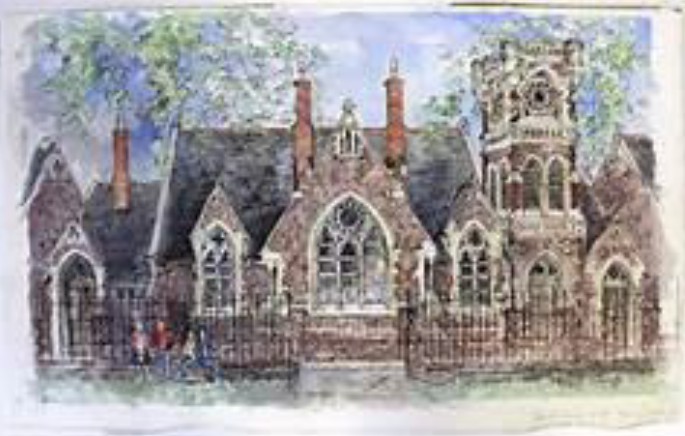
The East Cardiff Conservation Area which takes in the area encircling the parks starts at St Margaret’s and ends at the top of Roath Park Lake. As a representative of The Victorian Society I was on the advisory group. We helped keep the character of the area by vetting detrimental planning applications to both large and smaller houses, sometimes for extensions, more often for new inappropriate windows in the front or as dormers on the front roofs. One application was for another of my favourite buildings – listed Roath Park Primary School- to have replacement windows. We opposed this and the school remains as it was. I did a painting of it as a retirement gift from the school to its Headmistress enjoying putting in the proper windows and children in the playground. Roath Park, said by experts to be one of the country’s finest urban parks is of course of on my list. Scott’s Memorial Lighthouse was done in the raging blizzard of my imagination, instead of from outside! Finally, St Andrew’s United Reformed Church, its elegant spire marking Wellfield Road, the parks and playing field; is for me a reminder of Constable’s paintings of Salisbury Cathedral.

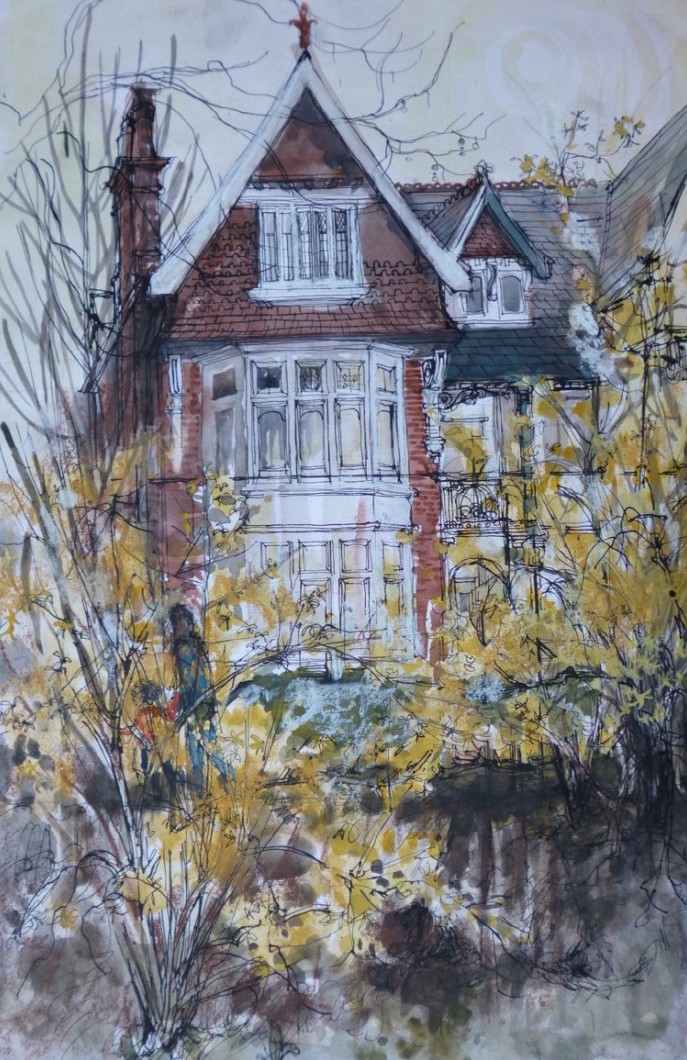
House in Ninian Road
Pen and Watercolour
Facing the Roath Recreation Ground, the houses in Ninian Road date from 1891 and completed 1910

Artists don’t retire if they can help it and I keep painting and drawing from my sketch books and photos during Covid -19. I am proud to be one of a group of at least five artists living quite near. For a few years an enterprising group of artists organised ‘Made in Roath’, taking place in October when artists, including me opened their studios to anyone who wanted to see them.

When I first started in the late ’60s and ’70s there were a lot of changes going on in Cardiff, such as the building of Boulevard de Nantes, the demolition of the houses at Dumfries Place and the splitting of the civic centre from the city centre. There was even talk of driving a road through Cathays Cemetery. Painting is what I do, so I would go and sketch buildings I knew were going to disappear – but I didn’t think I would still be doing it 50 years later. In January 2003 the Central Hotel was lost, when a huge fire swept through the derelict building. It was demolished in 2006 to make way for a new high-rise hotel. I have mixed feelings about the redevelopment of Cardiff over the years, some things I love – like the walkway around Cardiff Bay and the Millennium Stadium, which I think is fantastic – but other things I’m not so sure about. There does seem to be a bit more sensitivity now though in the way historic buildings are treated.

The climax of my work to date has been the writing of ‘Creating Cardiff’ done alongside my painting and drawing. The illustrations are taken from work done over many years and especially for the book. Now it is published I shall return to my latest project which is a very challenging commissioned painting of Roath Brook Gardens and then continue recording the different styles of the houses of Roath and Penylan.

In June 2014 Glamorgan Archives received a very interesting and unique deposit, when Mary gifted her collection of sketchbooks and loose works. They form an invaluable record and resource, both for researchers and as the basis for many exhibitions.

Creating Cardiff

  • ISBN: 9781845242961
  • Mary Traynor
  • Publication June 2020
  • Format: Paperback,
    150×155 mm, 168 pages
  • Price : £8.95

Cardiff became a city in 1905 and the capital of Wales in 1955. It has a castle, civic buildings and extensive parklands, docks, two cathedrals, three universities,concert halls and theatres and museums. A new rugby stadium and arts centre marked the millennium.

Author Biography: Mary Traynor is an artist with a vivid interest in architectural and historical subjects. She has spent a lifetime recording Cardiff buildings, many of which have been threatened and has campaigned to save them. All the images in this book have been sketched on site. Sadly, some have been demolished over the years. This book brings the memory of them back to life in the company of her present-day images of the capital.

To me, this beautiful book, honed over many decades, represents a love letter from Mary to Cardiff, for all to cherish. Elizabeth Morgan.

Military Trunk found in Coffee #1, Wellfield Road

We recently received an enquiry from someone who had visited Coffee#1 on Wellfield Road a few years ago and noticed an old military trunk on display.  They wondered if we knew anything about it.  Well, I didn’t but it certainly piqued my interest.

Captain B M Dunn trunk pictured by the enquirer a few years ago in Coffee#1 Wellfield Road.

I spend quite a bit of time researching people from the area who lost their lives in WWI and WWII and adding them to our Roath Virtual War Memorial.  I wondered if the war trunk had belonged to one of Roath’s fallen.

One of the first things I did was to suggest to my wife that we go out for a coffee and investigate if the trunk is still there.  She didn’t take much persuading.  Sure enough, there at the top of the stairs on the first floor we found the military trunk, two in fact, seemingly used for storing Christmas decorations.

The trunks pictured July 2025

The chest trunk in question was marked as belonging to ‘Capt B M Dunn MC, 2nd Bn, the Welch Regt’.  And no, that’s not a typo.  The Welsh Regiment used to be called the Welch Regiment around the time of WWI.

The first thing I did when I got home was to see if he had survived the war by looking to see if he had a Commonwealth War Graves Commission record.  I found none indicating he had survived.   

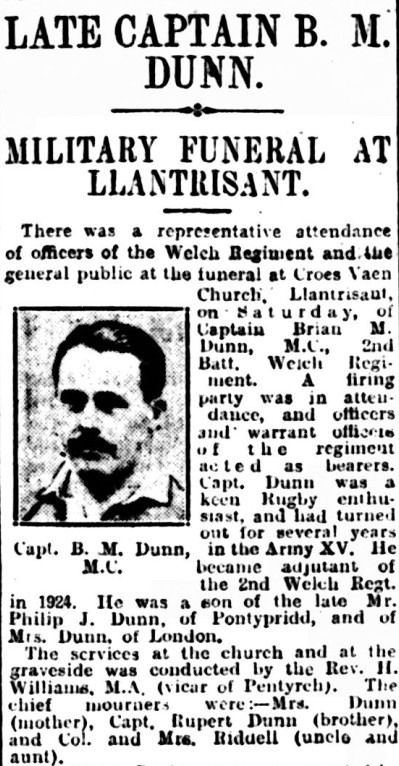
I search the newspaper archives and was soon able to identify him.  He was Captain Brian M Dunn from Groes-faen, near Llantrisant, who sadly passed away in Oct 1926. 

I had initially thought that if I discovered he wasn’t from the Roath area I would leave the enquiry there, but having read the interesting newspaper clipping I decided to keep going.  Here was a man who won a number of awards for gallantry and had had a Welsh Rugby trial.

It was time to call in some reinforcements.  I copied members of our Society’s research group.  I also contacted my friends Gwyn Prescott (military and rugby historian) and Ceri Stennett (military historian and all round good egg) who were a great help.  Between us all and our other contacts we managed to piece together the following:

Brian Morgan Dunn was born on 23rd March 1895, one of five children born to Phillip Dunn, a Justice of the Peace and Estate Agent, originally from Carmarthen and Anne Margaret Dunn nèe Morgan from Llantrisant.  The family lived at a large house called Crofta, on the outskirts of Groes-faen village.

Crofta on the outskirts of Groes-faen village

At the time of the 1911 census Brian is 16 years old and attending Uppingham School in Rutland.

Piecing together the military history of Brian Dunn has been difficult as is often the case with those of officer rank.   It appears he enlisted early in WWI and joined the 2nd Battalion, Welsh Regiment, was made a 2nd Lieutenant on 11 Nov 1914, temp Captain on 9 Jun 1915 and Adjutant on 1 Jul 1916. 

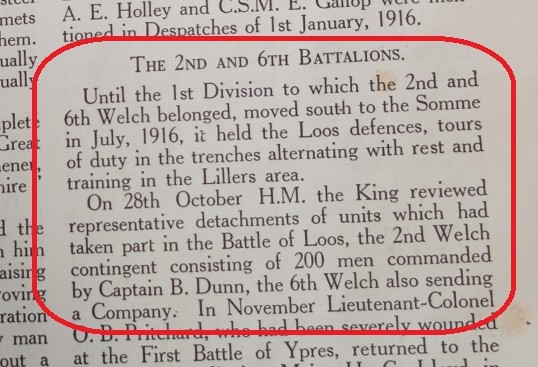
The war diary of the regiment records that on 17 Aug 1916 at Becourt Wood during reconnaissance of a new divisional front he was wounded and left the regiment for hospital.   On 28 Oct 1916 Capt B M Dunn led a review of a Company of 200 men from the 2nd Welch regiment which had taken part in the Battle of Loos, in front of the King.

The MC after his name on his military trunk is an abbreviation for Military Cross, awarded for acts of gallantry.  It is often possible to find a citation to the specific act for which a MC has been awarded but in the case of Capt Brian Dunn he was awarded it in the New Years Honours list (mentioned in the Edinburgh Gazette, 17 Jan 1916), probably for multiple acts of bravery.  He was also awarded the Croix de Guerre (Ref – London Gazette 14th July 1917), a French military award for acts of heroism.  

Capt Dunn survived the war and continued in the military afterwards.  At the time of the 1921 Census we find him at Richmond Barracks in Dublin.

He was evidently a gifted sportsman and well-liked.  Between the end of the war and his early death in 1926 we find references to him playing rugby at a high level.  He was the recognised hooker for the Army team and appeared in Welsh International trials but was never capped.  

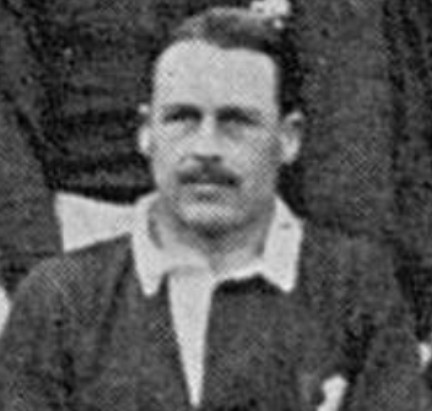
B M Dunn wearing No.9 jersey Army v Navy 13.3.26

Here are some of his rugby highlights:

  • He was selected for Hampshire against Yorkshire in the final of the county championship in April 1926 but he did not play. Yorkshire won 15-14 and one report says his hooking was badly missed.
  • He was a member of the 2nd Welch (Pembroke Dock) team which won the Army Cup in 1919-20. He kicked a penalty in their 9-0 win over 2nd Life Guards.  Also played for United Services Portsmouth at one point.
  •  He played in a Welsh rugby trial for an Anglo-Welsh XV v the Probables in December 1925.
  • H played regularly for the Army for several seasons and was in the Army XV which won the Inter Services Championship for the first time in 1925-6 when they beat both Royal Navy and RAF at Twickenham in front of the King.
B M Dunn (2nd row third from left) Army v Navy 1926

He was still in the army when he died at Tidworth Barracks Hospital in Hampshire on 6 Oct 1926 aged just 31.  He was buried in the family grave at St David’s church, Groes-faen.  The papers report that it was a military funeral with warrant officers of the regiment acting as bearers with a firing party present too.

I visited St David’s, Groesfaen and found the grave.  It is the largest plot in the cemetery.  It appears that the wealthy Dunn family may well have been benefactors to the church at the time it was constructed in the early 1890s.

Dunn family headstone, St David’s, Groes-faen
Brian Morgan Dunn headstone, St David’s church, Groed-faen

Brian was one of five children, four boys and one girl, born to Philip and Anne Dunn.  All four brothers served in WWI and two were killed.  

The eldest brother, Captain Philip Morgan Dunn (b.1888) attended Clare College, Cambridge and then served with the 8th Battalion of the Royal Welsh Fusiliers.  He was killed in action during the advance on Kut, Mesopotamia on 3 Feb 1917, aged 28. He is commemorated  at the Amara War Cemetery, Iraq.  This was of personal interest to me as my grandfather served with the same battalion in Mesopotamia.

Another brother, 2nd Lieutenant Gwynne Morgan Dunn (b.1893), served in the 9th Battalion, Duke of Wellington’s (West Riding Regiment).  He died of wounds on 23 Feb 1917 at the Somme, France, aged 23, just 20 days after his elder brother died.  He is buried at Grove Town Cemetery, Meaulte, France.

The two brothers are remembered on an attractive plaque in the chancel at St David’s Church, Groes-faen, was well as on their parents grave.

The other brother, Rupert Morgan Dunn (b.1890) served as a 2nd Lieutenant in with the Royal Fusiliers and the Machine Gun Corps.  He survived the war, married in 1924 and worked as a safe deposit manager in London.  There don’t appear to be any offspring from that marriage. He died in London in 1953, aged 62.

The sister, Eileen Victoria Dunn (b.1897), never married and died in London, aged 85, in 1983.

Rupert and Eileen Dunn remembered on Dunn family headstone at St David’s church, Groes-faen

Having found the Dunn family grave and the resting place of Capt Brian Morgan Dunn, owner of the military chest in the coffee house, I was left wondering what had killed a seeming very fit young rugby player.  I ordered his death certificate which led to another surprise.  He died of gonococcal septicemia, a rare but serious complication of gonorrhea. That in itself isn’t a surprise given it was before the days of widespread use of barrier contraception and pre-antibiotics.  The surprise is more the reference to 1 month, 5 days, 10¾ hours.  Given the seriousness of this condition that is more likely to be the time since infection rather than the time since diagnosis.  It appears he shared some close personal information with the medical team at the military hospital.

Brian Morgan Dunn Death Certificate

I’m always surprised where some of the enquiries we receive via our website lead.  If ever you find yourself on the A4119 road from Cardiff to Llantrisant may I suggest you drop into see St David’s church in Groes-faen and have a wander around the cemetery.  The Dunn family grave is at the back (west side) of the church.   

How the trunk got to end up in Coffee #1 on Wellfield Road I don’t know. My guess would be that it was part of a house clearance sale at some stage.

My thanks goes to Jon Roberts and Jon Lloyd at Roath Local History Society, Gwyn Prescott, (military and rugby historian) and Ceri Stennett, (military historian and broadcaster)  as well as others for help with this research. And also of course Alex for making us aware of the military trunk in the first place.

Lord David Owen and his Cardiff connections

Lord David Owen – Official portrait, 2018 (souce: Wikipedia)

There’s little sign that 86 year old David Owen is winding down. The man who was Foreign Secretary in James Callaghan’s Labour government and who then went on to be a founder of the SDP party will be 87 in a few weeks time.  Yes, he retired from a House of Lords last year but is still a prolific writer and gives regular radio interviews offering his opinions on modern politics.  

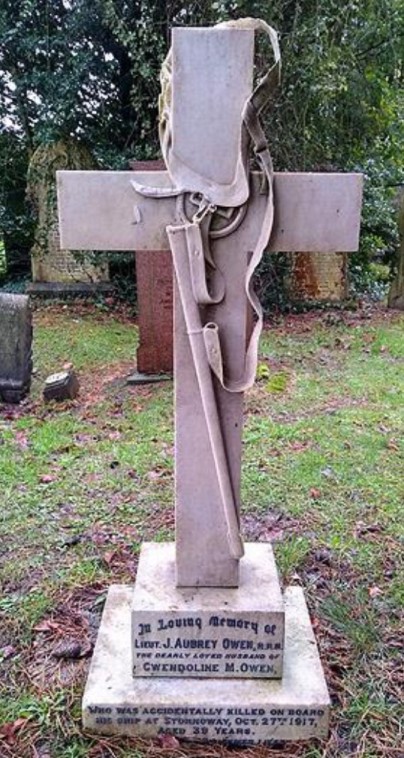
It wasn’t my intention to research David Owen and his Cardiff connections.  It was rather an accident. My attention had drawn recently to an unusual grave headstone at Cathays Cemetery.  It is unusual in it’s design.  Cathays Cemetery, the third largest Victorian in the country, still contains many examples of elaborate headstones despite a harsh clearance scheme that took place in the 1960/70s aiming to make cemetery maintenance easier.  There are still examples of Celtic crosses, obelisks, pedestals with urns, angels, broken columns signifying a life cut short and a couple of polished granite globes.  There is however only one example of a sword and belt draped around a cross.  It is the headstone of Lieutenant John Aubrey Owen.

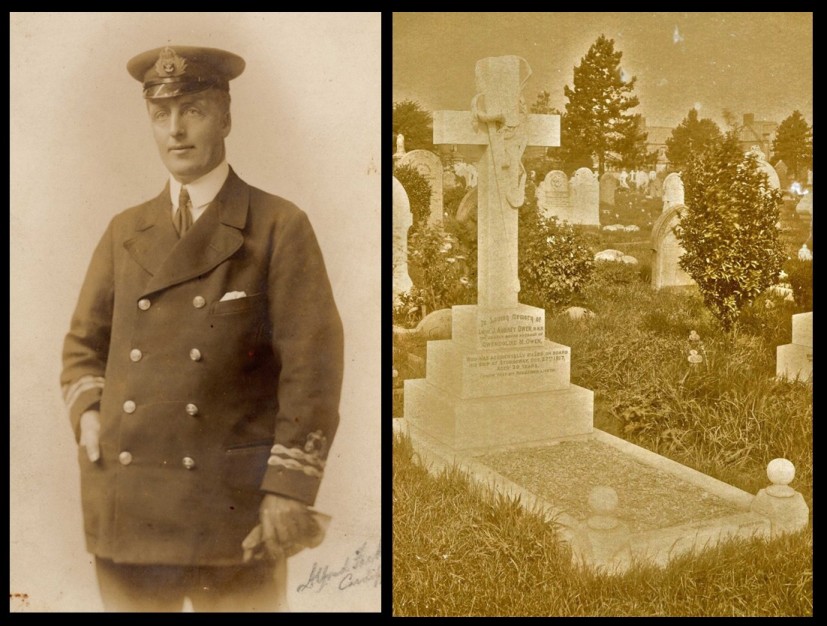
Even this elaborately carved headstone may have suffered as a result of the clearance scheme.  Comparing the present headstone with a historical picture shows the kerbing is no longer present and the headstone itself is lower than it originally was.  Maybe this was as a result of the clearance scheme or just sinkage into the ground.  The elaborate sword and belt carving and cross too has suffered some damage over time.  The sword’s hilt is sadly no longer present.

Lieutenant John Aubrey Owen it turns out was Lord David Owen’s grandfather.  Not that David Owen ever knew his grandfather sadly.  Lieutenant Owen died during WWI as a result of an accident.

Lieutenant John Aubrey Owen headstone at Cathays Cemetery.

Having found that connection I did some research and ordered David Owen’s biography ‘Time to Declare’ (1991).  David Owen was born in Devon in 1938 but has a lot of Welsh blood in him.  His biography details how he spent time in South Wales when his father was away involved in WWII.  My intention here isn’t to repeat all his South Wales family history but to tease out his interesting connections to us here in Cardiff, starting with his grandfather. 

Lieutenant John Aubrey Owen (1876-1917) – Grandfather

John Aubrey Owen was born on 12 Jun 1878 at at 14 Park Street, Temperance Town, Cardiff to William Frank Owen, a coal merchant, originally from Cardiff and Selina Maud Owen nèe Rees originally from Bridgend, Glamorgan.  By 1881 the family were living at 9 Crwys Road, Cathays, which is now a hairdressers.  He was baptized on 18 Mar 1885 at St Augustine, Panarth and in 1891 the Owen family were living at 24 Pembroke Terrace, Penarth.  John joined the merchant navy as a boy sailor at the age of 16, working on the four masted ships sailing out of Cardiff docks.  In the 1891 census he is recorded as living at 10 Belle View Terrace, Penarth, aged 22, and a sailor. 

9 Crwys Road, Cathays where John Aubrey Owen was living as a child in 1881.

On 8 Nov 1905 John married Gwendoline Mary Morris, the daughter of a Congregational minister.  They may well have met each other as teenagers when they both lived on Pembroke Terrace, Penarth.  After getting married they settled in Cwmgwrach, in the upper Neath Valley and had two sons.

John’s career soon progressed in the merchant navy, gaining his First Mate’s certificate in 1905 and then his Master’s certificate in 1907.  John was employed by Messrs Evan Thomas Radcliffe and Co, Cardiff, one of the more prosperous and better-known of Cardiff-based shipowning companies.   John had had been in command of three of their steamers by the time the First World War arrived where he served in the Royal Naval Reserve and was made a temporary lieutenant in February 1917.  He served on H.M. Trawler ‘John Pollard’.  He however sadly died from a fractured skull on 27 Oct 1917, after falling from the upper deck of his vessel into the stoke hold, while the ship was docked in Stornoway on the Isle of Lewis in the Outer Hebrides.  He was aged 39.  He is buried in Cathays Cemetery (grave S 509A).  Commonwealth War Graves Commission record.

Lieutenant John Aubrey Owen and old image of his headstone at Cathays Cemetery, Cardiff..

David Lewis (1797-1860)  G-G-G-Grandfather – Mayor of Cardiff

Researching the Owen family history is made a lot easier, not only by David Owen’s autobiography, but by there being a very comprehensive family tree on Ancestry put together by another Owen family member.   In that family tree it details the life of David Lewis (1797-1860).  He married Margaret Aubrey, which is where the Aubrey name passed down through the family comes from.  In 1841 he lived on Quay Street, Cardiff.

His lengthy obituary in the newspaper in 1860 details how he was a victualler, landlord of the Ship and Dolphin in Church Street, and afterwards became Master of the Ship on Launch, in Quay Street which was the favorite resort of the Cardiganshire seamen when they visited Cardiff.  He also speculated in coal and had a rope making business and donated money to the Wesleyan Chapel in Charles Street.  In 1854 he was Mayor of Cardiff.  He is buried at Llandaff Cathedral.

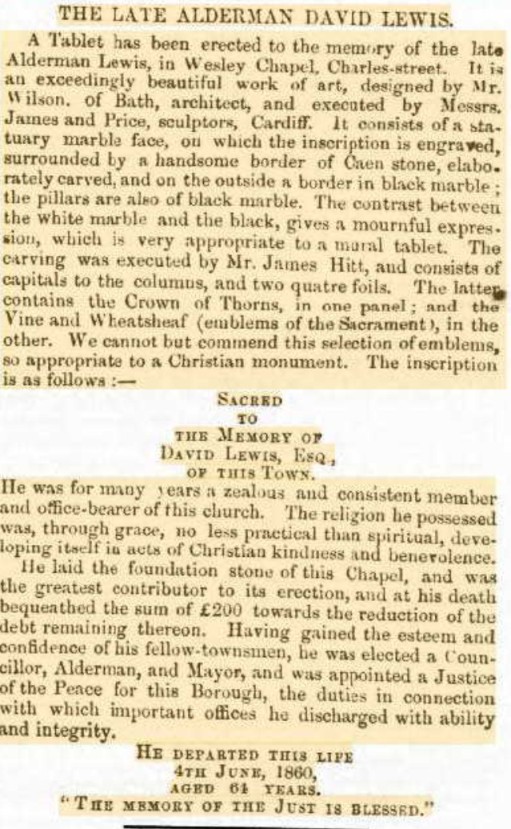
Wesleyan Chapel, Charles Street, Cardiff, opened 1850. The chapel was destroyed by fire in 1895 and then rebuilt. The rebuilt chapel was demolished in 1984.
The plaque to David Lewis (described below) could well be one of those in the sketch under the eaves of the balcony.
A plaque to David Lewis was erected in Charles Street Wesleyan Chapel after his death.

Alderman William Llewellyn (1850- 1923) – Maternal G-Grandfather

William Llewellyn was both a liberal politician and shopkeeper.  David Owen writes that ‘Alderman William Llewellyn, was chairman of Glamorgan County Council and chairman of the Bridgend Bench of Magistrates.  A staunch Liberal, he was a moving spirit in first the Mid-Glamorgan then the Ogmore Divisional Liberal and Labour Party, of which he also became chairman.  He had started life as a grocer and provision merchant in Ogmore, having moved there from Llantrisant. Over the years The Gwalia, as his shop was called, grew until it was described as `a mecca of the valley and neighbourhood’.  The shop used to be in Ogmore Vale but has been moved and many of you will have been there.  Gwalia Stores closed in Ogmore Vale in 1973 but was then moved and rebuilt at St Fagans National Museum of History in 1991.  The ground floor is set up as it would have been during the 1920s.

Gwalia Stores originally in Ogmore Vale now at St Fagans National Museum of History, Cardiff.

Dr Edgar Llewellyn (1890-1964) – G-uncle

Alderman William Llewellyn had eight children, or more accurately his wife Mary did.  One was George ‘Gear’ Morgan Llewellyn (1877-1951), David Owen’s maternal grandfather.  He was a blind church minister and lived at Llandow in the Vale of Glamorgan and a big influence on David Owen’s life.  David spent time living there as a child when his father was away in WWII.

Another son of Alderman William Llewellyn was Dr Edgar Llewellyn and it is he that has connections with our area.  He became a GP in Splott and had his surgery on Splott Road. He was Cardiff Commissioner of the St John’s Ambulance Brigade and the works’ doctor at Guest Keen steel works, and also became a Cardiff Councillor. 

In his autobiography David Owen recalls the following:

The brother whose career most closely paralleled my own was Edgar. He was a family doctor in Splott which is an area of Cardiff dominated by the steel-works.  He was a great character and adored by his patients His unique way of sorting out their ailments was, according to my mother, to go into his surgery and announce, “Those buggers who are ill can move to the right-hand side of the room and be seen now: those who are not can wait on the left and see me later or chance their luck tomorrow.’  After the war he became infuriated by the politicians on the City Council and so decided to join his wife who was already a Ratepayer Councillor. He was elected in 1951. A photograph of him in a pony and trap, bedecked in a massive rosette, electioneering shows the first combination of doctor-politician in the family’s history. His wife Jenny, who had first stood and won as a Ratepayer in 1946, was a strikingly good looking woman and a considerable character.  She was the first person in eighteen years to beat the Labour candidate in her Ward. She stood again in 1949 and won and then lost her seat three years later. The wish to be an independent in local government and to stand against party politics was later mirrored by my mother and, some will say, by me too.

Dr Edgar Llewellyn, Ratepayers Candidate in the Cardiff 1951 Local Government elections (picture credit: Cardiff Yesterday Vol XVI)
Dr Edgar Llewellyn of the Ratepayers Part campaigning in 1951 (Picture credit: David Owen’s biography ‘Time to Declare’ (1991))

What started as a bit of research into the grave of John Aubrey Owen at Cathays Cemetery turned up many interesting stories about the history of Cardiff. Fascinating stuff is histoy.

Marconi and the part Roath played inventing the radio

Who invented the radio? 

Well, as with many scientific breakthroughs it is often a case of an accumulation of small scientific advances by many different individuals and some good teamwork.

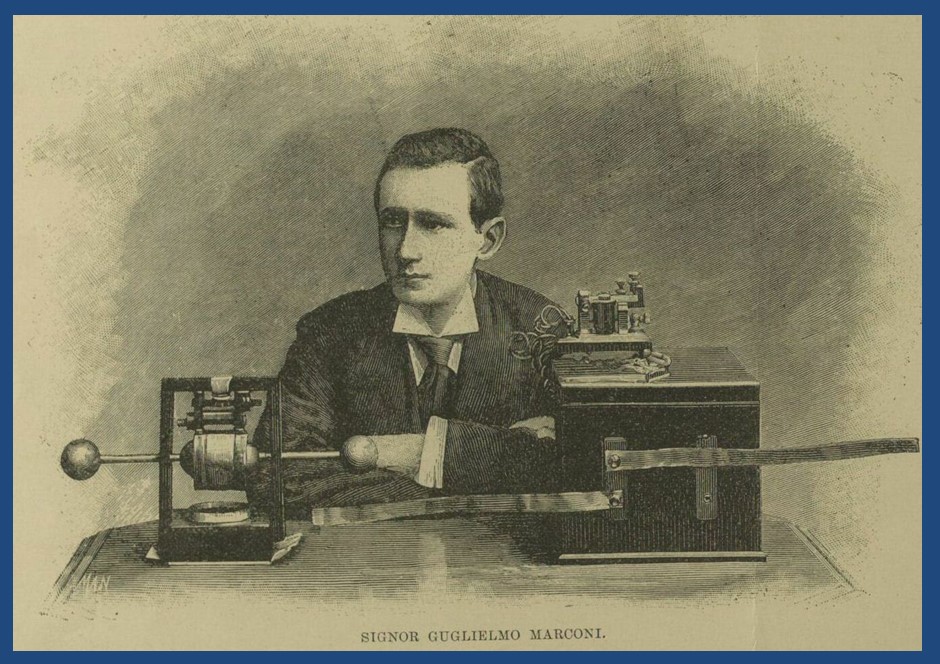
The man most often accredited with the invention of radio is Guglielmo Marconi.

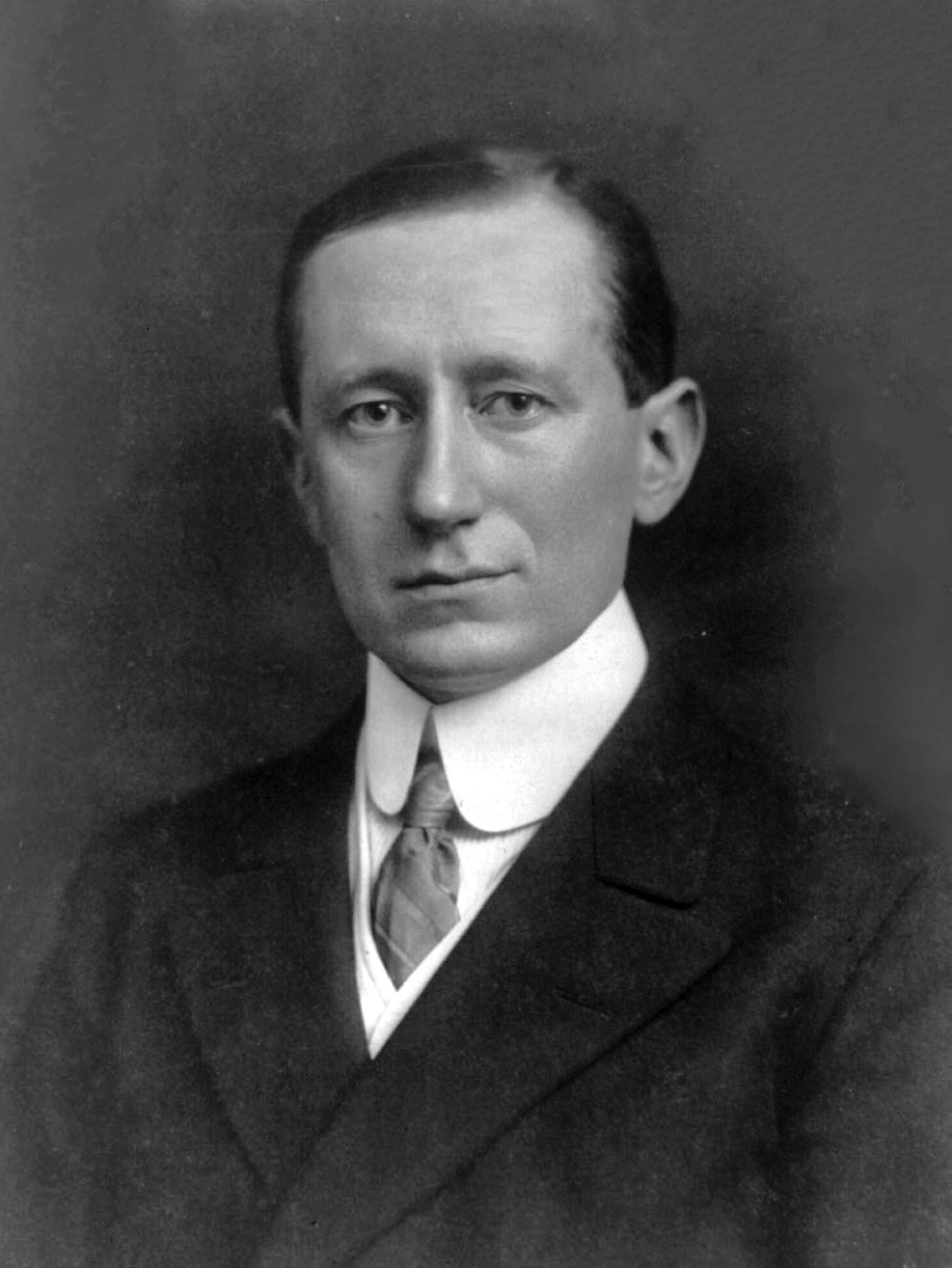
Guglielmo Marconi (pic credit: Wikipedia)

On 13th May 1897 a message was sent by Marconi on Flat Holm island over to Lavernock Point near Penarth. It was heralded as the first time a message was sent over water. The breakthrough would quickly lead to wireless telegraphy and later the wireless radio.

It was hardly the most inspiring of messages.  It is reported to have said: ‘CAN YOU HEAR ME’.  It was sent in Morse code and it was picked up at Lavernock Point by Marconi’s assistant George Kemp, who replied ‘YES LOUD AND CLEAR’.   The recording slip for the first message is now kept at the National Museum of Wales.

Marconi Hut at Lavernock Point (although this is labeled as Marconi Hut on maps like OpenStreetMap I am uncertain of the foundation for saying this is exactly where the equipment was set up. It seems unlikely that such as building would have been built especially to house a short experiment)

The initial experiments were not successful.  It was only a few days later when the equipment had been modified by extending a wire down onto Lavernock beach that a signal was successfully received.  A report states:

On the 11th and 12th his experiments were unsatisfactory — worse still, they were failures — and the fate of his new system trembled in the balance.

An inspiration saved it. On the 13th May the apparatus was carried down to the beach at the foot of the cliff, and connected by another 20 yards (18 m) of wire to the pole above, thus making an aerial height of 50 yards (46 m) in all. Result, The instruments which for two days failed to record anything intelligible, now rang out the signals clear and unmistakable, and all by the addition of a few yards of wire!

A week later, on 18th May 1897 the same equipment was used to send a message between Lavernock Point in Wales and Brean Head, near Weston-Super-Mare in England. This was probably the first international telegraph message ever sent.

And here I make a bold claim.  That first ever international wireless message may have been sent by a man from Roath.

I haven’t found any pictures of Marconi or Kemp sending or receiving their messages. The picture most often associated with these events is below.  For years I assumed one of the men was Marconi or Kemp but apparently not.

The picture is in the National Museum of Wales collection and is labeled:-

The actual transmitting apparatus and Morse Inker used for the Lavernock – Brean Down demonstration of wireless telegraphy for the first time across water in May 1897, being inspected by three Post Office officials associated with the occasion.

By courtesy of the G.P.O. Cardiff, these officials have been identified as (from left to right) :-

Mr. G.N. Partridge, Superintending Engineer

Mr.H.C, Price, Engineer

Mr.S.E.Hailes, Linemen

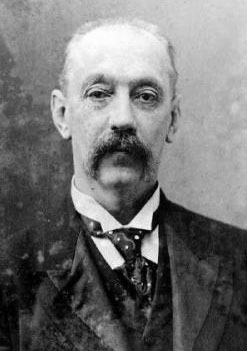
Sydney Hailes

Sidney Edward Hailes

Sidney Edward Hailes (pic credit: Ancestry)

I believe the man sat down at the front is Sydney Edward Hailes. In 1891 he was 17 and living at 8 System Street, Adamsdown and working as a telegraph messenger. By 1901 he had married and was living at 26 Swinton Street, Splott and working as a GPO Telegraph Linesman. In 1911 the Hailes family were living 26 Alfred Street, Roath and Sydney an Inspector 1st Class working at the Engineering Department of the PO Telegraphs.  By 1921 he had worked his way up to be Chief Inspector Engineering Department G.P.O.

I was led to looking at Sydney Hailes and the Marconi story when I was researching one of his brothers, Frank Uriah Hailes, who was killed in WWI and remembered on the St James the Great Church war memorial, now at St John’s Church in town. On Ancestry there is a picture of the Hailes family with Sydney identified and looking remarkably like the man in the foreground of the photograph, sat down next to the telegraph equipment in the Brean Down photograph. The man on the right in the photograph appears to be the oldest and is probably Hugh Price (b.1858), who lived at Rectory Road, Canton. The man on the top left would therefore have been George Noble Partridge (b.1873) who lived at Llandaff Road, Cardiff.

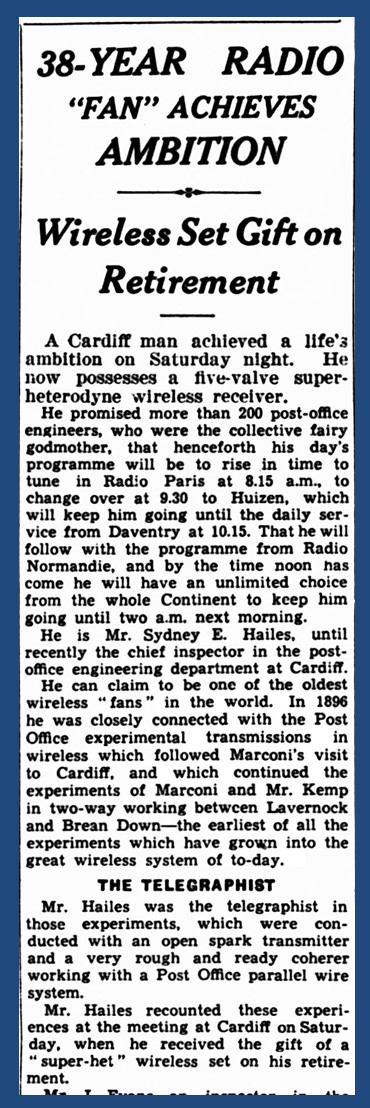
What part these men played in the Marconi experiment is hard to tell. The caption describes them as ‘inspecting’ the apparatus. The family tree on Ancestry however describes Sydney was being a technician to Marconi.  In his retirement speech in 1934 Sydney Hailes described himself as the telegraphist in those early experiments.   So maybe he did indeed send that first international message or maybe he didn’t but he certainly appears connected with the event.

1934 Hailes says he was the operator

It remains a bit of a mystery as to why there are no pictures of Marconi or Kemp themselves but maybe they were keeping a low profile until the invention was patented a while later.

William Preece

William Henry Preece

William Henry Preece (pic credit: Wikipedia)

Let me introduce you to a couple of other men who played a big part.  The first is William Henry Preece (b.1834), engineer-in-chief at the British Post Office.  He was a Welshman from Caernarfon, Merionethshire. There’s a strong case actually for arguing that he was the first person to send a telegraph message over the water.  He did this at Loch Ness a few years prior to the Marconi experiment at Lavernock. In fact it seems from a newspaper report that William Preece himself has transmitted a message from Lavernock over to Flat Holm in 1894, three years prior to Marconi.  The William Preece apparatus however had no way of recording the Morse code message received.  What Marconi did was to add the last piece in the jigsaw, a method to record the Morse onto a paper tape.  To be honest there were probably other technological differences between what William Preece had been working on in 1894 and what Marconi ended up in 1897 with but they are beyond my comprehension.

March 1894 – three years before the Marconi experiments

Sir John Gavey

Sir John Gavey

Sir John Gavey (pic credit: Guernsey Society & Cardiff Naturalists)

Working alongside William Preece at Loch Ness and other events was another man who lived in Roath, John Gavey. He was originally from St Hellier, Jersey (b.1842) but at the time of the 1881 and 1891 census he was living at 152 Newport Road, Roath and working as ‘Superintendent engineer post office telegraph’. He was a prominent member of the Cardiff Naturalists’ Society, holding the office of hon. secretary for three years, and the presidency of the society in 1890.

Now here’s something I never knew.  In 1881 Gavey opened the first telephone trunk line connecting two British towns, namely, Newport and Cardiff.

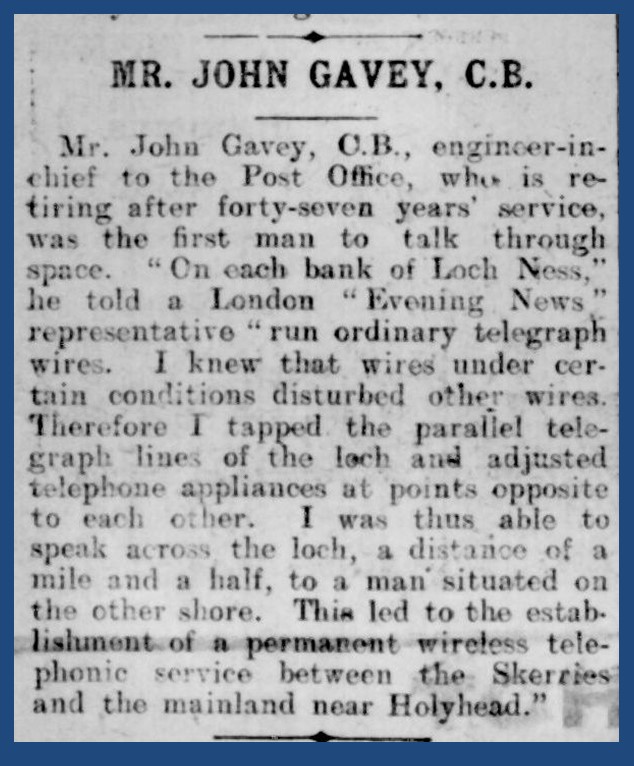
In 1894 he worked with William Preece at Loch Ness and succeeded in establishing communication between the opposite sides.

He moved to London and would go on became Engineer-in-Chief and Electrician to the General Post Office.

It was Gavey who was responsible for the organisation of the complete telephone trunk system for Great Britain, and he organised the Post Office telephone exchange system for London. He was Knighted in 1907.

Marconi it seems was a prodigy of William Preece and both Preece and Gavey were involved in the Flat Holme experiments. Marconi was introduced to William Preece when he arrived in England in 1896 and the two worked together.

Link to article on John Gavey by Cardiff Naturalist’s Society

John Gavey 1907 newspaper article.

Guglielmo Marconi

So having looked at some of the others involved in the Marconi experiment it is time to have a look at the man himself.

He sounds Italian, and indeed he was, well, half-Italian. Guglielmo Marconi (b.1874) was born in Bologna, Italy   His mother was in fact Irish.  She was Annie Jameson, part of the Jameson Irish Whiskey family.   He lived part of his childhood in England and with it is believed paid periodic visits to Ireland.

He was home-schooled and coming from a wealthy family his parents hired personal tutors for him.  He never went on to attend university, and judging by his success he had no need to. He homed in on the idea of Wireless telegraphy.  This wasn’t a new idea and quite a few people were working in the area. What Marconi seems to have done is make a breakthrough in certain areas and have the vision and commercial sense to turn those ideas into something. 

There are a number of things that amaze me about this achievement. How on earth did he gain access to technical information.  It was the days pre-computer, pre-radio, and pre-telephone etc. Being home-schooled he would not have had access to academic libraries or alike. Fascinating to think how he managed, but manage he did to come up with lots of ideas.

When the Italian authorities didn’t appear receptive to his ideas his mother bought him to England and it was then that the association between Marconi and Welshman William Preece formed.

His mother Anne Jameson wasn’t Marconi’s only connection with Ireland.  He married an Irish lady, Beatrice O’Brien in 1905.  They had four children together and moved to Italy. Beatrice served as a lady-in-waiting to Queen Elena of Italy.  The marriage however ended in divorce in 1924.  He converted to Catholicism to enable him to marry his second wife, Maria Cristina, who was half his age.

Let’s rewind a few years.  After the 1897 Flat Holm experiment things moved on apace. Marconi demonstrated his apparatus in many places in Great Britain and Italy including both sets of Royal Families.  He patented the invention and his charisma and marketing acumen led to commercial success.  In 1909 he was jointly awarded the Nobel Prize for Physics.

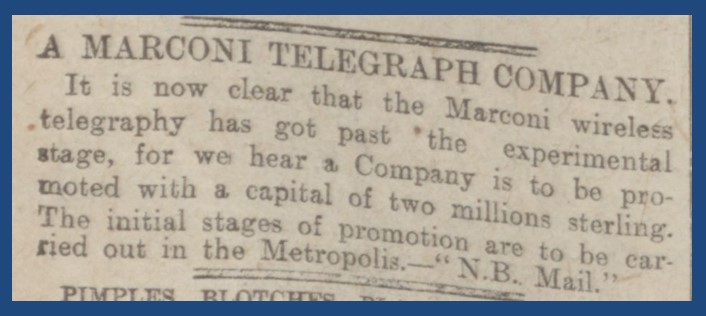
His first commercial venture was the Wireless Telegraph & Signal Company (1897–1900), renamed Marconi’s Wireless Telegraph Company in 1900.  It became a mainstay of the British telecommunications industry.  It was acquired by GEC in the 1960s but the Marconi name lived on in subsequent subsidiaries all the way through to 2006.  Not a bad achievement for a man sat in a hut on top of Lavernock Point in 1897.

Marconi’s later years were less admirable. He joined the National Fascist Party and Mussolini appointed him President of the Royal Academy of Italy and the following quote is attributed to him. “I reclaim the honour of being the first fascist in the field of radiotelegraphy, the first who acknowledged the utility of joining the electric rays in a bundle, as Mussolini was the first in the political field who acknowledged the necessity of merging all the healthy energies of the country into a bundle, for the greater greatness of Italy”.  I’m guessing this is why the 2024 Radio sculpture on Cardiff Barrage makes no reference to Marconi himself.    

Other Players

I’d like to introduce you to a couple of other people who were involved in a small way with the wireless telegraphy and the arrival of the radio.

Fast forward a decade or so following Marconi’s Lavernock to Flat Holm experiment and his invention has been commercialized. Ships are making use of wireless telegraphy to communicate with the shore to relay important messages and save them having to dock.

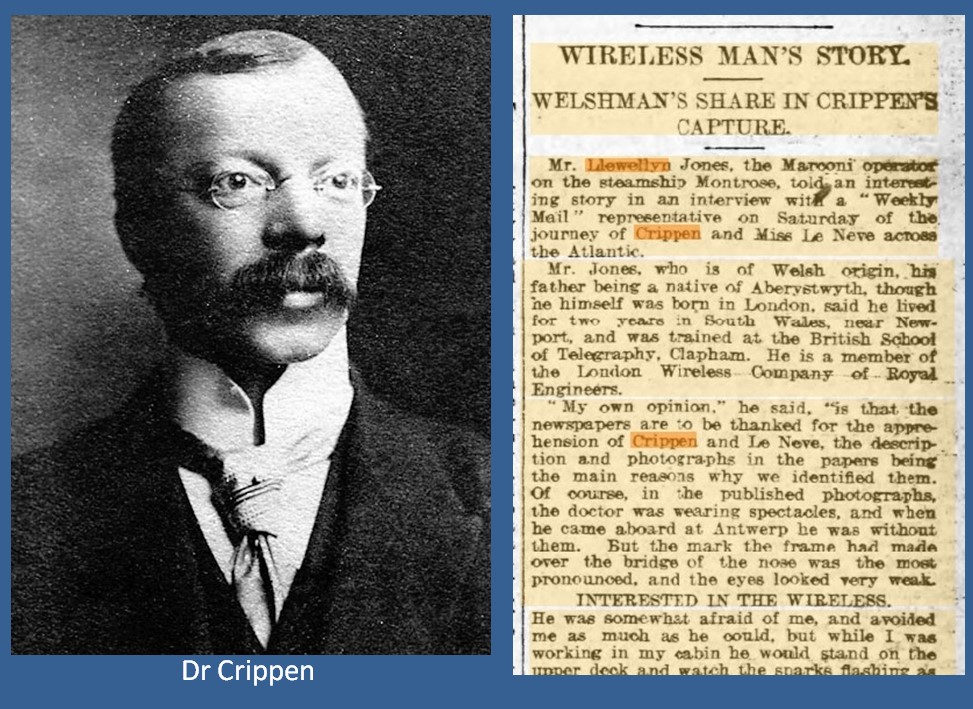
It was in 1910 that Dr Crippen the notorious London murderer had been rumbled. The body of his music-hall singer wife Cora, had been dug up from under the kitchen floor in Holloway, London.  Dr Crippen and his lover Ethel le Neve went on the run, first making their way to Antwerp and then boarding a transatlantic steam ship S.S.Montrose to escape to Canada.  Ethel dressed as a boy to avoid being identified.  Unfortunately for them the Captain of the S.S.Montrose was very observant and identified Crippen and le Neve from a ‘Wanted’ poster he had seen posted.  His priority however was to get the S.S.Montrose to Canada on time.  As the ship was passing Cornwall he got his telegram operator to send a message ashore and alert the police as to who was aboard.  When the police received the message they promptly sent a party to Liverpool who boarded a faster trans-Atlantic vessel meaning that when Dr Crippen and Ethel le Neve disembarked they were promptly arrested about bought back to England for trial.  Dr Crippen was subsequently found guilty and sent to be hung.  So why do I tell you this?  Well, it was the first time that wireless telegraphy was used in a murder case and the person who sent the telegraph message from on board the S.S.Montrose was Mr Llewellyn Jones who had in Newport for two years (a somewhat tenuous link to our topic I admit).

The part Llewellyn Jones played in capturing Dr Crippen.

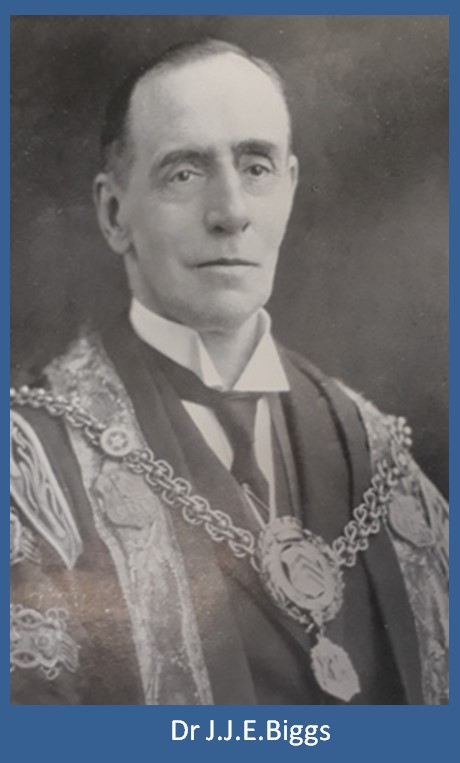
Dr J J E BiggsThe other story I like is that of Dr.J.J.E Biggs and he certainly was a local man and lived on Newport Road, Roath.  A lot of scientific advancement had happened between 1897 when Marconi sent his first message over water to Flat Holm and 1923 when wireless broadcasting first began in Wales from a little studio opposite Cardiff Castle. Have a look for the plaque on the wall next time you are passing. The man whose job it was that day to open the first BBC studio in Wales was Lord Mayor Dr.J.J.E Biggs. He gave a speech acknowledging the invention of radio and cleverly predicting the advent of TV. The only blip was he forgot the name of the BBC and then when turning to someone, asking them to remind him of the name, he forgot he still had his microphone on so everyone heard his blooper. I’ve written about him previously in Dr J.J.E.Biggs – the first man in Wales to forget the microphone was still switched on.


The Legacy in the area

There is a plaque on the wall outside St Lawrence Church in Lavernock celebrating the Marconi-Kemp transmission.  It was erected 50 years after the event in 1947 by the Rotary Club of Cardiff.  I still haven’t been able to find out anything about the shield on the plaque. The building attributed with the historic event is some 50 meters away, precariously perched on the cliff top.
Lavernock Point – Marconi and Kemp plaque outside the church. Can anyone help identify the shield/motif?

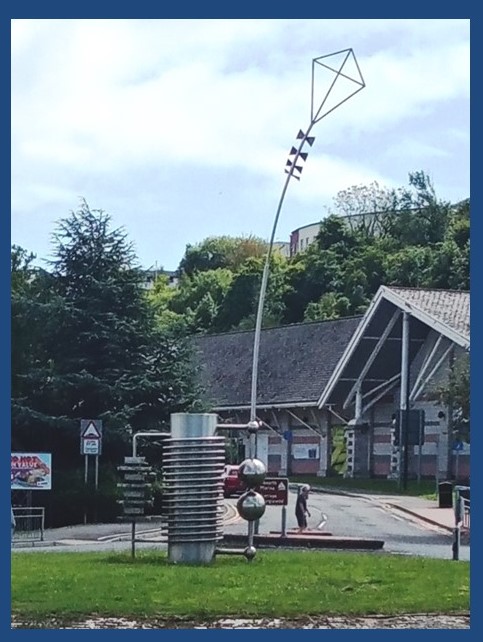
There is a sculpture on a roundabout at the entrance to Tesco in Penarth.  It is a representation of the equipment used by Marconi at Lavernock by the artist Ray Smith (b.1949 Harrow, London, d.2018), It was commissioned by Tesco Stores with Cardiff Bay Arts Trust and unveiled in 1996.

Marconi wireless telegraph equipment sculpture – Tesco, Penarth

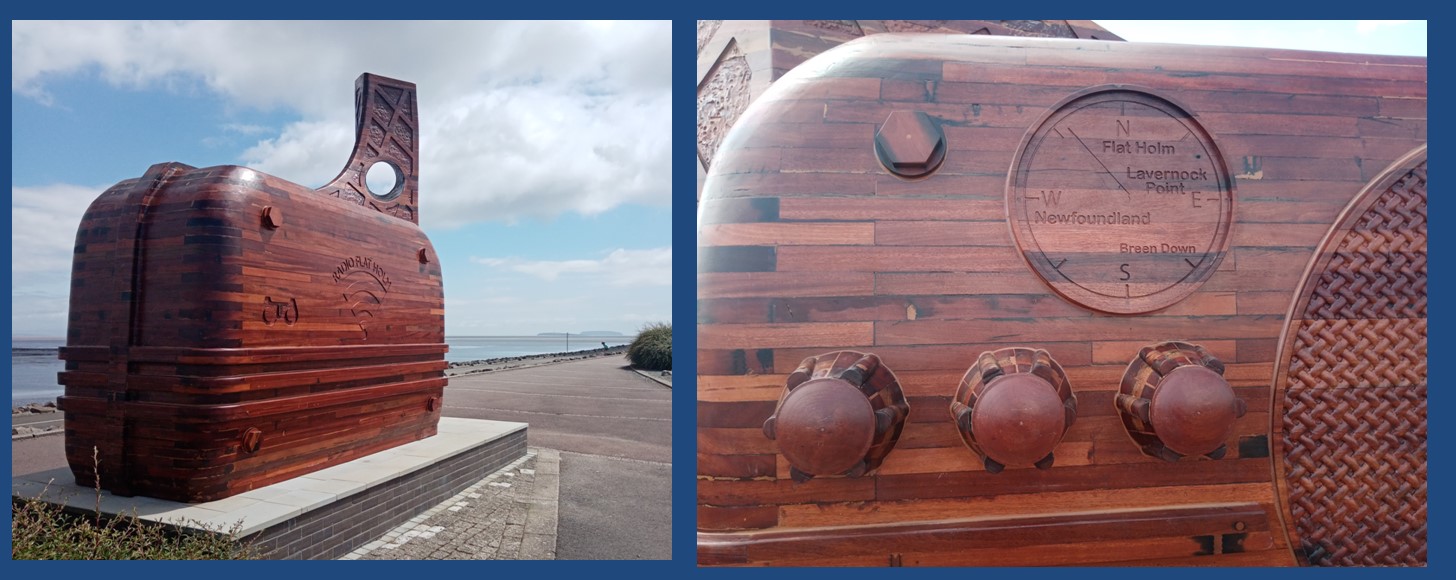
The newest nod to the historic event of 13th May 1897 is a giant wooden radio sculpture on Cardiff Barrage. I think it was conceived and designed by artist Glenn Davidson and carved at Boyesen Studios in Llangranog, West Wales. The sculpture, titled ‘Radio Flatholm’, re-uses the heritage materials, configuring them through the modem CADCAM technique of 3D carving.  It is made from recycled Jarrah or Hornbeam ironwood railway sleepers, originally imported from Southeast Asia during the Victorian era.  I think it is a fine piece of artwork, very tactile.

Flat Holm Radio Sculpture (picture credit: Ted RIchards)

Conclusions

So whist I am sat here reflecting on the achievements of Marconi, William Preece and John Gavey and pondering the possibility that it was Roath man, Sydney Hailes, who sent the first ‘international’ telegraph message between England and Wales, I think it is time to celebrate it all and have a glass of Jameson’s Irish Whiskey.  Thanks for reading.

Additional Material you may find interesting

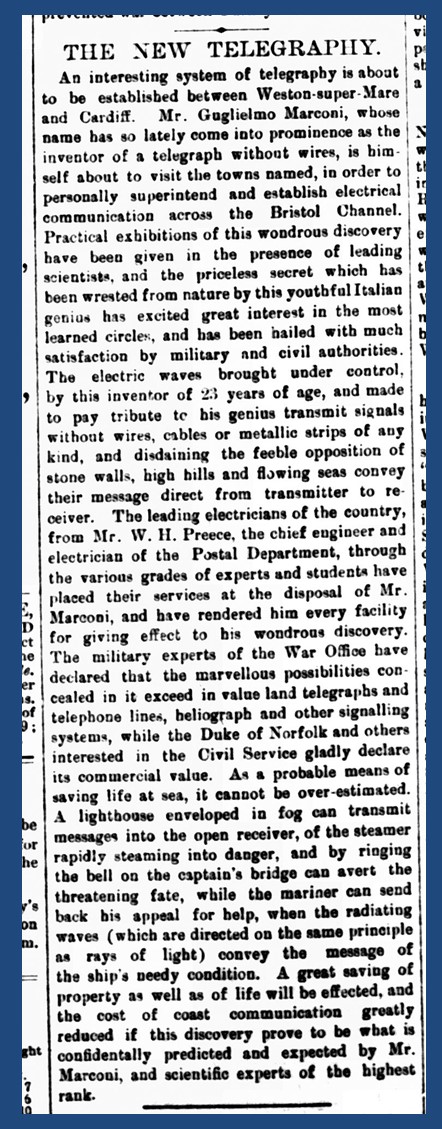
1 May 1897 – Announcement of forthcoming Marconi experiments.
17 May 1897 report
22 May 1897
27 May 1897
10 Jul 1897
1897 July
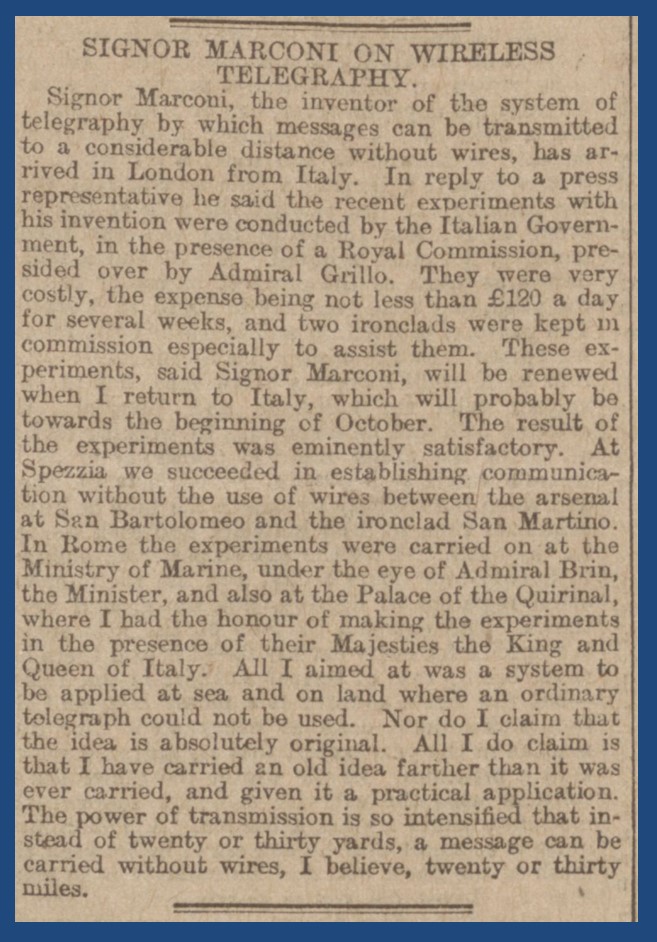
4 Aug 1897 – Italian Royal Family demonstration
21 Aug 1897 – Demonstation to Queen Victoria
Nov 1899 Adopted in USA
1899 Dec
1902: Sydney Hailes operating the equipment at telegraph boys concert with police present.

Refs: Newspaper cuttings – FindMyPast & Welsh Newspapers Online

Mary Agnes Pugh – Ophthalmologist and Eye Surgeon

Ever since researching the history of Cardiff High School for Girls I’ve been keen to find an example of an ex-pupil from the early days of the school who became a successful scientist and I’ve just found her.  Mary Pugh was a very successful eye surgeon, specialized in correcting eye squint and developed the Pugh orthoptoscope.

Pugh Orthoptoscope (Pic credit – Welcome Collection)

She was born Muriel Agnes Pugh but later changed her name to Mary Pugh as she disliked the name Muriel.  She was born in Barry on 11 May 1900.  Her father was a commercial traveler in the drapery business and originally came from Aberdare.  Her mother, Agnes Mary Pugh née Jones was from Bath. When Muriel was young the Pugh family relocated from Barry and settled in Roath, living at 67 Bangor Street. Muriel attended Marlborough Road School before moving onto Cardiff High School for Girls in 1911.  They later moved to 9 Marlborough Road where they were at the time of the 1921 census.

The head teacher at Cardiff High School for Girls at the time was Mary Collin, an active suffragette. She taught her pupils to ride bicycles, seen as a symbol of the growing independence of women and their determination to cast off chaperonage.  The amount of science taught at the school was probably fairly limited when it started up in 1895 but by the time Muriel joined in 1911 things were probably beginning to change.

She left school in 1918 and went on to read medicine at Cardiff Medical School.  She then did her clinical training at Charing Cross Hospital and qualified in 1926.  She was initially employed at Birmingham and Midland Eye Hospital before moving back to London and working at Moorfields Eye Hospital in 1928 in the Squint Department where she was made Officer in Charge a short time later.  Her work in that department led her to developing the Pugh Orthoptoscope, an instrument to investigate and correct eye squint. Her work has been described as individual and pioneering and led to the development of modern day instruments.

She stayed as leader of the squint department at the famous Moorfields Eye Hospital until 1948 during which time she authored the book Squint Training in 1936.

Squint Training by Mary Agnes Pugh

In 1948 she moved to the Institute of Ophthalmology where she worked on a part time research basis until she retired as well as working privately. 

Pugh orthoptoscope by Hamblin, London

As well as a love of the arts she also enjoyed her cars and owned a Rolls Royce.

So why can’t I show you a picture of Mary Pugh?  Perhaps it is because of her shy nature revealed in her obituary on the British Medical Journal “Mary Pugh was a bright, friendly person, shy and self-effacing, and intensely interested in the arts, especially painting and literature.  She travelled widely and had an international circle of friends both medical and lay; indeed her ability to detach herself completely from her profession was remarkable.  She will rank as a pioneer in her field and will be remembered with warm affection by all who knew her and with gratitude by a host of patients”.

I’ve also been informed that Mary Agnes Pugh became eye surgeon to both the Queen Mother and Queen Elizabeth.

She died in London on 21 Jan 1972 aged 71. She left her estate to Audrey Russell.

It would be lovely to hear from anyone who does have a picture that could share of Mary Agnes Pugh. 

Her partner in life was Audrey Russell, the first lady of broadcasting, whom she met in war-torn London.  They shared a love of theatre and the arts. 

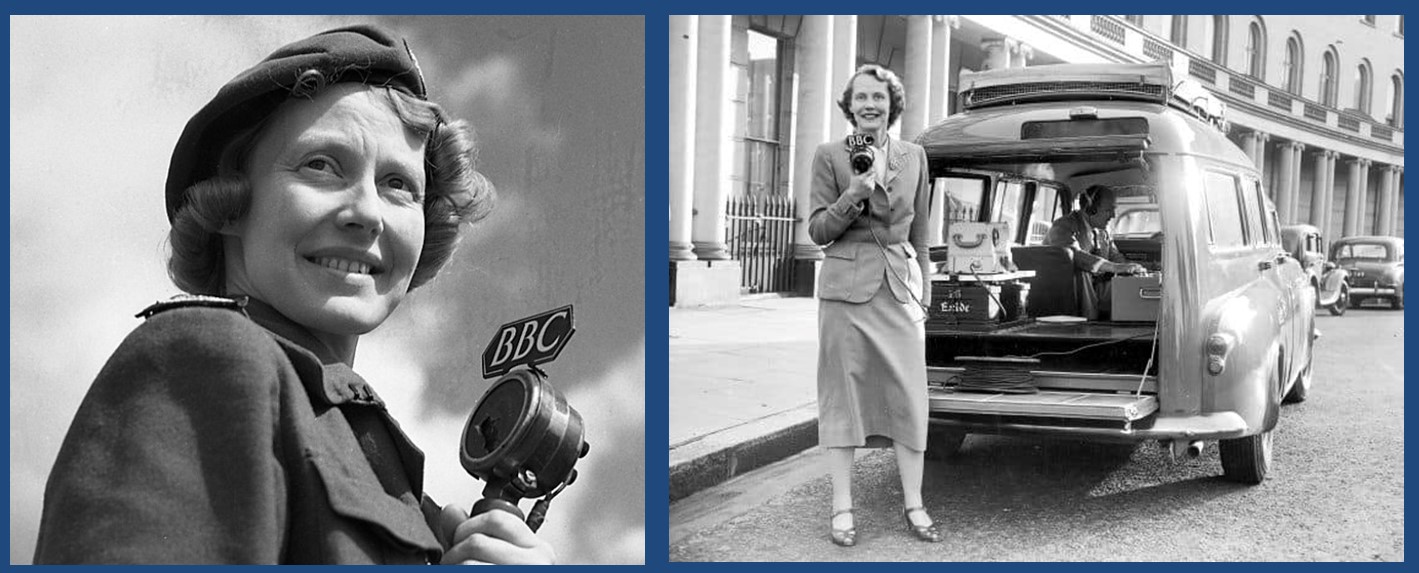
Audrey Russell was a pioneer of broadcasting.  She was born in Dublin and educated in England and France.  She trained at the Central School of Speech and Drama before becoming an actress and stage manager.  Audrey Russell joined the BBC in 1942 after being discovered by them when interviewed about her wartime work for the National Fire Service. She travelled to mainland Europe just after the D-Day landings and reported from Belgium, the Netherlands, Germany, and Norway. 

 In 1953, Russell gave a live commentary on the Coronation of Elizabeth II, from inside Westminster Abbey.  She also gave commentary on the funeral of Winston Churchill in 1965.  Martha Kearney on the BBC War Correspondent Audrey Russell.

Audrey Russell broadcaster (pic credit: BBC)

Article compiled with the greatful assistance and input of Ingrid Dodd née Pugh.

Henry Corn – Travelling Salesman, Photographer, Painter, Businessman and Spy?

The following words and pictures have kindly been provided by Cardiff author Chris Butler along with premission to reproduce them.

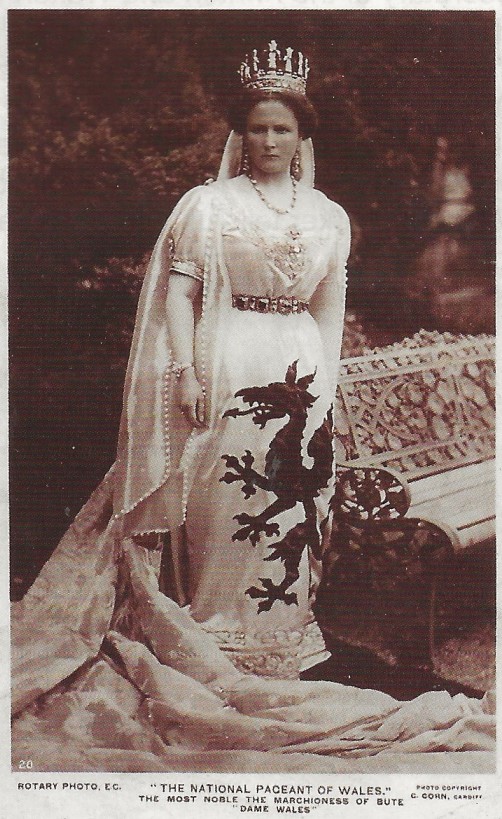
The National Pageant of Wales took place in Sophia Gardens, Cardiff between 26th July and 7th August 1909. With 5,000 performers it was an expensive and swanky event reflecting the growth of Cardiff, its new city status (as of 1905), its new City Centre (as of 1906), its aspirations and the fact that it referred to itself as “The Modern Athens”. All this was built on the thriving export trade of coal and iron from its docks.

Coal had come down from the South Wales Valleys and made the Marquess of Bute, who owned Cardiff Castle and the docks, the richest man in the world. It had created a proud, rich city, too. In 1907 it was the largest coal port in the world and our Royal Navy depended solely on Welsh coal.

The official photographer of the National Pageant of Wales was a Mr Corn, trading as C. Corn from the Metropole Studios, 3 The Hayes in central Cardiff.

His trades directory entry shows him as being a portrait painter as well as a photographer. He is clearly a photographer of talent, demonstrable from the suite of 36 real photographic postcards which he produced for the pageant. They are so well composed that these postcards leave a collector of Cardiff wanting more. Participants in the pageant ranged from workers recruited en masse from Cardiff docks to the cream of Welsh society, including even the Marchioness of Bute, appearing as Dame Wales. Although described as “the charming chatelaine” of Cardiff Castle, she looks sternly regal in her postcard, and it is known that her understudy took most of the strain of the actual performances.

It was quite common for prominent local figures to participate in pageants though. Lady Ninian Crichton Stuart for example who was a supporter of Mr Corn, featured as Glamorgan, and both Lewis Morgan, the Conservative Lord Mayor of Cardiff and his wife, Lady Morgan, both had prominent roles.

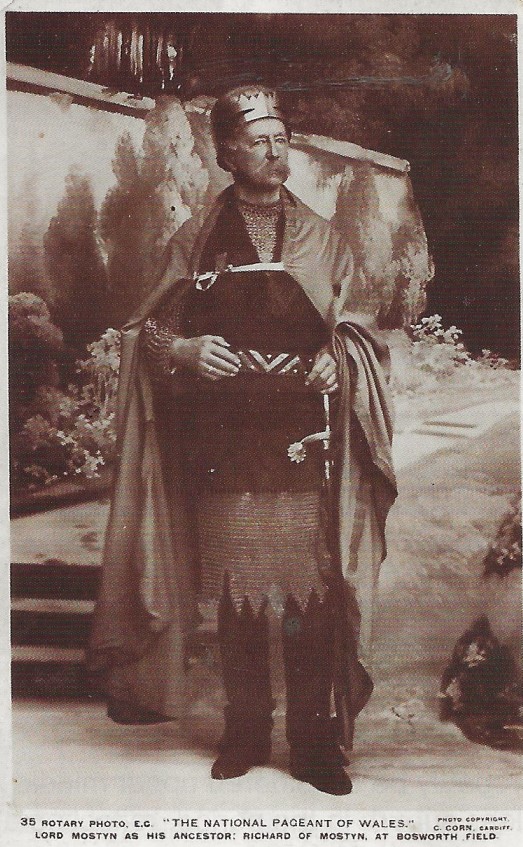
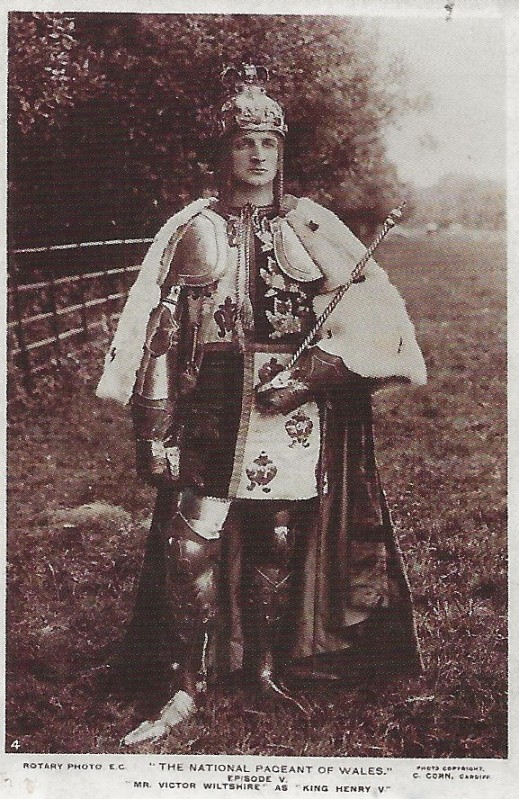
Some of the performers of this pageant were even playing roles of their actual ancestors many generations before. Lord Mostyn, for instance played Richard ap Howel of Mostyn from the Battle of Bosworth. And even when a rare outsider was brought in, to play Henry V for instance, no expense was spared and an important and influential West End actor in the shape of Victor Wiltshire was hired.

Henry Corn’s Metropole Studios were in an up-and-coming part of Cardiff, the heart of its retail shopping and the scene of a titanic commercial battle between the two competitive drapers, James Howell and David Morgan. Morgan’s investment in shops and arcades had raised the social status of the Hayes buildings but James Howell was a prominent backer of the pageant. And, as we have already witnessed, Corn had made acquaintance with the cream of contemporary Welsh society, and must have spent quite some time with them in his studio. Indeed, his advert in the Pageant’s “Book of the Words” lays emphasis on how much he was patronized by the nobility as well as local political grandees. The list of patrons, as you can see from his advertisement, included The Duke of Argyll, the Marquis and Marchioness of Bute, Viscount Tredegar, Lord and Lady Crichton Stewart, the Lord Mayor and Mayoress of Cardiff, several Aldermen, JP’s and so on.

Mildly surprising though was the fact that, apart from his advertising of the studio Corn does not seem to appear in the local press. He keeps a low profile. The 1911 Census shows a Henry Corn living with his wife, Annie, and servant in 6 Ty-Draw Place in a 7 roomed property in Roath. This part of Roath would probably be considered upper middle-class suburb in the period, reflecting a comfortable lifestyle.

More mysteriously. his hitherto regular entry in trade directories suddenly disappears after 1914. Till this date he regularly advertised his studio.  Did he die? There are no relevant UK death records or probate records. As his profession is listed as photographer in the Census this must be him.

A key to all this though, turns out that he was born in Altona, Hamburg on 8th November 1875, information provided on his subsequent entry to America. This corresponds with a German birth certificate for Henry Cohn, son of Isaas Cohn, most probably Jewish.

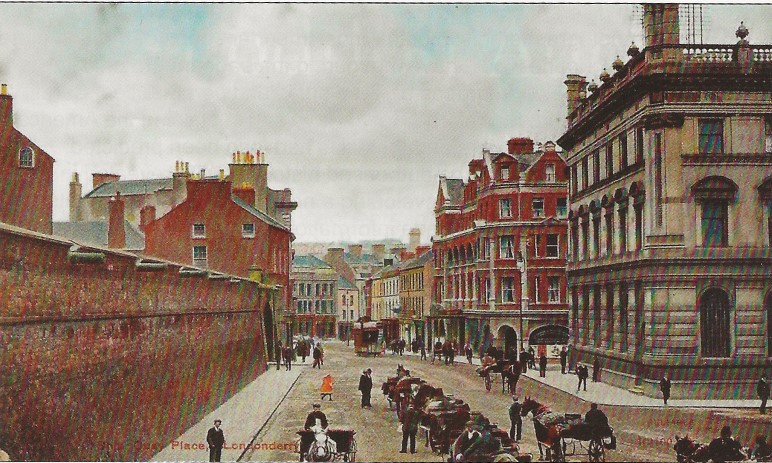
The 1901 Census then shows him trading as a portrait painter and commercial traveller aged 27 living in digs in Linenhall Street, Londonderry in Northern Ireland and not far from the River Foyle which carried a very busy shipping trade. His religion by that time is recorded as Unitarian.

Thereafter he must have come over to Cardiff,established a respectableand profitable business and found his bride from Bargoed, Glamorgan…But the question remains, what took a young German from Hamburg to Londonderry in the first place?

When the Great War broke out in 1914 resentment against German nationals resident in Britain rose steadily and Henry seems to have found his way out in a narrow squeak before internment scooped him up in its net. Indeed he shows up on a passenger list from Liverpool to New York on a ship with a neutral flag on January 12th 1915.

This was just 4 months before the sinking of the Lusitania on the 7th May 1915, when Internment became much more universal, and his flit is reminiscent of the escape of Burgess and Maclean before they were rounded up as spies. Burgess and Maclean, of course, had been tipped off.

Corn’s “enemy” nationality is listed on the manifest as German. His wife, Annie, does not appear to be with him, unless she is travelling under an assumed name. There is an “Annie” travelling on board and listed as “enemy” but she bears a different surname. His occupation is not recorded like other passengers. Maybe he wanted to conceal it. There is no record of Corn’s wedding or divorce that I can trace, though an Annie “Corn” gets married in Cardiff for the first or second time in 1919 and resides in up-market Lake Road West for the rest of her life.

Henry Corn – Photographer

Then we can trace his naturalization record in the USA on 6th April 1916 – a year before the USA enters the Great War. He is 5’ 5” tall, 140lbs weight, dark brown hair, with a (fencing?) scar on his nose, his last foreign residence being Cardiff in South Wales, and he renounces all allegiance to the German Emperor. He states flatly: “I am not married”. Perhaps he never was – and the Census entry had been another deception. He lists an alternative surname as “Cohn”. He is now a fine art dealer…Corn ultimately died in the Jewish Hospital Brooklyn in 1933 and is buried in the Mount Olivet cemetery in Washington. His obituary records him as having been a manager of several manufacturing firms in Manhattan, latterly Automatic Linker. He left a wife, Rose, behind him.

There are two possibilities. One is that our talented Photographer, the man who captured the cream of Welsh society in the famous 1909 National Pageant of Wales, was a victim of circumstance, and lost his wife, home and business before escaping to a new life in the USA. However, conspiracy theorists may have a different concept. Here is a mobile, linguistically able, artistic young German who finds himself as a gifted photographer in two of the most important ports of Britain before the Great War. He mixes with local dignitaries whom he would have met during the pageant. Potentially, he might have been able to make observations and take photographs of Allied ships and port facilities. Cardiff would have been of critical importance to the war effort, fuelling the Royal Navy and sustaining the American Expeditionary Force (AEF). A war between the Central Powers and the Allies had long been predicted.

Is this a plausible theory? Well, “Defence of The Realm” the authorised history of MI5, revealed in 2009 that the German Admiralty’s intelligence service had set about developing a network of German agents in Britain for some years before 1914, to monitor shipping and provide information. Some of these agents were identified and tried before the war. MI5 records show that 65 German agents were arrested during World War I. This general approach was also captured by popular spy novels of the time such as “The Riddle of the Sands” and “The Invasion of 1910”, the latter predicting a German invasion assisted by a complex spy network, and as early as July 1908 the “Western Mail” posed the questions: “Are we prepared for war? What would happen in a fight with Germany?”

It would have been sensible of course for the Germans to have installed a sleeper agent with photographic skills, an ability to mix with the rich and powerful, and with easy access to the Docks in Londonderry or Cardiff, from his city centre studio.

And then, escaping in the nick of time and concealing his talent as a photographer, he might well have gained entry to New York – a vital port of the USA which was destined to join the war against Germany in 1917. New York was the Port of Embarkation for the American Expeditionary Force and having an observant and experienced agent in place would have been a real coup for the Germans.

So, unless there are some MI5 records available on the mysterious Mr Corn, we may never know whether he was a spy or not… But he certainly was in the right place at the right time, mixing with the right people – and a clear master in his craft, as his postcards bequeathed to us clearly demonstrate.

John Biggs – The Brewer who had Oldwell built.

Towards the top of Pen-y-lan Road, on the corner with Bronwydd Avenue, there stood until the mid-1980s, a rather grand house called Oldwell. It was built the mid-1880s for owner of the South Wales Brewery, John Biggs.  It was one of the grand houses of Pen-y-lan along with its neighbour Wellclose and other nearby houses including Bronwydd, Greenlawn and Pen-y-lan House.

Oldwell, Pen-y-lan

I recall visiting Oldwell in the 1970s when it was a residential home for the elderly owned by the local authority.  The other owners are listed in an article by Glamorgan Archives. It was demolished in the 1980s and the land repurposed for flats.

Oldwell in 1980s.

Oldwell must have been an idyllic residence when it was first occupied by John and Emily Biggs and their six boisterous teenage boys back in the mid 1880s.  It had a snooker room to entertain them in times of wet weather and a stable at the back for them to learn horse riding skills. But the boy’s real passion was playing rugby.  All six would go on to play rugby for Cardiff and two for Wales.  There is a story associated with each of them.  One boy, John James Egerton Biggs went on to be Lord Mayor of Cardiff, Norman Biggs ended up being killed by a poison arrow and Geoffrey Biggs was captain of one of Britain’s first submarines, the A1. 

In this article we concentrate on John Biggs, the man who couldn’t stop brewing.  His name crops up in newspaper articles from the time and we are able to piece together bits of his life story but admittedly its an incomplete picture. 

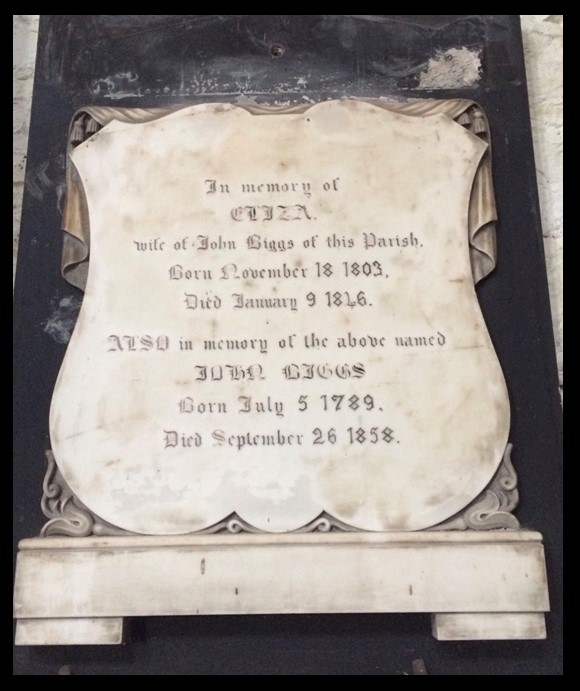
John Biggs was born in St Mary Street in 1833 to John Biggs, a wine and spirits merchant, originally from Bristol, and Eliza Biggs née Jones, originally from Glamorgan. John and Eliza Biggs are worth a mention in their own right as they have a plaque in their name at St Mary the Virgin church in Bute Street, probably indicating that they were one of the benefactors who helped pay for the building of the church in 1843.  

Plaque to Eliza and John Biggs, St Mary, Bute Street,

John Biggs (our future brewer) was baptised at St John’s church in Dec 1833.  In the 1841, 1851 and 1861 census he was living in St Mary Street.  By 1861, aged 27, his parents had died and he himself was now working as a wine and spirit merchant and living with his three sisters. John Biggs (Snr) died in 1858 and was buried at St Margaret’s, Roath though virtually all the grave headstones at St Margaret’s have now been removed so I haven’t been able to identify his precise resting place.

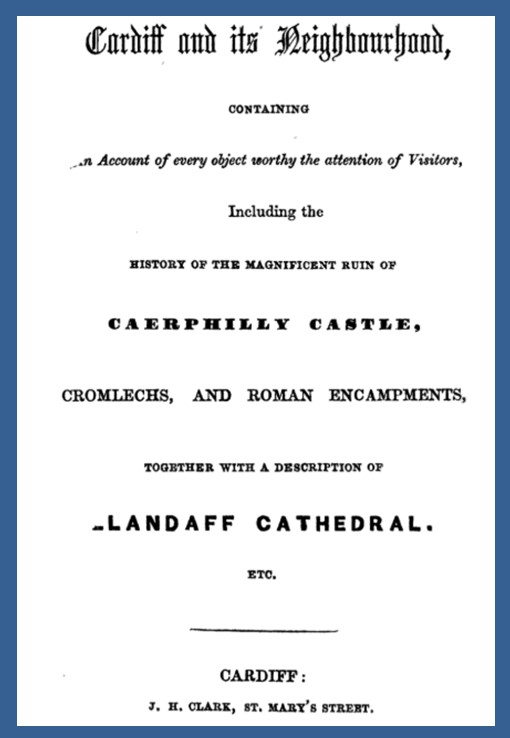
In 1866 John Biggs (Jnr) married Emily Sophia Clark, originally from Usk.  She was daughter of a newspaper editor and publisher James Henry Clark.  Please allow me another brief aside. In 1850 Cardiff was growing rapidly and J.H.Clark came down from Usk and opened a branch of his business in Saint Mary Street. In 1853 he wrote and published ‘Cardiff and its Neighbourhood’ which was the first guide book about Cardiff to be published. After four years however he sold the business because of the inconvenience and expense of regular travelling down to Cardiff.

Cardiff’s first guidebook.
Engraving of Cardiff Castle from Cardiff and its Neighbourhood

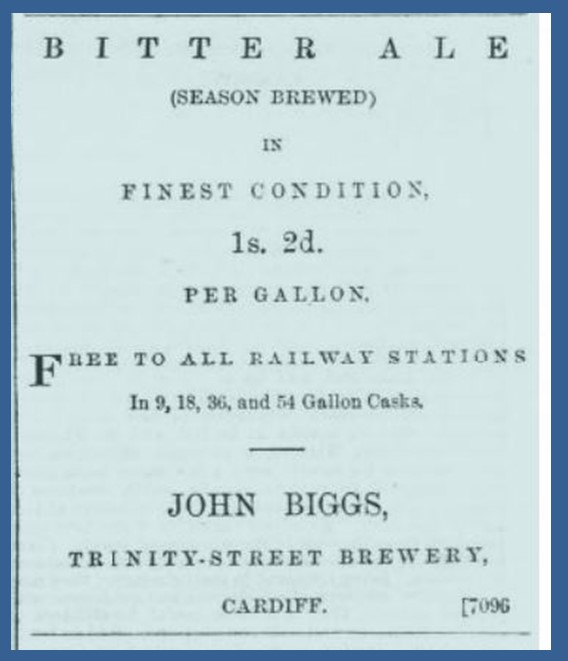
By the time of the 1871 census John Biggs is now describing himself as a ‘wine merchant and brewer’. He’d realized that that the workers of the burgeoning town of Cardiff are thirsty people and enjoyed a beer or two.  An advert from 1872 identifies him as the owner of Trinity Street Brewery which would have been adjacent to the present indoor market.  Trinity Brewery was later sold, probably to cater for the expansion of James Howell, the department store.

Trinity Street Brewery, Cardiff, brewery owned by John Biggs, advert from 1872

With the proceeds of that sale John Biggs built the South Wales Brewery in 1876.  The drawings for the brewery offices are still in Glamorgan Archives with his signature on. The brewery was situated on a triangle of land on Salisbury Road between the two railways. The buildings would later be used for offices of the Taff Vale Railway and today the land is occupied by university accommodation.  

South Wales Brewery

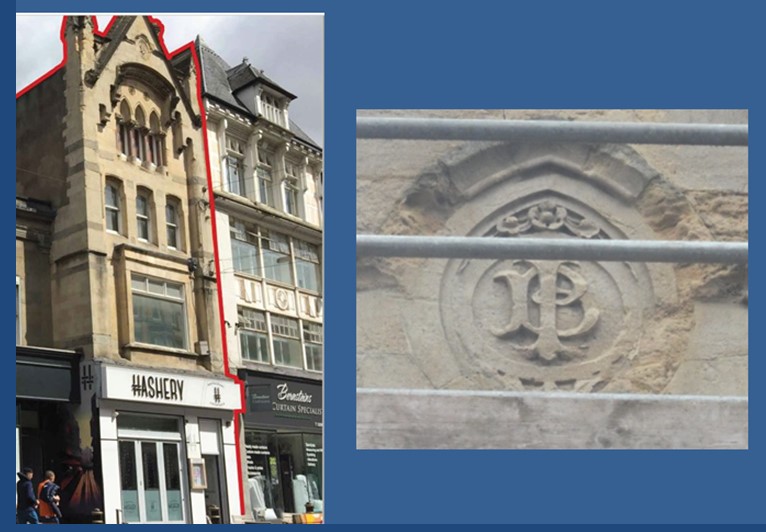
In the 1870s things were going well for John Biggs.  Not only was his brewing business successful but he finds time to invest in buildings.  In the Western Mail of 22 Sept 1876 there is an article entitled ‘Street Architecture in Cardiff’ in which it congratulates John Biggs on a new building in High Street which from the description I have been informed was 6 High Street, now home of Temple Bar.  When I went to visit I looked up to the very top of the building and was surprised to see what looks like his initials, though the bottom of the J seems to have fallen away.

6 High Street, Cardiff with what could well be the initials of John Biggs at the very top.

John and Emily Biggs had ten children together, one girl and nine boys, though four of the children, including the daughter, died in infancy. The family lived in St Andrew’s Place in 1871 and Park Place in 1881 before their house Oldwell in Penylan was built in 1885.  I’ve tried to find the family at Oldwell in the 1991 census but have never succeeded (now there’s a challenge for you all) as both Oldwell and Wellclose seem to be omitted from the census.

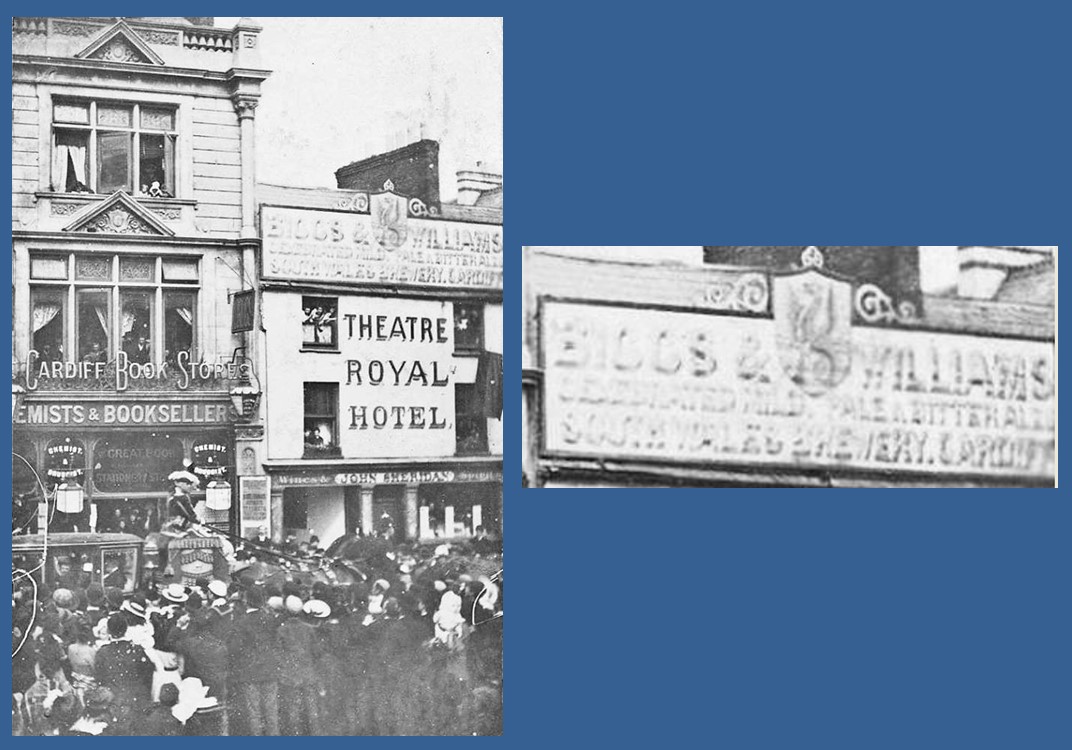
The South Wales Brewery was owned by John Biggs and a John Vaughan Williams.  There would also have been a number of hotels/pubs owned by the brewery.  One was the Theater Royal Hotel at the southern end of Queen Street.  I have discovered an old picture of the hotel with an advertising hording for the South Wales Brewery. 

Theatre Royal Hotel, Queen Street with advert for the South Wales Brewery.

In 1888 the John Biggs and John Williams appeared in court charged with adding saccharine to their beer thereby increasing the specific gravity. They were found guilty and ordered to pay £100. One of those hearing the case was Dr Paine who is buried virtually next to John Biggs at Cathays Cemetery.  The following year, 1889, William Hancock buys South Wales Brewery.  It appears that as part of this deal John Biggs became a Director of Hancocks Brewery.

His stay on the Hancocks Brewery board was however short lived as in 1892 John Biggs resigns and takes over the Canton Cross Brewery on Cowbridge Road. The Canton Cross Vaults pub is still there to this day but no longer a brewery.

Canton Cross Vaults, Cardiff – used to be Canton Cross Brewery owned by John Biggs then Hancocks.

In 1898 the Theatre Royal Hotel in Queen Street is back in the news. Police object to a licence being renewed on the grounds had been frequented by prostitutes.  John Biggs objects saying the landlord at the time has been replaced. The hotel is sold later that year. 

It appears that the love of John Biggs’s love of brewing is coming to an end. In 1900, with the children by now having left home, Oldwell is put up for sale with son Selwyn Biggs, a solicitor, handing the sale.  In the 1901 census John Biggs is living with his in-laws in Usk giving his profession as a Retired Brewer.   The Canton Cross brewery is sold to Hancocks in 1904 together with 5 pubs.

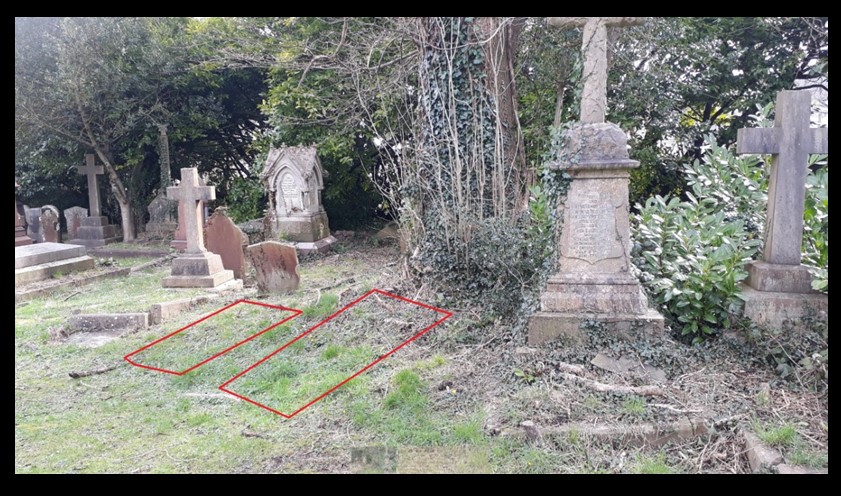
In the 1911 census John and Emily Biggs have retired to The Laurels, London Road, Bath.  Emily Biggs died in 1919 and John Biggs in 1920.  Both their funerals are held back in Cardiff and they are buried in Cathays Cemetery (plots L1211/L1235).  What surprises me is that there is no headstone on the grave and no record of there ever having been one.  Four of their children were still alive at the time of the funerals; one, Selwyn Biggs was a solicitor and one John James Egerton Biggs becomes Lord Mayor of Cardiff in 1922. There is however large tree nearby so perhaps the headstone suffered damage over the years.  It remains a bit of a mystery.

Grave of John and Emily Biggs at Cathays Cemetery

The tragic coincidence linking the deaths of the De Guélis siblings

Jacques and Jacqueline De Guélis were brother and sister.  They led very different lives but were both to die young in motor accidents but in very different circumstances.  Jacques de Guélis  you may have heard of.  He was a spy in WWII. He has a blue plaque in his honour in Museum Place, off Park Place, in Cardiff.  Jacqueline you probably won’t have heard of, though there may still be a memorial desk in here memory somewhere at Cardiff Royal Infirmary. 

Home of the De Guélis family, 3 Museum Place (used to be called Richmond Terrace)

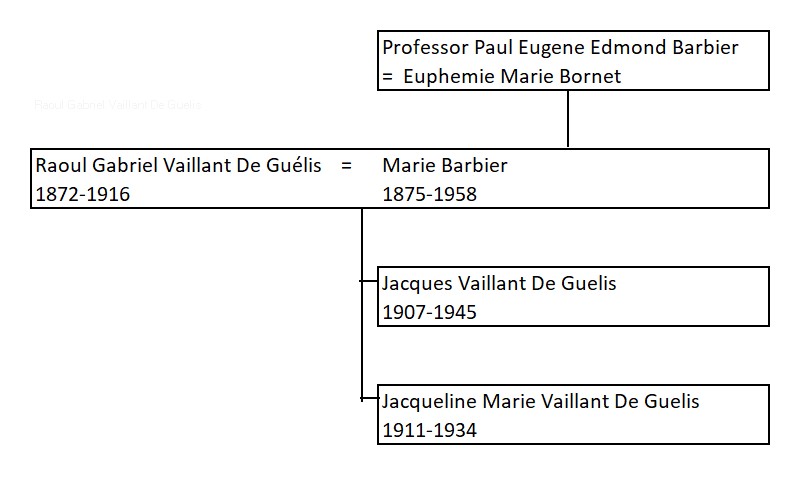
Before we look at Jacques and Jacqueline De Guélis in detail lets go back a generation and examine the Roath connection.  Jacques and Jacqueline were the only children of Raoul and Marie De Guélis. 

Raoul Gabriel Vaillant de Guelis as born on 26 Dec 1872 in Herry, Cher, France.  He came to Cardiff around 1900 and worked as a coal export agent, ending up as a business partner with Sam Powell coal exporter.  In the 1901 census he lived at 28 Ruthin Gardens, Cathays.  He was a member of the Cardiff Anglo-French Society where he delivered lectures periodically.  In Aug 1904 he married Marie Stephanie Barbier, daughter of Paul Barbier, French professor at the University. They went on to have two children together, Jaques (b.1908) and Jacqueline Marie (b.1911).  At the time of the 1911 census they lived at 3 Richmond Terrace (now called Museum Place). He joined the French army upon the call to arms in Aug 1914 and served as a Brigadier with the 11th Artillery Regiment. He died of pneumonia on 19 Apr 1916, aged 44, whilst serving in Argonne, France.  He is remembered on the Cardiff Coal Exchange war memorial

Raoul Gabriel Vaillant De Guelis

Marie De Guélis née Barbier was one of nine children born to Professor Paul Barbier originally from France and his wife Euphémie Barbier née Bornet, originally from Switzerland.  The family lived in Oakfield Street in Roath in 1891 and Fitzalan Place in 1901 before moving to Corbett Road. The Barbier family is well-researched and there is an archive of their family papers in Cardiff University Library.  In Nov 1914 Marie de Guélis and others were busy raising money for the establishment of a field hospital in France called the Glamorgan and Monmouth Hospital for French Soldiers.  In early 1915 she was coordinating the Belgium Soldiers Fund in Cardiff raising money for field kitchens in Belgium.  After her husband died in April 1916 in France Marie was left to raise her two children on her own.

Jacqueline De Guelis attended Cardiff High School for Girls in The Parade before going on the study Art. She was tragically killed on a dark December evening in 1934, aged just 22, after being knocked down by a motor van at the bottom of Penylan Hill, at the junction of Ty Draw and Kimberley Roads.  After the accident she was taken to a nearby doctor’s surgery where she sadly died a short time later.  Just a week earlier the paper reported that Jacqueline had played a leading role in a production of ‘The Aristocrat’ in front of a full house with the proceeds going to the Infirmary.  Her funeral was held a few days later at St John’s Church and she is buried at Cathays Cemetery.

A few weeks after Jacqueline’s death, her brother wrote a letter to the paper pleading for road safety improvements at the Penylan Hill, Kimberley Road, Ty Draw Road junction.  He describes the defective lighting leaving the corner in almost complete obscurity and how a few feet from the corner is a fire alarm box standing on the edge of the pavement blocking the view. He noted that most motorist passing do not blow their horns and have got up to maximum speed to negotiate the hill. This dangerous state of affairs was made worse by the fact that the bus stop at the time was on the corner of Kimberley Road.  Jacques said that the family agrees with the jury’s verdict exonerating the driver but pleaded with the authorities to improve lighting and placement of bus stops.

Death of Jaqueline de Guelis
Penylan Hill and Kimberley Road junction as pictured today

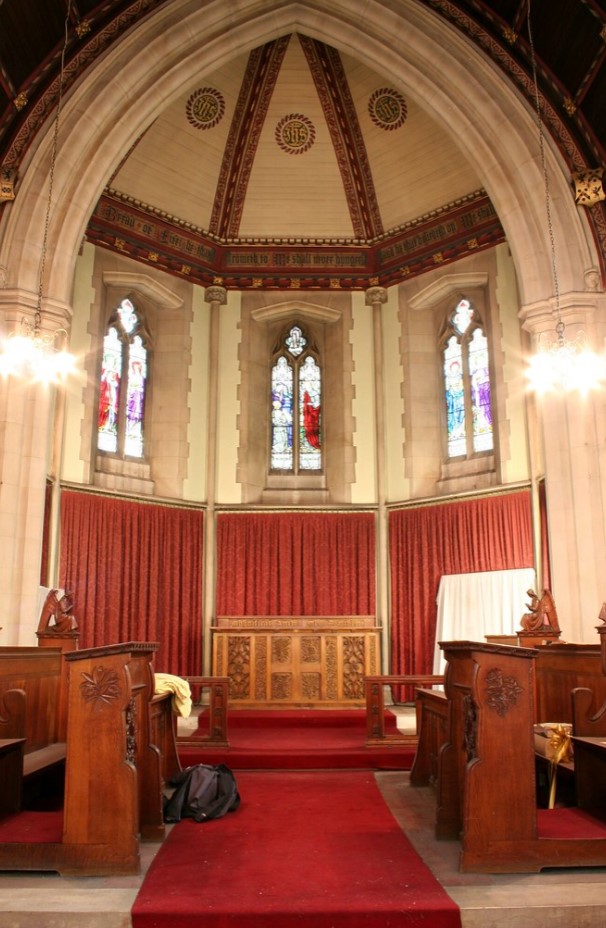
The proceeds of the production Jacqueline had taken part in prior to her death were used to purchase a litany desk for the Infirmary Chapel.  On the anniversary of her death a service was held at the Infirmary Chapel where the Bishop of Llandaff dedicated the desk in front of a large congregation.  The Infirmary Chapel lay empty and unused for a number of years but in recent years has been converted into Capel I Bawb; a library, café and meeting place. There are some pictures of the old chapel.  I don’t know if the litany desk is pictured in the old chapel or whether it has survived.

The old Cardiff Royal Infirmary chapel. The Litany desks are seen left and right next to the choir stalls.
Barbier grave at Cathays Cemetery with tragic death of Jaqueline Marie De Guelis remembered on the bottom three lines.

Jacques Theodoule Paul Marie Vaillant de Guélis was born on 6 Apr 1907.  Jacques went to school in Wrekin College, Shropshire before going onto Magdalen College, Oxford.  He had dual French/British nationality, and was therefore required to undertake French national service which he did with the French Cuirassiers in the 1930s.  At the time of Jacqueline’s death in 1934 Jacques was reported to be the director of the press advertising firm in Paris.  He married Beryl Richardson at St Augustine’s church, Kensington, London on 26 Feb 1938 after which both Jacques and Beryl worked in press advertising in London.  He had a handle-bar moustache and was 6 feet 4 inches tall.

In WWII Jacques initially served with the French Army. He was appointed liaison officer to the British II Corps, escaped via Dunkirk, but then returned to France.  He then found himself escaping the enemy again via the Pyrenees into Spain.  On returning to UK he was recruited to the Special Operations Executive (SOE). He undertook many missions behind enemy lines and saw service in France, Algiers and Italy.  He rose to the rank of Major, receiving many awards for his bravery including the Croix-de-Guerre with palms, Military Cross and MBE.  

Members of SOE in southern France in 1944. Jacques is centre of the back row (picture credit: Imperial War Museum)

After the liberation of France, he was assigned to the Special Allied Airborne Reconnaissance Force (SAARF) to help coordinate the resistance and to provide feedback information, mainly on the conditions of prisoners of war and concentration camps.  He was sent across Europe to search for information.  As Nazi Germany surrendered in May 1945, Jacques de Guélis arrived in Germany on an urgent mission to find captured agents and make sure they were not subjected to any last minute vengeance.  His investigations centred on a number of concentration camps, including Flossenburg in Bavaria.

Whilst in Germany, he was involved in a serious car accident with a car driven by a German soldier near Flossenbürg concentration camp on 16 May 1945. He was badly injured. Some reports say the circumstances of the accident were suspicious and speculate whether it was to stop Jacques carrying out his investigative work.

After the accident Jacques was immediately flown to Paris for an operation, and a while later repatriated to a hospital in Burtonwood, Staffordshire, but was to lose his life after further unsuccessful operations on 7 Aug 1945 at the age of 38.  His body was returned to Cardiff and cremated and the ashes buried in Cathays Cemetery (plot I.22E) alongside his sister Jacqueline.  His wife Beryl died in Paris in 1978.  His life has been recorded in the book ‘Jacques de Guélis SOE’s Genial Giant: His Life, His War & His Untimely End’ by Delphine Isaaman in 2018.  Other articles include those found in Wikipedia, the Western Mail and on BBC.  He is remembered on Wrekin College WWI memorial plaque and Magdalen College WWII memorial plaque as well as a blue plaque on 3 Museum Place.  Commonwealth War Graves Commission record.

There was one other accidental death that I stumbled upon when researching the family.  In 1915 Uline Barbier, sister of Marie de Guelis née Barbier, married Charles Hepburn in London. They had a son together called him Raoul Hepworth born in Cardiff in 1916, quite possibly named after Raoul de Guelis who died in France around the same time.  The marriage appears not to have lasted as Uline had returned to using her maiden name by 1921.  Raoul Hepworth had a military career and in WWII became a Major Raoul Paul Cuthbert Hepburn and served with the Royal Army Service Corps.  He died in Germany in Nov 1945, after the war had ended, as a result of an accident and is buried in Cologne.

Charles Leyshon – The first referee to dismiss a player in a Rugby Test Match.

I hadn’t come across Charles Leyshon before.  In fact there isn’t a lot written about him. Much of the information in the following article comes from a series of tweets in May 2024 by Frederic Humbert @Frederic, Committee Member World Rugby Museum, which was supported by research from Herve Padioleau @HervP, historian of Stade Nantais, and Gwyn Prescott @rugbyhistorian who knows everything about Cardiff rugby, all to whom I am indebted.

In 1924 Welshman Charles Leyshon achieved his place in history by being the first referee to dismiss a player in a rugby test match.  

Charles Leyshon (pic credit: Frederic Humbert @Frederic)

The other remarkable, and much sadder bit piece of his history, is that he died in a German Concentration Camp in 1944 aged 69.

Charles Leyshon wasn’t a Roath boy but he did go to school here and lodged at Monkton House school, played rugby for Pen-y-lan juniors and married a Roath girl. 

Charles Isaac Leyshon was born on 18 Sep 1875 (see footnote) at 4 Cardiff Road, Mountain Ash, one of four boys born to Charles Ralph Leyshon, a station master with Taff Vale Railway, originally from Pontypridd, and Margaret Mary Leyshon née Thomas, originally from Mountain Ash.  In 1881 the Leyshon family were living in Windsor Villa, Miskin, Llantrisant.  His mother tragically died aged 25 in 1882 when Charles was just seven.

Charles initially attended school in Pontyclun but then his father received promotion and became station master in Cardiff at the Taff Vale Railway Station, now called Queen Street station.  In the 1891 census the family were living at 9 Howard Terrace.  Charles and his brother however were boarding at nearby Monkton House School in 18 The Parade with the school’s headmaster and founder Henry Shewbrook.

1. Howard Terrace, home of the Leyshon family. 2. Monkton House School 3. Taff Vale Station

Charles’s father died in Sep 1894.   The newspaper reports that he was a much respected stationmaster. His funeral cortege, consisting of ‘a beautiful Victorian car bearing a huge oak and brass coffin followed by numerous mourning coaches’, left Howard Terrace heading for ‘the sequestered churchyard at Talygarn, Llantrisant’.  

Charles continued to live in Cardiff.  He played rugby for Pen-y-lan Juniors (1893-4) which used to play on Roath Park, and then Old Monktonians (1894-7) the club that later became Glamorgan Wanderers. 

On 7 Nov 1897 Charles married Inès Clothilde Frédérica Griffiths at St Andrew’s church. She was born in Roath and lived at in James Street Roath, now called Talworth Street.  Quite what inspired her parents to name her Inès Clothilde Frédéricais uncertain as her siblings have more conventional names; Mabel, Lillian, Charles and Eleanor. Charles and Inès had a daughter together, Mary Carmen Leyshon, born in Penarth in 1900, who was baptized at St Augustine Church in Sep 1900.  

By 1901 they had moved to Llantrisant Road, Pontyclun, where Charles was worked as a railway clerk.

Sometime in the next six years they emigrated to France.  In the 1907-8 season Charles played scrum-half for the Stade Nantes Université Rugby Club (SNUC) before moving into refereeing.

1908 Stade Nantes Université Rugby Club (SNUC), Charles Leyshon in civilian clothes (Pic credit SNUC Archives)

In 1910, he became a member of the SNUC committee, at the same time as the Welsh star of the team Percy Bush who arrived after him.  Percy Bush had by that time won 8 caps for Wales and 4 for the British Isles. 

1910 Stade Nantes Université Rugby Club (SNUC), Charles Leyshon in civilian clothes, Percy Bush, 2nd row, 2nd from right (Pic credit SNUC Archives).

Charles Leyshon refereed matches in 1915 and 1916 suggesting he remained in France in WWI.

In 1918 he settled in Paris and continued his rugby refereeing, something he did until 1930. Quite what Charles Leyshon did for a living I have yet to discover.

In 1923 he was one of the founding members of the British Rugby Club of Paris which still exists today.  

In 1924 he was a referee in the Paris Olympics and in the match USA versus Romania in Colombes and sent off American Ed Turkington who was the first person to be sent off in a rugby international test match.  The newspaper reports that Turkington was sent off minutes before the final whistle for kicking a Romanian player whist the later was down.  Turkington argued that the kick was unintentional. The USA ended up winning the game 37-0.  Some British sources mistakenly indicate that the first expelled was the New Zealander Cyril Brownlie against England on January 3, 1925 but that was a year after the Olympics.

USA Rugby Team 1924 Olympics

What surprised me was that it took until 1924 for a player to be dismissed in a test match considering rugby had been a popular sport for the previous 50 years. I may be missing the subtleties of what is defined as a Test Match, or maybe ‘sending off’ had more recently gained some official status in the rules.

Charles Leyshon was arrested in Jul 1944 and sent to the Buchenwald Concentration Camp in Germany. He died there of broncho-pneumonia and heart failure on Nov 19 1944, aged 69. The reason for his arrest and being sent to Buchenwald is unclear. The Buchenwald Archives reference card for Charles Leyshon states “”Polit. England”, which he interprets as “Political Prisoner – English”. It appears the family had already moved to the South of France to escape initial German occupation.  Charles had been a Freemason when they lived in Paris, a member of the ‘Anglo-Saxon Lodge’ which may be a reason for his arest.

 Or maybe there are some Jewish connections which could explain his arrest.  Charles Leyshon was married in a Christian church (St Andrew’s) but his daughter Mary Carmen Leyshon is said to have married in a synagogue in Paris. She married Frenchman Rémi Louis Lamoureux and they had two children Gerard and Evelyn, but whether there are any Leyshon family still living in France is uncertain.

Buchenwald Memorial (pic credit Wikipedia / Creative Commons)

Although Charles Leyshon has no known grave there is a memorial at Buchenwald and he does have a Commonwealth War Graves Commission record.  He has now been included on the Roath Virtual War Memorial.

And what of his three brothers? 

  • Edward Thomas Leyshon (1874-1949) was landlord of the Miskin Inn before later becoming a Director of the Ely Brewery in Cardiff.  His son Trevor Leyshon became the brewer manager at St Austell Brewery which still going strong today.   
  • Thomas William Leyshon (1877-1910) also attended Monkton House school.  He married in 1897 giving his profession as an architect. When he died in 1910 he was living at the Butchers Arms in Llandaff.
  • Arthur Ralph Leyshon (1879-1940) married in 1898 but was widowed a decade later and moved to British Colombia, Canada and became a logger.  In WWI he joined the Canadian Expeditionary Force in 1916 and was demobilised in 1919 before he moved back to the UK and lived in Surrey and was employed as a road worker.

Footnote

Charles’s birth certificate records his birth as 18 Sep 1875 although he always appears to have celebrated his birthday on 8th Sept.  That is the day quoted on his school registration form in Pontyclun and his prisoner of war papers. Those same papers state he was born in 1873 rather than 1875 which appears to be an error.   

More information

If anyone has any more information about Charles Leyshon then I would be interested to know as I’m sure would Frederic Humbert @Frederic