Newport Road used to be called Roath Road. Here we look at Newport Road from where it starts, leaving the centre of Cardiff, to where it crosses the Rhymney River.
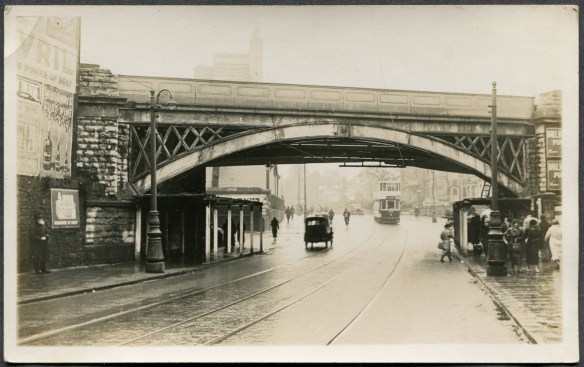
Railway bridge over Queen Street/Newport Road (date unknown)
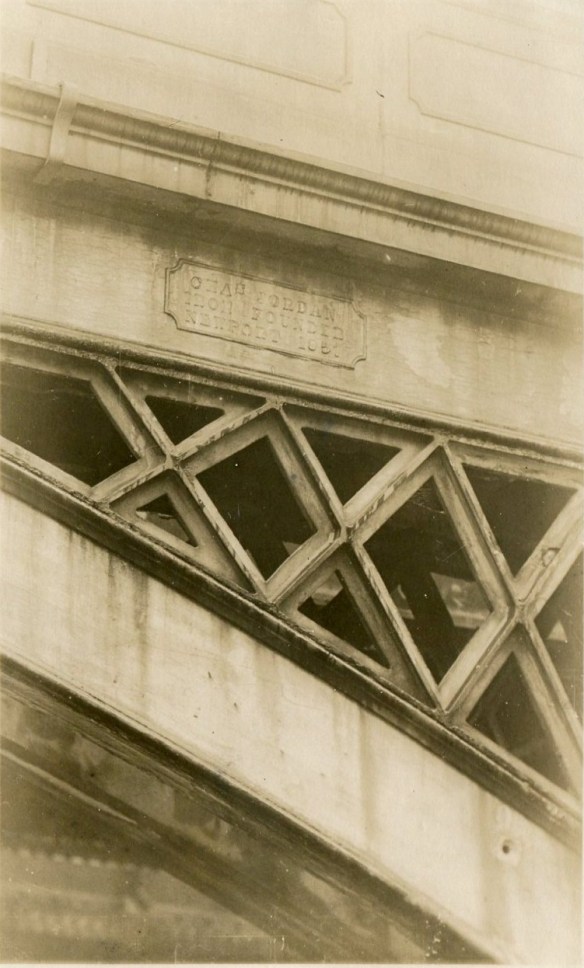
Charles Jordon bridge over Roath Road (now called Newport Road) built in 1857
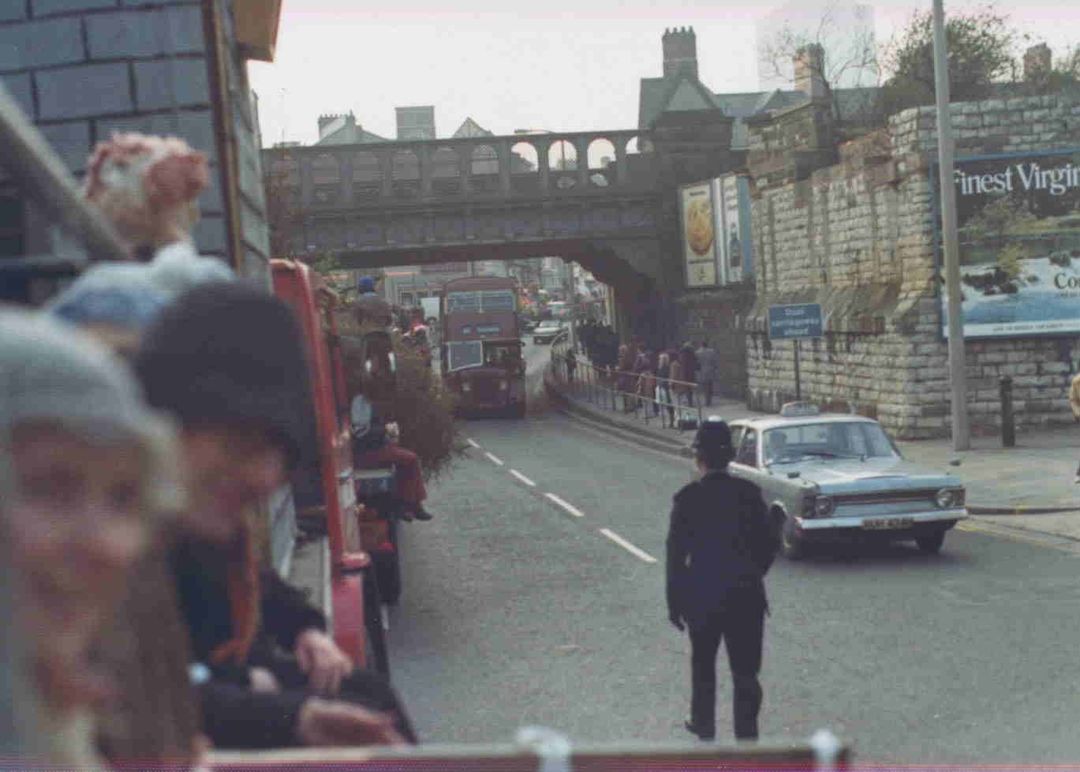
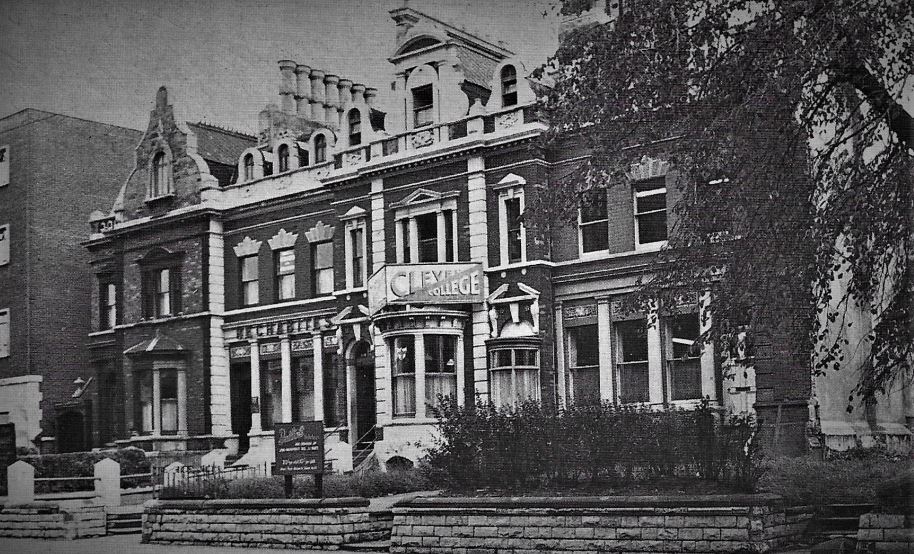
Newport Road, 1974. Looks to be a University Rag procession entering town. The Rhymney Railway bridge can be seen to have been removed, probably around 1970. The Taff Vale bridge is still there in this view, since replaced. Decorative cast iron parts of this bridge survive in the National Museum’s collection.(photo credit: Ian Evans)No.14: Cleves Secretarial College. No.16 Rechabites. The Fitzalan Student Accommodation now covers the site. The Independent Order of Rechabites (IOR), also known as the Sons and Daughters of Rechab, is a fraternal organisation and friendly society founded in England in 1835 as part of the wider temperance movement to promote total abstinence from alcoholic beverages. Cardiff Institute for the Blind is just seen on the left of the photo.
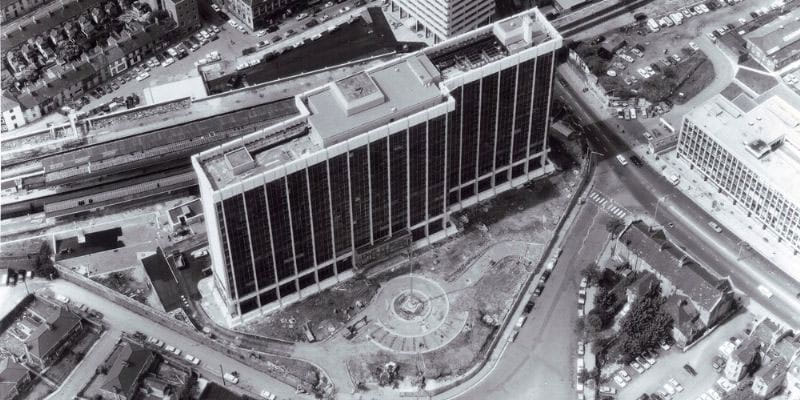
Brunel House on Fitzalan Road (year unknown). Newport Road and Cardiff University Queen’s Building / School of Engineering to the right. Queen Street Station to the top and interesting to see the terrace housing on Station Terrace at the top left.
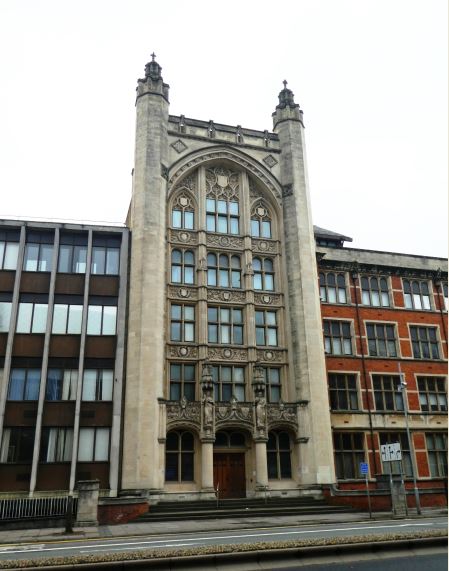
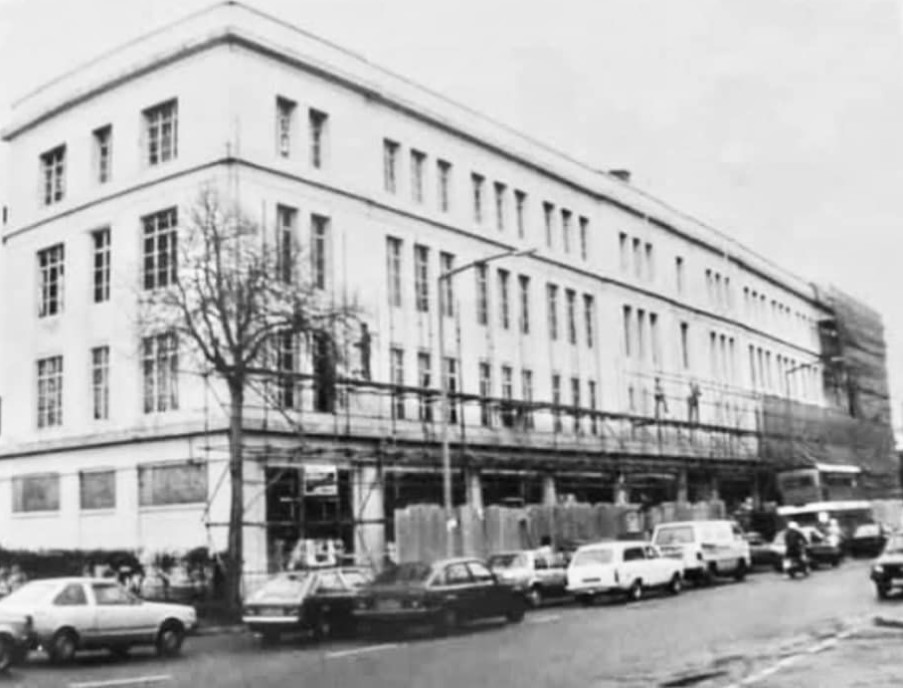
Queen’s Building – Cardiff University Engineering Department
The skeleton carved above the entrance to Cardiff University Queesn’s Building – visit our blog The Newport Road Skeleton for more information
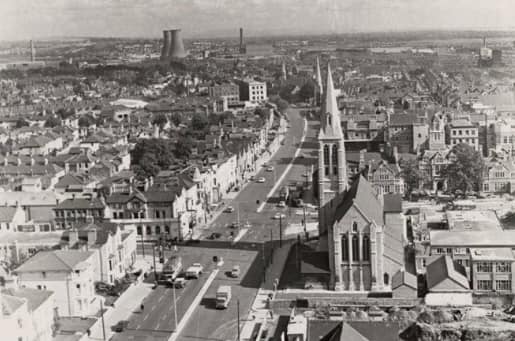
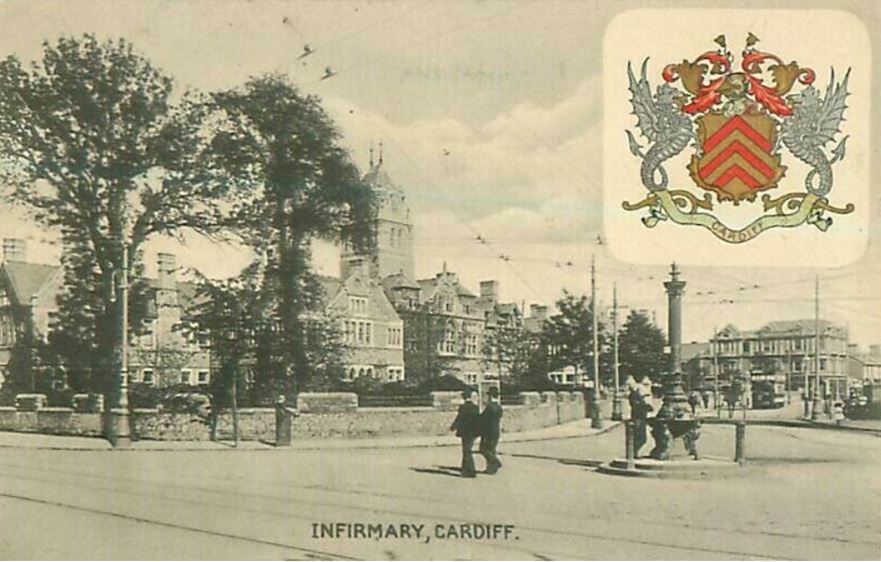
Looking eastwards up Newport Road in the 1960s at St James church and the City Road junction on the left and the Royal infirmary right. The cooling towers at Colchester Avenue power station are visible in the distance.
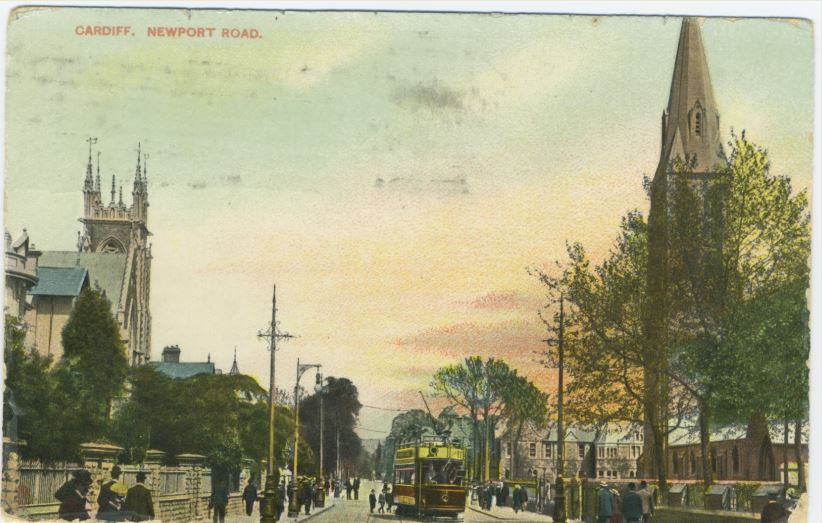
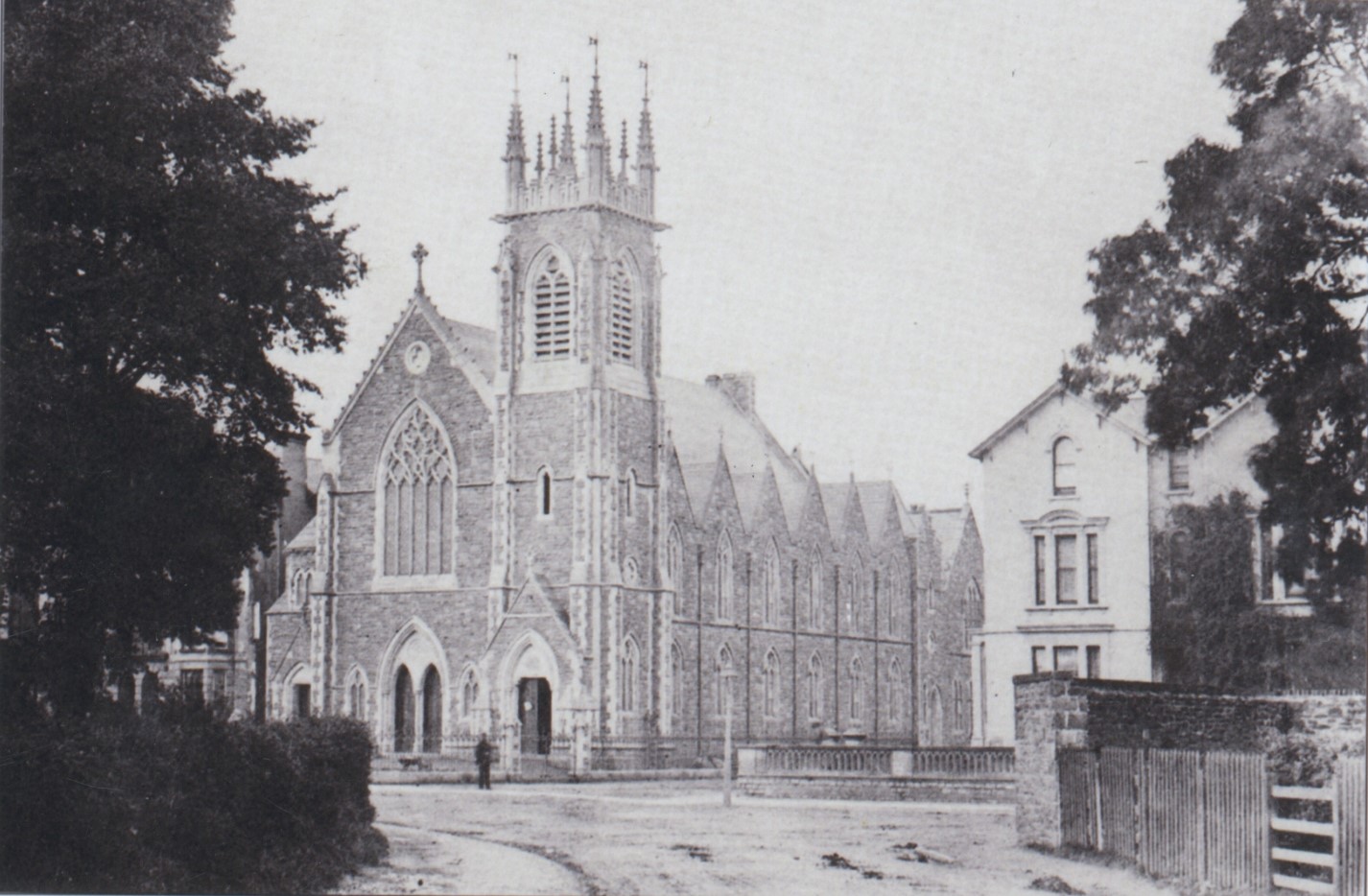
An early postcard of Newport Road, looking east. On the right is St James the Great church and behind it the Infirmary (before the infirmary chapel was built). On the left is Roath Road Wesleyan church, bombed in WWII and subsequently demolished.
Roath Road Wesleyan Church around 1871. It was on the corner of City Rd & Newport Rd, bomb damaged in WWII and demolished in 1955. Old St James the Great church is on the left where the hedge was. Infirmary chapel on the right where the wooden fence was.
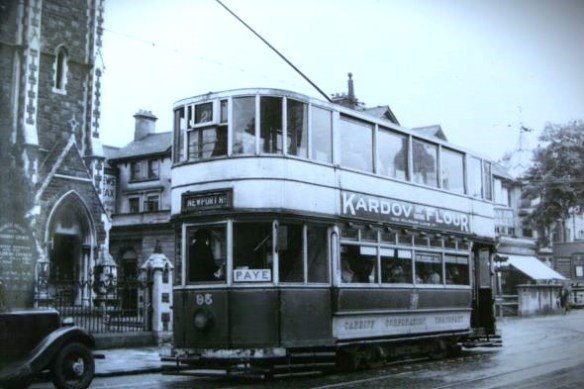
Tram on Newport Road passing Roath Road Methodist Chapel at City Road junction in around 1938.
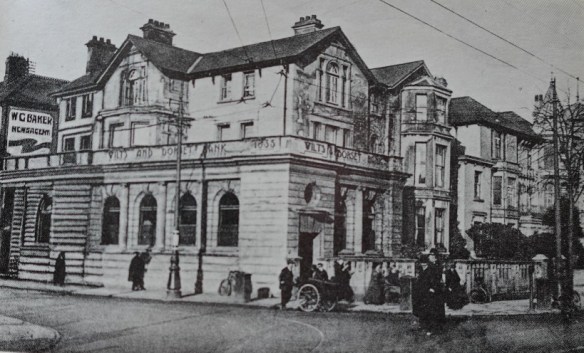
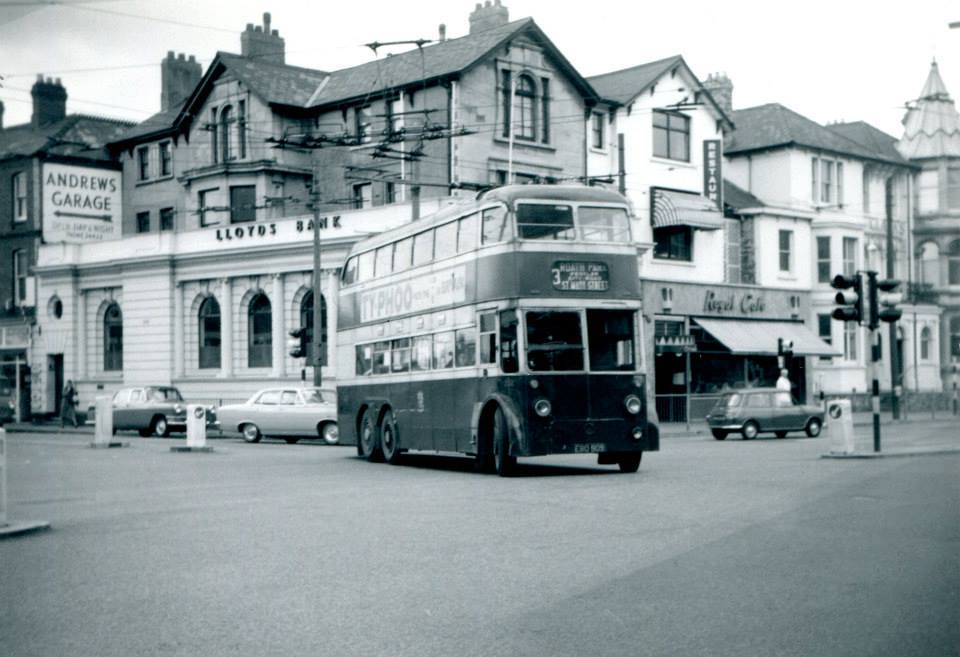
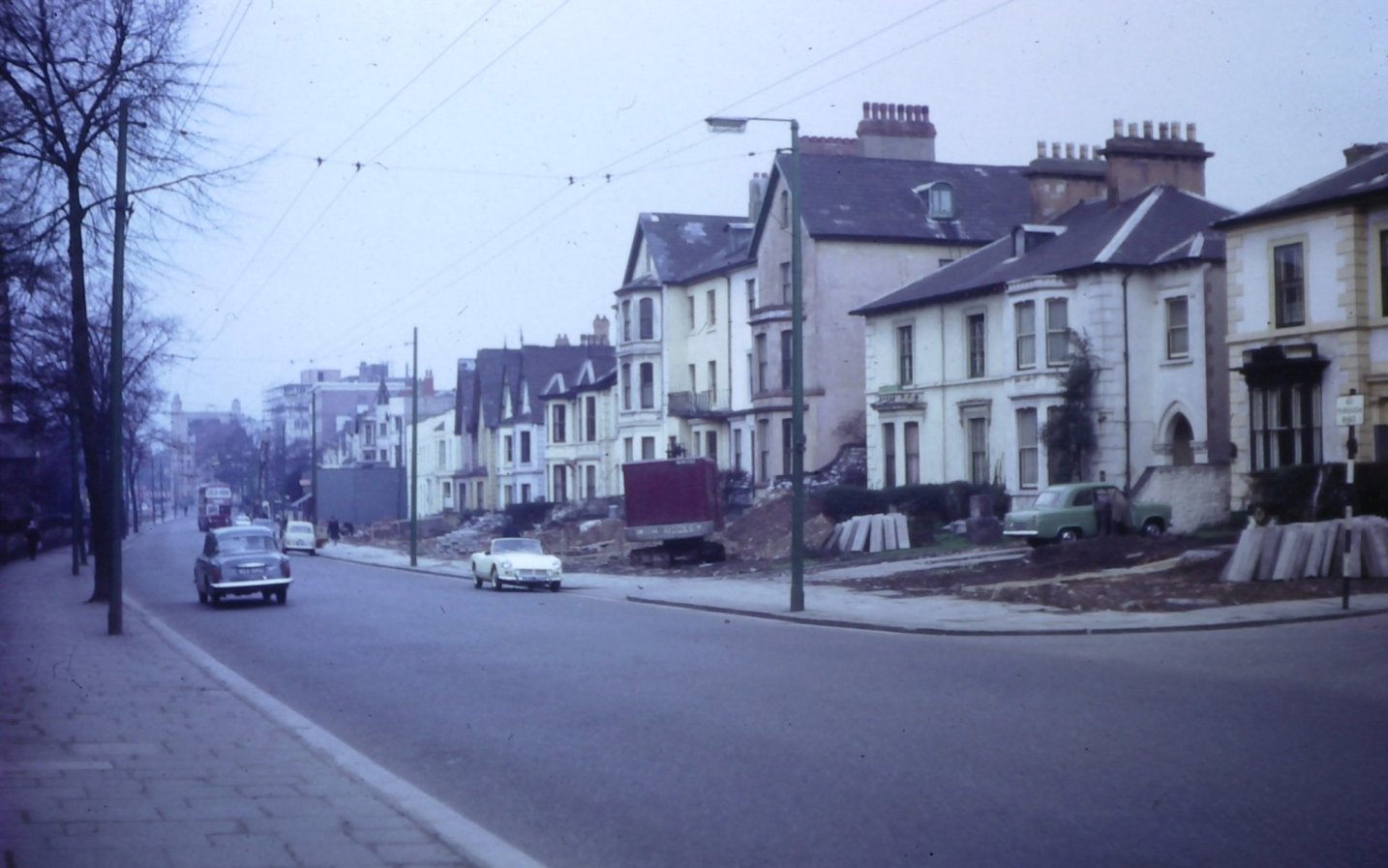
Newport Road, looking down Glossop Road, with the Infirmary on left and the Blind institute on Longcross Street, bombed in WWII, on far right.Bank on corner of City and Newport Rd, 1910, later became Lloyds Bank.Trolley bus exiting City Road onto Newport Road with the Royal Café in the background. That corner is currently occupied by Longcross Court.Newport Road aorund 1965 during road-widening works. Turning on the right is Wordsworth Avenue. All houses pictures have since been demolished. (pic credit – Glyn Bowen)
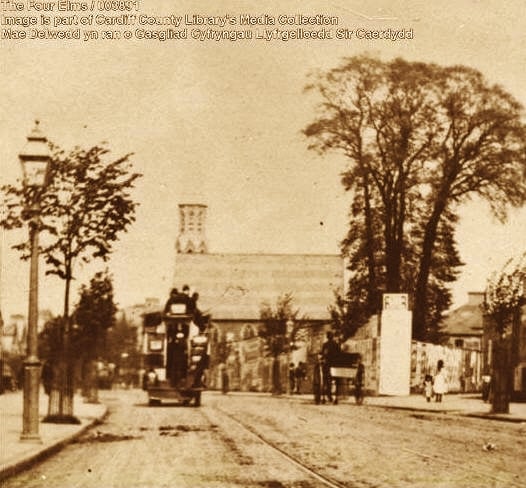
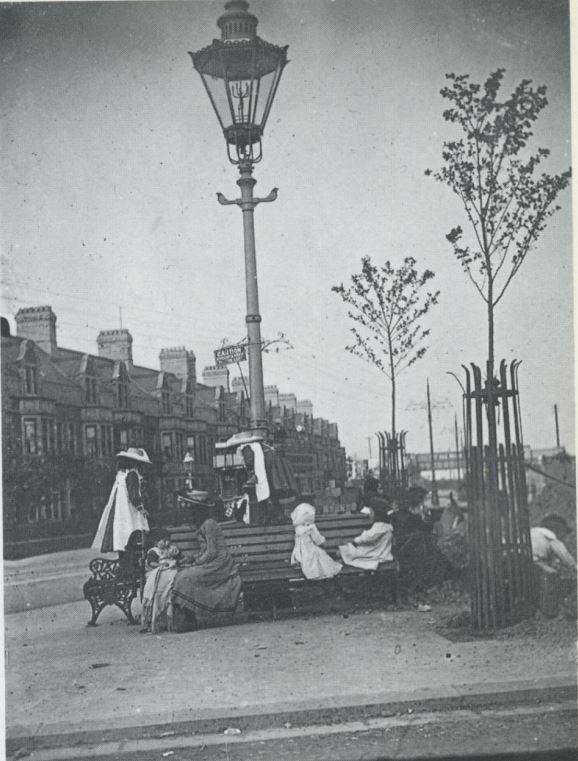
Looking eastwards along Newport Road where Four Elms Road branches off to the right. Picture taken around 1890, before the old Roath Library was constructed. The trees on the right are believed to the the four elms after which the road was named. (pic credit: Cardiff Libraries)
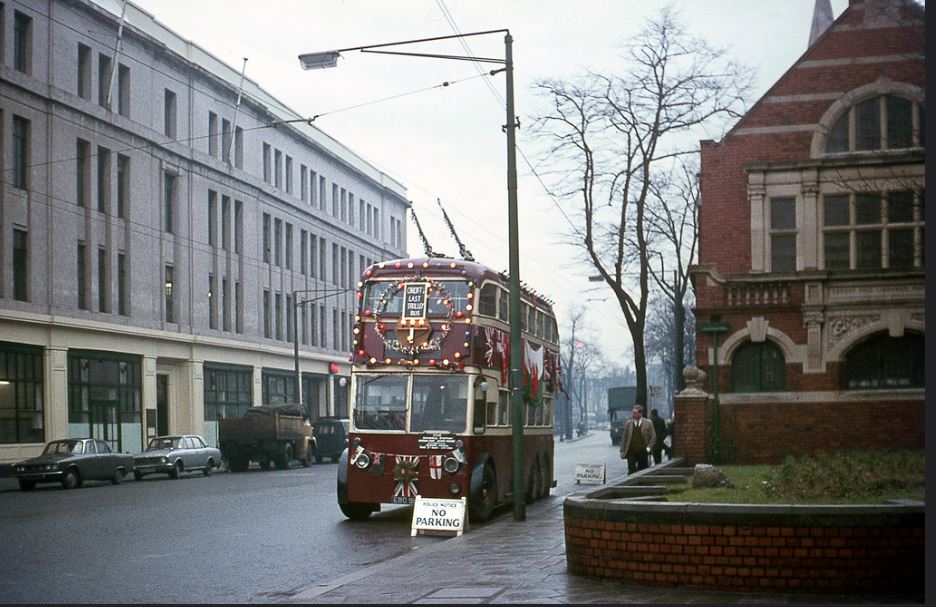
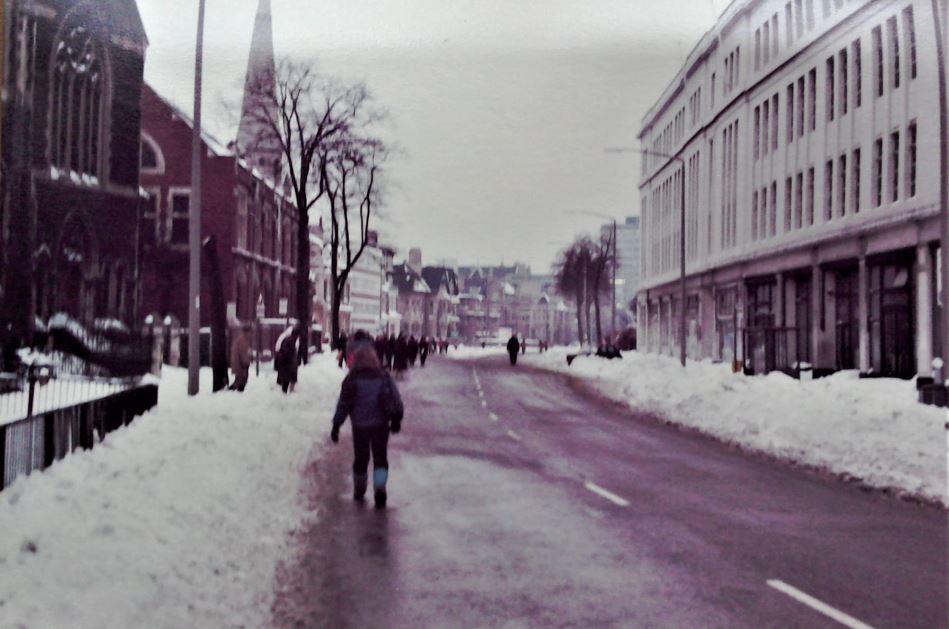
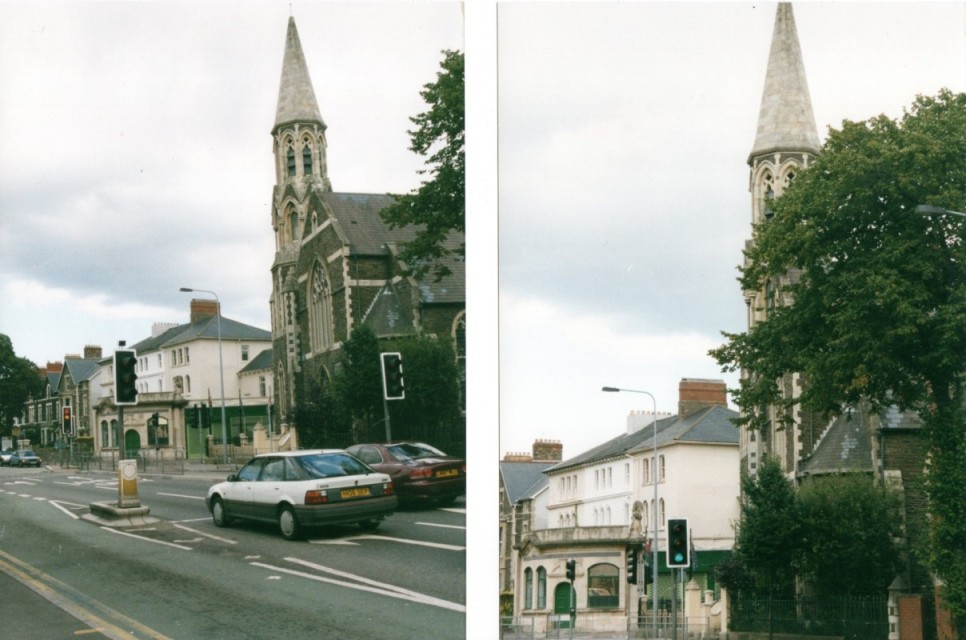
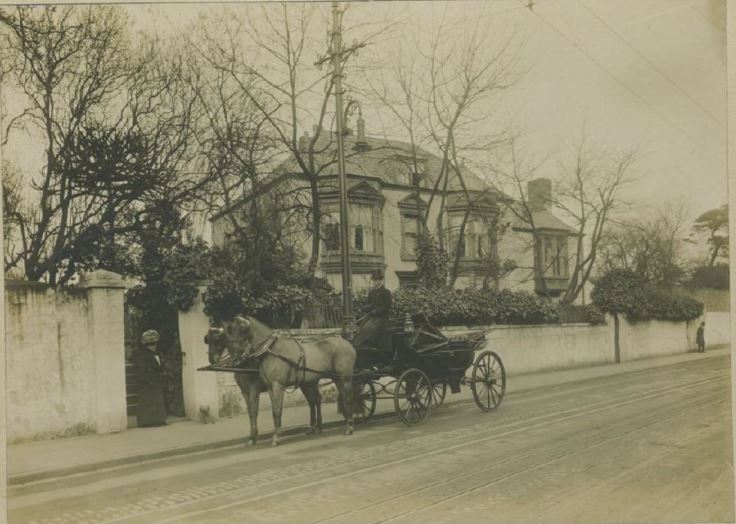
Last trolley bus in Cardiff – Newport Road 1970 (photo credit: David Christie on Flickr)Graham Buildings on Newport rd in the 1980s,now an ESSO petrol stationSnow on Newport Road in 1982. Graham Building on right, Roath Library on left. (Picture credit – Peter Ellis)Newport Road near junction with Upper Clifton Street, s. probably mid to late 1990s. The church on the right is Clifton Street Welsh Calvinistic Methodist later called Clifton Street Presbyterian. It closed around 1970 and since 1995 the building has been an art venue known as Inkspot – The Old Church. The car on the right appears L reg i.e. 1993 or afterwards. There seem to be flags outside the church – a Welsh dragon and union jack. The old bank on the corner seems closed and not yet used as a retail outlet. More about the hisotry of churches in RoathRoath House on Newport Road which was adjacent to Roath Court. More information on the Holmes family of Roath Court in our:- April 2022 newsletter.
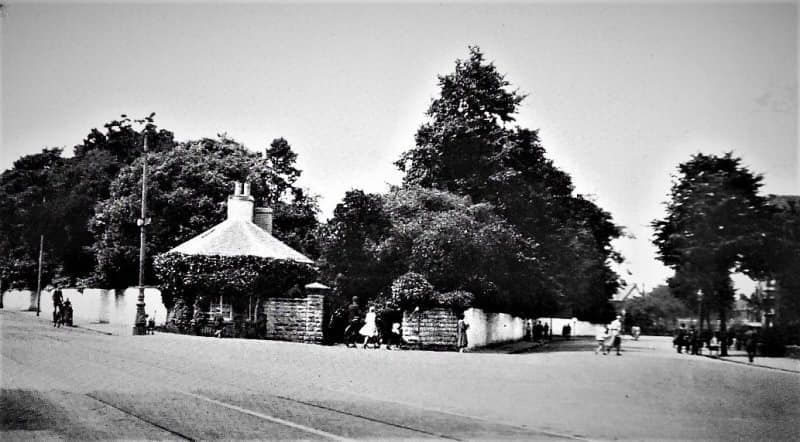
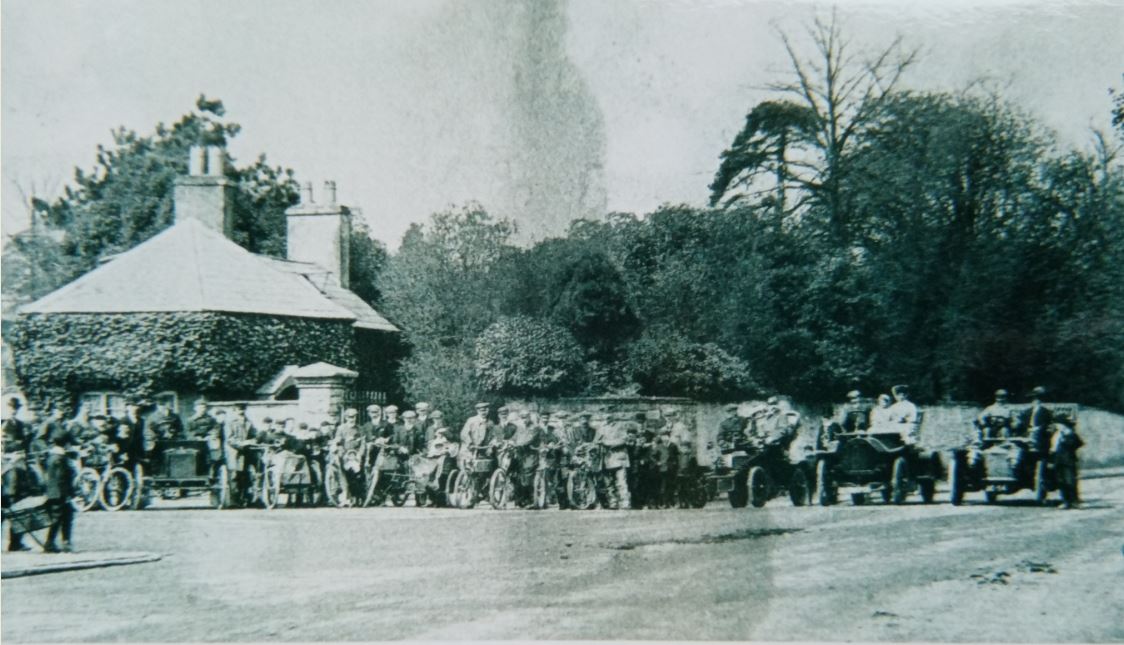
Roath Court lodge at the junction of Albany Road and Newport Road. The lodge was purchased by the council in 1936 and later demolished as part of a road widening scheme.These fine motors an bikes were lined up outside Roath Court Lodge, on the corner of Newport and Albany Road, probably 1904. The lodge was purchased by the Corporation in 1936 to enable Newport Road to be widened, hence Roath Court (Summers Funeral Home) no longer has a lodge. Behind those walls were where Roath Harriers first met – the athletics team Lynn Davies was a member of when he won his Olympic Gold medal. Read more of the history of Roath Harriers here.
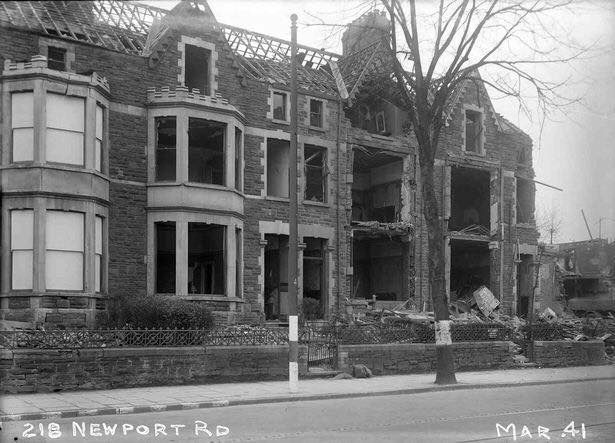
Bomb damage to 218 Newport Road, Roath in March 1941
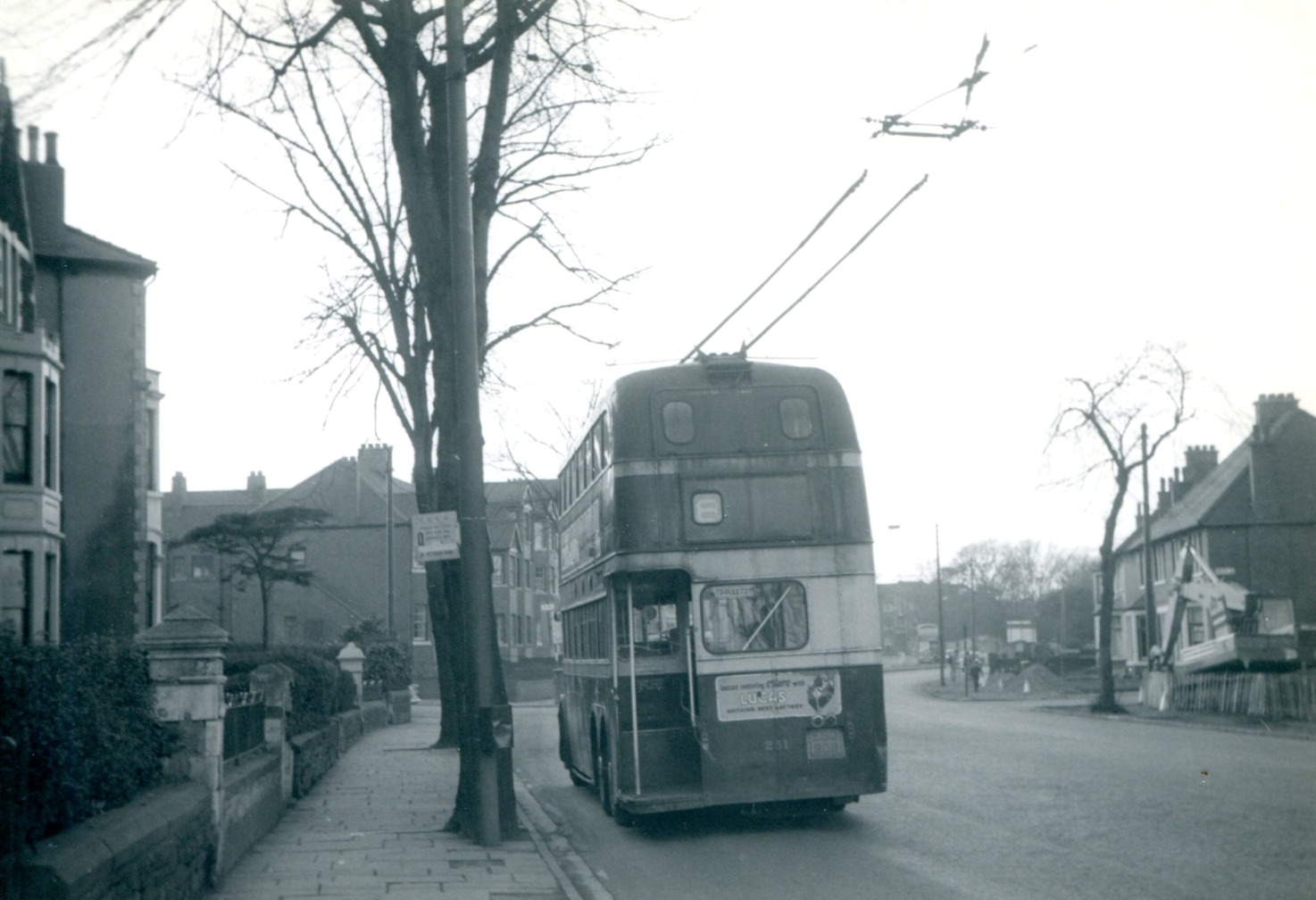
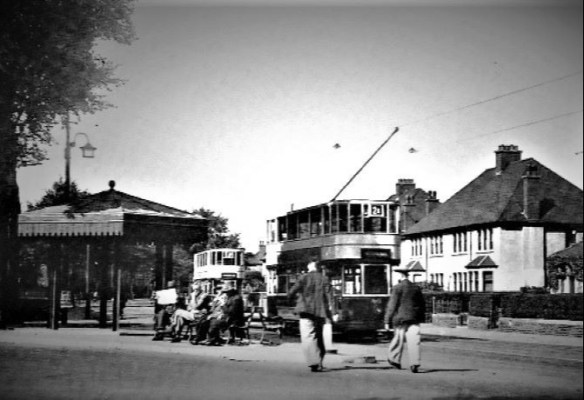
The Trolleybus is Cardiff #251 (EBO 908) which entered service in February 1950. The bodywork was built at Bruce Coachworks, who were based at Pengam Aerodrome in Tremorfa. It was withdrawn from service in April 1968 and scrapped by W. Way at their yard next to Cardiff East Dock. The photograph is taken at the Royal Oak Terminus in Newport Road on 17th February 1968 just two months before it was withdrawn from service. The street on the left is Richards Terrace with Minster Road on the right hand side. (Pic Credit: Mike O’Sullivan)The tram shelter at Royal Oak junction, Newport Road and Broadway in the 1940s .Tram Terminus on Newport Road, outside the Royal Oak
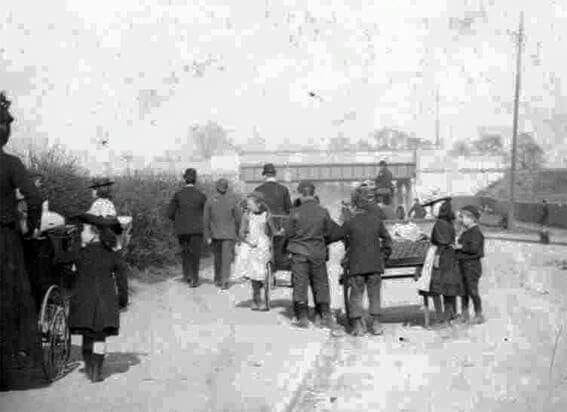
Newport Road 1892. The bridge (no longer standing) is carrying the Taff Vale Railway over Newport Road.
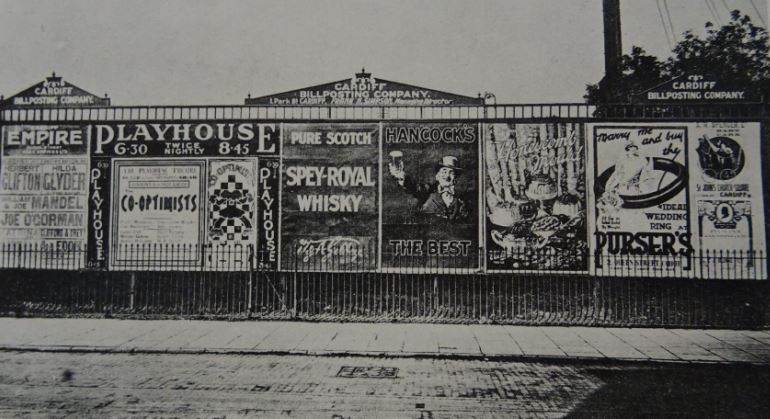
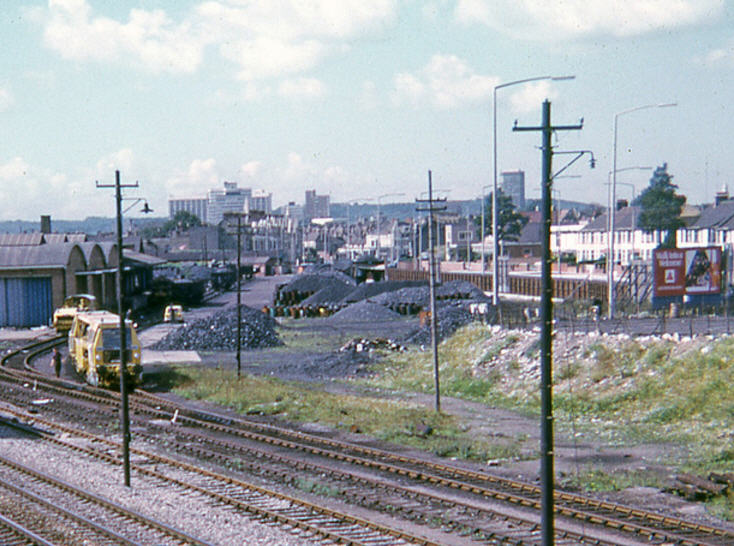
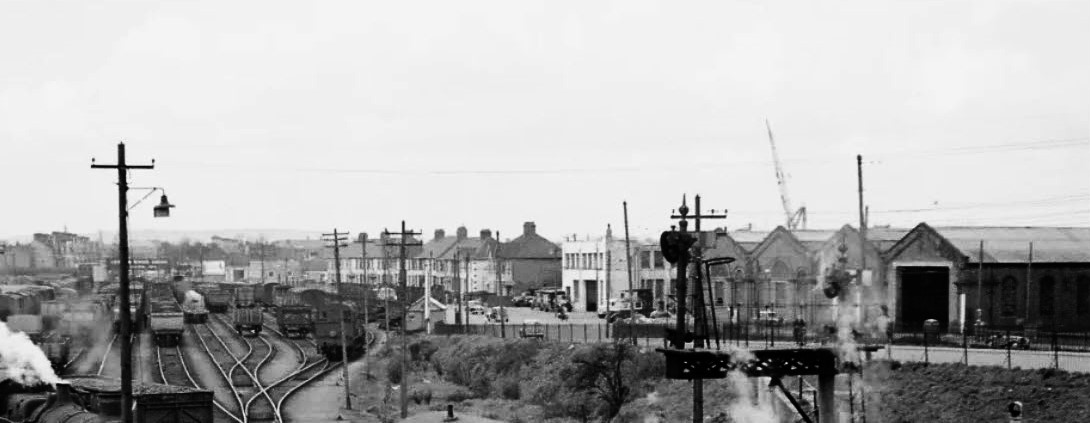
Billboards on Newport Rod, Cardiff in the 1920s opposite the bus depot.Pengam Coal Sidings at Newport Road in 1974 viewed from Rover Way Bridge and the area now a shopping area which includes TGIs.Newport Road sidings and Cardiff City Transport Roath Bus Depot in 1958.
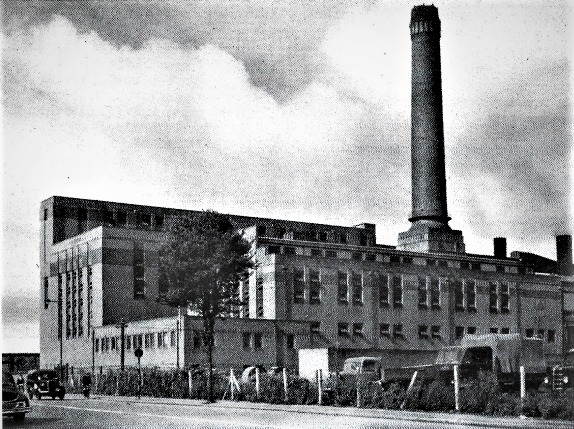
Roath Power Station – the later of the expansion phases. This one was known as the HP (High Pressure) section and was built around the time of WW2 – It may have been started in the late 30s and completed after the war. To the right and out of the camera frame was the LP (Low Pressure) section.
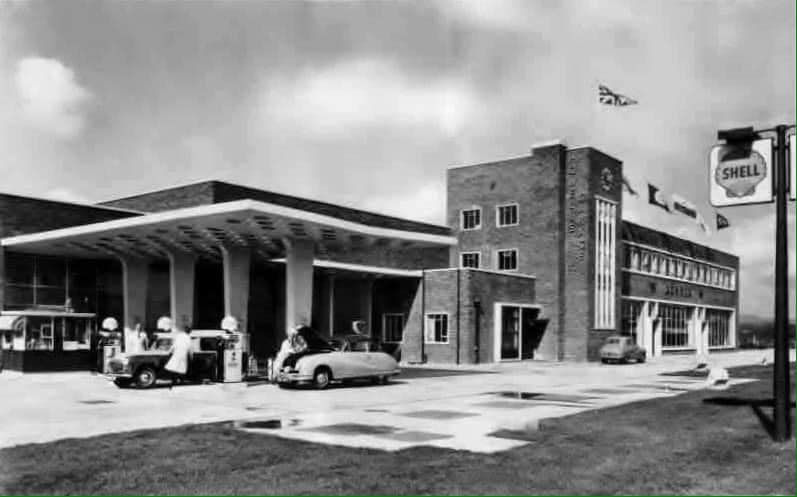
James Howells garage in the late 1950s
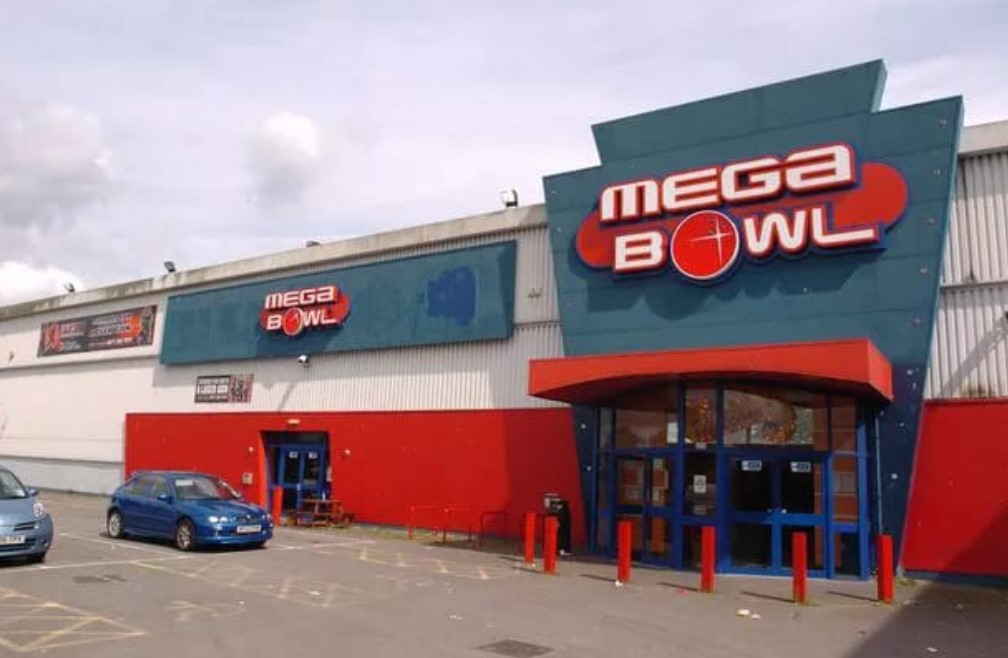
Megabowl, Newport Road, pictured here in 2008 before it closed (Pic credit: Media Wales)
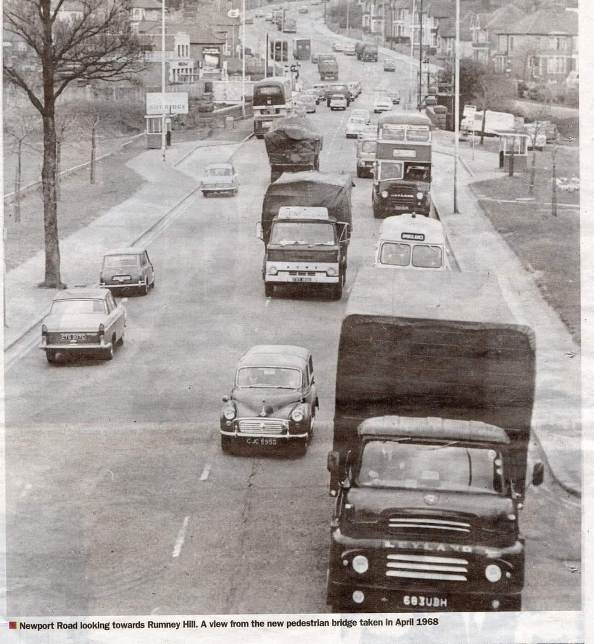
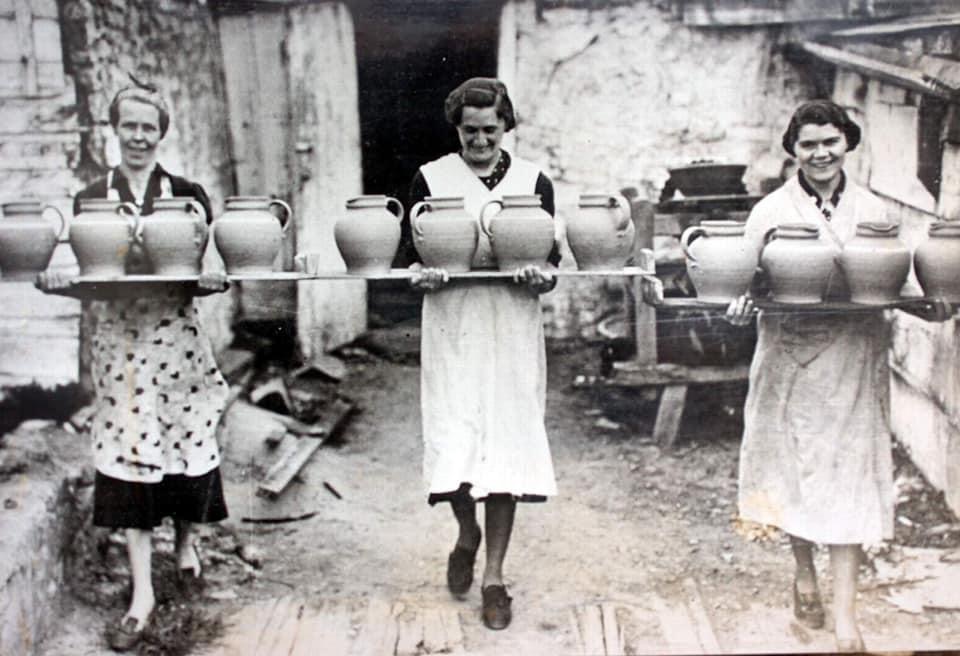
Newport Road just before the Rumney River bridge. Taken from the new pedestrian bridge in 1968. The flyover now blocks this view and the pedestrian bridge is no longer there. Rumney Pottery, just on the east side of the River Rhymney and therefore just outside the old parish of Roath. The Giles Ladies, the owner Vera centre, with Pearl left and Renee right of Rumney pottery, photographed in 1932 (photo credit – Giles family).


 Roath Local History Society