
I spotted a post on social media last week from someone looking for the origin of the street name Theodora Street in Roath. I already knew the basics but was keen to learn a bit more so set about doing some research. Who would have thought it would lead to a lovely day out in rural Herefordshire.
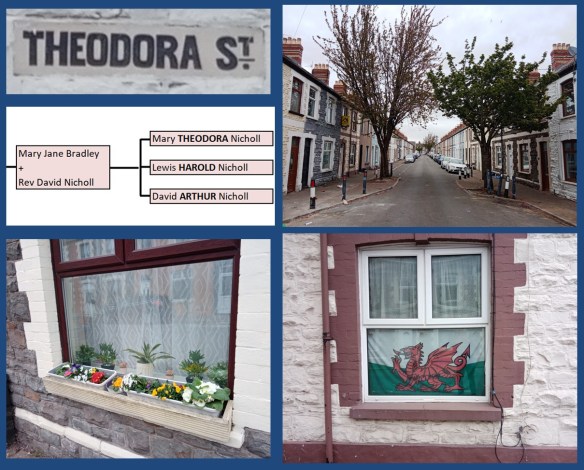
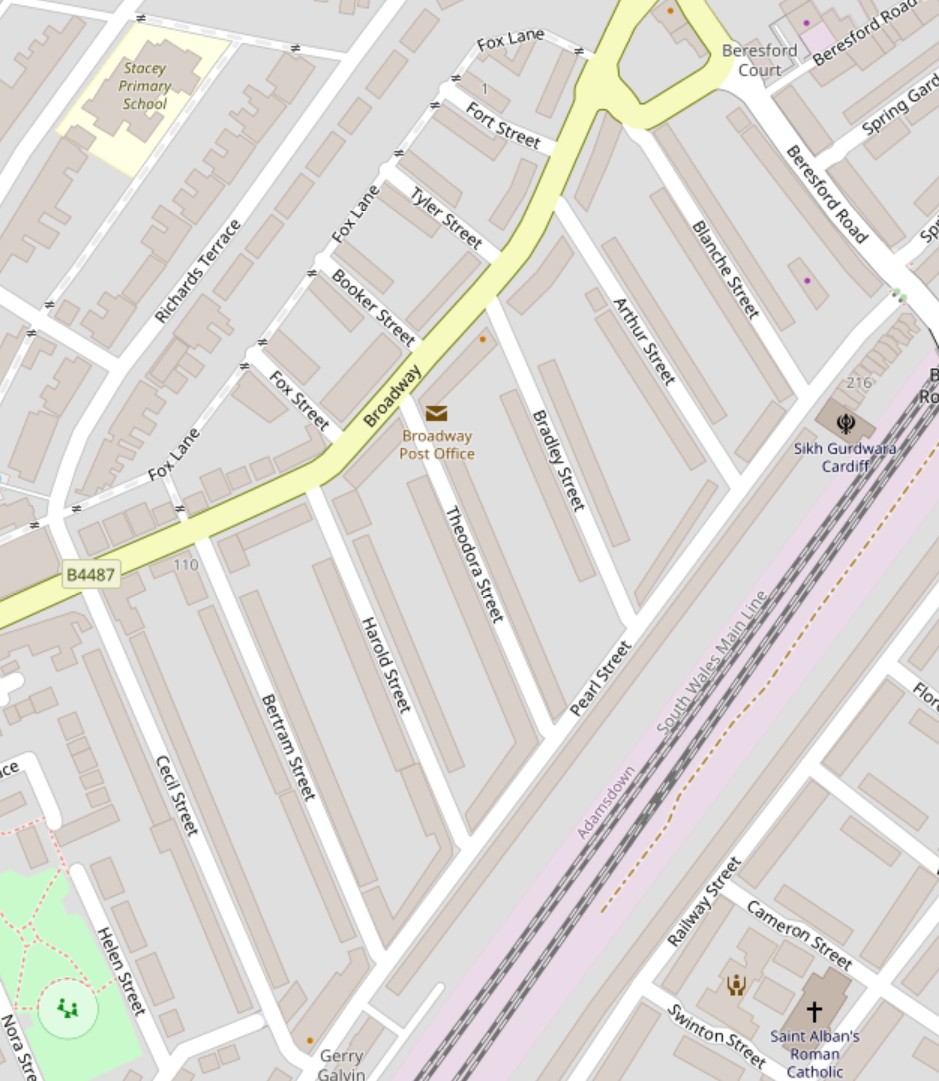
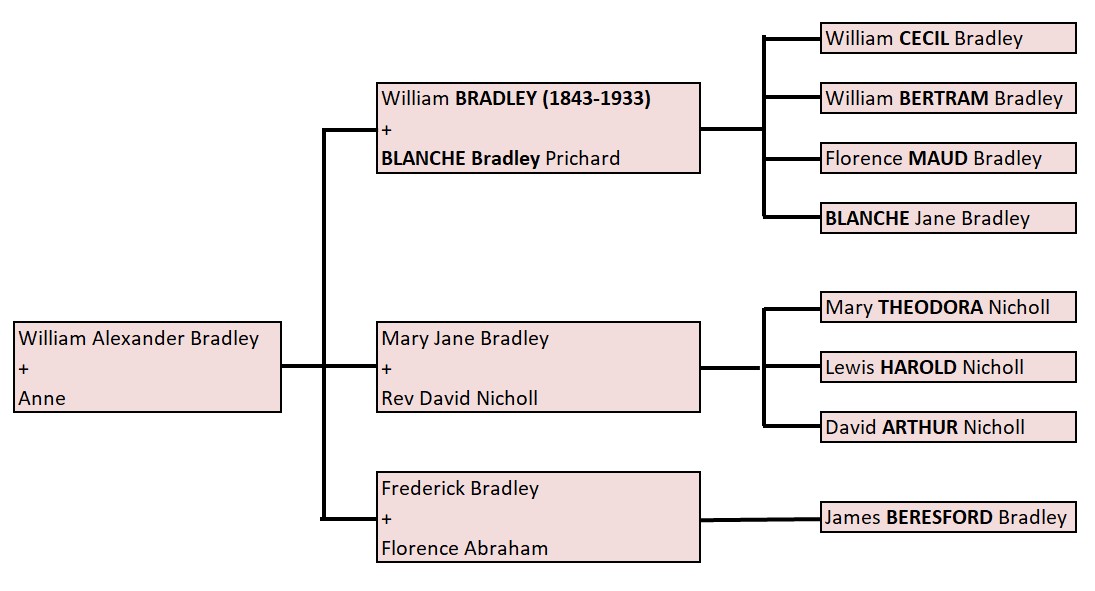
Theodora Street is one eight streets that run between Broadway and Pearl Street that were probably built in the 1870s. The land was owned by William Bradley (1843-1933), a solicitor, who named the streets after his children, Cecil, Bertam, Blanche and Maud (later renamed Bradley Street).
The problem was that he had more streets to name than he had children.
Instead, he turned to the using the names of his nieces and nephews.
Beresford Road it seems is named after his nephew James Beresford Bradley, child of Frederick and Florence Bradley.
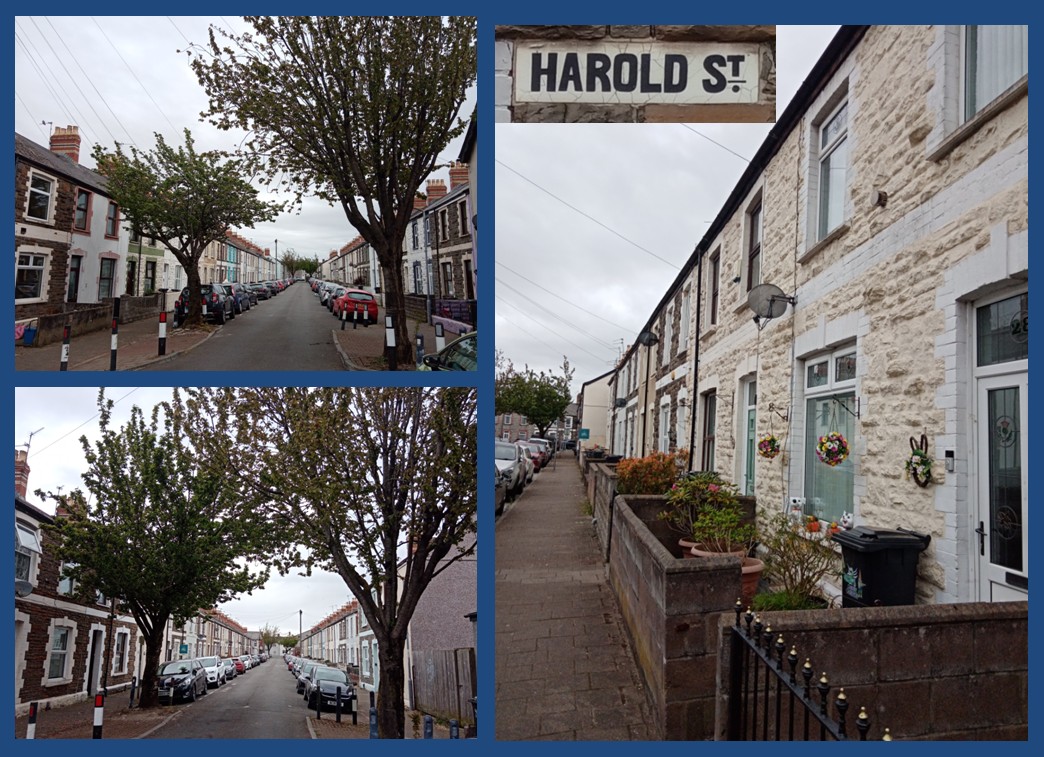
The three remaining streets, Theodora, Harold and Arthur Streets are named after three of his sister’s children. She was Mary Jane Bradley (1841-80). She married Rev David Nicholl (1842-1916), the rector of the church in St Brides Super Ely, just outside Cardiff, in 1863. In fact they had ten children together so her brother could have kept building streets – there were plenty of names in reserve.

After marrying Rev David Nicholl became a rector in Llanelli for a short time before they moved to the hamlet of Edvin Loach, Herefordshire where he became rector of St Mary’s church in 1873. He was rector at St Mary’s for the next 40 years and lived in the nearby rectory. Having now been there I can understand why he was in no rush to move on. It’s remote and idyllic. But then again I did visit on a beautiful spring day and there was a giant hare hopping around the graveyard.

The day before I visited I had spent researching the Nicholl family history. It was quite intriguing. The one thing I noticed when I put the Nicholl family tree together on Ancestry was that nobody else seemed to have researched them. The reason for that slowly became evident. Of the ten children Rev David Nicholl and Mary Jane had together, few married and even fewer had children. I can only find two grandchildren and I think the Nicholl family line may be sparse or have even ended there.
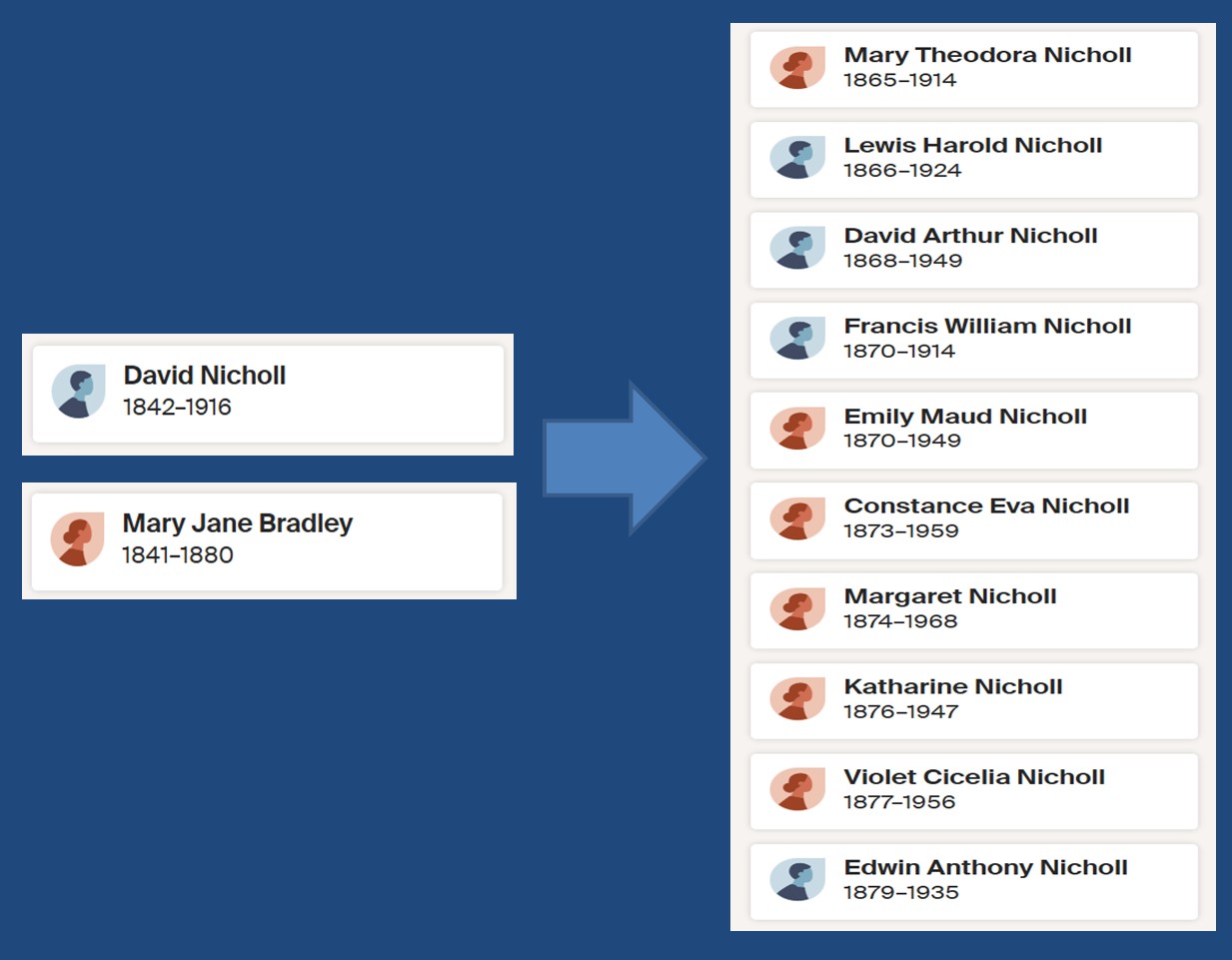
Mary Theodora was the first of the ten children born to Rev David and Mary Jane Nicholl in 1865. Mary Jane, her mother, tragically died in 1880, the year after her tenth child was born. In the 1881 census we see Rev David Nicholl living in the rectory in Edvin Loach with the children and a governess and a servant.
One reason I had been keen to visit the church was that I could find no mention of Mary Theodora Nicholl in the newspaper archives. She died in 1914 of heart disease, aged just 49, still living with her father in the rectory. I assume that, as the eldest child of widowed Rev David Nicholl, she grew up filling the motherly and vicar’s wife role in the church, as would may have been traditional at the time.
I was interested in knowing if she is buried at the church. The pictures I had seen of St Mary’s church in Edvin Loach showed few graves and there weren’t many recorded on the ‘findagrave.com’ website either. As I approached through the narrow lanes a small signpost directed to take a turning along a 200m unsurfaced track up to the church.
There are two St Mary’s churches on the site. The original, which dated back to the 1100’s is now a ruin, owned by English Heritage. It is tiny, with herringbone stonework in the walls, low lintels and no roof. The ‘new’ St Mary’s dates from the1860s.

After watching the hare make his/her escape through the fence into the field I set about looking at the headstones. There were certainly more than I had expected looking at the photos online but the graveyard was by no means packed with headstones which meant some may have been lost over the years to weathering etc.
As I neared the church porch I struck lucky. There was the grave of Rev David Nicholl and his wife Mary Jane who had predeceased him by 46 years. Also buried in the grave is Mary Theodora. The pink granite headstone in the shape of a cross is in good condition.

The other burial in the same plot is Theodora’s brother Francis William Nicholl. He was a solicitor who died the same year, 1914. He had tragically taken his own life. His inquest heard how he had been suffering pain due to a medical condition as well as having financial issues.
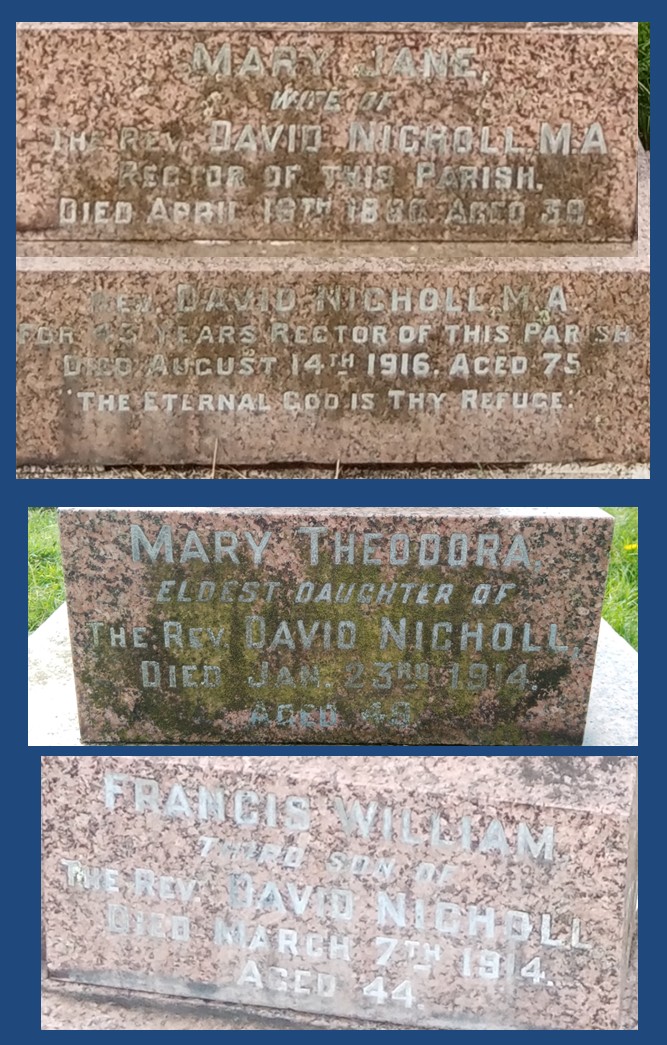
Having explored the outside of the church I tried the door and found it open. It was lovely, with a vaulted timber roof, cream walls and a dozen pews as well as stain glass windows. As I examined the plaques on the walls and I was in for another surprise. There was a plaque to both Rev David Nicholl, his wife Mary Jane and on the opposite wall a plaque to Mary Theodora, perhaps signifying the prominent role she had played in the church after her mother’s death.


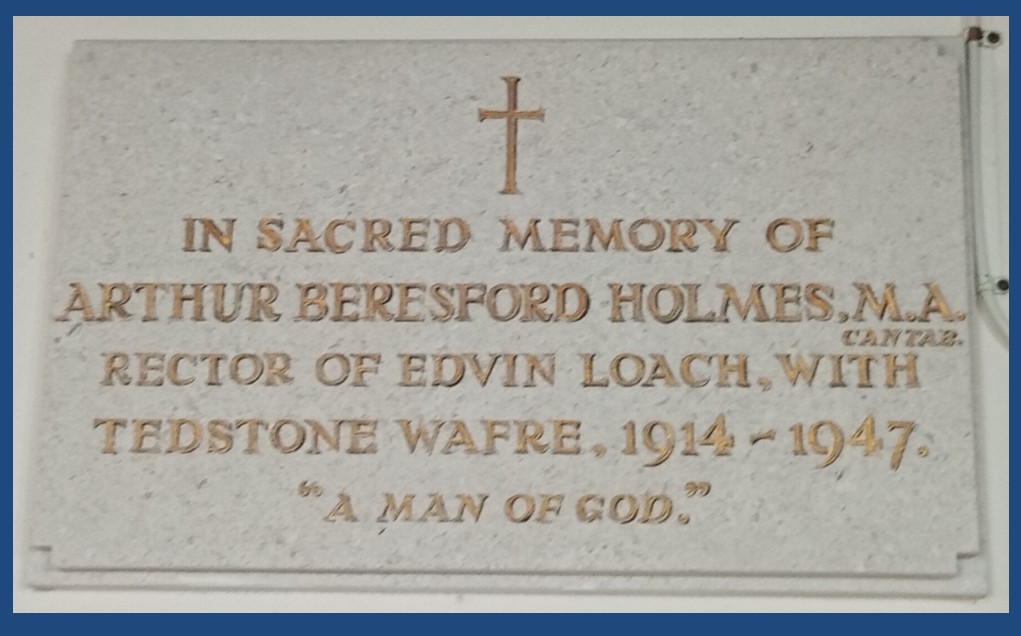
I was in for one more surprise. There is another plaque in memory of the vicar who followed on from Rev David Nicholl. He was Arthur Beresford Holmes. Is it purely a coincidence that a man with the middle name Beresford went to live in the rectory where Mary Jane Bradley had lived, who had a nephew called John Beresford Bradley after which Beresford Road in Cardiff seems to be named? I can’t find a connection but maybe a keen sleuther could turn something up.
Edvin Loach seems a long way from Roath. I was left wondering if Mary Theodora ever visited Cardiff to see the street named after her.

Before I left this lovely location I had a few more things to see, not connected with the Nicholl family. When I’m not huddled up over a laptop doing local history research I’m often to be found out walking in the countryside. To give me an excuse to visit new and different locations I visit hills, trigpoints, benchmarks and find geocaches that people have hidden. It turned out that Edvin Loach had an example of all four of these. There is a cut benchmark on the wall of the new church, the church spire itself is a type of trig point (an intersected station) and the prominent position of the church classifies it as a TuMP (a hill with a 30m promontory). There is even a tiny geocache hidden at the turn off to the church, which I must admit took me a while to find. It hadn’t been found for over a year so was a bit of a challenge. Anyway, that’s enough of my nerdy hobbies. After going to find a couple more trig points nearby and eating my marmalade sandwiches it was back to the local history.

My focus now was Lewis Harold Nicholl (1867-1924) after whom Harold Street in Roath is named. Like his father and indeed his grandfather before him, he went into the church and became a rector. He was born in Bodenham, Herefordshire on 18 May 1866. He attended Hereford Cathedral School before going on to St John’s College, Cambridge University and became a priest in 1890. He held positions in the church in Thornbury, Gloucestershire, Ludlow, then Ribbersford, Worcs and Bewdley. He was there for two years before his heath broke down and he sought warmer weather by going to France (1904-14) where he was Chaplain at the Church of England Christ Church, Pau, South of France. At the outbreak of WWI he returned to England and became assistant curate in Clifton, Bristol before becoming Curate in Bredenbury, Herefordshire from 1916 until his death in 1924.
My next stop was therefore Bredenbury church to see if there was any mention of Lewis Harold Nicholl. He had actually died in Bournemouth where he had gone to try and recuperate from another illness but had died on 21 Nov 1924.

St Andrew’s at Bredenbury is another lovely Herefordshire church. The first thing I noticed was the large number of headstones in the graveyard so I wasn’t too confident about finding Harold’s grave. Being the rector however I guessed he may have had a fairly prominent burial plot. I walked around the perimeter of the church and after a few minutes I spotted it, an unusual flat coffin-shaped stone slab with raised cross. It looked rather splendid today surrounded by primroses and other spring flowers.

He had married Lilian Theodora Williams in Thornbury, Gloucestershire in 1893. She passed away when they lived in Pau, France which probably explains why they are not buried together.
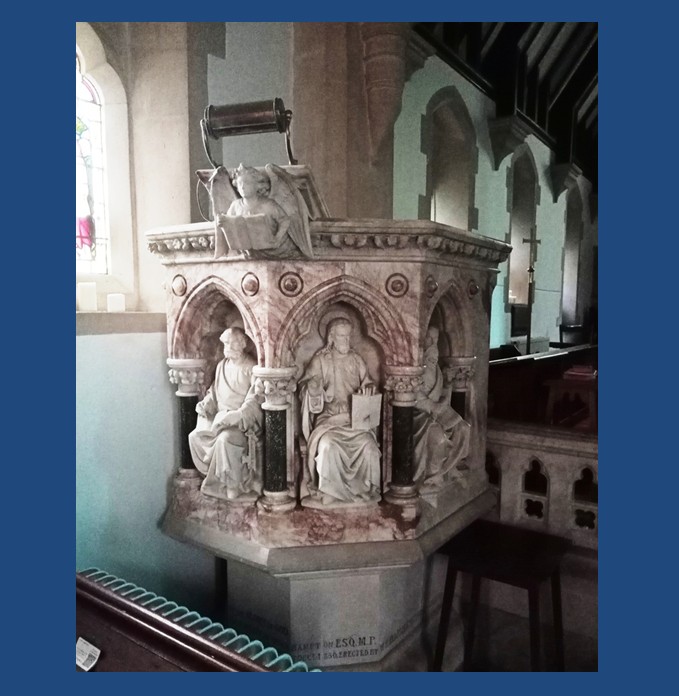
This church was also open. The highlight here was a wonderful carved marble pulpit. Now that must have taken some time to do.
My final stroke of luck for the day, at least from a local history point of view, was finding the brass wall plaque to Lewis Harold Nicholl. It was good to see him remembered. His newspaper obituary records that ‘he was much respected by his fellow clergy in the Deanery and had endeared himself to his parishioners by his sincere and quiet manner. They found him a homely parish priest who shared with them alike in their joys and sorrows’.

In the 1921 census records he was living next door to the church at the rather grand rectory with his two unmarried sisters Emily Maud and Katherine and two servants.

To finish off a splendid day I took myself off to Bromyard Downs for a two mile walk and some more geocaching before heading home through the Herefordshire countryside.
So having found Theodora and Harold that just left Arthur but unfortunately I found little more than I already knew about him and again no picture. Arthur Street in Roath is named after David Arthur Nicholl, nephew of the landowner William Bradley. Arthur was born in Llanelli in 1868, son of church minister Rev David Nicholl and raised in the Bromyard area, Herefordshire. After leaving Hereford Cathedral school he went on to gain three degrees from Cambridge University including law. He married Hilda Maude Chalmers-Hunt in London in 1913 but they appear not to have had children. His career was spent as a Solicitor and Town Clerk including at Scarborough (1900-12) and Wandsworth Council (1912-34) where he was awarded an OBE for his services. He died in 1949 in Bournemouth.
It seems a shame having looked at the Nicholl siblings who gave their names to three Cardiff streets not to briefly mention the other seven.
- Francis William Nicholl was mentioned earlier, and is buried with Theodora at Edvin Loach.
- Emily Maud Nicholl, lived until 78, and died in Staffordshire. She never married. She lived with her sister Katherine for most of her life in the Bromyard area.
- Constance Eva Nicholl, died aged 84 in Staffordshire and again never married. She had a career in nursing all around the country, in both midwifery and as a general nurse. Her nursing records describe her as ‘an educated and refined woman, but not very suited to the work of a district nurse’.
- Margaret Nicholl, had a career teaching in private schools and died unmarried in Malvern in 1968 aged 94.
- Katherine Nicholl, died a spinster in Malvern in 1947, aged 71. There is no mention of her having a career. She lived with her parents then her brother then her sister.
- Violet Cecilia Nicholl, married farmer Albert Bishop and lived in the Worcestershire area and died aged 75. They had two children, Violet, who died unmarried and Edwin David Bishop who did marry and may have had children, the only possible offspring of the Nicholl family I could find.
- Edwin Anthony Nicholl, married Isabel Frances Diver in 1916 when he was serving in the army. After the war they ran a guesthouse in Lynmouth, Devon. They don’t appear to have had children. Edwin was tragically killed in 1935 as a result of a road traffic accident in Welyn Garden City. He was heading to his allotment on his bicycle aand carrying a garden fork when he was in collision with a lorry. Witnesses stated he had only one hand on the handlebars.
And on that sad note it is time to leave this insight into the three Nicholl children who gave their names to three Roath streets.
I would be interested in hearing from anyone who can add anything to their story.
If anyone ever does find themselves in the Bromyard area of Herefordshire I would encourage a visit to the churches in Edvin Loach and Bredenbury, in particular on a fine spring day.
 Roath Local History Society