It was in the latter part of the wet winter in 1903 that Alice May Tovey may have been given the autograph book, most probably for her nineteenth birthday. No birthday cake nor ‘Happy Birthday’ would have been sung as these customs had yet to be established. We don’t know if she had a special afternoon tea in the parlour of 15 Partiridge Road, Roath, Cardiff but we do know she was quick to ask family and friends to write in her book, ‘Confessions, Opinions and Autographs Of My Friends’.
Autograph Book owned by Alice Tovey
This type of book had been popular since the 1860s but the fashion was beginning to decline by the time Alice received hers. The giver may have purchased it for a few shillings from The Park Newsagency, Stationery and Fancy Repository, on the corner of Wellfield Road and Albany Road. Alice asked thirty three people to answer the thirty eight questions; her siblings were the first, on Monday 9th March 1903.
What characteristics do you admire most in a man?
What characteristics do you admire most in a woman?
What would be your ideal life ?
What do you consider your best quality?
What do you consider your forte to be?
If necessary to work for a living, what calling would you pursue?
What do you consider your greatest failing?
What is your favourite pastime?
What gives you most annoyance?
Are you a linguist and what is your favourite language?
In what country would you prefer to live?
What foreign land would you best like to visit?
Who do you consider has the greatest brain power, man or woman?
Do you think women should take part in public life?
Do you believe in women’s suffrage?
What colour do you think is most becoming to you?
Do you think dress influences character?
Describe the girl of the period
Describe the young man of the day
What is your favourite motto?
What is your favorite flower and what is its meaning?
Who do you consider is the best sovereign in Europe?
What nation exercises most influence in the world?
Who do you consider the greatest politician in Great Britain
Who do you consider the greatest artist of the present age?
Who do you consider the greatest musician of the present age?
Who do you consider the greatest man of science of the present age?
Who do you consider the greatest orator of the present age?
Who do you consider the greatest author of the present age?
Who do you consider the greatest poet of the present age?
Which is your favourite reading prose or poetry?
Name two poems that have given you great pleasure
Name two books of fiction that have given you the most profit
Who is your hero in life?
Who is your hero in fiction?
Who is your heroine in life?
Who is your heroine in fiction?
Name the composer whose music you most enjoy
Over the next few years the book was filled in by Alice’s friends and acquaintances. It can be surmised that some of the contributors were also friends of Alice’s siblings, such as the school mistresses and office clerks. Others may have been work colleagues of Alice when she was a grocer’s assistant. She may have had visitors as some entries were labelled, Port Talbot and Fishguard.
By 1911 Alice was a domestic servant to retired tobacconist William Bowles and his wife, Anna, at 140 Cathedral Road, Cardiff where two of their young nephews signed the book; two of their nieces had signed it in 1906, suggesting Alice was the Bowles’ servant by this time. The young priest at St Martin Church, Roath and his future wife, is an obvious connection but two brothers who lived in Newport and became meat traders along with an Italian born refrigeration engineer who lived in Lancashire, it’s harder to conclude what the links were; they are yet to be found.
After years of apparent abandonment the book was resurrected for the last time in 1923, when Alice was living at 118 Richmond Road, Cardiff, with her mother & sisters. In spite of WWI having been fought and some women gaining the vote in 1918 the answers were much the same as in 1903.
Here’s a broad summary of the most popular answers.
What characteristics do you admire most in a man / woman? Stereotypical such as bravery & love respectively
What would be your ideal life? Money
What do you consider your best quality? Many were too modest to answer
What do you consider your forte to be? Many were too modest to answer
If necessary to work for a living, what calling would you pursue? Various
What do you consider your greatest failing? Temper, impatience
What is your favourite pastime? Cycling & walking
What gives you most annoyance? Other people
Are you a linguist and what is your favourite language? English
In what country would you prefer to live? England
What foreign land would you best like to visit? Switzerland
Who do you consider has the greatest brain power, man or woman? Man
Do you think women should take part in public life? No
Do you believe in women’s suffrage? No
What colour do you think is most becoming to you? Various
Do you think dress influences character? Yes
Describe the girl of the period Various
Describe the young man of the day a toff
What is your favourite motto? Various
What is your favorite flower and what is its meaning? Various
Who do you consider is the best sovereign in Europe? King Edward VII (almost unanimously)
What nation exercises most influence in the world? England, Great Britain (almost unanimously)
Who do you consider the greatest politician in Great Britain? Joseph Chamberlain(almost unanimously)
Who do you consider the greatest artist of the present age? Various
Who do you consider the greatest musician of the present age? Paderewski
Who do you consider the greatest man of science of the present age? Edison
Who do you consider the greatest orator of the present age? Various
Who do you consider the greatest author of the present age? Various
Who do you consider the greatest poet of the present age? Tennyson
The rest of the answers were individual.
To conclude, as Alice and her siblings didn’t have any children there was no one to hand the book on to. It’s not known how the book came into the possession of its owner, Richard Adair; he suggested it was from a house clearance as his parents were antique dealers. Richard is the author of ‘Courtship, Illegitimacy and Marriage in Early Modern England’ which may be of interest to some readers. Thank you Richard for sending the images of the entries and collating the answers.
Lord David Owen – Official portrait, 2018 (souce: Wikipedia)
There’s little sign that 86 year old David Owen is winding down. The man who was Foreign Secretary in James Callaghan’s Labour government and who then went on to be a founder of the SDP party will be 87 in a few weeks time. Yes, he retired from a House of Lords last year but is still a prolific writer and gives regular radio interviews offering his opinions on modern politics.
It wasn’t my intention to research David Owen and his Cardiff connections. It was rather an accident. My attention had drawn recently to an unusual grave headstone at Cathays Cemetery. It is unusual in it’s design. Cathays Cemetery, the third largest Victorian in the country, still contains many examples of elaborate headstones despite a harsh clearance scheme that took place in the 1960/70s aiming to make cemetery maintenance easier. There are still examples of Celtic crosses, obelisks, pedestals with urns, angels, broken columns signifying a life cut short and a couple of polished granite globes. There is however only one example of a sword and belt draped around a cross. It is the headstone of Lieutenant John Aubrey Owen.
Even this elaborately carved headstone may have suffered as a result of the clearance scheme. Comparing the present headstone with a historical picture shows the kerbing is no longer present and the headstone itself is lower than it originally was. Maybe this was as a result of the clearance scheme or just sinkage into the ground. The elaborate sword and belt carving and cross too has suffered some damage over time. The sword’s hilt is sadly no longer present.
Lieutenant John Aubrey Owen it turns out was Lord David Owen’s grandfather. Not that David Owen ever knew his grandfather sadly. Lieutenant Owen died during WWI as a result of an accident.
Lieutenant John Aubrey Owen headstone at Cathays Cemetery.
Having found that connection I did some research and ordered David Owen’s biography ‘Time to Declare’ (1991). David Owen was born in Devon in 1938 but has a lot of Welsh blood in him. His biography details how he spent time in South Wales when his father was away involved in WWII. My intention here isn’t to repeat all his South Wales family history but to tease out his interesting connections to us here in Cardiff, starting with his grandfather.
Lieutenant John Aubrey Owen (1876-1917) – Grandfather
John Aubrey Owen was born on 12 Jun 1878 at at 14 Park Street, Temperance Town, Cardiff to William Frank Owen, a coal merchant, originally from Cardiff and Selina Maud Owen nèe Rees originally from Bridgend, Glamorgan. By 1881 the family were living at 9 Crwys Road, Cathays, which is now a hairdressers. He was baptized on 18 Mar 1885 at St Augustine, Panarth and in 1891 the Owen family were living at 24 Pembroke Terrace, Penarth. John joined the merchant navy as a boy sailor at the age of 16, working on the four masted ships sailing out of Cardiff docks. In the 1891 census he is recorded as living at 10 Belle View Terrace, Penarth, aged 22, and a sailor.
9 Crwys Road, Cathays where John Aubrey Owen was living as a child in 1881.
On 8 Nov 1905 John married Gwendoline Mary Morris, the daughter of a Congregational minister. They may well have met each other as teenagers when they both lived on Pembroke Terrace, Penarth. After getting married they settled in Cwmgwrach, in the upper Neath Valley and had two sons.
John’s career soon progressed in the merchant navy, gaining his First Mate’s certificate in 1905 and then his Master’s certificate in 1907. John was employed by Messrs Evan Thomas Radcliffe and Co, Cardiff, one of the more prosperous and better-known of Cardiff-based shipowning companies. John had had been in command of three of their steamers by the time the First World War arrived where he served in the Royal Naval Reserve and was made a temporary lieutenant in February 1917. He served on H.M. Trawler ‘John Pollard’. He however sadly died from a fractured skull on 27 Oct 1917, after falling from the upper deck of his vessel into the stoke hold, while the ship was docked in Stornoway on the Isle of Lewis in the Outer Hebrides. He was aged 39. He is buried in Cathays Cemetery (grave S 509A). Commonwealth War Graves Commission record.
Lieutenant John Aubrey Owen and old image of his headstone at Cathays Cemetery, Cardiff..
David Lewis (1797-1860) G-G-G-Grandfather – Mayor of Cardiff
Researching the Owen family history is made a lot easier, not only by David Owen’s autobiography, but by there being a very comprehensive family tree on Ancestry put together by another Owen family member. In that family tree it details the life of David Lewis (1797-1860). He married Margaret Aubrey, which is where the Aubrey name passed down through the family comes from. In 1841 he lived on Quay Street, Cardiff.
His lengthy obituary in the newspaper in 1860 details how he was a victualler, landlord of the Ship and Dolphin in Church Street, and afterwards became Master of the Ship on Launch, in Quay Street which was the favorite resort of the Cardiganshire seamen when they visited Cardiff. He also speculated in coal and had a rope making business and donated money to the Wesleyan Chapel in Charles Street. In 1854 he was Mayor of Cardiff. He is buried at Llandaff Cathedral.
Wesleyan Chapel, Charles Street, Cardiff, opened 1850. The chapel was destroyed by fire in 1895 and then rebuilt. The rebuilt chapel was demolished in 1984. The plaque to David Lewis (described below) could well be one of those in the sketch under the eaves of the balcony.
A plaque to David Lewis was erected in Charles Street Wesleyan Chapel after his death.
Alderman William Llewellyn (1850- 1923) – Maternal G-Grandfather
William Llewellyn was both a liberal politician and shopkeeper. David Owen writes that ‘Alderman William Llewellyn, was chairman of Glamorgan County Council and chairman of the Bridgend Bench of Magistrates. A staunch Liberal, he was a moving spirit in first the Mid-Glamorgan then the Ogmore Divisional Liberal and Labour Party, of which he also became chairman. He had started life as a grocer and provision merchant in Ogmore, having moved there from Llantrisant. Over the years The Gwalia, as his shop was called, grew until it was described as `a mecca of the valley and neighbourhood’. The shop used to be in Ogmore Vale but has been moved and many of you will have been there. Gwalia Stores closed in Ogmore Vale in 1973 but was then moved and rebuilt at St Fagans National Museum of History in 1991. The ground floor is set up as it would have been during the 1920s.
Gwalia Stores originally in Ogmore Vale now at St Fagans National Museum of History, Cardiff.
Dr Edgar Llewellyn (1890-1964) – G-uncle
Alderman William Llewellyn had eight children, or more accurately his wife Mary did. One was George ‘Gear’ Morgan Llewellyn (1877-1951), David Owen’s maternal grandfather. He was a blind church minister and lived at Llandow in the Vale of Glamorgan and a big influence on David Owen’s life. David spent time living there as a child when his father was away in WWII.
Another son of Alderman William Llewellyn was Dr Edgar Llewellyn and it is he that has connections with our area. He became a GP in Splott and had his surgery on Splott Road. He was Cardiff Commissioner of the St John’s Ambulance Brigade and the works’ doctor at Guest Keen steel works, and also became a Cardiff Councillor.
In his autobiography David Owen recalls the following:
The brother whose career most closely paralleled my own was Edgar. He was a family doctor in Splott which is an area of Cardiff dominated by the steel-works. He was a great character and adored by his patients His unique way of sorting out their ailments was, according to my mother, to go into his surgery and announce, “Those buggers who are ill can move to the right-hand side of the room and be seen now: those who are not can wait on the left and see me later or chance their luck tomorrow.’ After the war he became infuriated by the politicians on the City Council and so decided to join his wife who was already a Ratepayer Councillor. He was elected in 1951. A photograph of him in a pony and trap, bedecked in a massive rosette, electioneering shows the first combination of doctor-politician in the family’s history. His wife Jenny, who had first stood and won as a Ratepayer in 1946, was a strikingly good looking woman and a considerable character. She was the first person in eighteen years to beat the Labour candidate in her Ward. She stood again in 1949 and won and then lost her seat three years later. The wish to be an independent in local government and to stand against party politics was later mirrored by my mother and, some will say, by me too.
‘
Dr Edgar Llewellyn, Ratepayers Candidate in the Cardiff 1951 Local Government elections (picture credit: Cardiff Yesterday Vol XVI)
Dr Edgar Llewellyn of the Ratepayers Part campaigning in 1951 (Picture credit: David Owen’s biography ‘Time to Declare’ (1991))
What started as a bit of research into the grave of John Aubrey Owen at Cathays Cemetery turned up many interesting stories about the history of Cardiff. Fascinating stuff is histoy.
I spotted a post on social media last week from someone looking for the origin of the street name Theodora Street in Roath. I already knew the basics but was keen to learn a bit more so set about doing some research. Who would have thought it would lead to a lovely day out in rural Herefordshire.
Theodora Street is one eight streets that run between Broadway and Pearl Street that were probably built in the 1870s. The land was owned by William Bradley (1843-1933), a solicitor, who named the streets after his children, Cecil, Bertam, Blanche and Maud (later renamed Bradley Street).
William Bradley, Cardiff solicitor and landowner
The problem was that he had more streets to name than he had children.
Bradley streets, Roath, Cardiff (Ref: Open Streetmap)
Instead, he turned to the using the names of his nieces and nephews.
Beresford Road it seems is named after his nephew James Beresford Bradley, child of Frederick and Florence Bradley.
The three remaining streets, Theodora, Harold and Arthur Streets are named after three of his sister’s children. She was Mary Jane Bradley (1841-80). She married Rev David Nicholl (1842-1916), the rector of the church in St Brides Super Ely, just outside Cardiff, in 1863. In fact they had ten children together so her brother could have kept building streets – there were plenty of names in reserve.
After marrying Rev David Nicholl became a rector in Llanelli for a short time before they moved to the hamlet of Edvin Loach, Herefordshire where he became rector of St Mary’s church in 1873. He was rector at St Mary’s for the next 40 years and lived in the nearby rectory. Having now been there I can understand why he was in no rush to move on. It’s remote and idyllic. But then again I did visit on a beautiful spring day and there was a giant hare hopping around the graveyard.
Edvin Loach church, Herefordshire
The day before I visited I had spent researching the Nicholl family history. It was quite intriguing. The one thing I noticed when I put the Nicholl family tree together on Ancestry was that nobody else seemed to have researched them. The reason for that slowly became evident. Of the ten children Rev David Nicholl and Mary Jane had together, few married and even fewer had children. I can only find two grandchildren and I think the Nicholl family line may be sparse or have even ended there.
Nicholl family tree (as built in Ancestry.co.uk)
Mary Theodora was the first of the ten children born to Rev David and Mary Jane Nicholl in 1865. Mary Jane, her mother, tragically died in 1880, the year after her tenth child was born. In the 1881 census we see Rev David Nicholl living in the rectory in Edvin Loach with the children and a governess and a servant.
One reason I had been keen to visit the church was that I could find no mention of Mary Theodora Nicholl in the newspaper archives. She died in 1914 of heart disease, aged just 49, still living with her father in the rectory. I assume that, as the eldest child of widowed Rev David Nicholl, she grew up filling the motherly and vicar’s wife role in the church, as would may have been traditional at the time.
I was interested in knowing if she is buried at the church. The pictures I had seen of St Mary’s church in Edvin Loach showed few graves and there weren’t many recorded on the ‘findagrave.com’ website either. As I approached through the narrow lanes a small signpost directed to take a turning along a 200m unsurfaced track up to the church.
After watching the hare make his/her escape through the fence into the field I set about looking at the headstones. There were certainly more than I had expected looking at the photos online but the graveyard was by no means packed with headstones which meant some may have been lost over the years to weathering etc.
As I neared the church porch I struck lucky. There was the grave of Rev David Nicholl and his wife Mary Jane who had predeceased him by 46 years. Also buried in the grave is Mary Theodora. The pink granite headstone in the shape of a cross is in good condition.
Grave of Mary Theodora Nicholl at Edvin Loach with old Rectory where she lived in the background.
The other burial in the same plot is Theodora’s brother Francis William Nicholl. He was a solicitor who died the same year, 1914. He had tragically taken his own life. His inquest heard how he had been suffering pain due to a medical condition as well as having financial issues.
Inscriptions on the Nicholl headstone
Having explored the outside of the church I tried the door and found it open. It was lovely, with a vaulted timber roof, cream walls and a dozen pews as well as stain glass windows. As I examined the plaques on the walls and I was in for another surprise. There was a plaque to both Rev David Nicholl, his wife Mary Jane and on the opposite wall a plaque to Mary Theodora, perhaps signifying the prominent role she had played in the church after her mother’s death.
Rev David and Mary Jane Nicholl plaques in Edvin Loach church, Herefordshire.
Plaque dedicated to Mary Theodora Nicholl in Edvin Loach church, Herefordshire
I was in for one more surprise. There is another plaque in memory of the vicar who followed on from Rev David Nicholl. He was Arthur Beresford Holmes. Is it purely a coincidence that a man with the middle name Beresford went to live in the rectory where Mary Jane Bradley had lived, who had a nephew called John Beresford Bradley after which Beresford Road in Cardiff seems to be named? I can’t find a connection but maybe a keen sleuther could turn something up.
Plaque dedicated to Arthur Beresford Holmes, Rector of Edvin Loach 1914-1947. A relative of Theodora or is the name Beresford just a coincidence?
Edvin Loach seems a long way from Roath. I was left wondering if Mary Theodora ever visited Cardiff to see the street named after her.
Theodora Street, Roath Cardiff and Mary Theodora Nicholl headstone in Edvin Loach church
Before I left this lovely location I had a few more things to see, not connected with the Nicholl family. When I’m not huddled up over a laptop doing local history research I’m often to be found out walking in the countryside. To give me an excuse to visit new and different locations I visit hills, trigpoints, benchmarks and find geocaches that people have hidden. It turned out that Edvin Loach had an example of all four of these. There is a cut benchmark on the wall of the new church, the church spire itself is a type of trig point (an intersected station) and the prominent position of the church classifies it as a TuMP (a hill with a 30m promontory). There is even a tiny geocache hidden at the turn off to the church, which I must admit took me a while to find. It hadn’t been found for over a year so was a bit of a challenge. Anyway, that’s enough of my nerdy hobbies. After going to find a couple more trig points nearby and eating my marmalade sandwiches it was back to the local history.
Inside Edvin Loach church and the benchmark on the church wall outside.
My focus now was Lewis Harold Nicholl (1867-1924) after whom Harold Street in Roath is named. Like his father and indeed his grandfather before him, he went into the church and became a rector. He was born in Bodenham, Herefordshire on 18 May 1866. He attended Hereford Cathedral School before going on to St John’s College, Cambridge University and became a priest in 1890. He held positions in the church in Thornbury, Gloucestershire, Ludlow, then Ribbersford, Worcs and Bewdley. He was there for two years before his heath broke down and he sought warmer weather by going to France (1904-14) where he was Chaplain at the Church of England Christ Church, Pau, South of France. At the outbreak of WWI he returned to England and became assistant curate in Clifton, Bristol before becoming Curate in Bredenbury, Herefordshire from 1916 until his death in 1924.
Harold Street in Roath, Cardiff
My next stop was therefore Bredenbury church to see if there was any mention of Lewis Harold Nicholl. He had actually died in Bournemouth where he had gone to try and recuperate from another illness but had died on 21 Nov 1924.
Bredenbury Church, Herefordshire
St Andrew’s at Bredenbury is another lovely Herefordshire church. The first thing I noticed was the large number of headstones in the graveyard so I wasn’t too confident about finding Harold’s grave. Being the rector however I guessed he may have had a fairly prominent burial plot. I walked around the perimeter of the church and after a few minutes I spotted it, an unusual flat coffin-shaped stone slab with raised cross. It looked rather splendid today surrounded by primroses and other spring flowers.
Lewis Harold Nicholl grave, Bredenbury church.
He had married Lilian Theodora Williams in Thornbury, Gloucestershire in 1893. She passed away when they lived in Pau, France which probably explains why they are not buried together.
This church was also open. The highlight here was a wonderful carved marble pulpit. Now that must have taken some time to do.
Carved marble pulpit at St Andrew’s church, Bredenbury
My final stroke of luck for the day, at least from a local history point of view, was finding the brass wall plaque to Lewis Harold Nicholl. It was good to see him remembered. His newspaper obituary records that ‘he was much respected by his fellow clergy in the Deanery and had endeared himself to his parishioners by his sincere and quiet manner. They found him a homely parish priest who shared with them alike in their joys and sorrows’.
Plaque to Rev Lewis Harold Nicholl at Bredenbury church
In the 1921 census records he was living next door to the church at the rather grand rectory with his two unmarried sisters Emily Maud and Katherine and two servants.
The Rectory at Bredenbury, home of Rev Lewis Harold Nicholl and two of his sisters in 1921.
To finish off a splendid day I took myself off to Bromyard Downs for a two mile walk and some more geocaching before heading home through the Herefordshire countryside.
So having found Theodora and Harold that just left Arthur but unfortunately I found little more than I already knew about him and again no picture. Arthur Street in Roath is named after David Arthur Nicholl, nephew of the landowner William Bradley. Arthur was born in Llanelli in 1868, son of church minister Rev David Nicholl and raised in the Bromyard area, Herefordshire. After leaving Hereford Cathedral school he went on to gain three degrees from Cambridge University including law. He married Hilda Maude Chalmers-Hunt in London in 1913 but they appear not to have had children. His career was spent as a Solicitor and Town Clerk including at Scarborough (1900-12) and Wandsworth Council (1912-34) where he was awarded an OBE for his services. He died in 1949 in Bournemouth.
It seems a shame having looked at the Nicholl siblings who gave their names to three Cardiff streets not to briefly mention the other seven.
Nicholl family tree (as built in Ancestry.co.uk)
Francis William Nicholl was mentioned earlier, and is buried with Theodora at Edvin Loach.
Emily Maud Nicholl, lived until 78, and died in Staffordshire. She never married. She lived with her sister Katherine for most of her life in the Bromyard area.
Constance Eva Nicholl, died aged 84 in Staffordshire and again never married. She had a career in nursing all around the country, in both midwifery and as a general nurse. Her nursing records describe her as ‘an educated and refined woman, but not very suited to the work of a district nurse’.
Margaret Nicholl, had a career teaching in private schools and died unmarried in Malvern in 1968 aged 94.
Katherine Nicholl, died a spinster in Malvern in 1947, aged 71. There is no mention of her having a career. She lived with her parents then her brother then her sister.
Violet Cecilia Nicholl, married farmer Albert Bishop and lived in the Worcestershire area and died aged 75. They had two children, Violet, who died unmarried and Edwin David Bishop who did marry and may have had children, the only possible offspring of the Nicholl family I could find.
Edwin Anthony Nicholl, married Isabel Frances Diver in 1916 when he was serving in the army. After the war they ran a guesthouse in Lynmouth, Devon. They don’t appear to have had children. Edwin was tragically killed in 1935 as a result of a road traffic accident in Welyn Garden City. He was heading to his allotment on his bicycle aand carrying a garden fork when he was in collision with a lorry. Witnesses stated he had only one hand on the handlebars.
And on that sad note it is time to leave this insight into the three Nicholl children who gave their names to three Roath streets.
I would be interested in hearing from anyone who can add anything to their story.
If anyone ever does find themselves in the Bromyard area of Herefordshire I would encourage a visit to the churches in Edvin Loach and Bredenbury, in particular on a fine spring day.
William Bradley family tree and street names in Roath
The following words and pictures have kindly been provided by Cardiff author Chris Butler along with premission to reproduce them.
The National Pageant of Wales took place in Sophia Gardens, Cardiff between 26th July and 7th August 1909. With 5,000 performers it was an expensive and swanky event reflecting the growth of Cardiff, its new city status (as of 1905), its new City Centre (as of 1906), its aspirations and the fact that it referred to itself as “The Modern Athens”. All this was built on the thriving export trade of coal and iron from its docks.
Coal had come down from the South Wales Valleys and made the Marquess of Bute, who owned Cardiff Castle and the docks, the richest man in the world. It had created a proud, rich city, too. In 1907 it was the largest coal port in the world and our Royal Navy depended solely on Welsh coal.
The official photographer of the National Pageant of Wales was a Mr Corn, trading as C. Corn from the Metropole Studios, 3 The Hayes in central Cardiff.
His trades directory entry shows him as being a portrait painter as well as a photographer. He is clearly a photographer of talent, demonstrable from the suite of 36 real photographic postcards which he produced for the pageant. They are so well composed that these postcards leave a collector of Cardiff wanting more. Participants in the pageant ranged from workers recruited en masse from Cardiff docks to the cream of Welsh society, including even the Marchioness of Bute, appearing as Dame Wales. Although described as “the charming chatelaine” of Cardiff Castle, she looks sternly regal in her postcard, and it is known that her understudy took most of the strain of the actual performances.
It was quite common for prominent local figures to participate in pageants though. Lady Ninian Crichton Stuart for example who was a supporter of Mr Corn, featured as Glamorgan, and both Lewis Morgan, the Conservative Lord Mayor of Cardiff and his wife, Lady Morgan, both had prominent roles.
Some of the performers of this pageant were even playing roles of their actual ancestors many generations before. Lord Mostyn, for instance played Richard ap Howel of Mostyn from the Battle of Bosworth. And even when a rare outsider was brought in, to play Henry V for instance, no expense was spared and an important and influential West End actor in the shape of Victor Wiltshire was hired.
Henry Corn’s Metropole Studios were in an up-and-coming part of Cardiff, the heart of its retail shopping and the scene of a titanic commercial battle between the two competitive drapers, James Howell and David Morgan. Morgan’s investment in shops and arcades had raised the social status of the Hayes buildings but James Howell was a prominent backer of the pageant. And, as we have already witnessed, Corn had made acquaintance with the cream of contemporary Welsh society, and must have spent quite some time with them in his studio. Indeed, his advert in the Pageant’s “Book of the Words” lays emphasis on how much he was patronized by the nobility as well as local political grandees. The list of patrons, as you can see from his advertisement, included The Duke of Argyll, the Marquis and Marchioness of Bute, Viscount Tredegar, Lord and Lady Crichton Stewart, the Lord Mayor and Mayoress of Cardiff, several Aldermen, JP’s and so on.
Mildly surprising though was the fact that, apart from his advertising of the studio Corn does not seem to appear in the local press. He keeps a low profile. The 1911 Census shows a Henry Corn living with his wife, Annie, and servant in 6 Ty-Draw Place in a 7 roomed property in Roath. This part of Roath would probably be considered upper middle-class suburb in the period, reflecting a comfortable lifestyle.
More mysteriously. his hitherto regular entry in trade directories suddenly disappears after 1914. Till this date he regularly advertised his studio. Did he die? There are no relevant UK death records or probate records. As his profession is listed as photographer in the Census this must be him.
A key to all this though, turns out that he was born in Altona, Hamburg on 8th November 1875, information provided on his subsequent entry to America. This corresponds with a German birth certificate for Henry Cohn, son of Isaas Cohn, most probably Jewish.
The 1901 Census then shows him trading as a portrait painter and commercial traveller aged 27 living in digs in Linenhall Street, Londonderry in Northern Ireland and not far from the River Foyle which carried a very busy shipping trade. His religion by that time is recorded as Unitarian.
Thereafter he must have come over to Cardiff,established a respectableand profitable business and found his bride from Bargoed, Glamorgan…But the question remains, what took a young German from Hamburg to Londonderry in the first place?
When the Great War broke out in 1914 resentment against German nationals resident in Britain rose steadily and Henry seems to have found his way out in a narrow squeak before internment scooped him up in its net. Indeed he shows up on a passenger list from Liverpool to New York on a ship with a neutral flag on January 12th 1915.
This was just 4 months before the sinking of the Lusitania on the 7th May 1915, when Internment became much more universal, and his flit is reminiscent of the escape of Burgess and Maclean before they were rounded up as spies. Burgess and Maclean, of course, had been tipped off.
Corn’s “enemy” nationality is listed on the manifest as German. His wife, Annie, does not appear to be with him, unless she is travelling under an assumed name. There is an “Annie” travelling on board and listed as “enemy” but she bears a different surname. His occupation is not recorded like other passengers. Maybe he wanted to conceal it. There is no record of Corn’s wedding or divorce that I can trace, though an Annie “Corn” gets married in Cardiff for the first or second time in 1919 and resides in up-market Lake Road West for the rest of her life.
Henry Corn – Photographer
Then we can trace his naturalization record in the USA on 6th April 1916 – a year before the USA enters the Great War. He is 5’ 5” tall, 140lbs weight, dark brown hair, with a (fencing?) scar on his nose, his last foreign residence being Cardiff in South Wales, and he renounces all allegiance to the German Emperor. He states flatly: “I am not married”. Perhaps he never was – and the Census entry had been another deception. He lists an alternative surname as “Cohn”. He is now a fine art dealer…Corn ultimately died in the Jewish Hospital Brooklyn in 1933 and is buried in the Mount Olivet cemetery in Washington. His obituary records him as having been a manager of several manufacturing firms in Manhattan, latterly Automatic Linker. He left a wife, Rose, behind him.
There are two possibilities. One is that our talented Photographer, the man who captured the cream of Welsh society in the famous 1909 National Pageant of Wales, was a victim of circumstance, and lost his wife, home and business before escaping to a new life in the USA. However, conspiracy theorists may have a different concept. Here is a mobile, linguistically able, artistic young German who finds himself as a gifted photographer in two of the most important ports of Britain before the Great War. He mixes with local dignitaries whom he would have met during the pageant. Potentially, he might have been able to make observations and take photographs of Allied ships and port facilities. Cardiff would have been of critical importance to the war effort, fuelling the Royal Navy and sustaining the American Expeditionary Force (AEF). A war between the Central Powers and the Allies had long been predicted.
Is this a plausible theory? Well, “Defence of The Realm” the authorised history of MI5, revealed in 2009 that the German Admiralty’s intelligence service had set about developing a network of German agents in Britain for some years before 1914, to monitor shipping and provide information. Some of these agents were identified and tried before the war. MI5 records show that 65 German agents were arrested during World War I. This general approach was also captured by popular spy novels of the time such as “The Riddle of the Sands” and “The Invasion of 1910”, the latter predicting a German invasion assisted by a complex spy network, and as early as July 1908 the “Western Mail” posed the questions: “Are we prepared for war? What would happen in a fight with Germany?”
It would have been sensible of course for the Germans to have installed a sleeper agent with photographic skills, an ability to mix with the rich and powerful, and with easy access to the Docks in Londonderry or Cardiff, from his city centre studio.
And then, escaping in the nick of time and concealing his talent as a photographer, he might well have gained entry to New York – a vital port of the USA which was destined to join the war against Germany in 1917. New York was the Port of Embarkation for the American Expeditionary Force and having an observant and experienced agent in place would have been a real coup for the Germans.
So, unless there are some MI5 records available on the mysterious Mr Corn, we may never know whether he was a spy or not… But he certainly was in the right place at the right time, mixing with the right people – and a clear master in his craft, as his postcards bequeathed to us clearly demonstrate.
Towards the top of Pen-y-lan Road, on the corner with Bronwydd Avenue, there stood until the mid-1980s, a rather grand house called Oldwell. It was built the mid-1880s for owner of the South Wales Brewery, John Biggs. It was one of the grand houses of Pen-y-lan along with its neighbour Wellclose and other nearby houses including Bronwydd, Greenlawn and Pen-y-lan House.
Oldwell, Pen-y-lan
I recall visiting Oldwell in the 1970s when it was a residential home for the elderly owned by the local authority. The other owners are listed in an article by Glamorgan Archives. It was demolished in the 1980s and the land repurposed for flats.
Oldwell in 1980s.
Oldwell must have been an idyllic residence when it was first occupied by John and Emily Biggs and their six boisterous teenage boys back in the mid 1880s. It had a snooker room to entertain them in times of wet weather and a stable at the back for them to learn horse riding skills. But the boy’s real passion was playing rugby. All six would go on to play rugby for Cardiff and two for Wales. There is a story associated with each of them. One boy, John James Egerton Biggs went on to be Lord Mayor of Cardiff, Norman Biggs ended up being killed by a poison arrow and Geoffrey Biggs was captain of one of Britain’s first submarines, the A1.
In this article we concentrate on John Biggs, the man who couldn’t stop brewing. His name crops up in newspaper articles from the time and we are able to piece together bits of his life story but admittedly its an incomplete picture.
John Biggs was born in St Mary Street in 1833 to John Biggs, a wine and spirits merchant, originally from Bristol, and Eliza Biggs née Jones, originally from Glamorgan. John and Eliza Biggs are worth a mention in their own right as they have a plaque in their name at St Mary the Virgin church in Bute Street, probably indicating that they were one of the benefactors who helped pay for the building of the church in 1843.
Plaque to Eliza and John Biggs, St Mary, Bute Street,
John Biggs (our future brewer) was baptised at St John’s church in Dec 1833. In the 1841, 1851 and 1861 census he was living in St Mary Street. By 1861, aged 27, his parents had died and he himself was now working as a wine and spirit merchant and living with his three sisters. John Biggs (Snr) died in 1858 and was buried at St Margaret’s, Roath though virtually all the grave headstones at St Margaret’s have now been removed so I haven’t been able to identify his precise resting place.
In 1866 John Biggs (Jnr) married Emily Sophia Clark, originally from Usk. She was daughter of a newspaper editor and publisher James Henry Clark. Please allow me another brief aside. In 1850 Cardiff was growing rapidly and J.H.Clark came down from Usk and opened a branch of his business in Saint Mary Street. In 1853 he wrote and published ‘Cardiff and its Neighbourhood’ which was the first guide book about Cardiff to be published. After four years however he sold the business because of the inconvenience and expense of regular travelling down to Cardiff.
Cardiff’s first guidebook.
Engraving of Cardiff Castle from Cardiff and its Neighbourhood
By the time of the 1871 census John Biggs is now describing himself as a ‘wine merchant and brewer’. He’d realized that that the workers of the burgeoning town of Cardiff are thirsty people and enjoyed a beer or two. An advert from 1872 identifies him as the owner of Trinity Street Brewery which would have been adjacent to the present indoor market. Trinity Brewery was later sold, probably to cater for the expansion of James Howell, the department store.
Trinity Street Brewery, Cardiff, brewery owned by John Biggs, advert from 1872
With the proceeds of that sale John Biggs built the South Wales Brewery in 1876. The drawings for the brewery offices are still in Glamorgan Archives with his signature on. The brewery was situated on a triangle of land on Salisbury Road between the two railways. The buildings would later be used for offices of the Taff Vale Railway and today the land is occupied by university accommodation.
South Wales Brewery
In the 1870s things were going well for John Biggs. Not only was his brewing business successful but he finds time to invest in buildings. In the Western Mail of 22 Sept 1876 there is an article entitled ‘Street Architecture in Cardiff’ in which it congratulates John Biggs on a new building in High Street which from the description I have been informed was 6 High Street, now home of Temple Bar. When I went to visit I looked up to the very top of the building and was surprised to see what looks like his initials, though the bottom of the J seems to have fallen away.
6 High Street, Cardiff with what could well be the initials of John Biggs at the very top.
John and Emily Biggs had ten children together, one girl and nine boys, though four of the children, including the daughter, died in infancy. The family lived in St Andrew’s Place in 1871 and Park Place in 1881 before their house Oldwell in Penylan was built in 1885. I’ve tried to find the family at Oldwell in the 1991 census but have never succeeded (now there’s a challenge for you all) as both Oldwell and Wellclose seem to be omitted from the census.
The South Wales Brewery was owned by John Biggs and a John Vaughan Williams. There would also have been a number of hotels/pubs owned by the brewery. One was the Theater Royal Hotel at the southern end of Queen Street. I have discovered an old picture of the hotel with an advertising hording for the South Wales Brewery.
Theatre Royal Hotel, Queen Street with advert for the South Wales Brewery.
In 1888 the John Biggs and John Williams appeared in court charged with adding saccharine to their beer thereby increasing the specific gravity. They were found guilty and ordered to pay £100. One of those hearing the case was Dr Paine who is buried virtually next to John Biggs at Cathays Cemetery. The following year, 1889, William Hancock buys South Wales Brewery. It appears that as part of this deal John Biggs became a Director of Hancocks Brewery.
His stay on the Hancocks Brewery board was however short lived as in 1892 John Biggs resigns and takes over the Canton Cross Brewery on Cowbridge Road. The Canton Cross Vaults pub is still there to this day but no longer a brewery.
Canton Cross Vaults, Cardiff – used to be Canton Cross Brewery owned by John Biggs then Hancocks.
In 1898 the Theatre Royal Hotel in Queen Street is back in the news. Police object to a licence being renewed on the grounds had been frequented by prostitutes. John Biggs objects saying the landlord at the time has been replaced. The hotel is sold later that year.
It appears that the love of John Biggs’s love of brewing is coming to an end. In 1900, with the children by now having left home, Oldwell is put up for sale with son Selwyn Biggs, a solicitor, handing the sale. In the 1901 census John Biggs is living with his in-laws in Usk giving his profession as a Retired Brewer. The Canton Cross brewery is sold to Hancocks in 1904 together with 5 pubs.
In the 1911 census John and Emily Biggs have retired to The Laurels, London Road, Bath. Emily Biggs died in 1919 and John Biggs in 1920. Both their funerals are held back in Cardiff and they are buried in Cathays Cemetery (plots L1211/L1235). What surprises me is that there is no headstone on the grave and no record of there ever having been one. Four of their children were still alive at the time of the funerals; one, Selwyn Biggs was a solicitor and one John James Egerton Biggs becomes Lord Mayor of Cardiff in 1922. There is however large tree nearby so perhaps the headstone suffered damage over the years. It remains a bit of a mystery.
In the first article in this series we looked at 28 The Parade – The Billups Family and their pivotal role in the formation of the Salvation Army. In this article we look at the next occupants of the house, Cardiff High School for Girls or Cardiff Intermediate School for Girls as it was originally called when it began in a large ground-floor room at No.28 The Parade back in Jan 1895 with 95 pupils.
The importance of child education was being quickly realized throughout the 1800s. Private schools and church schools were established. By 1870, Board Schools were being established to provide free education for children up the age of nine. Many of the Primary Schools we see in Cardiff today started as Board Schools and are often still using the same buildings. Some are still inscribed with the original Board School stone inscriptions if you look carefully up at the roof apexes, such as on Albany Road Primary.
Cardiff Intermediate School for Girls in 1910 with 28 The Parage on the right
University education in Wales was also becoming established. University College opened on Newport Road in 1883. The Intermediate Education Scheme, established in the Act of 1889 aimed to bridge the gap between the Board Schools and University education and provide education for the 9 to 17 year olds who were not able to afford the privilege of a private education. That’s not to say that attending an Intermediate School was free but the fees were not allowed to exceed £5 per annum and there had to be scholarships and bursaries available amounting to not less than ten percent of the total number of pupils in the school. The Welsh Intermediate Education Act of 1889 pre-dated similar legislation in England by a dozen years. The Intermediate Act was also designed to cater for those not necessarily destined for university by providing a technical aspect to the curriculum too but to what extent this aim was born out at 28 The Parade I’m not sure. A quarter of the cost of construction of an Intermediate School had to be raised by public subscription. Presumably the same applied if a school was purchasing an existing building.
The nearby Howard Gardens Higher Grade School was established earlier in 1885. Again I think the aim was to bridge the gap between the Board Schools and University. Howard Gardens became a Municipal Secondary School from 1905 and abolished fees in 1924 somewhat disadvantaging Cardiff High School for Girls that still had an entrance examination and fees.
The original wish had been to have the girls and boys Intermediate school on the same site in Cathays Park but Lord Bute could not see his way to grant a site inside the park. In the end the girl’s Intermediate school opened in The Parade before the boy’s school in Newport Road.
Cardiff High School for Girls – Lower School on Right
The money used to purchase 28 The Parade was presumably 25% public subscription with some or all of the remainder supplied public funds. Some or all of that funding it seems came from charities or endowment funds such as the Craddock Well Charity and the Howell’s Charity.
The Craddock Wells Charity
Craddock Wells died in Cardiff in 1710 and bequeathed two houses in High Street, £28 in cash and a small close of land in Canton (~1¾ acres) to provide for the education of six girls and six boys in Cardiff. The £28 cash was to be used to purchase 3½ more acres adjacent to his existing land. The trustees invested well and by 1895 some 17 acres of land was owned by the charity and income of £17,000 derived off it. By 1955 it was worth £60,000 with an annual income of £3,800. The money was used to award scholarships to those both in school and university education. During the 2020-2021 financial year the total value of assistance approved to former and current pupils was £96,897.84 and Pupils of Cardiff High School benefited generally from the provision of land and buildings by the Charity for the purpose of the school. The Charity held investments valued at over £3 million and land and property valued at £21 million.
Howells Charity
The Howells Charity goes back even further than the Thomas Wells Charity. Thomas Howell was a philanthropist. In his will, published in Spain in 1540 he left 12,000 ducat. That money was invested and some of the proceeds of which were used to set up Howell’s School in Llandaff. .
In 1893, the two charities were combined for administrative purposes. It appears it was money from these combined charities was used to in the setting up of Cardiff Intermediate School for Girls. The money was used to purchase both 28 The Parade from Mr Billups and the freehold from Lord Tredegar.
(In 1910 the combined charities were renamed the Cardiff Intermediate and Technical Education Fund. In 1955 they legally merged under the name of the latter and on 9 May 1966 the combined Charity was renamed the Cardiff Further Education Trust Fund).
In 1893 and agreement was set out whereby boys from places like Llandaff and Penarth would be allowed to attend Cardiff Intermediate School for Boys and girls from Cardiff would be allowed to attend Howell’s School, Llandaff. Whether this was just a temporary agreement until the Cardiff Intermediate School for Girls was established is unclear.
The school proved a success and was quickly expanded to the purpose-built premises that included 24-25 The Parade and cost £30,000 and opened in 1900 by which time there were 250 girls on the books. Nos 26 and 27 The Parade were still both private properties in 1910 so the school was just built around them. It wasn’t until the late 1920’s that the leases of No’s 26 and 27 ran out and in 1930 that the building of the school as we finally knew it really took place. Part of the original gardens of 26 and 27 were retained, entered by a door at the end of the main corridor, just before the Hall.
28 The Parade on right. No’s 26-27 in centre prior to demolition to make way for the school extension. Undated. (Photo Credit J H Dyer, Queen Street)
The school was renamed Cardiff High School for Girls in 1910.
As the school expanded 28 The Parade became the Lower School. In later years 28 The Parade became the sixth form. The caretaker continued to live on the upper floor which included the octagonal copula. One of the frequent memories ex-pupils have of No.28 is the smell of polish used to keep the floor and elegant staircase shiny.
The exterior appearance of 28 The Parade changed little over the 74 years Cardiff High School for Girls occupied the building. J.B.Hilling in the Glamorgan Historian described the building as ‘designed with a mixture of styles incorporating a Doric portico, Dutch gables, tall Tudor brick chimneys and a large octagonal copula over the staircase hall.
The first headmistress at the school was Miss Mary Collin. Born in Cambridge in 1860 she was educated in Notting Hill School and Bedford College, London where she studied languages. She then taught for seven years in Nottingham High School before moving to Cardiff. At the time of the 1911 and 1921 census she lived in 29 The Parade, a property which at some stage became part of the school.
Staff of 1955. Photo presumably taken at the rear of No 28 The Parade. (photographer unknown)
Mary Collin was an English teacher and campaigner for woman’s suffrage during the early part of the 20th century. She taught her pupils to ride bicycles, seen as a symbol of the growing independence of women and their determination to cast off chaperonage.
Mary Collin was active in the Cardiff Suffrage movement, which included Professor Millicent Mackenzie, founder of the Cardiff Suffrage branch. Collin would host women at The Parade from the National Union of Women’s Suffrage Societies such as NUWSS organizer Helen Fraser when she visited Cardiff to speak.
Miss Mary Collin headteacher 1895-1924
Mary Collin had her work cut out. When the girls and boys intermediate schools were set up it was deemed that among the subjects boys would be taught would be natural science but for the girls domestic economy and the laws of health were to be substituted. Similarly boys would learn iron moulding, modeling in clay and the use of tool whereas the girls would instead learn cookery, needlework, cutting out, and laundry work. Decades later when Mary Collin submitted plans for the expansion of what was then Cardiff High School for Girls she asked for a chemistry laboratory. When the plans were returned the laboratory had been refused and substituted with a sewing room. Eventually she got her was and a laboratory was constructed.
She retired in 1924. She died at the age of 95 soon after the diamond jubilee celebrations of the school in 1955.
The school song was “Hail Glorious Sun”, written by Miss Woodward, who was a mistress at the school from 1896 – 1936. The school motto was Tua’r y Goleuni (‘Towards the Light’).
The school playing fields for both the girls and boys High Schools were at the Harlequins ground off Newport Road. The ‘Spinning Wheel’ book describes the Harlequins being ‘gifted’ by Lord Tredegar. Whether the leasehold was gifted or sold I’m not quite sure but Lord Tredegar was held in high enough esteem that his portrait hung in the school in The Parade
The Old Girls Association (OGA) itself has a long history. It was established in Nov 1899, just four years after the school itself opened. It established a reputation for their dramatic entertainment. In 1932 it put on a performance of The Bat described as one of the most complicated and strangest stories imaginable but it made for fine entertainment with capable acting from every member of the cast. Two years later Jacqueline de Guélis played a leading role in a production of ‘The Aristocrat’ in front of a full house with the proceeds going to the Infirmary. Tragedy was to strike a few weeks later when Jacqueline was knocked down and killed by a motor van on Penylan Hill. Her brother, the spy Major Jacques de Guélis was also killed n a motor accident at the end of WWII. Their story is told in our article The tragic coincidence linking the deaths of the De Guélis siblings.
By June 1955 there were 5,500 Old Girls, ranging from 15 to 70 years of age, scattered all over the world. The summary in of the archives say “Some held unique or important positions; for example, one was the first qualified woman engineer in the United Kingdom”. The OGA was officially wound up in October 2006, although informal gatherings continued. The OGA archives are held in Glamorgan Archives.
The school remained in The Parade until 1970 when it merged with Cardiff High School for Boys and Tŷ Celyn Secondary School in Llandennis Road to form Cardiff High School as a new Comprehensive School and over the next three years transferred to the Llandennis Avenue site. The move to Ty Celyn was gradual with the Sixth form staying at The Parade for a number of years until new facilities were constructed at Llandennis Ave.
Headmistresses
It is amazing to think that in the 75 years Cardiff High School for Girls was at The Parade it only ever had three headmistresses:
Miss Mary Collin 1895-1924, Miss Frances Rees 1925-1949, Miss Eluned Jones 1950-1970
Headteachers Frances Rees ( 1925-1949) and Harriet Eluned Jones (1950-1970)
Notable Old Girls:
Bernice Rubens, Author.
Bernice Rubens (1923-2004) was the first woman to win the Booker Prize for Fiction in 1970, and the second winner overall. She was born in 1923 of Jewish decent and attended the school in the 1930s where she was in the orchestra. A Purple Plaque has recently been erected on the Rubens family home in Kimberley Road to commemorate her life. Our article Bernice Rubens – Booker Prize winner records her life.
The unveiling of the Bernice Rubens Purple Plaque in Kinberley Road in 2024
Irene Steer, Swimmer
Irene Steer, the first Welsh woman to win a Gold Medal at the Olympics. She struck gold in the 1912 Stockholm Olympics as the anchor leg swimmer in the victorious, world record breaking British 4×100 yards freestyle relay team. She was born at 290 Bute Street, Cardiff on 10 Aug 1889. Her father was a draper. By 1901 the Steer family had moved to 32 The Parade. She attended Cardiff High School for Girls, a few yards from her home, from 1899-1906.
Irene Steer at the 1912 Stockholm Olympics (pic credit: Wikipedia)
Gillian Gill, Author
Gillian Gill née Scobie (b.1942) is a noted writer of biographies including ones on Victoria and Albert, Florence Nightingale and Agatha Christie. An insight into her early life comes in a 2020 interview Shelf Awareness: Reading with… Gillian Gill. In it she describes: ‘My loving, secure and extremely boring childhood world, I lived mainly in and for books’. The very first book she remembers owning was Flower Fairies of the Wayside by Cicely Mary Barker. She explains she could barely tell a daisy from a dandelion, but loved that book and acquired a taste for doggerel. In the section of the interview ‘Book you hid from your parents’ she responded: If you can believe it, The Blue Lagoon, when I was about 14. Later, I took a secret gallop through Lady Chatterley’s Lover for the dirty parts which I found a lot less hot than The Blue Lagoon.
Gillian Gill (photo credit: Linda Crosskey and Penguin Random House)
Ann Beach – Actress
Ann Beach (1938 – 2017) had a varied career in film and on stage. Beach won a scholarship to RADA at the age of 16. After leaving, she toured with Frankie Howerd in Hotel Paradiso, and then came to London in the title role of Emlyn Williams’s Beth. She was Polly Garter in Under Milk Wood with Richard Burton and Elizabeth Taylor. She also starred in Notting Hill playing Hugh Grant’s mother.
Ann Beach, actress (photo credit: Wikipedia)
Joan Oxland, Artist
Joan Oxland (1920–2009), was born in Westville Road. After leaving school she attended Cardiff School of Art. She also studied at Wimbledon School of Art and later attended Académie Julian in Paris, 1962–3, before returning to teaching in Wales. She taught at her former school in The Parade and before becoming head of the design department at Llandaff College of Education. She was co-author with Betty Whyatt of the book Design for Embroidery – An Experimental Approach, published in 1974. The regions of France, especially Brittany, Provence and the Ardeche, featured regularly in Joan’s work, and her interpretation of a French market won the prestigious Derrick Turner Prize in Cardiff in 1990.
Eye surgeon to both the Queen Mother and Queen Elizabeth, as well as developing the Pugh orthoptoscope for measuring and correcting eye squint. She attended Marlborough Road School before going on to Cardiff High School for girls in 1911. One thing we are missing though is a picture of Mary Pugh. I wonder if anyone has one? For more information on Mary Pugh see our blog: Mary Agnes Pugh, Ophthalmologist and Eye Surgeon.
The Royal Academy of Music awarded her a Scholarship in 1949. In 1954 she was a member of the National Youth Orchestra for Wales. She went on to be the pianist for the City of Birmingham Symphony Orchestra.
Eira West Pianist
Muriel Kennedy née Williams – head teacher
Muriel Kennedy became the head teacher for the first secondary school for women in Iraq in Baghdad which opened in Apr 1935.
Doreen Vermeulen-Cranch – Professor of Anesthesiology
Doreen Cranch (1915 – 2011) was born in Abertillery. The Cranch family moved to Cardiff and Doreen attended Cardiff High School for Girls before going on to study Medicine in Cardiff and become a house physician at Cardiff Royal Infirmary. She met Jan Vermeulin, of the Amsterdam Shipping Company in Cariff and moved to Holland after WWII where she became a pioneer of Dutch anesthetic science. With her charm. personality, and above all. her intellect Dr Cranch has overcome any opposition from doctors who were somewhat hurt in their pride to be lectured by a woman. They soon realised she was their equal in general medical knowledge and superior in that of anesthesia. She was awarded Commander Order of the British Empire, 1971. Her valedictory lecture was titled “Emancipation process”. Herself a fully emancipated woman, who inspired many female professionals, she was responsible for the emancipation of anesthesia in the Dutch academic world. Miss Collin would have been proud of her.
Professor Doreen Cranch
Further Reading
The history of the school is set out in two books:
The Spinning Wheel: Cardiff High School for Girls 1895-1955. Its story assembled by Catherine Carr (pubs: Cardiff Western Mail and Echo. 1955)
Full Circle: Cardiff High School for Girls 1950-1970 by Barbara Leech (pubs: Starling Press Ltd. 1986)
It must be said however that trying to extract the history of 28 The Parade from these book was not an easy task. The books mainly concentrate on personal reminiscences, mostly concerning the staff, lessons, trips, events etc rather than the fabric of the school itself. When the classrooms are discussed they are usually not identified as being in a specific building etc. For a past-pupil the task would have been easier but for an outsider I found it a challenge. The following extracts from the books are ones that specifically refer to No 28 The Parade and I hope give the reader a sense of the building. Readers of this blog may wish to contribute their own recollections of 28 The Parade if they attended the school.
Some of the plans in question at the end of the first chapter concerned the transformation of a big house, 28, The Parade, into a School, at first the whole School, now Lower School. Miss Rees had an interesting experience in the early summer of 1936, when General Evangeline Booth, daughter of General William Booth, the founder of the Salvation Army, called at School. Her visit was unexpected, or, as Miss Rees said, it would have been a privilege to invite her to take Prayers. She had come in order to renew acquaintance with Lower School, where she had stayed as a little girl with a Mr. and Mrs. Billup, friends of her father. She went into the Welsh Room (the tree-darkened Form room to the left as you go through the front door) and said that was the dining-room. Upstairs, she found that the little dressing-room where she had slept had joined with a bedroom to make the larger Form room on the first floor there are still the two doors plain to see.
General Evangeline Booth told Miss Rees that the house was well-known in those days as one of the finest in the neighbourhood and it is common now for master craftsmen in wood or stone, who for any reason pass through Lower School, to lay hands lovingly on the shining heavy doors and to contemplate the elegantly carved staircase and say: “Substantial, you won’t find wood or work like that nowadays”. ‘Then there are the crystal door-plates and knobs, the crystal bell-handles by the fireplaces, the inlaid floors, the ceilings, the marble mantelpieces.
The noblest mantelpieces are in the largest room, on the right as you go through the front door. At present, it is the Music room, and the envy of other subjects; for with its platform and the big bay window behind it facing on to The Parade, and with its pleasant view of the garden through French windows that open on to a fine terrace at the opposite end, it is still, perhaps, the most attractive room in School. Miss Rees used to say what a beautiful library it would make. Old Girls who had the fortune to begin School with it as their Form room remember it more vividly than any other: to Ursula Scott Morris it symbolizes her school life, with its stage at one end, flowers at the other, and the desks between. Ursula Lavery recalls the garden scene resting lightly on the glass; the massive fire-grates, the carvings, and, above all, the exciting little platform where one solemnly recited or acted across to the red may and the laburnum that once grew together in the Spring, or to the scarlet rowan tree that still lights up the early Autumn.
There it was, after the opening date had been twice postponed because the builders could not complete the necessary alterations in time in the gripping winter weather, that Miss Collin took Prayers on the first morning, January 24th 1895, with 94 girls and a Staff of five Assistant Mistresses and four visiting teachers.
Cloakrooms were unfurnished, pipes were frozen, and girls and Mistresses, too, for the fires in the massive grates, so good to look at, warmed only the near rows with any adequacy. But discomforts were trifles, mere thorns to the rose, in the excitement and enthusiasm of beginnings. In Miss Collin’s words, “Staff and girls, like a large family, were ready to meet any emergency and share both in the difficulties and the joy of work”.
Some of the 94 girls assembled there were no doubt filled with trepidation for they came from private tuition in their own homes, to what would seem to them to be a large unfeeling community. Some came from Board Schools that had been established following the Act of 1870. The majority came from smallish private schools.
Moreover, I was recalling the gloomy forebodings of the family, as from our house in The Walk, we saw the large house in The Parade, with its gardens and stables, being transformed into a school, where I was doomed to lessons in a classroom and sedate games on an asphalted playground.
At first the School Buildings consisted only of the large, double-fronted house, every room, cubicle and cupboard of which was put to use. A Hall of two rooms running the whole depth of the house was used for the assembly of the whole school for Prayers, entertainments, admonitions, physical exercises, and so on. I seem to remember that P.T. was then called Callisthenics, but the only sure memories are of the scratchy feeling of the serge gym suit and one exercise performed at the bidding of Miss Hoskins, our first Gym Mistress : “Hips firm, heels together, knees outward bend.” I can’t remember any Singing classes until a real hall had been built connecting the original house with two others acquired next door but two. There I do remember Mr. Aylward teaching us voice-production, and ‘ intervals’, but when I left in 1899 we had not reached the stage of learning a song.
In the basements were the Dining-room, Cloakrooms, with the mouse-trap lockers, and arrangements for shoes, shoebags, etc., and those name tapes decorating everything, and the atmosphere enriched with the smell of macintoshes and goloshes and wet shoes.
And Silence everywhere, with the minatory mistress in the corner to prevent the breach of this and other rules! Plumbing was what you would expect of a last century house. And a week or two after the school was opened, it was closed for three weeks as all the pipes were frozen! What joy! And how educational the experience; for three weeks, frost enabled us to become expert in ice sports.
The higher your Form, the higher up was your classroom, as the latter were the smaller rooms. I started in a spacious room, the Lower Fifth, the most adventurous of my Forms, as we were a mixed lot in many senses of the word. With my gradual ascent, I ended up in a quite small attic in one of the new houses, at first only to be reached by a tour round the playground, but later accessible through a hall connecting the two sets of buildings.
28 The Parade in 2024 currently unoccupied. It would be great to see this building saved and put to a new use.
Additional informaiton recived from readers of this article:
When the first formers moved into no 28 in September 1959 it was such an intimidating building, let alone the staff. The biggest room on the ground floor housed 1c initially and then went on to be the school music room.
The great Cardiff Gold Robbery of 1889, just like the Great Train Robbery of the 1960s, certainly caught the public’s imagination. The newspapers described it as a ‘Daring Gold Robbery with some remarkable features’.
Crowds flocked to Cardiff railway station in the hope of catching a glimpse of the arrested suspects Philip Osborne and Harry Dugmore. When the engine steamed into Cardiff the excitement intensified and there was a general crush to catch a glimpse of the youthful delinquents.
Disappointment followed when it was ascertained that the prisoners had not made their appearance. Someone announced that the prisoners had alighted at Newport and were being driven to Cardiff. This led to the crowd retreating to Newport Road. Others went to the Taff Vale station after hearing another rumour. Most left disappointed when the prisoners were smuggled out of the back of the General station having arrived on the late mail train.
It looks a fascinating story and one I’d like some help with, especially if you are a keen genealogist or amateur sleuth. The question I’m trying to answer is whether Philip Osborne the gold thief was also a journalist? But before we get to asking that question there’s a bit of a preamble.
Like many stories I discover, I stumbled across this one quite by accident. I spend considerable time researching those that fell in WWI and WWII for including on the Roath Virtual War Memorial. I have different methods for choosing who to research next. Sometimes I get request in to include someone specific on the memorial or sometimes I work though the list of over 4000 from Cardiff who died in the two wars. Last week I started looking at Francis Morris Grey who lost his life as a Merchant Seaman in WWI. Although it turned ut not to have any Roath connections it led to an interesting story.
The first thing that struck me about Francis Morris Grey was his age. He was just 15 when he died, working in the Merchant Navy as an assistant steward on board the S.S. Eskmere when it was torpedoed and sunk south of Anglesey on 13 Oct 1917. Twenty crewmen were drowned, including Francis and only a few survived. At 15 years old he is the youngest person of the over 400, I have so far added to the Roath Virtual War Memorial.
The other thing that struck me about Francis Morris Grey was that the record stated he didn’t serve under his own name but under that of ‘F Osborne’. At this stage I didn’t know a lot more, other than his mother was called Elizabeth. In fact his Commonwealth War Graves Commission record read unusually strange:
(Served as OSBORNE). Son of Elizabeth Philp (formerly Grey), of 36, Fryatt St., Barry Dock, Glam. Born at Cardiff.
S.S.Eskdale and Tower Hill Memorial (pic credit bengidog.co.uk )
I couldn’t find him in the 1911 census and I was at a loss to where to turn to next to find out whether he came from the Roath area or not.
It was then that I remembered that it is now possible to purchase certain birth certificates for just £2.50. Previously, family historians have had to pay out much more than. At £2.50 (or two for the price of pint!), it makes them much more accessible. There was only one person called Francis Morris Grey born in Cardiff, or indeed anywhere in the country, in or around 1902, so it seemed pretty obvious it was going to be him. I took the plunge and ordered his birth certificate.
Not only have birth certificates become relatively affordable but they are also available virtually instantaneously online. I visited the GRO website, filled in the details, made my payment and could view the certificate there and then. Gone are the days of waiting 10 days for the certificates to arrive, peeping out of the window to see is the postman is coming down the street clutching your A4 brown envelope. I miss those days in a way but then again l do like getting to see the results straight away.
Ping went my e-mail inbox and a few clicks later I saw the birth certificate for Francis Morris Grey. He was born on 21 Mar 1902 to Elizabeth Grey, a domestic servant, but no mention of a father. Francis was born at 23 Gloucester Street, Riverside. I think this is very much the area covered by the splendid Grangetown Local History Society. They have done for very comprehensive work on the names that appear on the Grangetown War Memorial and also researched others from the area whose names are not on the memorial and included them on their website. I checked out their website but Francis Morris Grey was not included, but it looks like Gloucester Street is just outside their area of interest.
Section of birth certificate for Francis Morris Grey
I could have left it there and just messaged my friends at Grangetown Local History Society with the information but as it was still a few hours till bedtime and as I had a few important unanswered questions remaining, I carried on. Why did he sail under the name of F Osborne? I thought for a while that he may just have made up the name as he was so young and desperate to serve or be a sailor.
It took a while but eventually I tracked him down in the 1911 Census and called Frank Grey, aged 9. He had a sister Violet Grey, aged 10 and his mother, now called Elizabeth Osborne, it seems had married Philip John Osborne, in 1908. So that would explain why he served in the Merchant Navy under the name ‘F Osborne’. They were living at 64 Neville Street, Riverside in 1911.
A couple of other things were apparent on the census record. Philip John Osborne was a journalist, born around 1866 in Pontypool. Elizabeth Osborne was born around 1882 in Ebbw Vale.
So with that one important question, why did he sail under the name F Osborne, seemingly answered, I just had one other left. Why did his war record state: mother – Elizabeth Philp (formerly Grey).
I searched for Philip John Osborne, journalist, and discovered he had died in 1915, seemingly of a heart attack, at home in Denton Road, aged 44. Elizabeth then went on to marry Charles L Philp in Cardiff in late 1917.
Western Mail 23 September 1915
What caught my eye however was that when searching under the name ‘Philip John Osborne’ and ‘Cardiff’, a imprisonment record in 1889 appeared. The prisoner, aged 22, had been found guilty of stealing £650 from his employers, the Great Western Colliery Company, and sentenced to of 9 months imprisonment in 1889. A quick check on an inflation calculator showed that £650 in 1889 is worth over £100,000 in today’s money. Wow! And he was only sentenced to 9 months. And in those days people seemed to be sentenced for longer for stealing a bicycle.
I thought it unlikely at this stage that the prisoner was the same Philip John Osborne, step-father to our Frank who drowned off Anglesey, even though the age and name matched. It looked an intriguing story however so more research was needed, this time mainly using the online newspaper archives. Here’s the essence of the seemingly well-planned robbery which took place on 13 Apr 1889.
Philip John Osborne was a clerk working for the Great Western Colliery Company and had responsibility for gong to the Bristol and West Bank to collect the money for the wages to be paid to the miners on Saturday.
Ah, remember those days, when you got paid on a Friday in a little brown envelope? No getting it paid directly into your bank account. £9.67 a week was how much I used to get in the 1970s. Hard to believe these days.
The Bristol and West bank was in St Mary Street, on the corner of Wharton Street. The building has gone now. It was knocked down and replaced by the expansion to the James Howell’s building in the 1930s. .
St Mary Street, Cardiff prior to expansion of James Howell. Bristol and West Bank next to restaurant, just before turning into Wharton Street. (picture credit: National Museum of Wales Collection)
After going to the bank he went back to the office and deposited the bag in the safe. On Saturday however he failed to show up for work and on examination the bag in the safe was found to be empty.
The police soon discovered that Osborne had left Cardiff for London the previous night in the company of his fellow lodger Henry Francis Dugmore (23), who the papers described as ‘though lame is a good-looking young man’. Scotland Yard were informed and the hunt began for Osborne and Dugmore. Police circulated a picture of Osborne, a copy of which the newspapers obtained from a girl at the Philharmonic Restaurant. The newspaper also reported that Osborne had been in the employment of the Great Western Colliery Company for about seven years and although trusted with a position of great responsibility was only paid about 30s per week.
Philharmonic Restaurant, St Mary Street.
It is thought that the clue which led the police to their arrest was a telegram from Duggan to his father asking that his box be sent to him in London.
Osborne and Duggan had been spotted by people who recognized Duggan, at the station in Newport. Osborne was reported as being in procession of a new yellow portmanteau (I admit I had to look that up. It’s a large travelling bag, typically made of stiff leather and opening into two equal parts.)
They were on their way to their hideout in deepest Suffolk but they stopped in London where they enjoyed life by visiting the Alhambra and other places of amusement.
They were later tracked down and arrested at Yaxley, Suffolk where they had been passing themselves off as the brothers Benson.
It had been a well-planned robbery. The proprietor of a guesthouse in Yaxley that received summer visitors had earlier received a letter from H.F.Dugmore, Cardiff saying that he thought the fashionable accommodation offered would exactly suit two young fellows of his acquaintance who resided in London and whose physician had ordered them quiet rest in the country. The accommodation was booked and the Saturday following Good Friday the landlady received a telegram saying that the bothers Benson would arrive that day. A carriage was sent to the station to meet them but only one arrived, the second one arriving the next day.
It is reported that their behavior at the guesthouse in Yaxley during their two to three week stay was most exemplary and their habits regular. They were ‘respectably dressed and heavily ringed’. Their gentile behavior and apparent affluence made them great favorites with the best people. They took part in balls, lawn tennis, card parties and other amusements as well as taking short tours of nearby towns and villages including Eye where they played billiards at the White Lion Hotel.
One Wednesday however they were arrested whilst playing tennis with several ladies. The landlord of the guesthouse interrupted their tennis game and they were asked to come inside but suspected nothing. They were greeted by the manager of the Colliery Company who immediately recognized Osborne as an employee and Dugmore as a clerk at another local office. When the colliery manager demanded the money a bag was fetched from their bedroom and emptied onto the table and found to be 611 sovereigns. They admitted their guilt and had another £24 in their pockets.
At some stage Osborne telegraphed his brother saying ‘Am in custody. Deficiency very small. See Jones.” Jones it seems was the manager of the colliery company and the hope was that making up the shortfall would be enough to get any charges dropped.
So how did the police find the perpetrators? Once the detectives had discovered the hotel Osborne and Duggan used in London they had a lucky break. The porter remembered ordering them a cab and was able to give the police the number. The cabby was able to tell them that it was Liverpool Street station he had taken them and that they were heading for Mellis station in Suffolk near Yaxley. It sounds like Osborne and Duggan weren’t very good at covering their tracks.
When the police turned up to arrest Osborne and Dugmore with the colliery manager they immediately admitted their guilt. There is no mention of them demanding a lawyer or answering ‘no comment’ to questions. Out of the £650 stolen, £624 was recovered and prior to the trial friends of the prisoners made up the deficiency. It seems an attempt was made to get the case dismissed under the First Offenders Act but their employers thought it too serious a nature to be dealt with as such. Bail was accepted and public interest in the case continued unabated.
When the case convened a large crowds flocked to the court to see the prisoners and hear the evidence but police were determined that the court would not be crowded and a very limited number were allowed to enter. Those who did make it in were said to be ‘of a different class of persons from those who usually occupy it’ and ‘were probably acquainted with one or both of the prisoners through commercial intercourse’. Bail was set at £100, again quite a considerable amount in today’s money.
The newspaper reported that they were staying at Stour House, Yaxley. The closest I have founs to that name is Storehouse Farm,
Harry Dugmore had been charged with receiving the money knowing it to be stolen.
At the trial the details of how the robbery was carried out were revealed. Osborne and a colleague named Ambrose had gone to the bank to collect the wages. Whilst the money was being counted Osborne induced his colleague to pop out for a few minutes to the Philharmonic Restaurant to make a reservation and during his absence placed the money in his own pocket rather than the leather bag which was provided for the purpose. That’s why the leather bag later found in the safe was empty and not full of gold sovereigns.
Perhaps their capture could have been something to do with that the papers called ‘a scandalous piece of imposition’. A person who represented himself as an employee of the Great Western Colliery Company visited Philip Osborne’s parents in Pontypool and asked them if they had heard from their missing son. He went onto say that if information was not forthcoming to his whereabouts, his brother, a booking clerk with Great Western Railways, would probably suffer the consequences as he would certainly be dismissed. The threat was evidently used by the man with a view of extorting any possible information that the parents may have privately received.
In the trial, both Osborne and Dugmore pleaded guilty. (I noted the irony that a Mr Benson, the name the prisoners used whilst n the run, was the council for the Osborne). The lawyers pleaded that their youth was an extenuating circumstance together with the fact at all stolen money had been paid back and of course were of excellent character. In the end they were both sentenced to 9 months imprisonment.
It looks like after serving his sentence Harry Dugmore went on to be an accountant in his hometown of Mynyddyslwyn, Monmouthshire.
So I’m left asking whether Philip John Osborne the gold robber was the same Philip John Osborne who married Elizabeth Grey and lived in Riverside.
Philip John Osborne, the journalist, was born in Pontypool in on 5 Oct 1866, youngest son of Edwin Osborne, a baker, and Mary Ann Osborne née Parsons. Looking at the 1881 census record we see that at the age of 14 he is at home and a newspaper clerk. In the 1891 census he is also living with his parents in Pontypool and a newspaper reporter. That still left him time in theory to have moved to Cardiff in the 1880s, worked as a clerk, stolen the gold, served his 9 months prison sentence and be back in Pontypool for the 1891 census. In 1901 he is lodging in Newport and working as a journalist and author. In 1911, as we know, he was living in Riverside, Cardiff and had married Elizabeth Grey.
There are some mentions in the newspaper reports of the gold robbery that strongly suggest the two Philip John Osborne are indeed the same person. There is the mention that the parents lived in Pontypool. Also, that Philip was the youngest son, which he was. And also that he had an elder brother who worked for Great Western Railways as a clerk. A look at the family tree of Philip John Osborne the journalist does indeed show he had an elder brother, William Henry Osborne, who in the 1891 census was living in Penllyn Road, Canton and whose job was Chief Booking Clerk on the Railway. Maybe that’s enough to prove it .……… or maybe not?
I did find another Philip John Osborne would you believe in Cardiff. He was 25 when he got married in 1896, so the age is a bit out. He was a platelayer and lived in Llantwit Street, Cathays. I may be wrong but it doesn’t seem a good match to a heavily ringed gentleman playing lawn tennis in Suffolk.
So what started as an investigation into the sad death of 15 year old Francis Morris Grey (F Osborne) led to the ‘Cardiff Gold Robbery’. You never quite know where this local history research is going to lead you. Here’s just one more puzzle to leave you with.
Remember that the information on Assistant Steward Francis Morris Grey’s record stated:
(Served as OSBORNE). Son of Elizabeth Philp (formerly Grey), of 36, Fryatt St., Barry Dock, Glam. Born at Cardiff.
Well, I happened to glance at the information for the Chief Steward lost on the S.S.Eskmere. He was William Maxwell, aged 59. It said:
Son of the late William Maxwell; husband of Eliza Ann Maxwell (nee Rich), of 36, Fryatt St., Barry Dock, Glam. Born at Glasgow.
I did some more research, thinking that possibly Elizabeth Philp and Eliza Maxwell were the same person but I don’t think there are.
I did however find a strong connection. Remember the birth certificate I purchased atated that Francis Morris Grey was born at 23 Gloucester Street, Riverside in March 1902. Well, I researched Eliza Ann Maxwell née Rich and found her in the 1901 census living as Eliza Ann Rich at the same house – 23 Gloucester Street, Riverside.
1901 Census for 23 Gloucester Street, Cardiff
I haven’t been able to figure out the connection as yet but I think there must be between the two families and therefore between the Chief Steward and the Assistant Steward of the S.S.Eskdale. I’ll leave that one for you amateur sleuths to salve. Thanks for your patience.
Temperance Town is no longer there. It was demolished in the 1930s and few people now will have first-hand memories of it. The land was then used for Cardiff Bus Station which wasn’t built until after WWII and in more recent years has been replaced by Central Square and the BBC building.
The five streets of terraced housing stood directly in front of Cardiff station, where the BBC building now stands. It was constructed in 1860.
View of Temperance Town, Cardiff, looking towards the railway station and Penarth head in the background on the right.
The area used to be known as the Bulwarks (see 1859 newspaper cutting).
Temperance Town, used to be called the Bulwarks
The land is reclaimed land resulting from the River Taff being straightened. But where do the street names originate from? I’ve been doing some research and these are my thoughts:
Wood Street: The land on which Temperance Town was built was owned by Colonel Edward Wood and hence Wood Street was probably named after him. A lot of modern references, including Wikipedia, state that Temperance Town was so named because Wood was a teatotaller and supporter of the Temperance Movement. I’ve found no historic reference linking Colonel Edward Wood to the temperance movement. I think people have probably been getting him mixed up with Jacob Scott Matthews, the land developer, who was the teatotaller (see below)
1876 – Newspaper reports the death of Colonel Edward Wood.
Scott Street: The developer of the area was Jacob Scott Matthews who leased land from Colonel Wood and completed the project by about 1864. Around 1860 Mathews authorised the tipping of huge quantities of rubbish onto this land, streets were laid out, and very soon a new suburb had been created. He was also a staunch advocate of temperance (not drinking alcohol) and would not allow any public house to be built in Temperance Town (see newspaper cutting). On the outskirts of Temperance Town was a large Music Hall for which J S Matthews held the licence.
1880 – Newspaper reports the death of Jacob Scott Matthews referencing his strong support to the temperance principles.Music Hall licence granted to Matthews in 1862
Jacob Scott Matthews was born in Cardiff in 1817. He married Elizabeth Brown in Bristol in 1847. Jacob Scott Matthews took over his father Samuel Matthews successful nursery in 1847 developing it into the premier nursery in Cardiff. It was to Jacob that JH Insole turned for the trees, for the initial planting of Ely Court (Insole Court). Jacob and Elizabeth lived at Station Terrace near the Taff Vale railway station.
Advertising his fir trees for sale in 1860
It appears he was a multifaceted individual. As wall as being a nurseryman and property developer he also filed patents. After Temperance Town was developed Scott and Elizabeth Matthews moved to Penarth. Jacob Scott Matthews died in 1880 is buried at Cathays Cemetery (plot M372) in what appears to be an unmarked grave or one where the headstone has been removed.
Gough Street: Thought to be named after John Bartholomew Gough, a famous temperance movement speaker of the time who came to Cardiff and delivered a powerful speech. Gough was born in Kent but sent to America at the age of 12 to learn a trade which he never did. Instead he ended up a heavy drinker in New York. He became a convert of the Temperance Movement and toured the world lecturing. His story is told in The Cambrian newspaper in 1879.
Temperance Movement orator John Bartholomew Gough
Gough Street, Temperance Town, Cardiff
On some old maps part of Gough Street sometimes appears labelled as Raven Street. I haven’t yet found out the origin of that name.
Havelock Street: Probably named after the army temperance advocate Sir Henry Havelock. He was a strong advocate of the temperance movement. Following his death in 1859 (just as Temperance Town was being built) the ‘Havelock Cross’ medal was founded which was awarded to soldiers for seven years’ temperance. There is also reference to a temperance club formed in the army called the Havelock’s Saints.
From ‘Watch and Be Sober’: The story of Army temperance:-
One of the earliest Army temperance societies was established in Burma by Lieutenant (later General Sir) Henry Havelock of the 13th Regiment in 1823. Its members were dubbed ‘Havelock’s Saints’. Indeed, his wife’s family were missionaries and this religious zeal no doubt inspired him to begin bible classes for his soldiers. On becoming adjutant of the 13th in India in 1839, he formed the first regimental temperance society.
Havelock later died of disease during the Indian Mutiny (1857-59), but was commemorated by the Army Temperance Society with the ‘Havelock Cross’, awarded for seven years’ temperance. Many regimental temperance societies were subsequently formed in India, numbering over 50 by 1850.
Can you help us track down Sir George Lewis. He’s been reported missing.
A recent enquiry into our website asked if we knew of his whereabouts. It came from Steve Parlanti whose ancestors owned Parlanti Bronze Foundries in London. Steve has been busy piecing together the history of the foundry and tracking down the bronze casts that were made there. He’s put his findings together on an interesting website.
Of the many pieces of art made by Parlanti foundries, three are here in Cardiff, all close to each other. There are:
Boer War memorial by Cardiff City Hall. In his book of 1953, ‘Casting A Torso In Bronze’, Ercole J Parlanti wrote about the direct lost wax method, and mentioned how it was used for the casting in bronze of a small tree fixed in the hand of a Figure of Victory, part of the Cardiff War memorial. A real tree was used in this case, the brick-dust mixture applied to it, the wood burned out in the baking, and the molten metal run in its place. The casting was successful.
The Scott memorial plaque is in the City Hall. This was designed by a young sculptor W.W.Wagstaffe. The tablet had a troubled creation. Cardiff donated generously towards Scott’s expedition to the Antarctic but it seems were far less generous when it came to establishing a Memorial Fund to him. Wagstaffe claimed the tablet ended up costing him more to have made than he was paid. Delivery of the tablet was also delayed because the foundry had been ordered to temporarily suspend all artistic work for the production of vital munitions.
Morpheus by the sculptor William Goscombe John made in 1890 in the National Museum of Wales. This figure was modelled in Paris during the studentship which followed the sculptor’s winning of the Royal Academy Gold Medal of 1889. Goscombe John frequented Rodin’s studio and the pose of this figure recalls Rodin’s Age of Bronze. At the Royal Academy in 1891 it was exhibited with the poetic caption ‘Drown’d in drowsy sleep of nothing he takes keep’. When I tried to visit Morpheus at the museum recently I was told he’d been removed because of Covid. Here’s wishing him a speedy recovery.
Parlanti castings in Cardiff: Boer War memorial, the Scott memorial plaque and Morpheus.
What we are looking for is a fourth casting. In the West London Observer of 31 Aug 1900 there is a list of pieces made at the Alexander Parlanti foundry including “Sir George Lewis for Cardiff”. Given the dates the foundry existed it is believed this must have been referring to a cast made some time between 1890 and 1900.
A quick internet search throws up two people called Sir George Lewis of notoriety.
Sir George Cornewall Lewis (1806-1863). He was born in Radnorshire and later became MP for Herefordshire and held senior positions in government including Home Secretary and Chancellor of the Exchequer. He is best known for preserving neutrality in 1862 when the British cabinet debated intervention in the American Civil War. He is remembered in New Radnor with a striking stone monument erected in 1864. Sir George Lewis is also remembered in Hereford with a statue which was unveiled also in 1864 some 35 years prior to the one referred to in the newspaper article so not the one we are looking for. There is also a bust of him by Henry Weekes in Westminster Abbey.
Sir George Cornewall Lewis, the New Radnor monument and statue in Hereford.
The other Sir George Lewis (1833-1911) was a lawyer from London. On the face of it he has no obvious association with Cardiff. It would also be relatively unusual for a statue to be commissioned of someone still alive though one of Cardiff’s statues bucks that trend.
So where is the missing statue of Sir George Lewis? Can you help find him please.
Wales is known for its history of non-conformity and abundance of chapels.
The first Nonconformists in Cardiff were probably the heretics, who, after the Reformation, were hanged or burnt at the stake for their faith. New ideas were a threat to the authority of the Church and the stability of society.
In Cardiff, two men were burnt for their beliefs: Thomas Capper in 1542 and Rawlins White in 1555. Rawlins White was a local fisherman. He was executed in 1555 in the centre of Cardiff for his protestant beliefs. He is said to have been given opportunity to escape and renounce his beliefs but refused to. When his time came to be executed he asked his wife to bring him his wedding outfit so he would look his best. It is even said he helped neatly build up the wood around his feet. There is a plaque to him in the old Bethany Baptist Church which has now been subsumed into the House of Frasier department store.
These were individuals and founded no new church, but in the 1630s all that was to change with William Erbery. It was his followers who set up the first non-conformist church in Cardiff, Trinity chapel in Womanby Street, opposite the castle, in 1697. William had been dead 45 years by that stage but his followers and their descendants are thought to have continued to meet in secret after his death, until in 1697 they were given the freedom to build their own church.
Life of William Erbery
William Erbery was born in Roath in 1604 or more precisely Roath Dogfield. His father, Thomas Erbery, was a merchant who had probably come across from the West Country of England to establish an iron foundry in the Merthyr Valley before moving to Cardiff. It is probable that Thomas married Elizabeth, daughter of Rees David, a Cardiff cordwainer.
William entered Brasenose College, Oxford in 1619, graduated in 1623 and proceeded to Queens’ College, Cambridge where he earned a second degree in 1626. He subscribed for deacon’s orders in the diocese of Bristol a December 23rd 1626 and became curate in St Woolos in Newport in 1630.
He remained at Newport until 1633 when he became vicar of St Mary’s in Cardiff. He had been presented with the living by Sir Thomas Lewis of Penmarc, a member of the influential Puritan Lewis family of Y Fan. The Lewis family were patrons of William Wroth and business associates of Erbery’s father.
He became vicar at St Mary’s in August, 1633. St Mary’s church is no longer standing. The church was badly damaged when the River Taff flooded in 1607 with bones and coffins from its graveyard being washed out to sea. Accounts state a mini tsunami swept up the Bristol Channel! Saint Mary’s was finally abandoned in 1701. The church gave its name to nearby St Mary’s Street. A new St Mary’s church was later built on Bute Street, south of the railway station. The current Prince of Wales pub now stands on this church’s original site. On the side of the pub on Gt. Western lane entrance is an unusual outline of the original Saint Mary’s church.
Immediately after becoming vicar of St Mary’s William Erbery expressed his Puritan convictions. The ‘Book of Sports’ was issued on October 18th, 1633 and all clergy were instructed to read the King’s commands in Sunday worship. One of the aims of the Act was to root out ‘Puritans and precise people’ who would object to the playing games and sports on the Sabbath. Erbery refused to read out the ‘Book of Sports’, and as a result he was summoned to appear before William Murray, Bishop of Llandaff and subsequently before the Court of High Commission at Lambeth. The Bishop of Llandaff had branded him a schismatic After a long process he resigned his living in 1638.
The Archbishop wrote to Charles I saying that the vicar of St Mary’s in Cardiff was very disobedient to your Majesty’s instructions.
Erbery’s refusal to read the ‘Book of Sports’ led to a lengthy struggle between him and William Murray, Bishop of Llandaf. The controversy may have begun with Murray, but it soon reached the ear of Laud, Archbishop of Canterbury, and even the King. In his annual reports to Charles, Laud referred to his struggles with the schismatic Erbery. Ultimately Erbery was summoned to appear before Laud at the Court of High Commission at Lambeth. Laud’s reports to the King present important and intriguing reading.
REPORT FOR 1634
The Bishop of Landaff certifies. That this last Year he Visited in Person: and found that William Erbury, Vicar of St. Maries in Cardiff, and Walter Cradocke his Curate, have been very disobedient to your Majesty’s Instructions, and have Preached very Schismatically and Dangerously to the People. That for this he hath given the Vicar a Judicial Admonition, and will farther proceed, if he do not submit, And for his Curate, being a bold ignorant young Fellow, he hath Suspended him, and taken away his License to serve the Cure. Among other things he used this base and Unchristian passage in the Pulpit, that God so loved the world, that for it he sent his Son to live like a Slave, and dye like a Beast.
In 1638 William Erbery was deprived of his occupation for refusing to read “The Book of Sports” and along with similar minded members of the congregation of St Mary’s. He preached for some years in secret in various parts of England and Wales, and on his return to Cardiff in the latter part of 1639.
Around 1640, or at the end of the previous year, the radical cleric Rev William Erbery set up his own church with his followers but in the Civil Wars was about to start.
His Cardiff property was plundered by the Royalists though it is unclear whether this was his house in Roath or a vicarage in St Mary’s parish.
Like his fellow Puritans in south-east Wales, Erbery was forced to flee from the Royalist forces because ‘the sword scattered us all into England’. Erbery made his way to Windsor Castle where he sought help from Christopher Love who was serving as chaplain tan Venn, Governor of the castle. s parish.
Erbery played a role in petitioning the House of Commons about the need for a godly ministry in Wales:-
The first indication of the Welsh radicals pressing their case for reform came in December 1640, when William Erbery submitted a petition to the Commons… he, and the clique of Puritan ministers associated with him, saw his role to be that of a spokesman for the whole of Wales… It was noted on the surviving copy of this petition that it was granted on 12 January 1641, and liberty was given by the Commons to a closely-associated group of Welsh radicals – quite possibly those mentioned as attending on parliament – to preach throughout Wales. They were Erbery himself, Walter Cradock, Henry Walter, Ambrose Mostyn and Richard Symonds.”
He became chaplain, when the English Civil War broke out in 1642, to the regiment of Philip Skippon in the Parliamentary Army.
Erbery played a key role in the Oxford Disputations. He was a prime cause of the growth of sectarianism amongst students and soldiers (a heady mix!) in the city. Oxford had fallen to the parliamentary Army in the summer of 1646, and Erbery was there soon after the city’s liberation/capture. His lectures and preaching created such a ferment in the city that parliament sent six Presbyterian ministers to maintain the orthodox line. The visitors reported to parliament that ‘they found the University and City much corrupted’. Five separate accounts have survived of the debates between the Presbyterians and Erbery. They make fascinating reading and provide a contemporary picture of a critical struggle between those, like Erbery, who were ‘enquiring only, and seeking the Lord our God’, and those, like Francis Cheynell, who feared that ‘a licentious spreading of damnable doctrines would be disturbing the civill peace and power’.
When Oxford fell to the parliamentary forces, Erbery was in the limelight in instructing and supporting the rebellious students and soldiers. He defended his position vigorously against six Presbyterian visitors sent by parliament to force Erbery and his followers to submit to orthodoxy. He was obliged to leave the city at the instruction of General Fairfax.
Erbery wrote a letter to Oliver Cromwell in 1652. The letter’s survival is remarkable. Found in the political papers of John Milton, it was first published by John Nickolls in his collection of Cromwell’s letters and papers of state in 1743.
Mr. William Erberry, to the Lord General Cromwell.
SIR,
Greate thinges God has done by you in warr, and good things men expect from you in peace; to breake in pieces the oppressor, to ease the oppressed of their burdens, to release the prisoners of their bandes, and to relieve poore familys with bread, by raisinge a publique stocke out of the estates of the unrighteous rich ones, or parliamentary delinquents and from the ruines of most unjust courts, judicatures and judges, brought in by the conqueror, and embondaging the commonweale; as alsoe the tythes of the preists, the fees of the lawyers, whom the whole land has longe cry’d out and complain’d against, besides the many unnecessary clerks offices, with the attendants to law, who are more oppressive and numerous then the prelates and their clergicall cathedrall company, whom (from the highest to the lowest, and least Querister) God in judgment has rooted out; by whose fall, as some have bin raysed, and many enriched, so now the poare of the nation are waiting at your gates, beseeching your Excellency to move effectually our present Governors, to hasten | a publique treasury for them, from those, that there be noe begger in Israel, nor base covetousness among Christians; but that it may be punished as double idolatry by the magistrate, as the primitive ministers of Christ did excommunicate the covetous (amonge the worst of men) out of the churches. If this virgin commonwealth could I bee preserved chast and pure, if the oppressed, the prisoner, and the poore might bee speedily heard and helped, how would the most high God bee praysed, and men pray for you, and your most unworthy servant professe himselfe in truth, Sir,
Yours for ever in the Lord,
and in all Christian service,
WILLIAM ERBERRY
London, the 19th of July, 1652.
After this he preached for some time at Christ Church, Newgate Street. London, until he was summoned before the Committee for Plundered Ministers at Westminster in 1652 to explain the strange tenets held and the hetercdox doctrines preached by him. He published many books, one of which has an odd title : “Jack Pudding, or the Minister made of Black Pudding.” “Presented to R. Farmer, parson of Nicholas Church, at Bristol. 1654.” He was also a voluminous writer of pamphlets and tracts on religious subjects, and after his death an anonymous pamphlet was issued entitled “A small Mite in Memory of the late deceased and never to be forgotten Will Erbery.”
Finally in 1653, he was accused and tried for heresy at Westminster before a congregation of 500. This man of Roath, Cardiff did not live a quiet life. The last twenty years of his life often saw him hit the headlines, but after his death, he has been quietly forgotten.
He died in 1654 and believed to be buried in London.
Trinity Church
The original Trinity church Trinity burnt down in 1847 but was replaced soon afterwards with a fine classical frontage, the name ‘Trinity’ incised into the stonework.
A number of daughter churches were created including Charles Street Congregational and Llandaff Road. John Bachelor was a member of Trinity church. In 1888 Trinity Church was amalgamated with Llandaff Road Church and the Charity Commissioners approved the sale of Womanby Street Church, the proceeds of which were used to erect a new church in Cowbridge Road for the united congregation. The united congregation met in Llandaff Road Church until the new church, known as New Trinity Church, was opened on Cowbridge Road. The chapel on Womanby street was demolished and looks at one stage to have been a garage and when that was demolished more recently it was being used as a car park. It is now the beer garden for the Fuel Rock Club. I wonder what William would have thought of that.
Old view of Trinity Chapel, Womanby Street, Cardiff
This is a very thorough and well researched book and recommended for anyone wanting to read more of the writings of William Erbery.
Back cover of this reference reads:-
Born in Roath, Cardiff, William Erbery (1604-1654) was a graduate of Oxford and Cambridge universities. He served as curate of St Woolos, Newport, and vicar of St Mary’s and St John’s in Cardiff. He was tried for his Puritanism at Lambeth Palace and resigned as a priest of the Church of England.
Erbery was the founder of the first Independent Church in Cardiff, and a chaplain in the parliamentary Army. He resigned as an Independent minister and was a forerunner of Quakerism. He was accused of heresy at St Mary’s, Oxford in 1646, and at Westminster in 1652. Although acquitted, he was stigmatised by his enemies as a ‘madman’. This stigma followed him into the second half of the twentieth century.
The Honest Heretique lets Erbery speak for himself. Containing 500 extracts from all of Erbery’s writings, the book presents the background to Erbery’s life and thoughts, introduces each of his tracts, and takes note of recent scholarship.
———
Mini-review by Professor M. Wynn Thomas, Swansea Universityof above reference on back of book:
William Erbery is one of Wales’ hidden writers. So unorthodox and daring a theological thinker was he, and so controversial was his social outlook, that many of his own and later times dismissed him as mentally unbalanced. His rebellious originality of mind has, however, proved altogether more intriguing to recent scholarship and a full-scale ‘rehabilitation’ of him, such as that attempted in Dr Morgans’ ground-breaking study, is as welcome as it is overdue.
——————————————————————–
Womanby Street, Cardiff – site of former Trinity Church



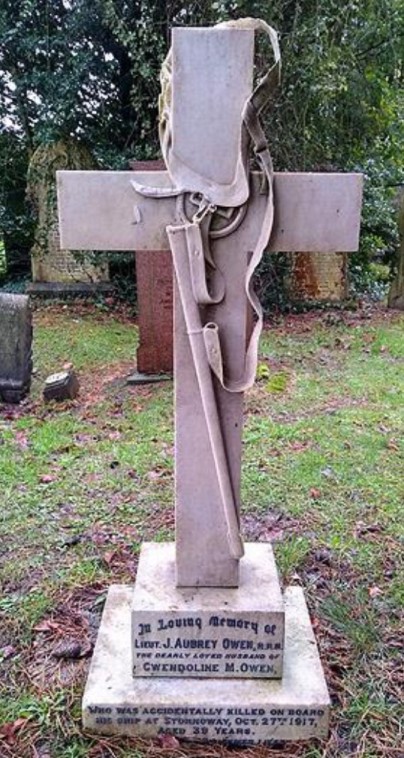

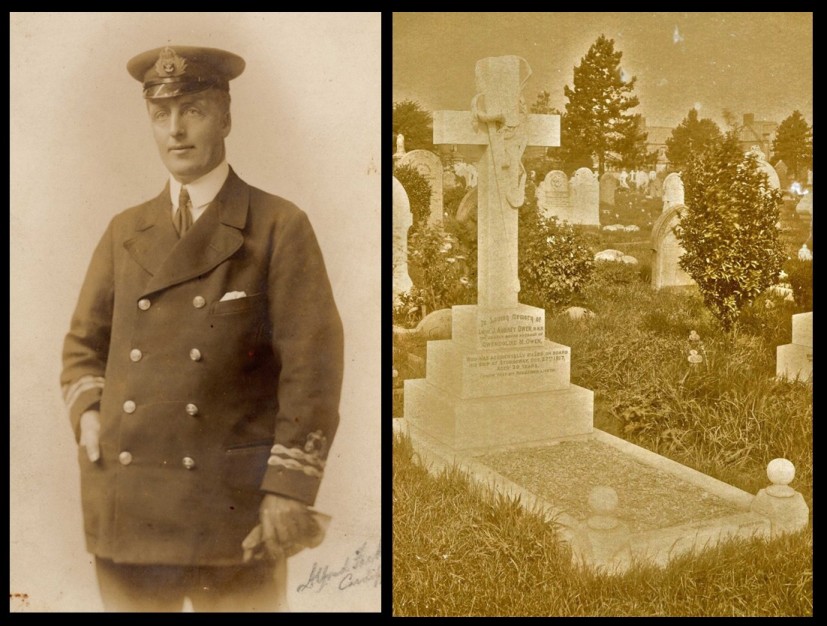

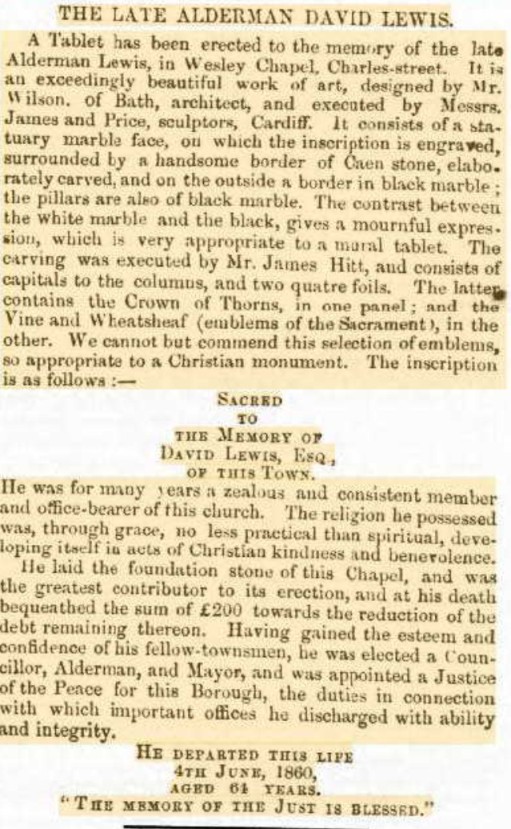


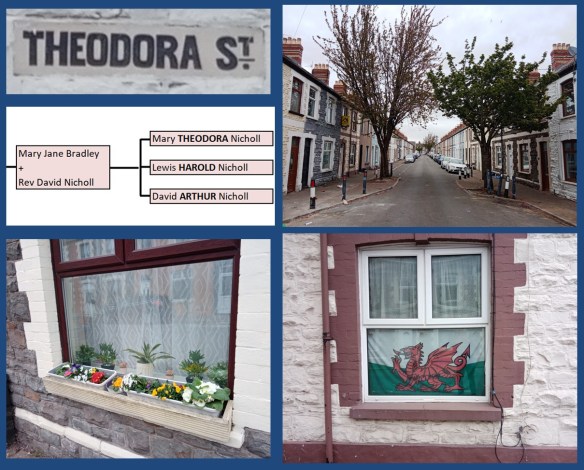
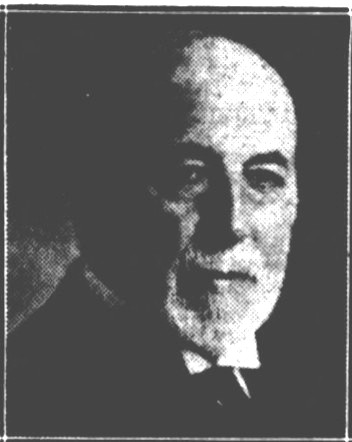
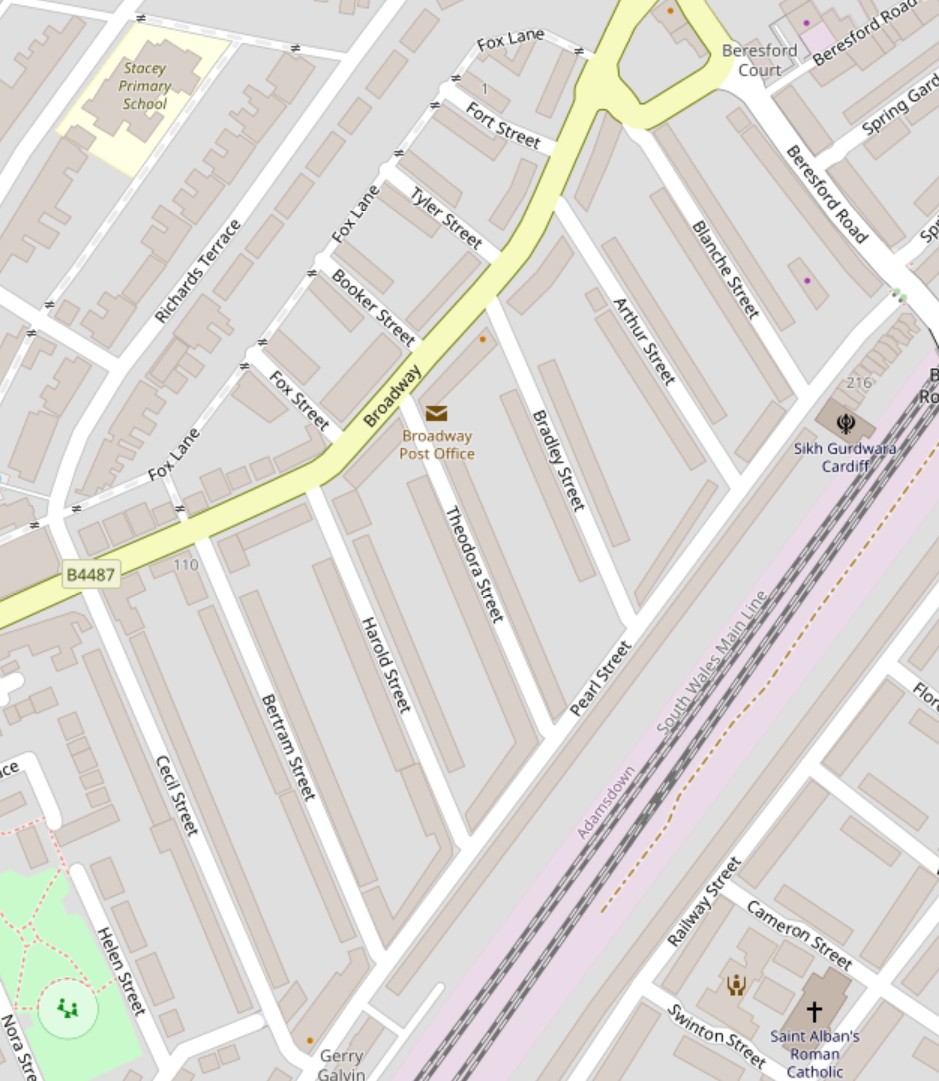


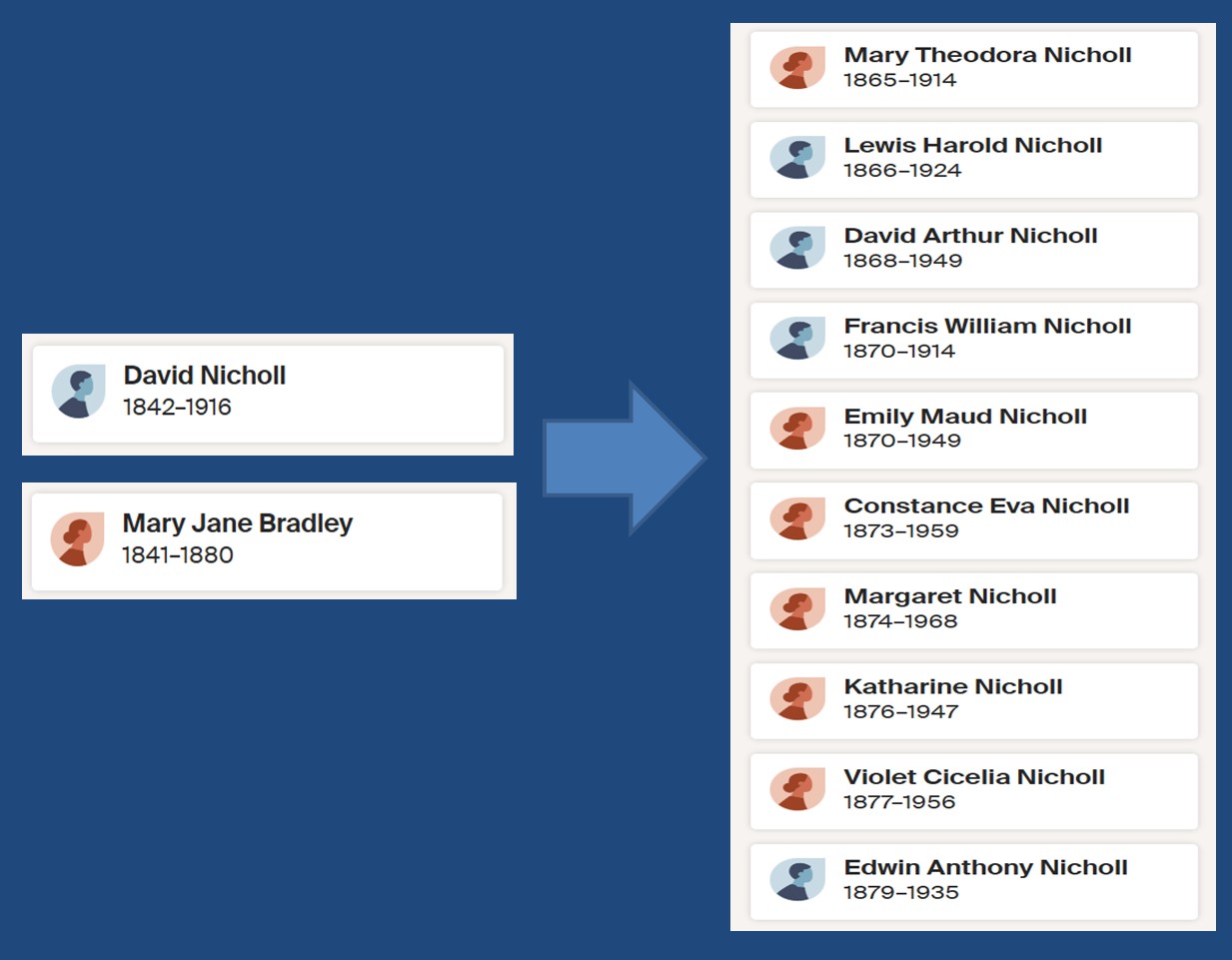


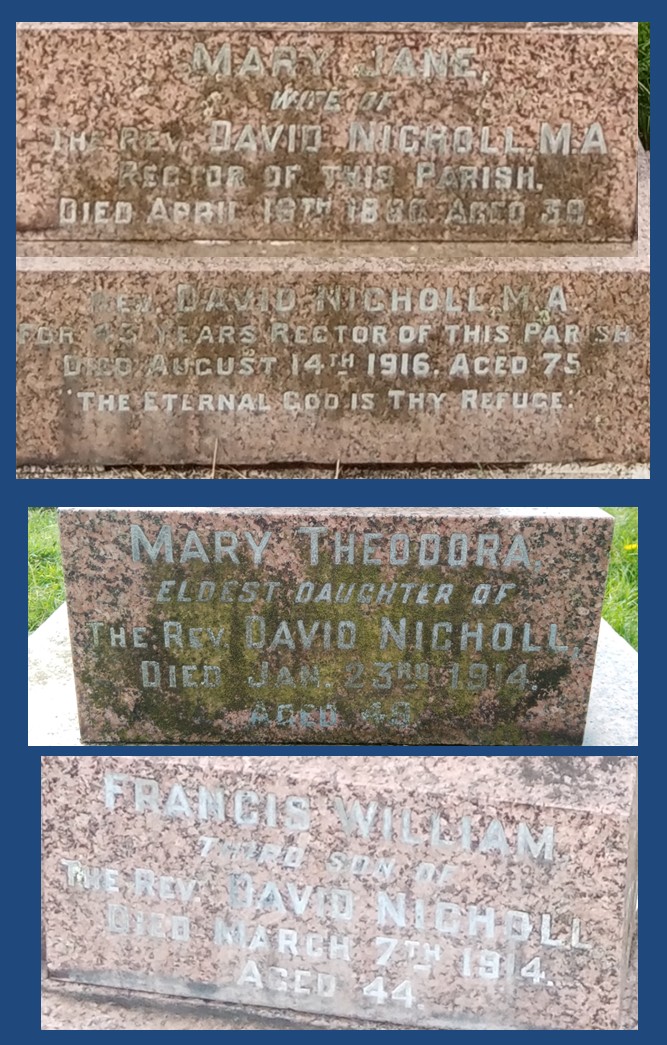


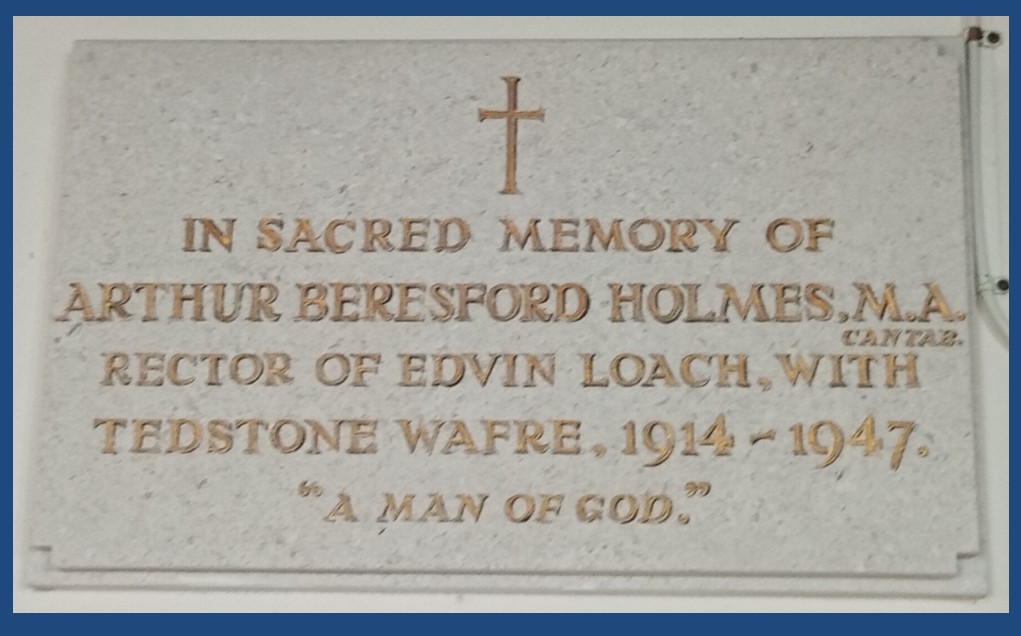


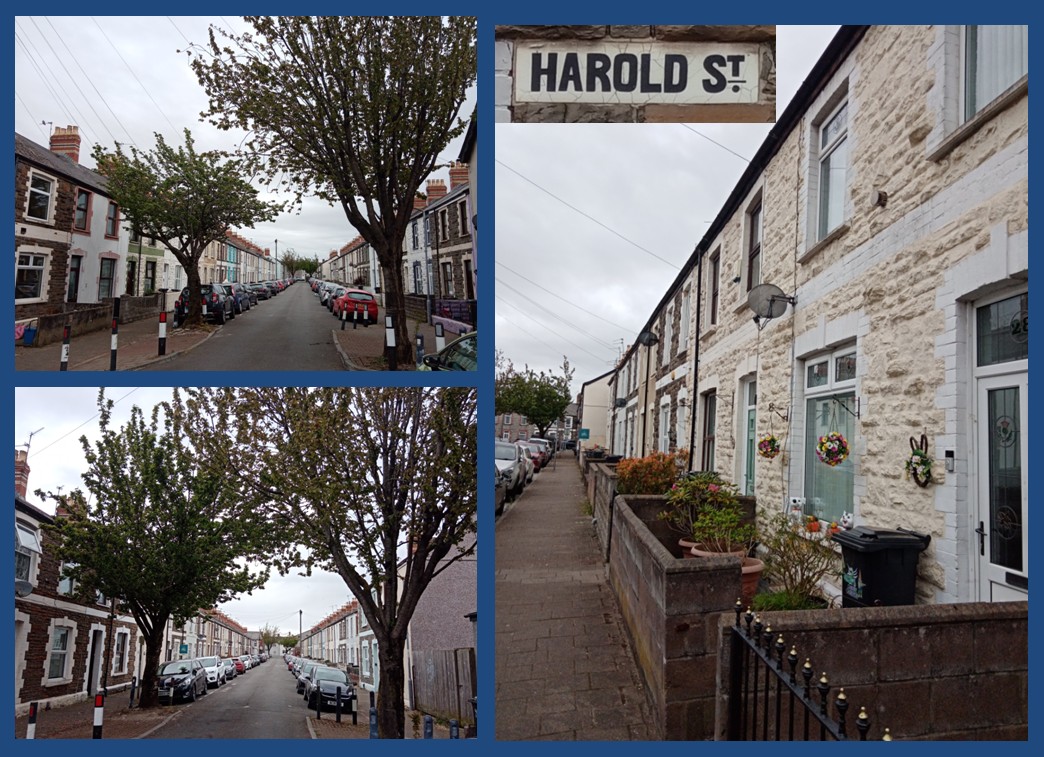


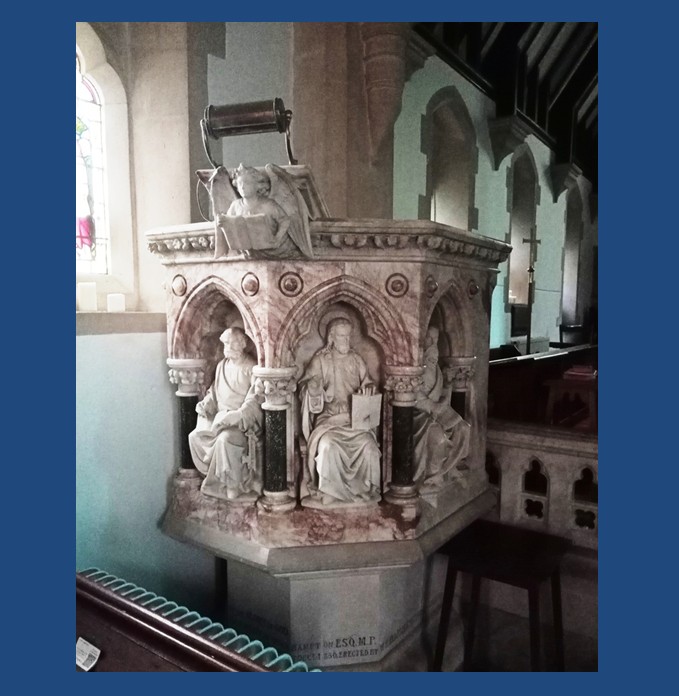


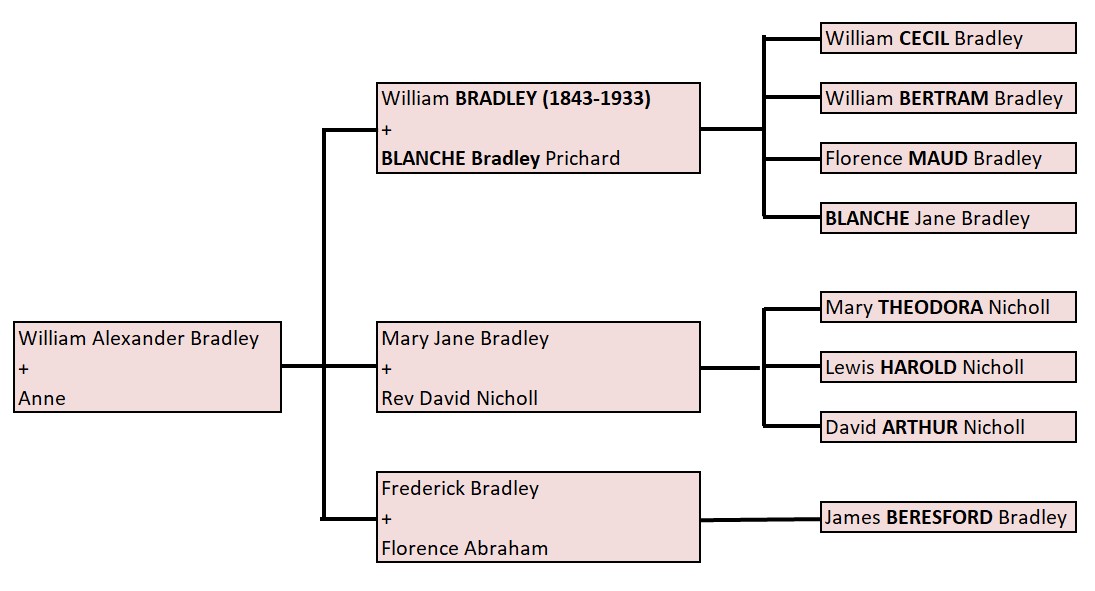


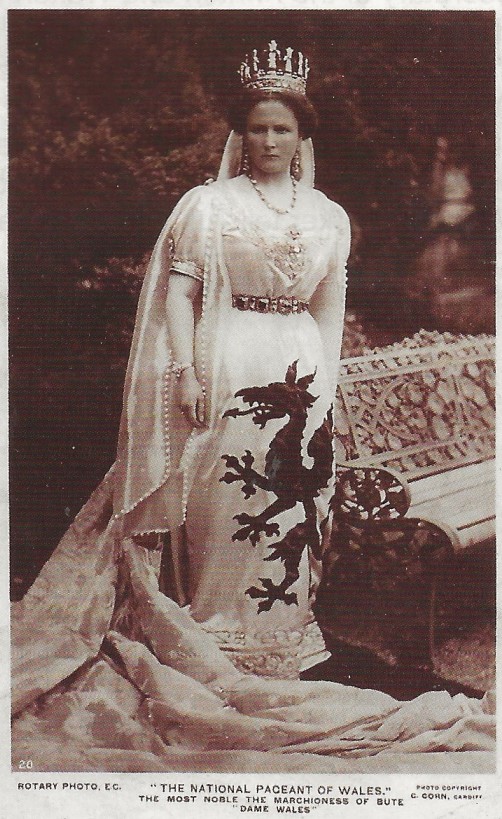

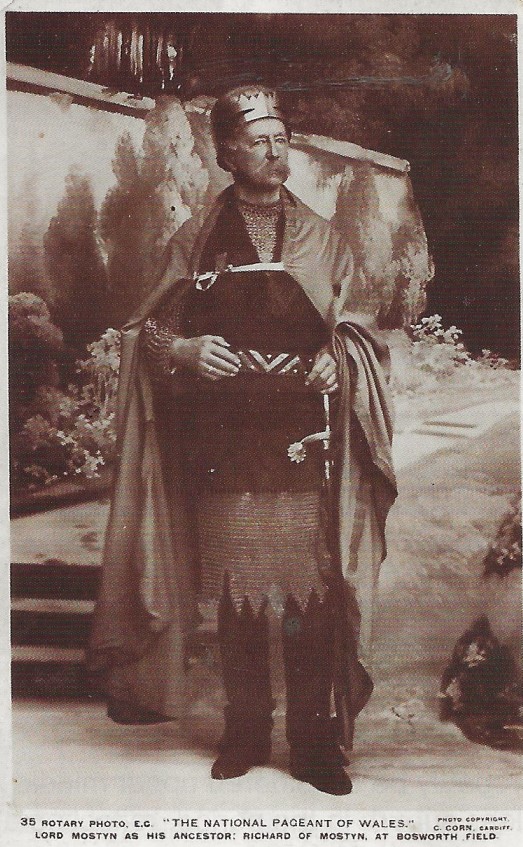


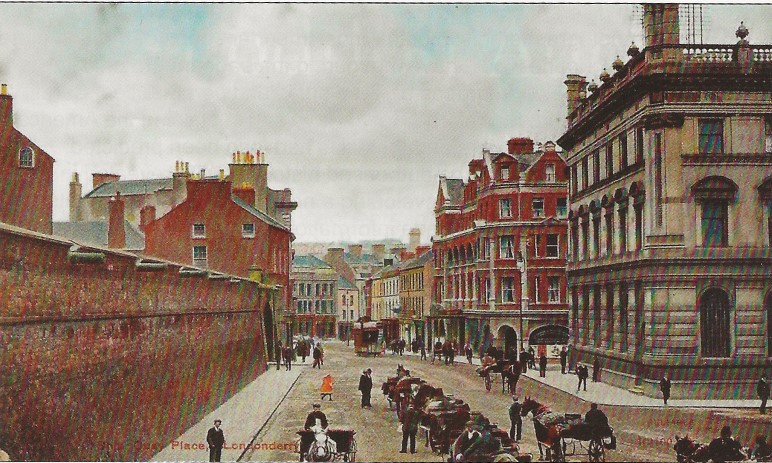


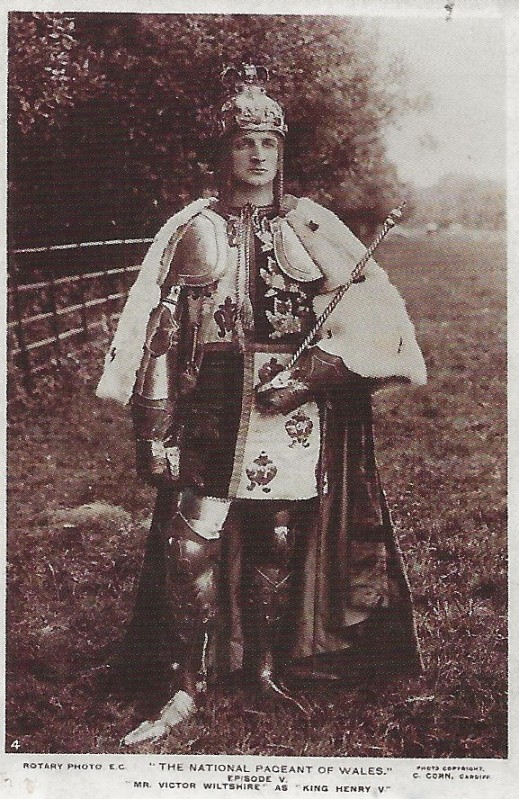


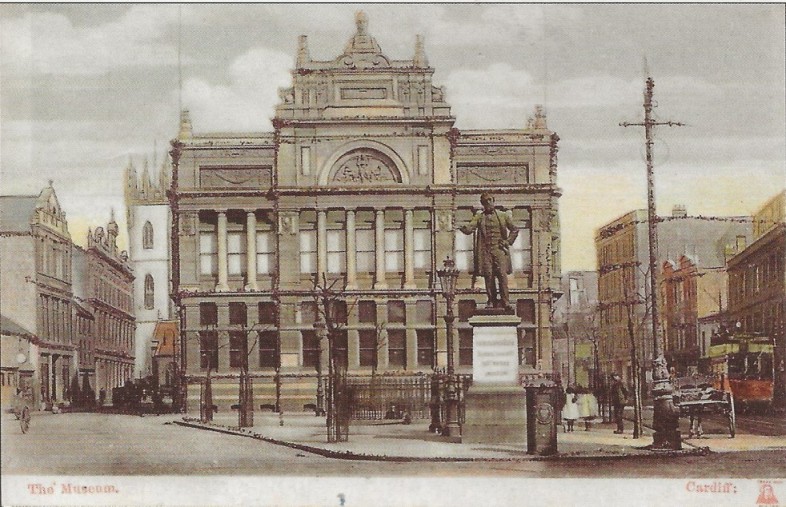


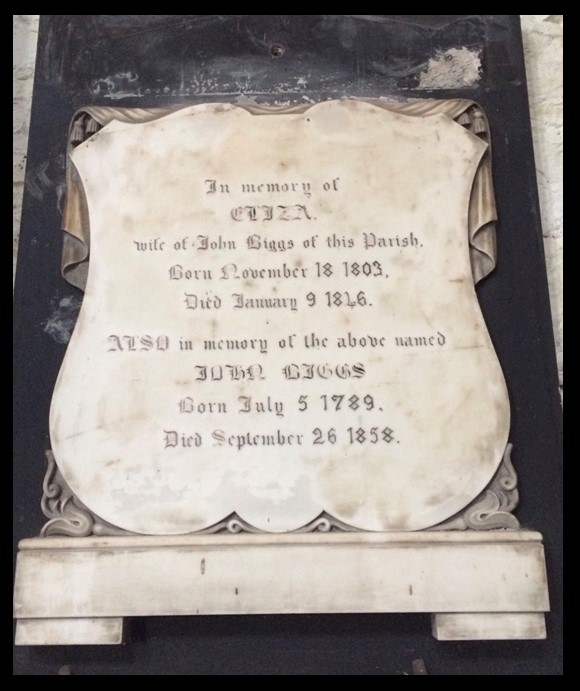
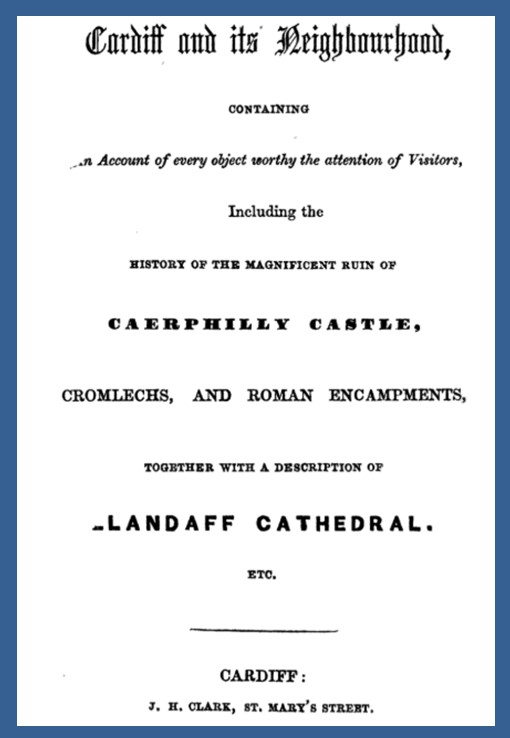

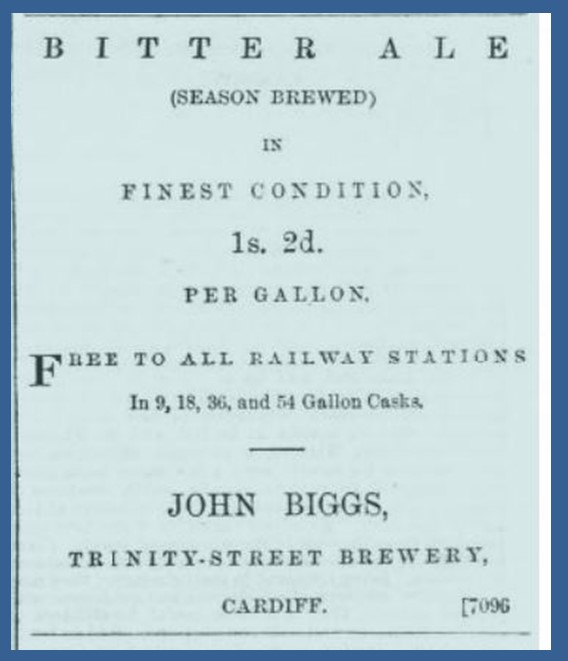

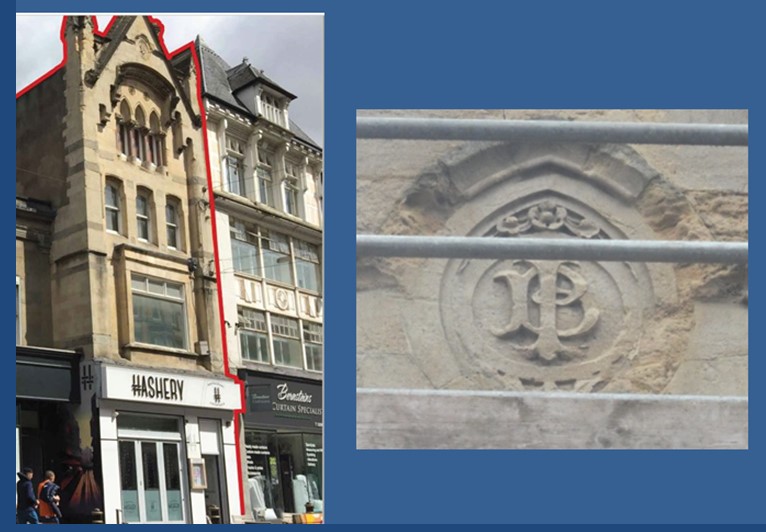
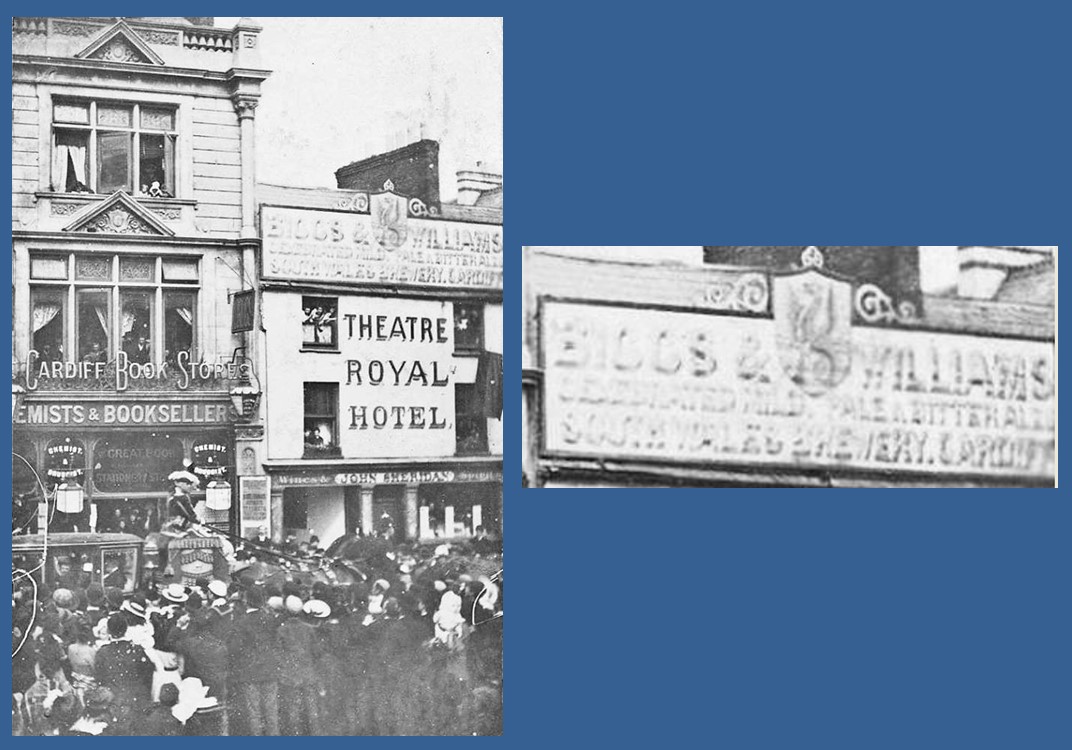

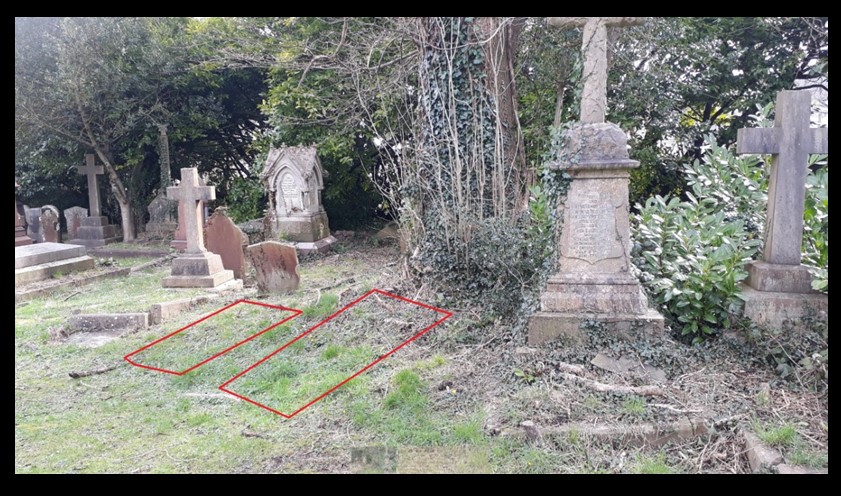

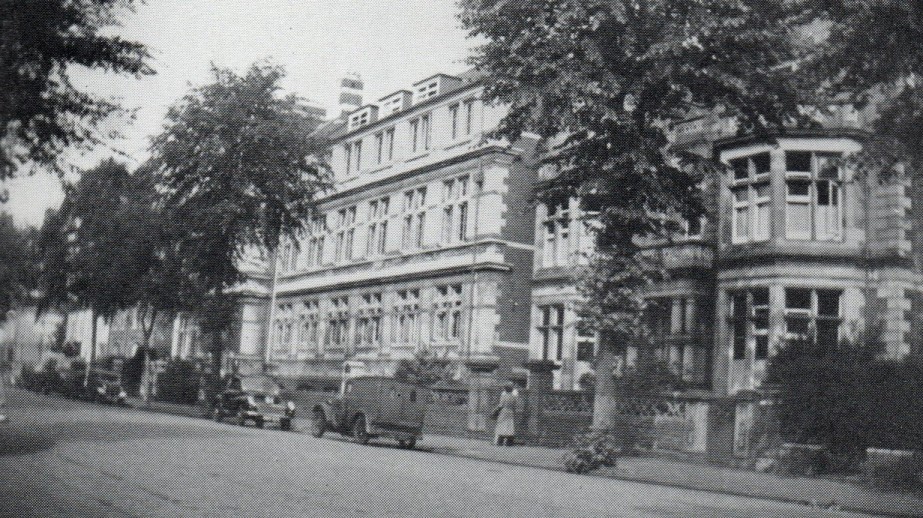
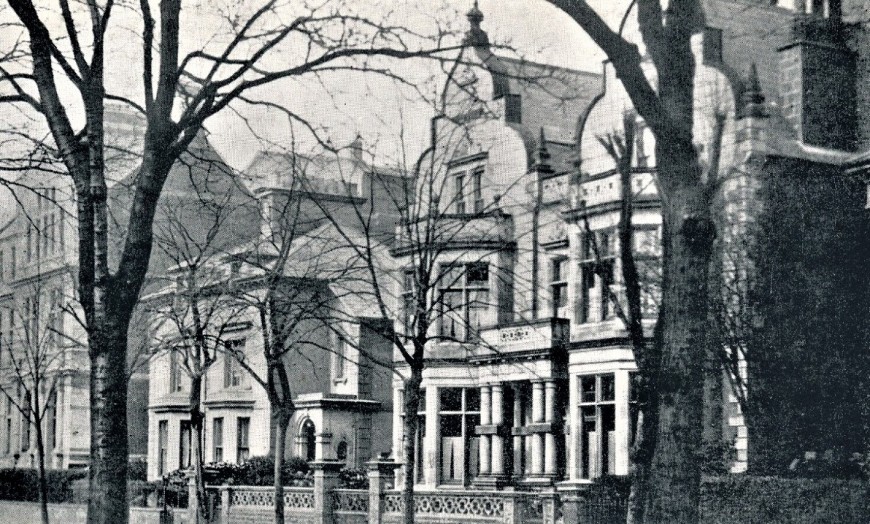

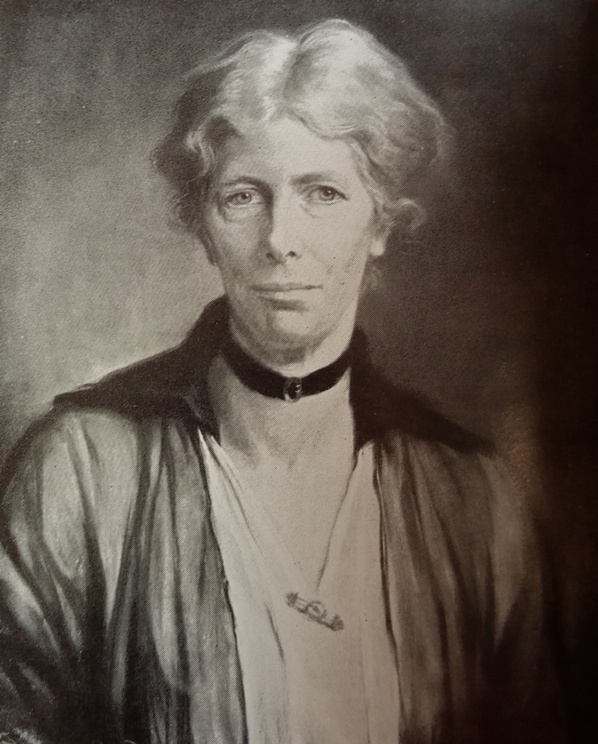


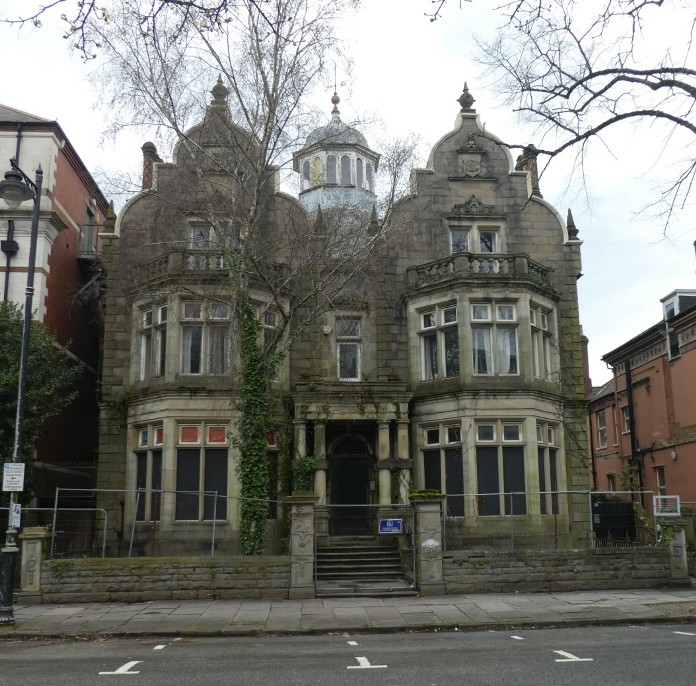

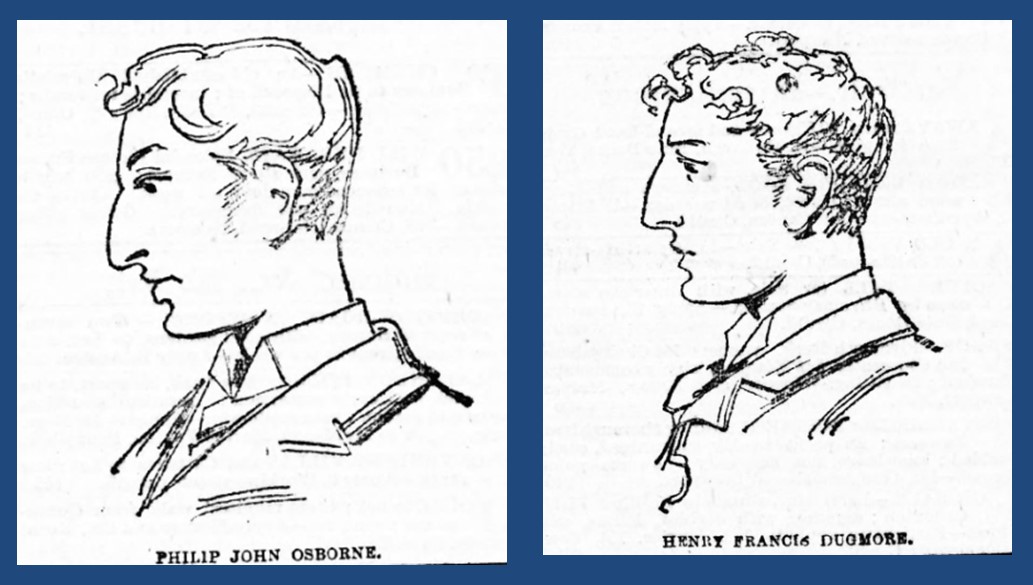
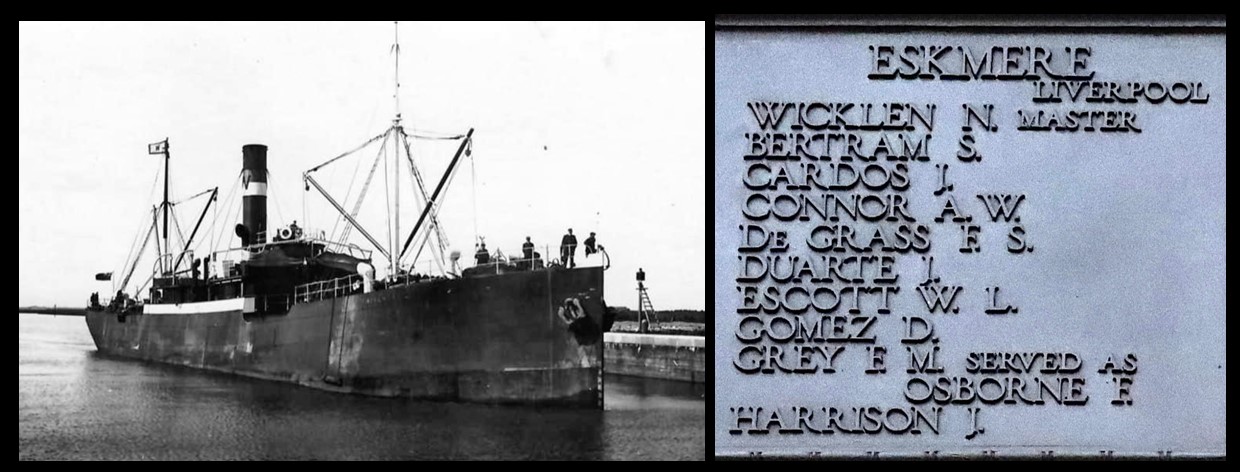

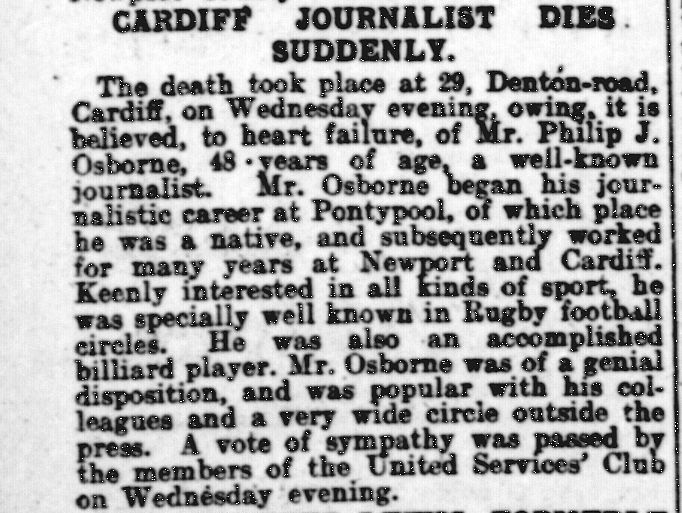
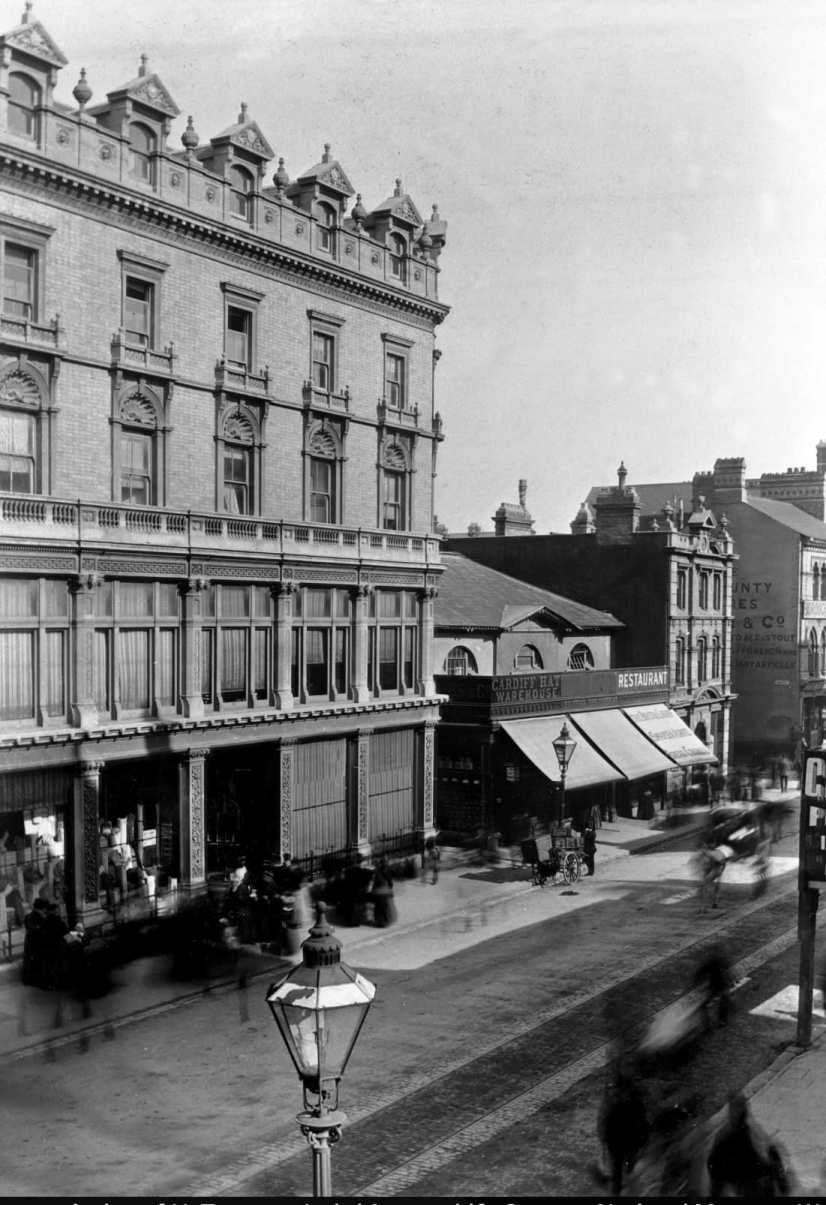
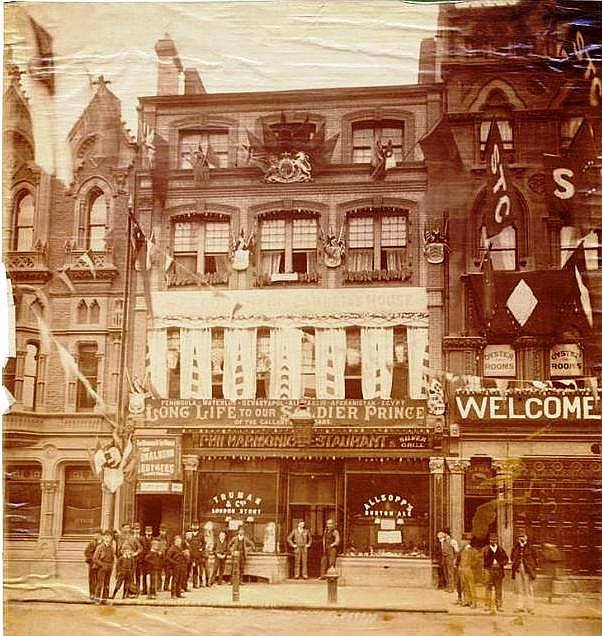


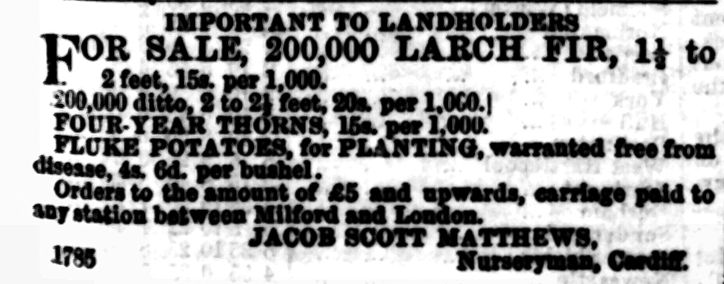


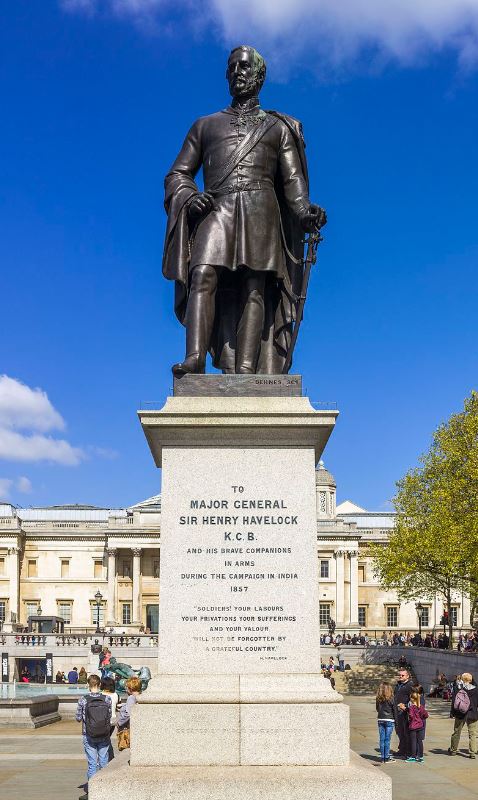
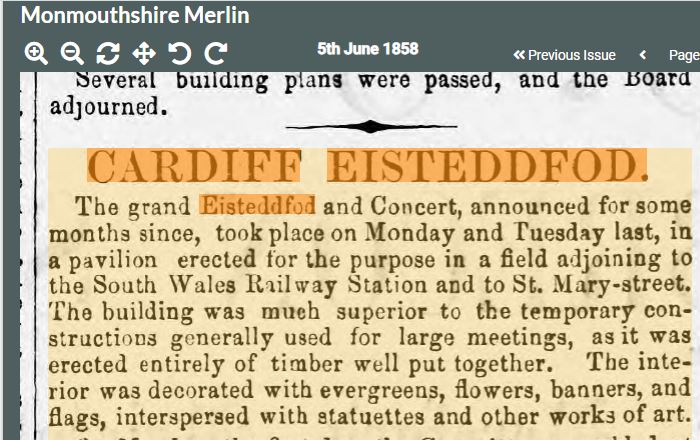
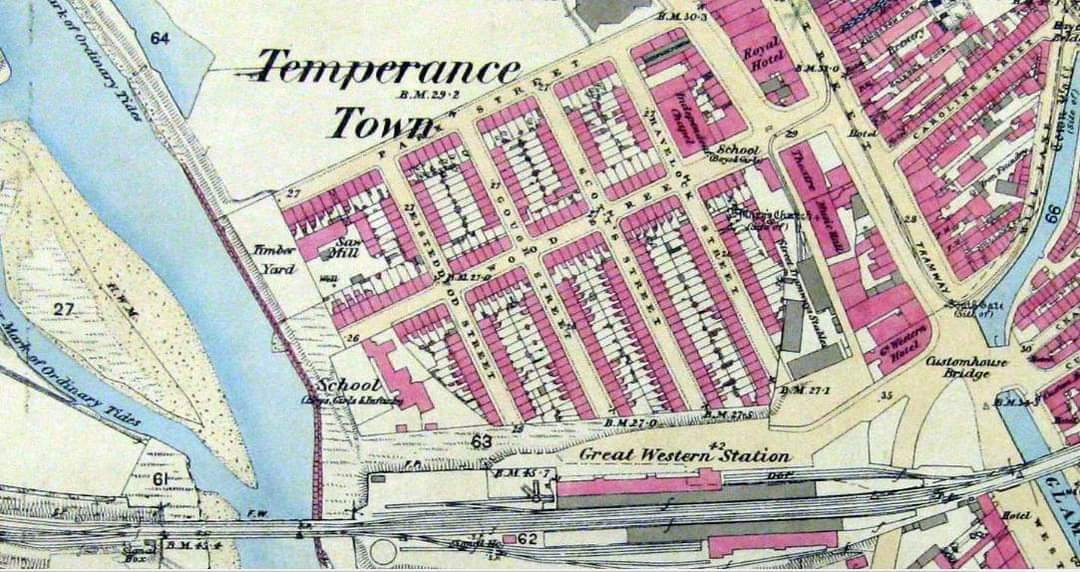
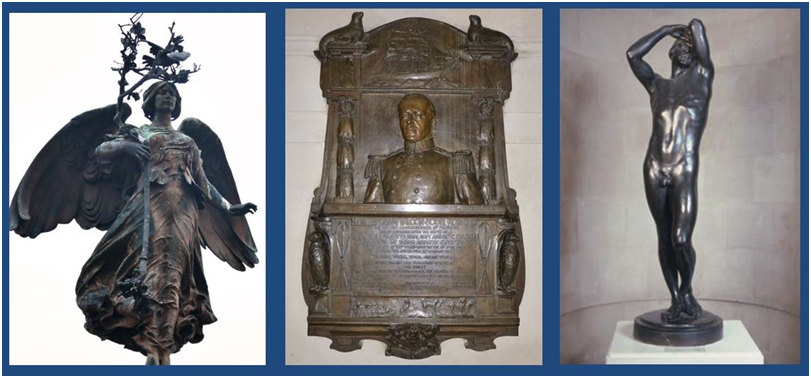


 Roath Local History Society