Mary Agnes Pugh – Ophthalmologist and Eye Surgeon

Ever since researching the history of Cardiff High School for Girls I’ve been keen to find an example of an ex-pupil from the early days of the school who became a successful scientist and I’ve just found her.  Mary Pugh was a very successful eye surgeon, specialized in correcting eye squint and developed the Pugh orthoptoscope.

Pugh Orthoptoscope (Pic credit – Welcome Collection)

She was born Muriel Agnes Pugh but later changed her name to Mary Pugh as she disliked the name Muriel.  She was born in Barry on 11 May 1900.  Her father was a commercial traveler in the drapery business and originally came from Aberdare.  Her mother, Agnes Mary Pugh née Jones was from Bath. When Muriel was young the Pugh family relocated from Barry and settled in Roath, living at 67 Bangor Street. Muriel attended Marlborough Road School before moving onto Cardiff High School for Girls in 1911.  They later moved to 9 Marlborough Road where they were at the time of the 1921 census.

The head teacher at Cardiff High School for Girls at the time was Mary Collin, an active suffragette. She taught her pupils to ride bicycles, seen as a symbol of the growing independence of women and their determination to cast off chaperonage.  The amount of science taught at the school was probably fairly limited when it started up in 1895 but by the time Muriel joined in 1911 things were probably beginning to change.

She left school in 1918 and went on to read medicine at Cardiff Medical School.  She then did her clinical training at Charing Cross Hospital and qualified in 1926.  She was initially employed at Birmingham and Midland Eye Hospital before moving back to London and working at Moorfields Eye Hospital in 1928 in the Squint Department where she was made Officer in Charge a short time later.  Her work in that department led her to developing the Pugh Orthoptoscope, an instrument to investigate and correct eye squint. Her work has been described as individual and pioneering and led to the development of modern day instruments.

She stayed as leader of the squint department at the famous Moorfields Eye Hospital until 1948 during which time she authored the book Squint Training in 1936.

Squint Training by Mary Agnes Pugh

In 1948 she moved to the Institute of Ophthalmology where she worked on a part time research basis until she retired as well as working privately. 

Pugh orthoptoscope by Hamblin, London

As well as a love of the arts she also enjoyed her cars and owned a Rolls Royce.

So why can’t I show you a picture of Mary Pugh?  Perhaps it is because of her shy nature revealed in her obituary on the British Medical Journal “Mary Pugh was a bright, friendly person, shy and self-effacing, and intensely interested in the arts, especially painting and literature.  She travelled widely and had an international circle of friends both medical and lay; indeed her ability to detach herself completely from her profession was remarkable.  She will rank as a pioneer in her field and will be remembered with warm affection by all who knew her and with gratitude by a host of patients”.

I’ve also been informed that Mary Agnes Pugh became eye surgeon to both the Queen Mother and Queen Elizabeth.

She died in London on 21 Jan 1972 aged 71. She left her estate to Audrey Russell.

It would be lovely to hear from anyone who does have a picture that could share of Mary Agnes Pugh. 

Her partner in life was Audrey Russell, the first lady of broadcasting, whom she met in war-torn London.  They shared a love of theatre and the arts. 

Audrey Russell was a pioneer of broadcasting.  She was born in Dublin and educated in England and France.  She trained at the Central School of Speech and Drama before becoming an actress and stage manager.  Audrey Russell joined the BBC in 1942 after being discovered by them when interviewed about her wartime work for the National Fire Service. She travelled to mainland Europe just after the D-Day landings and reported from Belgium, the Netherlands, Germany, and Norway. 

 In 1953, Russell gave a live commentary on the Coronation of Elizabeth II, from inside Westminster Abbey.  She also gave commentary on the funeral of Winston Churchill in 1965.  Martha Kearney on the BBC War Correspondent Audrey Russell.
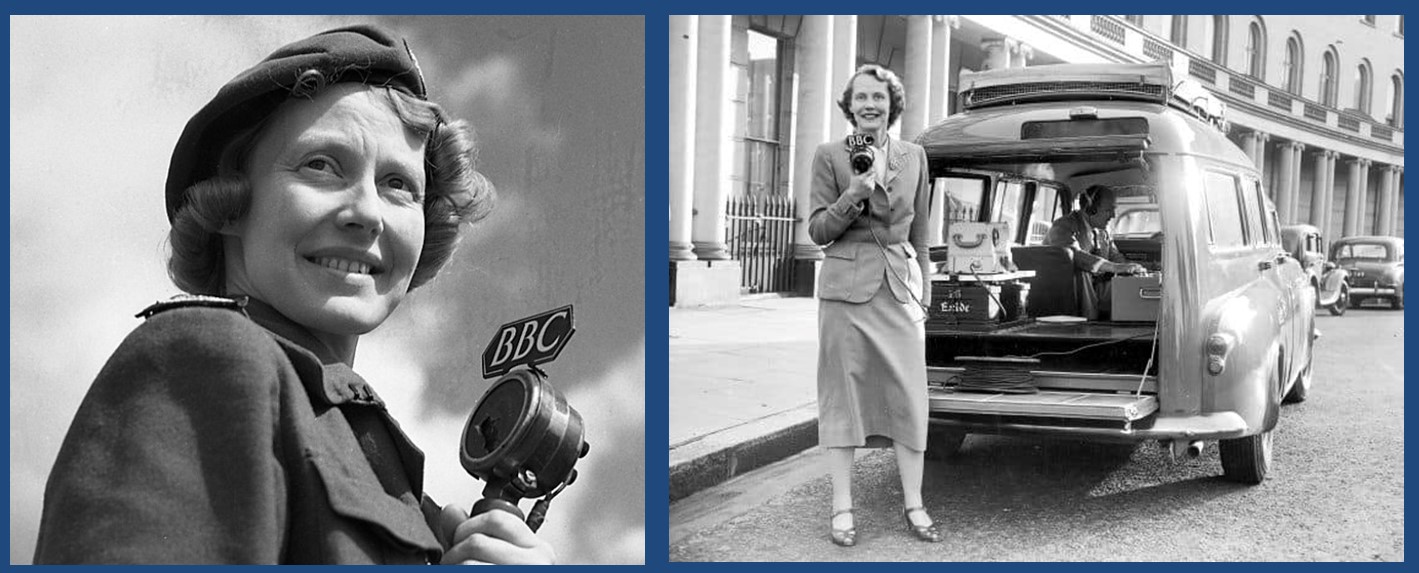
Audrey Russell broadcaster (pic credit: BBC)

Article compiled with the greatful assistance and input of Ingrid Dodd née Pugh.
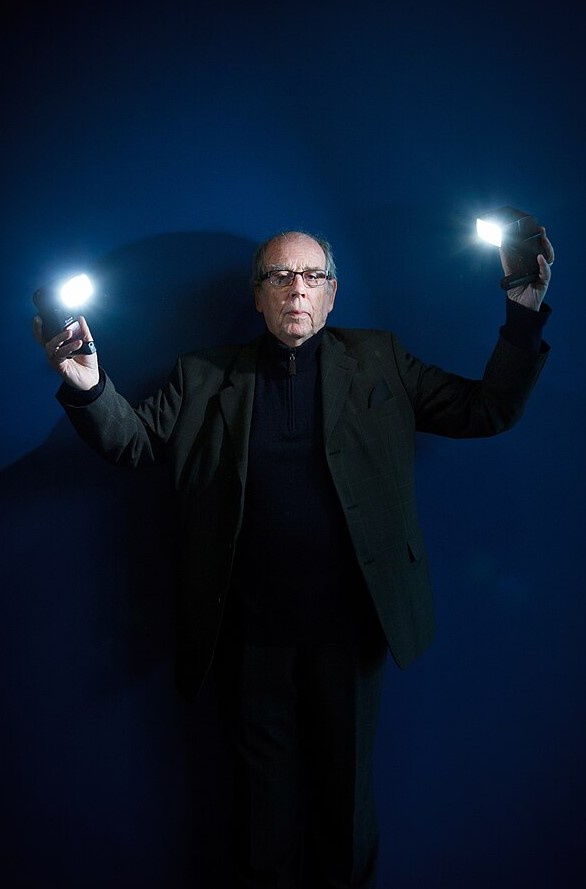
David Hurn – The man who shot James Bond

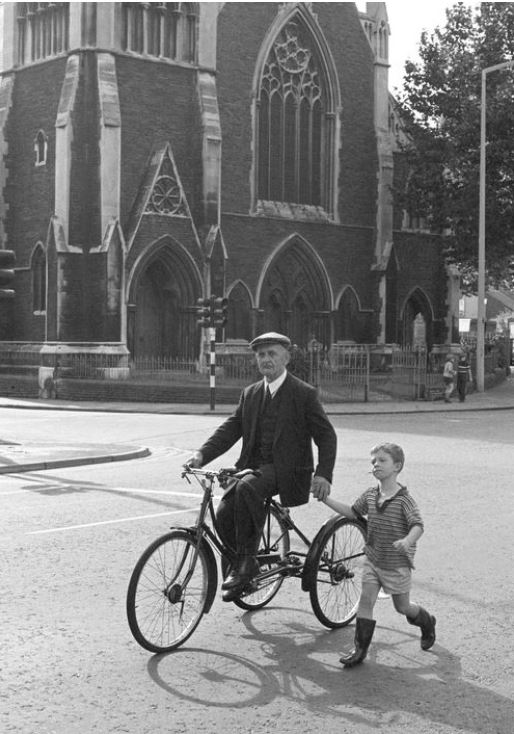
I first came across the work of David Hurn when reading the book ‘Cardiff – Rebirth of a Capital’.  The book contains many wonderful black and white photographs taken by Hurn but the one that caught my eye was one of a man on a tricycle and with a child in hand taken from outside Pen-y-lan library taken probably in the 1960s.  The church in the background is St Andrew’s URC church, where we hold our monthly meetings.

David Hurn - (photo credit - Wikipedia - Creative Commons)

David Hurn – (photo credit – Wikipedia – Creative Commons)

I was keen to see if we could use one of his photographs on our website and luckily in doing so managed to meet up with David.  He is both charming and forthright at the same time; there are few wasted words.

Penylan Road David Hurn 1973

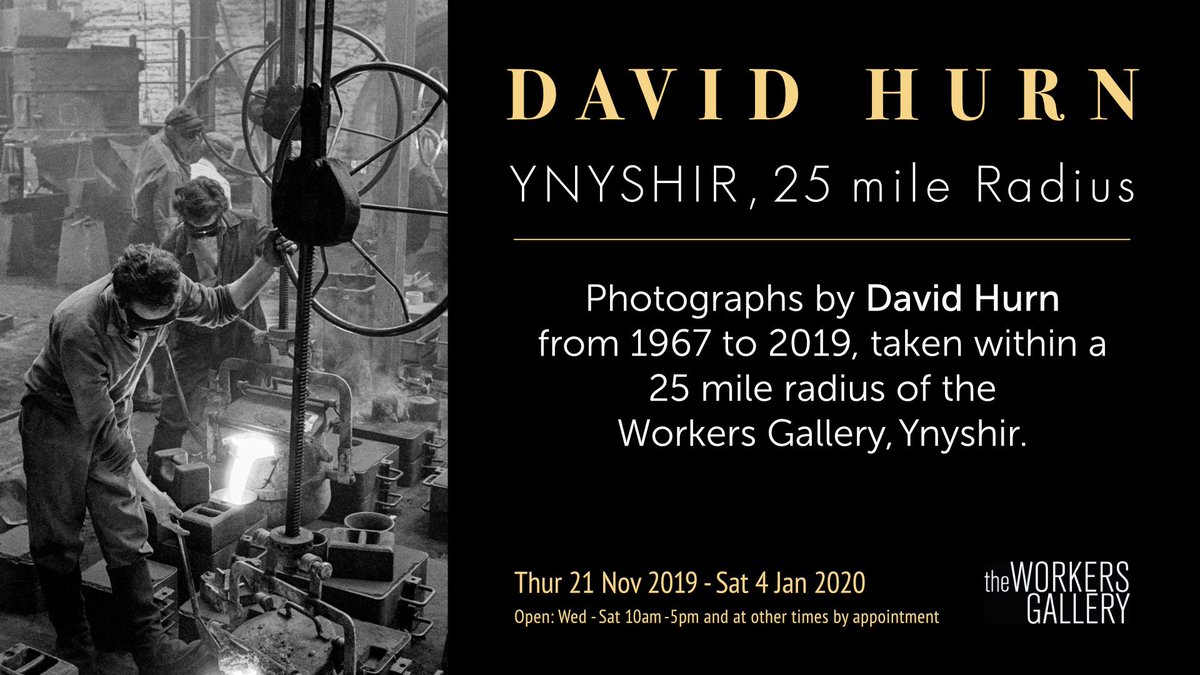
I saw David Hurn again recently when he opened an exhibition of his photographs at the Workers Gallery in Ynyshir.  There’s just time to catch it if you hurry.

EJKde2IXkAIAC6t

Hurn wasn’t born in Roath but he did grow up here.  He was born in Surrey on 21st July 1934 but shortly afterwards the family relocated to Cardiff.  In the 1939 Register he was at school and living at 3 Newminster Road but the house David remembers most vividly is 104 Marlborough Road.   He attended De la Salle School but his dyslexia made education challenging.  His father was in the military and David himself joined the military and attended Sandhurst where he first discovered a love of  photography.

Choosing photography over a military career he headed for London to doggedly pursue a photographic career.  It took time, he initially got other jobs to make ends meet but his big break came when he hitchhiked over to Hungary in 1956 to take photos of the uprising against the Communist regime.

Having got his photographs widely published he was much in demand, though not necessarily as a war photographer.  In the 1960 much time was spent snapping what we would now call celebrities; film stars, pop musicians and alike including the Beatles and Jane Fonda. He quickly worked out that when sent on an assignment there were four important shots to get that may end up differentiating you from your competition, a portrait, a close-up, a wide-angle and a shot in context.

One day when Sean Connery arrived at the studio for a shoot the publicist forgot to bring one important prop – a gun.  Fortunately David Hurn was keen on air pistol target-shooting and so they were able to use David’s pistols in the photographs.  The plan was to edit the photos afterwards to make it look more like a real gun before they were used on the bill-boards but that somehow got forgotten.

David Hurn is also known for his photographs of the Aberfan disaster in 1966.  He was one of the first photographers on the scene, and of course not necessarily that welcome.  Local miners were busy digging the bodies of the village children out of the suffocating coal slurry.  The photographs however acted as evidence of the tragedy and were shown in Parliament and played a small part in helping bring about change and preventing another similar disaster.

In 1967 he joined the prestigious Magnum photographic cooperative, a top accolade for a photojournalist.

Later in life however he left the world of photography journalism behind he returned to live in Wales where he set about recording the landscape and people of Wales. His collection must be the largest on record totalling over 50,000 shots of the nation and its people. Many of these have now been donated to the National Museum of Wales together with others that he swapped with fellow professional photographers over the years.

Also on return to Wales he ended up in 1972 setting up a course on documentary photography at Gwent College in Newport which was to become highly regarded.

He is a self-taught photographer. He very much believes in talking photographs of the world as he sees it rather than posed shots. He takes candid shots of life as it happens. His subjects are not asked if they want to be photographed.  He tends to concentrate on scenes he knows will not be there in another 20 years, capturing history as it happens as it were, always attempting to get the definitive picture of the time and place. He is however much more interested in tomorrow than he is in the past and his thirst for life is evident when he talks.

Asked what are the secrets of being a good photographer David will talk about hard work, lots of time spent doing research, tenacity and a good pair of shoes.  The photographer needs to be driven by curiosity and have a lot of patience. A lot is about positioning, working out when you arrive at a place the perfect place to stand and then waiting.   Very rarely would he spend less than 30 minutes at a place just waiting for that perfect shot.  His work ethic is ruthless.  He’s of the belief that anyone who spends less than 7.5 hours a day at it is just playing, but that time is not all about shooting; there is the researching and looking at the work of other skilled photographers.

So what makes a good shot of the community? Well, having a dog somewhere in the picture can add a lot of context he explains.  People making gestures too are very important.

His shots are never edited, they are just life as it happened to be at the time.  Even today in his eighties, David Hurn is taking 4000 photographs a year.  That gets followed by some ruthless selection procedure after which he would end up with just twenty or so to display at an exhibition.

He still has good things to say about his hometown of Cardiff, about its sense of community and the place itself though maybe like many feels there have been wasted opportunities in the architecture chosen for the centrepiece buildings along the waterfront in Cardiff Bay.

In 2001 he was diagnosed with colon cancer but has made a full recovery.  He now sees radiographers as a most important branch of photography and encourages youngsters with an enthusiasm in photography to consider this as a profession.

Today, David lives in Tintern and still spends time photographing the community in which he lives.  He often works closely with poets and his next project is to ask ten poets to write something about one of his pictures expecting it to demonstrate that we all see different things in the same picture.


Cardiff - Rebirth of a Capital

Cardiff – Rebirth of a Capital

PS.  With the help of the members of the Cardiff Days Gone By Facebook group, the scene of the ‘Walkers in Roath’ photo has actually been identified as Atlas Road in Canton at the junction with Denton Street.  The house which could be seen as bricked up in the photo has been demolished.