28 The Parade was built around 1868 and has only ever had three occupants. In the first two articles in this series we looked at the two earlier occupiers:
In this third article we look at the most recent occupants – The Parade Community Education Centre.
28 The Parade – The Parade Community Education Centre
In the summer of 1971 Cardiff High School for Girls vacated the building as part of their move up to Ty Celyn School on Llandennis Road.
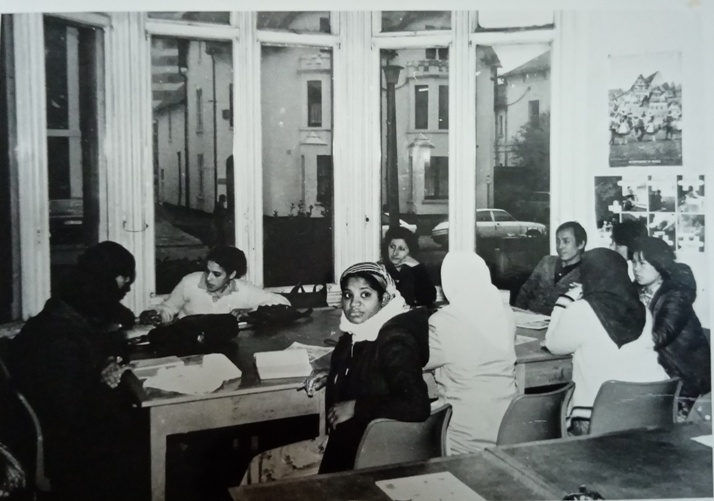
When Ravinand ‘Ravi’ Mooneeram saw the vacated building he saw an opportunity. Teaching was in his blood and he already had a track record of teaching English as a Second Language (ESL) to some of Cardiff’s new arrivals at Fitzalan High School. The local authority gave permission for 28 The Parade to be used as a base for ESL teaching and called ‘The Parade Community Education Centre’.
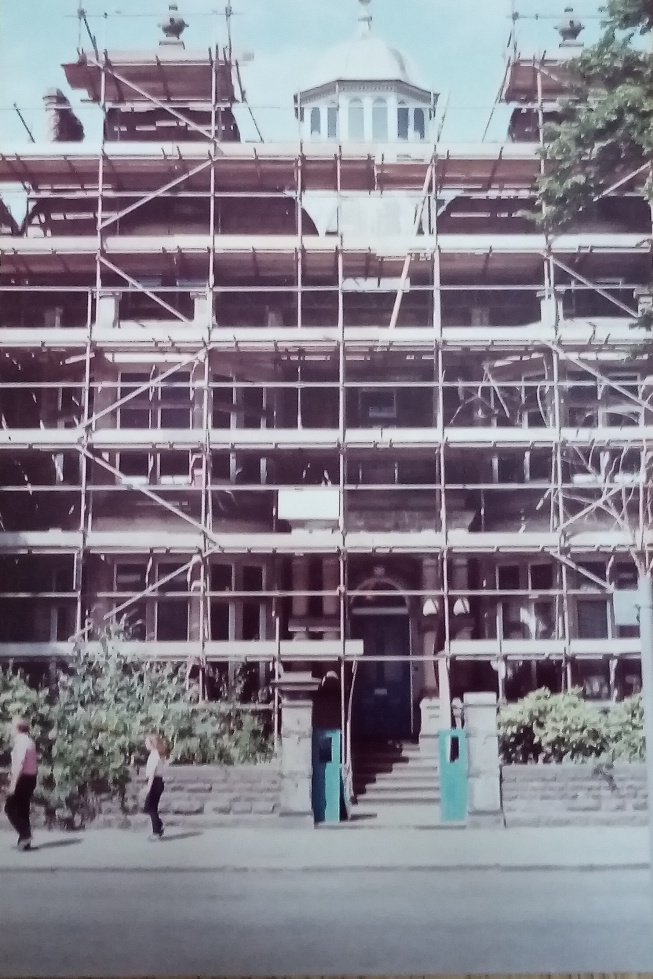
The building had been vacated but not emptied. The bins in the rooms were still full. There was work to be done in preparing it. One advantage however was that the caretaker from Cardiff High School for Girls days still lived in the top floor.
ESL evening classes began at the Parade in 1971. Ravi Mooneeram became a teacher/adviser in immigrant education in the city and in 1974 he became county community tutor. Over the next few years he would liaise between schools and parents, leading to an expansion in ESL teaching. The Parade became the hub of a network of ESL classes throughout the city, initially targeting adults but later their children too. The Parade Community Education Centre had the advantage that it wasn’t tied to a specific school.
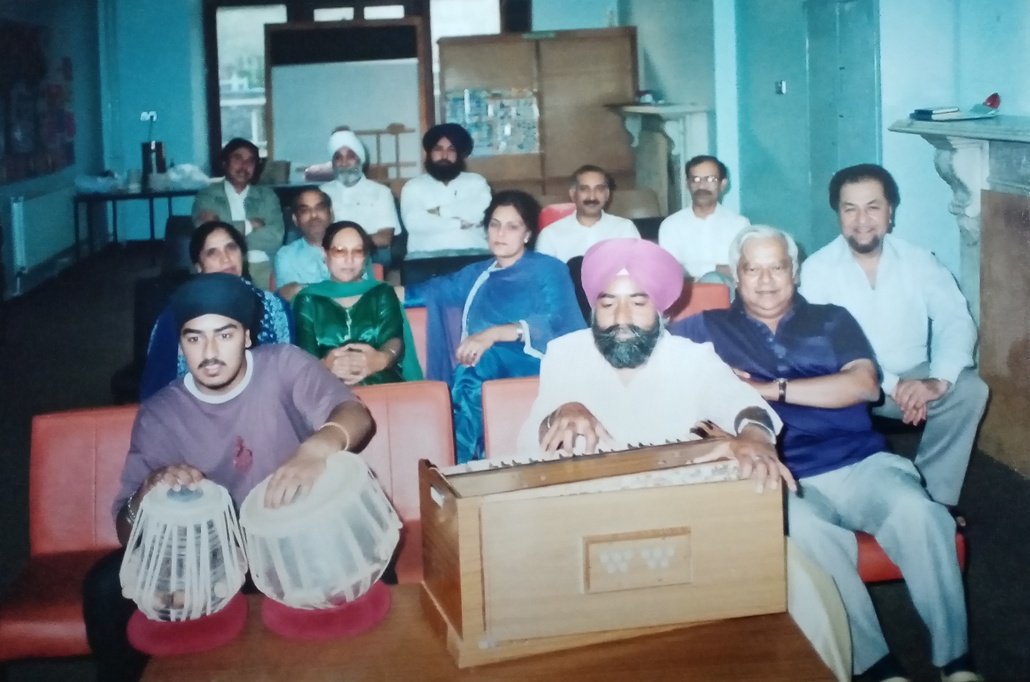
Staff and students at The Parade Community Education Centre
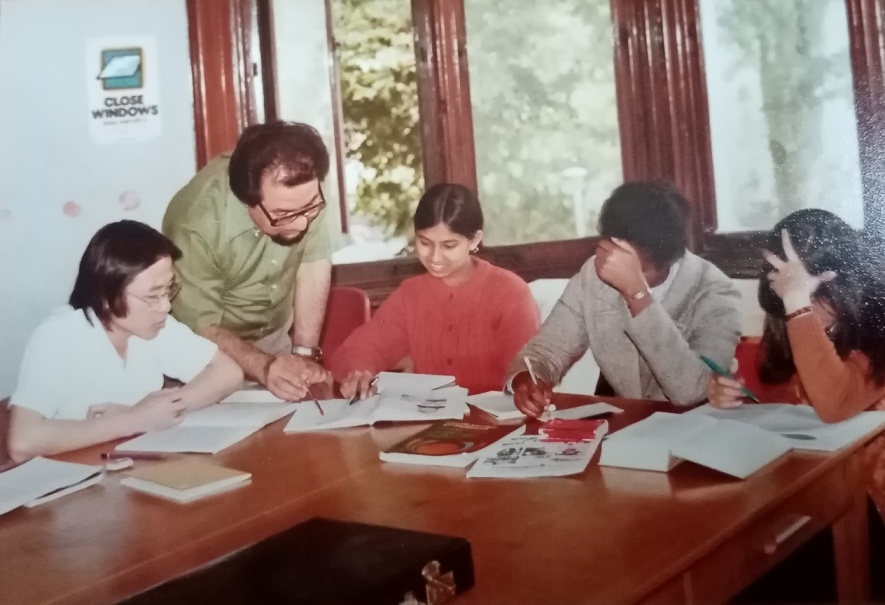
Teaching at The Parade Community Education Centre
When Panasonic opened up a factory in Cardiff employees from Japan and their families came for English lessons to No.28.
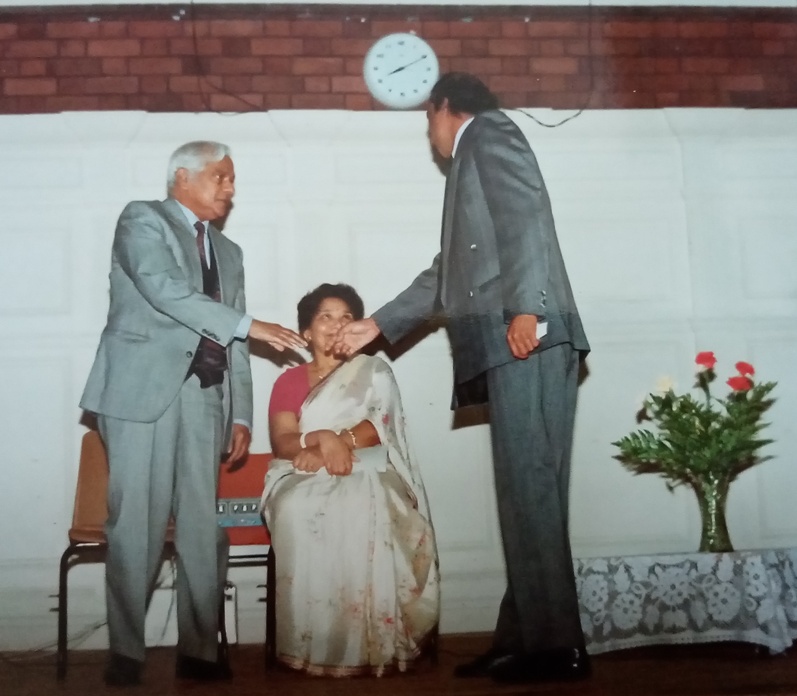
A gesture of thanks from Panasonic Managers.
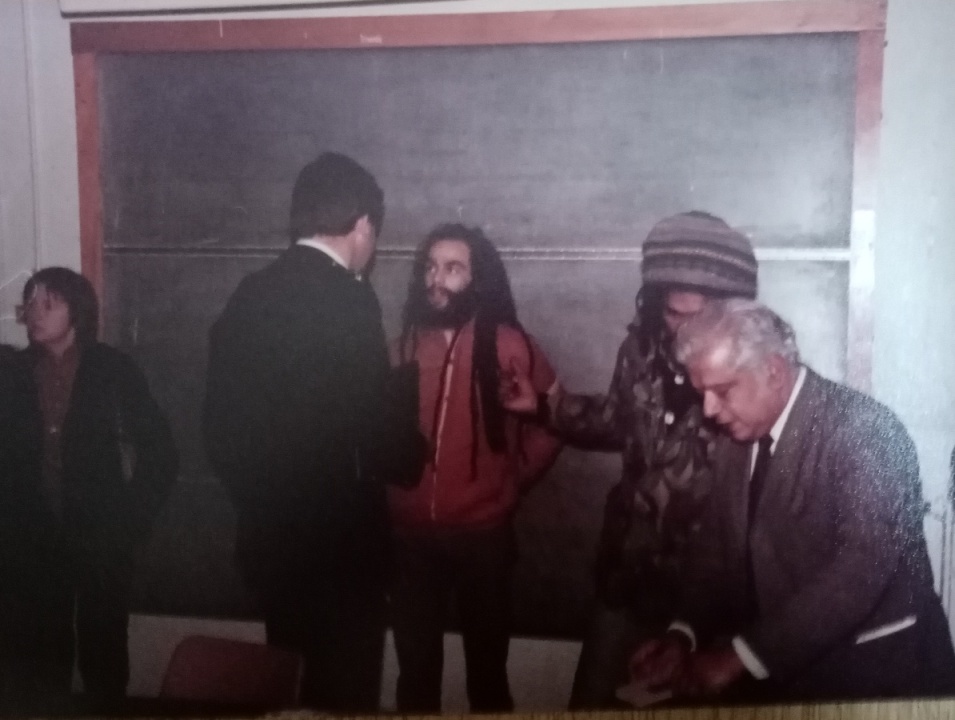
The work carried out in 28 The Parade however had another aspect. The building provided a base for many thriving multicultural groups, enabling them to maintain their own identity and culture whilst at the same time facilitating integration. Ravi’s whole philosophy and life’s work was one of Britain developing harmoniously into a multi-racial, multi-faith, multi-lingual and multi-cultural society.
Another aspect of the work was exchange visits with Cardiff’s twin cities such as Stuttgart in Germany and Nantes in France. Groups of pupils from schools in the Cardiff’s twin cities would meet and attend lessons at No.28.
In the 1970s all the Cardiff High School for Girls buildings along The Parade were vacated. The Parade Community Education Centre could therefore sometimes use the Assembly Hall in the adjacent building to No.28. Even later when Ysgol Bryntaf School moved into No.27 it was still sometimes possible to use the hall for events. The South Glamorgan Youth Brass Band under Dewi Griffiths played there regularly.
The South Glamorgan Youth Brass Band under Dewi Griffiths.
As well as ESL teachers other staff such John Scofield were recruited to help provide extra tutoring in maths and other subjects to pupils who were struggling in their own schools as they sought to be fully conversant in English.
Ravi Mooneeram in front of the class
In 1981, Ravi Mooneeram was appointed a magistrate. A year later, his tireless work would be awarded with an MBE for his services to education and refugees.
He retired in July 1993 but unfortunately had poor health in retirement and sadly passed away in 2002.
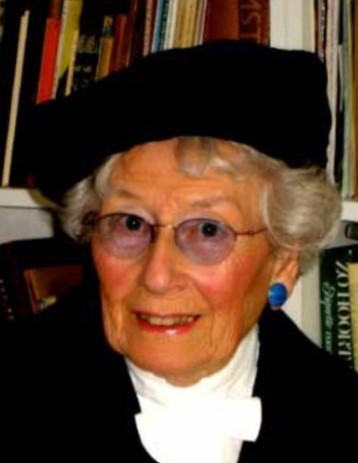
His role at The Parade Community Education Centre was taken over by Samina Khan. After 28 The Parade closed in the early 2000s Samina went on to be Equality Diversity and Community Development Manager at Cardiff and Vale College.
Ravi Mooneeram’s own life story is interesting. He hailed from the island of Mauritius. His father died when he was young and Ravi took over the role of father-figure to his siblings. He was initially self-taught, borrowing many books from the local library but then he won a scholarship. He subsidised his own high school education by tutoring younger boys at the school. After leaving school he taught for 12 years at St Andrew’s School on Mauritius.
Ravi and his two brothers had planned to come to Britain and subsidise each other’s university education by working but it never quite worked out. A cyclone hit and destroyed the family home. Eventually Ravi arrived in Cardiff and obtained a degree in Mathematics and Botany at Cardiff University. Securing a teaching job however proved difficult and he ended up as a council worker.
One day a friend spotted him cutting the grass at the Mansion House and through that contact Ravi managed to enter teaching. He became warden at the Grangetown Centre, then, after teaching French at Cyntwell High School, Ely, for three years, he moved to Fitzalan High School to take charge of the immigrant reception class and from there to hid dream job at The Parade Community Education Centre.
Ravi Mooneeram in his office at The Parade Community Education Centre
28 The Parade is now 150 years old. Let’s hope The Parade Community Education Centre were not the last occupants of this fine building. There are grounds for optimism. It seems that the terms of a covenant probably means the building has to be used for educational purposes. Cardiff Council has been exploring the feasibility of turning the building into a new integrated hub for young people.
Plasnewydd Labour Newsletter – Spring 2024
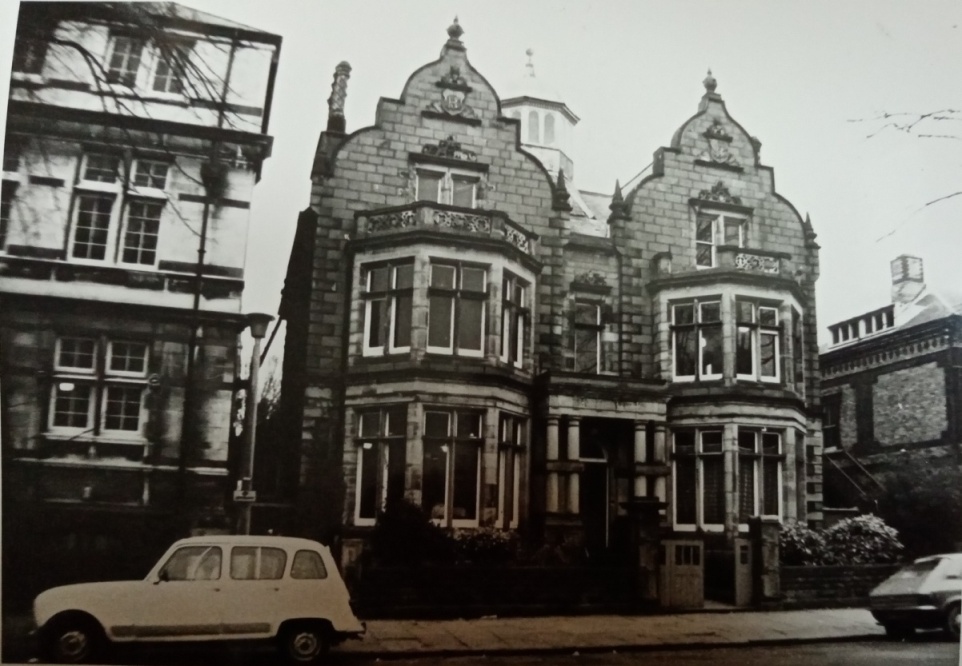
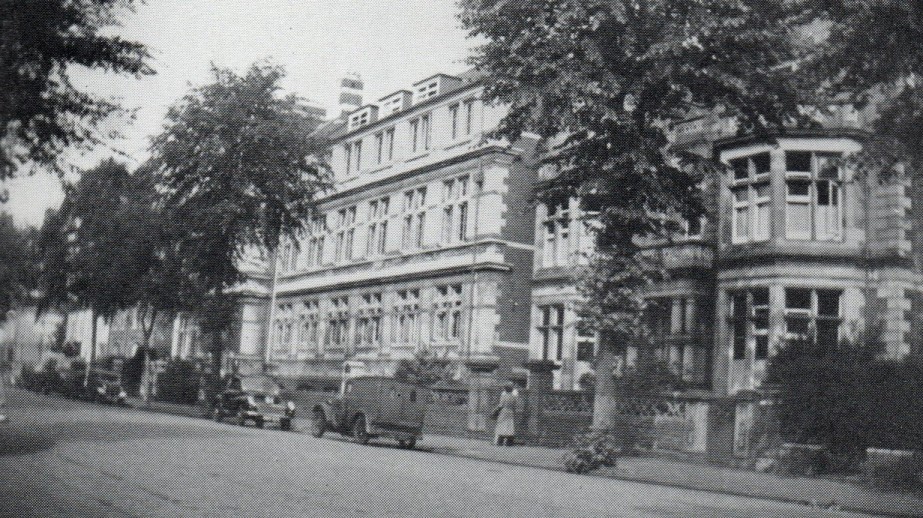
Some additional photographs showing 28 The Parade and the work that went on at The Parade Community Education Centre:
In the first article in this series we looked at 28 The Parade – The Billups Family and their pivotal role in the formation of the Salvation Army. In this article we look at the next occupants of the house, Cardiff High School for Girls or Cardiff Intermediate School for Girls as it was originally called when it began in a large ground-floor room at No.28 The Parade back in Jan 1895 with 95 pupils.
The importance of child education was being quickly realized throughout the 1800s. Private schools and church schools were established. By 1870, Board Schools were being established to provide free education for children up the age of nine. Many of the Primary Schools we see in Cardiff today started as Board Schools and are often still using the same buildings. Some are still inscribed with the original Board School stone inscriptions if you look carefully up at the roof apexes, such as on Albany Road Primary.
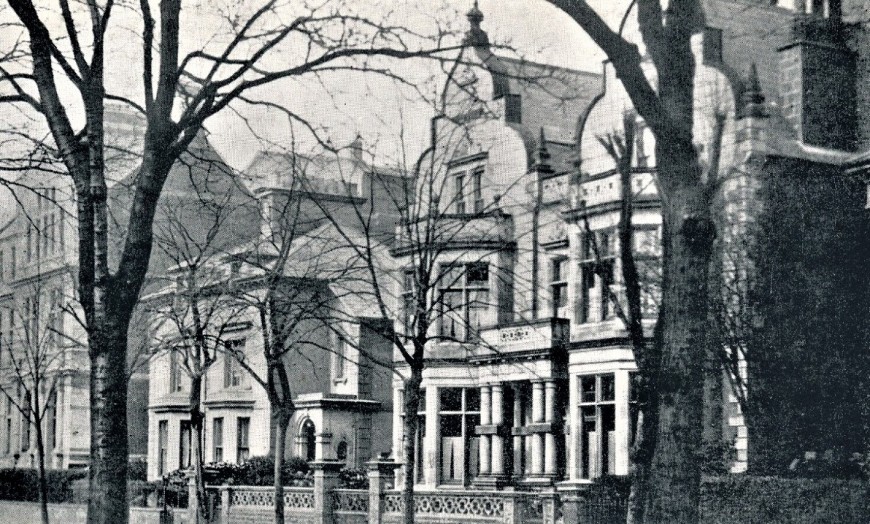
Cardiff Intermediate School for Girls in 1910 with 28 The Parage on the right
University education in Wales was also becoming established. University College opened on Newport Road in 1883. The Intermediate Education Scheme, established in the Act of 1889 aimed to bridge the gap between the Board Schools and University education and provide education for the 9 to 17 year olds who were not able to afford the privilege of a private education. That’s not to say that attending an Intermediate School was free but the fees were not allowed to exceed £5 per annum and there had to be scholarships and bursaries available amounting to not less than ten percent of the total number of pupils in the school. The Welsh Intermediate Education Act of 1889 pre-dated similar legislation in England by a dozen years. The Intermediate Act was also designed to cater for those not necessarily destined for university by providing a technical aspect to the curriculum too but to what extent this aim was born out at 28 The Parade I’m not sure. A quarter of the cost of construction of an Intermediate School had to be raised by public subscription. Presumably the same applied if a school was purchasing an existing building.
The nearby Howard Gardens Higher Grade School was established earlier in 1885. Again I think the aim was to bridge the gap between the Board Schools and University. Howard Gardens became a Municipal Secondary School from 1905 and abolished fees in 1924 somewhat disadvantaging Cardiff High School for Girls that still had an entrance examination and fees.
The original wish had been to have the girls and boys Intermediate school on the same site in Cathays Park but Lord Bute could not see his way to grant a site inside the park. In the end the girl’s Intermediate school opened in The Parade before the boy’s school in Newport Road.
Cardiff High School for Girls – Lower School on Right
The money used to purchase 28 The Parade was presumably 25% public subscription with some or all of the remainder supplied public funds. Some or all of that funding it seems came from charities or endowment funds such as the Craddock Well Charity and the Howell’s Charity.
The Craddock Wells Charity
Craddock Wells died in Cardiff in 1710 and bequeathed two houses in High Street, £28 in cash and a small close of land in Canton (~1¾ acres) to provide for the education of six girls and six boys in Cardiff. The £28 cash was to be used to purchase 3½ more acres adjacent to his existing land. The trustees invested well and by 1895 some 17 acres of land was owned by the charity and income of £17,000 derived off it. By 1955 it was worth £60,000 with an annual income of £3,800. The money was used to award scholarships to those both in school and university education. During the 2020-2021 financial year the total value of assistance approved to former and current pupils was £96,897.84 and Pupils of Cardiff High School benefited generally from the provision of land and buildings by the Charity for the purpose of the school. The Charity held investments valued at over £3 million and land and property valued at £21 million.
Howells Charity
The Howells Charity goes back even further than the Thomas Wells Charity. Thomas Howell was a philanthropist. In his will, published in Spain in 1540 he left 12,000 ducat. That money was invested and some of the proceeds of which were used to set up Howell’s School in Llandaff. .
In 1893, the two charities were combined for administrative purposes. It appears it was money from these combined charities was used to in the setting up of Cardiff Intermediate School for Girls. The money was used to purchase both 28 The Parade from Mr Billups and the freehold from Lord Tredegar.
(In 1910 the combined charities were renamed the Cardiff Intermediate and Technical Education Fund. In 1955 they legally merged under the name of the latter and on 9 May 1966 the combined Charity was renamed the Cardiff Further Education Trust Fund).
In 1893 and agreement was set out whereby boys from places like Llandaff and Penarth would be allowed to attend Cardiff Intermediate School for Boys and girls from Cardiff would be allowed to attend Howell’s School, Llandaff. Whether this was just a temporary agreement until the Cardiff Intermediate School for Girls was established is unclear.
The school proved a success and was quickly expanded to the purpose-built premises that included 24-25 The Parade and cost £30,000 and opened in 1900 by which time there were 250 girls on the books. Nos 26 and 27 The Parade were still both private properties in 1910 so the school was just built around them. It wasn’t until the late 1920’s that the leases of No’s 26 and 27 ran out and in 1930 that the building of the school as we finally knew it really took place. Part of the original gardens of 26 and 27 were retained, entered by a door at the end of the main corridor, just before the Hall.
28 The Parade on right. No’s 26-27 in centre prior to demolition to make way for the school extension. Undated. (Photo Credit J H Dyer, Queen Street)
The school was renamed Cardiff High School for Girls in 1910.
As the school expanded 28 The Parade became the Lower School. In later years 28 The Parade became the sixth form. The caretaker continued to live on the upper floor which included the octagonal copula. One of the frequent memories ex-pupils have of No.28 is the smell of polish used to keep the floor and elegant staircase shiny.
The exterior appearance of 28 The Parade changed little over the 74 years Cardiff High School for Girls occupied the building. J.B.Hilling in the Glamorgan Historian described the building as ‘designed with a mixture of styles incorporating a Doric portico, Dutch gables, tall Tudor brick chimneys and a large octagonal copula over the staircase hall.
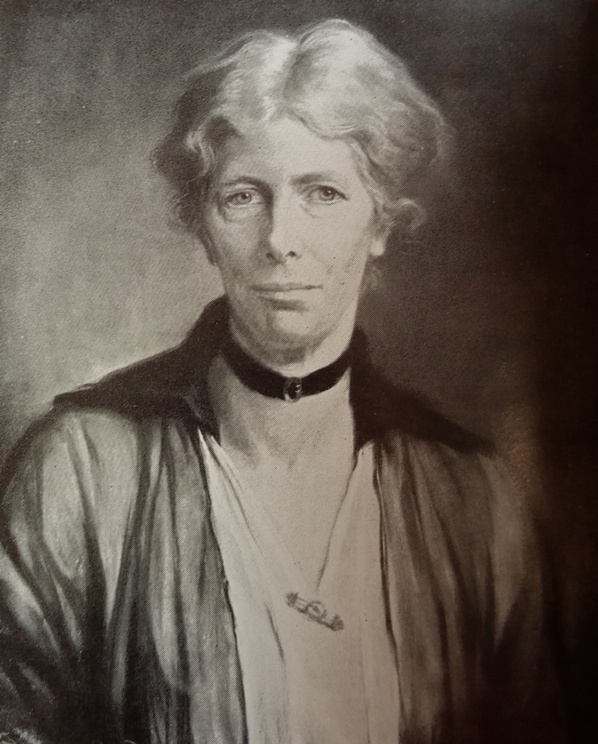
The first headmistress at the school was Miss Mary Collin. Born in Cambridge in 1860 she was educated in Notting Hill School and Bedford College, London where she studied languages. She then taught for seven years in Nottingham High School before moving to Cardiff. At the time of the 1911 and 1921 census she lived in 29 The Parade, a property which at some stage became part of the school.
Staff of 1955. Photo presumably taken at the rear of No 28 The Parade. (photographer unknown)
Mary Collin was an English teacher and campaigner for woman’s suffrage during the early part of the 20th century. She taught her pupils to ride bicycles, seen as a symbol of the growing independence of women and their determination to cast off chaperonage.
Mary Collin was active in the Cardiff Suffrage movement, which included Professor Millicent Mackenzie, founder of the Cardiff Suffrage branch. Collin would host women at The Parade from the National Union of Women’s Suffrage Societies such as NUWSS organizer Helen Fraser when she visited Cardiff to speak.
Miss Mary Collin headteacher 1895-1924
Mary Collin had her work cut out. When the girls and boys intermediate schools were set up it was deemed that among the subjects boys would be taught would be natural science but for the girls domestic economy and the laws of health were to be substituted. Similarly boys would learn iron moulding, modeling in clay and the use of tool whereas the girls would instead learn cookery, needlework, cutting out, and laundry work. Decades later when Mary Collin submitted plans for the expansion of what was then Cardiff High School for Girls she asked for a chemistry laboratory. When the plans were returned the laboratory had been refused and substituted with a sewing room. Eventually she got her was and a laboratory was constructed.
She retired in 1924. She died at the age of 95 soon after the diamond jubilee celebrations of the school in 1955.
The school song was “Hail Glorious Sun”, written by Miss Woodward, who was a mistress at the school from 1896 – 1936. The school motto was Tua’r y Goleuni (‘Towards the Light’).
The school playing fields for both the girls and boys High Schools were at the Harlequins ground off Newport Road. The ‘Spinning Wheel’ book describes the Harlequins being ‘gifted’ by Lord Tredegar. Whether the leasehold was gifted or sold I’m not quite sure but Lord Tredegar was held in high enough esteem that his portrait hung in the school in The Parade
The Old Girls Association (OGA) itself has a long history. It was established in Nov 1899, just four years after the school itself opened. It established a reputation for their dramatic entertainment. In 1932 it put on a performance of The Bat described as one of the most complicated and strangest stories imaginable but it made for fine entertainment with capable acting from every member of the cast. Two years later Jacqueline de Guélis played a leading role in a production of ‘The Aristocrat’ in front of a full house with the proceeds going to the Infirmary. Tragedy was to strike a few weeks later when Jacqueline was knocked down and killed by a motor van on Penylan Hill. Her brother, the spy Major Jacques de Guélis was also killed n a motor accident at the end of WWII. Their story is told in our article The tragic coincidence linking the deaths of the De Guélis siblings.
By June 1955 there were 5,500 Old Girls, ranging from 15 to 70 years of age, scattered all over the world. The summary in of the archives say “Some held unique or important positions; for example, one was the first qualified woman engineer in the United Kingdom”. The OGA was officially wound up in October 2006, although informal gatherings continued. The OGA archives are held in Glamorgan Archives.
The school remained in The Parade until 1970 when it merged with Cardiff High School for Boys and Tŷ Celyn Secondary School in Llandennis Road to form Cardiff High School as a new Comprehensive School and over the next three years transferred to the Llandennis Avenue site. The move to Ty Celyn was gradual with the Sixth form staying at The Parade for a number of years until new facilities were constructed at Llandennis Ave.
Headmistresses
It is amazing to think that in the 75 years Cardiff High School for Girls was at The Parade it only ever had three headmistresses:
Miss Mary Collin 1895-1924, Miss Frances Rees 1925-1949, Miss Eluned Jones 1950-1970
Headteachers Frances Rees ( 1925-1949) and Harriet Eluned Jones (1950-1970)
Notable Old Girls:
Bernice Rubens, Author.
Bernice Rubens (1923-2004) was the first woman to win the Booker Prize for Fiction in 1970, and the second winner overall. She was born in 1923 of Jewish decent and attended the school in the 1930s where she was in the orchestra. A Purple Plaque has recently been erected on the Rubens family home in Kimberley Road to commemorate her life. Our article Bernice Rubens – Booker Prize winner records her life.
The unveiling of the Bernice Rubens Purple Plaque in Kinberley Road in 2024
Irene Steer, Swimmer
Irene Steer, the first Welsh woman to win a Gold Medal at the Olympics. She struck gold in the 1912 Stockholm Olympics as the anchor leg swimmer in the victorious, world record breaking British 4×100 yards freestyle relay team. She was born at 290 Bute Street, Cardiff on 10 Aug 1889. Her father was a draper. By 1901 the Steer family had moved to 32 The Parade. She attended Cardiff High School for Girls, a few yards from her home, from 1899-1906.
Irene Steer at the 1912 Stockholm Olympics (pic credit: Wikipedia)
Gillian Gill, Author
Gillian Gill née Scobie (b.1942) is a noted writer of biographies including ones on Victoria and Albert, Florence Nightingale and Agatha Christie. An insight into her early life comes in a 2020 interview Shelf Awareness: Reading with… Gillian Gill. In it she describes: ‘My loving, secure and extremely boring childhood world, I lived mainly in and for books’. The very first book she remembers owning was Flower Fairies of the Wayside by Cicely Mary Barker. She explains she could barely tell a daisy from a dandelion, but loved that book and acquired a taste for doggerel. In the section of the interview ‘Book you hid from your parents’ she responded: If you can believe it, The Blue Lagoon, when I was about 14. Later, I took a secret gallop through Lady Chatterley’s Lover for the dirty parts which I found a lot less hot than The Blue Lagoon.
Gillian Gill (photo credit: Linda Crosskey and Penguin Random House)
Ann Beach – Actress
Ann Beach (1938 – 2017) had a varied career in film and on stage. Beach won a scholarship to RADA at the age of 16. After leaving, she toured with Frankie Howerd in Hotel Paradiso, and then came to London in the title role of Emlyn Williams’s Beth. She was Polly Garter in Under Milk Wood with Richard Burton and Elizabeth Taylor. She also starred in Notting Hill playing Hugh Grant’s mother.
Ann Beach, actress (photo credit: Wikipedia)
Joan Oxland, Artist
Joan Oxland (1920–2009), was born in Westville Road. After leaving school she attended Cardiff School of Art. She also studied at Wimbledon School of Art and later attended Académie Julian in Paris, 1962–3, before returning to teaching in Wales. She taught at her former school in The Parade and before becoming head of the design department at Llandaff College of Education. She was co-author with Betty Whyatt of the book Design for Embroidery – An Experimental Approach, published in 1974. The regions of France, especially Brittany, Provence and the Ardeche, featured regularly in Joan’s work, and her interpretation of a French market won the prestigious Derrick Turner Prize in Cardiff in 1990.
Eye surgeon to both the Queen Mother and Queen Elizabeth, as well as developing the Pugh orthoptoscope for measuring and correcting eye squint. She attended Marlborough Road School before going on to Cardiff High School for girls in 1911. One thing we are missing though is a picture of Mary Pugh. I wonder if anyone has one? For more information on Mary Pugh see our blog: Mary Agnes Pugh, Ophthalmologist and Eye Surgeon.
The Royal Academy of Music awarded her a Scholarship in 1949. In 1954 she was a member of the National Youth Orchestra for Wales. She went on to be the pianist for the City of Birmingham Symphony Orchestra.
Eira West Pianist
Muriel Kennedy née Williams – head teacher
Muriel Kennedy became the head teacher for the first secondary school for women in Iraq in Baghdad which opened in Apr 1935.
Doreen Vermeulen-Cranch – Professor of Anesthesiology
Doreen Cranch (1915 – 2011) was born in Abertillery. The Cranch family moved to Cardiff and Doreen attended Cardiff High School for Girls before going on to study Medicine in Cardiff and become a house physician at Cardiff Royal Infirmary. She met Jan Vermeulin, of the Amsterdam Shipping Company in Cariff and moved to Holland after WWII where she became a pioneer of Dutch anesthetic science. With her charm. personality, and above all. her intellect Dr Cranch has overcome any opposition from doctors who were somewhat hurt in their pride to be lectured by a woman. They soon realised she was their equal in general medical knowledge and superior in that of anesthesia. She was awarded Commander Order of the British Empire, 1971. Her valedictory lecture was titled “Emancipation process”. Herself a fully emancipated woman, who inspired many female professionals, she was responsible for the emancipation of anesthesia in the Dutch academic world. Miss Collin would have been proud of her.
Professor Doreen Cranch
Further Reading
The history of the school is set out in two books:
The Spinning Wheel: Cardiff High School for Girls 1895-1955. Its story assembled by Catherine Carr (pubs: Cardiff Western Mail and Echo. 1955)
Full Circle: Cardiff High School for Girls 1950-1970 by Barbara Leech (pubs: Starling Press Ltd. 1986)
It must be said however that trying to extract the history of 28 The Parade from these book was not an easy task. The books mainly concentrate on personal reminiscences, mostly concerning the staff, lessons, trips, events etc rather than the fabric of the school itself. When the classrooms are discussed they are usually not identified as being in a specific building etc. For a past-pupil the task would have been easier but for an outsider I found it a challenge. The following extracts from the books are ones that specifically refer to No 28 The Parade and I hope give the reader a sense of the building. Readers of this blog may wish to contribute their own recollections of 28 The Parade if they attended the school.
Some of the plans in question at the end of the first chapter concerned the transformation of a big house, 28, The Parade, into a School, at first the whole School, now Lower School. Miss Rees had an interesting experience in the early summer of 1936, when General Evangeline Booth, daughter of General William Booth, the founder of the Salvation Army, called at School. Her visit was unexpected, or, as Miss Rees said, it would have been a privilege to invite her to take Prayers. She had come in order to renew acquaintance with Lower School, where she had stayed as a little girl with a Mr. and Mrs. Billup, friends of her father. She went into the Welsh Room (the tree-darkened Form room to the left as you go through the front door) and said that was the dining-room. Upstairs, she found that the little dressing-room where she had slept had joined with a bedroom to make the larger Form room on the first floor there are still the two doors plain to see.
General Evangeline Booth told Miss Rees that the house was well-known in those days as one of the finest in the neighbourhood and it is common now for master craftsmen in wood or stone, who for any reason pass through Lower School, to lay hands lovingly on the shining heavy doors and to contemplate the elegantly carved staircase and say: “Substantial, you won’t find wood or work like that nowadays”. ‘Then there are the crystal door-plates and knobs, the crystal bell-handles by the fireplaces, the inlaid floors, the ceilings, the marble mantelpieces.
The noblest mantelpieces are in the largest room, on the right as you go through the front door. At present, it is the Music room, and the envy of other subjects; for with its platform and the big bay window behind it facing on to The Parade, and with its pleasant view of the garden through French windows that open on to a fine terrace at the opposite end, it is still, perhaps, the most attractive room in School. Miss Rees used to say what a beautiful library it would make. Old Girls who had the fortune to begin School with it as their Form room remember it more vividly than any other: to Ursula Scott Morris it symbolizes her school life, with its stage at one end, flowers at the other, and the desks between. Ursula Lavery recalls the garden scene resting lightly on the glass; the massive fire-grates, the carvings, and, above all, the exciting little platform where one solemnly recited or acted across to the red may and the laburnum that once grew together in the Spring, or to the scarlet rowan tree that still lights up the early Autumn.
There it was, after the opening date had been twice postponed because the builders could not complete the necessary alterations in time in the gripping winter weather, that Miss Collin took Prayers on the first morning, January 24th 1895, with 94 girls and a Staff of five Assistant Mistresses and four visiting teachers.
Cloakrooms were unfurnished, pipes were frozen, and girls and Mistresses, too, for the fires in the massive grates, so good to look at, warmed only the near rows with any adequacy. But discomforts were trifles, mere thorns to the rose, in the excitement and enthusiasm of beginnings. In Miss Collin’s words, “Staff and girls, like a large family, were ready to meet any emergency and share both in the difficulties and the joy of work”.
Some of the 94 girls assembled there were no doubt filled with trepidation for they came from private tuition in their own homes, to what would seem to them to be a large unfeeling community. Some came from Board Schools that had been established following the Act of 1870. The majority came from smallish private schools.
Moreover, I was recalling the gloomy forebodings of the family, as from our house in The Walk, we saw the large house in The Parade, with its gardens and stables, being transformed into a school, where I was doomed to lessons in a classroom and sedate games on an asphalted playground.
At first the School Buildings consisted only of the large, double-fronted house, every room, cubicle and cupboard of which was put to use. A Hall of two rooms running the whole depth of the house was used for the assembly of the whole school for Prayers, entertainments, admonitions, physical exercises, and so on. I seem to remember that P.T. was then called Callisthenics, but the only sure memories are of the scratchy feeling of the serge gym suit and one exercise performed at the bidding of Miss Hoskins, our first Gym Mistress : “Hips firm, heels together, knees outward bend.” I can’t remember any Singing classes until a real hall had been built connecting the original house with two others acquired next door but two. There I do remember Mr. Aylward teaching us voice-production, and ‘ intervals’, but when I left in 1899 we had not reached the stage of learning a song.
In the basements were the Dining-room, Cloakrooms, with the mouse-trap lockers, and arrangements for shoes, shoebags, etc., and those name tapes decorating everything, and the atmosphere enriched with the smell of macintoshes and goloshes and wet shoes.
And Silence everywhere, with the minatory mistress in the corner to prevent the breach of this and other rules! Plumbing was what you would expect of a last century house. And a week or two after the school was opened, it was closed for three weeks as all the pipes were frozen! What joy! And how educational the experience; for three weeks, frost enabled us to become expert in ice sports.
The higher your Form, the higher up was your classroom, as the latter were the smaller rooms. I started in a spacious room, the Lower Fifth, the most adventurous of my Forms, as we were a mixed lot in many senses of the word. With my gradual ascent, I ended up in a quite small attic in one of the new houses, at first only to be reached by a tour round the playground, but later accessible through a hall connecting the two sets of buildings.
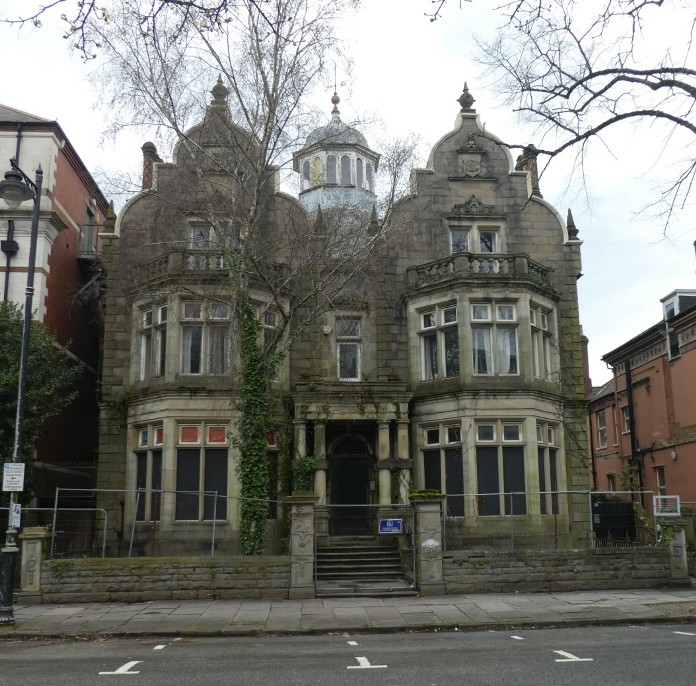
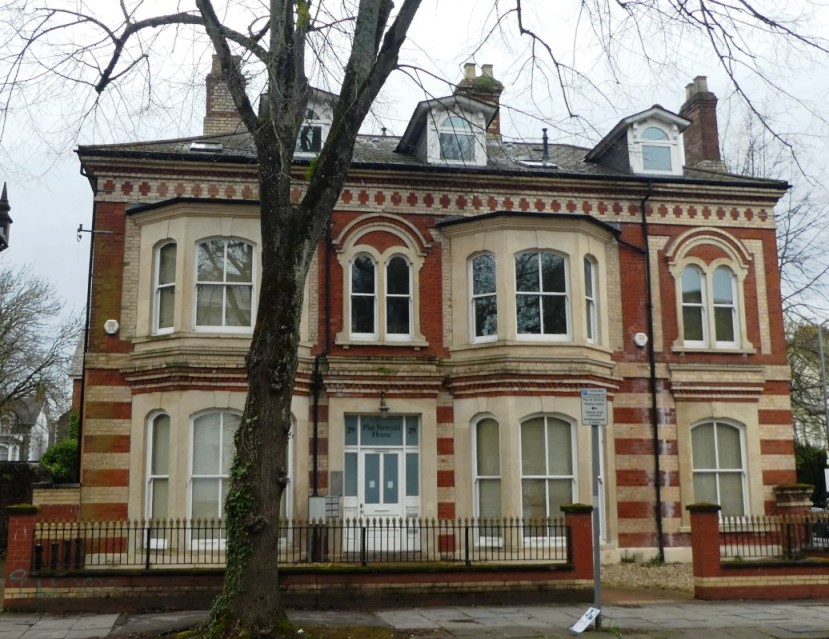
28 The Parade in 2024 currently unoccupied. It would be great to see this building saved and put to a new use.
Additional informaiton recived from readers of this article:
When the first formers moved into no 28 in September 1959 it was such an intimidating building, let alone the staff. The biggest room on the ground floor housed 1c initially and then went on to be the school music room.
Walking along The Parade in Tredegarville, Cardiff these days it’s sad to see No.28 looking empty and neglected. It is a fine building with a fascinating history. In this article we look at the first people who lived there, the Billups family and uncover some of their past. In future articles I hope to cover some of the educational bodies that were based there after the Billups moved on.
The sad looking 28 The Parade today.
Mr Jonathan Edwin Billups was not just a wealthy industrialist who could afford to have a grand residence like 28 The Parade built for him and his family. The Billups family history is also closely intertwined with the history of the Salvation Army. In fact there is even one newspaper article that claims Mr Billups devised the name The Salvation Army, but that’s probably going a bit far. As we shall see however the Billups family were close friends and financial supporters of the founders of the Salvation Army, William Booth and his wife Catherine. The Booths even named one of their children Marian Billups Booth. But let’s not jump ahead of ourselves. Let’s start at the beginning.
Jonathan Billups was born in Chatteris, Cambridgeshire in 1820. His father, Thomas Billups, was a fen farmer. Looking back at old maps from the 1800s there was Billups Sidings Farm just south west of Chatteris.
Billups’ Siding Farm, south west of Chatteris.
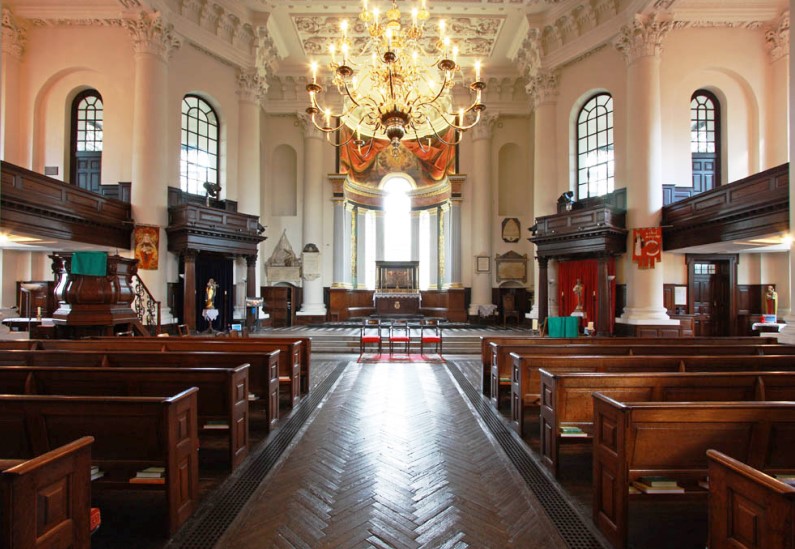
Rather than become a farmer Jonathan leaves Cambridgeshire and works in the burgeoning railway business in London as a platelayer, a person who maintains the railway track. In 1842 he married Susannah Coutts Cooper at St Paul’s Church, Deptford one of London’s finest Baroque parish churches.
The inside of St Paul’s Church, Deptford where Jonathan Billups and Susannah Cooper got married in 1842 (pic credit: John Salmon)
Their first daughter Mary Coutts Billups was born in Deptford in 1844. By 1849 the Billups family have moved to Newport where their second daughter, Susannah Coutts Billups, was born in 1849. In the 1851 census the family are living on Cardiff Road, Newport with Jonathan still working as a platelayer.
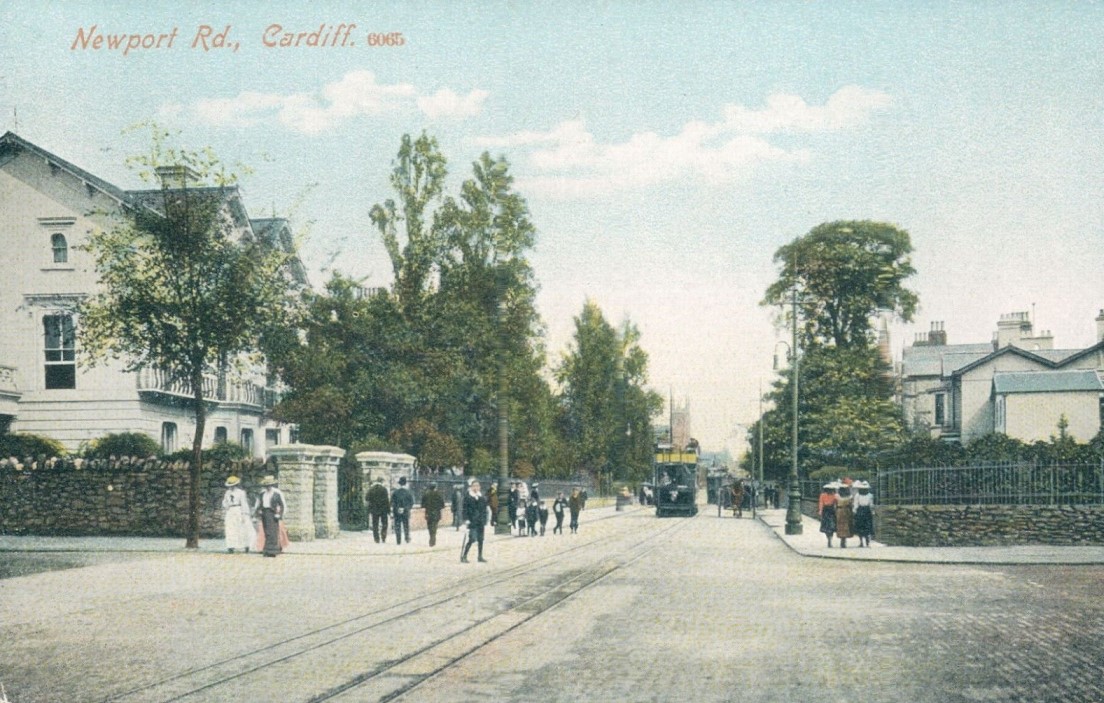
Sometime over the next ten years Jonathan Billups’s entrepreneurial spirit must have mushroomed for in the 1861 census the family are living in Cadiz House, Halswell Terrace, a large property on Roath Road (later renamed Newport Road), Cardiff and in between the wealthy Cory brothers; John Cory, the ship broker and Richard Cory the coal merchant. Jonathan Billups was by this time a ‘railway contractor’.
Newport Road (previously called Roath Road) with West Grove going off to the left. The Billups family initally lived at Cadiz House, probably the second house on the left, next to John Cory.
The Salvation Army connection
The Billups family has a fascinating connection with the Salvation Army that was founded by William Booth with strong support from his wife Catherine Booth.
The Booths were strong believers in roaming evangelism which didn’t sit well with the Wesleyan Methodist church who he worked for. The church would have preferred he spend more of his time supporting his parishioners at home rather than roam the country with his fervent preaching in other parishes and possibly showing up the inadequacies of the incumbent minister. Things came to a head in 1862 when he split from the Wesleyan Methodist church and became an independent evangelist.
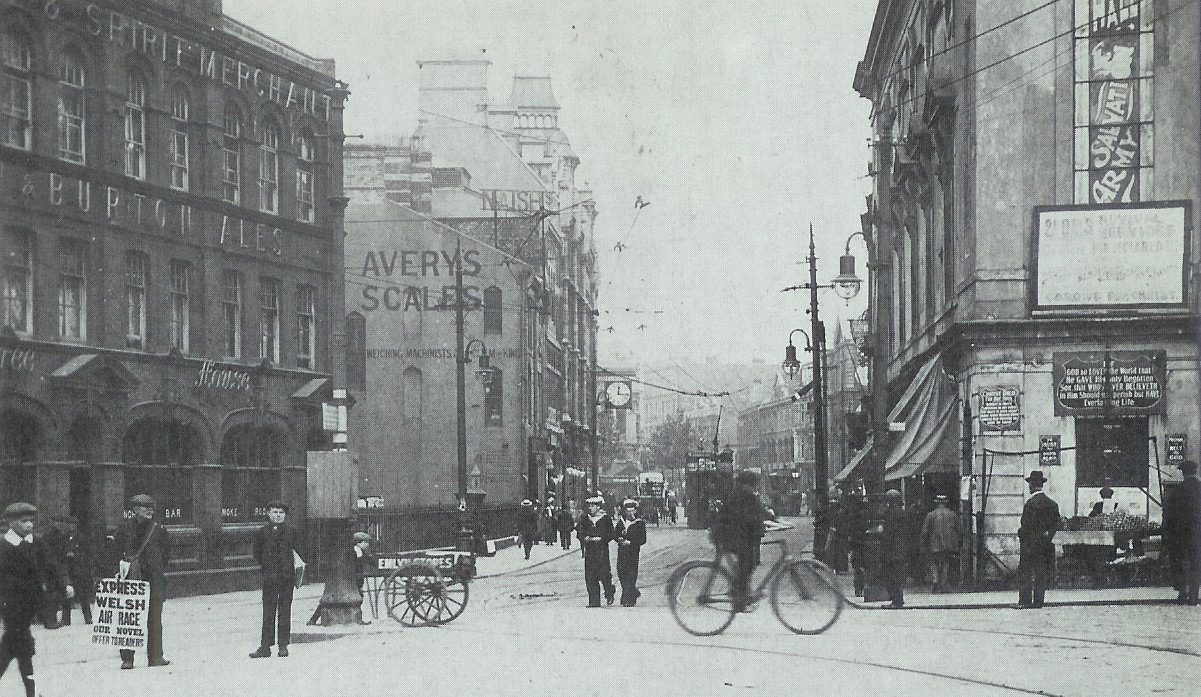
William and Catherine Booth had spent much of 1862 in Cornwall evangelising to Cornish fishermen with mixed results. In 1863 they acted on a suggestion received form Cornish fishermen working in Cardiff that they visit. They were no longer welcome or pride prevented them using Methodist churches so William Booth’s first venue in Cardiff was Tredegarville Baptist Church in The Parade where he preached for a week. William Booth however didn’t feel comfortable preaching in a Baptist church. It was then that they saw an advertisement for an abandoned circus in St Mary Street and decided to rent it. Catherine voiced her concerns about such a venue prior to the first service there on 18 Feb 1862 but soon changed her mind when it became a success. The Booths no longer had to wait for invitations from local churches to carry out their work. This circus venue can perhaps be seen as a turning point in the history of what was to become the Salvation Army.
Catherine and William Booth
But where was this circus? It was not the circus that was to be built at a later date on the corner of Westgate Street and Park Street. By the 1860s the River Taff had been diverted by Brunel so that Cardiff station could be built. One newspaper article refers to some of the piles for the circus being in the river. The river in this case was probably the remnants of the River Taff which were probably not drained until the construction of Temperance Town. Thus would put the circus somewhere at the southern end of St Mary Street.
An extract of a newspaper cutting (3rd JAn 1863) referring to the circus in St Mary Street
An 1851 map of Cardiff showing that the Taff had by then been diverted, but the remnants of the old river remained along parts of St Mary Street (pic credit: Glamorgan Archives).
The Booths, having severed their ties with the Wesleyan Methodist church, had to raise sufficient money to support them and their children. Their target congregation was the poor and destitute, not the type of people who had money to give. They therefore had to find benefactors. Arriving in Cardiff in 1863 they were lucky to meet the Billups and the Cory families.
John Cory as a Wesleyan Methodist and used to preach himself at Roath Road Wesleyan Methodist church at the corner of City Road and Newport Road, the church destroyed in WWII. John Cory was able to see above the differences between the Methodist church and William Booth and became one of his benefactors as did his brother Richard.
Jonathan Billups also became a key financial supporter of William Booth, but more than that, he and his wife Susannah became close personal friends of the Booths. The closeness of these ties is evidenced by the fact that the Booths named their daughter born in 1864 Marian Billups Booth and their daughter born in 1866 Eveline Cory Booth.
Records of the Catherine and William Booth daughters birth registrations in 1864 and 1866.
The Cory brothers went as far was naming one of their new ships ‘William Booth’ and setting aside a proportion of the expected profits for the cause. Unfortunately the vessel was soon wrecked off the coast of Bermuda but the Cory brothers still kept to their original intention to support the Booths. Some years later Cory was involved in helping set up the ‘Salvation Navy’, an idea beset with problems and a story recently told by BBC How the Salvation Army’s navy was sunk – twice.
But it was the Billups and the Booths that built up a strong personal friendship. After Cardiff revival the two families went on holiday together to Weston Super Mare.
28 The Parade
Let’s park the story of the Salvation Army there for a moment and take a look at the main subject of this article that of 28 The Parade.
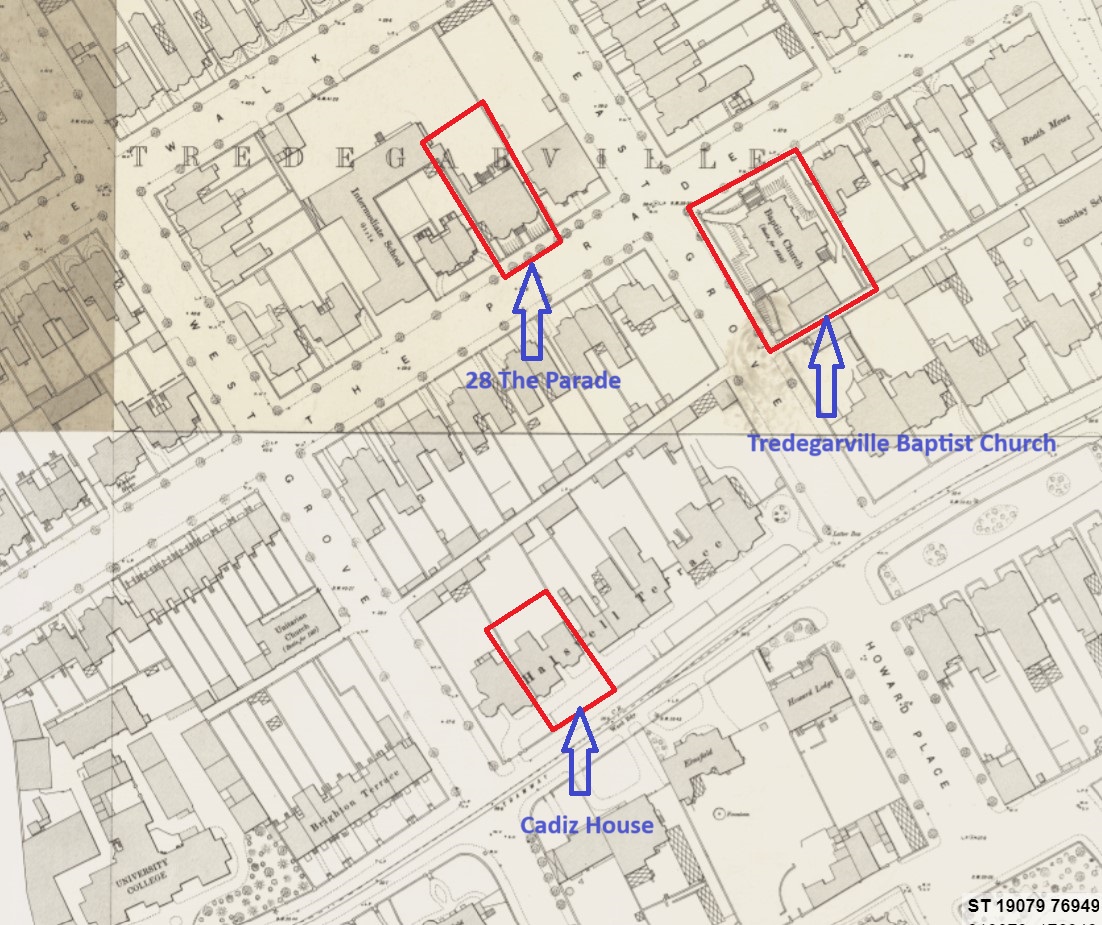
28 The Parade in relation to the old Billups property, Cadiz House on Newport Road.
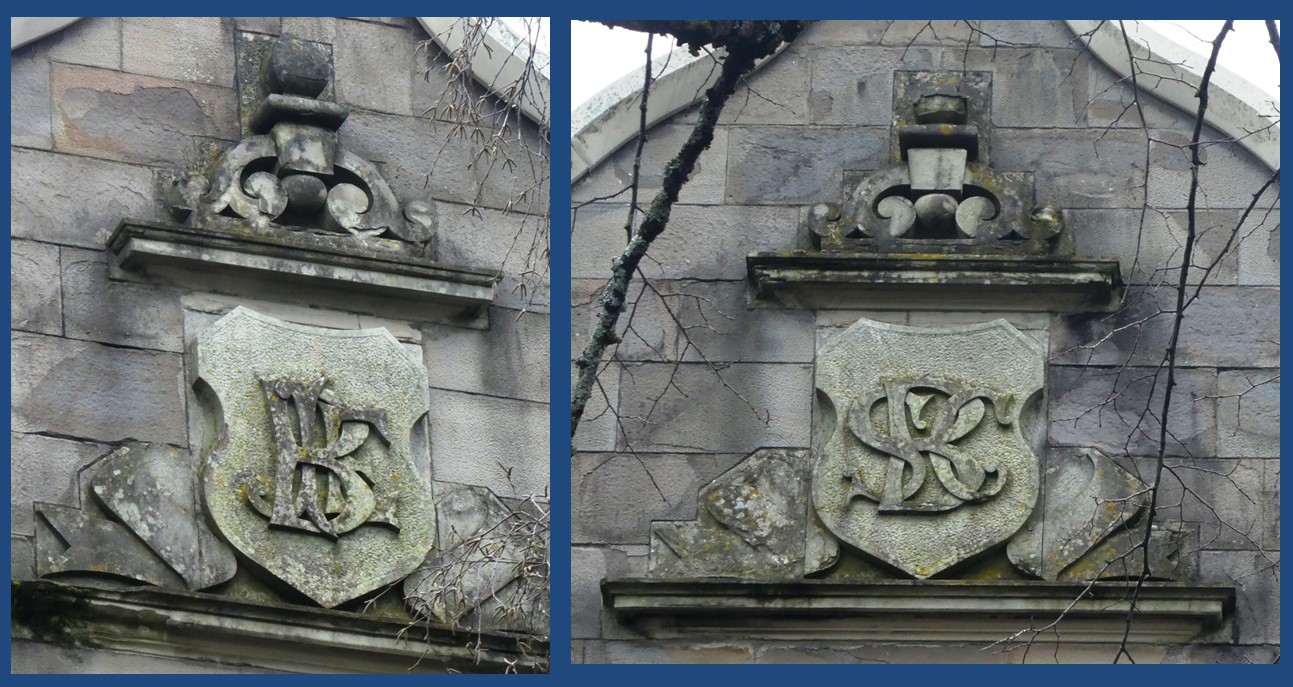
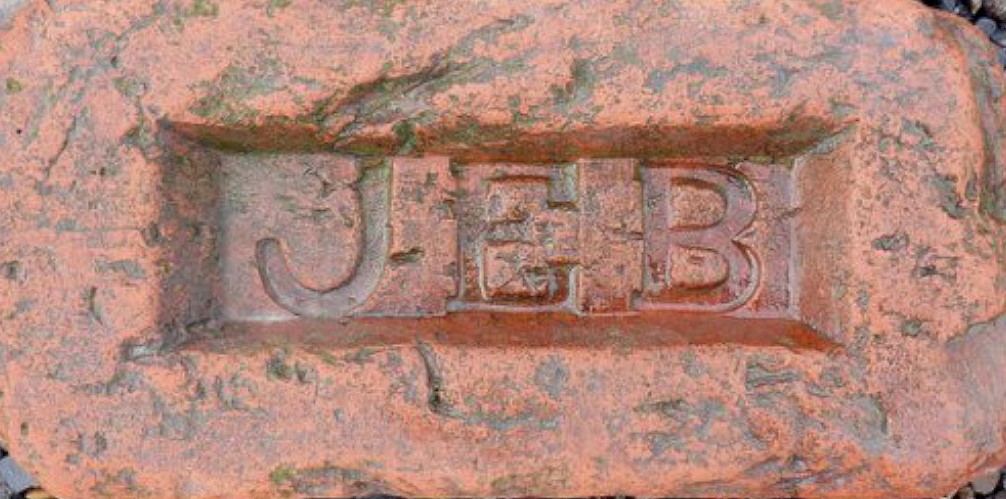
The house was built for the Billups family, there is little doubt about that. Their monograms are still there at the roof apexes.
The Billups monograms on 28 The Parade: JEB (Jonathan Edwin Billups) and SCB (Susannah Coutts Billups).
If you are asking me when it was built then I would estimate around 1868. The family seem to be living there at the time of the 1871 census, though the house at the time has neither a name nor a number (the properties in The Parade were not numbered till a later date). Jonathan Billups was by then described as a Railway Contractor and he lived there with his wife, two daughters and two servants. The 1871 Cardiff Directory however still has his old address of Halswell Terrace on Roath Road, which seems to indicate their move to The Parade was around that date.
28 The Parade is now a Grade 2 listed building. The listing states it was probably built by W.G. Habershon, architect to the Tredegar Estate. It is a Jacobean style 3-bay villa of 2 storeys and attic. The central stair hall has a fine Jacobean full-height open-well stair, which is the principal interior feature.
The ornate chimneys on 28 The Parade
In 1890 Cardiff council were looking to purchase an existing property for use a Judges’ Lodgings. Mr Billups offered up 28 The Parade for a price of £7,000. There was 78 years to run on the ground rent and the rent being £18 9s per annum. His offer was turned down in preference to an offer by Mr James Howell, (presumably his house at the corner of The Walk and West Grove which was later to become the first Mansion House).
In 1894 Mr Billups offers the house for sale to Cardiff Intermediate School for Girls at a price of £5,000 stating that it had originally cost £8,000 when built. The offer was accepted by the board of governors provided that the lease can be purchased from Lord Tredegar.
Jonathan Billups – the businessman
In twenty years Jonathan Billups went from being a plate layer to a railway contractor who could afford to have the grand house at 28 The Parade built for him. Newspaper cuttings over the years give us a clue as to his business.
He was a principal contractor for the Taff Vale Railway and in 1870 in charge of building a double line from Ystrad to Treherbert.
In 1874 he was the main contractor responsible for laying a new sewer under the Taff in Cardiff.
In 1877 he was the contractor for the Taff Vale Railway being built to Penarth and in 1880 for the Clydach Valley Railway.
There are quite a few references over the years to brickworks owned by Mr Billups. In 1879 he had a brickworks in lower Grangetown.
In 1879 he was busy building houses, in this case Nos 1 & 2 Richmond Crescent.
In 1881 the newspaper reports that he is sinking coal shafts into the Nantgarw and Llantwit seams in the hope of realizing up to 100tones a week. Whether he ever found coal we are not informed.
There’s even reference in 1881 to Mr Billups being the first importer of cattle into Cardiff.
1883 has some interesting references in the newspaper to Mr J E Billups being the leaseholder on two farms in Barry which are needed for the construction of Barry Dock and railway.
In 1884 he was applying for a patent for the manufacture of hydraulic cement from local limestone called ‘Aberthaw pebbles’.
In 1885 he is masonry contractor of a new railway bridge in St Andrew’s Place, Cardiff.
Perhaps one of his largest jobs was the construction of the Dry Dock in Roath Basin 1885.
In 1888 we find him working much closer to home as the main contractor for the Roath branch of the Taff Vale Railway. In a related article it mentions Billups as the owner of the Roath Brick Works where two fatalities occurred. The brickworks were where the Sainsbury’s car park is now.
Just a year later he is a contractor on the Dowlais East Moors steel works.
1890 wins the contact for a giant 200 feet Portland cement chimney in Penarth.
There are numerous newspaper references to Mr Billups outside his work sphere. The most frequent references refer to him speaking at or chairing meeting or debates, often of a religious nature or associated with the subject of temperance. Public debates in the 1800s were could be noisy and sometimes riotous affairs with a police presence. In 1863 he chaired a debate on ‘Purgatory’ in the packed Music Hall in Cardiff, with hundreds locked outside. In 1874 he was present at a meeting supporting women’s suffrage. In 1876 he spoke in favour of Sunday closing for public houses.
He presided over a meeting of the Christian Mission (the original name for the Salvation Army), in 1876 at Stuart Hall in the Hayes.
He was evidently a keen gardener and would regularly win prizes in the amateur sections of competitions, ‘for gentlemen not having regular gardeners’. It begs the question as to what part Mrs Billups played in growing the prize winning blooms.
In July 1871 we learn Mr Billups from Tredegarville had lost his dog Fido, a black and tan King Charles spaniel. Perhaps Fido didn’t like it at 28 The Parade and wandered back to his old house.
Susannah Coutts Billups – his wife
Susannah Coutts Billups was born Susannah Coutts Cooper in Deptford, London in 1821.
Mrs Billups and Mrs Booth had a very strong friendship bond and were in regular correspondence. These letters form a good resource for those researching the Salvation Army. In one letter Mrs Booth displays her dislike of vaccines. ‘I would sooner pawn my watch to pay the fines, and my bed too, for the matter of that, than to have any of my children vaccinated. Who knows how much some of us have suffered through life owing to ‘the immortal Jenner?’ (Goodness knows what she would have thought of the relief sculpture of Jenner on the Cardiff University building on Newport Road close to The Parade, but that admittedly wasn’t unveiled till much later)
Mrs Billups died at 28 The Parade on 19 Nov 1883. She had suffered a long illness. During her illness the Salvation Army band would gather in the garden and Susannah would ‘convey to them her dying messages’. Catherine Booth was at her bedside when she died.
Her funeral was large, attended by 1000 Salvation Army soldiers from Cardiff and beyond and augmented by a large crowd and carriages. It set off from The Parade and would have progressed up along what is now City Road and Crwys Road to the new Cathays Cemetery. There were banners and flags waving and bands playing and lots of whoops. General William Booth had travelled from Scotland to lead the graveside service. Her grave is marked by one of the largest headstones in the cemetery and made from Aberdeen red granite on which is a Salvation Army shield and ‘Blood and Fire’ motto. The stonework is said to have cost in excess of £400 (or £40,000 in today’s terms). Her husband Jonathan and sister Ann (Jonathan’s second wife), are buried in the same grave.
The Billups grave at Cathays Cemetery. The cemetery chapels can be seen in the background.
Grave inscription for Susannah Coutts Billups with the Salvation Army shield and motto, Blood and War.
Jonathan Billups maintained his support for the Salvation Army after Susannah had died. In 1886 he is at a wedding in Glasgow of a prominent Salvation Army member alongside William Booth.
In 1889 Jonathan chairs a meeting of the Salvation Army where General Booth’s 22 year old ‘third daughter’ speaks on ‘Torquay Swelldom and London Slumdon’. The speaker would have been Eveline Booth, actually their fourth daughter, which adds weight to the theory that Marian Billups Booth was overlooked (see below).
Mary Coutts Billups – the elder daughter
Mary comes across as an interesting character. She left the Billups home on The Parade in the 1870s and went to lodge with William and Catherine Booth in London. She was keen to learn a foreign language and wanted to learn from a tutor who was teaching one of the Booth sons. The move to London was however prior to her having converted to Christianity so lodging in the Booth household was difficult. She found adhering to the practices problematic. All was solved however at a later date when she saw the light and had a dramatic conversion in a Christian Mission meeting in London.
In April 1875 she married Rev James Elliott Irvine in Cardiff in a packed Charles Street Wesleyan Chapel. Reports describe him as an American Evangelical preacher but he was in fact born in Ireland in 1830. After the wedding the party retired to 28 The Parade for a reception where the cake was reported to have been 4ft tall.
There is an interesting description of Rev Irvine and Mary preaching in Leighton Buzzard in late Dec 1875. She too by this stage is described as ‘an American lady’. It is written very much from the fear of outside evangelists coming into the town uninvited and pinching soles from existing churches in order to form a new church. Mary was described as ‘the more powerful of the two evangelists’. The report states they were part of an organization called ‘International Christian Association for the promotion of Scriptural Holiness’, which seems to be different to the Salvation Army which was at that time called ‘Christian Mission’.
James and Mary emigrated to America shortly after. They were living in New Jersey in 1880 with James working as a clergyman. They later moved to Washington DC and Mary worked as a music teacher. Mary died aged 58 on 26 Jun 1903 and is buried at the Congressional Cemetery in an unmarked grave.
James died in 1916 aged 86 and is buried in Arlington National Cemetery. His obituary makes interesting reading:-
Rev. James E. Irvine, am ordained evangelistic minister for the Methodist Episcopal Church for over half a century, died at his home, 601 4th Street NW, Saturday, from the effects of a fall received about three months ago. Interment was in Arlington Cemetery. Rev. Irvine was born in Ireland and came to this country when a boy. He was ordained shortly before the civil war, and when hostilities began he enlisted in a New York regiment, in which he served as chaplain. During the war he rose to the rank of sergeant. Rev. Irvine took up active evangelistic work at the close of the war, and traveled extensively over the United States and in England. He was married but his wife died a number of years ago. He is survived by an adopted daughter, Mrs. Alamado Rivera, wife of Judge Alamado Rivera of Puerto Rico.
Rev James Elliott Irvine headstone in in Arlington National Cemetery
Susannah Coutts Billups – the younger daughter
Susannah married Edwin Palmer Lee, originally from Plymouth, in 1872 in Cardiff. Initially they lived in 28 The Parade with Jonathan Billups but as their family grew larger with their eight children they moved next door to 29 The Parade. Edwin Palmer Lee was a managing director of a brickworks. Whether 29 The Parade was built for them I am not sure, but it is certainly brick built as opposed to stone built like others in the row.
29 The Parade, home of Susannah Coutts Lee nee Billups and family
The Salvation Army
In 1882 the Salvation Army took out a lease on Stuart Hall in the Hayes in the centre of Cardiff. It was still being used by the Salvation Army in the 1960s but was later demolished.
Stuart Hall in the Hayes on the right and what is now the Duke of Wellington pub on the left
Lease for Stuart Hall signed by William Booth
Another Cardiff connection with the history of the Salvation Army is seen in a newspaper article in 1891 reporting on a meeting held in Roath Road Wesleyan Chapel of the in connection with Salvation Army Homes for the relief and rescue of friendless girls. The meeting was attended by Bramwell Booth, son of William and Catherine Booth. The Chair, Lewis Williams JP spoke of how he may lay claim, along with his friends Mr R.Cory, Mr Billups and Mr J.Cory who ‘fought the first battle that was fought in this country in relation to the right of the Salvation Army to preach the Gospel in the public streets of their country’.
General Booth visited Cardiff on a number of occasions to preach. In 1894 the venue was Wood Street chapel and he was a guest of Mr Billups that day. The obituary of Mr Billups states that whenever William Booth visited Cardiff he invariably stayed with Mr Billups.
The Death of Jonathan Billups
Mr Billups died in Clifton, Bristol on 25 Nov 1896 aged 76 having moved there a few years before his death after 28 The Parade had been sold.
His obituary describes him as a man of considerable energy and force of character. He was a member of Charles Street Congregational church, his politics were liberal and did yeoman service in connection with elections in town.
His body was returned to Cardiff and a large funeral procession set off from The Parade to Cathays Cemetery consisting of more than 20 private carriages and 60-70 members of the Salvation Army marching behind the coffin. The service was conducted by the minister of Charles Street Congregational and Bramwell Booth, son of William Booth. He was laid to rest alongside his first wife Susannah Billups.
The following month a memorial service to Mr Billups was held at the Park Hall led by General Booth in which he was full of praise for Jonathan Billups and the support he had given to the Salvation Army describing him as an honest businessman, a saintly man and ever anxious to promote good works and not only in the cause of religion but of charity and befriending the working man. General Booth wished to correct the notion that had got aboard that the deceased gave a lot of money to the Salvation Army. Mr Billups did not give beyond his means, and helped other good causes beyond the Salvationists.’
Grave inscription for Jonathan Edwin Billups at Cathays Cemetery.
Some reports say that although he was very generous with his money some of his investment decisions may have been poor. His estate when he died was worth £600, not a lot considering probable prior earnings. His Will makes interesting reading. It financially supports his second wife Ann and his children but in the case of his daughter Mary Ann Irvine in America it is made clear that the money should not be in the control of her husband and if Mary predeceases him and there are no children then the money be returned to, and held in trust, for the children of her sister Susannah.
Ann Cooper – Second Wife
After Jonathan Billups lost his first wife Susannah in 1883 he lived with her sister Ann Cooper. Whether they ever officially married is unclear. His will refers to her as ‘my wife or reputed wife Ann Cooper….’ And there is no trace of there marriage being registered. They had no children together and she outlived him, dying in Bristol in 1904 leaving £3000 in her estate.
Grave inscription for Ann Billups
Marian Billups Booth
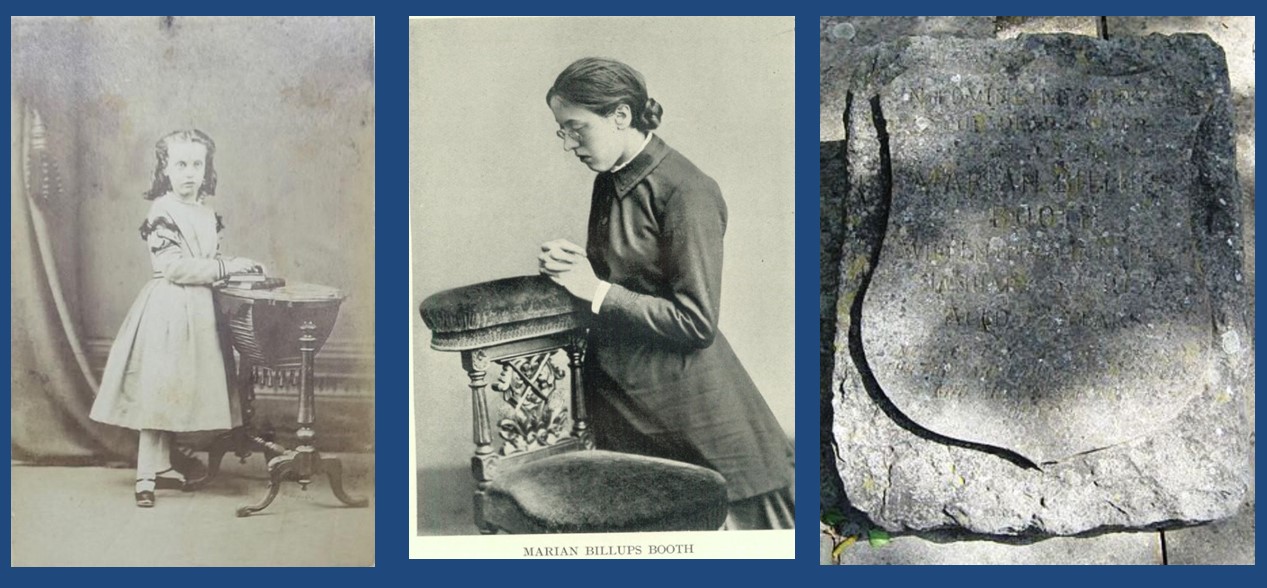
Marian Billups Booth, known as Marie, the sixth child of William and Catherine Booth was born in Leeds on 4 May 1864, a year after the Booths and Billups family had become close friends. Marie suffered from convulsive fits from a young age so unlike her brothers and sisters she did not go on to take a full part in Salvation Army evangelism. She was however assigned a rank of Staff Captain.
Marian Billups Booth and headstone (pic credit: findagrave.com ).
Unlike her siblings Marie led a largely private life. The exact nature of her disability is unknown. Some recent research of the Salvation Army archives has led to the question of whether she was in effect infantilised by her family. Marie herself may have felt undervalued as in one letter she wrote:
‘I think by so doing the officers of that establishment find me very useful & appreciate me being amongst them. But I suppose that is for others to say, only it is necessary to blow your own trumpet sometimes for I expect you don’t hear much about me or my good qualities’.
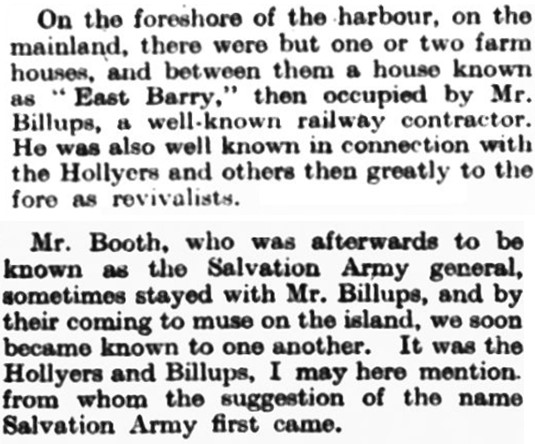
Perhaps the most fascinating newspaper cutting I came across was in the Western Mail 28 Apr 1926 and about the history of Barry Island written by S A Tylke, a former owner of the island. It says:
On the foreshore of the harbour, on the mainland, there were but one or two farm houses, and between them a house known as East Barry,’ then occupied by Mr.Billups, a well-known railway contractor. He was also well known in connection with the Hollyers and others then greatly to the fore as revivalists.
Mr. Booth, who was afterwards to be known as the Salvation Army general, sometimes stayed with Mr. Billups, and by their coming to muse on the island, we soon became known to one another. It was the Hollyers and Billups, I may here mention from whom the suggestion of the name Salvation Army first came.
Could it be true that the name Salvation Army was first suggested by Mr Billups? Possibly, but it does very much contradict the widely accepted theory that the name “The Salvation Army” developed from an incident in May 1878. William Booth was dictating a letter to his secretary and said, “We are a volunteer army.” Bramwell Booth heard his father and said, “Volunteer! I’m no volunteer, I’m a regular!” The secretary was instructed to cross out the word “volunteer” and substitute the word “salvation”.
A General Returns
In 1936, who should turn up at the doorstep of 28 The Parade, then Cardiff High School for Girls, but General Eveline Cory Booth, then leader of the Salvation Army. She had come for a look around the house she remembered staying at with her parents when she was a child. She even found the little dressing room she had slept in as a child, now a form room.
Until the next time ……..
There was me thinking I would cover the history of this fine building all in one article, but no, there’s far too much to tell. We’ll come back another day. In the meantime let’s all hope that 28 The Parade is somehow preserved and its history not forgotten.
Ted RIchards, May 2024
References
The Short Life of Catherine Booth, The Mother of the Salvation Army – by F de L Booth-Tucker.
Blood & Fire, Wiliam and Catherine Booth and their Salvation Army – by Roy Hattersley.
The Grace of Giving – Richard Cory; the BIllups Family – Nigel Faithful
























 Roath Local History Society