I hadn’t come across Charles Leyshon before. In fact there isn’t a lot written about him. Much of the information in the following article comes from a series of tweets in May 2024 by Frederic Humbert @Frederic, Committee Member World Rugby Museum, which was supported by research from Herve Padioleau @HervP, historian of Stade Nantais, and Gwyn Prescott @rugbyhistorian who knows everything about Cardiff rugby, all to whom I am indebted.
In 1924 Welshman Charles Leyshon achieved his place in history by being the first referee to dismiss a player in a rugby test match.
Charles Leyshon (pic credit: Frederic Humbert @Frederic)
The other remarkable, and much sadder bit piece of his history, is that he died in a German Concentration Camp in 1944 aged 69.
Charles Leyshon wasn’t a Roath boy but he did go to school here and lodged at Monkton House school, played rugby for Pen-y-lan juniors and married a Roath girl.
Charles Isaac Leyshon was born on 18 Sep 1875 (see footnote) at 4 Cardiff Road, Mountain Ash, one of four boys born to Charles Ralph Leyshon, a station master with Taff Vale Railway, originally from Pontypridd, and Margaret Mary Leyshon née Thomas, originally from Mountain Ash. In 1881 the Leyshon family were living in Windsor Villa, Miskin, Llantrisant. His mother tragically died aged 25 in 1882 when Charles was just seven.
Charles initially attended school in Pontyclun but then his father received promotion and became station master in Cardiff at the Taff Vale Railway Station, now called Queen Street station. In the 1891 census the family were living at 9 Howard Terrace. Charles and his brother however were boarding at nearby Monkton House School in 18 The Parade with the school’s headmaster and founder Henry Shewbrook.
1. Howard Terrace, home of the Leyshon family. 2. Monkton House School 3. Taff Vale Station
Charles’s father died in Sep 1894. The newspaper reports that he was a much respected stationmaster. His funeral cortege, consisting of ‘a beautiful Victorian car bearing a huge oak and brass coffin followed by numerous mourning coaches’, left Howard Terrace heading for ‘the sequestered churchyard at Talygarn, Llantrisant’.
Charles continued to live in Cardiff. He played rugby for Pen-y-lan Juniors (1893-4) which used to play on Roath Park, and then Old Monktonians (1894-7) the club that later became Glamorgan Wanderers.
On 7 Nov 1897 Charles married Inès Clothilde Frédérica Griffiths at St Andrew’s church. She was born in Roath and lived at in James Street Roath, now called Talworth Street. Quite what inspired her parents to name her Inès Clothilde Frédéricais uncertain as her siblings have more conventional names; Mabel, Lillian, Charles and Eleanor. Charles and Inès had a daughter together, Mary Carmen Leyshon, born in Penarth in 1900, who was baptized at St Augustine Church in Sep 1900.
By 1901 they had moved to Llantrisant Road, Pontyclun, where Charles was worked as a railway clerk.
Sometime in the next six years they emigrated to France. In the 1907-8 season Charles played scrum-half for the Stade Nantes Université Rugby Club (SNUC) before moving into refereeing.
1908 Stade Nantes Université Rugby Club (SNUC), Charles Leyshon in civilian clothes (Pic credit SNUC Archives)
In 1910, he became a member of the SNUC committee, at the same time as the Welsh star of the team Percy Bush who arrived after him. Percy Bush had by that time won 8 caps for Wales and 4 for the British Isles.
1910 Stade Nantes Université Rugby Club (SNUC), Charles Leyshon in civilian clothes, Percy Bush, 2nd row, 2nd from right (Pic credit SNUC Archives).
Charles Leyshon refereed matches in 1915 and 1916 suggesting he remained in France in WWI.
In 1918 he settled in Paris and continued his rugby refereeing, something he did until 1930. Quite what Charles Leyshon did for a living I have yet to discover.
In 1923 he was one of the founding members of the British Rugby Club of Paris which still exists today.
In 1924 he was a referee in the Paris Olympics and in the match USA versus Romania in Colombes and sent off American Ed Turkington who was the first person to be sent off in a rugby international test match. The newspaper reports that Turkington was sent off minutes before the final whistle for kicking a Romanian player whist the later was down. Turkington argued that the kick was unintentional. The USA ended up winning the game 37-0. Some British sources mistakenly indicate that the first expelled was the New Zealander Cyril Brownlie against England on January 3, 1925 but that was a year after the Olympics.
USA Rugby Team 1924 Olympics
What surprised me was that it took until 1924 for a player to be dismissed in a test match considering rugby had been a popular sport for the previous 50 years. I may be missing the subtleties of what is defined as a Test Match, or maybe ‘sending off’ had more recently gained some official status in the rules.
Charles Leyshon was arrested in Jul 1944 and sent to the Buchenwald Concentration Camp in Germany. He died there of broncho-pneumonia and heart failure on Nov 19 1944, aged 69. The reason for his arrest and being sent to Buchenwald is unclear. The Buchenwald Archives reference card for Charles Leyshon states “”Polit. England”, which he interprets as “Political Prisoner – English”. It appears the family had already moved to the South of France to escape initial German occupation. Charles had been a Freemason when they lived in Paris, a member of the ‘Anglo-Saxon Lodge’ which may be a reason for his arest.
Or maybe there are some Jewish connections which could explain his arrest. Charles Leyshon was married in a Christian church (St Andrew’s) but his daughter Mary Carmen Leyshon is said to have married in a synagogue in Paris. She married Frenchman Rémi Louis Lamoureux and they had two children Gerard and Evelyn, but whether there are any Leyshon family still living in France is uncertain.
Buchenwald Memorial (pic credit Wikipedia / Creative Commons)
Edward Thomas Leyshon (1874-1949) was landlord of the Miskin Inn before later becoming a Director of the Ely Brewery in Cardiff. His son Trevor Leyshon became the brewer manager at St Austell Brewery which still going strong today.
Thomas William Leyshon (1877-1910) also attended Monkton House school. He married in 1897 giving his profession as an architect. When he died in 1910 he was living at the Butchers Arms in Llandaff.
Arthur Ralph Leyshon (1879-1940) married in 1898 but was widowed a decade later and moved to British Colombia, Canada and became a logger. In WWI he joined the Canadian Expeditionary Force in 1916 and was demobilised in 1919 before he moved back to the UK and lived in Surrey and was employed as a road worker.
Footnote
Charles’s birth certificate records his birth as 18 Sep 1875 although he always appears to have celebrated his birthday on 8th Sept. That is the day quoted on his school registration form in Pontyclun and his prisoner of war papers. Those same papers state he was born in 1873 rather than 1875 which appears to be an error.
More information
If anyone has any more information about Charles Leyshon then I would be interested to know as I’m sure would Frederic Humbert @Frederic
Walking along The Parade in Tredegarville, Cardiff these days it’s sad to see No.28 looking empty and neglected. It is a fine building with a fascinating history. In this article we look at the first people who lived there, the Billups family and uncover some of their past. In future articles I hope to cover some of the educational bodies that were based there after the Billups moved on.
The sad looking 28 The Parade today.
Mr Jonathan Edwin Billups was not just a wealthy industrialist who could afford to have a grand residence like 28 The Parade built for him and his family. The Billups family history is also closely intertwined with the history of the Salvation Army. In fact there is even one newspaper article that claims Mr Billups devised the name The Salvation Army, but that’s probably going a bit far. As we shall see however the Billups family were close friends and financial supporters of the founders of the Salvation Army, William Booth and his wife Catherine. The Booths even named one of their children Marian Billups Booth. But let’s not jump ahead of ourselves. Let’s start at the beginning.
Jonathan Billups was born in Chatteris, Cambridgeshire in 1820. His father, Thomas Billups, was a fen farmer. Looking back at old maps from the 1800s there was Billups Sidings Farm just south west of Chatteris.
Billups’ Siding Farm, south west of Chatteris.
Rather than become a farmer Jonathan leaves Cambridgeshire and works in the burgeoning railway business in London as a platelayer, a person who maintains the railway track. In 1842 he married Susannah Coutts Cooper at St Paul’s Church, Deptford one of London’s finest Baroque parish churches.
The inside of St Paul’s Church, Deptford where Jonathan Billups and Susannah Cooper got married in 1842 (pic credit: John Salmon)
Their first daughter Mary Coutts Billups was born in Deptford in 1844. By 1849 the Billups family have moved to Newport where their second daughter, Susannah Coutts Billups, was born in 1849. In the 1851 census the family are living on Cardiff Road, Newport with Jonathan still working as a platelayer.
Sometime over the next ten years Jonathan Billups’s entrepreneurial spirit must have mushroomed for in the 1861 census the family are living in Cadiz House, Halswell Terrace, a large property on Roath Road (later renamed Newport Road), Cardiff and in between the wealthy Cory brothers; John Cory, the ship broker and Richard Cory the coal merchant. Jonathan Billups was by this time a ‘railway contractor’.
Newport Road (previously called Roath Road) with West Grove going off to the left. The Billups family initally lived at Cadiz House, probably the second house on the left, next to John Cory.
The Salvation Army connection
The Billups family has a fascinating connection with the Salvation Army that was founded by William Booth with strong support from his wife Catherine Booth.
The Booths were strong believers in roaming evangelism which didn’t sit well with the Wesleyan Methodist church who he worked for. The church would have preferred he spend more of his time supporting his parishioners at home rather than roam the country with his fervent preaching in other parishes and possibly showing up the inadequacies of the incumbent minister. Things came to a head in 1862 when he split from the Wesleyan Methodist church and became an independent evangelist.
William and Catherine Booth had spent much of 1862 in Cornwall evangelising to Cornish fishermen with mixed results. In 1863 they acted on a suggestion received form Cornish fishermen working in Cardiff that they visit. They were no longer welcome or pride prevented them using Methodist churches so William Booth’s first venue in Cardiff was Tredegarville Baptist Church in The Parade where he preached for a week. William Booth however didn’t feel comfortable preaching in a Baptist church. It was then that they saw an advertisement for an abandoned circus in St Mary Street and decided to rent it. Catherine voiced her concerns about such a venue prior to the first service there on 18 Feb 1862 but soon changed her mind when it became a success. The Booths no longer had to wait for invitations from local churches to carry out their work. This circus venue can perhaps be seen as a turning point in the history of what was to become the Salvation Army.
Catherine and William Booth
But where was this circus? It was not the circus that was to be built at a later date on the corner of Westgate Street and Park Street. By the 1860s the River Taff had been diverted by Brunel so that Cardiff station could be built. One newspaper article refers to some of the piles for the circus being in the river. The river in this case was probably the remnants of the River Taff which were probably not drained until the construction of Temperance Town. Thus would put the circus somewhere at the southern end of St Mary Street.
An extract of a newspaper cutting (3rd JAn 1863) referring to the circus in St Mary Street
An 1851 map of Cardiff showing that the Taff had by then been diverted, but the remnants of the old river remained along parts of St Mary Street (pic credit: Glamorgan Archives).
The Booths, having severed their ties with the Wesleyan Methodist church, had to raise sufficient money to support them and their children. Their target congregation was the poor and destitute, not the type of people who had money to give. They therefore had to find benefactors. Arriving in Cardiff in 1863 they were lucky to meet the Billups and the Cory families.
John Cory as a Wesleyan Methodist and used to preach himself at Roath Road Wesleyan Methodist church at the corner of City Road and Newport Road, the church destroyed in WWII. John Cory was able to see above the differences between the Methodist church and William Booth and became one of his benefactors as did his brother Richard.
Jonathan Billups also became a key financial supporter of William Booth, but more than that, he and his wife Susannah became close personal friends of the Booths. The closeness of these ties is evidenced by the fact that the Booths named their daughter born in 1864 Marian Billups Booth and their daughter born in 1866 Eveline Cory Booth.
Records of the Catherine and William Booth daughters birth registrations in 1864 and 1866.
The Cory brothers went as far was naming one of their new ships ‘William Booth’ and setting aside a proportion of the expected profits for the cause. Unfortunately the vessel was soon wrecked off the coast of Bermuda but the Cory brothers still kept to their original intention to support the Booths. Some years later Cory was involved in helping set up the ‘Salvation Navy’, an idea beset with problems and a story recently told by BBC How the Salvation Army’s navy was sunk – twice.
But it was the Billups and the Booths that built up a strong personal friendship. After Cardiff revival the two families went on holiday together to Weston Super Mare.
28 The Parade
Let’s park the story of the Salvation Army there for a moment and take a look at the main subject of this article that of 28 The Parade.
28 The Parade in relation to the old Billups property, Cadiz House on Newport Road.
The house was built for the Billups family, there is little doubt about that. Their monograms are still there at the roof apexes.
The Billups monograms on 28 The Parade: JEB (Jonathan Edwin Billups) and SCB (Susannah Coutts Billups).
If you are asking me when it was built then I would estimate around 1868. The family seem to be living there at the time of the 1871 census, though the house at the time has neither a name nor a number (the properties in The Parade were not numbered till a later date). Jonathan Billups was by then described as a Railway Contractor and he lived there with his wife, two daughters and two servants. The 1871 Cardiff Directory however still has his old address of Halswell Terrace on Roath Road, which seems to indicate their move to The Parade was around that date.
28 The Parade is now a Grade 2 listed building. The listing states it was probably built by W.G. Habershon, architect to the Tredegar Estate. It is a Jacobean style 3-bay villa of 2 storeys and attic. The central stair hall has a fine Jacobean full-height open-well stair, which is the principal interior feature.
The ornate chimneys on 28 The Parade
In 1890 Cardiff council were looking to purchase an existing property for use a Judges’ Lodgings. Mr Billups offered up 28 The Parade for a price of £7,000. There was 78 years to run on the ground rent and the rent being £18 9s per annum. His offer was turned down in preference to an offer by Mr James Howell, (presumably his house at the corner of The Walk and West Grove which was later to become the first Mansion House).
In 1894 Mr Billups offers the house for sale to Cardiff Intermediate School for Girls at a price of £5,000 stating that it had originally cost £8,000 when built. The offer was accepted by the board of governors provided that the lease can be purchased from Lord Tredegar.
Jonathan Billups – the businessman
In twenty years Jonathan Billups went from being a plate layer to a railway contractor who could afford to have the grand house at 28 The Parade built for him. Newspaper cuttings over the years give us a clue as to his business.
He was a principal contractor for the Taff Vale Railway and in 1870 in charge of building a double line from Ystrad to Treherbert.
In 1874 he was the main contractor responsible for laying a new sewer under the Taff in Cardiff.
In 1877 he was the contractor for the Taff Vale Railway being built to Penarth and in 1880 for the Clydach Valley Railway.
There are quite a few references over the years to brickworks owned by Mr Billups. In 1879 he had a brickworks in lower Grangetown.
In 1879 he was busy building houses, in this case Nos 1 & 2 Richmond Crescent.
In 1881 the newspaper reports that he is sinking coal shafts into the Nantgarw and Llantwit seams in the hope of realizing up to 100tones a week. Whether he ever found coal we are not informed.
There’s even reference in 1881 to Mr Billups being the first importer of cattle into Cardiff.
1883 has some interesting references in the newspaper to Mr J E Billups being the leaseholder on two farms in Barry which are needed for the construction of Barry Dock and railway.
In 1884 he was applying for a patent for the manufacture of hydraulic cement from local limestone called ‘Aberthaw pebbles’.
In 1885 he is masonry contractor of a new railway bridge in St Andrew’s Place, Cardiff.
Perhaps one of his largest jobs was the construction of the Dry Dock in Roath Basin 1885.
In 1888 we find him working much closer to home as the main contractor for the Roath branch of the Taff Vale Railway. In a related article it mentions Billups as the owner of the Roath Brick Works where two fatalities occurred. The brickworks were where the Sainsbury’s car park is now.
Just a year later he is a contractor on the Dowlais East Moors steel works.
1890 wins the contact for a giant 200 feet Portland cement chimney in Penarth.
There are numerous newspaper references to Mr Billups outside his work sphere. The most frequent references refer to him speaking at or chairing meeting or debates, often of a religious nature or associated with the subject of temperance. Public debates in the 1800s were could be noisy and sometimes riotous affairs with a police presence. In 1863 he chaired a debate on ‘Purgatory’ in the packed Music Hall in Cardiff, with hundreds locked outside. In 1874 he was present at a meeting supporting women’s suffrage. In 1876 he spoke in favour of Sunday closing for public houses.
He presided over a meeting of the Christian Mission (the original name for the Salvation Army), in 1876 at Stuart Hall in the Hayes.
He was evidently a keen gardener and would regularly win prizes in the amateur sections of competitions, ‘for gentlemen not having regular gardeners’. It begs the question as to what part Mrs Billups played in growing the prize winning blooms.
In July 1871 we learn Mr Billups from Tredegarville had lost his dog Fido, a black and tan King Charles spaniel. Perhaps Fido didn’t like it at 28 The Parade and wandered back to his old house.
Susannah Coutts Billups – his wife
Susannah Coutts Billups was born Susannah Coutts Cooper in Deptford, London in 1821.
Mrs Billups and Mrs Booth had a very strong friendship bond and were in regular correspondence. These letters form a good resource for those researching the Salvation Army. In one letter Mrs Booth displays her dislike of vaccines. ‘I would sooner pawn my watch to pay the fines, and my bed too, for the matter of that, than to have any of my children vaccinated. Who knows how much some of us have suffered through life owing to ‘the immortal Jenner?’ (Goodness knows what she would have thought of the relief sculpture of Jenner on the Cardiff University building on Newport Road close to The Parade, but that admittedly wasn’t unveiled till much later)
Mrs Billups died at 28 The Parade on 19 Nov 1883. She had suffered a long illness. During her illness the Salvation Army band would gather in the garden and Susannah would ‘convey to them her dying messages’. Catherine Booth was at her bedside when she died.
Her funeral was large, attended by 1000 Salvation Army soldiers from Cardiff and beyond and augmented by a large crowd and carriages. It set off from The Parade and would have progressed up along what is now City Road and Crwys Road to the new Cathays Cemetery. There were banners and flags waving and bands playing and lots of whoops. General William Booth had travelled from Scotland to lead the graveside service. Her grave is marked by one of the largest headstones in the cemetery and made from Aberdeen red granite on which is a Salvation Army shield and ‘Blood and Fire’ motto. The stonework is said to have cost in excess of £400 (or £40,000 in today’s terms). Her husband Jonathan and sister Ann (Jonathan’s second wife), are buried in the same grave.
The Billups grave at Cathays Cemetery. The cemetery chapels can be seen in the background.
Grave inscription for Susannah Coutts Billups with the Salvation Army shield and motto, Blood and War.
Jonathan Billups maintained his support for the Salvation Army after Susannah had died. In 1886 he is at a wedding in Glasgow of a prominent Salvation Army member alongside William Booth.
In 1889 Jonathan chairs a meeting of the Salvation Army where General Booth’s 22 year old ‘third daughter’ speaks on ‘Torquay Swelldom and London Slumdon’. The speaker would have been Eveline Booth, actually their fourth daughter, which adds weight to the theory that Marian Billups Booth was overlooked (see below).
Mary Coutts Billups – the elder daughter
Mary comes across as an interesting character. She left the Billups home on The Parade in the 1870s and went to lodge with William and Catherine Booth in London. She was keen to learn a foreign language and wanted to learn from a tutor who was teaching one of the Booth sons. The move to London was however prior to her having converted to Christianity so lodging in the Booth household was difficult. She found adhering to the practices problematic. All was solved however at a later date when she saw the light and had a dramatic conversion in a Christian Mission meeting in London.
In April 1875 she married Rev James Elliott Irvine in Cardiff in a packed Charles Street Wesleyan Chapel. Reports describe him as an American Evangelical preacher but he was in fact born in Ireland in 1830. After the wedding the party retired to 28 The Parade for a reception where the cake was reported to have been 4ft tall.
There is an interesting description of Rev Irvine and Mary preaching in Leighton Buzzard in late Dec 1875. She too by this stage is described as ‘an American lady’. It is written very much from the fear of outside evangelists coming into the town uninvited and pinching soles from existing churches in order to form a new church. Mary was described as ‘the more powerful of the two evangelists’. The report states they were part of an organization called ‘International Christian Association for the promotion of Scriptural Holiness’, which seems to be different to the Salvation Army which was at that time called ‘Christian Mission’.
James and Mary emigrated to America shortly after. They were living in New Jersey in 1880 with James working as a clergyman. They later moved to Washington DC and Mary worked as a music teacher. Mary died aged 58 on 26 Jun 1903 and is buried at the Congressional Cemetery in an unmarked grave.
James died in 1916 aged 86 and is buried in Arlington National Cemetery. His obituary makes interesting reading:-
Rev. James E. Irvine, am ordained evangelistic minister for the Methodist Episcopal Church for over half a century, died at his home, 601 4th Street NW, Saturday, from the effects of a fall received about three months ago. Interment was in Arlington Cemetery. Rev. Irvine was born in Ireland and came to this country when a boy. He was ordained shortly before the civil war, and when hostilities began he enlisted in a New York regiment, in which he served as chaplain. During the war he rose to the rank of sergeant. Rev. Irvine took up active evangelistic work at the close of the war, and traveled extensively over the United States and in England. He was married but his wife died a number of years ago. He is survived by an adopted daughter, Mrs. Alamado Rivera, wife of Judge Alamado Rivera of Puerto Rico.
Rev James Elliott Irvine headstone in in Arlington National Cemetery
Susannah Coutts Billups – the younger daughter
Susannah married Edwin Palmer Lee, originally from Plymouth, in 1872 in Cardiff. Initially they lived in 28 The Parade with Jonathan Billups but as their family grew larger with their eight children they moved next door to 29 The Parade. Edwin Palmer Lee was a managing director of a brickworks. Whether 29 The Parade was built for them I am not sure, but it is certainly brick built as opposed to stone built like others in the row.
29 The Parade, home of Susannah Coutts Lee nee Billups and family
The Salvation Army
In 1882 the Salvation Army took out a lease on Stuart Hall in the Hayes in the centre of Cardiff. It was still being used by the Salvation Army in the 1960s but was later demolished.
Stuart Hall in the Hayes on the right and what is now the Duke of Wellington pub on the left
Lease for Stuart Hall signed by William Booth
Another Cardiff connection with the history of the Salvation Army is seen in a newspaper article in 1891 reporting on a meeting held in Roath Road Wesleyan Chapel of the in connection with Salvation Army Homes for the relief and rescue of friendless girls. The meeting was attended by Bramwell Booth, son of William and Catherine Booth. The Chair, Lewis Williams JP spoke of how he may lay claim, along with his friends Mr R.Cory, Mr Billups and Mr J.Cory who ‘fought the first battle that was fought in this country in relation to the right of the Salvation Army to preach the Gospel in the public streets of their country’.
General Booth visited Cardiff on a number of occasions to preach. In 1894 the venue was Wood Street chapel and he was a guest of Mr Billups that day. The obituary of Mr Billups states that whenever William Booth visited Cardiff he invariably stayed with Mr Billups.
The Death of Jonathan Billups
Mr Billups died in Clifton, Bristol on 25 Nov 1896 aged 76 having moved there a few years before his death after 28 The Parade had been sold.
His obituary describes him as a man of considerable energy and force of character. He was a member of Charles Street Congregational church, his politics were liberal and did yeoman service in connection with elections in town.
His body was returned to Cardiff and a large funeral procession set off from The Parade to Cathays Cemetery consisting of more than 20 private carriages and 60-70 members of the Salvation Army marching behind the coffin. The service was conducted by the minister of Charles Street Congregational and Bramwell Booth, son of William Booth. He was laid to rest alongside his first wife Susannah Billups.
The following month a memorial service to Mr Billups was held at the Park Hall led by General Booth in which he was full of praise for Jonathan Billups and the support he had given to the Salvation Army describing him as an honest businessman, a saintly man and ever anxious to promote good works and not only in the cause of religion but of charity and befriending the working man. General Booth wished to correct the notion that had got aboard that the deceased gave a lot of money to the Salvation Army. Mr Billups did not give beyond his means, and helped other good causes beyond the Salvationists.’
Grave inscription for Jonathan Edwin Billups at Cathays Cemetery.
Some reports say that although he was very generous with his money some of his investment decisions may have been poor. His estate when he died was worth £600, not a lot considering probable prior earnings. His Will makes interesting reading. It financially supports his second wife Ann and his children but in the case of his daughter Mary Ann Irvine in America it is made clear that the money should not be in the control of her husband and if Mary predeceases him and there are no children then the money be returned to, and held in trust, for the children of her sister Susannah.
Ann Cooper – Second Wife
After Jonathan Billups lost his first wife Susannah in 1883 he lived with her sister Ann Cooper. Whether they ever officially married is unclear. His will refers to her as ‘my wife or reputed wife Ann Cooper….’ And there is no trace of there marriage being registered. They had no children together and she outlived him, dying in Bristol in 1904 leaving £3000 in her estate.
Grave inscription for Ann Billups
Marian Billups Booth
Marian Billups Booth, known as Marie, the sixth child of William and Catherine Booth was born in Leeds on 4 May 1864, a year after the Booths and Billups family had become close friends. Marie suffered from convulsive fits from a young age so unlike her brothers and sisters she did not go on to take a full part in Salvation Army evangelism. She was however assigned a rank of Staff Captain.
Marian Billups Booth and headstone (pic credit: findagrave.com ).
Unlike her siblings Marie led a largely private life. The exact nature of her disability is unknown. Some recent research of the Salvation Army archives has led to the question of whether she was in effect infantilised by her family. Marie herself may have felt undervalued as in one letter she wrote:
‘I think by so doing the officers of that establishment find me very useful & appreciate me being amongst them. But I suppose that is for others to say, only it is necessary to blow your own trumpet sometimes for I expect you don’t hear much about me or my good qualities’.
Perhaps the most fascinating newspaper cutting I came across was in the Western Mail 28 Apr 1926 and about the history of Barry Island written by S A Tylke, a former owner of the island. It says:
On the foreshore of the harbour, on the mainland, there were but one or two farm houses, and between them a house known as East Barry,’ then occupied by Mr.Billups, a well-known railway contractor. He was also well known in connection with the Hollyers and others then greatly to the fore as revivalists.
Mr. Booth, who was afterwards to be known as the Salvation Army general, sometimes stayed with Mr. Billups, and by their coming to muse on the island, we soon became known to one another. It was the Hollyers and Billups, I may here mention from whom the suggestion of the name Salvation Army first came.
Could it be true that the name Salvation Army was first suggested by Mr Billups? Possibly, but it does very much contradict the widely accepted theory that the name “The Salvation Army” developed from an incident in May 1878. William Booth was dictating a letter to his secretary and said, “We are a volunteer army.” Bramwell Booth heard his father and said, “Volunteer! I’m no volunteer, I’m a regular!” The secretary was instructed to cross out the word “volunteer” and substitute the word “salvation”.
A General Returns
In 1936, who should turn up at the doorstep of 28 The Parade, then Cardiff High School for Girls, but General Eveline Cory Booth, then leader of the Salvation Army. She had come for a look around the house she remembered staying at with her parents when she was a child. She even found the little dressing room she had slept in as a child, now a form room.
Until the next time ……..
There was me thinking I would cover the history of this fine building all in one article, but no, there’s far too much to tell. We’ll come back another day. In the meantime let’s all hope that 28 The Parade is somehow preserved and its history not forgotten.
Ted RIchards, May 2024
References
The Short Life of Catherine Booth, The Mother of the Salvation Army – by F de L Booth-Tucker.
Blood & Fire, Wiliam and Catherine Booth and their Salvation Army – by Roy Hattersley.
The Grace of Giving – Richard Cory; the BIllups Family – Nigel Faithful
To begin with the familiar, “our” Mackintosh of Mackintosh, Alfred Donald Mackintosh, who was born in 1851 and married Harriet Diana Arabella Richards was the 28th clan chief to hold the title. This paper is about one of his predecessors, Captain Aeneas Mackintosh of Mackintosh, the 22nd holder of the title, his wife the Lady Anne and their parts in the last Jacobite Rising in 1745-46.
Lady Anne Mackintosh (image atribute: National Library of Scotland, Public domain, via Wikimedia Commons)
Background to the Jacobite Risings:
The Jacobites supported the claim to the throne of King James II of England and VII of Scotland and his descendants. During his short reign, James II became increasingly unpopular, mainly because of his support for Catholicism. He was eventually replaced by his daughter Mary and her husband William III, usually called William of Orange. King James escaped to Ireland. He made an ineffectual attempt to regain the throne in Ireland then remained in France until his death in 1701.
William and Mary, who had no children, were succeeded by Mary’s sister Anne, who also died without heirs. In order to ensure the Protestant succession, the Elector of Hanover, a great-grandson of James I, was proclaimed King of Great Britain and Northern Ireland in 1714, on the death of Queen Anne. He ruled as George I.
In 1715 the first Jacobite rising against the Hanoverian monarchy in an attempt to restore the Catholic Stuart Kings to the British throne, James Francis Edward Stuart (“the Old Pretender”), only son of James II and his second wife, landed at Peterhead but left Scotland some weeks later. Jacobite forces were defeated at Preston and the rebellion collapsed in 1716. After this, James lived in Rome until his death in 1766.
In 1745 the second Jacobite rising started when Charles Edward Stuart (“the Young Pretender”), son of James, landed with seven followers at Eriskay in the Hebrides and raised his father’s standard. The assistance he hoped for from France did not arrive, but the clansmen flocked to him. Edinburgh surrendered and he kept court at Holyrood. Following his victory at Prestonpans, he invaded England but turned back at Derby for lack of English support. He was routed by the Duke of Cumberland’s forces at Culloden Moor in 1746. The rebellion was ruthlessly suppressed and Charles was hunted for five months. Eventually, he escaped to Brittany, then lived in France and Rome until his death in 1788.
Charles Edward Stuart (“the Young Pretender”) (source – Wikipedia – picture in public domain)
The Political Position:
Whig propaganda identified Charles as a foreigner from Italy (the home of popery). Even in traditionally Jacobite areas, the elites of some clans such as the Mackintoshes and the Chisholms were terminally split in their loyalties. The most effective agents for the Government were the Presbyterian clergy of the west-central and south-east lowlands who encouraged fears that the return of the House of Stuart would bring in an autocratic papist regime.
Now back to the Mackintoshes:
The Mackintosh Clan, one of the members of the Clan Chattan Confederation, was prominent in the Jacobite Rising of 1715 under Brigadier Mackintosh of Birlum. Captain Aeneas Mackintosh of Mackintosh, the Clan Chief in 1745, was on service with General Loudon’s Highlanders when the Rising took place and continued to support the Hanoverian cause (reportedly, because the Elector could pay him “half-a-guinea today and half-a-guinea tomorrow”). His wife, Lady Anne, who was a Farquharson of Invercauld, raised the Clan for Prince Charles. Her family were also part of the Clan Chattan Confederation. In 1715 they fought and were defeated at Preston.
Following the landing of the Prince with his companions on the shores of Loch nam Uamh in Arisaig on 25 July 1745, two of Lord John Murray’s Black Watch companies, commanded by Captain Aeneas Mackintosh of Mackintosh and Sir Peter Murray of Ochtertyre were dispatched to Inverary “to assist the Civil Magistrates in seizing the boats in order to prevent the Rebels coming in from the Western Islands.”
After a Jacobite victory at the Battle of Prestonpans, General Loudon (Adjutant to Gen Cope) mounted an enterprising attempt to kidnap the Prince from his quarters at Moy Hall, 8 miles from Inverness, where he was being entertained by Lady Anne. Gen Loudon took 1,200 men with him after throwing a security cordon around Inverness but word of the expedition preceded him and while his quarry bolted in his nightshirt the local blacksmith and 4 other men were sent out to delay any pursuit. The main force halted 3 miles short of Moy Hall and 30 men were sent to seal off the approaches. In the dark, they stumbled over the blacksmith and his mates and briefly exchanged fire. The noise of this exchange threw the main body into confusion and 5 companies retreated. This engagement is known as the Rout of Moy. In some accounts Lady Anne is represented as organising the Prince’s escape and instructing her men to shout war cries and fire their guns in order to confuse the enemy but Col John Sullivan, a Jacobite who was present, paints a picture of her running around in a state of panic dressed only in her shift.
Rout of Moy by Henry Justice Ford (1860-1940) (Source: wood engraving, scan by George P. Landow and Victoria Web )
The clansmen raised by Lady Anne are referred to in official reports as Lady Mackintosh’s Regiment and she became known as “Colonel Anne”. After the defeat at Culloden, she was imprisoned for 6 weeks for her support of the Jacobites. General Hawley hoped to provide her with a “mahogany gallows and a silken cord” but his wish was not granted and she was released unharmed.
Sources — and a puzzle:
I first came across this incident in a novel, The Flowers of the Forest by Jan Carew, in which Lady Anne appears as a character (information about the imprisonment of Lady Anne after Culloden and the quote about Captain Aeneas’ “half-a-guinea today …” come from this book). The author, who was born in Dunfermline and now lives in Penarth, tells me that the Rout of Moy is a well-known part of Scottish history. I also consulted 3 reference books available in the Central Library: 1745: a Military History of the Last Jacobite Rising by Stuart Reid; The Scottish Nation 1700-2000 by TM Devine; The Clans and Tartans of Scotland by Robert Bain. In 3 of the books mentioned, the 22nd Mackintosh’s Christian name is given as “Aeneas” but The Clans and Tartans of Scotland calls him “Angus” I did check whether either name was also used by his descendants and find that the 28th Mackintosh had an elder brother named Alexander Aeneas and a son named Angus -…. not a lot of help!
This is a digitisation of a Roath Local Hisotry Society – Occasional Paper which was written in 2008 by Malcolm Ranson
The great Cardiff Gold Robbery of 1889, just like the Great Train Robbery of the 1960s, certainly caught the public’s imagination. The newspapers described it as a ‘Daring Gold Robbery with some remarkable features’.
Crowds flocked to Cardiff railway station in the hope of catching a glimpse of the arrested suspects Philip Osborne and Harry Dugmore. When the engine steamed into Cardiff the excitement intensified and there was a general crush to catch a glimpse of the youthful delinquents.
Disappointment followed when it was ascertained that the prisoners had not made their appearance. Someone announced that the prisoners had alighted at Newport and were being driven to Cardiff. This led to the crowd retreating to Newport Road. Others went to the Taff Vale station after hearing another rumour. Most left disappointed when the prisoners were smuggled out of the back of the General station having arrived on the late mail train.
It looks a fascinating story and one I’d like some help with, especially if you are a keen genealogist or amateur sleuth. The question I’m trying to answer is whether Philip Osborne the gold thief was also a journalist? But before we get to asking that question there’s a bit of a preamble.
Like many stories I discover, I stumbled across this one quite by accident. I spend considerable time researching those that fell in WWI and WWII for including on the Roath Virtual War Memorial. I have different methods for choosing who to research next. Sometimes I get request in to include someone specific on the memorial or sometimes I work though the list of over 4000 from Cardiff who died in the two wars. Last week I started looking at Francis Morris Grey who lost his life as a Merchant Seaman in WWI. Although it turned ut not to have any Roath connections it led to an interesting story.
The first thing that struck me about Francis Morris Grey was his age. He was just 15 when he died, working in the Merchant Navy as an assistant steward on board the S.S. Eskmere when it was torpedoed and sunk south of Anglesey on 13 Oct 1917. Twenty crewmen were drowned, including Francis and only a few survived. At 15 years old he is the youngest person of the over 400, I have so far added to the Roath Virtual War Memorial.
The other thing that struck me about Francis Morris Grey was that the record stated he didn’t serve under his own name but under that of ‘F Osborne’. At this stage I didn’t know a lot more, other than his mother was called Elizabeth. In fact his Commonwealth War Graves Commission record read unusually strange:
(Served as OSBORNE). Son of Elizabeth Philp (formerly Grey), of 36, Fryatt St., Barry Dock, Glam. Born at Cardiff.
S.S.Eskdale and Tower Hill Memorial (pic credit bengidog.co.uk )
I couldn’t find him in the 1911 census and I was at a loss to where to turn to next to find out whether he came from the Roath area or not.
It was then that I remembered that it is now possible to purchase certain birth certificates for just £2.50. Previously, family historians have had to pay out much more than. At £2.50 (or two for the price of pint!), it makes them much more accessible. There was only one person called Francis Morris Grey born in Cardiff, or indeed anywhere in the country, in or around 1902, so it seemed pretty obvious it was going to be him. I took the plunge and ordered his birth certificate.
Not only have birth certificates become relatively affordable but they are also available virtually instantaneously online. I visited the GRO website, filled in the details, made my payment and could view the certificate there and then. Gone are the days of waiting 10 days for the certificates to arrive, peeping out of the window to see is the postman is coming down the street clutching your A4 brown envelope. I miss those days in a way but then again l do like getting to see the results straight away.
Ping went my e-mail inbox and a few clicks later I saw the birth certificate for Francis Morris Grey. He was born on 21 Mar 1902 to Elizabeth Grey, a domestic servant, but no mention of a father. Francis was born at 23 Gloucester Street, Riverside. I think this is very much the area covered by the splendid Grangetown Local History Society. They have done for very comprehensive work on the names that appear on the Grangetown War Memorial and also researched others from the area whose names are not on the memorial and included them on their website. I checked out their website but Francis Morris Grey was not included, but it looks like Gloucester Street is just outside their area of interest.
Section of birth certificate for Francis Morris Grey
I could have left it there and just messaged my friends at Grangetown Local History Society with the information but as it was still a few hours till bedtime and as I had a few important unanswered questions remaining, I carried on. Why did he sail under the name of F Osborne? I thought for a while that he may just have made up the name as he was so young and desperate to serve or be a sailor.
It took a while but eventually I tracked him down in the 1911 Census and called Frank Grey, aged 9. He had a sister Violet Grey, aged 10 and his mother, now called Elizabeth Osborne, it seems had married Philip John Osborne, in 1908. So that would explain why he served in the Merchant Navy under the name ‘F Osborne’. They were living at 64 Neville Street, Riverside in 1911.
A couple of other things were apparent on the census record. Philip John Osborne was a journalist, born around 1866 in Pontypool. Elizabeth Osborne was born around 1882 in Ebbw Vale.
So with that one important question, why did he sail under the name F Osborne, seemingly answered, I just had one other left. Why did his war record state: mother – Elizabeth Philp (formerly Grey).
I searched for Philip John Osborne, journalist, and discovered he had died in 1915, seemingly of a heart attack, at home in Denton Road, aged 44. Elizabeth then went on to marry Charles L Philp in Cardiff in late 1917.
Western Mail 23 September 1915
What caught my eye however was that when searching under the name ‘Philip John Osborne’ and ‘Cardiff’, a imprisonment record in 1889 appeared. The prisoner, aged 22, had been found guilty of stealing £650 from his employers, the Great Western Colliery Company, and sentenced to of 9 months imprisonment in 1889. A quick check on an inflation calculator showed that £650 in 1889 is worth over £100,000 in today’s money. Wow! And he was only sentenced to 9 months. And in those days people seemed to be sentenced for longer for stealing a bicycle.
I thought it unlikely at this stage that the prisoner was the same Philip John Osborne, step-father to our Frank who drowned off Anglesey, even though the age and name matched. It looked an intriguing story however so more research was needed, this time mainly using the online newspaper archives. Here’s the essence of the seemingly well-planned robbery which took place on 13 Apr 1889.
Philip John Osborne was a clerk working for the Great Western Colliery Company and had responsibility for gong to the Bristol and West Bank to collect the money for the wages to be paid to the miners on Saturday.
Ah, remember those days, when you got paid on a Friday in a little brown envelope? No getting it paid directly into your bank account. £9.67 a week was how much I used to get in the 1970s. Hard to believe these days.
The Bristol and West bank was in St Mary Street, on the corner of Wharton Street. The building has gone now. It was knocked down and replaced by the expansion to the James Howell’s building in the 1930s. .
St Mary Street, Cardiff prior to expansion of James Howell. Bristol and West Bank next to restaurant, just before turning into Wharton Street. (picture credit: National Museum of Wales Collection)
After going to the bank he went back to the office and deposited the bag in the safe. On Saturday however he failed to show up for work and on examination the bag in the safe was found to be empty.
The police soon discovered that Osborne had left Cardiff for London the previous night in the company of his fellow lodger Henry Francis Dugmore (23), who the papers described as ‘though lame is a good-looking young man’. Scotland Yard were informed and the hunt began for Osborne and Dugmore. Police circulated a picture of Osborne, a copy of which the newspapers obtained from a girl at the Philharmonic Restaurant. The newspaper also reported that Osborne had been in the employment of the Great Western Colliery Company for about seven years and although trusted with a position of great responsibility was only paid about 30s per week.
Philharmonic Restaurant, St Mary Street.
It is thought that the clue which led the police to their arrest was a telegram from Duggan to his father asking that his box be sent to him in London.
Osborne and Duggan had been spotted by people who recognized Duggan, at the station in Newport. Osborne was reported as being in procession of a new yellow portmanteau (I admit I had to look that up. It’s a large travelling bag, typically made of stiff leather and opening into two equal parts.)
They were on their way to their hideout in deepest Suffolk but they stopped in London where they enjoyed life by visiting the Alhambra and other places of amusement.
They were later tracked down and arrested at Yaxley, Suffolk where they had been passing themselves off as the brothers Benson.
It had been a well-planned robbery. The proprietor of a guesthouse in Yaxley that received summer visitors had earlier received a letter from H.F.Dugmore, Cardiff saying that he thought the fashionable accommodation offered would exactly suit two young fellows of his acquaintance who resided in London and whose physician had ordered them quiet rest in the country. The accommodation was booked and the Saturday following Good Friday the landlady received a telegram saying that the bothers Benson would arrive that day. A carriage was sent to the station to meet them but only one arrived, the second one arriving the next day.
It is reported that their behavior at the guesthouse in Yaxley during their two to three week stay was most exemplary and their habits regular. They were ‘respectably dressed and heavily ringed’. Their gentile behavior and apparent affluence made them great favorites with the best people. They took part in balls, lawn tennis, card parties and other amusements as well as taking short tours of nearby towns and villages including Eye where they played billiards at the White Lion Hotel.
One Wednesday however they were arrested whilst playing tennis with several ladies. The landlord of the guesthouse interrupted their tennis game and they were asked to come inside but suspected nothing. They were greeted by the manager of the Colliery Company who immediately recognized Osborne as an employee and Dugmore as a clerk at another local office. When the colliery manager demanded the money a bag was fetched from their bedroom and emptied onto the table and found to be 611 sovereigns. They admitted their guilt and had another £24 in their pockets.
At some stage Osborne telegraphed his brother saying ‘Am in custody. Deficiency very small. See Jones.” Jones it seems was the manager of the colliery company and the hope was that making up the shortfall would be enough to get any charges dropped.
So how did the police find the perpetrators? Once the detectives had discovered the hotel Osborne and Duggan used in London they had a lucky break. The porter remembered ordering them a cab and was able to give the police the number. The cabby was able to tell them that it was Liverpool Street station he had taken them and that they were heading for Mellis station in Suffolk near Yaxley. It sounds like Osborne and Duggan weren’t very good at covering their tracks.
When the police turned up to arrest Osborne and Dugmore with the colliery manager they immediately admitted their guilt. There is no mention of them demanding a lawyer or answering ‘no comment’ to questions. Out of the £650 stolen, £624 was recovered and prior to the trial friends of the prisoners made up the deficiency. It seems an attempt was made to get the case dismissed under the First Offenders Act but their employers thought it too serious a nature to be dealt with as such. Bail was accepted and public interest in the case continued unabated.
When the case convened a large crowds flocked to the court to see the prisoners and hear the evidence but police were determined that the court would not be crowded and a very limited number were allowed to enter. Those who did make it in were said to be ‘of a different class of persons from those who usually occupy it’ and ‘were probably acquainted with one or both of the prisoners through commercial intercourse’. Bail was set at £100, again quite a considerable amount in today’s money.
The newspaper reported that they were staying at Stour House, Yaxley. The closest I have founs to that name is Storehouse Farm,
Harry Dugmore had been charged with receiving the money knowing it to be stolen.
At the trial the details of how the robbery was carried out were revealed. Osborne and a colleague named Ambrose had gone to the bank to collect the wages. Whilst the money was being counted Osborne induced his colleague to pop out for a few minutes to the Philharmonic Restaurant to make a reservation and during his absence placed the money in his own pocket rather than the leather bag which was provided for the purpose. That’s why the leather bag later found in the safe was empty and not full of gold sovereigns.
Perhaps their capture could have been something to do with that the papers called ‘a scandalous piece of imposition’. A person who represented himself as an employee of the Great Western Colliery Company visited Philip Osborne’s parents in Pontypool and asked them if they had heard from their missing son. He went onto say that if information was not forthcoming to his whereabouts, his brother, a booking clerk with Great Western Railways, would probably suffer the consequences as he would certainly be dismissed. The threat was evidently used by the man with a view of extorting any possible information that the parents may have privately received.
In the trial, both Osborne and Dugmore pleaded guilty. (I noted the irony that a Mr Benson, the name the prisoners used whilst n the run, was the council for the Osborne). The lawyers pleaded that their youth was an extenuating circumstance together with the fact at all stolen money had been paid back and of course were of excellent character. In the end they were both sentenced to 9 months imprisonment.
It looks like after serving his sentence Harry Dugmore went on to be an accountant in his hometown of Mynyddyslwyn, Monmouthshire.
So I’m left asking whether Philip John Osborne the gold robber was the same Philip John Osborne who married Elizabeth Grey and lived in Riverside.
Philip John Osborne, the journalist, was born in Pontypool in on 5 Oct 1866, youngest son of Edwin Osborne, a baker, and Mary Ann Osborne née Parsons. Looking at the 1881 census record we see that at the age of 14 he is at home and a newspaper clerk. In the 1891 census he is also living with his parents in Pontypool and a newspaper reporter. That still left him time in theory to have moved to Cardiff in the 1880s, worked as a clerk, stolen the gold, served his 9 months prison sentence and be back in Pontypool for the 1891 census. In 1901 he is lodging in Newport and working as a journalist and author. In 1911, as we know, he was living in Riverside, Cardiff and had married Elizabeth Grey.
There are some mentions in the newspaper reports of the gold robbery that strongly suggest the two Philip John Osborne are indeed the same person. There is the mention that the parents lived in Pontypool. Also, that Philip was the youngest son, which he was. And also that he had an elder brother who worked for Great Western Railways as a clerk. A look at the family tree of Philip John Osborne the journalist does indeed show he had an elder brother, William Henry Osborne, who in the 1891 census was living in Penllyn Road, Canton and whose job was Chief Booking Clerk on the Railway. Maybe that’s enough to prove it .……… or maybe not?
I did find another Philip John Osborne would you believe in Cardiff. He was 25 when he got married in 1896, so the age is a bit out. He was a platelayer and lived in Llantwit Street, Cathays. I may be wrong but it doesn’t seem a good match to a heavily ringed gentleman playing lawn tennis in Suffolk.
So what started as an investigation into the sad death of 15 year old Francis Morris Grey (F Osborne) led to the ‘Cardiff Gold Robbery’. You never quite know where this local history research is going to lead you. Here’s just one more puzzle to leave you with.
Remember that the information on Assistant Steward Francis Morris Grey’s record stated:
(Served as OSBORNE). Son of Elizabeth Philp (formerly Grey), of 36, Fryatt St., Barry Dock, Glam. Born at Cardiff.
Well, I happened to glance at the information for the Chief Steward lost on the S.S.Eskmere. He was William Maxwell, aged 59. It said:
Son of the late William Maxwell; husband of Eliza Ann Maxwell (nee Rich), of 36, Fryatt St., Barry Dock, Glam. Born at Glasgow.
I did some more research, thinking that possibly Elizabeth Philp and Eliza Maxwell were the same person but I don’t think there are.
I did however find a strong connection. Remember the birth certificate I purchased atated that Francis Morris Grey was born at 23 Gloucester Street, Riverside in March 1902. Well, I researched Eliza Ann Maxwell née Rich and found her in the 1901 census living as Eliza Ann Rich at the same house – 23 Gloucester Street, Riverside.
1901 Census for 23 Gloucester Street, Cardiff
I haven’t been able to figure out the connection as yet but I think there must be between the two families and therefore between the Chief Steward and the Assistant Steward of the S.S.Eskdale. I’ll leave that one for you amateur sleuths to salve. Thanks for your patience.
This Roath Local History Society Occasional Paper was researched and written by M.C.Ranson in 2011.
William Richards an Alderman of Cardiff who died c 1695 had two sons Michael and William. Michael Richards (1672-1729) married Mary Powell of Energlyn, Caerphilly and obtained lands from that union. Their son, another Michael purchased lands in Cardiff, but had already purchased parts of the Llancaiach Fawr estate from Jane Prichard. Most of this land lay outside Cardiff in the Taff Valley, but some of the land was in Whitchurch and Rhiwbina, particularly Rhiwbina Farm. This is the estate which passed down to Harriet Richards who married the Mackintosh of Mackintosh in 1880.
A reproduction of a 1789 map of the parish of Roath gives no indication of the existence of Plasnewydd in the late 18th Century. Not even Heol y Plwca is shown with any certainty and was probably just a muddy track at that time crossing an area known as Plwca Halog.
Around 1811-— 1812 Roath Court (now Summer Funeral Home) was sold to John Wood, a Cardiff banker and attorney and probably included the land on which Plasnewydd had been built around 1800, possibly replacing an earlier building c 1782. Newman (1995, p308) describes the present building as “a survivor of the Georgian style of building. Rendered, battlemented, sash windowed, it has a south front of three bays linked to single bay wings by concave pieces”.
In 1824 Roath Court was again advertised for sale and was acquired by Mrs Anne Williams, the mother of Charles Croft Williams. Also at this time Plasnewydd is advertised for sale as Roath Lodge where it is described as a “most desirable freehold estate…consisting of a modern villa containing dining and drawing rooms, excellent bedrooms [and] every necessary attached office”. In addition there is a coach house, stables, thriving plantations, a good garden and farmyard, and several pieces of productive land surrounding the house (Childs, 1995, p38). By 1829 Plasnewydd is becoming known as Roath Castle on account of its crenulated design.
Up until this time, there is no evidence that I can find, that any member of the Richards family had ever lived at Plasnewydd. On the contrary, Roath Court is advertised to be let in 1830 and is described as the residence of J. M. Richards Esq., but probably as a tenant, since applications to rent were to be made to Mr Charles C Williams in Duke St, Cardiff (Cambrian, 2 Oct 1830, p3). By 1831 Roath Castle had come into the ownership of John Matthews Richards (1803-1843).
The largest landowner in the parish of Roath in 1840 was Lord Tredegar (964a) 40%, followed by the Marquis of Bute (648a) 27%. Thereafter the next largest holdings were held by Thomas William Edwards (283a) 10%, William Mark Wood (137a) 6%, and John Mathews Richards (121a) 5%.The remaining 12% was held by 19 small landowners. John Mathews Richards held several parcels of land throughout the parish. His tenants included John Skyrme (6a), James Noble (43a), J Howell Rees (1rood) and the tenant of Tyn y Coed Farm, Henry Griffin who rented 67a in the parish of Roath and a further 90a in the parish of Cardiff St John.
John Mathews Richards had married Arabella Calley of Burdsoke, Wiltshire and their third son was Edward Priest Richards the Younger (1831-1856) a great nephew of his namesake Edward Priest Richards the Elder. The latter was the fifth son of John Richards and the first by his second wife Mary Priest. For 40 years he was the chief agent for the Marquis of Bute’s estates in Glamorgan and was instrumental in amassing the Bute fortune. During his life he held almost every public office in Glamorgan as well as in the Borough of Cardiff and established a powerful and intricate network of local control. He died in 1867 (Childs, 2005, p2).
On 5 February 1856 Edward Priest Richards the Younger married Harriet Georgina Tyler, eldest daughter of Sir George Tyler of Cottrell, St Nicholas. According to an eye witness, Edward was short sighted, wore an eyeglass, and walked with short steps and a curious little hop. He died in the first year of the marriage, when after having attended a ploughing match dinner, he and his horse were involved in a fatal collision with a cartload of manure in Heol y Plwca (now City Road). His pregnant wife then moved back to her childhood home and their daughter Harriet was born at Cottrell House, St Nicholas in June 1857. Thereafter Roath Castle was let to a succession of short term tenants including Frederick Greenhill, a colliery proprietor and his family from 1859 and Mr L.V.Shirley, agent for the Richards/Mackintosh estates in Glamorgan between 1875 and 1884.
Cardiff Corporation had shown interest in purchasing Roath Castle for use as a public park. In 1883 they changed their policy, accepting an offer made by Lord Bute to release land in order to develop what is now Roath Park. Housing development began on the estate in 1884, though the Mackintosh family did agree to the sale of land at Plasnewydd for the purpose of improvements to Albany Road in 1889. (Cardiff Records, vol V, 1889, p143)
Plas Newydd, nowadays called the Mackintosh Institute, one of the oldest buildings in Roath.
In 1880 Harriet ‘Ella’ Richards had married Alfred Donald Mackintosh (1851-1938) of Moy Hall, Invernesshire, the 28th Chief of Clan Mackintosh and the 29th Chief of Clan Chattan, and for the first six years of their marriage divided their time between Mayfair, Moy and Cottrell. By 1891 the urban development of the Plasnewydd estate had been completed and in 1889 plans were made to donate Roath Castle as a community asset for the people living on the estate. The house then became known as the Mackintosh Institute.
Map of Plasnewydd and surrounding area around 1880 just prior to the area being developed for housing.
There’s a lot in the news lately about artificial intelligence and in particular how ChatGPT can be used to answer questions and even write essays.
I thought I would give it a go and ask it three questions on the history of Roath, Wellfield Road and Roath Park Lake. I will leave it to you to decide how well you think it has done.
I’ve purposely not included any pictures in this blog as it may lead to the impression that ChatGPT has pictures in its answers which it doesn’t.
What is the History of Roath?
Roath is a district located in the city of Cardiff, Wales. It has a rich history that dates back several centuries. Here’s a brief overview of the history of Roath:
Early History: Roath’s origins can be traced back to the medieval period when it was a small agricultural settlement. The name “Roath” is believed to have derived from the Welsh word “rhath,” meaning a fortified place. In the early Middle Ages, the area was primarily farmland with scattered dwellings.
Expansion and Industrialization: Roath began to develop more significantly in the 19th century with the growth of Cardiff as a port and industrial center. The construction of the Glamorganshire Canal in the late 18th century and the Taff Vale Railway in the mid-19th century facilitated the transport of goods and people to and from Roath.
The expansion of coal mining and the iron and steel industries in South Wales brought about an influx of workers to the area. As a result, Roath experienced urbanization and the development of housing for the growing population. Many workers’ cottages and terraced houses were built to accommodate the working-class families.
Victorian Era and Suburban Development: During the Victorian era, Roath underwent further expansion and development. Wealthier residents began to settle in the area, and large Victorian houses were constructed, particularly along roads such as Newport Road and Albany Road. Roath Park, one of the notable landmarks, was created in the late 19th century, offering recreational space for the local community.
The 20th Century and Modern Roath: In the early 20th century, Roath continued to evolve with the growth of residential areas and the development of local amenities. The Roath Power Station, built in the 1910s, provided electricity to the city of Cardiff until its closure in the 1960s.
During World War II, Roath, like other parts of Cardiff, was affected by bombing raids, resulting in damage to buildings and loss of life. After the war, rebuilding efforts took place, and Roath gradually transformed into a diverse and vibrant community.
Today, Roath is a bustling district with a mix of residential, commercial, and recreational areas. It is known for its diverse population, Victorian architecture, and the lively atmosphere of its streets and local businesses. The area retains much of its historical charm while adapting to the needs and demands of the modern era.
What is the history of Wellfield Road?
Title: Wellfield Road: Unraveling the Historical Tapestry of a Cardiff Avenue
Introduction: Wellfield Road, an iconic avenue located in the vibrant district of Roath in Cardiff, Wales, has a rich and captivating history. From its humble beginnings as a rural thoroughfare to its evolution into a bustling commercial hub, Wellfield Road has witnessed significant transformations throughout the years. This essay explores the history of Wellfield Road, tracing its origins, development, and the diverse tapestry that has shaped its identity as a cherished destination for residents and visitors alike.
Part 1: Early Origins and Rural Beginnings
Wellfield Road’s story can be traced back to the early 19th century when it was little more than a rural lane. In those days, Roath was a predominantly agricultural area with scattered farms and fields. Wellfield Road, named after the natural springs found in the vicinity, served as a thoroughfare connecting the surrounding farmlands.
The road, originally a simple dirt track, gained importance as the region experienced urbanization and industrialization during the late 19th century. Cardiff’s growth as a port and industrial center brought an influx of people to Roath, leading to the need for improved infrastructure and amenities.
Part 2: Urbanization and Commercial Development
The late 19th and early 20th centuries witnessed the transformation of Wellfield Road from a rural lane to a bustling commercial avenue. The expansion of Cardiff’s population, along with the rise of the middle class, fueled the demand for local businesses and services in Roath.
As the district’s population increased, Wellfield Road became an attractive location for shopkeepers, entrepreneurs, and artisans. The development of terraced housing in Roath attracted a diverse range of residents, providing a customer base for the emerging businesses along Wellfield Road.
By the early 20th century, Wellfield Road had transformed into a thriving commercial center. It housed a variety of shops, including butchers, bakers, greengrocers, hardware stores, and more. The avenue became a one-stop destination for residents’ daily needs, creating a sense of community and local pride.
Part 3: Wellfield Road in the Modern Era
In the latter half of the 20th century, Wellfield Road continued to adapt to the changing times. As larger supermarkets and shopping centers gained prominence, the avenue underwent a shift in focus. Smaller, specialized businesses, including cafes, restaurants, boutiques, and independent stores, began to flourish, offering unique and niche products and experiences.
Wellfield Road’s charm lies in its ability to maintain a balance between the traditional and the contemporary. The presence of long-standing businesses, such as family-run shops and establishments, coexists harmoniously with newer enterprises, injecting fresh energy into the avenue.
Conclusion: Wellfield Road stands as a testament to Roath’s historical and commercial evolution. From its origins as a rural lane connecting farmlands to its current status as a bustling avenue with a diverse range of businesses, Wellfield Road has witnessed remarkable transformations throughout its history. The avenue’s ability to adapt to changing times while preserving its unique character has made it a beloved destination for residents and visitors alike. Wellfield Road continues to thrive as a vibrant hub, contributing to the tapestry of Roath’s rich history.
What is the history of History of Roath Park Lake?
Title: Roath Park Lake: A Serene Oasis with a Storied Past
Introduction: Roath Park Lake, an idyllic centerpiece nestled within the vibrant district of Roath in Cardiff, Wales, holds a rich history that spans over a century. From its creation as a vision of urban green space to its evolution into a beloved recreational destination, Roath Park Lake has played a significant role in the lives of locals and visitors alike. This essay delves into the captivating history of Roath Park Lake, exploring its origins, development, and enduring charm.
Part 1: Vision and Creation of Roath Park Lake
Roath Park Lake owes its existence to the vision and determination of the renowned landscape architect, William Harpur, who was appointed by the Cardiff Corporation in the late 19th century. Inspired by the picturesque parks and gardens of Victorian England, Harpur aimed to transform Roath into an urban oasis.
In 1887, the construction of Roath Park began, with the primary objective of creating a large man-made lake at its heart. The lake was designed to provide recreational opportunities, enhance the area’s natural beauty, and offer respite from the urban environment. The land was excavated, and the water was sourced from the Nant Fawr stream, which meandered through the park.
Part 2: Development and Evolution
Roath Park Lake was officially opened to the public in 1894, and its serene waters quickly became a beloved feature of the park. Boating was introduced, allowing visitors to explore the lake’s tranquil expanse while enjoying leisurely boat rides. The inclusion of boathouses added architectural charm to the lakeside, further enhancing the park’s allure.
Over the years, Roath Park Lake underwent various developments and improvements. In the early 20th century, a grand promenade was constructed along the lake’s eastern edge, offering stunning views of the water and surrounding landscape. The addition of ornamental gardens, vibrant flower beds, and the iconic Scott Memorial Lighthouse further enhanced the park’s appeal.
Part 3: Cultural Significance and Community Engagement
Roath Park Lake has played a vital role in the social fabric of the local community. Throughout its history, it has been a venue for various cultural and recreational activities. From music concerts and fireworks displays to sailing regattas and model boat races, the lake has witnessed a myriad of events that have brought the community together.
The lake’s enduring charm and scenic beauty have inspired generations of artists, writers, and photographers. Its tranquil atmosphere and picturesque surroundings have served as subjects for numerous artworks, capturing the essence of Roath Park Lake and immortalizing it in various artistic forms.
Conclusion: Roath Park Lake stands as a testament to the enduring allure of nature within an urban landscape. From its conception as part of a visionary park development to its status as a cherished recreational spot, the lake has offered solace, inspiration, and a sense of community to generations of residents and visitors. Roath Park Lake’s rich history, coupled with its timeless beauty, continues to make it a beloved destination, inviting individuals to immerse themselves in its serene oasis and experience the charm that has captivated hearts for over a century.
Temperance Town is no longer there. It was demolished in the 1930s and few people now will have first-hand memories of it. The land was then used for Cardiff Bus Station which wasn’t built until after WWII and in more recent years has been replaced by Central Square and the BBC building.
The five streets of terraced housing stood directly in front of Cardiff station, where the BBC building now stands. It was constructed in 1860.
View of Temperance Town, Cardiff, looking towards the railway station and Penarth head in the background on the right.
The area used to be known as the Bulwarks (see 1859 newspaper cutting).
Temperance Town, used to be called the Bulwarks
The land is reclaimed land resulting from the River Taff being straightened. But where do the street names originate from? I’ve been doing some research and these are my thoughts:
Wood Street: The land on which Temperance Town was built was owned by Colonel Edward Wood and hence Wood Street was probably named after him. A lot of modern references, including Wikipedia, state that Temperance Town was so named because Wood was a teatotaller and supporter of the Temperance Movement. I’ve found no historic reference linking Colonel Edward Wood to the temperance movement. I think people have probably been getting him mixed up with Jacob Scott Matthews, the land developer, who was the teatotaller (see below)
1876 – Newspaper reports the death of Colonel Edward Wood.
Scott Street: The developer of the area was Jacob Scott Matthews who leased land from Colonel Wood and completed the project by about 1864. Around 1860 Mathews authorised the tipping of huge quantities of rubbish onto this land, streets were laid out, and very soon a new suburb had been created. He was also a staunch advocate of temperance (not drinking alcohol) and would not allow any public house to be built in Temperance Town (see newspaper cutting). On the outskirts of Temperance Town was a large Music Hall for which J S Matthews held the licence.
1880 – Newspaper reports the death of Jacob Scott Matthews referencing his strong support to the temperance principles.Music Hall licence granted to Matthews in 1862
Jacob Scott Matthews was born in Cardiff in 1817. He married Elizabeth Brown in Bristol in 1847. Jacob Scott Matthews took over his father Samuel Matthews successful nursery in 1847 developing it into the premier nursery in Cardiff. It was to Jacob that JH Insole turned for the trees, for the initial planting of Ely Court (Insole Court). Jacob and Elizabeth lived at Station Terrace near the Taff Vale railway station.
Advertising his fir trees for sale in 1860
It appears he was a multifaceted individual. As wall as being a nurseryman and property developer he also filed patents. After Temperance Town was developed Scott and Elizabeth Matthews moved to Penarth. Jacob Scott Matthews died in 1880 is buried at Cathays Cemetery (plot M372) in what appears to be an unmarked grave or one where the headstone has been removed.
Gough Street: Thought to be named after John Bartholomew Gough, a famous temperance movement speaker of the time who came to Cardiff and delivered a powerful speech. Gough was born in Kent but sent to America at the age of 12 to learn a trade which he never did. Instead he ended up a heavy drinker in New York. He became a convert of the Temperance Movement and toured the world lecturing. His story is told in The Cambrian newspaper in 1879.
Temperance Movement orator John Bartholomew Gough
Gough Street, Temperance Town, Cardiff
On some old maps part of Gough Street sometimes appears labelled as Raven Street. I haven’t yet found out the origin of that name.
Havelock Street: Probably named after the army temperance advocate Sir Henry Havelock. He was a strong advocate of the temperance movement. Following his death in 1859 (just as Temperance Town was being built) the ‘Havelock Cross’ medal was founded which was awarded to soldiers for seven years’ temperance. There is also reference to a temperance club formed in the army called the Havelock’s Saints.
From ‘Watch and Be Sober’: The story of Army temperance:-
One of the earliest Army temperance societies was established in Burma by Lieutenant (later General Sir) Henry Havelock of the 13th Regiment in 1823. Its members were dubbed ‘Havelock’s Saints’. Indeed, his wife’s family were missionaries and this religious zeal no doubt inspired him to begin bible classes for his soldiers. On becoming adjutant of the 13th in India in 1839, he formed the first regimental temperance society.
Havelock later died of disease during the Indian Mutiny (1857-59), but was commemorated by the Army Temperance Society with the ‘Havelock Cross’, awarded for seven years’ temperance. Many regimental temperance societies were subsequently formed in India, numbering over 50 by 1850.
The contribution made by the Bute family to the growth and development of Cardiff during the 19th Century is well known. The first Marquess of Bute restored Cardiff Castle and made it habitable. The second built a dock and, in so doing, ensured that Cardiff would become the greatest coal-exporting port in the world. The third, the subject of this article, was John Patrick Crichton-Stuart (1847-1900) who became famous in his own lifetime as a philanthropist, scholar, politician, patron of the arts and author.
John Patrick Crichton-Stuart 3rd Marquess of Bute
Although raised as an Anglican, it was no surprise (though a scandal to many) when, in December 1868, he became a Roman Catholic. He was later confirmed by Pope Pius IX in Rome.
The Marquess had long been attracted to the Roman Catholic Church, particularly to its rich heritage of literature. His particular interest was the Catholic Breviary, the liturgical book containing the prayers, hymns, psalms and readings for the everyday use by bishops, priests and deacons. The Breviary (from the Latin “brevis” meaning ‘short’ or ‘concise’) is known today as the “Liturgy of the Hours”, the “Divine Office” or, simply, the “Office”.
The version of the Breviary familiar to the Marquess can be traced back to the reforms of the Council of Trent and Pope Pius V, who, in July 1568, promulgated the edition which became known as the “Roman Breviary”. During the centuries which followed, alterations were made by Popes Clement VIII and Urban VIII. (Further revisions were to be made during the 20th century by Pope Pius X and by Pope John XXIII).
Even before his reception into the Catholic Church the Marquess had been planning to translate the Breviary into English. His biographer, David Hunter Blair (“AMemoir”), cites a letter, dated October 5th 1868, in which the Marquess makes reference to the texts he used during his “devotions”. These included the Letters of St. Bernard, a simple prayer-book and, crucially, the Latin Psalter, in which he found, “a beauty and fullness of meaning which I think no modern language can give except…. ……possibly Greek.” The letter continues: “I sometimes dream of trying my hand at a new English version of the Psalms; but that is part of a larger scheme which is perhaps presumptuous of me even to think of.”
The Marquess began his work on the translation during the winter of 1870. His objective was clear: to “lay open to the English reader the whole of the Prayer of the Church.” It was a difficult task and progress was “most discouragingly slow”. It was not until August 1877 that he could declare, “the MS is nearly finished, and the printing now going on. I expect it will be published next year. I have learnt Hebrew (more or less) for the purpose, and done an amount of reading which it quite frightens me to think of. This translation is my beloved child.”
The “beloved child” was to occupy Bute’s time and energy for two more years, during which he corrected and revised the proofs to make sure that the translation was free from errors. The text was finally published in two large volumes in the Autumn of 1879. It was the first time that the entire Roman Breviary had appeared in the English language.
In his translation the Marquess closely followed the format of the Roman Breviary. This was divided into four sections according to the seasons of the year: Winter; Spring; Summer and Autumn. The main elements were: (a) the Psalter, consisting of some 150 psalms; (b) the Proper of the Season, i.e. Advent, Christmas, Lent, Easter; (c) the Proper of the Saints, consisting of the lessons, psalms and antiphons for the feasts of the saints; (d) the Common, or prayers for groups, such as the Apostles, Martyrs, Abbots, Holy Women ; (e) certain special Offices, such as the Office of the Blessed Virgin or the Office of the Dead.
To these sections the Marquess added critical notes, along with explanatory information on the lives of the saints. Also included were the published hymns of Cardinal Newman as well as hymns written by Caswell, Neale and Littledale. The first chapter was entitled “The Pie”, a somewhat quaint title perhaps, but we should remember that this was the era of moveable and immoveable feasts. The Marquess considered that the “Pie” would help the reader to decide which texts should be used on a particular day. To explain how he included a section entitled “Two Easy Tables”. Here, the use of the word “easy” is questionable, particularly when we find that the reader was expected to:
“find the little square from which lines drawn from the designations of the two Offices meet at right angles, and then look what direction is given underneath the Table with the number inscribed in the square.”
Despite his efforts, The Marquess felt that his work left a lot to be desired. In his view it contained a “great many blunders and oversights – mostly mine, not the printers’, who have done their work extraordinarily well which make me anything but contented with it.”
Others appear to have shared his apprehensions: “two ponderous tomes” wrote one friend. Later, however, the Marquess was pleased with many aspects of the final version: the Prayers, for example, where he considered that he had,
“not quite failed to reproduce…..the measured and sonorous dignity of the original Latin.”
Early sales of the Breviary were disappointing – for perfectly understandable reasons according to one observer. The Catholic clergy had little money to spare for literary luxuries and besides, why should they give up using their familiar Latin Breviary and replace it with this version in English? In fact, so slow were the sales that the Marquess complained that, “I am still 300 out of pocket by having published it.”
That said, Reviews of the work were positive and in 1908 (after his death) a second edition was published. This proved to be so popular in some Catholic religious houses that it was used to instruct novices. It was also popular among Anglican communities, particularly in the United States, where it was brought into use as the regular Office book.
By the end of his life The Marquess had achieved a great deal. On the one hand his conversion to Roman Catholicism had brought the issue of religious bigotry to a national level and this was further reinforced when Benjamin Disraeli (loosely) based the hero of his novel “Lothair” on him . But perhaps his finest achievement was to harness the talent of William Burges – once described as the “greatest of the Victorian art-architects”. Burges, acting on Bute’s instructions, restored the interiors of Cardiff Castle and reinvented Castell Coch as a fairy-tale castle. However, even these restorations provided an opportunity for Bute to demonstrate his firm religious faith; at Castell Coch, for example, where religious symbols can be found at various points including the approach to the castle where the portcullis is overlooked by the statue of the Madonna and Child.
Patrick Crichton-Stuart, the third Marquess of Bute, died of Bright’s Disease in October 1900 aged just 53 years. He was buried in a small chapel on the Isle of Bute, his ancestral home in Scotland. A few days later his wife and children took his heart to Jerusalem where it was laid to rest in the garden of a small Franciscan chapel situated halfway up the Mount of Olives. The name of the chapel is “Dominus Flevit” – The Lord wept!
Mount of Olives Chapel Dominus Flevit
Guest contribution by Liam Affley, former Chairman of the Wales and the Marches Catholic History Society
Readers of a certain vintage might well remember the layout of Cardiff’s Adamsdown Cemetery prior to the changes of the 1970s. Opened in September 1848 on land donated by Lord Bute, the size of the site allowed for some 600 graves. After outbreaks of cholera in 1849 and 1854 the cemetery was soon full.
In late 1968 I visited the site to carry out some family research. At that time the majority of the gravestones were of average size – three feet high by two and a half feet wide. One however was a much larger structure, a short spire supported by a square stone base bearing the inscription:
“In
Memory of
Franklin Hunter Whitney
formerly of Topsham Maine
and late Commander of the ship
Jennie W. Paine of Gardner
Who died June 10th 1853
Aged 30 Years”
Headstone of Franklin Hunter Whitney at Adamsdown Cemetery in 2015 (photo credit: Cardiffians website)
Reading the words immediately gave rise to questions. Clearly, Franklin Hunter Whitney had been a sea captain and in 1853 the rapidly developing port of Cardiff played host to sailors and ships from all over the world. But what happened to this sea captain? How did he die? Who arranged the burial? Who erected the monument? What about the ship, the Jennie W. Paine?
Thinking I’d like to find out some more about Franklin Hunter Whitney and his ship, I copied the details on to a scrap of paper and then forgot all about it. Forty or so years later the paper came to light and it was then that I decided to pick up where I’d left off.
In America, the surname “Whitney” is so common that, in 1996, the “Whitney Research Group” (the WRG) was established as an aid to family research. Taking the WRG as a starting point, I soon located the name Franklin Hunter Whitney and from there followed a trail which led along many different avenues and touched on many unexpected areas, including an “on-line” contact with Franklin Hunter Whitney’s great-great-grandson, Lee Whitney of California.
Franklin Hunter Whitney was born in the State of Maine on the 17th January 1823 at Lubec, a small town on the border between the United States and Canada. His father, Joseph (1784 – 1841) was Lubec’s Town Clerk and is described in the WRG as a “man of superior character and a surveyor of great skill and exactness”. His wife, Nancy, a “woman of sterling qualities” was a native of Topsham, some two hundred miles further south. She was the daughter of a sea captain, William Hunter. Her mother was Mary Patten, a member of a well-known sea-faring family .
Franklin’s elder brother, Robert Patten Whitney, was born in October 1817. In 1837, he moved to Topsham, his mother’s home town. Franklin followed a few years later. In those days Topsham was a small town consisting of only a few streets. Of these, Elm Street was the longest and is of interest only for the fact that it was at 47 Elm Street that, in 1847, Ellen White experienced the “vision” which led her to become one of the founding members of the Seventh Day Adventist Church.
During the next few years the career paths of the two brothers diverged. Robert remained in Topsham, became a successful trader and, from 1851 to 1860, attained the post of Topsham’s Town Clerk.
Franklin, however, decided to go to sea. This was no surprise. His mother was a Patten and the Pattens owned ships, a great many ships. Indeed, by the middle of the Nineteenth Century the Patten family, with 65 ships, owned the largest private fleet in North America. Thus Franklin Hunter Whitney had descended from one of the most influential and powerful seafaring families in the country.
In those years the sea was a magnet for young people drawn from all shades of Maine society. Rich or poor, many would prefer to become sailors rather than take up employment in local sawmills. Whatever their background, life for these young men was extremely demanding. Voyages could last several months. On board conditions were challenging with cramped conditions, often poor food and sometimes very bad weather. Shipwrecks were a common occurrence.
Clearly Franklin Whitney possessed the qualities of toughness and endurance to succeed. Aged only 26, he took command of a ship named the “Sarah Hand”. This was a “bark”, a ship with three or more masts. Described as the “workhorse of the golden age of sail in the 19th Century”, a bark would often follow trade routes which extended across the world.
We can visualise the outward appearance of the Sarah Hand from a painting now in the possession of the Maine Historical Society. The name of the artist is unknown. Here the ship is seen entering the harbour of Naples, Italy, on April 29, 1849.
Background notes to the painting confirm that that the Master’s name was Franklin Hunter Whitney. Also that this ship, described as a “merchant ship”, was owned by William Bradstreet and other residents of Gardiner, Maine. William Bradstreet (1793 – 1868) is an interesting character. He might well be described as an “entrepreneur”. He was certainly well known in the township of Gardner as a businessman, a shipbuilder and shipowner.
Regarding the painting, one might say that here the Sarah Hand displays a certain jauntiness as she rides the choppy waves and stormy seas. However, a few years later things were not so rosy. In early April 1852, whilst sailing near the Florida Keyes, the Sarah Hand was shipwrecked. The incident is recorded in a newspaper report of the time.
New York Times April 1852
“The ship Memphis, (newly) arrived at New-Orleans, reports the total loss of the bark Sarah Hand, on Sandy Keys, bound to New-York, with a cargo of sugar and molasses. All the cargo was lost except 300 boxes of sugar.”
As no names were mentioned in the report, it is not certain that Franklin was in charge of the ship when it foundered. However, it is clear that at some point during the period 1849 to 1852, Franklin married and raised two children, a boy and a girl. His wife was Julia A.H. Foote, born at Topsham in 1827. His children were named Peter Bradstreet Whitney, born in 1850 and Anna Jane Whitney , born in 1852.
In September 1852 Franklin Whitney, now aged 29, returned to the sea as Commander of a brand new ship. This was the Jennie W. Paine. Recently built at Gardner, the ship was once again described as “a bark, thoroughly ventilated, with great breadth of beam and ample space between the decks”.
The ownership of the Jennie W. Paine is interesting. A handwritten document, dated September 29th 1852, shows that the co-owners of the ship were William Bradstreet of Gardner, Maine, and the ship’s Commander, Franklin Hunter Whitney. Bearing in mind the middle name of Franklin’s son, it is possible that Bradstreet’s relationship with Franklin may have been more to do with friendship than business. In any case, for Franklin to have a share in the ownership made a great deal of sense as he could now have a say in important decisions relating to a voyage. For example, the choice of ports, cargoes and terms of service of the crew.
In late 1852 the Jennie W. Paine made its first voyage. This was to the French port of Le Havre. Again a painting is available, courtesy of the Maine Maritime Museum. This time we know the artist’s name – Henri Louis Casselini. Clearly a minor artist, Casselini – like many other port artists of the time – knew how to make some extra cash by monitoring ships entering the local port. He would then choose a ship, paint it and then offer the result to the captain – for a fee!
The Museum has offered this additional description of the ship:
“Ship Jennie W. Paine, Franklin H. Whitney Commander, Leaving the Port of Havre. ……..The image is a port broadside view of the ship, which features a black hull and yellowish sails. All sails are set except the main royal staysail, the mizzen course and the mizzen staysails. The vessel is flying a burgee of (sic) the main mast and the ensign off the mizzen halyard. “
In April 1853 The Jennie W. Paine left New York and sailed to Cardiff. By this time, thanks to the Taff Vale Railway , Cardiff had become a port of world renown as the centre point for the export of high grade iron and coal. During these years American ships were a common sight at the port as ship owners and businessmen – like Bradstreet – sought to load up their ships with high quality Welsh coal. This coal, known as “Welsh Steam Coal” was in great demand because it provided a high heat and burned without giving off too much smoke or ash. As such, it was the ideal power source for the many factories and railways which were emerging in the industrial towns and cities of America.
Franklin Whitney’s voyage to Cardiff would prove to be his last. He died of smallpox on June 10th 1853. He was 30 years old. Following his death, for fully understandable reasons, he was buried without delay. On June 11th, the next day, a funeral service was held at St. Mary’s church in Bute Street and from there the body was taken the short distance to the nearby Adamsdown Cemetery.
The Death Certificate is quite specific. Franklin Whitney, a Master Mariner, died on board his ship on the 10th June 1853. The cause of death was Smallpox – against which he had not been vaccinated. The death was registered on June 11th. Present at the death was one Matthew P. Reed who was, possibly, the ship’s First Mate.
Whilst the manner of Whitney’s death was, probably, very sad for the crew, the reality of life at sea meant that work had to go on. Therefore, it is reasonable to assume that within a few days the Jennie W. Paine, now loaded up with coal, set sail for America, under the command of Matthew Reed.
For some years after his death, Franklin’s wife and children continued to live at Topsham until, at some point, Franklin’s son, Peter Bradstreet, left home. In the 1878 census he is recorded as living in Marin in California and later, in 1880, at Ashland in Oregon. He died there on April 1 1907 aged 57 years. As for Franklin’s wife, Julia , she remained in Topsham for a few more years and then followed her son to Oregon where she died on the 31st July 1887, aged 60 years. Nothing more is known of Franklin’s daughter, Anna.
Given his wider family’s wealth and status, it is clear that arrangements were made – probably via the American Consulate at Bristol – to erect a tombstone to mark the position of Franklin’s grave. This remained in place for over a hundred years until, with the changes of 1970s, it was removed and replaced near the cemetery’s walls.
What of the Jennie W. Paine?
For the ten years or so after Franklin’s death she continued to trade at ports in countries across the world: Panama and Peru in 1854; the Philippines in 1855; Australia and New Zealand in 1860.
In April 1861 American society changed significantly when the long-lasting tensions between the northern and southern states broke out into a full scale civil war. Almost immediately ships working out of ports such as New York were warned that they should be on their guard when sailing near ports of the South.
New York Times May 1861:-
“Shipowners and captains should be advised that it is no longer safe for vessels to go to any ports in North Carolina.”
Perhaps it was to avoid the conflict that, during the next two years, the Jennie W. Paine left American waters and restricted its trading activity to ports around Australia and New Zealand. Thus during the years 1862 to 1863, we find the ship under Commander A. Burke, carrying “sheep, wethers (lambs) and horses” between the ports of Auckland, Melbourne, Southland and Port Chalmers.
After these years, whilst little information can be found regarding the Jennie W. Paine, one source – Lee Whitney of California – suggests that she took an active part in the American Civil War when she was “requisitioned” by Admiral David Farragut of the Northern States for service in the Battle of Mobile Bay in August 1864. Whatever the case, it should be remembered that after the Civil War the “golden age” of sailing ships began to decline, not only in America but across the world. Very soon these ships would be replaced by ships made of iron and steel and driven by engine power.
Did the Jennie W. Paine carry on trading for a few more years? We don’t know. However it is tempting to think that, at some time, she followed the traditional method of disposal for Maine ships when she was sailed to some lonely river bank, abandoned and allowed to waste away in her own good time.
————————————————————–
Guest contribution by Liam Affley, former Chairman of the Wales and the Marches Catholic History Society
Can you help us track down Sir George Lewis. He’s been reported missing.
A recent enquiry into our website asked if we knew of his whereabouts. It came from Steve Parlanti whose ancestors owned Parlanti Bronze Foundries in London. Steve has been busy piecing together the history of the foundry and tracking down the bronze casts that were made there. He’s put his findings together on an interesting website.
Of the many pieces of art made by Parlanti foundries, three are here in Cardiff, all close to each other. There are:
Boer War memorial by Cardiff City Hall. In his book of 1953, ‘Casting A Torso In Bronze’, Ercole J Parlanti wrote about the direct lost wax method, and mentioned how it was used for the casting in bronze of a small tree fixed in the hand of a Figure of Victory, part of the Cardiff War memorial. A real tree was used in this case, the brick-dust mixture applied to it, the wood burned out in the baking, and the molten metal run in its place. The casting was successful.
The Scott memorial plaque is in the City Hall. This was designed by a young sculptor W.W.Wagstaffe. The tablet had a troubled creation. Cardiff donated generously towards Scott’s expedition to the Antarctic but it seems were far less generous when it came to establishing a Memorial Fund to him. Wagstaffe claimed the tablet ended up costing him more to have made than he was paid. Delivery of the tablet was also delayed because the foundry had been ordered to temporarily suspend all artistic work for the production of vital munitions.
Morpheus by the sculptor William Goscombe John made in 1890 in the National Museum of Wales. This figure was modelled in Paris during the studentship which followed the sculptor’s winning of the Royal Academy Gold Medal of 1889. Goscombe John frequented Rodin’s studio and the pose of this figure recalls Rodin’s Age of Bronze. At the Royal Academy in 1891 it was exhibited with the poetic caption ‘Drown’d in drowsy sleep of nothing he takes keep’. When I tried to visit Morpheus at the museum recently I was told he’d been removed because of Covid. Here’s wishing him a speedy recovery.
Parlanti castings in Cardiff: Boer War memorial, the Scott memorial plaque and Morpheus.
What we are looking for is a fourth casting. In the West London Observer of 31 Aug 1900 there is a list of pieces made at the Alexander Parlanti foundry including “Sir George Lewis for Cardiff”. Given the dates the foundry existed it is believed this must have been referring to a cast made some time between 1890 and 1900.
A quick internet search throws up two people called Sir George Lewis of notoriety.
Sir George Cornewall Lewis (1806-1863). He was born in Radnorshire and later became MP for Herefordshire and held senior positions in government including Home Secretary and Chancellor of the Exchequer. He is best known for preserving neutrality in 1862 when the British cabinet debated intervention in the American Civil War. He is remembered in New Radnor with a striking stone monument erected in 1864. Sir George Lewis is also remembered in Hereford with a statue which was unveiled also in 1864 some 35 years prior to the one referred to in the newspaper article so not the one we are looking for. There is also a bust of him by Henry Weekes in Westminster Abbey.
Sir George Cornewall Lewis, the New Radnor monument and statue in Hereford.
The other Sir George Lewis (1833-1911) was a lawyer from London. On the face of it he has no obvious association with Cardiff. It would also be relatively unusual for a statue to be commissioned of someone still alive though one of Cardiff’s statues bucks that trend.
So where is the missing statue of Sir George Lewis? Can you help find him please.



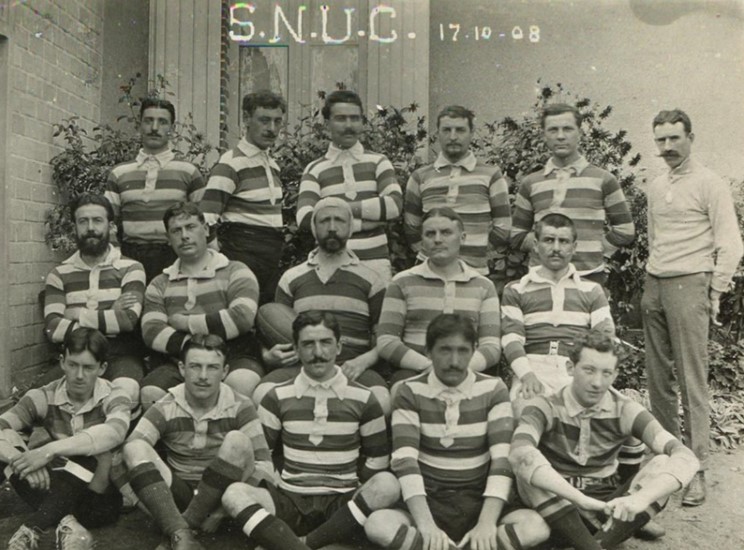
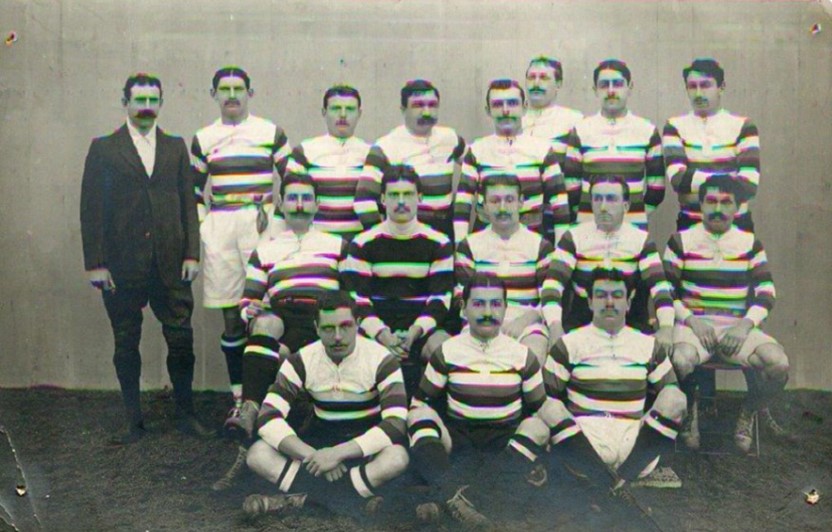

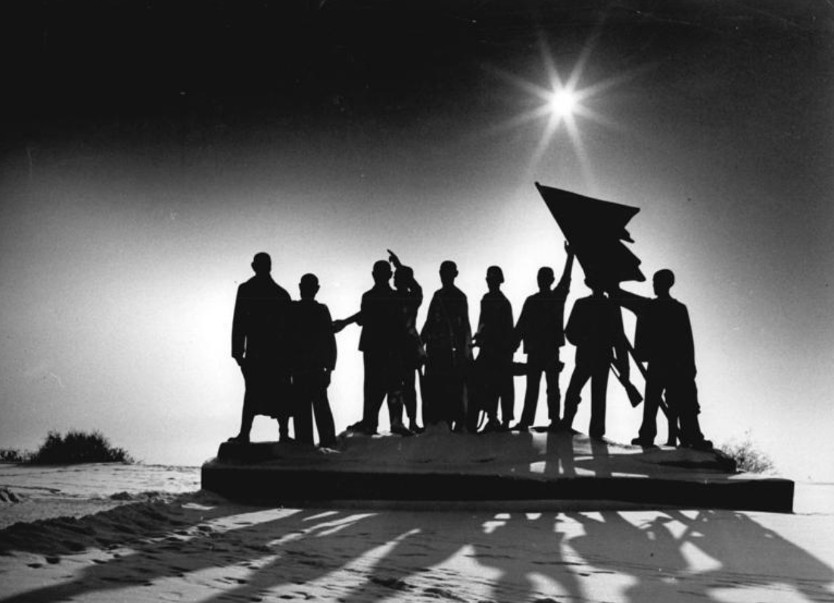


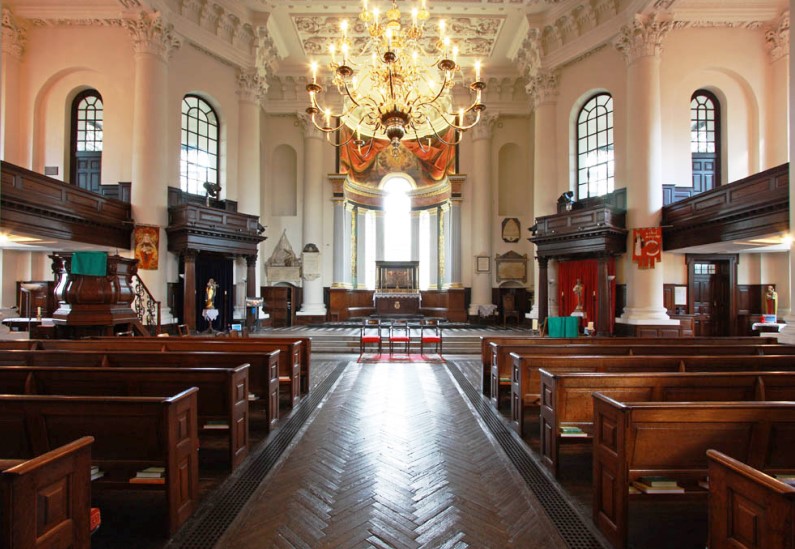
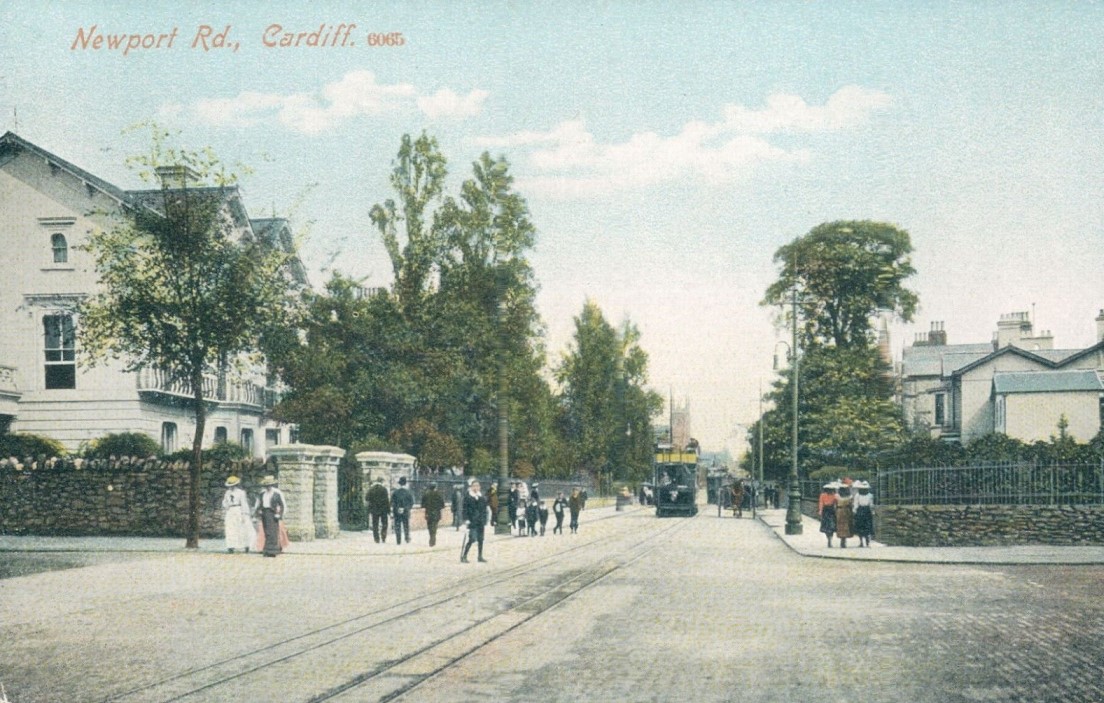


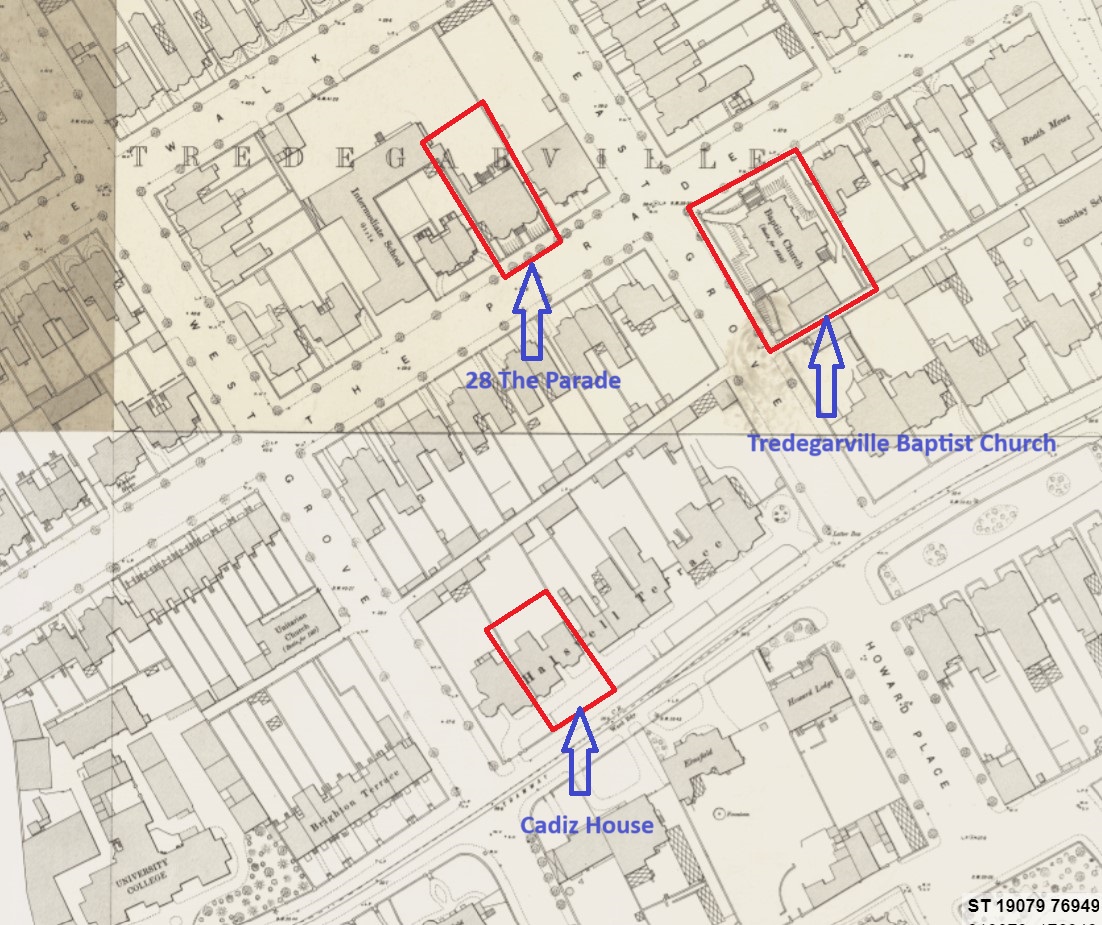
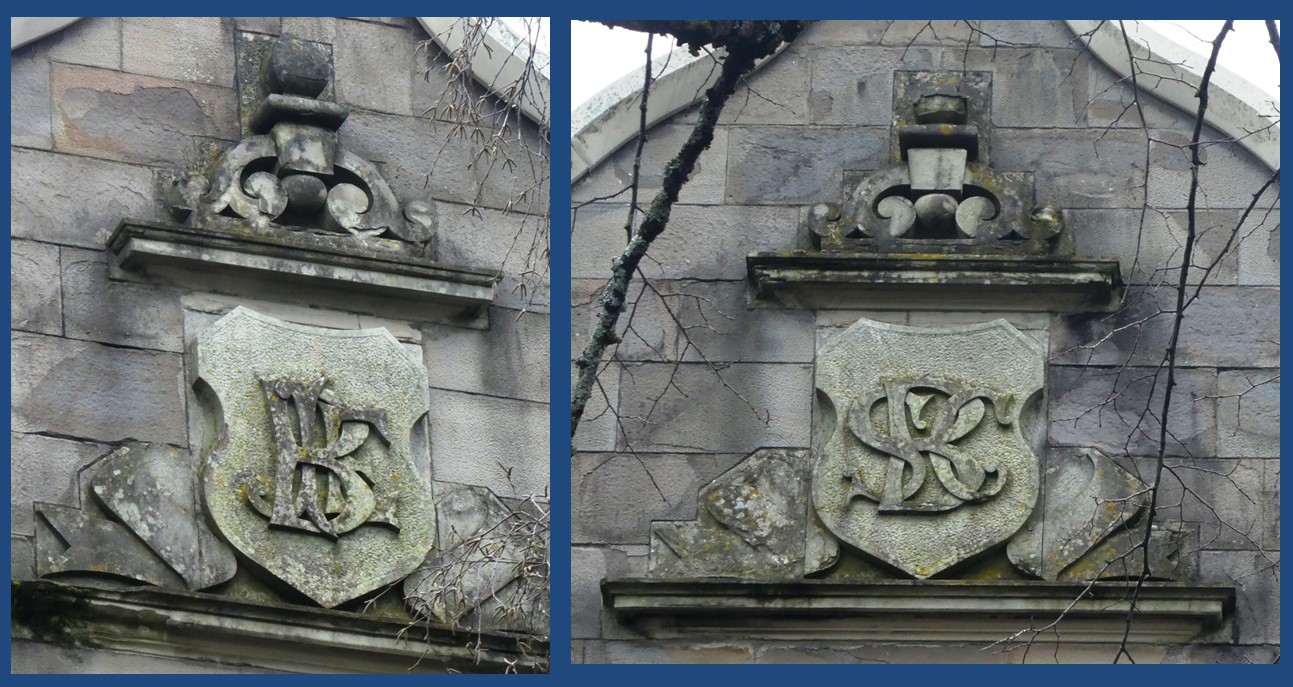


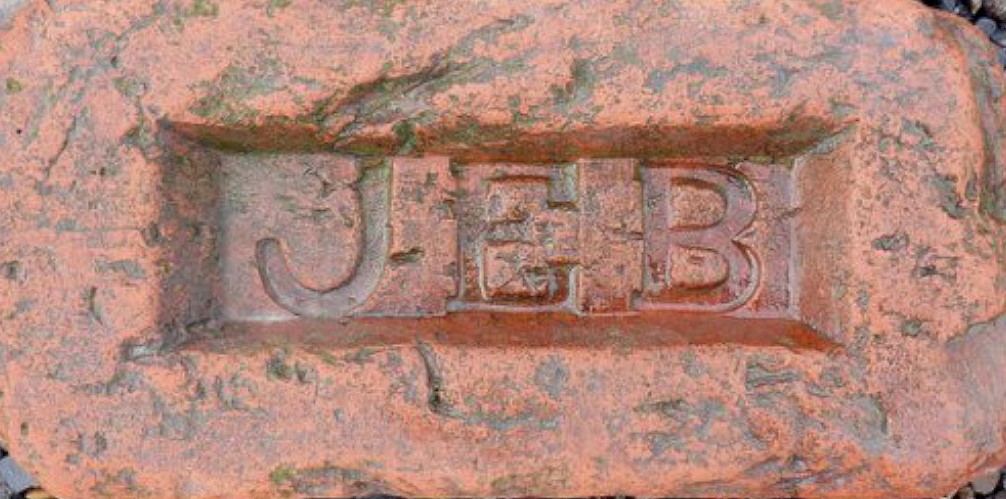


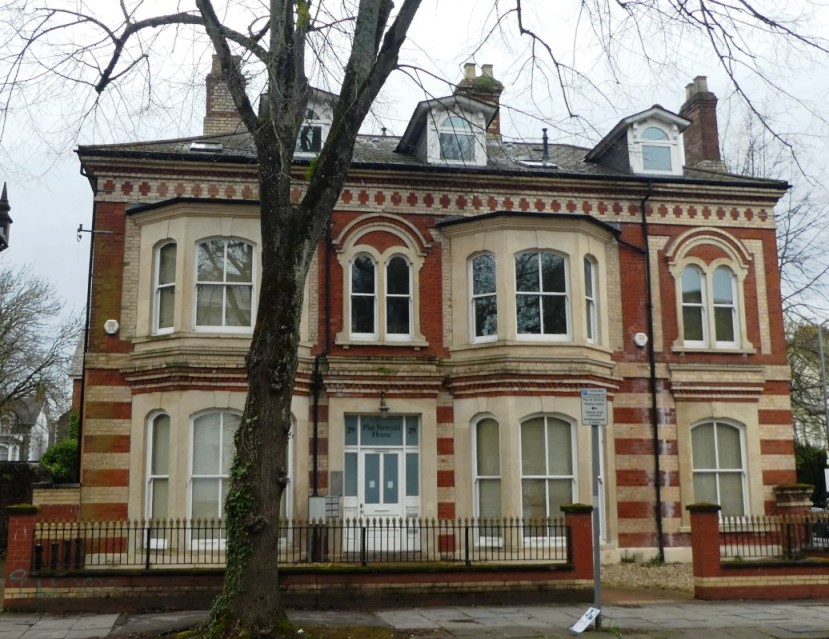
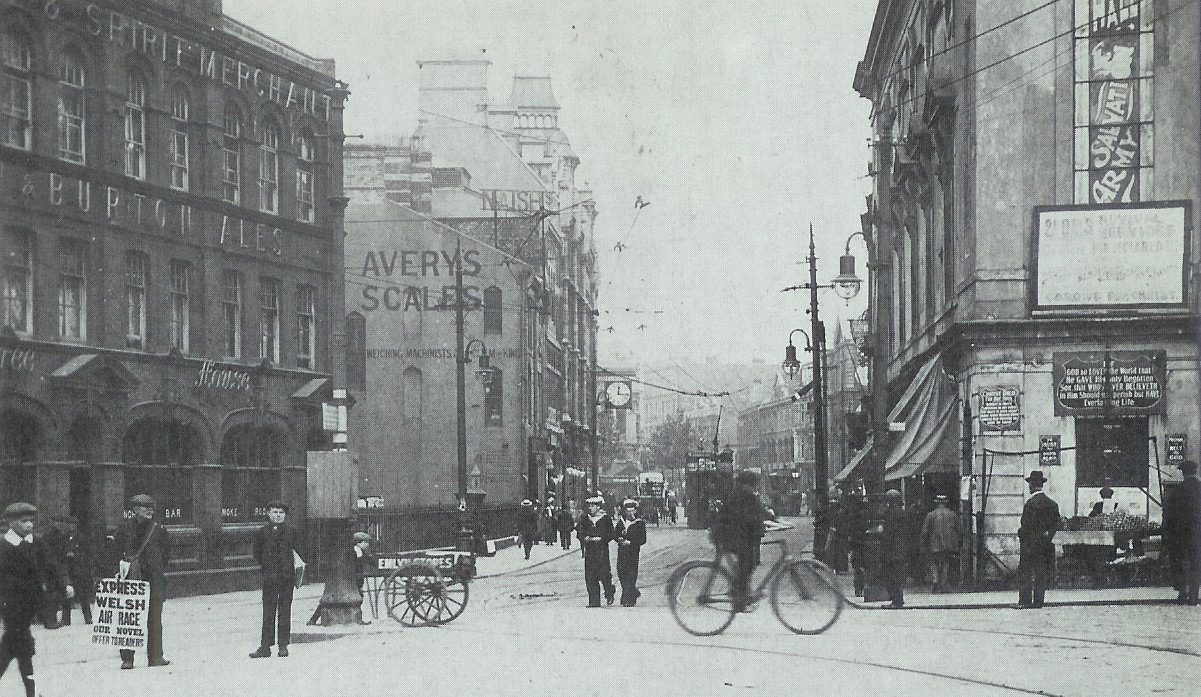


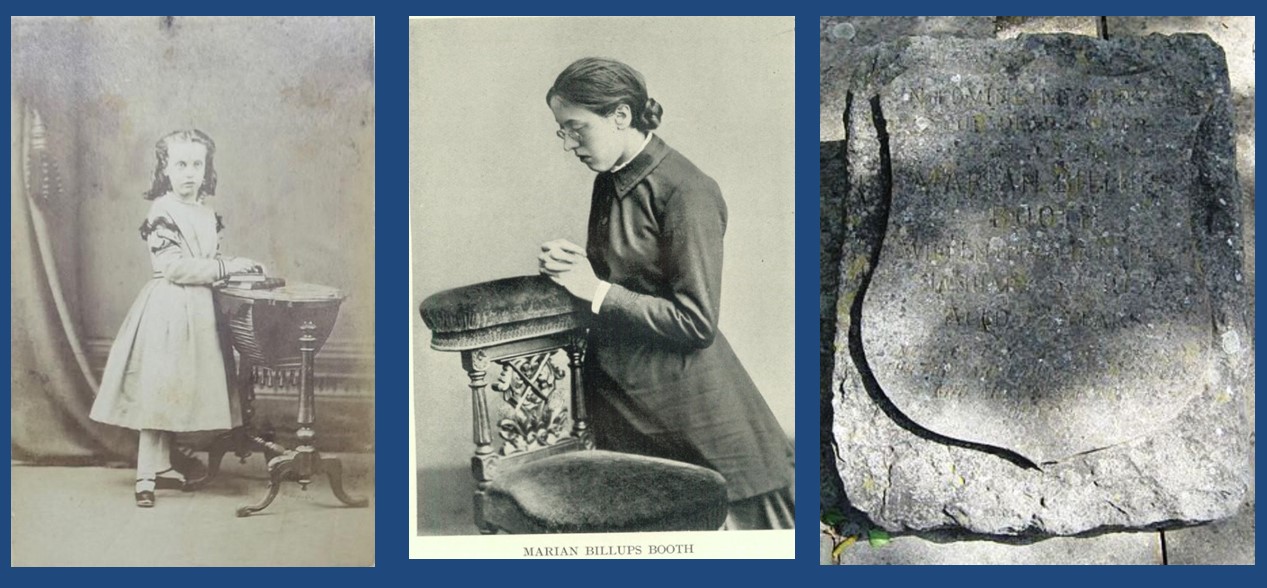
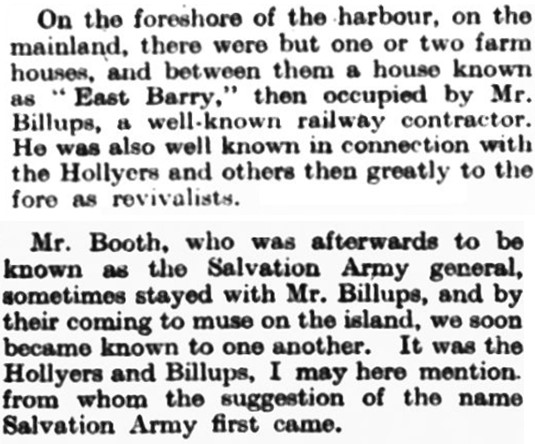


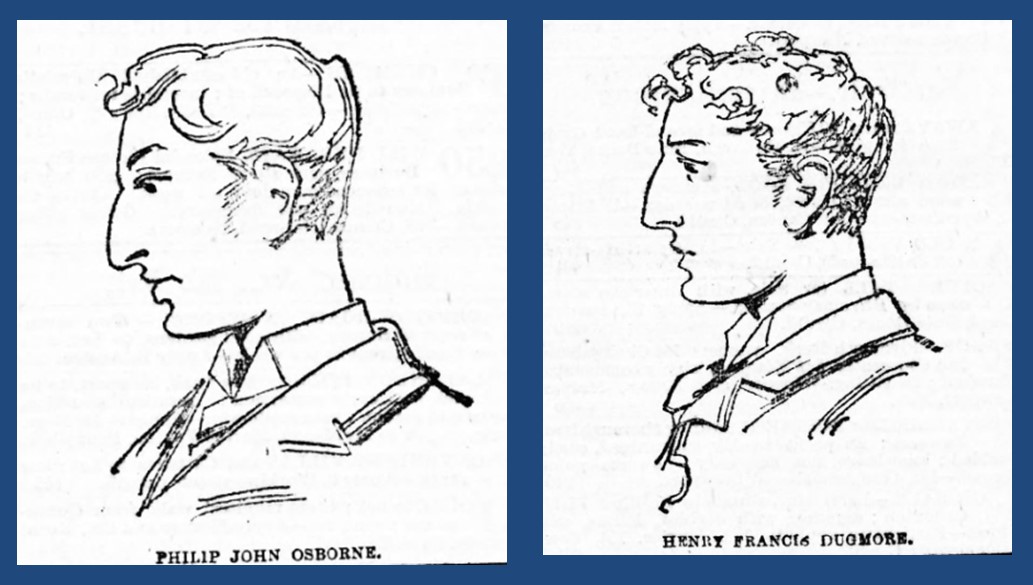
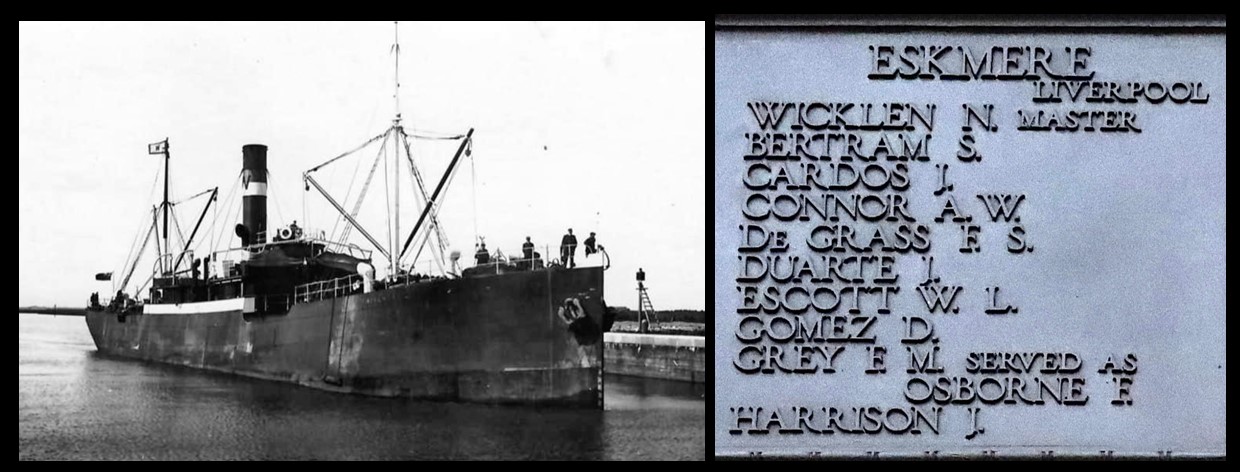

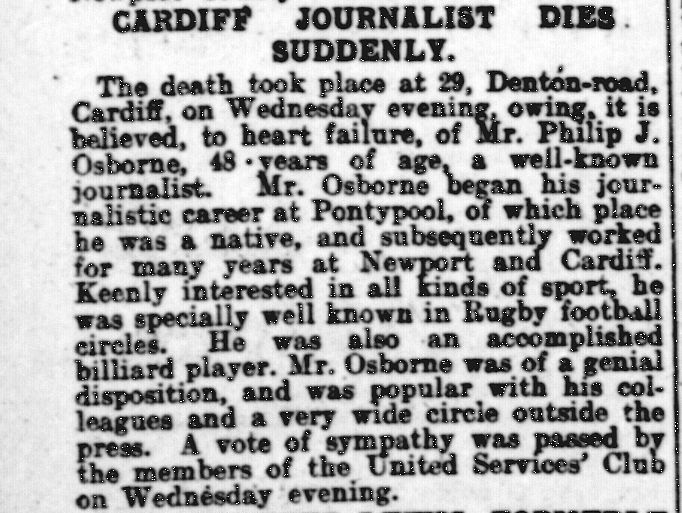
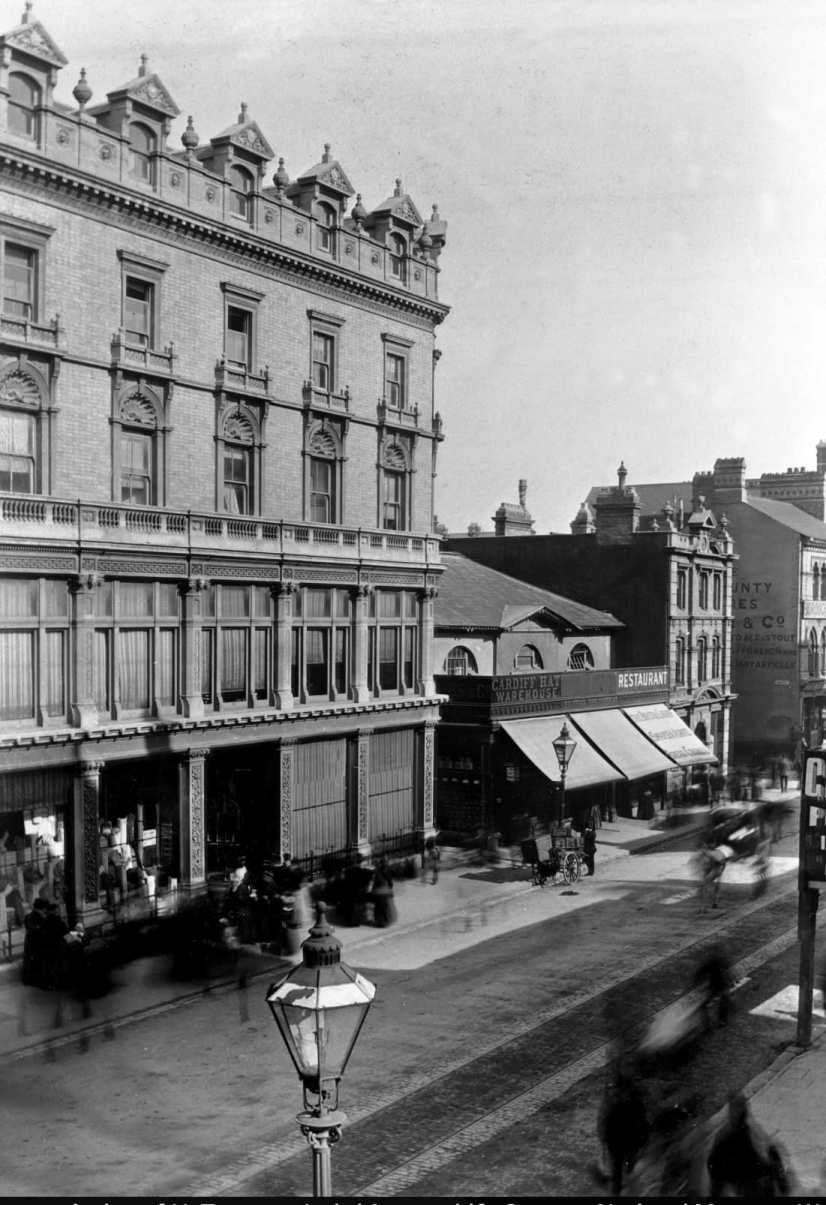
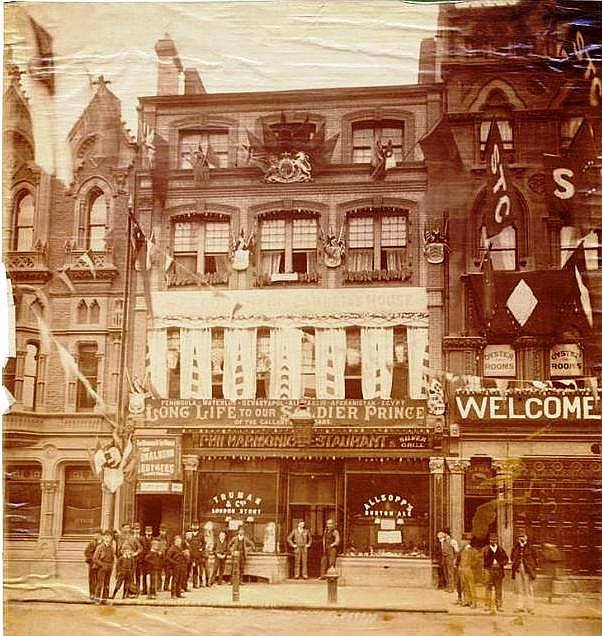


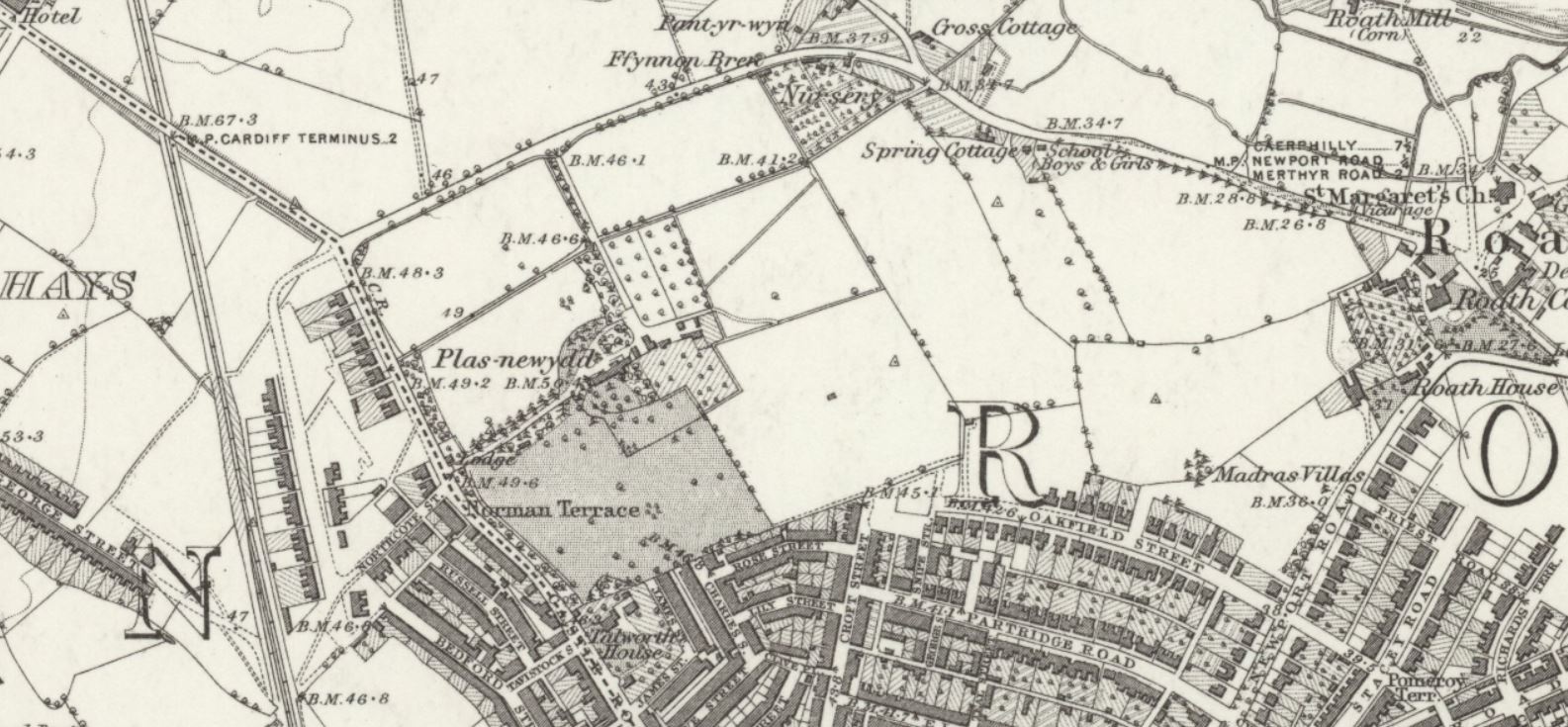


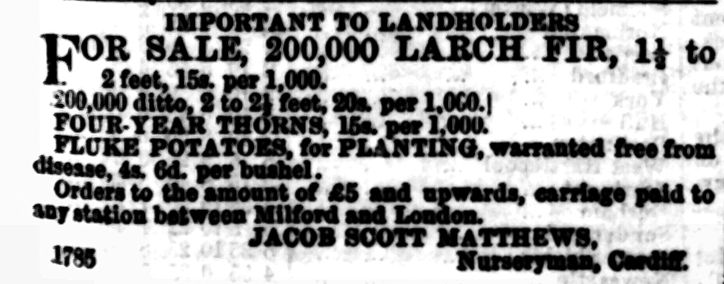


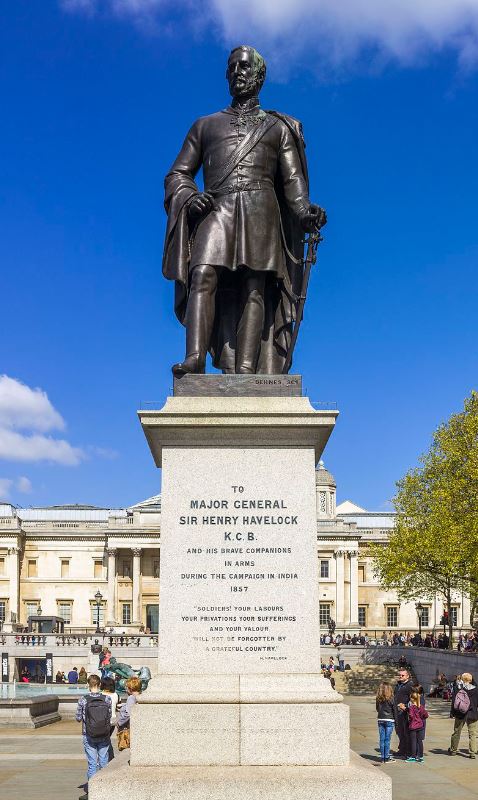
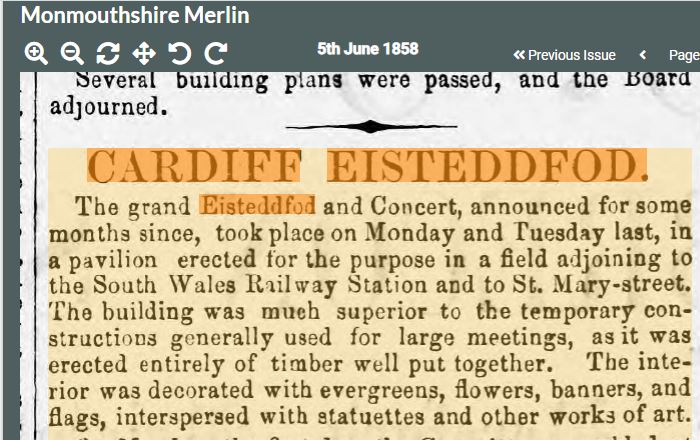
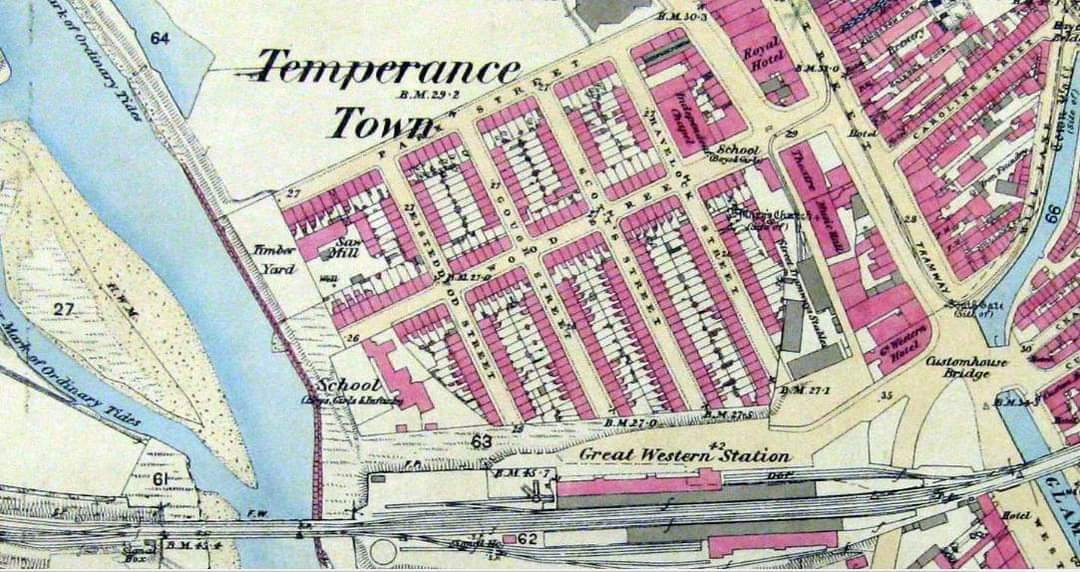


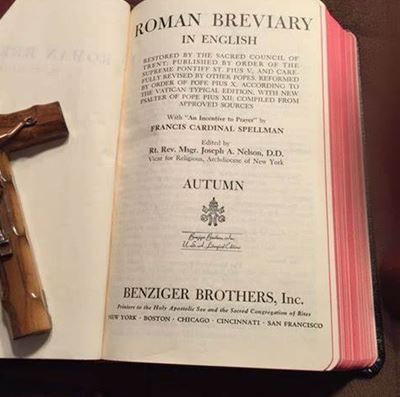


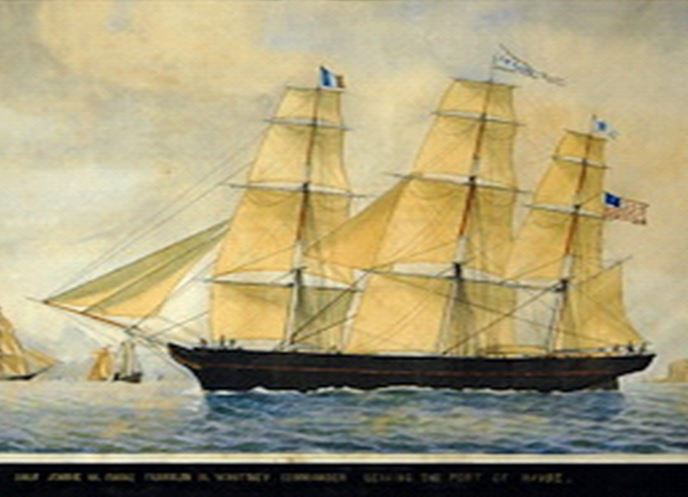
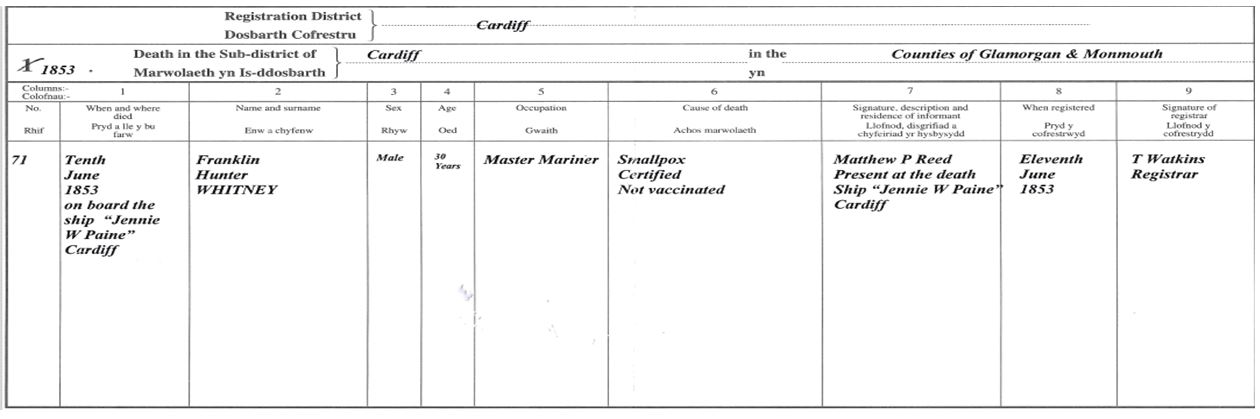
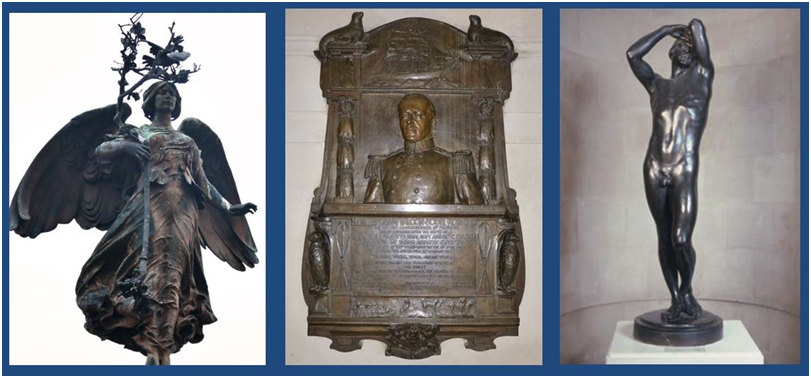
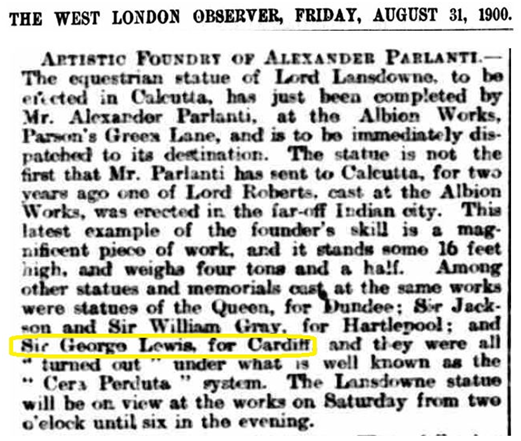

 Roath Local History Society