The tragic coincidence linking the deaths of the De Guélis siblings

Jacques and Jacqueline De Guélis were brother and sister.  They led very different lives but were both to die young in motor accidents but in very different circumstances.  Jacques de Guélis  you may have heard of.  He was a spy in WWII. He has a blue plaque in his honour in Museum Place, off Park Place, in Cardiff.  Jacqueline you probably won’t have heard of, though there may still be a memorial desk in here memory somewhere at Cardiff Royal Infirmary. 

Home of the De Guélis family, 3 Museum Place (used to be called Richmond Terrace)

Before we look at Jacques and Jacqueline De Guélis in detail lets go back a generation and examine the Roath connection.  Jacques and Jacqueline were the only children of Raoul and Marie De Guélis. 
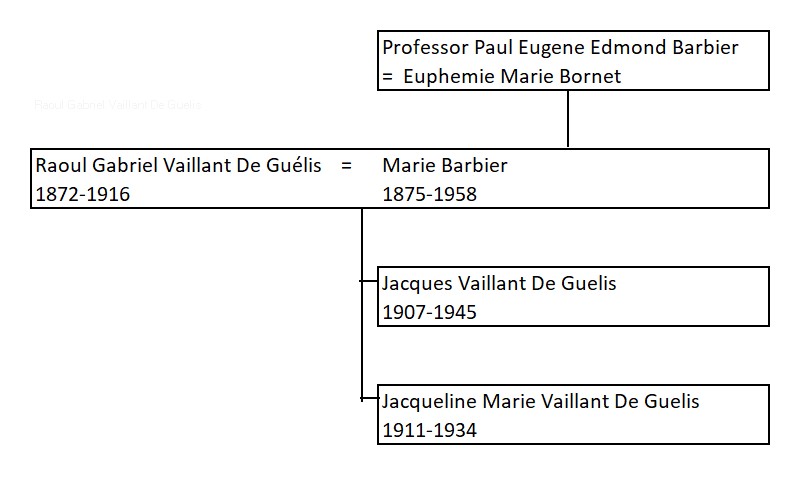
Raoul Gabriel Vaillant de Guelis as born on 26 Dec 1872 in Herry, Cher, France.  He came to Cardiff around 1900 and worked as a coal export agent, ending up as a business partner with Sam Powell coal exporter.  In the 1901 census he lived at 28 Ruthin Gardens, Cathays.  He was a member of the Cardiff Anglo-French Society where he delivered lectures periodically.  In Aug 1904 he married Marie Stephanie Barbier, daughter of Paul Barbier, French professor at the University. They went on to have two children together, Jaques (b.1908) and Jacqueline Marie (b.1911).  At the time of the 1911 census they lived at 3 Richmond Terrace (now called Museum Place). He joined the French army upon the call to arms in Aug 1914 and served as a Brigadier with the 11th Artillery Regiment. He died of pneumonia on 19 Apr 1916, aged 44, whilst serving in Argonne, France.  He is remembered on the Cardiff Coal Exchange war memorial

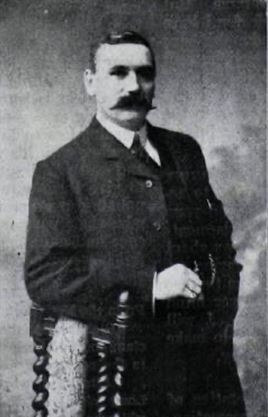
Raoul Gabriel Vaillant De Guelis

Marie De Guélis née Barbier was one of nine children born to Professor Paul Barbier originally from France and his wife Euphémie Barbier née Bornet, originally from Switzerland.  The family lived in Oakfield Street in Roath in 1891 and Fitzalan Place in 1901 before moving to Corbett Road. The Barbier family is well-researched and there is an archive of their family papers in Cardiff University Library.  In Nov 1914 Marie de Guélis and others were busy raising money for the establishment of a field hospital in France called the Glamorgan and Monmouth Hospital for French Soldiers.  In early 1915 she was coordinating the Belgium Soldiers Fund in Cardiff raising money for field kitchens in Belgium.  After her husband died in April 1916 in France Marie was left to raise her two children on her own.

Jacqueline De Guelis attended Cardiff High School for Girls in The Parade before going on the study Art. She was tragically killed on a dark December evening in 1934, aged just 22, after being knocked down by a motor van at the bottom of Penylan Hill, at the junction of Ty Draw and Kimberley Roads.  After the accident she was taken to a nearby doctor’s surgery where she sadly died a short time later.  Just a week earlier the paper reported that Jacqueline had played a leading role in a production of ‘The Aristocrat’ in front of a full house with the proceeds going to the Infirmary.  Her funeral was held a few days later at St John’s Church and she is buried at Cathays Cemetery.

A few weeks after Jacqueline’s death, her brother wrote a letter to the paper pleading for road safety improvements at the Penylan Hill, Kimberley Road, Ty Draw Road junction.  He describes the defective lighting leaving the corner in almost complete obscurity and how a few feet from the corner is a fire alarm box standing on the edge of the pavement blocking the view. He noted that most motorist passing do not blow their horns and have got up to maximum speed to negotiate the hill. This dangerous state of affairs was made worse by the fact that the bus stop at the time was on the corner of Kimberley Road.  Jacques said that the family agrees with the jury’s verdict exonerating the driver but pleaded with the authorities to improve lighting and placement of bus stops.

Death of Jaqueline de Guelis
Penylan Hill and Kimberley Road junction as pictured today

The proceeds of the production Jacqueline had taken part in prior to her death were used to purchase a litany desk for the Infirmary Chapel.  On the anniversary of her death a service was held at the Infirmary Chapel where the Bishop of Llandaff dedicated the desk in front of a large congregation.  The Infirmary Chapel lay empty and unused for a number of years but in recent years has been converted into Capel I Bawb; a library, café and meeting place. There are some pictures of the old chapel.  I don’t know if the litany desk is pictured in the old chapel or whether it has survived.
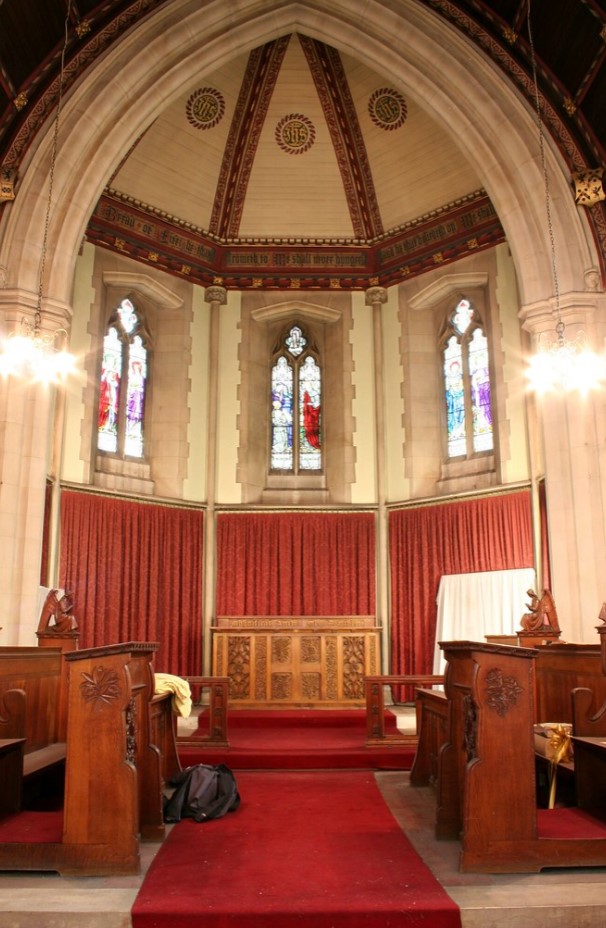
The old Cardiff Royal Infirmary chapel. The Litany desks are seen left and right next to the choir stalls.
Barbier grave at Cathays Cemetery with tragic death of Jaqueline Marie De Guelis remembered on the bottom three lines.

Jacques Theodoule Paul Marie Vaillant de Guélis was born on 6 Apr 1907.  Jacques went to school in Wrekin College, Shropshire before going onto Magdalen College, Oxford.  He had dual French/British nationality, and was therefore required to undertake French national service which he did with the French Cuirassiers in the 1930s.  At the time of Jacqueline’s death in 1934 Jacques was reported to be the director of the press advertising firm in Paris.  He married Beryl Richardson at St Augustine’s church, Kensington, London on 26 Feb 1938 after which both Jacques and Beryl worked in press advertising in London.  He had a handle-bar moustache and was 6 feet 4 inches tall.

In WWII Jacques initially served with the French Army. He was appointed liaison officer to the British II Corps, escaped via Dunkirk, but then returned to France.  He then found himself escaping the enemy again via the Pyrenees into Spain.  On returning to UK he was recruited to the Special Operations Executive (SOE). He undertook many missions behind enemy lines and saw service in France, Algiers and Italy.  He rose to the rank of Major, receiving many awards for his bravery including the Croix-de-Guerre with palms, Military Cross and MBE.  

Members of SOE in southern France in 1944. Jacques is centre of the back row (picture credit: Imperial War Museum)

After the liberation of France, he was assigned to the Special Allied Airborne Reconnaissance Force (SAARF) to help coordinate the resistance and to provide feedback information, mainly on the conditions of prisoners of war and concentration camps.  He was sent across Europe to search for information.  As Nazi Germany surrendered in May 1945, Jacques de Guélis arrived in Germany on an urgent mission to find captured agents and make sure they were not subjected to any last minute vengeance.  His investigations centred on a number of concentration camps, including Flossenburg in Bavaria.

Whilst in Germany, he was involved in a serious car accident with a car driven by a German soldier near Flossenbürg concentration camp on 16 May 1945. He was badly injured. Some reports say the circumstances of the accident were suspicious and speculate whether it was to stop Jacques carrying out his investigative work.

After the accident Jacques was immediately flown to Paris for an operation, and a while later repatriated to a hospital in Burtonwood, Staffordshire, but was to lose his life after further unsuccessful operations on 7 Aug 1945 at the age of 38.  His body was returned to Cardiff and cremated and the ashes buried in Cathays Cemetery (plot I.22E) alongside his sister Jacqueline.  His wife Beryl died in Paris in 1978.  His life has been recorded in the book ‘Jacques de Guélis SOE’s Genial Giant: His Life, His War & His Untimely End’ by Delphine Isaaman in 2018.  Other articles include those found in Wikipedia, the Western Mail and on BBC.  He is remembered on Wrekin College WWI memorial plaque and Magdalen College WWII memorial plaque as well as a blue plaque on 3 Museum Place.  Commonwealth War Graves Commission record.

There was one other accidental death that I stumbled upon when researching the family.  In 1915 Uline Barbier, sister of Marie de Guelis née Barbier, married Charles Hepburn in London. They had a son together called him Raoul Hepworth born in Cardiff in 1916, quite possibly named after Raoul de Guelis who died in France around the same time.  The marriage appears not to have lasted as Uline had returned to using her maiden name by 1921.  Raoul Hepworth had a military career and in WWII became a Major Raoul Paul Cuthbert Hepburn and served with the Royal Army Service Corps.  He died in Germany in Nov 1945, after the war had ended, as a result of an accident and is buried in Cologne.

From Plasnewydd to Roath Castle

This Roath Local History Society Occasional Paper was researched and written by M.C.Ranson in 2011.

William Richards an Alderman of Cardiff who died c 1695 had two sons Michael and William.  Michael Richards (1672-1729) married Mary Powell of Energlyn, Caerphilly and obtained lands from that union. Their son, another Michael purchased lands in Cardiff, but had already purchased parts of the Llancaiach Fawr estate from Jane Prichard.  Most of this land lay outside Cardiff in the Taff Valley, but some of the land was in Whitchurch and Rhiwbina, particularly Rhiwbina Farm. This is the estate which passed down to Harriet Richards who married the Mackintosh of Mackintosh in 1880.

A reproduction of a 1789 map of the parish of Roath gives no indication of the existence of Plasnewydd in the late 18th Century.  Not even Heol y Plwca is shown with any certainty and was probably just a muddy track at that time crossing an area known as Plwca Halog.

Around 1811-— 1812 Roath Court (now Summer Funeral Home) was sold to John Wood, a Cardiff banker and attorney and probably included the land on which Plasnewydd had been built around 1800, possibly replacing an earlier building c 1782. Newman (1995, p308) describes the present building as “a survivor of the Georgian style of building.  Rendered, battlemented, sash windowed, it has a south front of three bays linked to single bay wings by concave pieces”.

In 1824 Roath Court was again advertised for sale and was acquired by Mrs Anne Williams, the mother of Charles Croft Williams.  Also at this time Plasnewydd is advertised for sale as Roath Lodge where it is described as a “most desirable freehold estate…consisting of a modern villa containing dining and drawing rooms, excellent bedrooms [and] every necessary attached office”.  In addition there is a coach house, stables, thriving plantations, a good garden and farmyard, and several pieces of productive land surrounding the house (Childs, 1995, p38).  By 1829 Plasnewydd is becoming known as Roath Castle on account of its crenulated design.

Up until this time, there is no evidence that I can find, that any member of the Richards family had ever lived at Plasnewydd.  On the contrary, Roath Court is advertised to be let in 1830 and is described as the residence of J. M. Richards Esq., but probably as a tenant, since applications to rent were to be made to Mr Charles C Williams in Duke St, Cardiff (Cambrian, 2 Oct 1830, p3).  By 1831 Roath Castle had come into the ownership of John Matthews Richards (1803-1843).

The largest landowner in the parish of Roath in 1840 was Lord Tredegar (964a) 40%, followed by the Marquis of Bute (648a) 27%. Thereafter the next largest holdings were held by Thomas William Edwards (283a) 10%, William Mark Wood (137a) 6%, and John Mathews Richards (121a) 5%.The remaining 12% was held by 19 small landowners. John Mathews Richards held several parcels of land throughout the parish.  His tenants included John Skyrme (6a), James Noble (43a), J Howell Rees (1rood) and the tenant of Tyn y Coed Farm, Henry Griffin who rented 67a in the parish of Roath and a further 90a in the parish of Cardiff St John.

John Mathews Richards had married Arabella Calley of Burdsoke, Wiltshire and their third son was Edward Priest Richards the Younger (1831-1856) a great nephew of his namesake Edward Priest Richards the Elder. The latter was the fifth son of John Richards and the first by his second wife Mary Priest.  For 40 years he was the chief agent for the Marquis of Bute’s estates in Glamorgan and was instrumental in amassing the Bute fortune.  During his life he held almost every public office in Glamorgan as well as in the Borough of Cardiff and established a powerful and intricate network of local control. He died in 1867 (Childs, 2005, p2).
On 5 February 1856 Edward Priest Richards the Younger married Harriet Georgina Tyler, eldest daughter of Sir George Tyler of Cottrell, St Nicholas. According to an eye witness, Edward was short sighted, wore an eyeglass, and walked with short steps and a curious little hop.  He died in the first year of the marriage, when after having attended a ploughing match dinner, he and his horse were involved in a fatal collision with a cartload of manure in Heol y Plwca (now City Road).  His pregnant wife then moved back to her childhood home and their daughter Harriet was born at Cottrell House, St Nicholas in June 1857.  Thereafter Roath Castle was let to a succession of short term tenants including Frederick Greenhill, a colliery proprietor and his family from 1859 and Mr L.V.Shirley, agent for the Richards/Mackintosh estates in Glamorgan between 1875 and 1884.

Cardiff Corporation had shown interest in purchasing Roath Castle for use as a public park. In 1883 they changed their policy, accepting an offer made by Lord Bute to release land in order to develop what is now Roath Park. Housing development began on the estate in 1884, though the Mackintosh family did agree to the sale of land at Plasnewydd for the purpose of improvements to Albany Road in 1889. (Cardiff Records, vol V, 1889, p143)

Plas Newydd, nowadays called the Mackintosh Institute, one of the oldest buildings in Roath.

In 1880 Harriet ‘Ella’ Richards had married Alfred Donald Mackintosh (1851-1938) of Moy Hall, Invernesshire, the 28th Chief of Clan Mackintosh and the 29th Chief of Clan Chattan, and for the first six years of their marriage divided their time between Mayfair, Moy and Cottrell.  By 1891 the urban development of the Plasnewydd estate had been completed and in 1889 plans were made to donate Roath Castle as a community asset for the people living on the estate. The house then became known as the Mackintosh Institute.
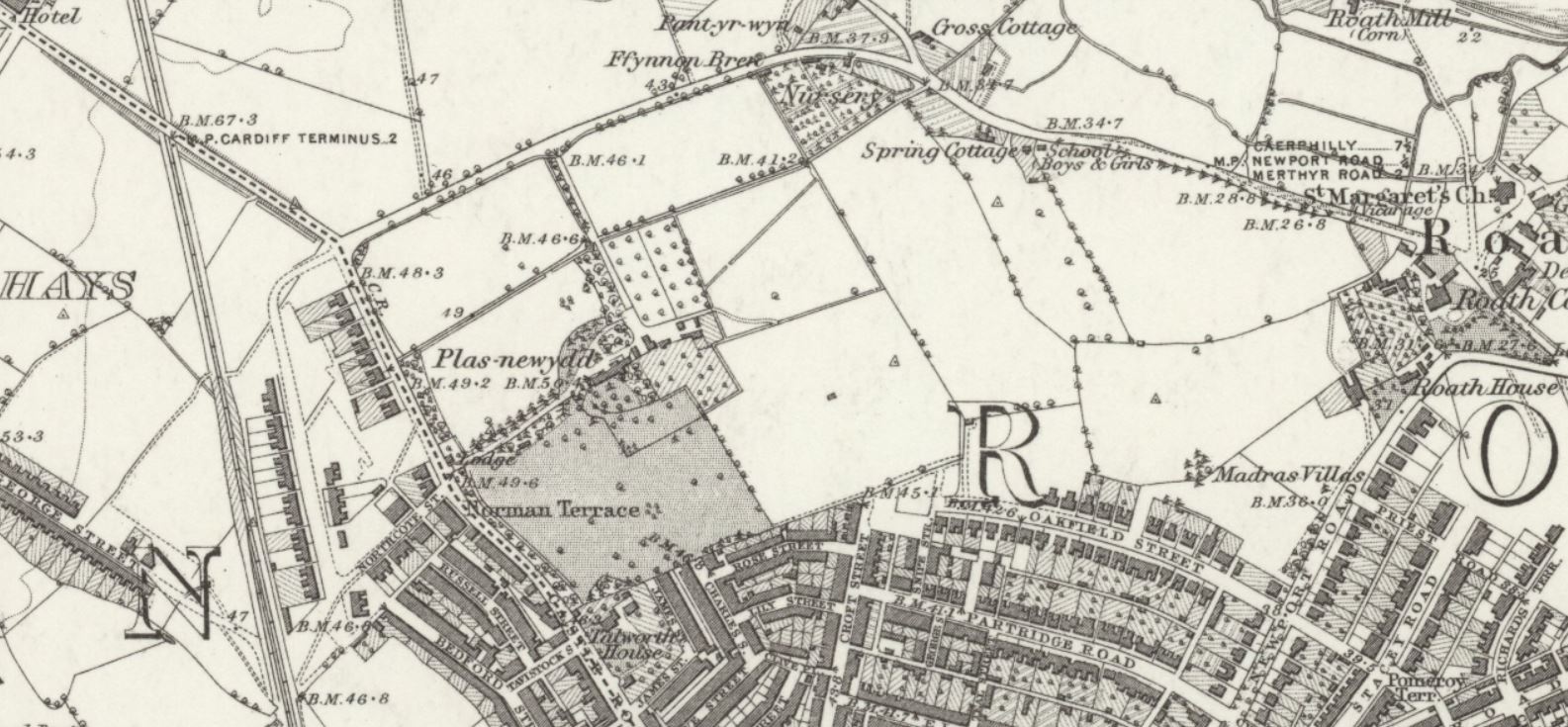
Map of Plasnewydd and surrounding area around 1880 just prior to the area being developed for housing.

Reference:

A Short History of the Mackintosh Estate, Roath.  Jeff Childs (2005)

See also:

The Mackintosh of Mackintosh comes to Cardiff and Alf and Ella get hitched.

William Erbery – Founder of the first non-conformist church in Cardiff

Wales is known for its history of non-conformity and abundance of chapels.

The first Nonconformists  in Cardiff were probably the heretics, who, after the Reformation, were hanged or burnt at the stake for their faith. New ideas were a threat to the authority of the Church and the stability of society.

In Cardiff, two men were burnt for their beliefs: Thomas Capper in 1542 and Rawlins White in 1555. Rawlins White was a local fisherman. He was executed in 1555 in the centre of Cardiff for his protestant beliefs.  He is said to have been given opportunity to escape and renounce his beliefs but refused to. When his time came to be executed he asked his wife to bring him his wedding outfit so he would look his best.  It is even said he helped neatly build up the wood around his feet. There is a plaque to him in the old Bethany Baptist Church which has now been subsumed into the House of Frasier department store.

These were individuals and founded no new church, but in the 1630s all that was to change with William Erbery.  It was his followers who set up the first non-conformist church in Cardiff, Trinity chapel in Womanby Street, opposite the castle, in 1697.  William had been dead 45 years by that stage but his followers and their descendants are thought to have continued to meet in secret after his death, until in 1697 they were given the freedom to build their own church.

Life of William Erbery

William Erbery was born in Roath in 1604 or more precisely Roath Dogfield. His father, Thomas Erbery, was a merchant who had probably come across from the West Country of England to establish an iron foundry in the Merthyr Valley before moving to Cardiff.  It is probable that Thomas married Elizabeth, daughter of Rees David, a Cardiff cordwainer.

William entered Brasenose College, Oxford in 1619, graduated in 1623 and proceeded to Queens’ College, Cambridge where he earned a second degree in 1626. He subscribed for deacon’s orders in the diocese of Bristol a December 23rd 1626 and became curate in St Woolos in Newport in 1630.

He remained at Newport until 1633 when he became vicar of St Mary’s in Cardiff. He had been presented with the living by Sir Thomas Lewis of Penmarc, a member of the influential Puritan Lewis family of Y Fan. The Lewis family were patrons of William Wroth and business associates of Erbery’s father.

He became vicar at St Mary’s in August, 1633.  St Mary’s church is no longer standing.  The church was badly damaged when the River Taff flooded in 1607 with bones and coffins from its graveyard being washed out to sea. Accounts state a mini tsunami swept up the Bristol Channel! Saint Mary’s was finally abandoned in 1701. The church gave its name to nearby St Mary’s Street. A new St Mary’s church was later built on Bute Street, south of the railway station. The current Prince of Wales pub now stands on this church’s original site. On the side of the pub on Gt. Western lane entrance is an unusual outline of the original Saint Mary’s church.

Immediately after becoming vicar of St Mary’s William Erbery expressed his Puritan convictions. The ‘Book of Sports’ was issued on October 18th, 1633 and all clergy were instructed to read the King’s commands in Sunday worship. One of the aims of the Act was to root out ‘Puritans and precise people’ who would object to the playing games and sports on the Sabbath. Erbery refused to read out the ‘Book of Sports’, and as a result he was summoned to appear before William Murray, Bishop of Llandaff and subsequently before the Court of High Commission at Lambeth. The Bishop of Llandaff had branded him a schismatic   After a long process he resigned his living in 1638.

The Archbishop wrote to Charles I saying that the vicar of St Mary’s in Cardiff was very disobedient to your Majesty’s instructions.

Erbery’s refusal to read the ‘Book of Sports’ led to a lengthy struggle between him and William Murray, Bishop of Llandaf. The controversy may have begun with Murray, but it soon reached the ear of Laud, Archbishop of Canterbury, and even the King. In his annual reports to Charles, Laud referred  to his struggles with the schismatic Erbery.  Ultimately Erbery was summoned to appear before Laud at the Court of High Commission at Lambeth. Laud’s reports to the King present important and intriguing reading.

REPORT FOR 1634

The Bishop of Landaff certifies. That this last Year he Visited in Person: and found that William Erbury, Vicar of St. Maries in Cardiff, and Walter Cradocke his Curate, have been very disobedient to your Majesty’s Instructions, and have Preached very Schismatically and Dangerously to the People. That for this he hath given the Vicar a Judicial Admonition, and will farther proceed, if he do not submit, And for his Curate, being a bold ignorant young Fellow, he hath Suspended him, and taken away his License to serve the Cure. Among other things he used this base and Unchristian passage in the Pulpit, that God so loved the world, that for it he sent his Son to live like a Slave, and dye like a Beast.

In 1638 William Erbery was deprived of his occupation for refusing to read “The Book of Sports” and along with similar minded members of the congregation of St Mary’s. He preached for some years in secret in various parts of England and Wales, and on his return to Cardiff in the latter part of 1639.

Around 1640, or at the end of the previous year, the radical cleric  Rev William Erbery set up his own church with his followers but in the Civil Wars was about to start.  

His Cardiff property was plundered by the Royalists though it is unclear whether this was his house in Roath or a vicarage in St Mary’s parish.

Like his fellow Puritans in south-east Wales, Erbery was forced to flee from the Royalist forces because ‘the sword scattered us all into England’. Erbery made his way to Windsor Castle where he sought help from Christopher Love who was serving as chaplain tan Venn, Governor of the castle. s parish.

Erbery played a role in petitioning the House of Commons about the need for a godly ministry in Wales:-

The first indication of the Welsh radicals pressing their case for reform came in December 1640, when William Erbery submitted a petition to the Commons… he, and the clique of Puritan ministers associated with him, saw his role to be that of a spokesman for the whole of Wales… It was noted on the surviving copy of this petition that it was granted on 12 January 1641, and liberty was given by the Commons to a closely-associated group of Welsh radicals – quite possibly those mentioned as attending on parliament – to preach throughout Wales. They were Erbery himself, Walter Cradock, Henry Walter, Ambrose Mostyn and Richard Symonds.”

He became chaplain, when the English Civil War broke out in 1642, to the regiment of Philip Skippon in the Parliamentary Army.

Erbery played a key role in the Oxford Disputations. He was a prime cause of the growth of sectarianism amongst students and soldiers (a heady mix!) in the city.  Oxford had fallen to the  parliamentary Army in the summer of 1646, and Erbery was there soon after the city’s liberation/capture. His lectures and preaching created such a ferment in the city that parliament sent six Presbyterian ministers to maintain the orthodox line. The visitors reported to parliament that ‘they found the University and City much corrupted’.  Five separate accounts have survived of the debates between the Presbyterians and Erbery.  They make fascinating reading and provide a contemporary picture of a critical struggle between those, like Erbery, who were ‘enquiring only, and seeking the Lord our God’, and those, like Francis Cheynell, who feared that ‘a licentious spreading of damnable doctrines would be disturbing the civill peace and power’.

When Oxford fell to the parliamentary forces, Erbery was in the limelight in instructing and supporting the rebellious students and soldiers. He defended his position vigorously against six Presbyterian visitors sent by parliament to force Erbery and his followers to submit to orthodoxy. He was obliged to leave the city at the instruction of General Fairfax.

Erbery wrote a letter to Oliver Cromwell in 1652. The letter’s survival is remarkable. Found in the political papers of John Milton, it was first published by John Nickolls in his collection of Cromwell’s letters and papers of state in 1743.

Mr. William Erberry, to the Lord General Cromwell.

SIR,

Greate thinges God has done by you in warr, and good things men expect from you in peace; to breake in pieces the oppressor, to ease the oppressed of their burdens, to release the prisoners of their bandes, and to relieve poore familys with bread, by raisinge a publique stocke out of the estates of the unrighteous rich ones, or parliamentary delinquents and from the ruines of most unjust courts, judicatures and judges, brought in by the conqueror, and embondaging the commonweale; as alsoe the tythes of the preists, the fees of the lawyers, whom the whole land has longe cry’d out and complain’d against, besides the many unnecessary clerks offices, with the attendants to law, who are more oppressive and numerous then the prelates and their clergicall cathedrall company, whom (from the highest to the lowest, and least Querister) God in judgment has rooted out; by whose fall, as some have bin raysed, and many enriched, so now the poare of the nation are waiting at your gates, beseeching your Excellency to move effectually our present Governors, to hasten | a publique treasury for them, from those, that there be noe begger in Israel, nor base covetousness among Christians; but that it may be punished as double idolatry by the magistrate, as the primitive ministers of Christ did excommunicate the covetous (amonge the worst of men) out of the churches.  If this virgin commonwealth could I bee preserved chast and pure, if the oppressed, the prisoner, and the poore might bee speedily heard and helped, how would the most high God bee praysed, and men pray for you, and your most unworthy servant professe himselfe in truth, Sir,

Yours for ever in the Lord,

and in all Christian service,

WILLIAM ERBERRY

London, the 19th of July, 1652.

After this he preached for some time at Christ Church, Newgate Street. London, until he was summoned before the Committee for Plundered Ministers at Westminster in 1652 to explain the strange tenets held and the hetercdox doctrines preached by him. He published many books, one of which has an odd title : “Jack Pudding, or the Minister made of Black Pudding.” “Presented to R. Farmer, parson of Nicholas Church, at Bristol. 1654.” He was also a voluminous writer of pamphlets and tracts on religious subjects, and after his death an anonymous pamphlet was issued entitled “A small Mite in Memory of the late deceased and never to be forgotten Will Erbery.”

Finally in 1653, he was accused and tried for heresy at Westminster before a congregation of 500. This man of Roath, Cardiff did not live a quiet life. The last twenty years of his life often saw him hit the headlines, but after his death, he has been quietly forgotten.

He died in 1654 and believed to be buried in London.

Trinity Church

The original Trinity church Trinity burnt down in 1847 but was replaced soon afterwards with a fine classical frontage, the name ‘Trinity’ incised into the stonework.

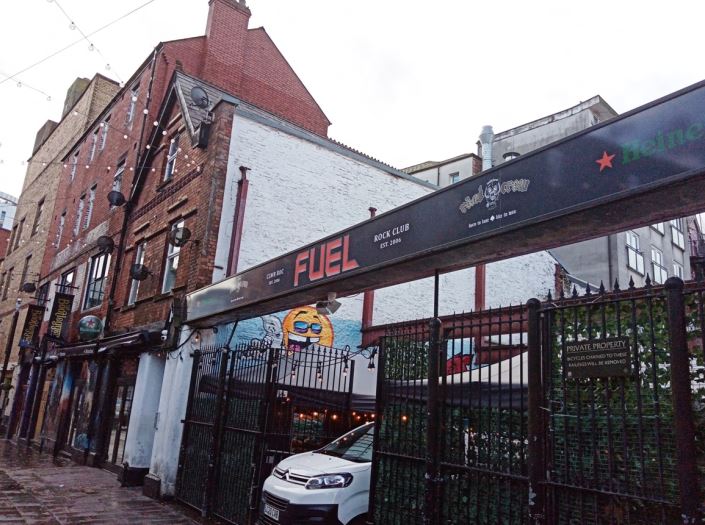
A number of daughter churches were created including Charles Street Congregational and Llandaff Road.  John Bachelor was a member of  Trinity church.  In 1888 Trinity Church was amalgamated with Llandaff Road Church and the Charity Commissioners approved the sale of Womanby Street Church, the proceeds of which were used to erect a new church in Cowbridge Road for the united congregation. The united congregation met in Llandaff Road Church until the new church, known as New Trinity Church, was opened on Cowbridge Road. The chapel on Womanby street was demolished and looks at one stage to have been a garage and when that was demolished more recently it was being used as a car park. It is now the beer garden for the Fuel Rock Club. I wonder what William would have thought of that.

Old view of Trinity Chapel, Womanby Street, Cardiff

References

This article quotes heavily from two sources:-

Cardiff Churches through Time – Jean Rose (see list of publications on our website)

and

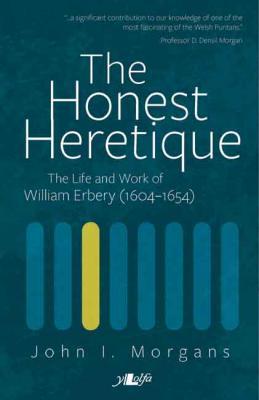
The Honest Heretique – The Life and Work of William Erbery – John I Morgans – published by y Llolfa (2012) ISBN: 978 184771 485 5.

This is a very thorough and well researched book and recommended for anyone wanting to read more of the writings of William Erbery.

Back cover of this reference reads:-

Born in Roath, Cardiff, William Erbery (1604-1654) was a graduate of Oxford and Cambridge universities. He served as curate of St Woolos, Newport, and vicar of St Mary’s and St John’s in Cardiff. He was tried for his Puritanism at Lambeth Palace and resigned as a priest of the Church of England.

Erbery was the founder of the first Independent Church in Cardiff, and a chaplain in the parliamentary Army. He resigned as an Independent minister and was a forerunner of Quakerism. He was accused of heresy at St Mary’s, Oxford in 1646, and at Westminster in 1652. Although acquitted, he was stigmatised by his enemies as a ‘madman’. This stigma followed him into the second half of the twentieth century.

The Honest Heretique lets Erbery speak for himself. Containing 500 extracts from all of Erbery’s writings, the book presents the background to Erbery’s life and thoughts, introduces each of his tracts, and takes note of recent scholarship.

———

Mini-review by Professor M. Wynn Thomas, Swansea University of above reference on back of book:

William Erbery is one of Wales’ hidden writers. So unorthodox and daring a theological thinker was he, and so controversial was his social outlook, that many of his own and later times dismissed him as mentally unbalanced. His rebellious originality of mind has, however, proved altogether more intriguing to recent scholarship and a full-scale ‘rehabilitation’ of him, such as that attempted in Dr Morgans’ ground-breaking study, is as welcome as it is overdue.

——————————————————————–

Womanby Street, Cardiff – site of former Trinity Church

Charles Oswald Williams – Magician

Charles Oswald Williams initially grew up in Llanelly (it became Llanelli, after 1960),  born on 26th September 1864. When of age, Charles followed his father into the then successful tin industry in Llanelly.

Charles Oswald Williams magician portrait

However, around 1889 he moved to Cardiff and married Elizabeth Jane Bate. Living at 7, Stephenson Street and working as a Collector and Canvasser. In 1901 he lived at 10, Beauchamp Street and was a listed as a dealer in watches, musical instruments and homeware.

An enthusiastic, amateur conjurer, Williams corresponded regularly to all the burgeoning magic magazines with ideas, letters and magic effects.

From 1900 onwards he began a regular exchange of letters with Professor Louis Hoffmann, who was considered to be one of the greatest authorities, of his day, on the theory and practice of magic as entertainment.

Williams contributed to many seminal magic books; Hoffman’s ‘Later Magic’, Charles Lang Neil’s ‘The Modern Conjurer’ and many others.

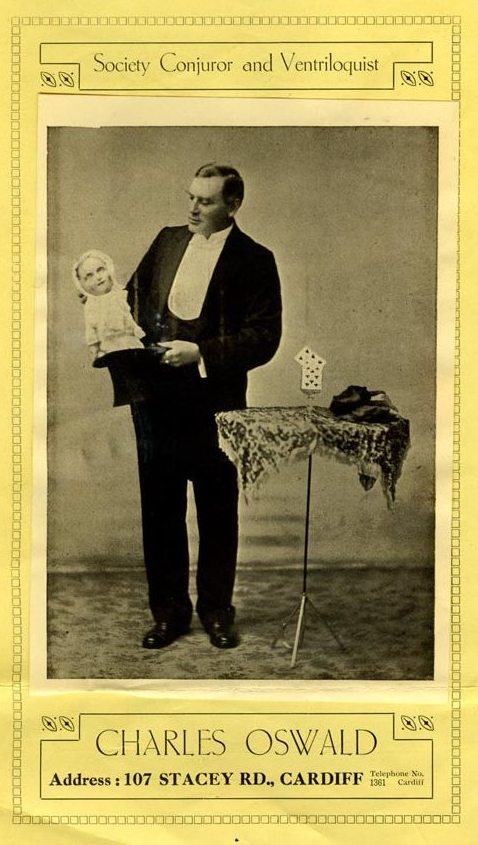
Charles Oswald - Conjuror and Ventiloquist programme - picture of CO- Glamorgan Archives

(Picture credit: Glamorgan Archives)

Now living at 107, Stacey Road, Williams was known internationally and nationally as an inventive and skilled magician. Encouraged by Hoffmann he became a professional magician in 1903, working under the name of Charles Oswald. In 1904 he was on the front cover of the American based ’The Sphinx’ magazine as magician of the month.

On Tuesday, April 10th 1906 at Maskelyne’s Theatre of Mystery in St George’s Hall, London, Williams appeared as one of the performers to appear in the newly formed Magic Circle’s first show, or as they called it, ‘The First Grand Seance’. He opened his act by speaking in Welsh! He was amongst one the first magicians to be a member of the Magic Circles ‘Inner’circle.

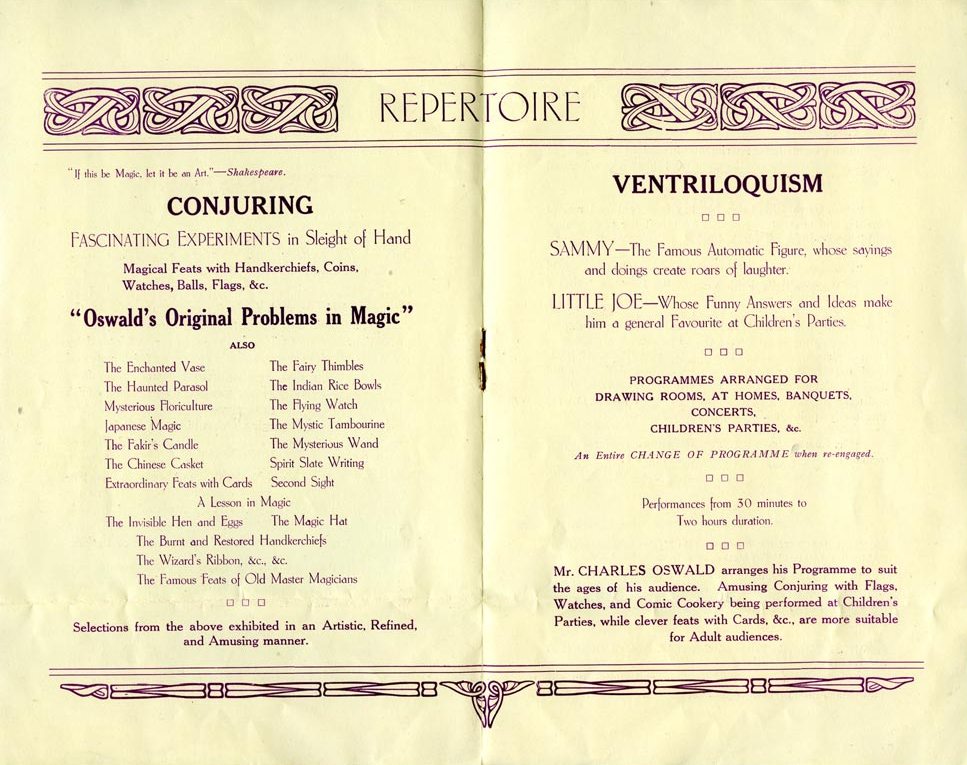
Charles Oswald - Conjuror and Ventiloquist programme inside - pic- Glamorgan Archives

Charles Oswald programme (Picture credit: Glamorgan Archives)

In 1913 he started as a magic dealer and was the UK representative for the renowned Thayer Magic Co. of the U.S.

Many famous magicians of the day, when in Cardiff visited Williams. Whenever Chung Ling Soo was appearing in Cardiff his first port of call was always the Williams house, on a number of occasions he tried to persuade C.O. to go into business with him and open a magic depot in London, but always the careful businessman, Williams was doubtful about the continued prosperity of the conjuring industry. Besides he already had a thriving and successful business and he looked upon magic as a hobby. Eventually, Soo convinced Williams to start selling tricks. In addition, any magician Soo met he used to tell them that if you are going anywhere near Cardiff then go and see Charlie Williams, where they would see more new effects than all the London depots put together. As a result of this, ‘Afton House’ 107, Stacey Road, Cardiff would soon become known to conjurers all over the world.

During WW1 he performed charity shows for wounded soldiers, arranging concert parties and on occasions persuading his famous visitors to accompany him to the King Edward VII Hospital (now Cardiff Royal Infirmary) to entertain the soldiers on the wards.

Charles Oswald Williams died on the 30th January 1924. He had eight children.

Steve Sanders

Charles Oswald Williams has been added to our ‘People of Roath’ page and given a red plaque.

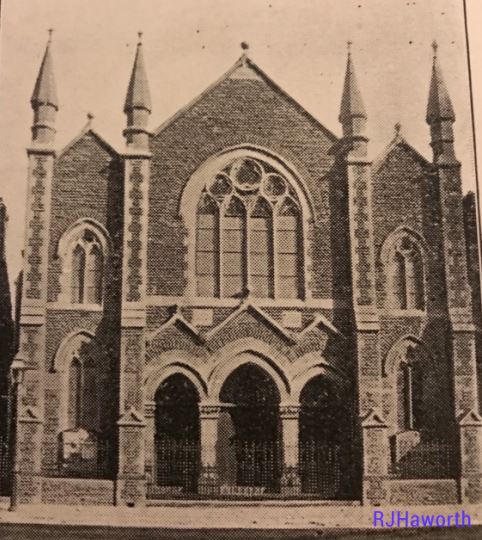
Ebenezer Baptist Church, Pearl Street.

I continue to build up the information on our website.  It’s always been my aim to try and make our website the ‘go-to’ site for information on the history of the old parish of Roath.  It is still a long way from being that at present I admit.  For the past couple of months I have been making a determined effort to complete our page on the histories of churches, rather than dart around witting about churches, pubs, schools, streets and buildings etc.  I’ve a fair number still to go but I am getting there.  The final number could be close to a hundred I think.

One advantage of tackling churches is that there are some good resources to hand including the book Cardiff Churches Through Time by one of our members Jean Rose and of course the books on Roath by Jeff Childs.  These are available to purchase from our Society.

Some of my work has led to exchanges with people who know about the history of certain churches.  One of those people has been Richard Haworth who knows about Ebenezer Baptist Church in Pearl Street.  He has kindly not only provided some interesting photographs but also expanded on the history of the church.  I reproduce the full article below.

For anyone worried about all this emphasis on churches, panic not, I’m planning on finishing off the pub history page next.

                                                                      Ted Richards


Ebenezer Baptist Church

Ebenezer Baptist Church on Pearl Street was a daughter Church of Tredegarville Baptist Church. It started as the Christ Church Baptist Mission on Theodora Street in 1879, moving briefly to rooms on Broadway before a building was constructed on Pearl Street in 1883 at a cost of around £700.  In 1886 the newspapers reported that a communion plate and baptismal dress and some other items were stolen from the church. In November 1981 the foundation stones were laid for the new Chapel, the previous building becoming the schoolrooms at the rear of the Church.  

Ebenezer Baptist Church Cardiff Exterior

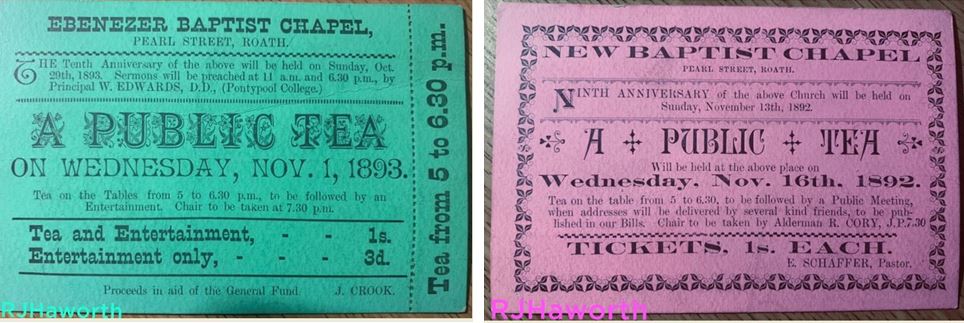
The Church was built in the gothic style with a capacity of 500 in mind, though the gallery was not added at this stage. The cost was projected to be about £1200. Alderman Richard Cory JP laid the foundation stone and contributed £100 towards the building fund. The Church building was opened on 1st October 1892 with the Rev. Edwin Schaffer preaching a sermon entitled “The Preservation of Mankind”. The following year however Rev. Shaffer was dismissed and Alderman Cory led a service in November 1893 in front of what was described as a “meagre congregation”. The Church survived this wobbly start and the Rev. T Walton ministered from 1894 – 1897.

Ebenezer Baptist Church tea tickets

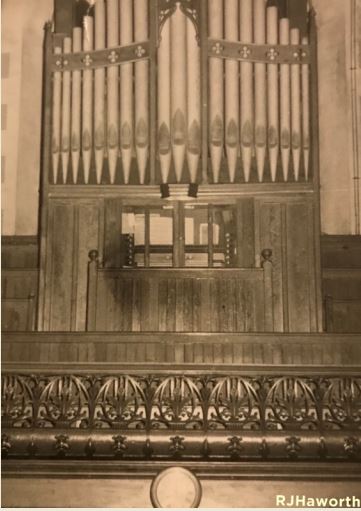
Ebenezer Baptist Church Cardiff Organ

Ebenezer Baptist Church Organ

In 1899 Rev. Caleb Joshua took up the ministry of the church and remained until his death in 1923, he was said to have “enjoyed throughout the years a good measure of God’s blessing”. Such a significant leader for the Church that on his passing a large plaque was commissioned in his memory and was mounted next to the pulpit. In the late 1920’s, thanks to the good works established by Rev. Joshua, the Church was redeveloped somewhat, this included the installation of a new organ in 1929. Rev. Garnet Powell, locally recognisable for his unusual skull cap, ministered through the late 1920’s and 1930’s. It was during his ministry that the Gallery was finally built. The Church flourished through the next few decades and at one point had a considerable choir who were nicknamed “The Pearl Street Pigeons”. The Rev. Winston took over the ministry for the War years. In 1946 Rev. Glyn Thomas took on the ministry and remained until 1963, his period being described as “a long and stable ministry”.

Ebenezer Baptist Church Cardiff Whitsun prep

Ebenezer Baptist Church Whitsun treat prep

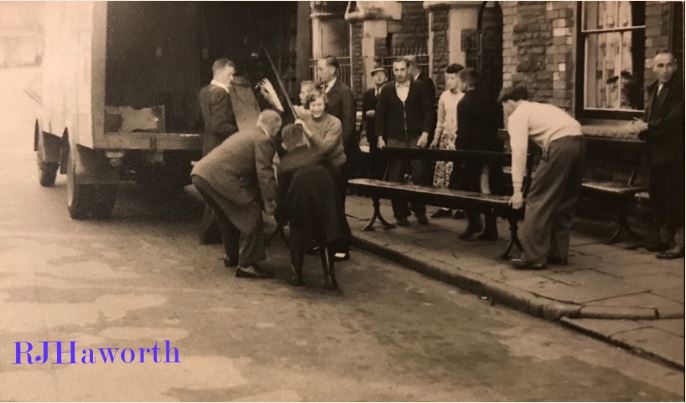
In the early 1970’s discussions with Tremorfa Baptist Church commenced, initially around calling a minister together but this soon progressed into the idea of uniting the Churches due to dwindling congregations. In 1972 Rev. Doug Harbour began his ministry of both Ebenezer and Tremorfa Baptist Churches. Over the next three years plans were put in place for the union and in 1975 it was decided that the new Church should be called “Belmont” named by Church Deacon Mr. Fred Browning. Morning services would take place in the Tremorfa building and evening services in Ebenezer, with any larger special services taking place in Ebenezer as it was the larger property. Because of the size of the Ebenezer building, it soon became apparent that it was becoming too expensive to maintain, especially when considering there were now two church sites. A proposal was made to build a new Church, equidistant between the two locations, the chosen plot was the site of the former Moorland Road Forward Movement Hall on the corner of Moorland Road, Habershon Street and North Park Road. However, despite initial favourable noises form the council it soon became apparent that they had their own use for the site and it went onto become the Moorland Community Centre. So, in 1976 the Ebenezer Church was used for the last time by this congregation. The building was rented to the New Testament Church of God for a year before it was sold to the Sikh community who opened their Gurdwara in 1979. The Sikh community added an extension to building in 2014 also adding a new entrance through one of the houses on Pearl Street and also levelled off the Gallery to create a new room on the upper level. Belmont Baptist Church continues to worship as Belmont Tremorfa Family Church to this day over 140 years after it was first established (2020).

Richard Haworth

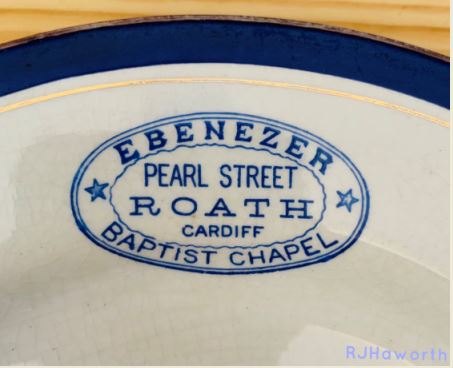
An Ebenezer Baptist Chapel plate

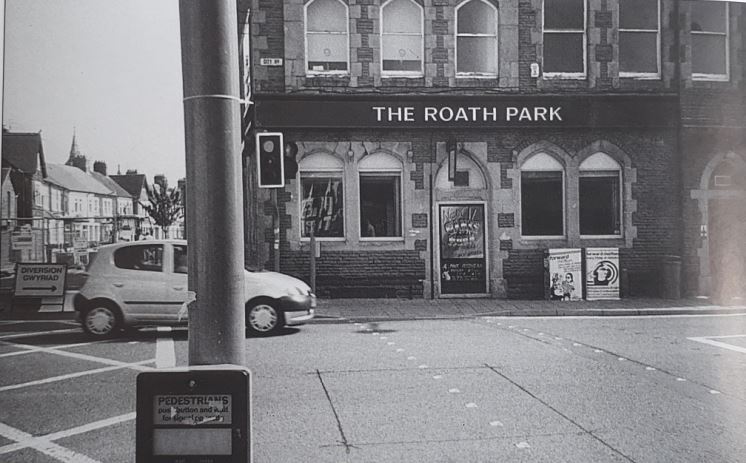
Roath Park Hotel

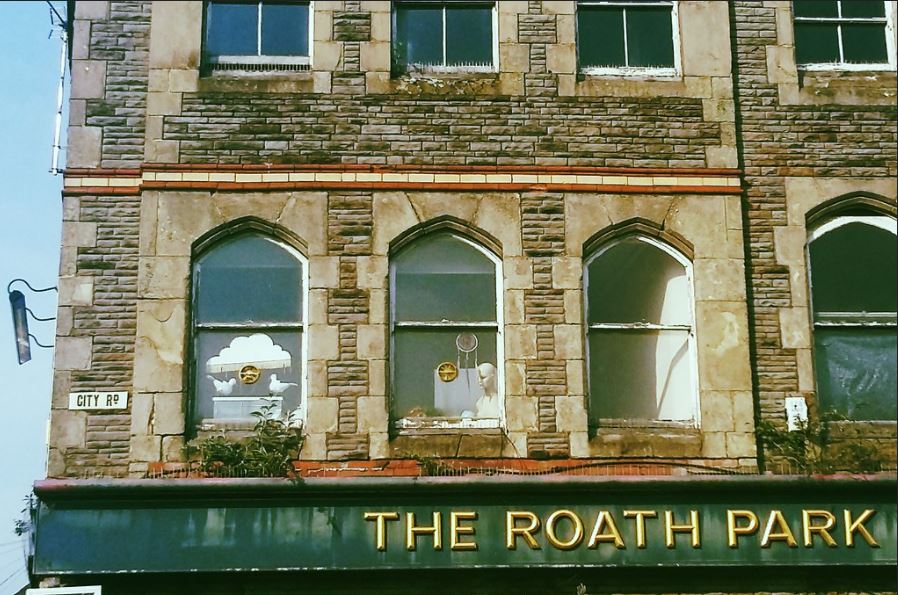
The Roath Park Hotel on the corner of City Road and Kincraig Street dates back to 1886.

As of Oct 2020 it is currently under threat of being demolished and replaced with flats.

The three storey stone built property with a roof top platform surrounded by railings is the last remaining Victorian pub on City Road, or Castle Road as it was called when the hotel was built.

Castle Road, Roath, Cardiff with the Roath Park Hotel on the right.

 it was built on land owned by the Mackintosh Estate. Urban development on the Mackintosh Estate began in 1886, but Wright’s Directory of Cardiff 1886 does not list Kincraig Street, so possibly the Roath Park Hotel was not in existence until 1887. An amended plan for some business premises at the junction in 1886 may refer to the building of the Roath Park Hotel, but would need to be examined in the Glamorgan archives (BC/S/1/5933).

We know that the Roath Park Hotel was in existence by 1889 at a time when the Sunday Closing (Wales) Act was in force and was the listed in the Cardiff Directories as being at 170 Castle Rd. It was the last of the Victorian hotels or public houses to be erected in City Rd the earliest being the Gardener’s Arms in what was then  Plucca Lane in 1855 which was renamed as the Military Canteen by 1871 . Richard Steward was the first manager of the Roath Park Hotel until 1904.

By 1905 the Roath Park Hotel was under the management of Enoch D Howells who remained there until 1911, during which time a ban on children under 14 being allowed access to licensed premises was introduced in 1908. He was succeeded by Charles Kyd until 1913, who was in turn followed by Percy A Lewin from 1914 to 1920. From the Electoral Register we know that he lived on the premises with his wife Mary and a lodger(?), Jane Rossatt, a blouse maker.  During World War I 1914 – 1918, early morning, afternoon and evening closing hours were introduced to combat the perceived evil effects of drinking on the war effort.

Photo credit: Brian Lee

Edward J Lloyd was the manager in 1924  (WMCD). Plans exist of the hotel premises in police records between 1926 and 1955 and again can be found in the Glamorgan Archives (DCONC/6/11 a – c), By 1927 Samuel Davey had become the manager.. Photographs of him appear in the Cardiff Yesterday series, vol 8, photographs 55 and 56. The Cardiff Yesterday series can be seen in the Cardiff Heritage Library located in the Cathays Branch Library.

Samuel Davey, landlord of the Roath Park

The hotel mainly manages to keep itself out of the newspapers apart from the usual arguments about liquor licences in the 1890s, the occasional person walking in and dropping dead from natural causes and Mr Naish, a greengrocer, being accused was accused of regularly taking bets in there in 1936.

The 1939 Register shows the occupants as Douglas Buckner (hotel manager), Iris Buckner (hotel manageress), Phyliss Edwards (barmaid) and Ada Selt 9barmaid).

During the 1930’s and after World War II, many young people under 25 preferred the dance hall or the cinema, but fashion changes and in the 1960’s the ‘pub’ was once again in favour only to lose out to bars and clubs in the early 2000’s. Drinking habits, particularly in the evenings tended to revolve around the playing of darts and or skittles and in some public houses singing around a piano. Men would generally drink beer, often Brain’s Dark (the original).  Drinkers of Bitter beer were in a minority.  Women drank ‘shorts’ such as Gin and tonic or Gin and It (Italian Vermouth).

From 1949 the Roath Park Hotel continues to be listed in the Western Mail Cardiff Directory (WMCD), but  the names of managers are no longer given. By 1971, the Electoral Register tells us that David Magee is the manager living in the flat above with his wife Anne. Babycham and Cinazano have now become the preferred drink for women. By the 1980’s the lager revolution was in full swing for both men and women.  For drinking habits generally see The Little book of Cardiff by D Collins and G Bennett, 2015.

(photo credit: Pintof45)

The Electoral Register still refers to the Roath Park Hotel when Melvyn E Evans was living on the premises from 2003 to 2004, but by 2009 it had become simply the Roath Park. Legislation in 2003 had transferred licensing powers from Magistrates to Local Authorities and in 2005 new licensing laws in England and Wales aimed to encourage a continental style café culture and introduced 24 hour licenses. As a result more people spread their drinking throughout the night and public houses continued to close.

An interesting assortment in the windows (photo credit: Sarah Louise on Flickr)

The Roath Park is the last Victorian public house to survive in City Road, there being I believe 8 in 1889. I do realise that fashion and economics are against its  survival as a public house, but given the horrendous change in the topography of City Road, I think that a Victorian building is worth preserving even if put to other uses.  An application  should be made for listed building status and perhaps an approach made to the National Trust or the Landmark Trust. As King Edward VIII once famously said in South Wales, “Something must be done”.

Local councillors have organised a petition against the demolition of the Roath Park.  

It had a skittle alley that was still there in the mid-1980s

. This history of the pub has just been added to the Roath Local History Society ‘Pubs’ page.

History researched by Malcolm Ranson & Ted Richards

The Newport Road Skeleton

Cardiff University Queens Building Skeleton

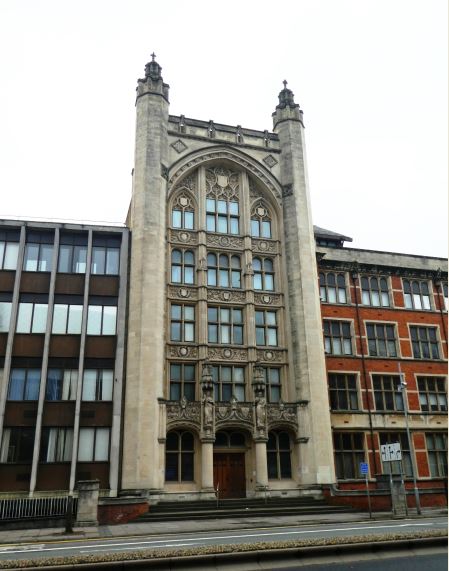
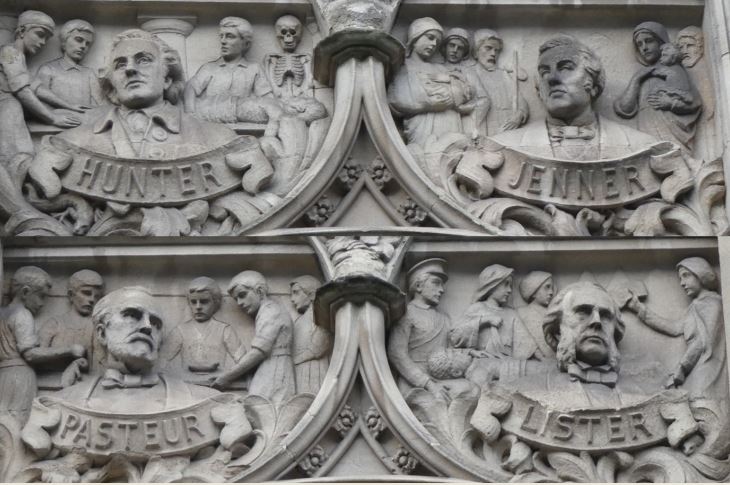
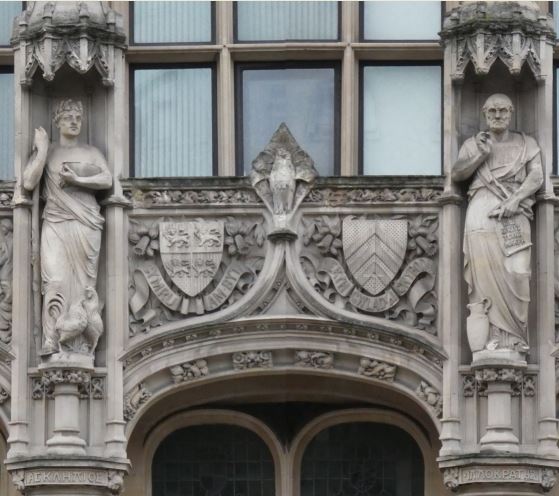
Newport Road isn’t where I was expecting to see a skeleton. There I was relaxing on the upper deck of the bus when I spotted it out of the window on Cardiff University Engineering Department.  It’s on the stone facade above the doors and looking very Gothic indeed.  The rest of the stone facade looked interesting too, comprising of two statues and four relief stone carvings of distinguished scientists.

Cardiff University Queen's Building

I did a bit of research, didn’t find a great deal, so went back and took some photos on a dank morning.  An ideal topic for a blog post I thought.  Four sculptured busts of scientists, Jenner, Lister, Hunter and Pasteur.  I could write a bit about each.  Then I did some more painstaking research and found a couple of blog posts.  One from Bob Speel looked at the sculptures in terms of the sculptor and style, the other from Pat English does pretty much what I going to do and looks at the scientists themselves.  Both blog sites are very good and I would recommend them.  I’ve little doubt that I can’t hope to add much to their blog posts in terms of knowledge.

The four scientists Hunter Jenner Pasteur Lister

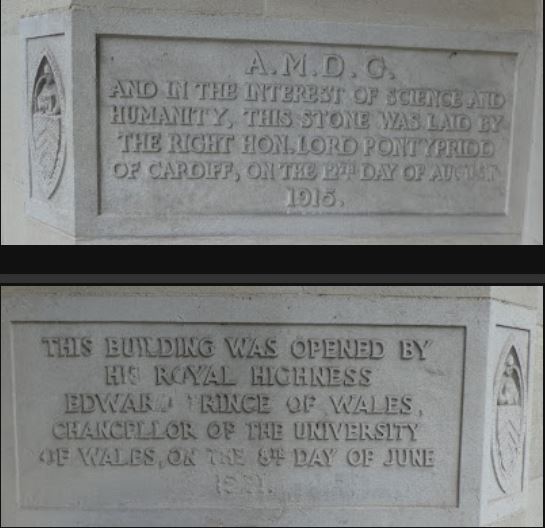
The building in question is Cardiff University Queen’s buildings on Newport Road.  Much of the building is of modern construction but the old tower dates back to 1915. To give it it’s proper description it is gothic Revival tower-facade retaining high-quality sculpture and I’m glad to see is a listed building.  There are two plaques on either side of the oak doors that indicate the first stone was laid in 1915 and then the building was opened in 1921 by the then Prince of Wales. I say oak doors but that’s a guess but they are decorated with what appears acorns, so hardly likely to be eucalyptus.

Cardiff University Queen's Building foundation stones

So if it’s the engineering building, then why is it adorned with the statues and sculptures of four non-engineering scientists. Apparently the building was originally the Medical school which makes sense as it is close to the Royal Infirmary up the road. That would also explain the two life sized statues which are part of the Bath stone facade; Asclepius, Greek god of Medicine and I’d swear an oath that the other one is Hippocrates.  Asclepius is holding his staff and two cocks stand at his feet.  It was traditional to sacrifice a cock to thank Asclepius for being healed.  I would happily sacrifice a chicken or good piece of tofu if only I could get an appointment with my doctor.

Cardiff University Gods

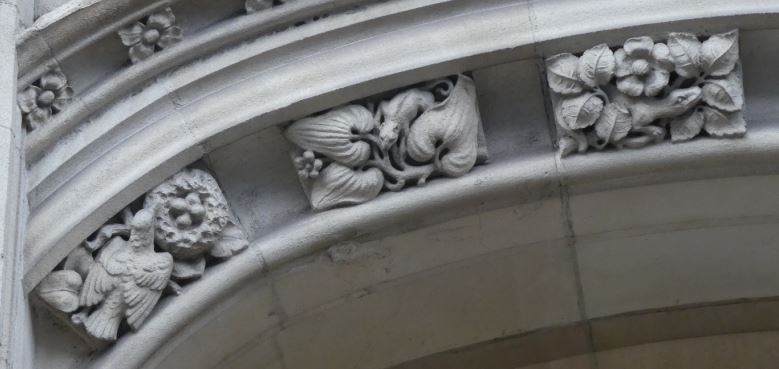
There’s so much on this facade to help keep you or your kids entertained if you are ever passing by on a bus or waiting at the bus stop. Get them to see how many carved animals that can spot just above the doorway. Among them I spotted a squirrel, lizard and mouse. And there’s probably a live pigeon hiding away in there too.

Cardiff University Newport Road Carved animals

John Hunter

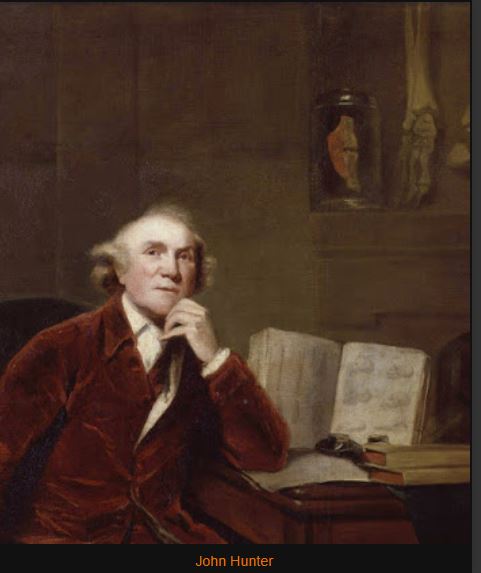
And so the scientists. Perhaps the least known is the 18th century Scottish surgeon John Hunter.  Now here’s and interesting character.

John Hunter

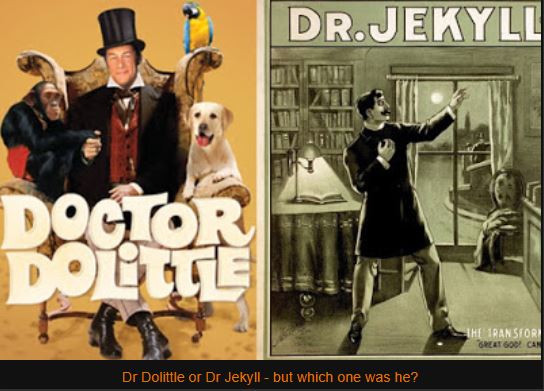
Throughout his career he collected many thousands animal and human corpses. It is said that his collection of live animals from around the world at his home in London may have led to the inspiration for the story of Doctor Dolittle. On the other hand his brother who obtained many of the human corpses for him has been accused of grave robbing and even worse, calling into question whether Hunter was more like Dr Jekyll than Doctor Dolittle.  To the top right of Hunter is a patient in a bed being watched over closely by a young man and a skeleton. Presumably this is to represent Hunter pioneering the importance of observations in medicine. But why the skeleton? I still don’t know.

Dr Dolittle or Dr Jekyll


Louis Pasteur

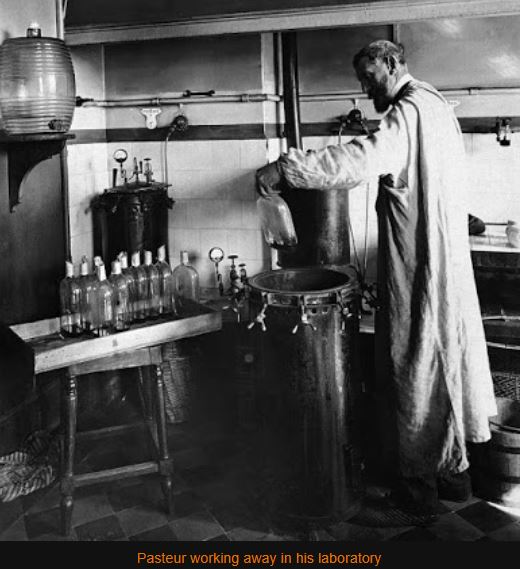
Pasteur in his laboratory

Representing France is Louis Pasteur. People no doubt know Pasteur mainly for his work as a microbiologist but he started his career as a chemist and even obtained his first professorship in that field in the University of Strasbourg.  His list of achievements are pretty staggering; vaccines for rabies and anthrax, inventing pasteurisation and an understanding of fermentation. After he died in 1895 he was buried in the Cathedral of Notre Dame, but his remains were reinterred in the Pasteur Institute in Paris. I’m not convinced that’s a move for the better if you ask me.  Would I want to be taken back to work after I die?  Before passing he asked for his laboratory notebook to be kept in the family and not shared. Only recently have historians gained access to them and are divided in what is revealed but seem to agree on the fact that a good summary would be “In spite of his genius, Pasteur had some faults”.  If I had an epitaph like that I’d be pretty happy.


Joseph Lister

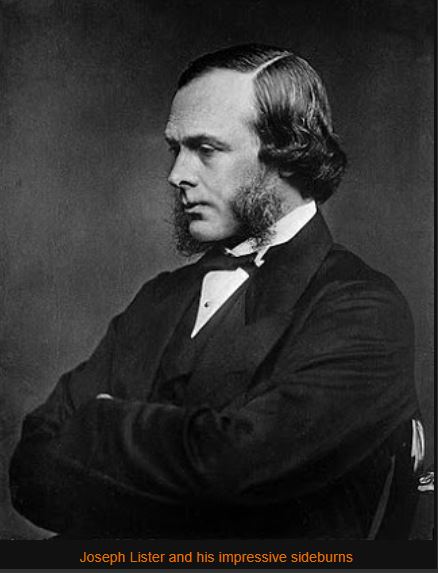
Joseph Listeur and his impressive sideburns

Joseph Lister was born in Upton House, West Ham, London. I bet I can guess which football team he supported.  He’s the man who realised that washing your hands is so important. If he were alive in these days of Covid-19 I’m sure he’d be features on many public service advertisement.  As the ‘father of disinfection’ he hailed the use of carbolic acid to sterilise everything in sight.  Initially Lister’s ideas were mocked by others in the health field who proudly wore their blood stained aprons as a badge of honour. The medical journal The Lancet warned the entire medical profession against his progressive ideas. Next time I smell the phenolic odour of Laphroig whiskey I will think of Joseph Lister and drink to him as a testament to his ingenuity.


Edward Jenner

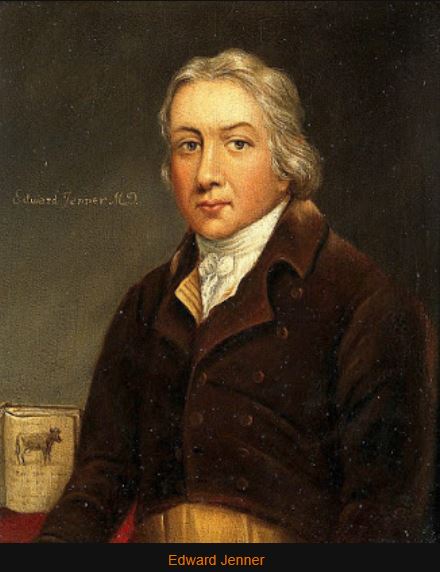
Edward Jenner

I suppose it’s a sign of the times that when you put Jenner into a popular search engine everything that turns up is about Caitlyn Jenner, who is apparently an American sex-reassigned ex-athlete and now TV personality.  A couple of pages down you come across our man, Edward Jenner, from the town of Berkeley, Gloucestershire.  His work on the smallpox vaccine has led to the much used quote that he ‘saved more lives than any other human’ and earned him the title ‘the father of immunology’.


The Unanswered Questions

And so we have it, what is probably a unique collection of sculptures of these four heroic scientists, Jenner, Pasteur, Lister and Hunter all in the same place.  Other than the outstanding question of the skeleton I have one other query.  Why is it called the Queen’s Buildings?

Hopson & Son tobacconists, Albany Road

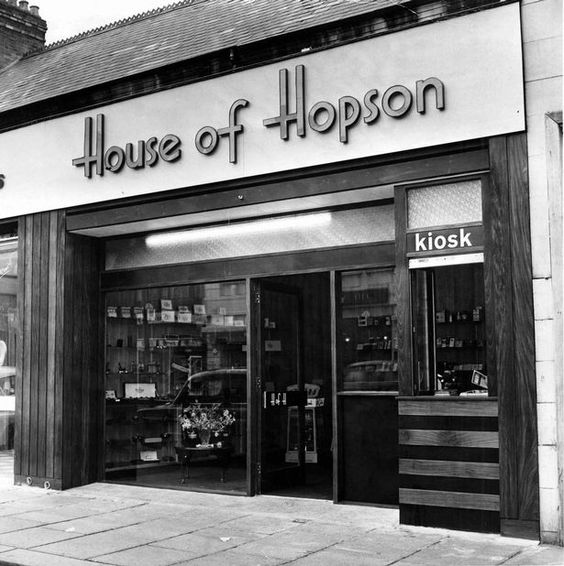
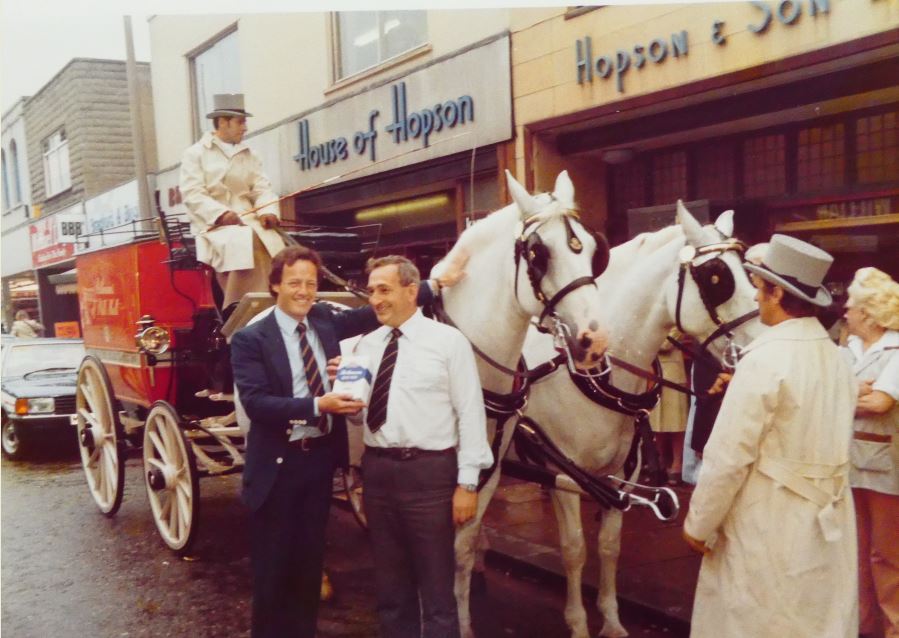
One of the businesses synonymous with Albany Road and no doubt still in the memory of many people who grew up in the Roath area would have been the tobacconists Hopson’s.  It was a lot more than just the tobacconist shop ‘House of Hopson’. It was the headquarters of a wholesale tobacco and confectionary business, Hopson and Son Ltd, the largest wholesale tobacconists in Wales.  Hidden behind the shop frontage of 27 Albany Road was a cigarette warehouse where orders were packed for delivery all over Wales and the West of England area to shops, pubs and clubs.

Albany Road had been a residential street called Merthyr Road when first constructed.  Slowly over the years the houses were converted to shop fronts.  The stretch between Inverness Place and Arabella Street was one of the first to see such a transformation.

Albany Road, Roath, Cardiff in early 1900s

Albany Road, early 1900s. H A Hopson, tobacconists, is the awning, just to the right of the lampost, where the man with the cart is standing. On the left is the bootmaker Stead and Simpson, on the corner of Inverness Place.  On the right is the original St Martin’s Church.

The business began in 1899 as a hairdressing and tobacconists shop. The profit at the end of the first year trading was 16s 1d.  In the 1913 Cardiff Trade Directory the business is described as ‘Hopson H.A – hairdresser, confectioner, newsagent and tobacconist’.   When the company first diversified into supplying cigarettes and tobacco to pubs, clubs and other shops the orders were delivered by bicycle and horse-drawn cart.

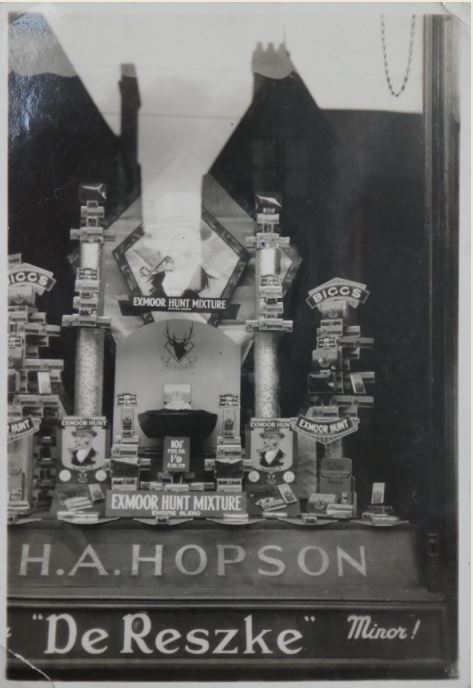
H A Hopson shop display

H A Hopson window display with Exmoor Hunt, Biggs cigarettes and De Reszke cigarettes named after Jean de Reszke (1850-1925), a famous Polish opera singer.

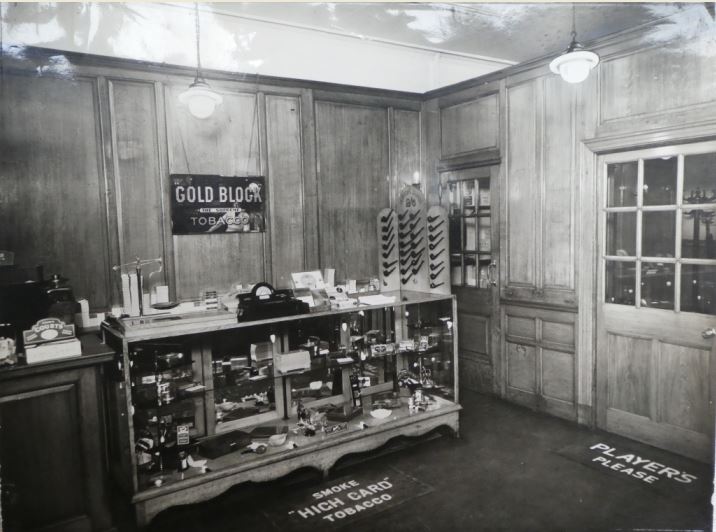
The shop had a touch of class about it, fitted out with walnut panelling that had been salvaged from the British Ocean liner RMS Olympic and had wall to wall red carpeting.   The shop also had a kiosk facing onto Albany Road to cater for the smoker in a hurry. In 1967 the shop used to stock almost 200 brands of cigarettes and 300 blends of tobacco.  The warehouse operation turned over 6 million cigarettes a week and had 110 employees.

Hopson, Albany Road, Roath, Cardiff, Hairdressing salon

The interior of the tobacconists shop with the entrance to the gentleman’s hairdresser at the rear.

What better way to get an insight into the history of the business than to look at the family history:

William John Hopson

The entrepreneurial spirit of the Hopson family can be traced back to William John Hopson.  In the 1871 census we find William, then aged just 16, living independently in Hereford and working as a gentleman’s hairdresser.  He was son of William Hopson, a trunkmaker, originally from Sedgeley, Staffordshire. William John Hopson marries Sarah Davis in Hereford when he is 19 and by 1881 has his own hairdressing business in Bedminster, Bristol. Ten years later, in the 1891 census we find he has decided to move to Wales and owns a gentleman’s hairdresser business in Treorchy in the Rhondda Valley.  They have five children, one of whom is Henry Albert Hopson b.1874 in Hereford.

Henry Albert Hopson

Henry Albert Hopson originally worked as a hairdresser in his father’s business in Treorchy.  He marries Katherine Saddler in 1898 in Cardiff.  In August 1899 he opens the gentleman’s hairdresser and tobacconist business at 27 Albany Road, no doubt with his father’s support.  In the 1901 and the 1911 census we find the Hopson family living at the Albany Road address. By 1934, when the business of Hopson & Son Ltd is registered, Henry is living at 13 Southcourt Road.  Henry Hopson passes away in 1936 and the business is passed onto his son Clifford Allison Hopson.

Wood lined Hopson and Son Ltd

The wood-lined Hopson tobacconist shop

Clifford Allison Hopson

Clifford Hopson was born in 1904 at 27 Albany Road.  He trained as a ship’s engineer and worked on vessels in Cardiff docks but gave it up when he was 32 and took over the family business when his father died young.  He expanded the business significantly, both via growth and acquisition.  Like many businesses of the time there were annual staff outings to places of interest such as Torquay, Windsor and Bude.  As well as the outings there was the legendary Christmas Dinner, traditionally held at the Angel Hotel, as a way of saying thank you to the staff.   He died in 1961 aged 57.

House of Hopson


Alan Clifford Hopson

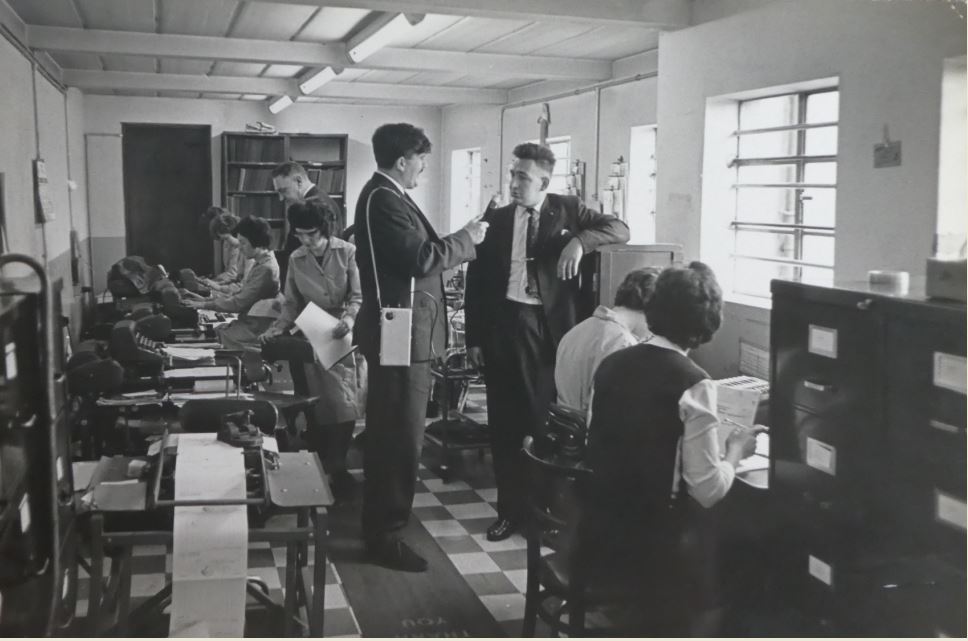
Alan Clifford Hopson was born in 1938 and takes over the reins of the business when he was just 22 years old. After leaving Cardiff High School at 16 his father had trained him up to run the business, sending him around different parts of the organisation and having him work in the packing warehouse. He was sent on courses and even over to Cuba to learn the fineries of cigar making etc. Alan’s father had already been diagnosed with the leukaemia hence the need and urgency to learn the business as his father’s health deteriorated.  When Alan took over the business continued to prosper but eventually in the 1980s external forces such as supermarkets being able to source cigarettes at discount prices from suppliers and the public’s growing awareness of the health issues began to impact trade.  The business went into voluntary liquidation in Nov 1986. The Albany Road shops and warehouse were sold and are now occupied by the Iceland supermarket.

Alan Hopson conducting an interview

A young Alan Hopson being interviewed in the office area

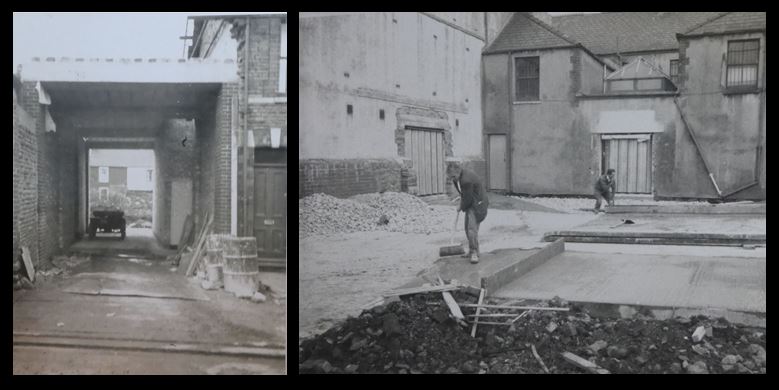
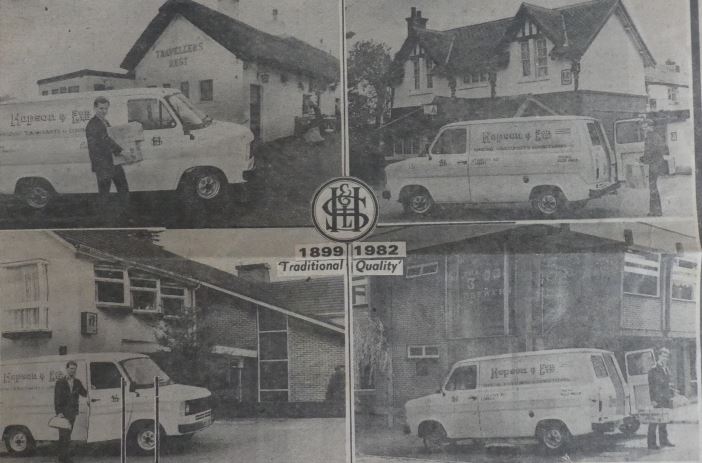
So what went on in that warehouse behind the tobacconist shop?  Early every morning a fleet of Hopson & Son white vans with their gold leaf lettering would load up in the yard before heading up to the valleys and further afield to make their deliveries.  Once they had departed it left room in the yard for the wagons from the cigarette companies to edge their way in through the arched entrance on Arabella Street, testing the driver’s manoeuvring skill to the maximum.  Whilst they went for a celebratory cup of tea an army of employees would speedily unload the wagon with the aid of rollers and neatly stack the boxes.  It’s hard to believe these days that some suppliers transported their cigarettes on flat bed wagons with just tarpaulin tied over the top of their valuable loads.

Back of 27 Albany Road being prepared for Hopson & Son

The yard behind the Albany Road premises being prepared including and entrance in via Arabella Street.

Later in the day the reps would arrive back from their rounds, clutching the orders that needed to be typed up by the office staff upstairs before being sent down to the warehouse for assembly.

Hopson fleet in Cathays Park

The Hopson & Son fleet lined up early one morning in Cathays Park

The Albany Road premises were just one of a number in the Hopson business  There were shops as well as smaller warehouses throughout Wales and nearby areas, including Chester, Haverfordwest, Newtown, Merthyr and Swansea.  Just off Newport Road in Cardiff  was the confectionary warehouse.

Publicity shot outside Hopson & Son, Albany Road, Cardiff

Rothman’s publicity shot with Alan Hopson in the white shirt.

And how do I know all this?  Well, I was fortunate enough to have a holiday job there for many years. It was there that I earned my first wage, £9.47 for a week’s work back in the 1970s, handed to me in a buff coloured packet and tiny wage slip and a national insurance number that has stayed with me all my life. Before I learnt to drive I worked in the warehouse assembling orders, unloading the wagons and running up and down stairs with the orders. After passing my test I was trusted with delivering the orders and filling in for drivers when they were away on their holidays.  It taught me a lot, not just the geography of South Wales.  You may go to school and college to learn the academic stuff but it was doing jobs like this that you learnt your life skills.

The packing room staff at Hopson & Son Albany Road, Cardiff

the packing room staff at Hopson’s on Albany Road

The business at the time was run by Alan Hopson, the third generation of the Hopson family to manage the business. He wasn’t one of those managers to hide away in an office. He would turn his hand to anything that needed doing and lead by example.  Outside work he was just as energised whether it be with youth work at Albany Road Baptist Church,  roadie for the local Unit 4 pop group or charity work with the Cardiff East Rotary Club where among other things he led an initiative to support disabled sports. As if his life wasn’t busy enough already you can add to that being a Director of the Paddle Steamer Preservation Society. He lived by the motto of ‘Service before Self’.  Alan sadly passed away in 2011, also from leukaemia.  Thank you Alan for teaching me so much.

Hopson deliveris being made

Deliveries being made to Cardiff pubs in the 1980s.

Hopson & Son up for sale, Albany Road, Cardiff

End of an era.  The Albany Road premises up for sale.

The WAAF Balloon Squadron casualties

A couple of months ago I published a blog post on the Pen-y-lan Road blitz victims.  Shortly after that I was put in touch with someone who remembered the night clearly and told me about another group who lost their lives that night.  They were members of the Women’s Auxiliary Air Force (WAAF) who were living in the newly built Lady Margaret’s school caretaker’s house on Colchester Avenue and managing a barrage balloon tethered nearby.  They were killed when the house took a direct hit from a German bomb.

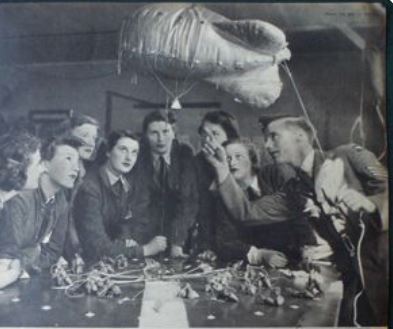
Training session

Much Googling later and I had failed to turn up any details. The internet seemed to be devoid of any information about the incident.  The casualties don’t seem to be on any Cardiff memorials and neither could I find them mentioned in the newspapers, which isn’t too surprising given the censorship in place at the time.  The civilian casualties of the Cardiff blitz bombings are listed but of course these were military victims and don’t appear on that list.  I tried looking at the Commonwealth War Graves Commission (CWGC) records but again drew a blank.  Then, last weekend I happened upon a folder on the Cardiff blitz in Cathays library and in there was a copy of a letter to the South Wales Echo in 1997 recalling the same incident.

Newspaper Article on Colchester Avenue WAAF Victims

The letter provided a lot of leads.  It pretty much mirrored what I had been told a few months earlier but not only did it list the names of the casualties and the injured but also information about a book written by a WAAF officer, Muriel Pusham, who was stationed at Cardiff Castle and one of the first on the scene afterwards.

WAAF Training
Training session for the WAAF balloon operators.

Now armed with names I could do a lot more research.  Three of the four women named in the letter I found listed on the CWGC website.  It soon became clear why I hadn’t found them earlier.   There was no mention of Cardiff on their records.  I discovered that their bodies, rather than being buried at Cathays cemetery, were transported back to their home towns and buried there.  Also, having found their names I could find their squadrons and more information about what happened on the night.  This is what I discovered:

  • 18/5  02.31
    The barrage was flying at 500′ when a “stand-by” followed by a “shine” at 02.34 was received from the Balloon Officer, 10 Fighter Group.
  • 18/5  02.41 to 03.35
    E/A attacked at varying heights from 1000′ to 10,000′ dropping flares, IB and HE.  At approximately 03.10 hours site 53/18 received a direct hit from an HE bomb which killed three WAAF balloon operators. Mary Askell (sic), Betty Stannard and Paddy (sic) Brand and wounded four others, Terry David, Cpl Lilian Ellis, Marjorie Oates and Betty Reynolds.  These were the first war casualties sustained by the Squadron.
  • 20TH MAY 1943
    The remains of three casualties, left for their respective homes. Each coffin accompanied by a W.A.A.F. Officer and N.C.O.
  •  
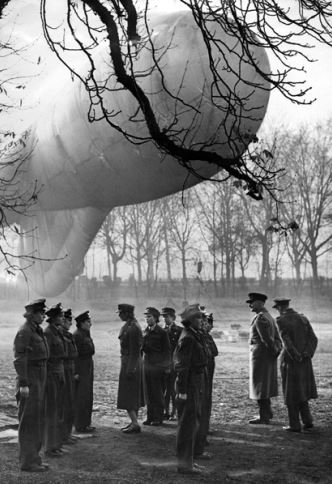
WAAF Balloon Squadron inspection

This is what I have been able to find out about the victims:

HELEN ROSS BRAND

Aircraftwoman 1st Class, 953 Balloon Squadron, Women’s Auxiliary Air Force (Service Number 2116411)

Helen Ross Brand was born in 1922 in Keith, Scotland to John Brand and Jessie Ross Brand nee Lobban. She died aged 20. She is buried in Keith (Broomhill) cemetery in Scotland (section B, grave 28). She is also remembered on the Keith War Memorial.  The newspaper article  reporting her death wrote she was due to be married in three weeks to a RAF Cadet.

Keith War Memorial Helen Ross Brand

MARY MACASKILL

Leading Aircraftwoman, 953 Balloon Squadron, Women’s Auxiliary Air Force (Service No: 2045888)

Mary MacAskill was born in c1921 to Norman and Joan MacAskill of Culrain, Scotland. Prior to enlising in 1942 she was training to be a nurse. She died aged 22.  She is buried at Kincardine Cemetery, Ross and Cromarty (grave 166) in Scotland. She is also remembered on the Ardgay War Memorial.

Mary MacAskill grave headstone

BETTY MARY STANNARD

Leading Aircraftwoman, 953 Balloon Squadron, Women’s Auxiliary Air Force (Service Number 2068971)

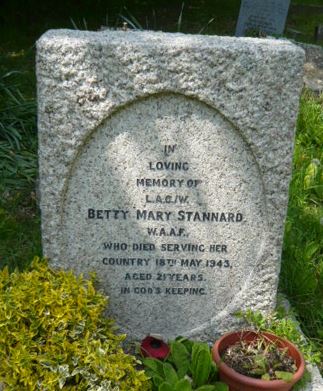
Betty Mary Stannard was born in Kent in 1922 to Albert James Stannard, an Estate worker from Monkton, Kent,  and Mary Eleanor Stannard nee Williams. (Her father Albert worked on the estate belonging  to Collingwood ‘Cherry’ Ingram, ornithologist and plant collector and son of Sir William Ingram, owner of London Illustrated News).   She died aged 21. She is buried at St George’s in Benenden, Kent (grave reference : Row 13. Grave 59).  Betty Mary Stannard is commemorated on the Benenden War Memorial in Kent.

Betty Stannard Grave

I have added their names to the Roath ‘Virtual’ War Memorial which now has almost 100 names on it, but a lot more to add.

Location

I examined old maps to see if I could work out exactly where the incident occurred.  I recall the caretaker’s house in Lady Margaret’s / Howardian school but it wasn’t necessarily rebuilt in the same place as the one that had been bombed.  On one of the old maps there are ‘ruins’ mentioned.  I wonder if this was the site.  If that’s the case then it would be on what is now Hammond Way, not far from the Colchester Avenue junction.  I am guessing this barrage balloon site was chosen to try and protect Roath Power Station from being bombed.

Ruin mentioned

Cardiff had quite a lot of barrage balloon sites across the city. They were also flown from Splott park, Cathays park and Roath Park Recreation Ground.  I have read recently that the balloons were made and maintained at a base in Ely.

30441668_1676251789155099_8956204798797938688_n
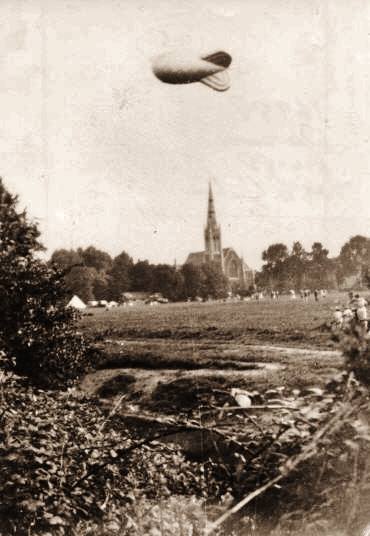
Barrage balloon flying over Roath Park Recreation Ground – 1939

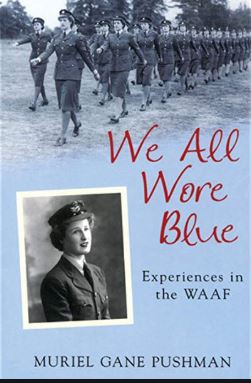
We All Wore Blue: Experiences in the WAAF by Muriel Gane Pushman

We all wore blue

This book adds some interesting memories to the incident described above though also contains some mysteries and be warned some gory bits.  The author was stationed in various parts of the country during her WAAF career so not all the book is about her time in Cardiff.

She describes there being eight balloon sites in Cardiff, ‘one being in the centre of the docks, the famous Tiger Bay area.’

‘….our headquarters were in the stables at Cardiff Castle’   ‘….. a solitary balloon was flying stoically from the keep.’

‘…..the men were responsible for the maintenance of the balloons and winches, and we were in charge of the girl operators.’

She describes the night of a raid and writes:

  • ‘It was not until daybreak that the full horror became known. One of our balloon sites up on a hill on the far side of the city had received a direct hit, blowing the Nissen hut to smithereens and instantly killing several of the girls.  The pretty young corporal in charge had her arm and shoulder blown off and suffered dreadful damage to one side of her face.  In this appalling condition, she had managed to crawl to the Pioneer Corps position – nearly a quarter of a mile away – to raise the alarm.  She had only been married the previous week, …..’
  • ‘Now, as I stood with the other officers while the parts of the bodies were collected, I found myself shivering despite the warm sunshine.’

She also describes attending the funerals:

  • ‘The next week was a blur. Nothing seemed quite real.  We were called upon to accompany the bodies to their respective home town and attend the funerals alongside the families.’
  • ‘I had never been to a funeral before and having to attend so many was physically and emotionally draining.’
  • ‘……. when the other WAAF officers returned from the funerals in Scotland’.

There were a couple of odd things that stuck me about the information in these quotes.  I don’t think I would describe the Colchester Avenue site as being ‘on a hill’.  Also she describes never having been to so many funerals before and the other WAAF officers returning from the funerals in Scotland. The three WAAF casualties I have identified, two were in Scotland and one in Kent.  So does that mean there are some not yet identified?  There is one more name in the letter that appeared in the Echo that I have not been able to trace but there may sadly have been more than that.

Barrage Balloons

A barrage balloon was three times the size of a cricket pitch. The balloons consisted of several panels of very tight fabric, at the back were three fins. The top of the balloon was filled with hydrogen, the bottom half was left empty, so when it was put up at a certain height it filled with natural air. If there wasn’t enough wind, the tail fins looked floppy but in time they filled with air. Balloons lost a certain amount of hydrogen when flying so they had to be topped up every day at the sites.

Crown Gardens 1939
The barrage balloon at Crown Gardens (Cathays Park) in 1939.

Balloons were held by cables which were fixed to winches on lorries. Cables were more important than the balloons as an aircraft had only to touch a cable and it would be destroyed straight away. If the balloon was shot it exploded, taking the aircraft with it.
The bombers had to fly over the balloons, so they couldn’t get any accuracy with their bombing, and they couldn’t dive bomb. It was dangerous to be near a cable if a balloon was shot down as the falling cable could kill a person. The winch has an altimeter which told you how high to fly the balloon, as they were flown at different heights. It was a hazardous job when you were winching up in a confined space, in wind and rain. If there was a strong wind the balloon would take itself off. It had to be handled with care because of the hydrogen.
The rope attachments consisted of metal rings which secured the balloon when it was down. Because of wear and tear the ropes were becoming dangerous so they were replaced with wire, and the metal rings were put on the wire.

There were over 15,000 WAAF barrage balloon operators throughout the country, operating 1400 balloons.

National Memorial Arboretum
Memorial to the Barrage Balloon Squadrons at the National Memorial Arboretum

(The photographs used in this article are not from the Colchester Avenue location.)

It would be interesting to hear from anyone who recalls this tragic incident. 

Postscript:

Steve Duffy, journalist and local historian, who has researched the Grangetown WWI victims, has turned up the following information in newspaper reports regarding a heroine from that night:

HEROINE When a bomb hit a balloon site during raid, killing three others, Leading Aircraftwoman Lilian Sarah Ellis, although seriously injured herself, organised relief parties and undoubtedly saved the life of at least one airwoman.” Throughout the raid,” says the citation accompanying the award to her the B.E.M. “she displayed outstanding leadership, coolness and courage.”

Liverpool Express, May 20th: When bombs fell near barrage balloon site in South Wales on Monday night killing three WAAF. crew and wounding others, Corporal Ellis, was in charge, who was herself injured, refused to accept assistance until attention had been given to her comrades, says Air Ministry News Service. When the raid started Corpl. Ellis ordered all the airwomen she could spare to shelter and had just put down the telephone after reporting to Headquarters when a bomb fell a few feet away, killing three airwomen wounding four, including Corpl. Ellis. Two airwomen who were injured went to the help of the others, although bombs were still falling. Men of the Pioneer Corps rendered first aid.

Another paper reported she had refused first aid herself, until the others had been attended to.

There are no clues in the reports as to who Lilian Sarah Ellis was or where she was from – one possible, a woman who had got married in the previous summer to a Charles Ellis – Lilian Sarah Humphrys and would have been 22 at the time and was from London. 

The Globe

It’s another one of those Roath buildings that tends to evoke lots of memories for people of a certain age.  Get into a conversation with another Roatharian about the Globe and soon you’ll be comparing what films you saw there and who with, whether you were a circle or a stalls person and what you bought from the usherette in the interval.    I think seeing The Graduate stands out for me.  Ahh, here’s to you Mrs Robinson.

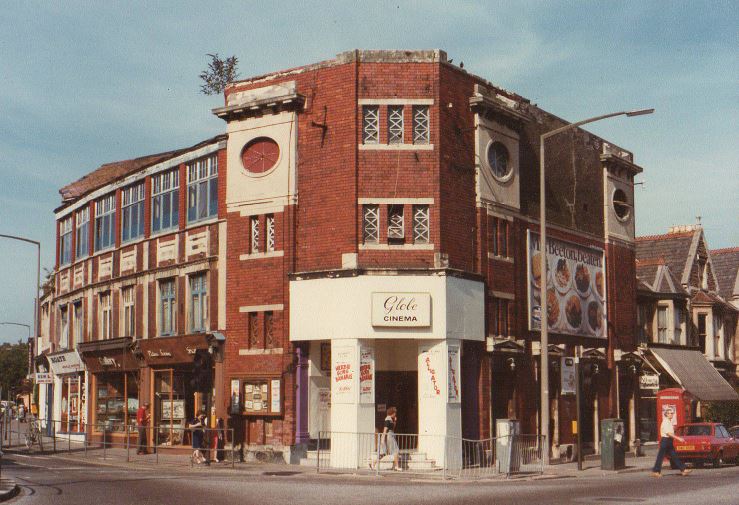
Globe Cinema Albany Road with globe on top.

Back in around 1913 someone had the foresight to look at the burgeoning population of Roath and the enthusiasm for silent movies and commission local architects Willmott and Smith too design a cinema building.

The Globe stood on the corner of Albany Road and Wellfield Road, where the Pear Tree pub now is.  It used to be called the Penylan Cinema, had a seating capacity of 542 and dated back to 1914.  In fact there is a reference to there being a cinema there as early as 1910 and called the Albany Cinema. The name the Globe derives from the fact the building used to have a globe sculpture on the roof. Look carefully at the old picture of the Penylan Cinema and not only will you spot the globe on the roof but also the two caryatids; Greek-like female sculpted figures acting as columns supporting the first floor.  These figures were later hidden behind boards advertising the programmes. It probably had a Wurlitzer organ too to accompany the silent movies.

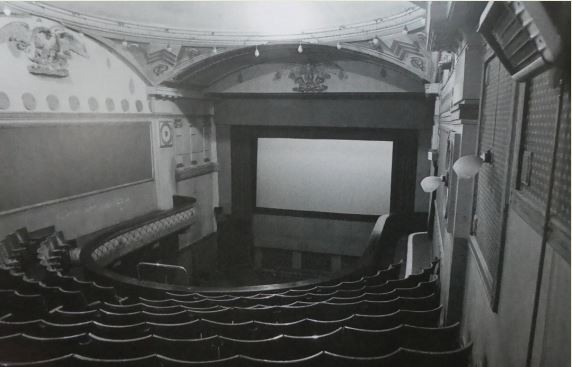
The interior was attractively decorated in classical style with eagles and the initials ‘PC’ (Penylan Cinema) near the domed roof.  Windows in the roof could be opened for ventilation to allow out the billowing cigarette smoke

Globe Cinema interior

Globe Cinema interior – taken after the cinema had closed down (photo credit: Steve Allison)

The cinema was renamed the Globe around the time it was rewired so that talkies could be shown in 1931. It was then owned by Rex Willis and operated with the Coliseum on Cowbridge Road and the Rialto in Whitchurch, often showing the same programme as one of these.

Globe cinema, Roath, Cardiff stalls and circle

Globe cinema, Roath, Cardiff stalls and circle (photo credit: Steve Allison)

In the 1950s the Globe specialised in showing foreign language films, usually subtitled, the only cinema in Wales specialising in such films.  The cinema was even called La Continentale at one stage. The papers of the time throw up some interesting stories. In Feb 1953 there was a private showing of the film Les Jeux Interdits for the Lord Mayor and the French and Spanish consuls.  In 1955 there was another private showing to the Watch Committee, this time of the film ‘The Stain in the Snow’. Only two members of the Watch Committee turned up, the Lord Mayor being one of them, and awarded it an X Certificate.

1955 Oct 26 western Mail X certificate


The Globe - La Continental

The Globe. Note how it appears to have been re-branded as La Continental at this time

In the early 1960s the cinema became a bingo hall for a short while but when that didn’t succeed it reverted to being a cinema sowing more mainstream films, often as double bills at reasonable prices.  In its final decades, the time many of us remember going there, it was a well-managed cinema owned by Mr & Mrs Wardle. Too much noise or sniggering and a torch light would highlight the offenders and order soon restored.

The curtains closed for a final time and the last choc-ice sold in the Globe cinema in 1985.  Sometime after it closed Steve Allison gained permission to take photographs of the interior of the building which he published in a nicely presented book ‘The Globe Cinema, Cardiff’ (ISBN-13: 978-0992989804), (available in Cardiff Libraries).

The Globe in later years

The Globe in later years

The building was demolished in 1987 even though it had had Grade 2 listed building status at some stage, subsequently revoked.  It was replaced by the Globe Centre, a collection of shops, a pub on the corner, originally called 42nd Street, then the Billabong and now the Pear Tree. The complex also would you believe contained a cinema, called the Monroe, which was later run by the Chapter Arts Centre and then became a Bollywood venture for a while before closing in 2001.  Today it is a successful music venue called, yes, The Globe.

Monroe

The Monroe – the last cinema on the site

So I’ll leave you reminiscing about your visit to the Globe, whether it be to see Blazing Saddles or something more refined like the Sound of Music.


A few extra pictures to bring back memories:

The Globe - the waiting area (photo credit: Steve Allison)

The couch in the waiting area where you would meet your fiends before the film began.


The Globe entrance prices

The Globe entrance prices (photo credit: Steve Allison)