Jacques and Jacqueline De Guélis were brother and sister. They led very different lives but were both to die young in motor accidents but in very different circumstances. Jacques de Guélis you may have heard of. He was a spy in WWII. He has a blue plaque in his honour in Museum Place, off Park Place, in Cardiff. Jacqueline you probably won’t have heard of, though there may still be a memorial desk in here memory somewhere at Cardiff Royal Infirmary.
Home of the De Guélis family, 3 Museum Place (used to be called Richmond Terrace)
Before we look at Jacques and Jacqueline De Guélis in detail lets go back a generation and examine the Roath connection. Jacques and Jacqueline were the only children of Raoul and Marie De Guélis.
Raoul Gabriel Vaillant de Guelis as born on 26 Dec 1872 in Herry, Cher, France. He came to Cardiff around 1900 and worked as a coal export agent, ending up as a business partner with Sam Powell coal exporter. In the 1901 census he lived at 28 Ruthin Gardens, Cathays. He was a member of the Cardiff Anglo-French Society where he delivered lectures periodically. In Aug 1904 he married Marie Stephanie Barbier, daughter of Paul Barbier, French professor at the University. They went on to have two children together, Jaques (b.1908) and Jacqueline Marie (b.1911). At the time of the 1911 census they lived at 3 Richmond Terrace (now called Museum Place). He joined the French army upon the call to arms in Aug 1914 and served as a Brigadier with the 11th Artillery Regiment. He died of pneumonia on 19 Apr 1916, aged 44, whilst serving in Argonne, France. He is remembered on the Cardiff Coal Exchange war memorial.
Raoul Gabriel Vaillant De Guelis
Marie De Guélis née Barbier was one of nine children born to Professor Paul Barbier originally from France and his wife Euphémie Barbier née Bornet, originally from Switzerland. The family lived in Oakfield Street in Roath in 1891 and Fitzalan Place in 1901 before moving to Corbett Road. The Barbier family is well-researched and there is an archive of their family papers in Cardiff University Library. In Nov 1914 Marie de Guélis and others were busy raising money for the establishment of a field hospital in France called the Glamorgan and Monmouth Hospital for French Soldiers. In early 1915 she was coordinating the Belgium Soldiers Fund in Cardiff raising money for field kitchens in Belgium. After her husband died in April 1916 in France Marie was left to raise her two children on her own.
Jacqueline De Guelis attended Cardiff High School for Girls in The Parade before going on the study Art. She was tragically killed on a dark December evening in 1934, aged just 22, after being knocked down by a motor van at the bottom of Penylan Hill, at the junction of Ty Draw and Kimberley Roads. After the accident she was taken to a nearby doctor’s surgery where she sadly died a short time later. Just a week earlier the paper reported that Jacqueline had played a leading role in a production of ‘The Aristocrat’ in front of a full house with the proceeds going to the Infirmary. Her funeral was held a few days later at St John’s Church and she is buried at Cathays Cemetery.
A few weeks after Jacqueline’s death, her brother wrote a letter to the paper pleading for road safety improvements at the Penylan Hill, Kimberley Road, Ty Draw Road junction. He describes the defective lighting leaving the corner in almost complete obscurity and how a few feet from the corner is a fire alarm box standing on the edge of the pavement blocking the view. He noted that most motorist passing do not blow their horns and have got up to maximum speed to negotiate the hill. This dangerous state of affairs was made worse by the fact that the bus stop at the time was on the corner of Kimberley Road. Jacques said that the family agrees with the jury’s verdict exonerating the driver but pleaded with the authorities to improve lighting and placement of bus stops.
Death of Jaqueline de Guelis
Penylan Hill and Kimberley Road junction as pictured today
The proceeds of the production Jacqueline had taken part in prior to her death were used to purchase a litany desk for the Infirmary Chapel. On the anniversary of her death a service was held at the Infirmary Chapel where the Bishop of Llandaff dedicated the desk in front of a large congregation. The Infirmary Chapel lay empty and unused for a number of years but in recent years has been converted into Capel I Bawb; a library, café and meeting place. There are some pictures of the old chapel. I don’t know if the litany desk is pictured in the old chapel or whether it has survived.
The old Cardiff Royal Infirmary chapel. The Litany desks are seen left and right next to the choir stalls.
Barbier grave at Cathays Cemetery with tragic death of Jaqueline Marie De Guelis remembered on the bottom three lines.
Jacques Theodoule Paul Marie Vaillant de Guélis was born on 6 Apr 1907. Jacques went to school in Wrekin College, Shropshire before going onto Magdalen College, Oxford. He had dual French/British nationality, and was therefore required to undertake French national service which he did with the French Cuirassiers in the 1930s. At the time of Jacqueline’s death in 1934 Jacques was reported to be the director of the press advertising firm in Paris. He married Beryl Richardson at St Augustine’s church, Kensington, London on 26 Feb 1938 after which both Jacques and Beryl worked in press advertising in London. He had a handle-bar moustache and was 6 feet 4 inches tall.
In WWII Jacques initially served with the French Army. He was appointed liaison officer to the British II Corps, escaped via Dunkirk, but then returned to France. He then found himself escaping the enemy again via the Pyrenees into Spain. On returning to UK he was recruited to the Special Operations Executive (SOE). He undertook many missions behind enemy lines and saw service in France, Algiers and Italy. He rose to the rank of Major, receiving many awards for his bravery including the Croix-de-Guerre with palms, Military Cross and MBE.
Members of SOE in southern France in 1944. Jacques is centre of the back row (picture credit: Imperial War Museum)
After the liberation of France, he was assigned to the Special Allied Airborne Reconnaissance Force (SAARF) to help coordinate the resistance and to provide feedback information, mainly on the conditions of prisoners of war and concentration camps. He was sent across Europe to search for information. As Nazi Germany surrendered in May 1945, Jacques de Guélis arrived in Germany on an urgent mission to find captured agents and make sure they were not subjected to any last minute vengeance. His investigations centred on a number of concentration camps, including Flossenburg in Bavaria.
Whilst in Germany, he was involved in a serious car accident with a car driven by a German soldier near Flossenbürg concentration camp on 16 May 1945. He was badly injured. Some reports say the circumstances of the accident were suspicious and speculate whether it was to stop Jacques carrying out his investigative work.
After the accident Jacques was immediately flown to Paris for an operation, and a while later repatriated to a hospital in Burtonwood, Staffordshire, but was to lose his life after further unsuccessful operations on 7 Aug 1945 at the age of 38. His body was returned to Cardiff and cremated and the ashes buried in Cathays Cemetery (plot I.22E) alongside his sister Jacqueline. His wife Beryl died in Paris in 1978. His life has been recorded in the book ‘Jacques de Guélis SOE’s Genial Giant: His Life, His War & His Untimely End’ by Delphine Isaaman in 2018. Other articles include those found in Wikipedia, the Western Mail and on BBC. He is remembered on Wrekin College WWI memorial plaque and Magdalen College WWII memorial plaque as well as a blue plaque on 3 Museum Place. Commonwealth War Graves Commission record.
There was one other accidental death that I stumbled upon when researching the family. In 1915 Uline Barbier, sister of Marie de Guelis née Barbier, married Charles Hepburn in London. They had a son together called him Raoul Hepworth born in Cardiff in 1916, quite possibly named after Raoul de Guelis who died in France around the same time. The marriage appears not to have lasted as Uline had returned to using her maiden name by 1921. Raoul Hepworth had a military career and in WWII became a Major Raoul Paul Cuthbert Hepburn and served with the Royal Army Service Corps. He died in Germany in Nov 1945, after the war had ended, as a result of an accident and is buried in Cologne.
I hadn’t come across Charles Leyshon before. In fact there isn’t a lot written about him. Much of the information in the following article comes from a series of tweets in May 2024 by Frederic Humbert @Frederic, Committee Member World Rugby Museum, which was supported by research from Herve Padioleau @HervP, historian of Stade Nantais, and Gwyn Prescott @rugbyhistorian who knows everything about Cardiff rugby, all to whom I am indebted.
In 1924 Welshman Charles Leyshon achieved his place in history by being the first referee to dismiss a player in a rugby test match.
Charles Leyshon (pic credit: Frederic Humbert @Frederic)
The other remarkable, and much sadder bit piece of his history, is that he died in a German Concentration Camp in 1944 aged 69.
Charles Leyshon wasn’t a Roath boy but he did go to school here and lodged at Monkton House school, played rugby for Pen-y-lan juniors and married a Roath girl.
Charles Isaac Leyshon was born on 18 Sep 1875 (see footnote) at 4 Cardiff Road, Mountain Ash, one of four boys born to Charles Ralph Leyshon, a station master with Taff Vale Railway, originally from Pontypridd, and Margaret Mary Leyshon née Thomas, originally from Mountain Ash. In 1881 the Leyshon family were living in Windsor Villa, Miskin, Llantrisant. His mother tragically died aged 25 in 1882 when Charles was just seven.
Charles initially attended school in Pontyclun but then his father received promotion and became station master in Cardiff at the Taff Vale Railway Station, now called Queen Street station. In the 1891 census the family were living at 9 Howard Terrace. Charles and his brother however were boarding at nearby Monkton House School in 18 The Parade with the school’s headmaster and founder Henry Shewbrook.
1. Howard Terrace, home of the Leyshon family. 2. Monkton House School 3. Taff Vale Station
Charles’s father died in Sep 1894. The newspaper reports that he was a much respected stationmaster. His funeral cortege, consisting of ‘a beautiful Victorian car bearing a huge oak and brass coffin followed by numerous mourning coaches’, left Howard Terrace heading for ‘the sequestered churchyard at Talygarn, Llantrisant’.
Charles continued to live in Cardiff. He played rugby for Pen-y-lan Juniors (1893-4) which used to play on Roath Park, and then Old Monktonians (1894-7) the club that later became Glamorgan Wanderers.
On 7 Nov 1897 Charles married Inès Clothilde Frédérica Griffiths at St Andrew’s church. She was born in Roath and lived at in James Street Roath, now called Talworth Street. Quite what inspired her parents to name her Inès Clothilde Frédéricais uncertain as her siblings have more conventional names; Mabel, Lillian, Charles and Eleanor. Charles and Inès had a daughter together, Mary Carmen Leyshon, born in Penarth in 1900, who was baptized at St Augustine Church in Sep 1900.
By 1901 they had moved to Llantrisant Road, Pontyclun, where Charles was worked as a railway clerk.
Sometime in the next six years they emigrated to France. In the 1907-8 season Charles played scrum-half for the Stade Nantes Université Rugby Club (SNUC) before moving into refereeing.
1908 Stade Nantes Université Rugby Club (SNUC), Charles Leyshon in civilian clothes (Pic credit SNUC Archives)
In 1910, he became a member of the SNUC committee, at the same time as the Welsh star of the team Percy Bush who arrived after him. Percy Bush had by that time won 8 caps for Wales and 4 for the British Isles.
1910 Stade Nantes Université Rugby Club (SNUC), Charles Leyshon in civilian clothes, Percy Bush, 2nd row, 2nd from right (Pic credit SNUC Archives).
Charles Leyshon refereed matches in 1915 and 1916 suggesting he remained in France in WWI.
In 1918 he settled in Paris and continued his rugby refereeing, something he did until 1930. Quite what Charles Leyshon did for a living I have yet to discover.
In 1923 he was one of the founding members of the British Rugby Club of Paris which still exists today.
In 1924 he was a referee in the Paris Olympics and in the match USA versus Romania in Colombes and sent off American Ed Turkington who was the first person to be sent off in a rugby international test match. The newspaper reports that Turkington was sent off minutes before the final whistle for kicking a Romanian player whist the later was down. Turkington argued that the kick was unintentional. The USA ended up winning the game 37-0. Some British sources mistakenly indicate that the first expelled was the New Zealander Cyril Brownlie against England on January 3, 1925 but that was a year after the Olympics.
USA Rugby Team 1924 Olympics
What surprised me was that it took until 1924 for a player to be dismissed in a test match considering rugby had been a popular sport for the previous 50 years. I may be missing the subtleties of what is defined as a Test Match, or maybe ‘sending off’ had more recently gained some official status in the rules.
Charles Leyshon was arrested in Jul 1944 and sent to the Buchenwald Concentration Camp in Germany. He died there of broncho-pneumonia and heart failure on Nov 19 1944, aged 69. The reason for his arrest and being sent to Buchenwald is unclear. The Buchenwald Archives reference card for Charles Leyshon states “”Polit. England”, which he interprets as “Political Prisoner – English”. It appears the family had already moved to the South of France to escape initial German occupation. Charles had been a Freemason when they lived in Paris, a member of the ‘Anglo-Saxon Lodge’ which may be a reason for his arest.
Or maybe there are some Jewish connections which could explain his arrest. Charles Leyshon was married in a Christian church (St Andrew’s) but his daughter Mary Carmen Leyshon is said to have married in a synagogue in Paris. She married Frenchman Rémi Louis Lamoureux and they had two children Gerard and Evelyn, but whether there are any Leyshon family still living in France is uncertain.
Buchenwald Memorial (pic credit Wikipedia / Creative Commons)
Edward Thomas Leyshon (1874-1949) was landlord of the Miskin Inn before later becoming a Director of the Ely Brewery in Cardiff. His son Trevor Leyshon became the brewer manager at St Austell Brewery which still going strong today.
Thomas William Leyshon (1877-1910) also attended Monkton House school. He married in 1897 giving his profession as an architect. When he died in 1910 he was living at the Butchers Arms in Llandaff.
Arthur Ralph Leyshon (1879-1940) married in 1898 but was widowed a decade later and moved to British Colombia, Canada and became a logger. In WWI he joined the Canadian Expeditionary Force in 1916 and was demobilised in 1919 before he moved back to the UK and lived in Surrey and was employed as a road worker.
Footnote
Charles’s birth certificate records his birth as 18 Sep 1875 although he always appears to have celebrated his birthday on 8th Sept. That is the day quoted on his school registration form in Pontyclun and his prisoner of war papers. Those same papers state he was born in 1873 rather than 1875 which appears to be an error.
More information
If anyone has any more information about Charles Leyshon then I would be interested to know as I’m sure would Frederic Humbert @Frederic
This Roath Local History Society Occasional Paper was researched and written by M.C.Ranson in 2011.
William Richards an Alderman of Cardiff who died c 1695 had two sons Michael and William. Michael Richards (1672-1729) married Mary Powell of Energlyn, Caerphilly and obtained lands from that union. Their son, another Michael purchased lands in Cardiff, but had already purchased parts of the Llancaiach Fawr estate from Jane Prichard. Most of this land lay outside Cardiff in the Taff Valley, but some of the land was in Whitchurch and Rhiwbina, particularly Rhiwbina Farm. This is the estate which passed down to Harriet Richards who married the Mackintosh of Mackintosh in 1880.
A reproduction of a 1789 map of the parish of Roath gives no indication of the existence of Plasnewydd in the late 18th Century. Not even Heol y Plwca is shown with any certainty and was probably just a muddy track at that time crossing an area known as Plwca Halog.
Around 1811-— 1812 Roath Court (now Summer Funeral Home) was sold to John Wood, a Cardiff banker and attorney and probably included the land on which Plasnewydd had been built around 1800, possibly replacing an earlier building c 1782. Newman (1995, p308) describes the present building as “a survivor of the Georgian style of building. Rendered, battlemented, sash windowed, it has a south front of three bays linked to single bay wings by concave pieces”.
In 1824 Roath Court was again advertised for sale and was acquired by Mrs Anne Williams, the mother of Charles Croft Williams. Also at this time Plasnewydd is advertised for sale as Roath Lodge where it is described as a “most desirable freehold estate…consisting of a modern villa containing dining and drawing rooms, excellent bedrooms [and] every necessary attached office”. In addition there is a coach house, stables, thriving plantations, a good garden and farmyard, and several pieces of productive land surrounding the house (Childs, 1995, p38). By 1829 Plasnewydd is becoming known as Roath Castle on account of its crenulated design.
Up until this time, there is no evidence that I can find, that any member of the Richards family had ever lived at Plasnewydd. On the contrary, Roath Court is advertised to be let in 1830 and is described as the residence of J. M. Richards Esq., but probably as a tenant, since applications to rent were to be made to Mr Charles C Williams in Duke St, Cardiff (Cambrian, 2 Oct 1830, p3). By 1831 Roath Castle had come into the ownership of John Matthews Richards (1803-1843).
The largest landowner in the parish of Roath in 1840 was Lord Tredegar (964a) 40%, followed by the Marquis of Bute (648a) 27%. Thereafter the next largest holdings were held by Thomas William Edwards (283a) 10%, William Mark Wood (137a) 6%, and John Mathews Richards (121a) 5%.The remaining 12% was held by 19 small landowners. John Mathews Richards held several parcels of land throughout the parish. His tenants included John Skyrme (6a), James Noble (43a), J Howell Rees (1rood) and the tenant of Tyn y Coed Farm, Henry Griffin who rented 67a in the parish of Roath and a further 90a in the parish of Cardiff St John.
John Mathews Richards had married Arabella Calley of Burdsoke, Wiltshire and their third son was Edward Priest Richards the Younger (1831-1856) a great nephew of his namesake Edward Priest Richards the Elder. The latter was the fifth son of John Richards and the first by his second wife Mary Priest. For 40 years he was the chief agent for the Marquis of Bute’s estates in Glamorgan and was instrumental in amassing the Bute fortune. During his life he held almost every public office in Glamorgan as well as in the Borough of Cardiff and established a powerful and intricate network of local control. He died in 1867 (Childs, 2005, p2).
On 5 February 1856 Edward Priest Richards the Younger married Harriet Georgina Tyler, eldest daughter of Sir George Tyler of Cottrell, St Nicholas. According to an eye witness, Edward was short sighted, wore an eyeglass, and walked with short steps and a curious little hop. He died in the first year of the marriage, when after having attended a ploughing match dinner, he and his horse were involved in a fatal collision with a cartload of manure in Heol y Plwca (now City Road). His pregnant wife then moved back to her childhood home and their daughter Harriet was born at Cottrell House, St Nicholas in June 1857. Thereafter Roath Castle was let to a succession of short term tenants including Frederick Greenhill, a colliery proprietor and his family from 1859 and Mr L.V.Shirley, agent for the Richards/Mackintosh estates in Glamorgan between 1875 and 1884.
Cardiff Corporation had shown interest in purchasing Roath Castle for use as a public park. In 1883 they changed their policy, accepting an offer made by Lord Bute to release land in order to develop what is now Roath Park. Housing development began on the estate in 1884, though the Mackintosh family did agree to the sale of land at Plasnewydd for the purpose of improvements to Albany Road in 1889. (Cardiff Records, vol V, 1889, p143)
Plas Newydd, nowadays called the Mackintosh Institute, one of the oldest buildings in Roath.
In 1880 Harriet ‘Ella’ Richards had married Alfred Donald Mackintosh (1851-1938) of Moy Hall, Invernesshire, the 28th Chief of Clan Mackintosh and the 29th Chief of Clan Chattan, and for the first six years of their marriage divided their time between Mayfair, Moy and Cottrell. By 1891 the urban development of the Plasnewydd estate had been completed and in 1889 plans were made to donate Roath Castle as a community asset for the people living on the estate. The house then became known as the Mackintosh Institute.
Map of Plasnewydd and surrounding area around 1880 just prior to the area being developed for housing.
Tucked away at the intersection of lanes in the triangle formed by Arran Place, Roath Court Road and Roath Court Place, a small bakery has been turning out fresh bread for 110 years. It is very much off the beaten track, and many Roath residents are unaware of its existence. Signs at either end of the lane serving the bakery were put up when the lane was gated in 2013, but these have now faded into illegibility, maintaining the anonymity of the premises. Despite the lack of advertising or “high street presence”, the bakery has flourished, and the Saturday morning queues speak to its popularity. But on Friday 9th September, the roller shutters will descend, possibly for the last time, when the current owner, John Allen, retires.
The bakery was established in 1912/1913 as a purpose-built bakehouse, around the time that the houses on Arran Place and Roath Court Road were being constructed. The developer was the 39 year-old Arthur John Brewer, a master baker, who lived at 135 Monthermer Road in Cathays. The architects were William Ware and Williams, who had been engaged by the Roath Court Estate to design many of the houses in the area.
The 1912 plans for the bakehouse
The design incorporated a patent steam oven at the rear, and the front of the bakery comprised stabling for 3 horses, with a manure store on what is now an open triangle of land where the wheelie bin is sited. Horse-drawn deliveries were made from the premises for many years, until the 1930s. The steam over is still there, visible as you enter the shop. It was converted to diesel fuel by John Allen but was replaced by electric ovens in about 2000.
At some time prior to 1939, William H Adams and his two sons, Douglas (Dougie) and Leslie (Les) Adams took over the running of the bakery, at which time they lived in the adjacent house at 11 Arran Place. The two brothers were involved in running the bakery over the next 40 or so years, Dougie having moved to Cosmeston Street and Les to Blenheim Road. The Adams van was a common sight in Roath as it delivered bread to retail customers. After Les retired, Dougie continued to run the bakery along with his wife, until he retired in 1984 and sold it to John Allen, who then lived with his parents at 39 Roath Court Road, just a stone’s throw away from the bakery. John had studied food technology at college and had worked in Bruton’s Bakery in Grangetown, and was able to buy the business with a loan from Midland Bank, guaranteed by his parents.
John Allen in 2018
The bakery features (briefly) in the 2001 film “Very Annie Mary” starring Rachel Griffiths, Jonathan Pryce, Ioan Gruffudd and Matthew Rhys.
Sir Jonathan Pryce as Jack Pugh, the opera-singing baker
The bakery has kept customers in Roath and further afield well-supplied with bread, cakes, pastries and pizza dough, although the main part of the business has been the wholesale supply of bread and pizza dough to cafes and restaurants in the city centre and as far away as Pendine in Carmarthenshire. Famous customers have included the former First Minister of Wales, the late Rt Hon Rhodri Morgan, who used to call in when visiting family in the area. The business has also employed numerous people over the years, not least local youngsters for whom a Saturday job was almost a rite of passage.
John and his bakery will be much missed, but we wish him all the best in his retirement, and fervently hope that the ovens may once again waft out those mouth-watering smells so enjoyed by neighbours.
Charles Oswald Williams initially grew up in Llanelly (it became Llanelli, after 1960), born on 26th September 1864. When of age, Charles followed his father into the then successful tin industry in Llanelly.
However, around 1889 he moved to Cardiff and married Elizabeth Jane Bate. Living at 7, Stephenson Street and working as a Collector and Canvasser. In 1901 he lived at 10, Beauchamp Street and was a listed as a dealer in watches, musical instruments and homeware.
An enthusiastic, amateur conjurer, Williams corresponded regularly to all the burgeoning magic magazines with ideas, letters and magic effects.
From 1900 onwards he began a regular exchange of letters with Professor Louis Hoffmann, who was considered to be one of the greatest authorities, of his day, on the theory and practice of magic as entertainment.
Williams contributed to many seminal magic books; Hoffman’s ‘Later Magic’, Charles Lang Neil’s ‘The Modern Conjurer’ and many others.
(Picture credit: Glamorgan Archives)
Now living at 107, Stacey Road, Williams was known internationally and nationally as an inventive and skilled magician. Encouraged by Hoffmann he became a professional magician in 1903, working under the name of Charles Oswald. In 1904 he was on the front cover of the American based ’The Sphinx’ magazine as magician of the month.
On Tuesday, April 10th 1906 at Maskelyne’s Theatre of Mystery in St George’s Hall, London, Williams appeared as one of the performers to appear in the newly formed Magic Circle’s first show, or as they called it, ‘The First Grand Seance’. He opened his act by speaking in Welsh! He was amongst one the first magicians to be a member of the Magic Circles ‘Inner’circle.
Charles Oswald programme (Picture credit: Glamorgan Archives)
In 1913 he started as a magic dealer and was the UK representative for the renowned Thayer Magic Co. of the U.S.
Many famous magicians of the day, when in Cardiff visited Williams. Whenever Chung Ling Soo was appearing in Cardiff his first port of call was always the Williams house, on a number of occasions he tried to persuade C.O. to go into business with him and open a magic depot in London, but always the careful businessman, Williams was doubtful about the continued prosperity of the conjuring industry. Besides he already had a thriving and successful business and he looked upon magic as a hobby. Eventually, Soo convinced Williams to start selling tricks. In addition, any magician Soo met he used to tell them that if you are going anywhere near Cardiff then go and see Charlie Williams, where they would see more new effects than all the London depots put together. As a result of this, ‘Afton House’ 107, Stacey Road, Cardiff would soon become known to conjurers all over the world.
During WW1 he performed charity shows for wounded soldiers, arranging concert parties and on occasions persuading his famous visitors to accompany him to the King Edward VII Hospital (now Cardiff Royal Infirmary) to entertain the soldiers on the wards.
Charles Oswald Williams died on the 30th January 1924. He had eight children.
Steve Sanders
Charles Oswald Williams has been added to our ‘People of Roath’ page and given a red plaque.
The research paper below was written in 2005 by one of our long-standing members Malcolm Ranson. It was one of a series of ‘occasional papers’ that are now being digitised, supplemented with pictures and uploaded onto our website for others to enjoy.
Early history
1789 map of Roath with Plwcca Lane marked with a dotted line towards the left and side. Note the milestone marked near the Elms (still in the grass by the old Roath library)
In the 17th Century Plwca Lane or Heol y Plwca (later City Road) marked the western boundary of the parish of Roath, adjoining the parish of St John’s Cardiff. The centre of the village lay a mile to the east, clustered around St Margaret’s Church. Surrounding Plwca Lane was an area of dirty wet uncultivated land. Rushes grew in the fields and were used to make rush mats which were then sold in the streets of Cardiff (Cardiff Records,1905). Here where City Road, Richmond Road, Crwys Road and Albany Road meet stood the town gallows. As commemorated on a plaque on the wall of the Nat West Bank the Roman Catholic martyrs, St John Lloyd and St Phillip Evans were executed here as were many others.
Plaque on the side of the Nat West bank on Crwys Road marking the site of the gallows.
What is now the Mackintosh Institute at Plasnewydd was built around 1800 and in 1824 was advertised for sale as “a modern villa containing dining and drawing rooms, excellent bedrooms… and every necessary attached office.” By 1830 John Mathew Richards was the landowner and occupier of what was then known as Roath Castle together with 6 small cottages and 2 fields. By 1851 Roath Castle had been let to Capt. George W.C.Jackson and in 1861 to Frederick Greenhill, a colliery proprietor.
The Cardiff Improvement Act, 1875 incorporated Roath into Cardiff. It also gave the Corporation power to provide public pleasure grounds. The first intention was to purchase part of the Plasnewydd estate, but this was dropped when building site value was demanded. In 1884 development began on the Plasnewydd estate. Most of the land was the property of Arabella Richards of Plasnewydd. She had married the Mackintosh of Mackintosh, leader of the Scottish clan, which explains many of the street names in the area.
Mackintosh Hall
In 1897 a memorandum setting out a case for the recognition of Cardiff as a City was submitted to the Prime Minister, Lord Salisbury which he rejected. Populous as it was, Cardiff was surpassed in size by many towns in the United Kingdom and which did not rank as cities.
In 1801 the population of Roath was 236. Over the next 50 years it slowly rose to 402 in 1851. In Plwca Lane in 1851, 28 residents were born in Glamorgan, 3 in Monmouthshire, 9 in Wiltshire and 1 each in 7 other counties. One woman, a soldier’s wife, was a British subject born in America. By 1861 there were 19 houses in Plwca Lane and 14 of their occupants were born in Glamorgan and 4 in Monmouthshire. Eight others were born in Somerset, 6 in Kent and Wiltshire; 5 in Devon and Ireland, and 13 from 11 other counties.
By 1891 the population of Roath was 39,903.
Plwca Lane and Castle Road in the 19th Century.
Most of the landowning families in Roath, systematically gave their land over to urban housing development during the second half of the 19th Century. In Roath Lord Tredegar was the largest landowner and some of the earliest street development was on Tredegar land adjacent to the Cardiff boundary i.e. The Parade. All the landowners adopted the practice of leasing building plots for a term of 99 years and exercised overall architectural control over the building operations on their estates.
Each ground landlord employed his own architect (the Mackintosh Estate retained Charles Rigg), who submitted plans to the local authority for the proposed layout of streets and the houses as and when they were ready to be built. Usually a large number of master builders or contractors were involved in the house building operations on each estate. They were allowed to introduce minor variations of design, thus pinpointing the work of a particular builder. Not much is known about the individual builders. Fluctuations in supply and demand made house building a risky form of enterprise. Bankruptcies were common. (Daunton, 1977)
James Hemingway the elder (1802-1854), his two brothers and Charles Pearson were all natives of Dewsbury, Yorkshire and were contractors for the construction of the East Bute Dock (1851-1859). James the elder lived at the corner of St Peter’s street (Perrix Wholesalers), but appears to have purchased land on the east side of Plwca Lane on which Talworth Street, Pearson Street and Byron Street now stand.
Talworth House had been occupied by James Hemingway the younger, at least from Nov 1859. He married Mary McGregor, step daughter of his late father’s partner, Charles Pearson. James the younger moved to northern England in Jan 1861 and the house was later leased to John Batchelor and to Samuel Nash another Cardiff businessman.
John Batchelor and Talworth House
By 1861 there were 19 inhabited houses and 9 uninhabited houses in Plwca Lane. Waring’s plan of 1869 shows that there was no development north of James Street on the even numbered side, and north of Tredegarville on the odd numbered side, though an application had been made for 14 houses to be built in Castle Road. (BC/SI/90342) Plans for 6 houses were proposed in 1872 (BC/SI/90657) and a further 6 in 1874, two of which were described as villas, implying a middle class market. (BC/S1/90908)
In 1873 the streets to the east of the lower end of City Road were drained into the Cardiff sewers, the outfall for which discharged itself into the sea, over the Splott moors about 1 mile east of Cardiff.
Before the end of 1862 Charles Pearson had moved from Leckwith to Talworth House and was appointed a member of the Roath District Board of Health. A house in Clive Street now Byron Street) was built for Charles Pearson in 1863 and plans approved for further development. Plans were also approved for additions to Talworth House in July 1867 and for a new street, James Street off Castle Road, both for Charles Pearson. Further development in Clive Street took place between Oct 1868 and Dec 1870. (Keir, c 1978)
On the west side of Castle Road the Parade had been developed from before 1875 and St Peter’s Street from at least 1861, when the Roman Catholic church was built. Penlline Street, Norman Terrace and Alexander Villas were all in existence in 1875, but lay in St John’s parish, Cardiff. Meanwhile Castle Road continued to develop, plans being submitted in 1875 for 6 proposed villas, 3 stables and coach houses, 4 shop fronts, 2 bakeries and many other minor alterations. In general, most new houses were still terraced buildings, 2 or 3 storeys high, their dimensions controlled by the end of the 19th Century by bye laws passed by the local authority. At this time water was increasingly plumbed into houses. This permitted internal sanitation, hot and cold water and bathrooms. In 1909 the Cardiff City Engineer reported on correspondence he had had with the Gas Company respecting the laying of Gas mains in City Road. The Council authorised him to arrange the best possible terms with the company to lay the mains and to provide street lamps. (Cardiff B.C., 1909)
Between 1880 and 1890 the area around City Road and Richmond Road had been developed and in Albany Road extended as far as the newly erected Board School. In 1884 urbanisation begins of the Plasnewydd and adjacent Ty’n-y-Coed land by the Richards family on what became the Mackintosh estate in and around Albany Road. Construction began in Arabella Street, Donald Street and Inverness Place in 1884. In 1886 there was no development north east of Cyfarthfa Street. On an OS map (1886) the site of what was later Glenroy Street is marked by a footpath adjoining “Mr Shergolds’ field” leading to the junction of Albany Road with Penylan Road alongside the Claude Public House. Finally construction begins in Angus Street, Diana Street and Alfred Street in 1891 and in that year Plasnewydd alias Roath Castle and 2 acres of land was donated by the Mackintosh family to local residents for their leisure use. Houses in Keppoch Street were selling for £136 each in 1892.
Despite all this new building some redevelopment was necessary. In 1883 a memorial from the inhabitants of Castle Road prays for an improvement to the narrow and dangerous entrance from Castle Road into Newport Road and for the removal of Hemingway’s house on the west side of Castle Road “an eyesore and a reproach to all living in Castle Road and others passing through.” (Cardiff BC, 1883-1884)
Development has now spread on both sides of Castle Road. Montgomery Place is pre 1861, when it had 7 inhabited and uninhabited house. Vere Street formerly St John Street had its first house built in 1867. Ninety nine year leases were granted on nos 7 & 8 and 52 & 53. Shakespeare Street in 1856, and the 1861 census records 56 inhabited and 18 uninhabited houses in that year, but the earliest known house plans date from 1865. Finally 14 houses were built in James Street for James Hemingway and later renamed Talworth Street in 1872
By 1889 there were 154 properties in Castle Road, 101 of which were commercial enterprises, and 53 were private houses occupied by residents. In 1894 an investigation in South Roath found that most houses had 6 rooms with rents of 8 to 9 shillings. It is not clear if South Roath included Adamsdown and Splott, both areas in the original parish of Roath, or the area bordering Newport Rd to the North. Men with families earning 24 to 28 shillings a week lived in these houses and as one man commented “There is not one tenant in 10 who does not let unfurnished apartments. That’s how they have to do; they could not get along otherwise… These are not the sort of buildings which ought to be put up for working men… They are too large. (Daunton, 1977)
City Road around 1920
Working in Plwca Lane & Castle Road in the 19th Century.
The 1851 census records 6 cottages in Plwca Lane, all occupied by families, and all with lodgers. Two heads of households were coal heavers possibly working in the docks, and also a painter. Two boatmen could also have been employed in the docks. Four women were employed in domestic occupations, 2 laundresses, 1 dressmaker and 1 domestic servant. Interestingly the latter is not described as such, but as being “employed at home.” Agricultural interests were represented by 6 agricultural labourers, 1 thatcher, 1 gardener and a waggoner who would easily find employment on adjacent farms. Finally there were two special categories, 2 soldiers, no doubt from the Longcross Barracks and 11 children described as scholars.
In 1861 their occupations were becoming a little more urbanised. Eight were in the building and engineering trades, including one builder who employed 24 men, and in addition there were 6 labourers. Domestic occupations i.e. servants and dressmakers accounted for another 6, while the commercial group included 5 in the boot and shoe trade and 2 grocers. There were also 2 grocers in Shakespeare Street in 1858.
At this time there were 2 hotels in City Road, the Ruperra (the Tut’n Shive) and the Clive Arms. Excessive drinking was one of the major evils of urban life. Opening hours were curtailed gradually between 1864 and 1874, but late Victorian pubs could still open between 5.0 am on weekdays and from 1.0 to 3.0 pm and 6.0 to 11.0 pm on Sundays. On the other hand the public house was a recreational and social centre where many could enjoy the comforts of light, heat, furniture and newspapers not available in their own homes. Public meetings were frequently held in public houses and it was not until the 1850’s that they ceased to be centres of political party organisation. Trade unions and Benefit societies met in pubs and workers went to their local to look for jobs. As today they were also centres for sport and entertainment. (Baldwin, 1986)
By 1882 there were 41 private residents mainly concentrated on the west side of Castle Road above Northcote Street. They were supported by 33 shops in the food trades and 15 shops of a general nature e.g. stationers, general dealers, tobacconists etc. There was also an industrial group, who presumably worked away from home and included tin plate workers, fitters, platelayers and general labourers. They numbered 17 in all.
Following Solomon Andrews move to Tweed lodge at 47 Newport Road his former house at no 37 The Parade was converted to an ironmongers shop. Though the plans were rejected by the Borough Surveyor on several occasions, considerable additions were made to the Castle Road frontage and the shop became known as 3 Castle Street (now a disused filling station in City Road) Accommodation for plumbers and tinsmiths was located at the rear. (Andrews, 1976)
Solly Andrews Garage, CIty Road
An analysis of the Cardiff Street directory, 1889 reveals the Food trade as the largest group, 36 tradesmen in all. Of these 10 were grocers, 9 butchers, 6 greengrocers, 4 bakers, 4 sweet confectioners, 2 fish and poultry dealers and 1 dairy. Plans for new premises for the Cardiff Milk Supply Co were approved by Cardiff BC in 1890. Next were 27 service shops i.e 5 boot and shoe makers, 4 general shops, 3 drapers, 2 pawnbrokers, 2 hairdressers and 1 tailor, hosier, umbrella maker and a tobacconist. The Building trades included 3 carpenters and 1 decorator, painter, contractor, builder, mason and a chimney sweep amounting to 9 in total. Finally there are the engineering and craft trades, led by 3 engineers and 2 cabinet makers. Others include an ironmonger, coal dealer and a smith, while the craft trades include china dealers, jewellers and watchmakers, 13 in all.
By 1889 there were 6 hotels in Castle Road and only 2 the Roath Park and the Ruperra (now the Tut ‘n Shive) remain. The average yearly consumption of beer per head between 1895 and 1900 was 31.2 gallons and 1.03 gallons of spirits. For the Victorian alcohol was a thirst quencher because water was unsafe and milk dangerous, even when fresh. Intoxicants were believed to impart physical stamina, assisted dentists and surgeons, quietened babies and helped women through childbirth. (Baldwin, 1984)
Street maintenance and public transport
In 1855 the Cardiff Street Commissioners ordered their Surveyor to inspect Plwca Lane and the road leading from the Crwys to Fairoak (Pen-y-Wain Rd), and report to the Commissioners on the most advantageous mode of arranging with the parish of Roath for the repair of such roads. (Cardiff Records, 1903)
By 1859 the Commissioners were complaining about the obstruction of a footpath by the removal of stiles, between Park Place and Plwca Lane. Co-operation with the Surveyor of Roath did not appear to be going smoothly since once again the Commissioner intervened and ordered “that the necessary steps be taken to recover the value of the stones removed by the Surveyor of Roath from Plwca Lane”. (Cardiff Records, 1903)
Despite setbacks road improvements continued and a drainage plan for Plwca Lane was implemented in April 1865. In the same year Solomon Andrews (b 1835, Trowbridge), signed an agreement with David Phillips of Roath to purchase his business at Roath Mews (no 1, City Rd) and the lease for £400. The purchase included 7 cabs, 12 horses, a brake, a phaeton, a dog cart, and 7 sets of single harness, buckets and other equipment. Eventually the freehold of the mews was purchased and later formed part of the company’s garage at nos 1 to 3 City Road.
Castle Road, Roath, Cardiff. The Roath Park Hotel can bee seen on the right.
Saddlers, harness makers and wheelwrights flourished until around 1920. Corn merchants lasted a little longer, gradually evolving into pet shops. One corn merchant, Wyndham Smiths (1901-1940) at no 38 received a direct hit by a bomb during a German air raid in 1940. Three employees were killed.
In 1871 Cardiff BC decreed that all turnpike gates within the town boundaries be removed and in 1872 The Provincial Tramway Co began its first Cardiff route from the town centre to the docks. In 1878 the system was extended to Roath and Canton.
The street name of Castle Road was introduced in 1874, taking its name from the mansion known as Roath Castle (formerly Plasnewydd). (Daunton, 1977)
Rees Enoch had been appointed a member of the Local Health Board in July 1867. He was a grocer living at 78 Shakespeare Street and stood unsuccessfully as a Liberal candidate for the Roath ward in the Cardiff Borough elections in 1875 and 1876. He was finally elected in 1879 and remained on the Council for 3 years.
In March 1877 the Council Surveyor reported to the Public Works Committee that the kerbing, channelling and paving required in Castle Road had been commenced by the contractors, Messrs Jones and Jepson. Later that year in May 1877 Mr Rees Enoch laid before the Sanitary Committee a memorial from the tradesmen residing in Castle Road, complaining of insufficient watering of that street, and the Foreman of Scavengers was directed to look into the matter. By June the Surveyor reported that the fencing on the North East side adjoining Mr Sherley’s field was now erected and that nearly the whole of the kerbing, channelling and paving ordered had been laid down, and a portion of the road reformed and rolled. From then on there are continual references in the minutes of Cardiff BC to repairs in Castle Road. Remember that the road surface had not yet been metalled. (Cardiff BC, 1877)
Despite pressure from Cardiff BC, the Provincial Tramway Co was not inclined to make further extension into Roath. The problem was that severe competition from the omnibuses run by S Andrews and Sons in Cardiff was cutting profits, so that in 1886 and 1887 no dividend could be paid. Eventually following compulsion from the Council, small extensions were made in Roath and Canton, and negotiations begun to buy out Andrews. By mid 1887 he had agreed to sell, and this led to a proper and regular timetable, ending the system whereby a bus had “nursed” a tram, so that in effect 2 vehicles had done the work of one. Remember the Bluebird buses in the 1990’s!
Education, education, education.
In 1847 a government report gives the total population of the parish as 298 and a Day school is recorded as having 30 pupils and the church Sunday school 32 pupils. In the 1861 census 11 children living in City Road were described as scholars. Were they attending the village school in Merthyr Rd (Albany Rd)? There were alternatives.
St Peter’s RC Church was built in 1861 and was originally known as St Peter’s in the Fields. A private school for Roman Catholic children was run by a Mr Timothy O’Brien at first from his house in Milton Street but later transferred to a small room in Castle Lane (Road?). This venture was almost certainly supported by the parish priest, Father Signini. There was no set syllabus, no government grants and minimal control by the Church, but it was better than nothing.
In June 1868 Father Signim rented a large room in a former Wesleyan chapel in Chapel Street off Bedford Place. The new accommodation was larger, had better facilities and gave the RC Church greater control over the school. Alas the pupils had to pay for their education. From this income Mr O’Brien paid the church £12 annually. but there was still a need for a larger school. The land next to the church on which the presbytery now stands was originally intended as a site for a school, but the Homfray estate was unwilling to agree on a fair rent. Finally Lord Bute negotiated with Lord Trdegar for land in St Peter’s Street, where the school was eventually built and where today Richmond Court flats now stand. St Peter’s RC School opened on 1 August 1872.
A Sunday school attached to Roath Road Methodist Church opened in 1868. In 1870 a new church was built at the south end of Castle Road (now City Rd), where Eastgate House now stands. The Sunday school premises were thought to be among the finest in the United Kingdom and together with a mission school in Cyfarthfa St catered for nearly 1,000 pupils.
The Clifton Calvinistic Methodist chapel also dates from 1868, when a group of friends began to hold prayer meetings and a Sunday school at the house of Mr Job Dew in Shakespeare Street. A chapel was opened on the corner of Clifton St and Newport Road on 5 Dec 1870. It is now the Inkspots Arts shop.
The Education Act, 1870 continued state support for church schools, but set up school boards to provide elementary schools when no others existed. From 1880 all children had to attend school between the ages of 5 and 10 and by the end of the 19th Century the school leaving age had been raised to 12. On 1 June 1886, the Cardiff School Board resolved to purchase a site on the Mackintosh estate on the south side of Albany Road. A contract was agreed with the builders, Stephens and Bastow of Bristol for the erection of a school designed by the architect A Llewellyn Batchelor for £8579. Today the school consists of a 2 storey range facing Albany Rd with a single storey infants department added to the rear. It was formally opened by the Mayor, Sir Stanley Morgan on 2 Nov 1887.
Health Services in City Road
As early as 1889 there were 2 chemists in Castle Road, and this had risen to 5 from 1932 to 1972. Three doctors were practising in 1901, but only one by 1949. City Road had 3 dentists in 1920 and a maker of artificial teeth. The latter was called a Dental mechanic by 1949. One of the Dentists, Henry Sainsbury had a practice at 173 City Road between 1922 and 1942. He married Maud and they had a daughter Betty born in 1922. (Mowbray, 2004). The first chiropodist arrived in 1949, herbal medicine in 1972, and an optometrist in 2002.
The design of artificial limbs was much improved in the latter half of the 19th Century. Prior to the 1914 -18 war, the British government realised that a large number of amputees would require artificial limbs, so it is not surprising to find J Stubbs & Son established in 1887, operating as an artificial limb expert in City Road in 1920, when John Stubbs and his wife Laura May were resident at no 7 City Road.
The Naming of City Road
The Prince of Wales, later King George V, paid a two day visit to Cardiff in June 1905, during which as Chancellor of the University of Wales he laid the foundation stone of the new UCW Cardiff building in Cathays Park. It was a successful Royal visit, and the civic leaders decided to put forward once more the claims of Cardiff for recognition as a City. On 3 July, a petition by the Council containing a statistical summary as to the population, trade, educational and other facilities in the borough was sent to the Prime Minister. Balfour did not comment until September, when he agreed to Cardiff’s case solely on the grounds of it being a town of exceptional position and importance in Wales, but worried about emphasising any further distinctions between England and Wales. (WM, 23.10.1905)
Progress remains slow, but finally the Mayor was privately informed on the 15 October by the Marquis of Bute that Cardiff was to become a city, followed by a letter to the Council from the Home Secretary. On 21 October, 1905 Cardiff was finally given the status of a city. There were of course immediate calls for Cardiff to be recognised as the Capital of Wales!
It was not until 1906 that a memorial signed by 195 residents of Castle Road and neighbourhood was received by the Council, praying that the name of Castle Road be altered to City Road. The Council agreed. (Cardiff CC, 1906)
Trades and occupations in City Road, 1901 to 1971
C & G Geen had a builder’s yard behind Argyll Chambers (Quartermasters Stores) from 1910 to 1961. Confusingly Parfitt (Builders) Ltd appear to have had office premises in the same building from 1952 to 1972. J Staples was a builder living at no 123 in 1910, but did not necessarily run his business from that address.
A Stark was a mason at no 71 in 1889 when City Road was known as Castle Road as was James Brobyn a carpenter at no 139 and F Krantzcke a chimney sweep at nearby 131. E.J.Sawyer was a plumber at no 99 in 1910 and Daunton and Winfield are described as plumbers and ironmongers at nos 160 to 162. John Downey was a plasterer at no 71 in 1920, the same year that Hampton and Co were established as Heating engineers and Lawrence Bros as plumbers, electrical engineers and decorators.
As might be expected boot and shoe makers were well represented when people walked more frequently. There were 12 in 1901, 14 in 1910, reducing gradually to 1 in 1961. Tailors, dressmakers and outfitters were also in abundance, 11 in 1910 and 1952, and 9 in 1949. J Hepworth & Son, clothiers were in City Road by 1910. James Edward Boughton went to work for them as a junior in 1920 at the age of 14. He worked at Hepworths for nearly 30 years working his way up to manager and then area manager for South Wales. In approximately 1948, James Boughton decided to branch out on his own and bought a property that had been W.H. Hills butcher’s shop with a large sausage factory at the rear. He opened his Gents Outfitters – J.E.Boughton at no 184 and the business continued successfully until shortly before his death in 1982. He had been President of the Wednesday Football League and a freemason with the Bute Lodge. (Andrews, 2005)
Umbrella makers disappeared after 1920 and hosiers after 1910. The furnishing trades prospered during this period, 11 in 1920 and 1949, and 10 in 1952, as did hairdressers and still do so today. The Roath Furnishing Co was owned by the Fligelstone family. They made furniture in several buildings in the lane behind City Road.
Before the 2nd World War, Newtons was a newsagent and tobacconist at the Newport Road end of City Road. It also had a barber’s shop at the rear of the premises. When the barber had finished cutting your hair, he would give you a token, which you then took into the shop and paid the required amount. At no 26 was Mrs Burns news agency, stationers and Catholic repository. The interior of the shop was long and narrow and Phillip Strong remembers a silent Mr Burns standing always at the rear of the shop dressed entirely in black and wearing a hat! (Strong, 2004)
On the comer of Oxford Lane was the Post Office. Behind this building with an entrance from Newport Road was the British Restaurant, one of hundreds sponsored by the government during the 2nd World War and afterwards, where meals were served as a supplement to the food rations.
In 1901 there were 4 hardware dealers and/or ironmongers in City Road, one of them belonging to Solomon Andrews at no 3 (CY 17:21), where a derelict garage now stands. Paraffin was sold in the shop and Phillip Strong recalls a large circular glass tank calibrated in gallons standing on the counter. When a sale took place the required quantity was pumped by hand to the level needed and then the tap opened filling a bottle or other container. Margaret Reeves remembers David Jones hardware shop at no 82. The shop advertised rubber handle grips for prams and pushchairs and offered to fit them free for customers. This operation took about 3 weeks until in exasperation Margaret’s mother accepted an offer of a free handle grip and fitted it herself!
Gaiety Cinema, City Road, Roath, around 1912
There was an engineer living in City Road from 1901 to 1910. Whether he was the mining engineer whose qualifications of M.I.M.E. are given in 1920 is not clear. The craft of the smith also survived between 1901 and 1910, but had mutated into motor engineering between then and 1949. Electricians also appeared in 1910. Other occupations such as sheet metal workers, plating technicians and tyre makers (vulcanizers) appear from 1920.
The livery stable established at no 1 Castle Road by Solomon Andrews remained until 1920, when it became a petrol station and garage. By 1952 there were 20 motor car dealers in City Road, 30 in 1961 and 53 in 1972. To support these were 5 motor engineers and car accessory firms in 1952, 9 in 1961, and 7 in 1972. There were also tyre distributors (2 in 1961), auto electrical engineers (2 in 1961), battery manufacturers (1 in 1952) and brake liners (2 in 1961).
Before 1920 pedal cycles were built in City Road by J. Worrell at nos 2 and 10 in 1910 and Kennard & Co (1910 — 1938) are described as cycle manufacturers at no 20. Halfords arrived in 1939 and stayed until 1972.
Banks in the past had splendid names, no abbreviations then. The Metropolitan Bank of England and Wales Ltd was at no 223 in 1910, followed by the London Joint City and Midland Bank, before becoming the Midland Bank in 1932, now of course HSBC. Alterations and additions to Barclays Bank on the corner of City Road and Richmond Road were rejected by the Public Works Committee on 18 Nov 1920, though later approved in 1921. Barclays Bank remained there at least until 1972, but has now been closed. At the other end of City Road, Lloyds Bank stood facing Newport Road (now the site of Longcross Court). It had previously been the Wilts and Dorset Bank until 1910.
There were 2 pawnbrokers in Castle Road/City Road from 1901 to 1920. Mrs S Cohen was a pawnbroker at no 134 in 1920. In 1921 the Council made an order prohibiting for 6 months building work at 134 City Road. Was business not so good in 1921 and cash flow was a problem? Difficulties also occurred for Fligelstones, pawnbrokers at no 22 City Road. In 1938 a serious fire broke out at night and much of the property was destroyed. The shop had an imposing front with 2 large convex plate glass windows which curved into the door of the shop. When the building was repaired these were not replaced.
Food trades dominated the commercial life of Castle Road in 1901. There were 10 butchers, 10 grocers and 9 confectioners. In addition there were 7 hotels and/or public houses. The grocers included Jones and Sons at no 49 near St Peter’s Street, H.J.Small a grocer and fruiterer at no 167 near Northcote Street and P.L.Dodington at no 232 on the corner with Strathnairn Street. John Williams ran the well known Argyll stores on the corner with Albany Road. The Modern Provision Co at no 34 was run by the Campbell Bros. and their predecessors from 1920 to 1961. O’Sheas succeeded Heginbothams at no 44 from 1940 to 1952.
The meat trade was well represented from 1901 to 1961, peaking in 1910 and 1932 with 15 establishments in each year and dropping from 7 to 1 between 1961 and 1972. Phillip Strong was born in the living quarters behind his father’s butcher’s shop at no 24 City Road in 1932. W.L.Strong had a business here from c 1920 to 1961 and was involved in the administration of meat rationing during the 2nd World War. When the siren sounded the family would go to their air raid shelter and stay there until the all clear. They could hear the sound of the German aircraft; their diesel engines had a distinctive ‘thrum’ sound. Bombs would fall and there was always speculation as to whether their house would still be standing. Fortunately for the Strong family it always was.
Phillip recalls the names of the other butchers in City Road at that time. Lamerton and Sons were Pork butchers between 1910 and 1932 at no 236, while T Storm had shops at nos 212 and 214 between 1932 and 1961. The Co-op arrived between 1940 and 1961 at no 152. Two specialist suppliers were Excel products a tripe dresser at no 92 and Thomas Lane a Salt Meat purveyor at no 50, both in 1920. On the other side of the road beyond St Peter’s St was Bill Sweet who succeeded Pleydell at no 29. Monks the pork butcher sold hot faggots and peas and had another shop in Albany Road where Woolworths now stands. (Strong, 2004)
In 1901 there were 2 cafes in Castle Road rising to 6 in 1971 and 1972. Today take-aways and restaurants are everywhere. One is Miss Millies; a small chain based in Bristol, it is a regular contributor to local charities and has contributed £500 towards the City Road Centenary Event. The site on which Miss Millies stands was not developed until around 1900. William Hillbome ran a confectionery business here from 1901 to 1920. Between 1949 and 1961 it was a milliner’s shop but by 1972 was taken over by Cleanercrafts (Cardiff) Ltd. who sold domestic appliances.
The number of confectioner in City Road peaked at 17 in 1932, dropping to 4 in 1972. John Paskell at nos 43 to 45 with his sweets in rows of glass jars is remembered by many people from 1920 to 1972. Pascall House, a block of flats now stands on the site of his shop. H.A.Frayling, confectioner was another well known name at no 2c. In 1910 there were 7 bakers in City Road, among them E Sirrell. In the 1920’s the Pearson Street side door to his shop was used daily by numbers of Roath schoolchildren to obtain a free meal.
Sirrell’s Bakery, City Road, Roath Cardiff. I wonder if that is Ernest’s widow in the doorway.
Mild ale had replaced porter as the main beverage in public bars by 1900, but patrons in saloon and private bars continued to prefer bitter. Today there are 3 public houses in City Road, but between 1901 and 1910 there were 10. The Ruperra Hotel is now the Tut n’ Shive, The Roath Castle Hotel flourished from 1906 to 1961 at no 89 City Road, but the Roath Park is still in business today. Only the Ernest Willows does not date from the 20th Century or earlier.
Roath Park Hotel, City Road, (picture credits: top rt – Sarah Louise on Flickr, bot left: Pint of 45.)
Possibly the most recognisable building in City Road is the former Gaiety Theatre which opened in 1911 and closed in 1961. It was part of a chain of cinemas which included the Splott, Monico, County, Ninian and several other cinemas. They changed their programme midweek, half the chain having a film for Monday, Tuesday and Wednesday passing them on to the other half on Thursday, Friday and Saturday.
Cinemas closed on Sundays until the early 1960’s. Unlike today you could enter the cinema at any time, even in the middle of a film and stay to the end of the following performance. Prices in the late 1940’s ranged from 1/6d to 2/6d. By 1972 it had been a Bingo Hall for several years and in 2004 was taken over by Spin Bowling Ltd. Despite the changes of use the building is still recognisable as an early cinema building.
The Gaiety revived as Spin bar and bowling but not for long,
In 1910 a music warehouse was opened by Richard Allen at no 82 who later with his brother owned a musical instrument depot at no 171 between 1920 and 1932. J Williams was Cranes agent at no 30 between 1910 and 1932, and Waddington’s the piano makers and dealers were at nos 29 to 31 between 1910 and 1932. Two outlets were selling gramophones in City Road in 1932. One, W.H. Jenkins, also sold baby cars and bicycles. The other, Byron Motors Ltd was a motor car dealer!
Lewis Lando (1910) was a glass silverer and dealer at no 159, followed by Charles Zausmer from 1920 to 1932. A china and glass dealer, P.W.Tatem had a shop here in 1911 at no 209, followed by William Heavan at no 83 and Thomas Henry at no 221, both in 1920. They were preceded by an earthenware dealer in 1901. Watchmakers and jewellers are steadily represented between 1901 and 2005. H Porter was a wholesale jeweller who operated from 1949 to 1972 at no 203. J.L.Fligelstone had a jewellers and pawnbrokers shop at no 22 from 1932 to 1940 and Herman Leveson at no 147 in 1952.
The last but one picture frame maker disappeared after 1932, but we have one today in 2005. The first antique dealer in City Road was in 1901. Richard Woodruff who was at no 79 from 1910 to 1920 was followed by J Lester (1932-1952) at no 13 and Owens (1949-1952) at numbers 156, 198 and 200. A Teacher of embroidery had premises above the Argyll Stores (today the Quartermasters Stores) from 1949 to 1961, but had been preceded by a Mrs Candlish (1910) whose art needlework shop was at no 12. In 2005 we have Crafty Sew and Sew at no 67.
Sign writing was a skill that we take for granted in 2005 and was represented by Banaman Signs at no 124 in 2004. Things were different in 1910 when M.J.Bentley was described as a Sign manufacturer and Enamelled letter cutter at no 111.
Photography is represented by Cadogan & Sons (1910) at no 109 and from 1951 to 1972 by Goundrys photo service at no 158. Today in 2005 we have Venture portraits at 227 and Express Imaging at no 172.
Down towards Newport Road, the Lucania Billiard saloon opened in 1920 at nos 52 and 54 City Road. Described as a Temperance institution it closed in 1962 and by 1972 had been replaced by Riley’s Snooker Clubs. Between 1920 and 1961 Benjamin Cheetham opened a shop described as an athletic outfitters at no 148, but it was not until 1972 that the more informally named Cardiff Sportsgear opened at no 248/9 again formerly the Quartermasters Stores). Fishing interests in 1972 were catered for by Norries (Cardiff) Ltd.
Looking back over 25 years
In 1969 Shakespeare Street and Milton Street, built around 1859 were demolished and Poets Corner changed beyond recognition. The Ruperra Public House (now the Tut’n Shive) remains, but the Riley Snooker Club, Plasnewydd Community Hall, Kimberly motors, the Plumb centre, houses and flats and Shelley Gardens have replaced the old houses.
By 1901 the population of Cardiff had reached 164,333 and that of Roath 61,074. In 1961 the Roath ward covered 3526 acres and had a population of 40,417. By 1991 the now named Plasnewydd ward had a resident population of only 14,010. In 2004 there were 236 names on the Electoral Register for City Road, most of them students.
To quote Peter Finch’s book, Real Cardiff (2004) “Under the onslaught of more than one hundred years of South Wales drizzle City Road has simply crumbled slightly. Today it is seedy, edgy, slightly wrecked, and, yes, exciting – all by turns.” We could do better.
The old Gaiety Cinema on City Road is under threat of demolition again. Admittedly the iconic domes don’t look at their best any longer. Maybe with some tasteful renovation they could be incorporated into a modern structure making a real feature in this historic street, formerly known as Plwcca Lane, the Castle Road and now City Road. Join us as we take a look at the history of the Gaiety.
The Gaiety Grand in 1913 not long after it had been opened.
Assessing the Gaiety Cinema building in 1995, John Newman refers to it as “presenting an appearance of gay abandon” a marked contrast to its appearance in 2020. Built in 1910 and originally planned as a roller skating rink and cinema the building is listed by Cardiff Council in its List of Local Buildings of Merit (no 297). The Gaiety opened in 1912 with a seating capacity of 800. The picture of the cinema in 1913 advertises the main feature as ‘Thor, lord of the jungles’ (1913) A feature of the design is a pair of small art deco domes on either side of the entrance. The words “The Gaiety” were inscribed above the entrance within a curved head mould. There was also some swag detail on the upper façade.
The Gaiety Grand Cinema was opened by the Lord Mayor, Alderman Morgan Thomas J P for the Splott (Cardiff) Cinema Co. a group of Cardiff business men who eventually owned 7 or 8 cinemas in the suburbs of Cardiff and who by 1913 had changed the name to the Gaiety Electric Theatre. The then manager was a Mr J Schlentheim.
Gaiety Cinema, City Road, Roath, around 1912
Between 1920 and 1923 plans were submitted for alterations to the roof and the gallery seating. As with most cinemas of the time there were two programmes each week, half the chain showing a film on Monday, Tuesday and Wednesday and passing it to the remaining cinemas on Thursday, Friday and Saturday. All cinemas were closed on Sundays until the early 1960’s. Unlike today you could enter the cinema at any time, even in the middle of a film and stay to the end of a following screening. Again like most cinemas there were Saturday morning matinees for children.
By the 1930’s there was growing concern about the influence of the Hollywood film industry. Film going in the United Kingdom was most popular in Northern England, Scotland and Wales. Data on consumer expenditure in the 1930’s indicates that the average Welsh household devoted 14.4% of their household expenditure on going to the cinema, well above the national average. In Cardiff the most luxurious cinemas were to be found in Queen Street. The Empire was converted to a cinema in c1933 and The Capitol had opened its doors in 1920. The Queen’s cinema was less pretentious, but in 1929 presented Al Jolson in The Singing Fool, the first “talkie” film released in 1927. By this time The Gaiety had been open for over 15 years and by 1934 had been remodelled and enlarged by William S Wort an architect who increased the seating capacity to 1518.
The Gaiety with it’s neon advertising signs (Picture: ITV Wales)
Renamed as The Gaiety Cinema, prices in the late 1940’s ranged from 1/6d to 2/6d. Plans were submitted for alterations to the toilets and to have neon lighting fitted. Thousands of leaflets were distributed each month advertising forthcoming programmes. By the 1950’s cinema attendance was 45% higher than in 1934 and the British are the world’s most avid film goers. In 1956 The Gaiety Cinema becomes part of the Jackson Withers Circuit, an alias for the Cardiff banker, Sir Julian Hodge, but by 1961 it had closed and reopened as a 7 Day Bingo Hall until 1994. Initially part of the Coral Bingo Hall network, by 1991 was part of Top Rank. Edith Pearce had visited the cinema many times as a child and was later employed in the Bingo Hall. She observes that in her opinion one of the failures of the Gaiety’s design were the two shops on either side of the entrance. Rented out to independent retailers, they continuously changed hands, both in the cinema and bingo eras.
Following a planning application to become a public house in 1998, which was withdrawn, the building was taken over by Spin Bowling Ltd in 2001. After an extensive renovation it became ‘The Spin Bar and Bowling Centre’, now having two floors, a Ten pin bowling alleys and a bar and restaurant area. Sadly it closed in 2006. A planning application to re-open as a bar, entailing further alterations, was rejected by Cardiff Council in 2007. The building remained empty and visibly deteriorating. In 2012 an anarchist group called the Gremlins break into the building and set up ‘The Gremlin Alley Social centre’. They are later evicted.
Interior of the Gaiety (picture credit: David W. J. Lloyd)
An evaluation of the state of the building was made in 2014 , when ripped out piping, crumbling walls and a floor covered with needles were found. Councillor Mary McGary then proposed a compulsory purchase order which would have allowed Cardiff Council to dispose of the site with the consent of the owner. The proposal was rejected due to lack of funding.
Interior shots of the Gaiety. All were taken when the building ceased being a cinema but some of the original features probably remain (photo credits: 1. David W. J. Lloyd, 2-4 Leighton Parker).
In 2015 the Wales United Housing Association began negotiations with the then owners Bonnes Mares Ltd to buy the property. Their proposal was to demolish the building and to construct 40+ affordable flats on the site. By 2018 ownership appeared to have changed again and the new owners the MSG Group apply to Cardiff Council for a demolition order to demolish the building on 1 Aug 2019. Recently developer Bonnes Mares has applied for planning permission from Cardiff Council for a temporary car park on the site but has not stated how long this would be for.
Young people will probably find it hard to believe that in the days when the Gaiety opened the films didn’t have any sound. Theatres had pipe organs to provide music and sound effects to accompany the silent film. Should, heaven forbid, the domes ever be demolished, then maybe someone should set themselves up on the pavement opposite with an organ to provide appropriate musical accompaniment in true Monty Python style. Fingers crossed that will never happen.
The Roath Park Hotel on the corner of City Road and Kincraig Street dates back to 1886.
As of Oct 2020 it is currently under threat of being demolished and replaced with flats.
The three storey stone built property with a roof top platform surrounded by railings is the last remaining Victorian pub on City Road, or Castle Road as it was called when the hotel was built.
Castle Road, Roath, Cardiff with the Roath Park Hotel on the right.
it was built on land owned by the Mackintosh Estate. Urban development on the Mackintosh Estate began in 1886, but Wright’s Directory of Cardiff 1886 does not list Kincraig Street, so possibly the Roath Park Hotel was not in existence until 1887. An amended plan for some business premises at the junction in 1886 may refer to the building of the Roath Park Hotel, but would need to be examined in the Glamorgan archives (BC/S/1/5933).
We know that the Roath Park Hotel was in existence by 1889 at a time when the Sunday Closing (Wales) Act was in force and was the listed in the Cardiff Directories as being at 170 Castle Rd. It was the last of the Victorian hotels or public houses to be erected in City Rd the earliest being the Gardener’s Arms in what was then Plucca Lane in 1855 which was renamed as the Military Canteen by 1871 . Richard Steward was the first manager of the Roath Park Hotel until 1904.
By 1905 the Roath Park Hotel was under the management of Enoch D Howells who remained there until 1911, during which time a ban on children under 14 being allowed access to licensed premises was introduced in 1908. He was succeeded by Charles Kyd until 1913, who was in turn followed by Percy A Lewin from 1914 to 1920. From the Electoral Register we know that he lived on the premises with his wife Mary and a lodger(?), Jane Rossatt, a blouse maker. During World War I 1914 – 1918, early morning, afternoon and evening closing hours were introduced to combat the perceived evil effects of drinking on the war effort.
Photo credit: Brian Lee
Edward J Lloyd was the manager in 1924 (WMCD). Plans exist of the hotel premises in police records between 1926 and 1955 and again can be found in the Glamorgan Archives (DCONC/6/11 a – c), By 1927 Samuel Davey had become the manager.. Photographs of him appear in the Cardiff Yesterday series, vol 8, photographs 55 and 56. The Cardiff Yesterday series can be seen in the Cardiff Heritage Library located in the Cathays Branch Library.
Samuel Davey, landlord of the Roath Park
The hotel mainly manages to keep itself out of the newspapers apart from the usual arguments about liquor licences in the 1890s, the occasional person walking in and dropping dead from natural causes and Mr Naish, a greengrocer, being accused was accused of regularly taking bets in there in 1936.
The 1939 Register shows the occupants as Douglas Buckner (hotel manager), Iris Buckner (hotel manageress), Phyliss Edwards (barmaid) and Ada Selt 9barmaid).
During the 1930’s and after World War II, many young people under 25 preferred the dance hall or the cinema, but fashion changes and in the 1960’s the ‘pub’ was once again in favour only to lose out to bars and clubs in the early 2000’s. Drinking habits, particularly in the evenings tended to revolve around the playing of darts and or skittles and in some public houses singing around a piano. Men would generally drink beer, often Brain’s Dark (the original). Drinkers of Bitter beer were in a minority. Women drank ‘shorts’ such as Gin and tonic or Gin and It (Italian Vermouth).
From 1949 the Roath Park Hotel continues to be listed in the Western Mail Cardiff Directory (WMCD), but the names of managers are no longer given. By 1971, the Electoral Register tells us that David Magee is the manager living in the flat above with his wife Anne. Babycham and Cinazano have now become the preferred drink for women. By the 1980’s the lager revolution was in full swing for both men and women. For drinking habits generally see The Little book of Cardiff by D Collins and G Bennett, 2015.
(photo credit: Pintof45)
The Electoral Register still refers to the Roath Park Hotel when Melvyn E Evans was living on the premises from 2003 to 2004, but by 2009 it had become simply the Roath Park. Legislation in 2003 had transferred licensing powers from Magistrates to Local Authorities and in 2005 new licensing laws in England and Wales aimed to encourage a continental style café culture and introduced 24 hour licenses. As a result more people spread their drinking throughout the night and public houses continued to close.
An interesting assortment in the windows (photo credit: Sarah Louise on Flickr)
The Roath Park is the last Victorian public house to survive in City Road, there being I believe 8 in 1889. I do realise that fashion and economics are against its survival as a public house, but given the horrendous change in the topography of City Road, I think that a Victorian building is worth preserving even if put to other uses. An application should be made for listed building status and perhaps an approach made to the National Trust or the Landmark Trust. As King Edward VIII once famously said in South Wales, “Something must be done”.
I must admit I’d never heard of John Sankey, or Viscount Sankey, to give him his proper title, till a week ago, let alone the fact he was a Roath man. If like me you find all the wig and gown stuff rather pompous then read on, the man under it is rather an interesting character.
Viscount Sankey, Lord Chancellor
Before we get immersed in the details here’s some of his headline achievements:
Lloyd-George appointed him Chairman of the Coal Industry Commission which became known as the Sankey Commission. Its surprise conclusion was that coal mines should be nationalised.
Appointed Lord Chancellor in Ramsey MacDonald’s cabinet. The Lord Chancellor is the top legal man in the government and was also the presiding officer of the House of Lords, the head of the judiciary in England and Wales.
He gave his name to the Sankey Declaration of the Rights of Man. This had strong input from H.G.Wells. This in turn led to the 1948 UN Declaration of Human Rights.
So how did a man who grew up on City Road end up as the top lawyer in England and Wales? Here’s what I’ve been able to piece together.
John Sankey was born on 26 Oct 1866 in the Cotswold town of Moreton in the Marsh, Gloucestershire in a house called ‘Croxdale’ on Evenlode Road. His father, Thomas Sankey was a draper originally from Canterbury, Kent and owned a shop on the High Street. His mother, Catalina Sankey neé Dewesbury was originally from Manchester.
Croxdale House, Moreton in the Marsh (Image: Google Street view)
In 1875, when John would have been 8, his father dies and mother Catalina moves the family to Cardiff where a number of her husband’s brothers already live and are in business as provision merchants and doing rather well for themselves. Catalina, John and his siblings live at 157 Castle Road, Roath. Castle Road is the former name for City Road, the road being reamed after Cardiff achieved City status. She called the house Croxdale, after their former Cotswold residence.
What was a bit more challenging was to pinpoint exactly where it was on City Road as renumbering of the properties has also taken place. Using old Directories it possible to ascertain it was two houses north of Northcote Road, now 171 City Road, the SouvLike Greek restaurant, and would you believe there is a decent old photo too.
Castle Road, Roath, Cardiff. The Sankey residence was the second house on the left. The Roath Park Hotel can bee seen on the right.
In 1879 he won a scholarship to Cardiff Proprietary School, Dumfries Place which his uncle Charles Sankey had been involved in setting up a few years previously. Some of you may remember the building – it became the Cardiff Student’s Union for a time before being demolished.
It seems he didn’t stay at Cardiff Proprietary school for long as by 1881 John Sankey was attending Lancing College in Sussex paid for through the charity of Canon F J Beck, of St Margaret’s Roath. In 1885 he went to Jesus College, Oxford, graduating with an Honours degrees in 1891 in classics, history and civil law.
St Margaret’s church Roath and Canon Beck
The 1891 census tells us that John Sankey, aged 26, a student of law, was living with his mother and Uncle’s family in Whitchurch, Cardiff. What was wrong with Roath I wonder? Don’t worry, they do return.
In 1892 John goes to London to further his legal training to become a barrister at Middle Temple.
After qualifying he returns to Cardiff and quickly makes a name for himself as a good barrister. For the next 15 years or so the newspapers are full of details of cases he was involved in. I was attracted by the amusing name for one case: Moses v. Solomon. William Moses, a traveller in silver plate, was bitten by a retriever dog in Canton, Cardiff, owned by Mr Solomon. Mr Moses was represented by John Sankey and won the case.
In 1897 he joined the freemasons in Cardiff, becoming a member of the Prince Llewellyn Lodge. That same year he is reported as chairing a meeting of the Cardiff Law student’s debating society at the Council Chamber in the Town Hall, all very much evidence of him integrating into Cardiff society.
In the 1901 census, we find John Sankey, Barrister of Law, living with mother and sister Edith at ‘Croxdale’, 239 Newport Road. Again, using street directories of the time and old maps it has been possible to pinpoint the house as being opposite the Royal Oak and tram terminus, with the athletic grounds behind them. The street has also been re-numbered and it is now 343 Newport Road. I haven’t been quite so lucky in finding a photograph of the actual house this time but it was close.
Although their house was opposite the Royal Oak I suspect he wasn’t regularly to be seen supping a pint of Brains Dark. He had strong Christian beliefs. He was for some years a sidesman at St Margaret’s parish church, Roath. In 1907 Roath Vestry were discussing the need to replace John Sankey as it was known he would soon be leaving for London.
The tram terminus outside the Royal Oak, Newport Road with the Sankey residence being just off picture to the left. 343 Newport Road today.
This was a time for change in the Church. For many centuries the church and the state had been intertwined and the church had a certain say over legislation. The church in Wales was about to be disestablished i.e. separated, from the state, which had great support among the Welsh non-conformists. This wasn’t to the liking of many in the Anglican church and indeed in 1909 John Sankey was invited to speak in Cardiff at the Park Hotel at a protest meeting against the government’s Disestablishment Bill, alongside the Lord Bishop of St David’s. That made him a supporter of antidisestablishmentarianism (I hope you appreciate how I have been able to weave in that word, the longest in the English dictionary and one too long to use on a Scrabble board).
1909 also saw John Sankey leave Cardiff and move to London as he was appointed a K.C. (Kings Council), i.e. appointed by the monarch of the country to be one of His Majesty’s Counsel learned in the law. Called taking the silk on account of the silk gowns worn by a K.C. That same year he was appointed Chancellor of the Diocese of Llandaff.
A young John Sankey (right) with solicitor George David who also lived on Newport Road and said to have employed Sankey when young and given him his first brief.
At this stage it is evident that he harboured some political ambitions. In 1910 he stood in the Council election in Stepney, London for the Municipal Reformers, a party allied to the Conservative party and in support of competitive contracts.
Meanwhile his legal career is going from strength to strength. In 1914 he was appointed a High Court judge in London. During WWI he was Chairman of the Enemy Aliens Advisory Committee, reviewing cases of interned Irishmen. To top it all in 1917 he was knighted.
Returning to ecclesiastical matters, the Church of England and Wales was about to be separated. This was delayed by WWI but in 1920 the Welsh Church Act when English Ecclesiastical law ceased to exist as law of the land in Wales. In preparation for this a new constitution of the Church in Wales was required. John Sankey is regarded as being at the forefront in drawing up that constitution which is still in place today.
In 1919 Lloyd George appointed him Chairman of the Coal Industry Commission the findings of which were known as the Sankey Commission. It recommended that the coal mines be nationalised. This was quite remarkable coming from a man who until now had leanings to the Conservative party and for a man who grew up in Cardiff, a city based on wealth generated from a privatised coal industry. It is said that this experience turned him from being an orthodox conservative into a Labour Party supporter
Fast forward ten years to 1929 and we see John Sankey’s political and legal careers merge as he is appointed Lord Chancellor and a member of Ramsey MacDonald’s cabinet. He holds that position in the Labour and National governments from 1929 to 1935. The Lord Chancellor was also the presiding officer of the House of Lords and the head of the judiciary in England and Wales. Not bad for a man who grew up on City Road!
Ramsey MacDonald Socialist Cabinet 1929. Sir John Sankey is sitting second from right.
Let’s not stop there however. He becomes Chairman of the Indian Federation Committee of the Round Table Conference, part of a series of peace conferences organized by the British Government and Indian political personalities to discuss constitutional reforms in India.
In 1931 he was created a Viscount and in 1934 he was a awarded Freedom of the City of Cardiff.
National Government of 1933 containing three Prime Ministers: , Neville Chamberlain (standing 2nd from rt), Stanley Baldwin (sat 2nd left), Ramsay MacDonald (sat centre), with John Sankey sitting bottom right.
In 1940 he gave his name to the Sankey Declaration of the Rights of Man. This had strong input from author H.G.Wells. This in turn led to the 1948 UN Declaration of Human Rights. Here are the suggested rights, in short. Right to nourishment, housing, health care and mental care : right to education : right to have home and private property protected : right to work and earn and be free from slavery : right to move freely about the world : right to public trial and to detention for a short fixed time only : freedom from torture and degrading or inhuman treatment : right not to be force-fed nor stopped from hunger strike if you so choose : and right to finite imprisonment terms.
At sometime too in these later years he was a British member of the Permanent Court of Arbitration at the Hague.
He died on 6 Feb 1948 in London leaving in his will £85,000 to his devoted spinster sister Edith, his servants, his old school in Lancing, Jesus College Oxford (to be used for students progressing to the Bar) and the Church in Wales to be used at the discretion of the Bishop of Llandaff.
He never married and was a strong promoter of Anglo-Catholicism. He was devoted to his mother who in her later years moved from her house in Newport Road to live with him in his residence in Dean’s Court, next to Westminster Abbey.
He loved walking, twenty to thirty miles was nothing to him when he was in form. As a golfer it has been said he was one of the worst ever but a delightful partner on the links.
He is buried is buried not in Cardiff but in his place of birth, Moreton in the Marsh where his mother and father were buried.
The grave of John Sankey in Moreton in the Marsh (Photo – Ted Richards 2021)
Newspaper articles throughout a person’s life often fail to mention their character but obituaries do. Here’s some of his characteristics drawn from those obituaries: Gentle. Strict adherence to the rules of fair play. Popular. A large and solemn man. A man of strong opinions, but at the same time admired for his impartial application of the rule of law. He gained a great reputation for brevity and conciseness in exposition. A kindly courteous man. Never too busy to talk to old friends. Never in a hurry but always getting there in time.
John Sankey relaxing – Illustrated London News
So next time you are walking down City Road feeling a bit peckish, pop into the SouvLike Greek restaurant, order some halloumi or moussaka and imagine yourself in the room where the young Viscount Sankey, future Lord Chancellor, did his homework in front of a roaring coal fire.
Souvlike, City Road, Cardiff, childhood home of Viscount John Sankey
I first picked up the achievement of John Sankey when watching a smashing video of Professor Norman Doe delivering a talk at St David’s Cathedral. Prof Doe’s paper was also illuminating: N. Doe, ‘The centenary of the Church in Wales: the formation of its Constitution remembered’, in Z. Horak and P. Skrejpkova, eds., Pocta Jirimu Rajmundu Treterovi (Prague: Leges, 2020) 115-126
The following interesting additional insights into John Sankey have kindly been provided by Richard Glover, currently Senior Lecturer in Law at the University of Wolverhampton and author of the textbook Murphy on Evidence (Oxford):-
Sankey’s most famous case was Woolmington v DPP, which firmly established the principle of the presumption of innocence in the law of England & Wales, but is also famous across the common law world. He’s often seen as a fairly conservative character, but he was close friends with the radical Harold Laski, among others and declared he shared his beliefs. He may also be the only lord chancellor to have appeared on a trade union banner, in recognition of his coal report. In his account of his ‘Last Months of Lord Chancellorship’ in the National Government he also relates that he told Ramsay MacDonald how, like MacDonald, he had known what it was to be hungry. So, if he’s to be believed, it may be that his family struggled financially, perhaps before the move to Cardiff.
Sometime last year I was flicking through the pages of a booklet that my late father had written ‘Welsh Expatriate Engineers of the 19th Century’, looking for any that may have had a connection to the Roath Area. I came across John Vipond Davies, a pioneering civil engineer. He wasn’t born in Cardiff but the Davies family did move here from Swansea. I started some research but must have got distracted and put it aside, as is often the case. Had it not been for a recent enquiry from his granddaughter asking about the family tree I had started to assemble on Ancestry, I may never have gone back to it. I’m glad I did as it’s another fascinating story.
John Vipond Davies was born in Swansea on 13 Oct 1862 to Andrew Davies, a surgeon and JP originally from Haverfordwest, and Emily Davies née Edmonds originally from Wantage, Berkshire.
The young J Vipond Davies with his mother Emily.
In the 1881 census the Davies family had moved to 2 Haswell Terrace on Newport Road, near the junction with West Grove. Dr Andrew Davies was working as a physician, possibly at the nearby Infirmary on Newport Road, the building which later became the University.
By 1881 John Vipond Davies had already been educated at Wesleyan College, Taunton, now called Queens College, before attending London University. In the 1881 census in Cardiff he is described as a student of Mechanical Engineering.
Newport Road, Cardiff with West Grove leading off to the left and the Davies house at 2 Haswell Terrace marked
Before we embark on looking at his impressive engineering career let’s step aside and look at something else I stumbled across. He played rugby for Cardiff. Not only that but there is a wonderfully clear photograph of him and the team from the 1881 season. Records aren’t necessarily all that complete from those early years of rugby. Cardiff RFC was only formed in 1876. We know he played at least six times for Cardiff including at half back in the Cup Final against Llanelli in March 1881, played at Neath. The match was scoreless at full time and went into extra time. When Cardiff scored a try in the second period of extra time the crowd invaded the pitch rendering further play impossible and Cardiff were declared the winners. It sounds like it was a boisterous affair, with a disputed try, claims of bias against the Cardiff official and a spot of crowd trouble. On their return the Cardiff team were met at station by a large crowd and carried shoulder high to the Queen’s Hotel where I guess a night of revelry ensued.
The 1881 Cardiff Rugby Football club cup winning team with Vipond Davies seated left (Photo: Cardiff Rugby Museum)
Getting back to Vipond’s engineering accomplishments, we are lucky to be able to refer to his application to join the Institution of Civil Engineers in which he detailed his early career in some depth. Between 1880 and 1884 he was apprenticed to Parfitt and Jenkins Engineers in Cardiff. These years would have been a busy time for an engineering company in Cardiff as industry, employment and the population all expanded rapidly centred on the coal exporting taking place in Cardiff docks. Parfitt and Jenkins Engineers had a foundry in Tyndall Street and were involved in manufacturing a range of things including locomotives, marine and stationary engines and boilers, points, crossings, turntables, cranes and railway bridges.
John Vipond Davies’s Apprentice Certificate still in the family and displayed on the office wall of his great grandson, also an engineer.
We also learn from a newspaper cutting of 1883 that Vipond was one of a group of Cardiff students to gain a distinction in an Cambridge Extension examination at the end of a course studying electricity.
After completing his training he embarks on a variety of roles in the South Wales area. His first job was to prepare plans for a fuel briquetting works for Charles M Jacobs. It was this association with C M Jacobs that took him to America but not for another five or so years. In between he gained experience working for the Blaenavon Coal and Iron Company designing blast furnaces, rolling mills and coke ovens. He also works for a time as a mine surveyor for the family business John Vipond & Co at Varteg.
In 1888 his career takes a different turn when he serves eight months as the 3rd Engineer on the newly built SS Argus, built in Newcastle but registered in Melbourne, Australia. The SS Argus was launched in 1889 so it is unclear if Vipond Davies was just involved in the construction and commissioning or whether he sailed on board too.
The shipbuilders model of the SS Argus
It appears to be in 1889 when John Vipond Davies left Wales for America with Charles M Jacobs that his career really took off. In 1892 he was Chief Assistant Engineer to Charles M Jacobs working on an 11 foot diameter railroad tunnel under the East River of New York. The project must have gone well for in 1894 he became a partner in the with C M Jacobs Engineering Company. He worked on railroads and water supply pipelines in Detroit, Ohio, West Virginia and Tennessee. In 1895 C M Jacobs also designed a 11,000 ft bridge to connect Brooklyn and Manhattan.
Perhaps his most prestigious project of the time was the Hudson River Tunnel Project for the Hudson and Manhattan Rail Road company, estimated in 1910 to have cost $60,000,000. The boroughs of New York are separated by rivers and it is perhaps interesting to think the key part Welshman Vipond Davies had in its development.
After achieving much in New York he moved on to design the Moffat Tunnel through the Rocky Mountains in Colorado.
The Moffat Tunnel in Colorado (photo: W R Berg Jr)
His work was not confined to within USA. He was consulting engineer on twenty six aqueduct tunnels in Mexico and a bit closer to home he designed and supervised the building of the Paris Metro tunnel under the Seine and across the Place de la Concorde.
You too can find out how to build a tunnel if you track down a copy of a book he co-authored and published called Modern Tunnelling in 1923.
Perhaps the only time his career slowed was in 1907 when he broke his hip bravely arresting a team of runaway horses heading towards a group of school children. He was in Flushing on his way to catch an early morning train to Long Island when the horses took fright of a passing automobile. Vipond was clinging to the bridle when he was thrown against a tree, fell to the ground and was run over by a passing van.
One paper reports that as a retirement present his employees presented him with a gold-handled silk umbrella. I wonder what his former team mates at Cardiff RFC would have thought about that. I suspect much banter would have ensued.
Family Life
He married Ruth Ramsey of Pottsville, Pennsylvania in 1895 and they went on to have three children, John Vipond Jr, Muriel and Margaret, the offspring of which still live in USA today but are proud of their Welsh roots.
A lovely Davies family bookplate depicting the family residence and a tunnel entrance.
His death at Flushing, New York on 4 Oct 1939 at the age of 76 announced him as one of the foremost civil engineers in USA. He is buried alongside his wife at the Presbyterian Cemetery in Pottsville, Schuylkill County, Pennsylvania.
Acknowledgements:
Thank you to the Davies family for information and images shared.


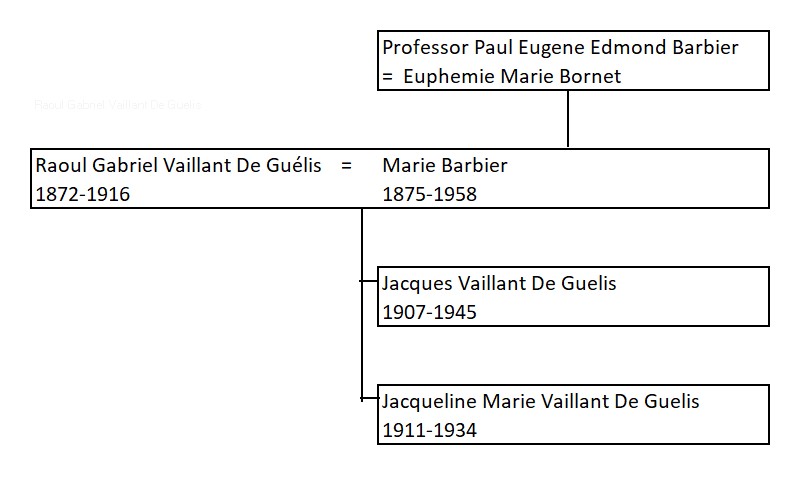


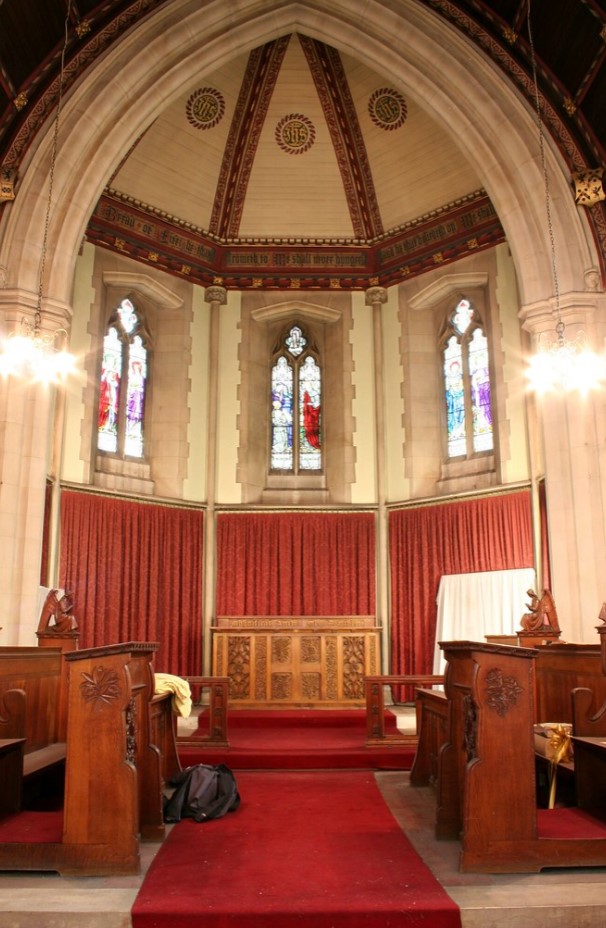


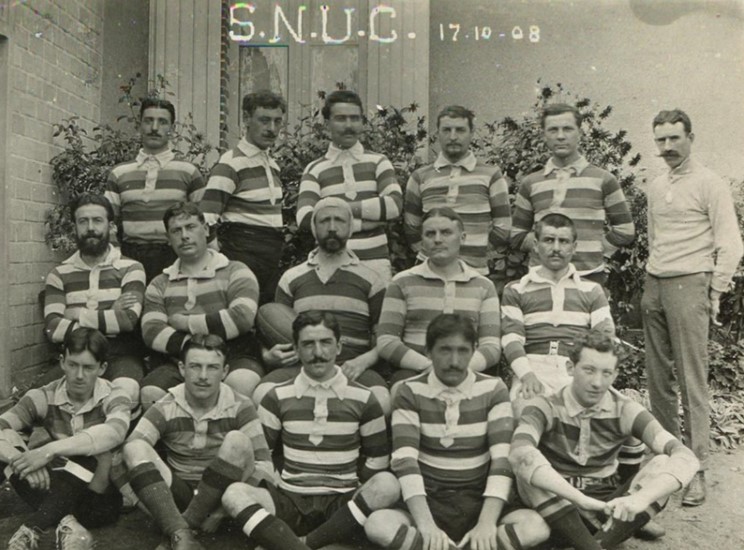
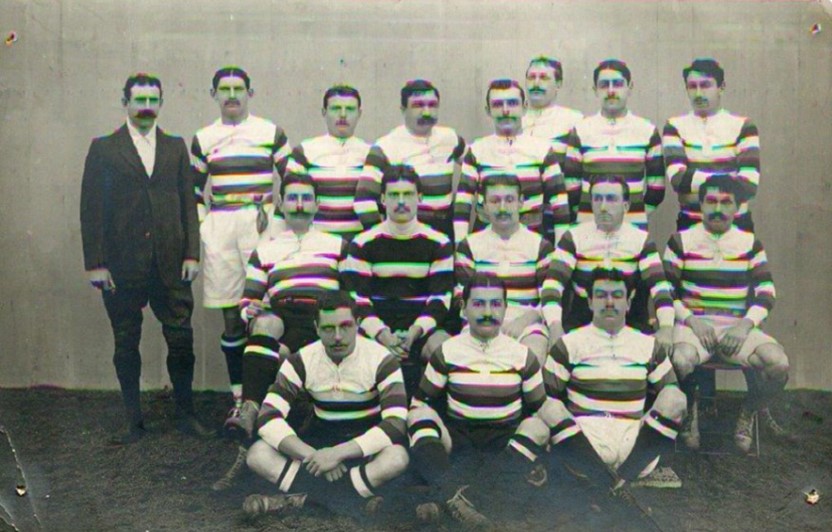

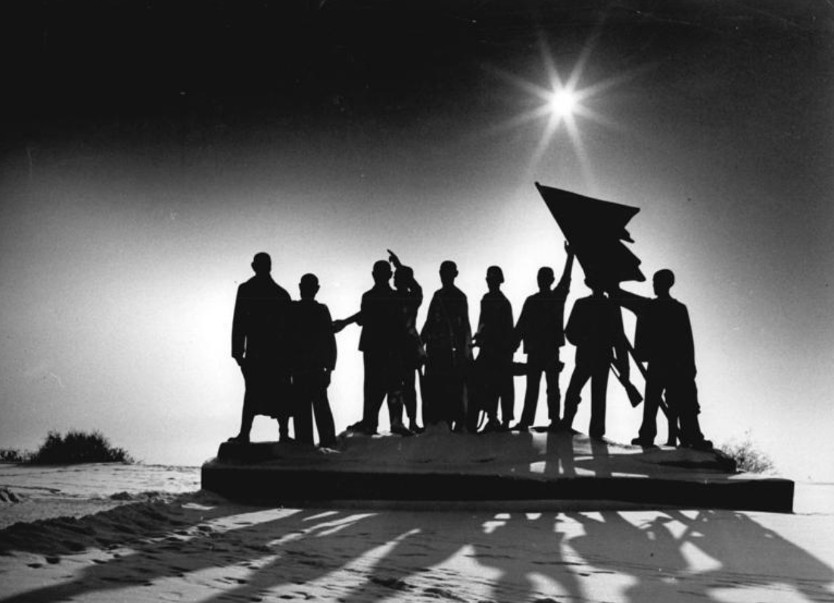


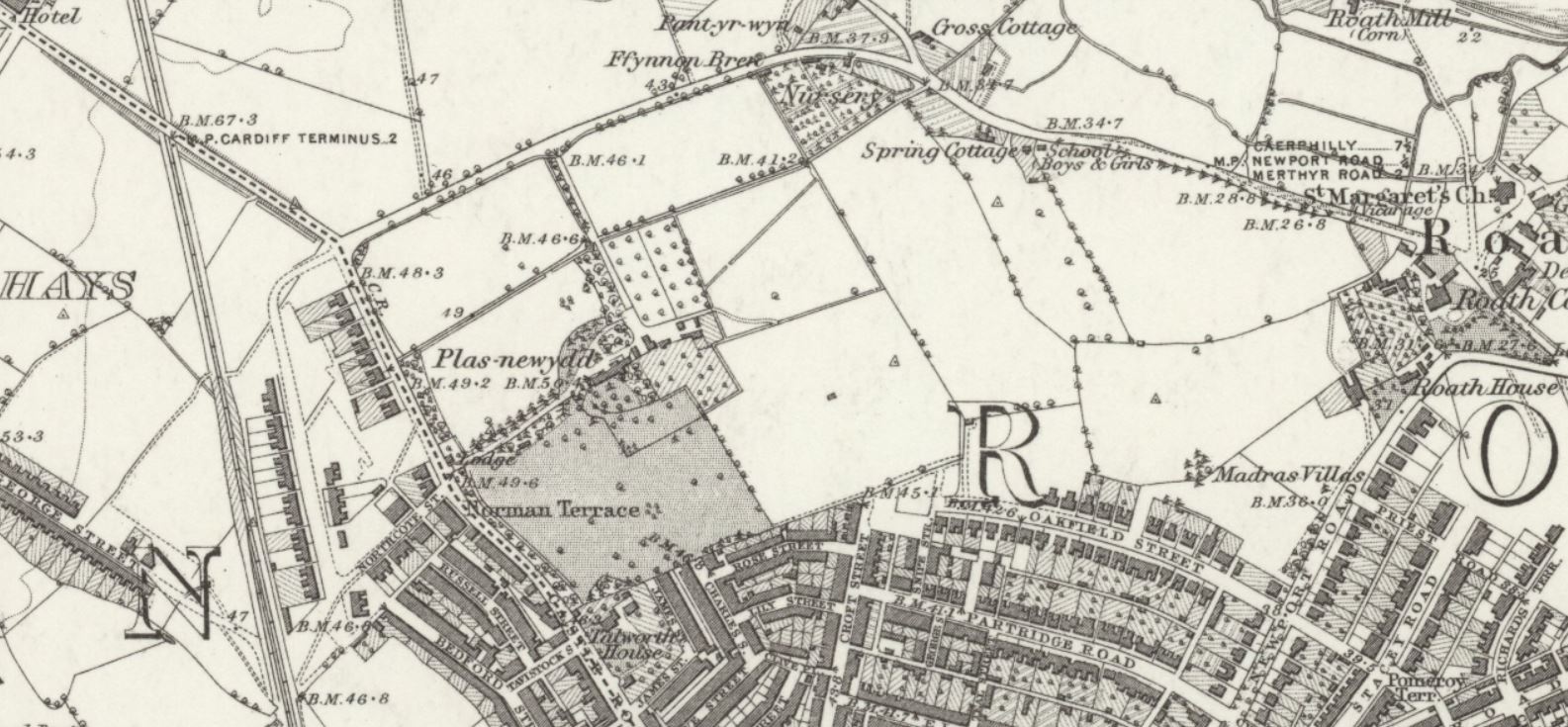
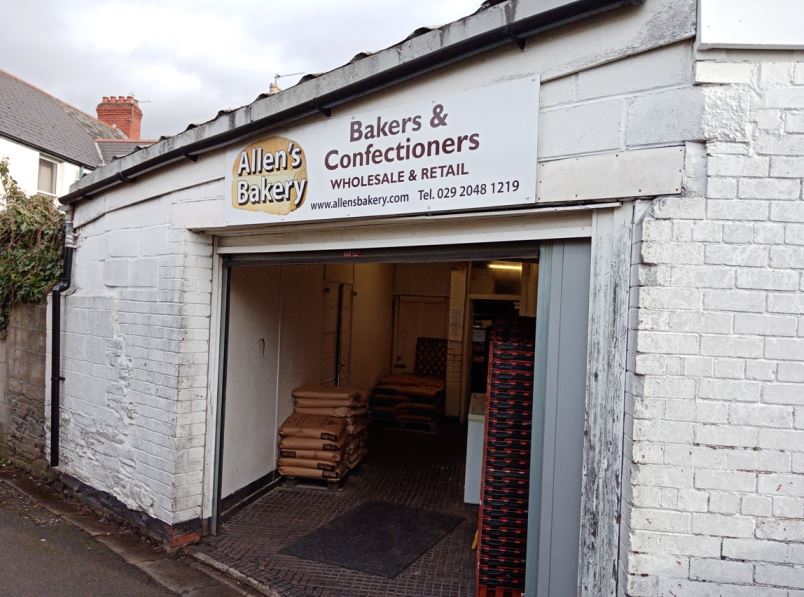
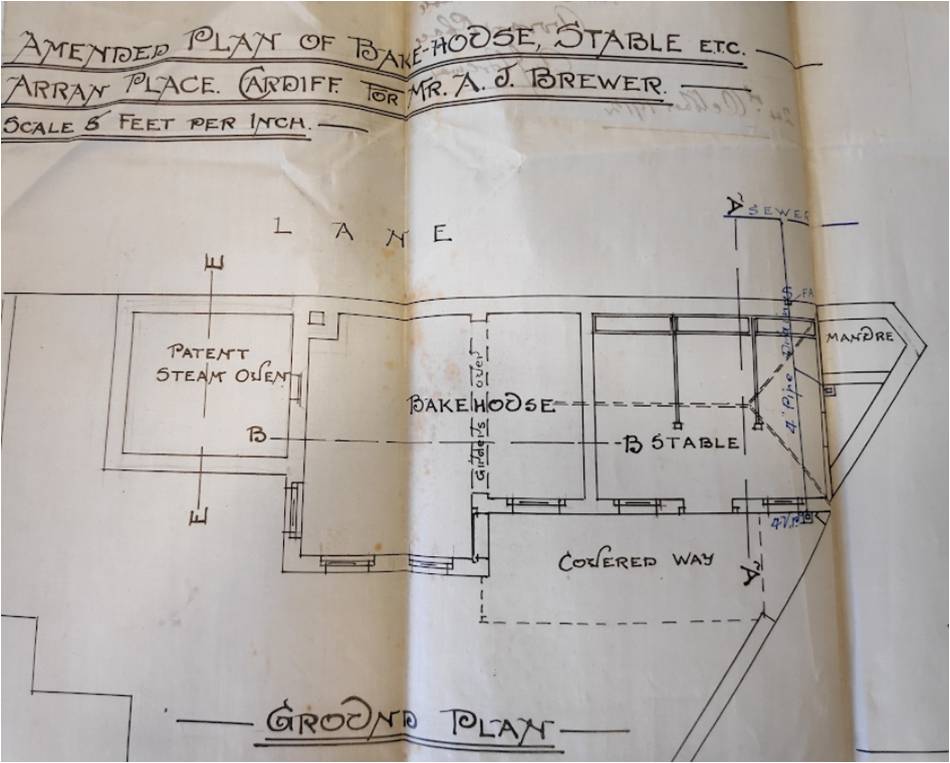
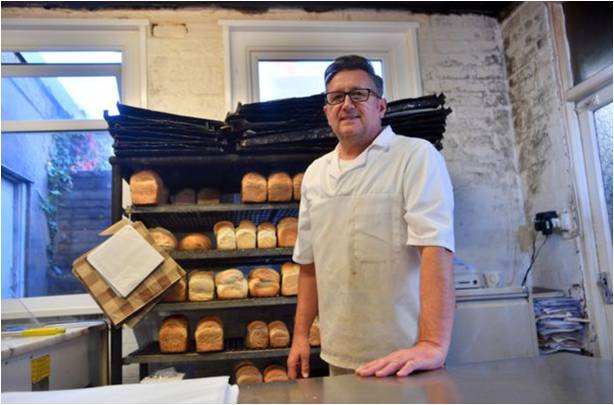
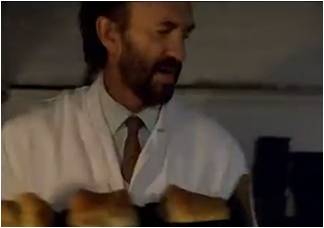
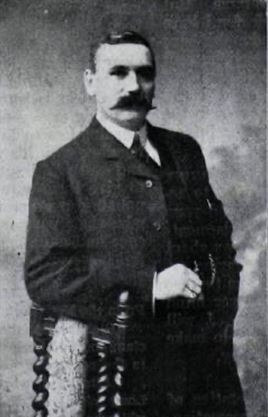
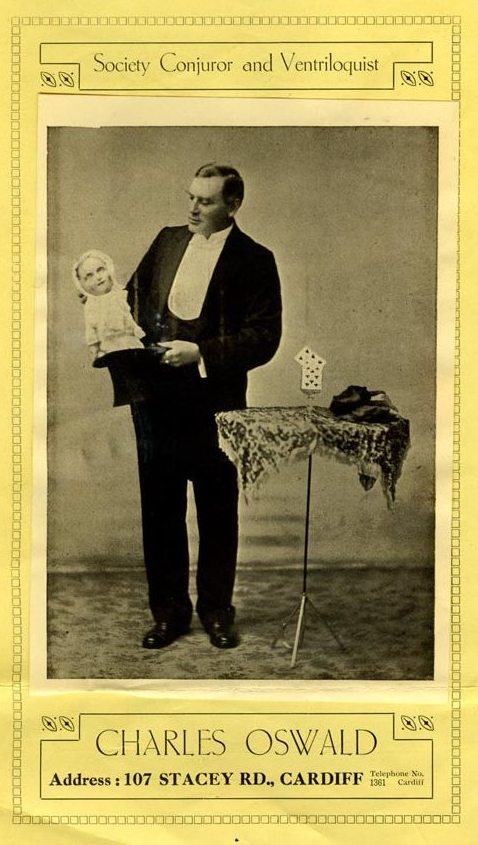
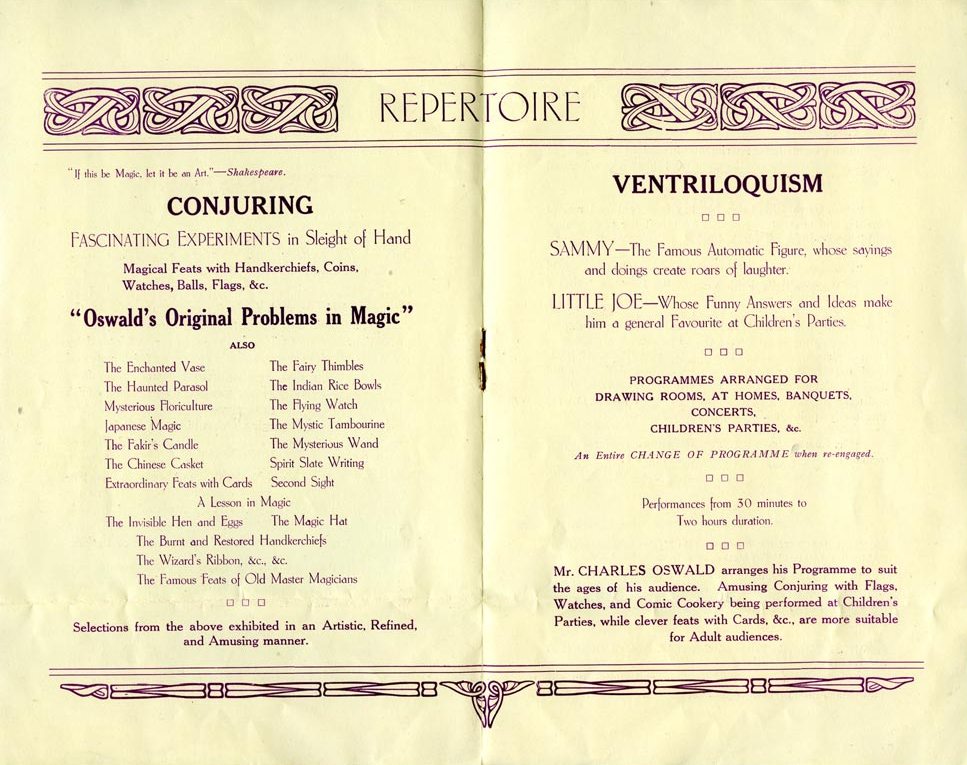


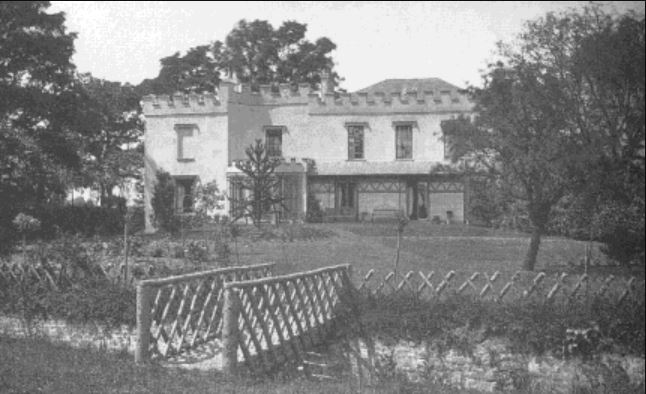
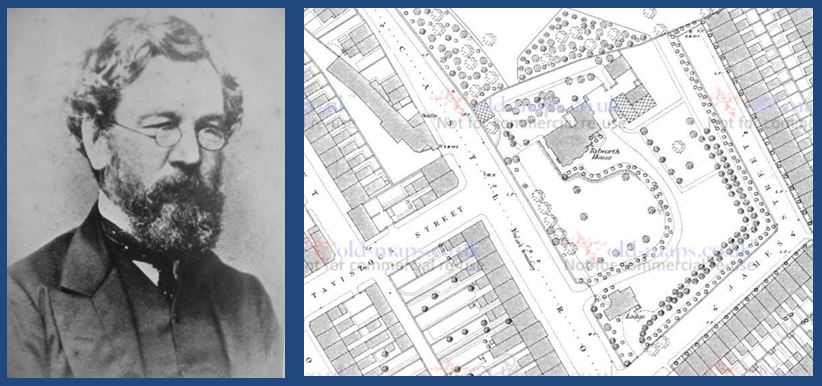


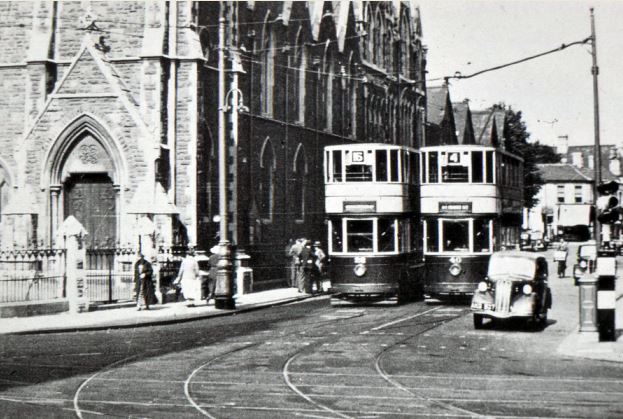
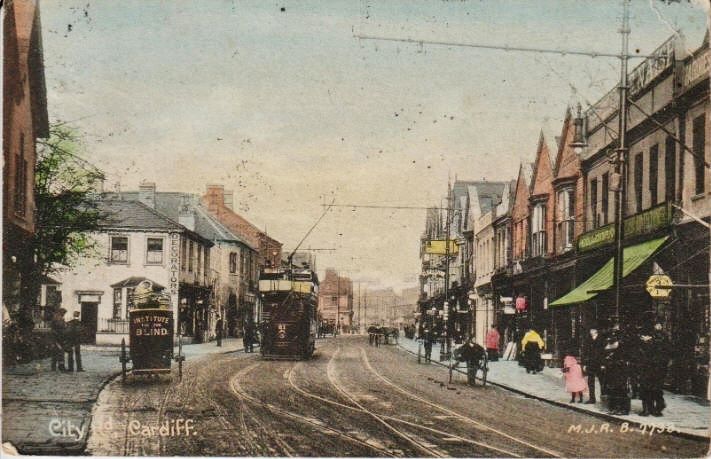

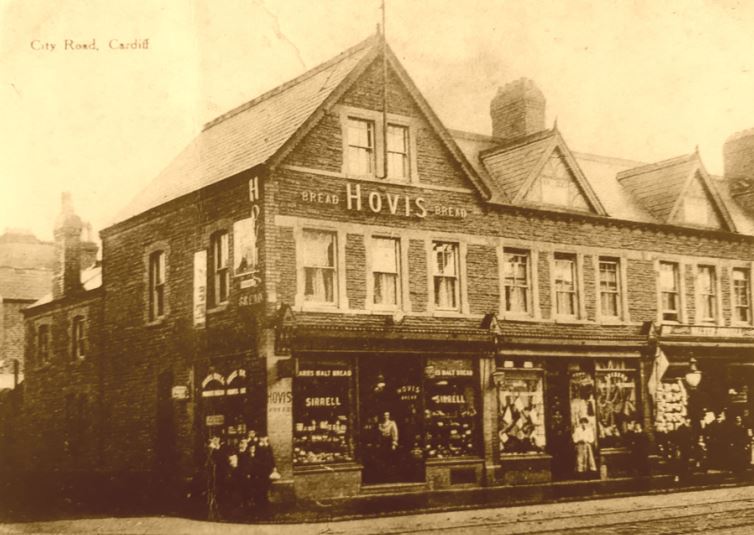
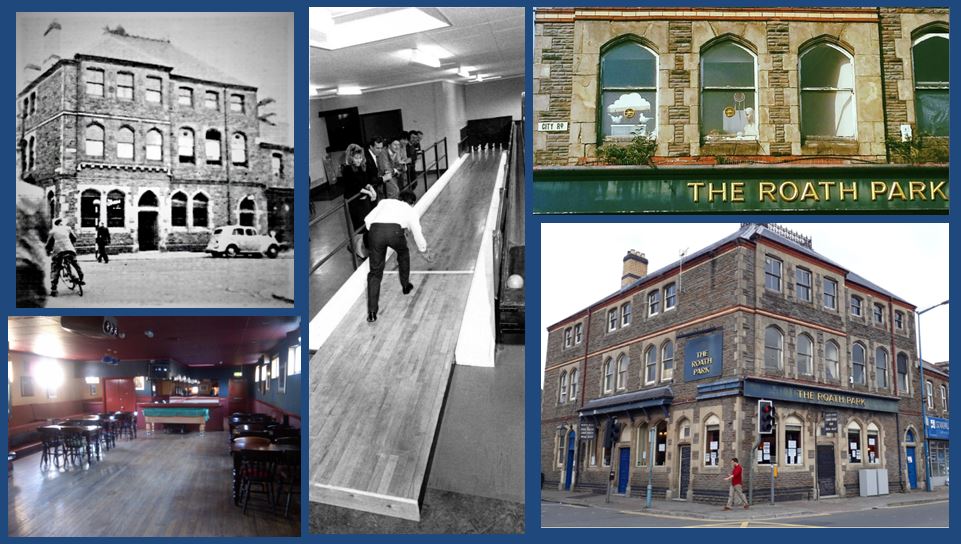


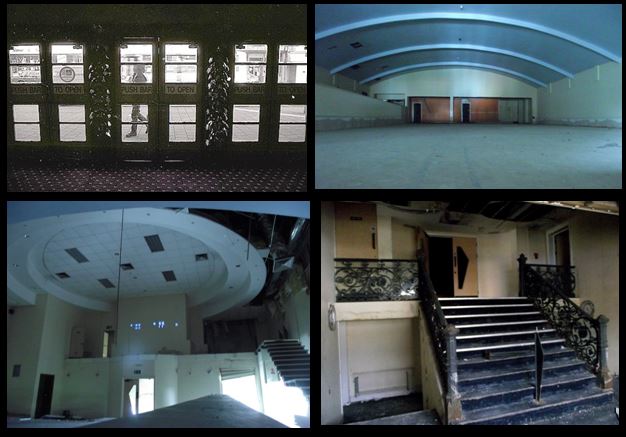
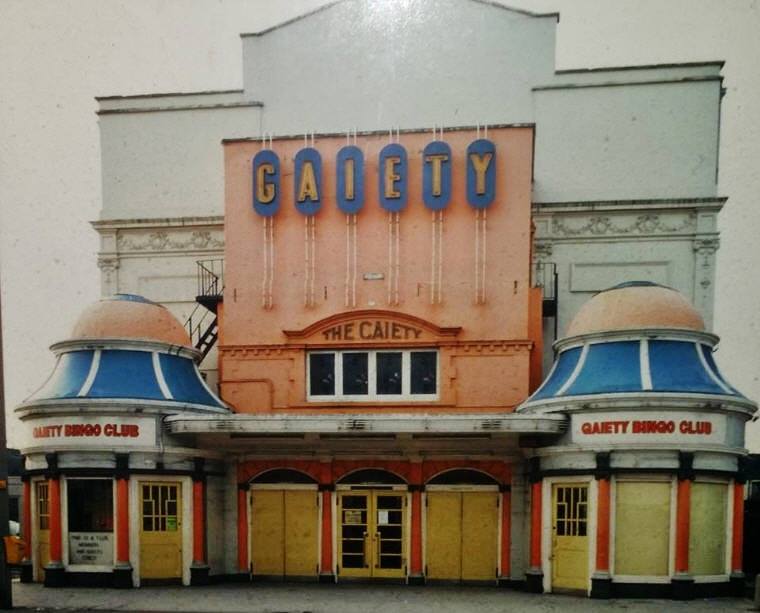


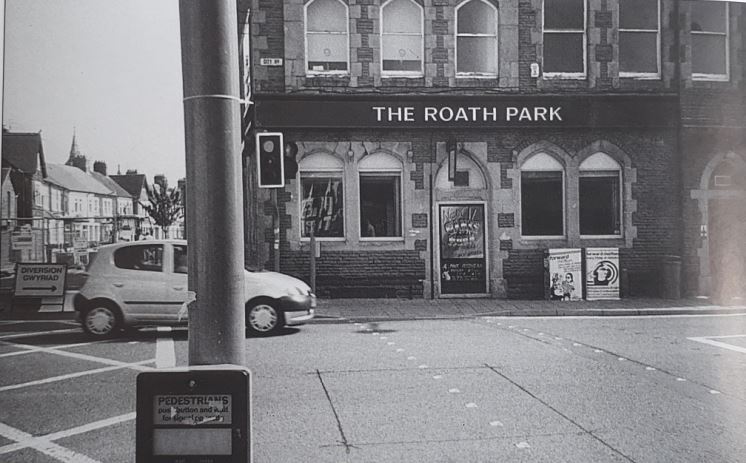


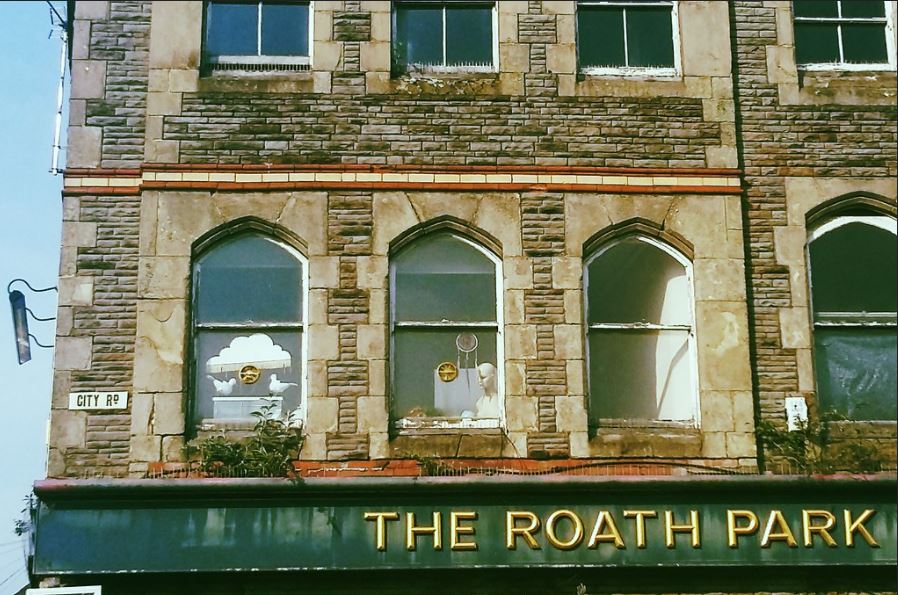

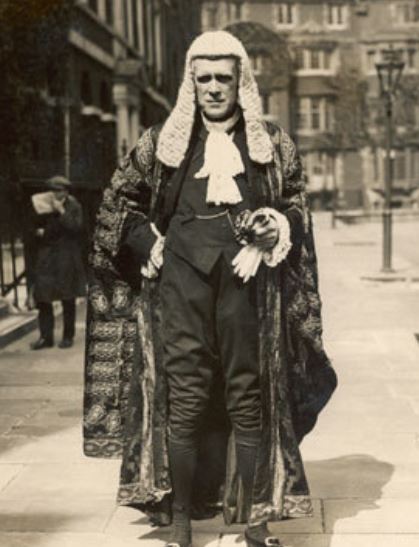
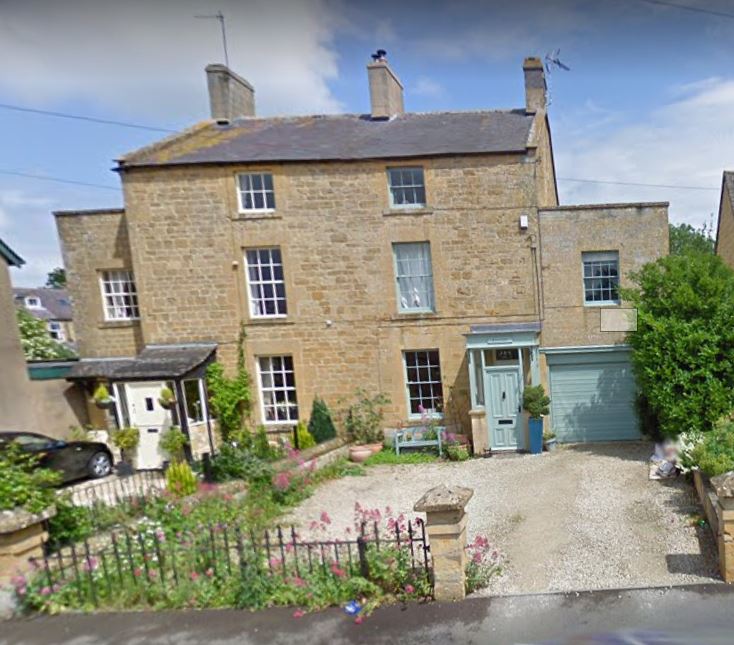
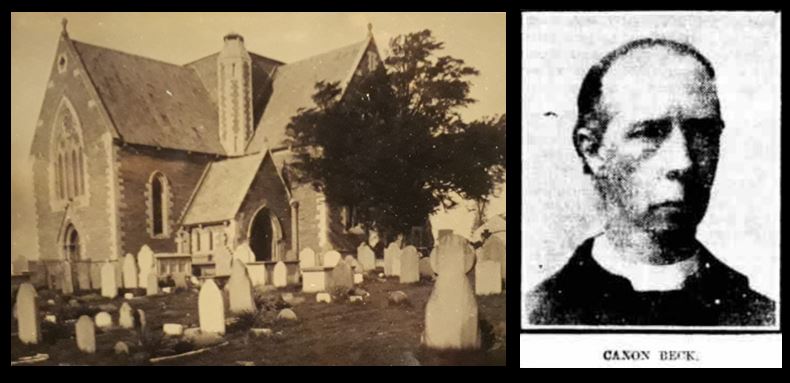
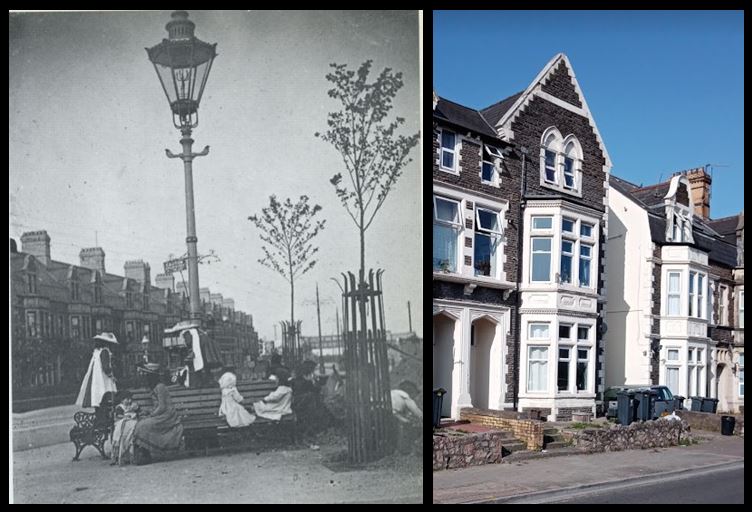

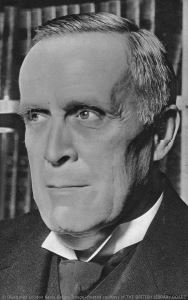
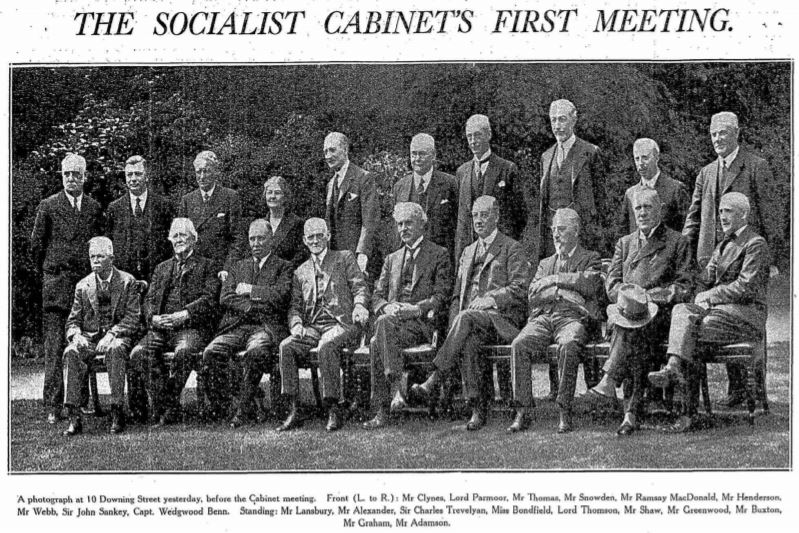
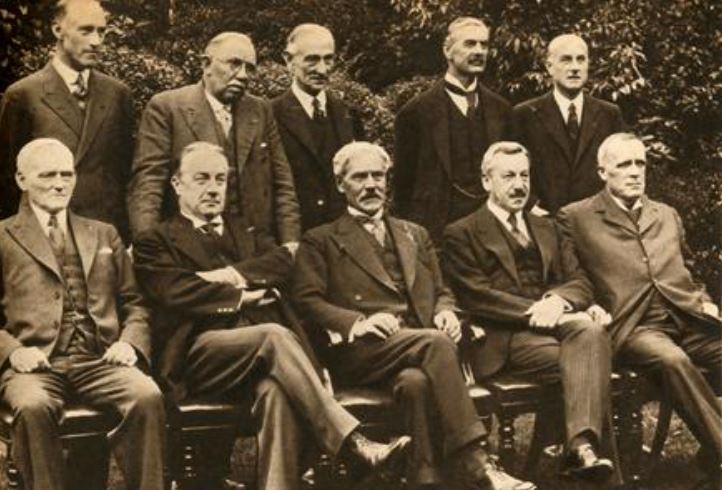
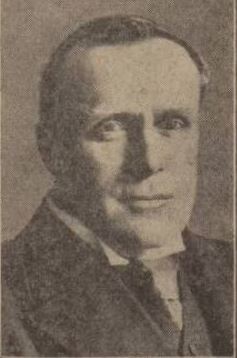
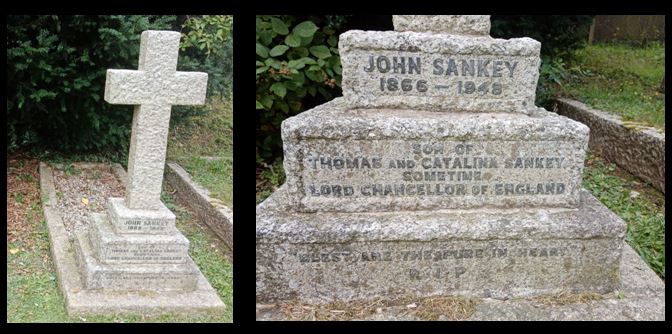
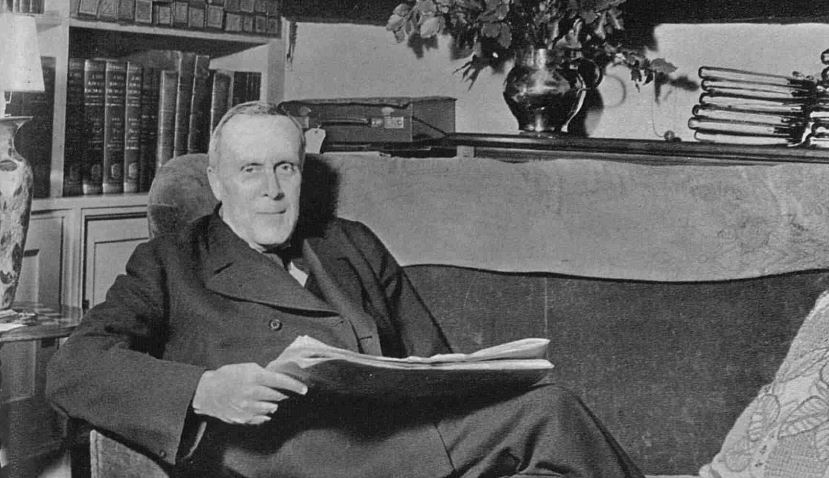
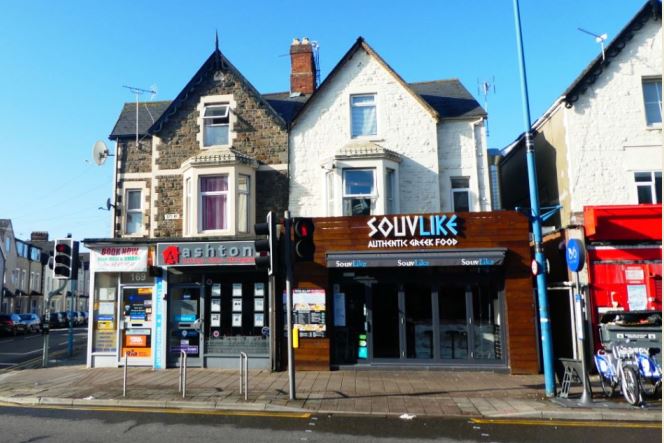
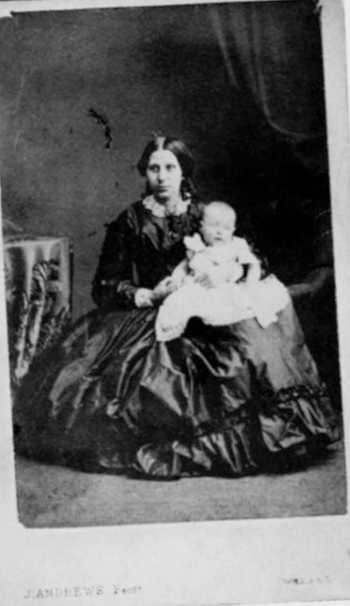
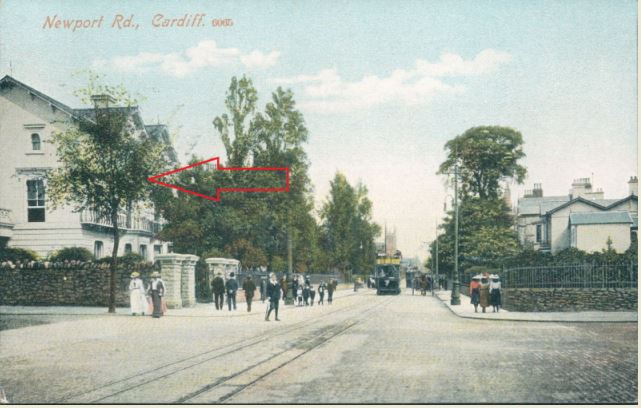
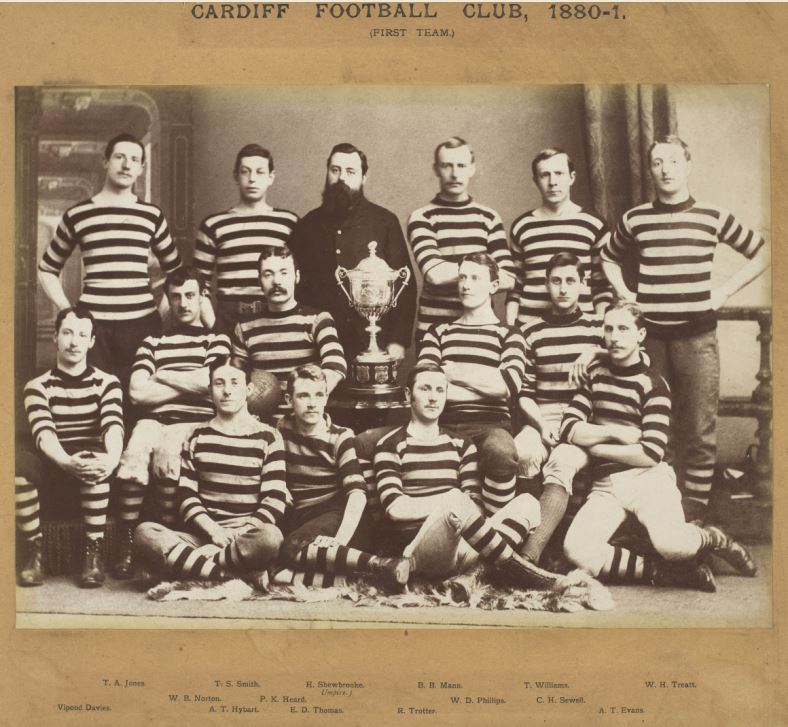
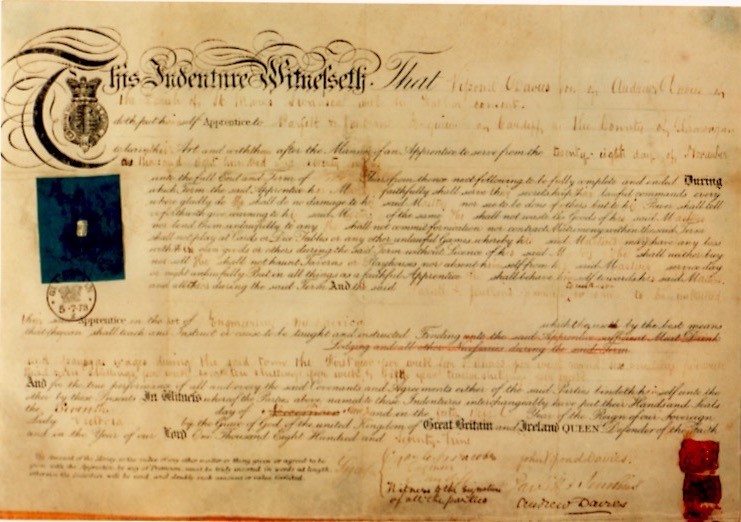
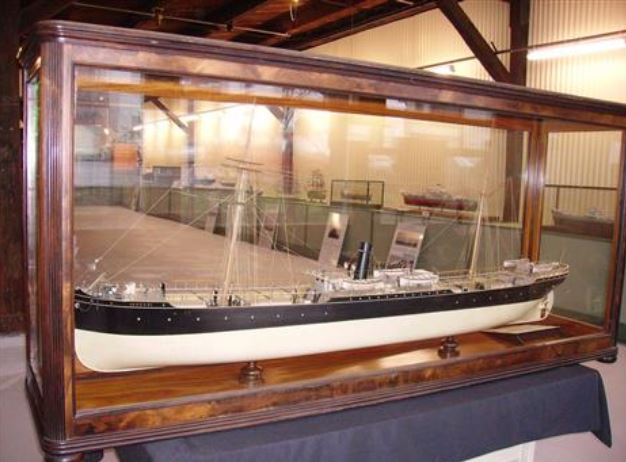
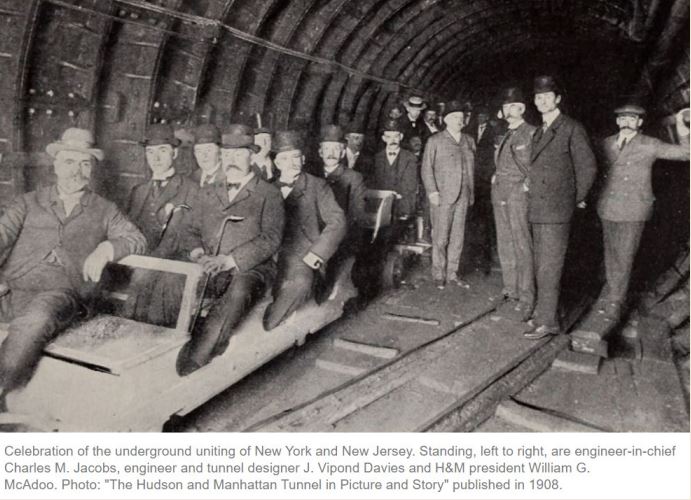
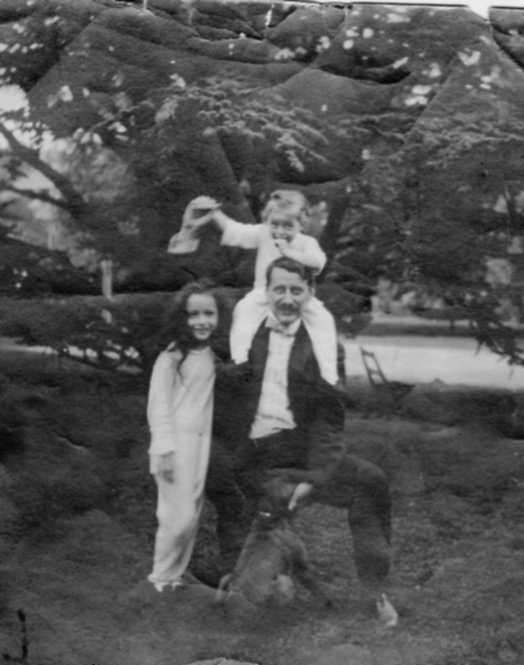
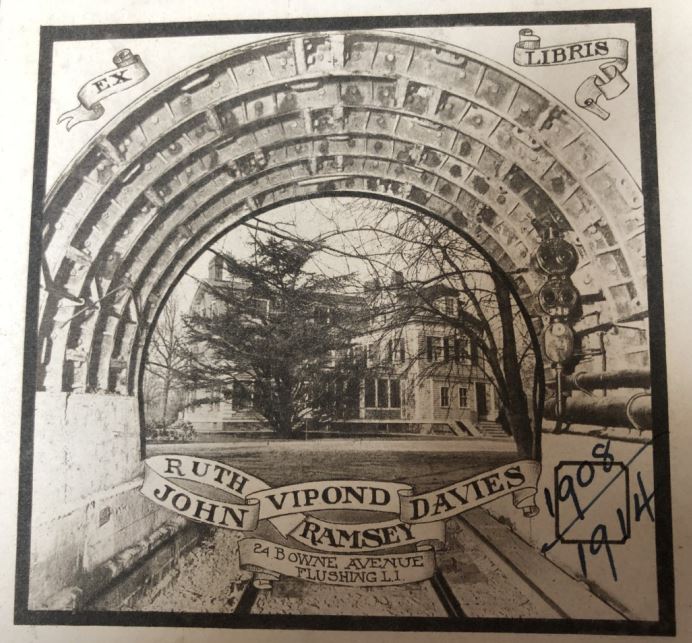
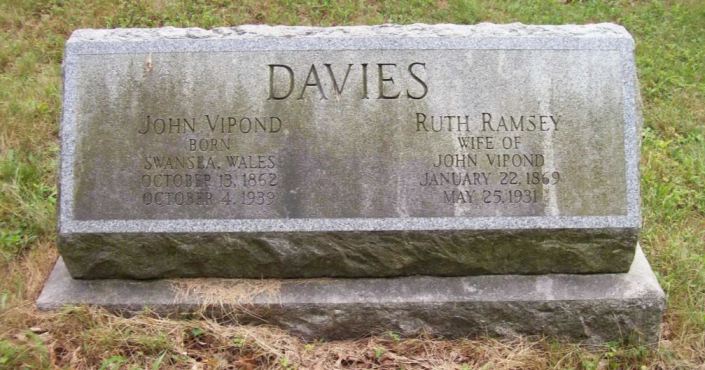
 Roath Local History Society