John O’Brien was a tough character, there’s no doubting that. A Welsh Boxing Champion, with potential to go further. He lived through the era where boxing transitioned from being an illegal bare-knuckle sport to being fought in the gentleman clubs of London through to larger sporting venues.
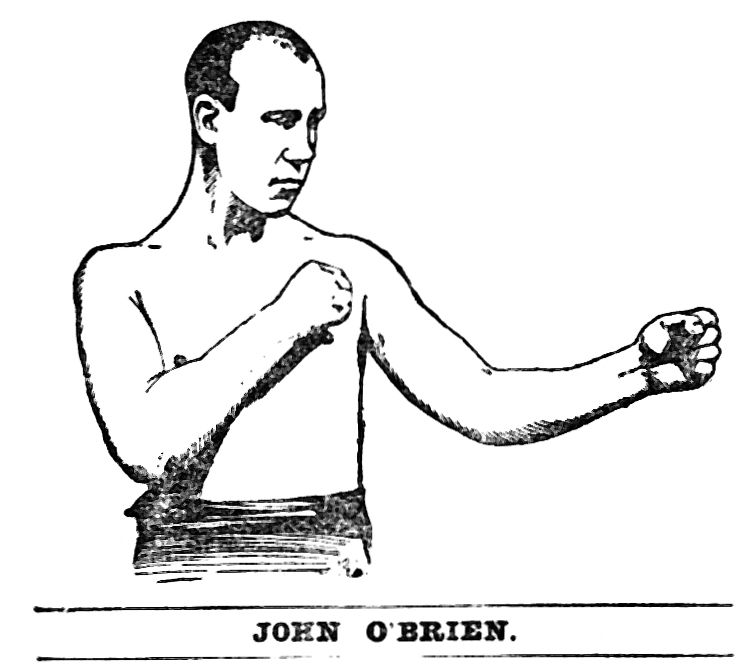
Newspaper reports hailed him a ‘The Roath Boxer’ or ‘The Milton Street Boxer’. The O’Brien family moved to Roath from Cardiff’s other Irish stronghold, Newtown, soon after John was born in 1867.
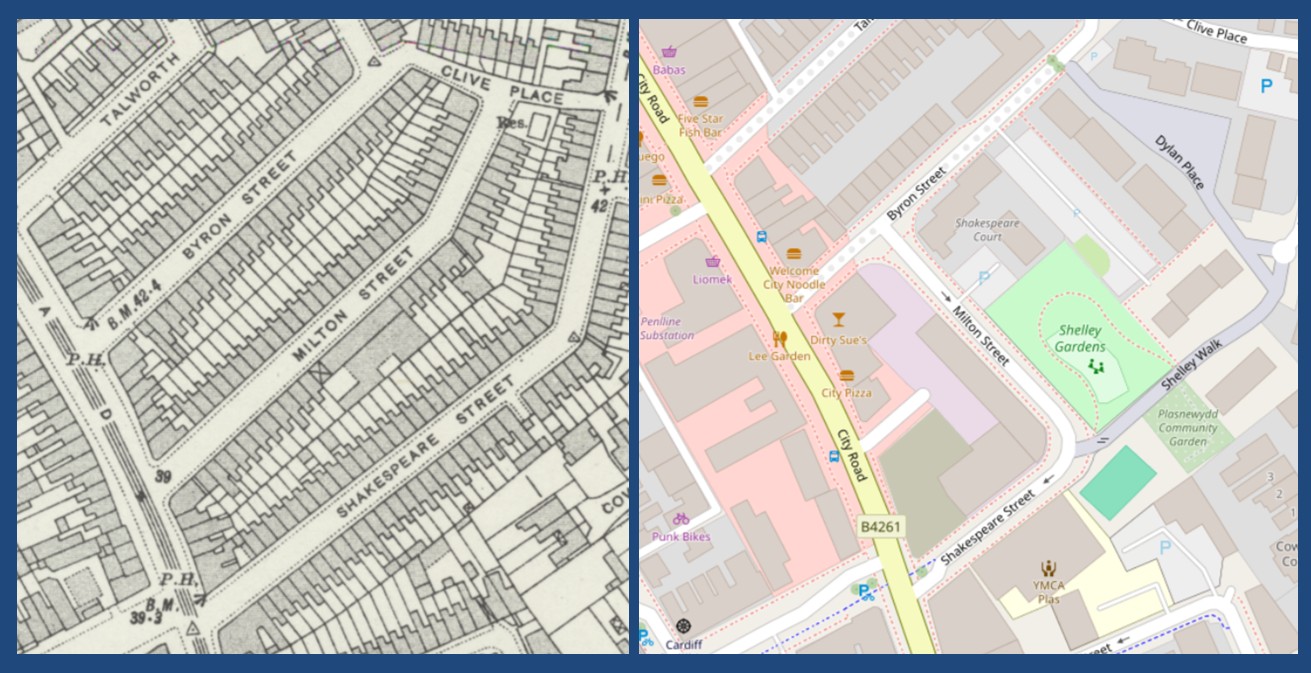
The ‘Poet Streets’ of Roath; Shakespeare Street, Milton Street and Byron Street, were at the heart of Roath’s Irish community in the late nineteenth century. New streets such as Shelly Walk and Dylan Place have since been added. The original terraced housing of Milton Street has all now gone. Milton Street has all but disappeared but the name remains in a street perpendicular to the original Milton Street.
John O’Brien’s Boxing Career
In May 1889 a bare-knuckle fight between John O’Brien and Jack Jones, known as Shoni Engineer, with a prize of £100 took place at Marshfield, between Newport and Cardiff. The fight was for the ‘Championship of Wales’. Twenty rounds were fought in about as many minutes. Shoni was virtually beaten after the first knock down blow from O’Brien and frequently afterwards went down to avoid blows from O’Brien. In the twentieth round Shoni’s second threw in the sponge. According to the paper, neither of the men were much injured. The Newport police arrived when the fight was over after the principles and seconds had left the ground. The boxers were later arrested and bound over to keep the peace.
In Liverpool in Feb 1890 O’Brien fought Felix Scott. He broke his arm in the first round but hid he fact and still managed to win in three rounds.
John O’Brien then moved to London, fighting against Ted Bryant in Nov 1890, but losing in 47 seconds, including the count. Undeterred O’Brien next fought favourite Ted White at the Soho Pelican Club, beating him without the use of gloves and obtaining the ‘English’ belt.
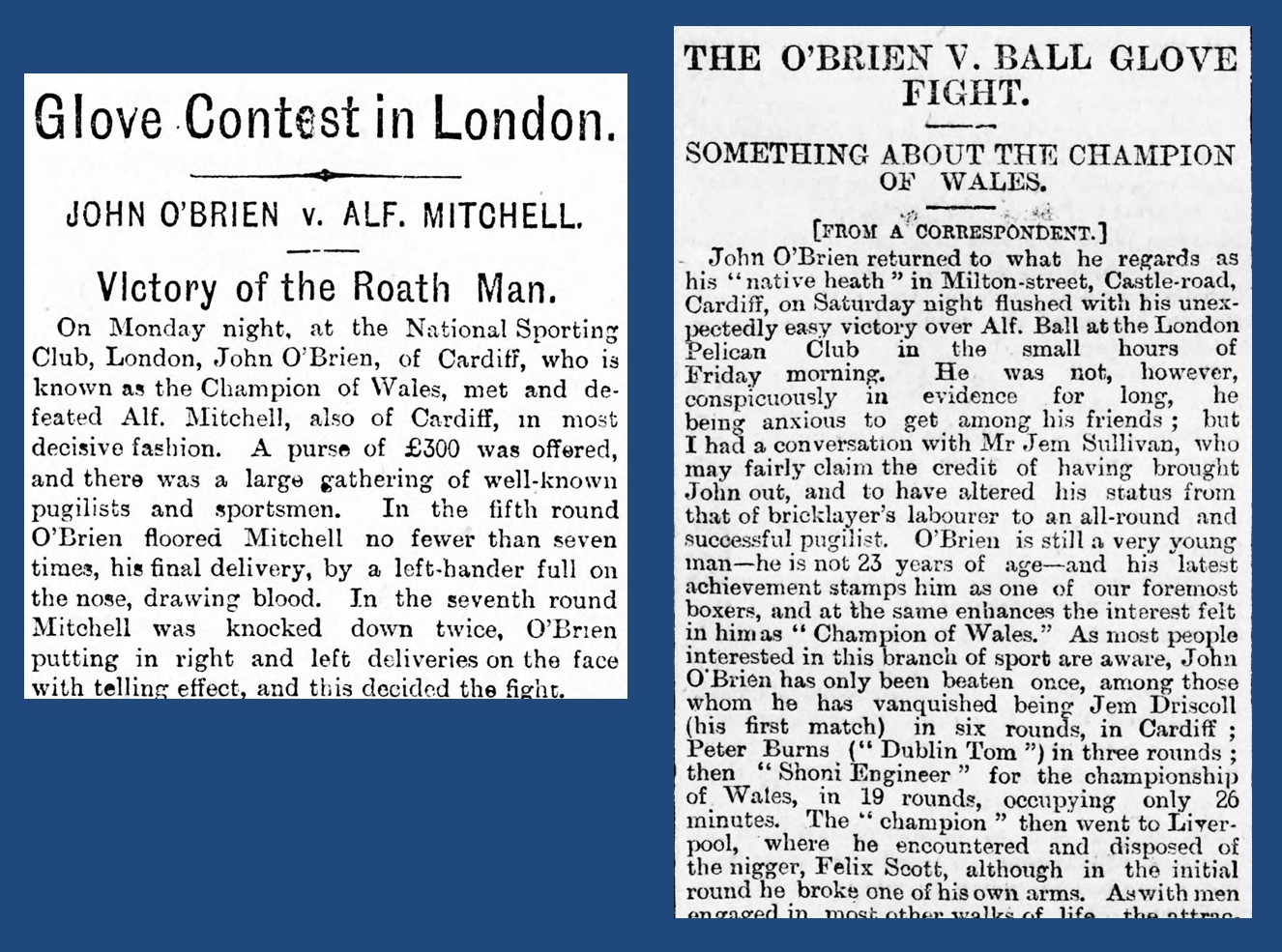
In Dec 1891, at the National Sporting Club, he met another boxer from Cardiff and a former Guardsman, Alf Mitchell, again winning. The National Sporting Club became the principal centre for elite professional boxing in Britain during the late nineteenth and early twentieth century. In the fifth round O’Brien floored Mitchell no fewer than five times. He was knocked down twice more the seventh round ending the fight. The purse was £300, equivalent to over £30,000 in today’s money. O’Brien beating Mitchell gained him the recognition as being the best boxer in Britain.
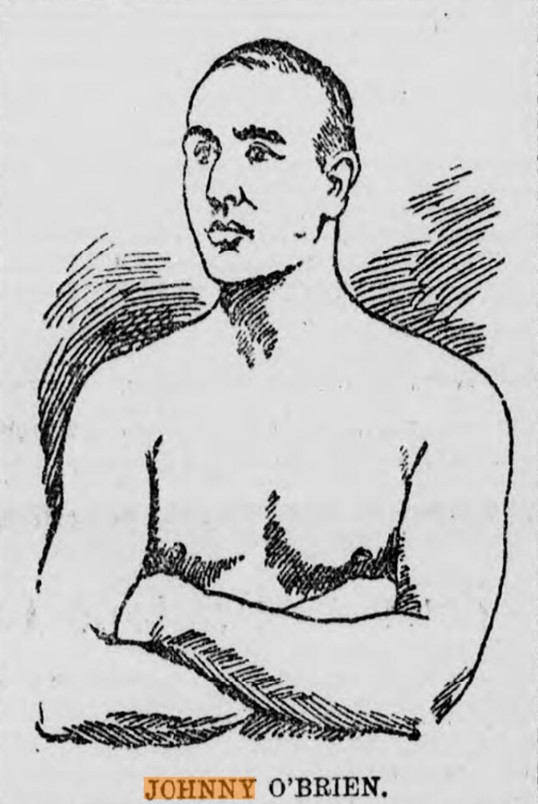
Next he was scheduled to challenge world champion Bob Fitzimmons in New Orleans. O’Brien was however struck down with sciatica, an illness to last two years. A similar match with Ted Pritchard, a Merthyr-born boxer, in London was also missed.
In 1894 the Welsh Heavy Championship was fought against Dai St John at the National Sporting Club, London for £150. O’Brien won in the fifth round despite injuring his hand. St John was later to be killed in the Boer War.
John O’Brien however met his match in American champion Frank Craig, the ‘Harlem Coffee Cooler’, in 1894. O’Brien was knocked down in the first round. A famous incident is said to have happened here when Criag ordered a telegram to his landlady after the first round requesting that she start baking his favourite apple dumplings for supper as ‘he wouldn’t be long’. He disposed of O’Brien in the second round. The ‘Cooler’ on the termination of the fight returned to his dressing room and indulged in his favourite pastime of producing a sweet lullaby on his harmonica.
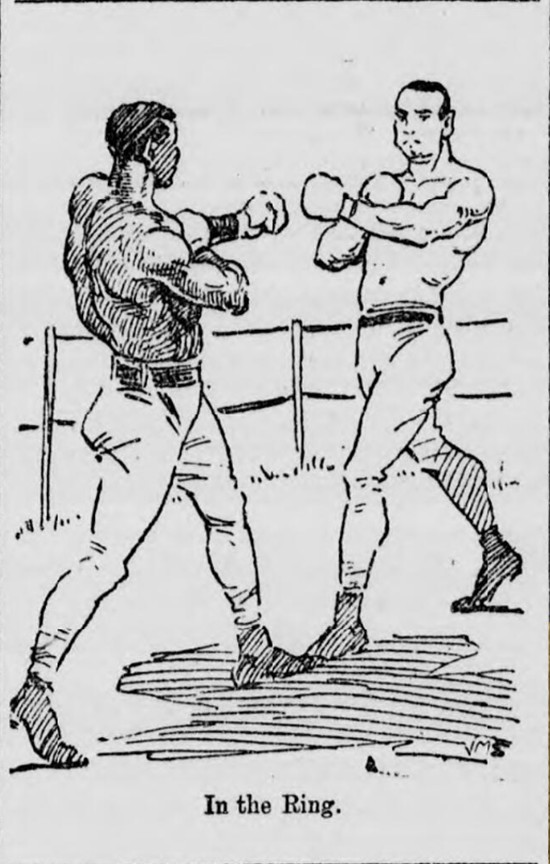
In 1895 he was involved in an unplanned rematch. Craig’s scheduled opponent, Pritchard, was taken ill so John O’Brien stepped in but was in no fair condition having been drinking. The fight only lasted one round. A newspaper report of the time makes sad reading:
The facts as we gathered them were that on Good Friday the Welshman received a wire inviting him to take Pritchard’s place in the advertised contest. Known to be utterly unfit for the task set out for him, and advised to stay at home, the big fellow would come south, and instantly packing his bag, and presumably providing himself with a wee drop of stingo, of which he didn’t spill much when the cork was drawn during the journey up, he arrived at the London terminus in very jolly condition. How it came about that the poor’ fellow was allowed to mount the stage passes comprehension, for he was manifestly as drunk as the proverbial fiddler… he stumbled through the ropes into the ring, reaching his seat in safety by holding on to a friendly rope, and seated on his chair, with dropped jaw and glazed eye, he looked, as he was, in hopeless condition.
John O’Brien’s boxing career was all but over. He returned to living in Cardiff, reputedly losing his crown to Ted James.
Some Misdemeanours
John O’Brien was no angel. The newspapers report a number of incidents:
In May 1890 ‘John O’Brien, champion pugilist, appeared at Cardiff police court, and was sentenced to three months imprisonment with hard labour for assaulting two foreigners, Antonio Prestonivitch and John Leho and one month for assaulting the police. The assault was of a very violent character’.
In 1892 John O’Brien was cleared of assaulting Henry Miller with an iron bar at 42 Peel Street, Cardiff. A witness claimed that the complainant had an open knife in his hand at the time of the assault and it was a case of self-defence.
In June 1895 a police constable encountered a crowd of rough-looking young men in the vicinity of Sophia Gardens Field wending their way rather boisterously in the direction of the field and in their mist was the Welsh pugilistic champion Jonny O’Brien. The policeman suspected a pugilistic encounter and ordered them away though the crowd was much incensed by this unforeseen interruption to their afternoon sport.
In April 1911 the Western Mail in an article headlined ‘The Pugilist’s Trouble’ described how he was charged with selling beer without a licence at 3 Duffryn Street having thus succumbed to the temptations of the Sunday Closing Act. On the arrival of the police O’Brien threatened them with a poker.
The Genealogy bit
Rarely have I had such a tough genealogy nut to crack. I must admit I am still not 100% convinced I have it right but let me share with you my thoughts and if anyone can add anything then I’d be keen to hear.
This isn’t the first Roath O’Brien family I’ve studied. I researched Billy Brian – the trick cyclist. It was whilst researching him did I discover the difficulty of O’Brien research. The O’ is sometimes dropped and the spelling regularly changes, so it can be Brien, Brian or Bryan etc.
Birthplace
I believe John O’Brien was born on 27 Nov 1867 at 15 Thomas Street in the Newtown district of Cardiff. His birth is registered under the name John Brian. His parents are registered as being John Brian, general labourer and Catherine Brian formerly Donovan. His birth certificate took a bit of finding as I had been looking for O’Brien and not Brian. His parents were both originally from Cork, Ireland.

Discovering he was born in Thomas Street in agreement with Gareth Jones in his book The Boxers of Wales Vol 1 (2009).
John O’Brien’s elder brother, Michael O’Brien, was also born at 15 Thomas Street, on 5th Aug 1865, but interestingly registered under the surname O’Brien.
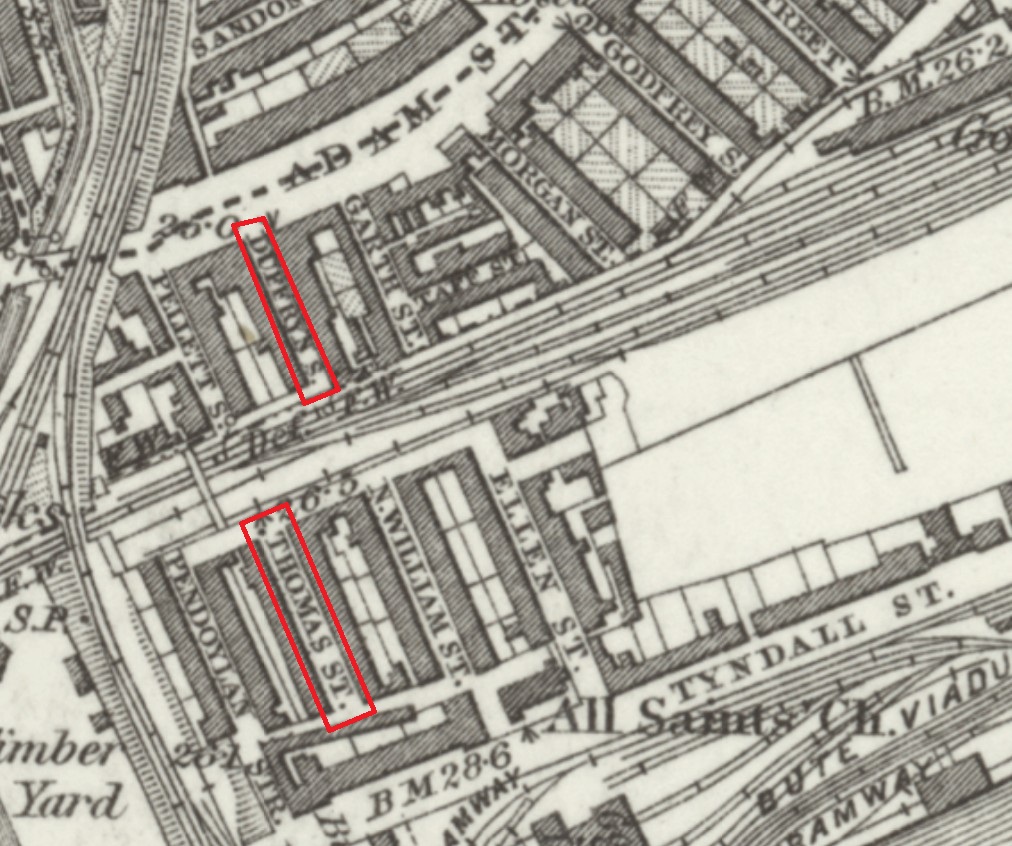
By 1871 the O’Brien family had moved to Roath and were living at 15 Milton Street. Ten years later they were still in Milton Street but living at No.52 (where Shelley Gardens now is).
At the time of the 1891 Census John O’Brien, Pugilist (boxer) is a visitor at 11 Rigault Road, Fulham, London.
In 1901 he was back in Cardiff living at 3 Duffryn Street, Newtown working as a labourer in the steel works. It shows him as being married to Bridget O’Brien from Ireland. I haven’t been able to find any records of this marriage.
His younger sister Ellen O’Brien was born on 22 Apr 1874 at 15 Milton Street. She lived with her parents at 52 Milton Street in 1881 and 1891 and married William Leahy in 1898, living at 19 Milton Street (1901) and 18 Milton Street (1911).
The O’Brien family seem to move to different houses in Milton Street occupying No 13 (1871), No 15 (1874), No 52 (1881 & 1891). As the children grow up some marry and stay in Milton Street.
Michael O’Brien (brother) married Catherine O’Neil and they initially shared a house with his parents (1891) and then moved to 63 Milton Street (1901 & 1911). He died in 1914 and is buried at Cathays Cemetery (Grave R3882)
His younger sister Ellen O’Brien was born on 22 Apr 1874 at 15 Milton Street. She lived with her parents at 52 Milton Street in 1881 and 1891 and married William Leahy in 1898, living at 19 Milton Street (1901) and 18 Milton Street (1911).
There are at least four other O’Brien siblings who I haven’t researched: Mary, James, Patrick and Honora.
There are a couple of anomalies regarding the birth details of John O’Brien.
In the South Wales Echo on 22 Dec 1891, reporting on a match between John O’Brien and Alf Mitchell, it stated ‘Like Mitchell, O’Brien has also served in the Guards, though with less distinction. He was born at John Street, or, as it is known now Nora Street, Roath some 22 years ago’.
Another anomaly is much more recent, from a couple of letters in the South Wales Echo (28 Oct 1989), which state O’Brien was ‘born in Roath on 20 Dec 1867’.
Death
John O’Brien died in the Infirmary on 25 Mar 1911, aged 43, from chronic nephritis and cardiac failure. The newspaper noted that he had been suffering from rheumatism for a number of years. On his death certificate he was described as a dock labourer living at 1 Dyffryn Street. His sister, Ellen Leahy, was in attendance. The paperwork is somewhat confusing with his death certificate stating he was 39 and his burial recoding him as 44.

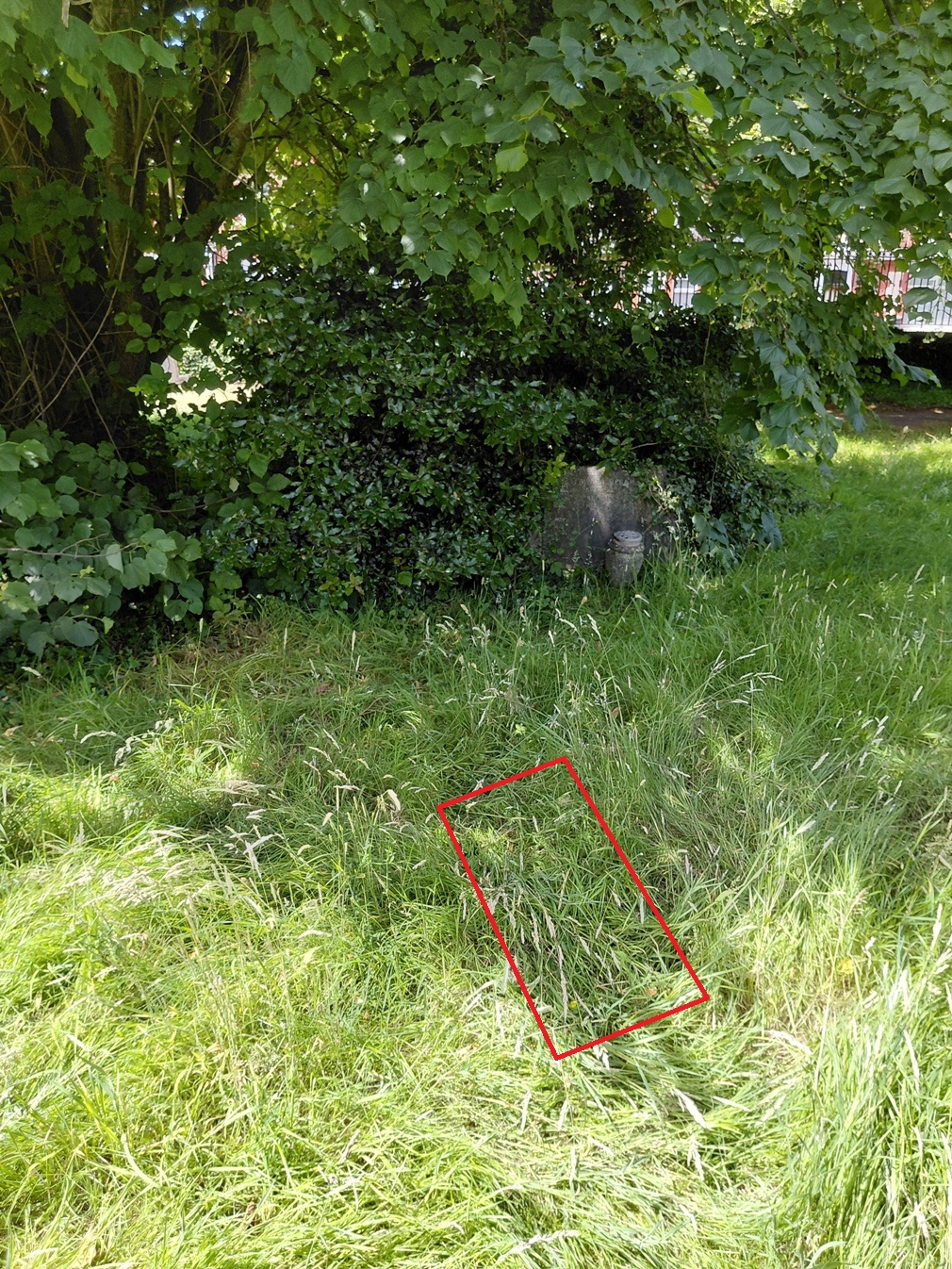
He is buried in an unmarked grave (R4412) at Cathays Cemetery. The newspaper records that his sister Ellen thanks people, in particular champion boxer Morgan Crowther, for ‘defraying the cost of the late John O’Brien’s funeral’.
Cardiff Street Ballad
In a letter published by the South Wales Echo on 28 Oct 1989, Bill Barnett wrote: He is mentioned in the Cardiff Street ballad “I met John O’Brien outside the Cambrian and we all got drunk at Steve O’Donnell’s wake”. I wonder if the words and tune of this Cardiff ballad still survive.
How did I get here?
By complete accident as is often the case. I wasn’t researching Welsh boxers. I researching a fallen solider Michael O’Brien. His records stated his father was John and wife Catherine and some more research showed his sister was Ellen O’Brien. A lot seemed to fit with the O’Brien family of Milton Street, Roath, but not everything. It was during that research that I tripped over the fact that John O’Brien of Milton Street was a boxer and that he is buried in Cathays Cemetery and from that moment I was hooked. That’s the beauty of local history research.
 Roath Local History Society
Thank you for your articles on John O’Brien and Michael O’Brien. Both very interesting and well-written. My mother was a member of the O’Brien family from Milton St. She was born at No 1 Milton St in 1907 and lived until she was 100. As she was the 16th and last child of the family, she could certainly tell some tales regarding the Roath Irish community during the years of the late19th century. Interestingly, her grandfather was John O’Neil, a farm-hand who eloped with Ellen Burke, a doctor’s daughter, from Dunmanway in Ireland. Their story is well known in Cardiff Irish circles and a family reunion featured in the “Echo during the 1980s. Also of interest is the story of their son, Billy O’Neil who played rugby for Cardiff in the years before World War 1. He was a fine player but was never picked to play for Wales until he changed his name. He removed the “O”, became Billy Neil and was very soon picked to play international rugby. He played for several years, including the 1907-8 season when they won the Triple Crown and the first-ever Grand Slam. His story was a main feature of Caroline Hitt’s BBC TV programme “Codebreakers”
There is a typo – a fight that must have been 1890 has been dated 1990
My great grandmother margaret Griffin nee OBrien lived at 60 Milton street in 1885 where John OBrien also lived