The installation of the new cycle and pedestrian route in Roath Recreation Ground last year certainly raised some criticisms.
What many however may not realise is that the Rec used to have cycle lane around it. Cycling was a popular a pastime at the turn of the 19th century. In a letter to the editor of the South Wales Echo in 1897 one reader was encouraging cycling in one direction only and that children should keep to the grass.
I recently came across some pictures in a book Cardiff Remembered by journalist Brian Lee of Welsh Champion trick cyclist Billy Brian taken at Roath Park Rec. I thought I’d have a look to see if he had any local connections and sure enough he did.
Billy Brian prforming his balancing acts at Roath Park in 1905.
On 1st April 1904 it was announced that Billy Brian would be attempting to ride from Newport to the recently opened Moon & Stars Hotel, Roath and if successful be presented with a cup by C.F.Lee, (grandfather of Brian Lee the journalist previously mentioned I think).
Western Mail 1st April 1904
The attempt was indeed successful and Billy was presented with the cup on April 4th 1904.
The Moon and Stars was on Cyfarthfa Street and was a temperance hotel i.e. only served non-alcoholic beverages. It had a short lifetime and closed after about a year. Mentions of the Moon and Stars in the press:
Western Mail 23rd May 1904
Western Mail – 13th Aug1904
Some of Billy Brian’s other feats:
Western Mail – 11 June 1906
Evaning Express: 11th Aug 1906
Evening Express: 4th Jul 1908
The above cutting refers to number of interesting aspects:-
Cycling backwards from Abergwynfi to Caerphilly, a distance of nearly 4½ miles in 13 minutes: I don’t understand this as Abergwynfi and Caerphilly are more than 20 miles apart by road so it looks like the time and distance are incorrect or the names towns?
He won first prize at the Sophia Gardens sports when the famous comedian, the late Dan Leno, presented him with the prize. Dan Leno died in Oct 1904 so the presentation must predate this.
He cycled backwards from Newport to Cardiff…….. : Already covered previously.
He also rode backwards up Leckwith Hill and “Tumble Down Dick”: I have never heard the Tumble referred to as Tumble Down Dick previously but it apparently comes from a story that it is where the stagecoach of Richard Cromwell (the son of Oliver Cromwell) struck a pothole with such a jolt that the impact threw him from his seat and out onto the road.
Brian gives exhibitions at local social functions, and is sometimes assisted by his nephews Charlie and Edward Brian, who are also very clever trick cyclists: I’ve researched the Brian family tree and one of Billy Brian’s nephews was Charles Phillip Brian b.1898, died in 1919 of pulmonary TB after serving in WWI and is buried in Cathays Cemetery. He is remembered on a memorial plaque thought to have been in Clifton Street Calvinistic Methodist chapel.
He is trained by F.G.Churchill of Cardiff and has been training for about five years: This looks to be Frederick George Churchill, a sign writer living in Treharris Street, Roath in 1911.
When Billy Brian’s son, also called Billy, was interviewed in 1997, aged 84, he recalled that the great German trick cyclist Bud Snyder, who was appearing at the Empire Theatre at the time, begged his father to join him in his act. But he turned him down, and stayed with Spillers and Bakers where he worked as a clerk for 40 years.
Among other places Billy Jnr recalled his father trick cycling was backwards around Roath Park Lake and up Thornhill. He said he continued trick cycling into his 50s and then took up the piano as he loved the idea of entertaining people.
Brian Family History
Billy Brian was born William O’Brien on 27 Aug 1881 at 11 Garth Street, Newtown, Cardiff. He was the youngest of seven children born to John O’Brien, a labourer, originally from Clonakilty, County Cork, Ireland and Margaret O’Brien nèe Whelan also originally from Ireland.
William O’Brien, Birth Certificate
Billy’s mother died when he was less than a year old and his father never remarried. Billy it seems was bought up by his father and older siblings. By 1891 the family had moved to 118 Cyfarthfa Street, Roath. In 1901 the family were living at 25 Croft Street and by now William was working as a clerk in a flour mill.
The spelling of the family surname changed over the years, which wasn’t unusual at the time. In the 1901 census it had changed from O’Brien to O’Brian. Shortly afterwards it appears they dropped the ‘O’ and the whole family adopted the surname Brian.
Billy’s trick cycling exploits seem to have been around the years 1904-1908. In the summer of 1910 he married Florence Thomas, originally from Newport. At the time of the 1911 census Billy and Florence were living at 92 Glenroy Street, Roath. In 1915 they had a son, William Lionel Brian. At the time of the 1921 census they were still living at 92 Glenroy Street and Billy working as a flour milling clerk for Spillers Industry Ltd in Bute Street. By 1939 he had retired and was living at Heol Nest, Whitchurch. He died in Cardiff on 8 Feb 1951 aged 69.
Billy Brian is buried at Cathays Cemetery. After a bit of a search I managed to locate his grave (plot C2115) where the stonework is somewhat damaged but could still make out his name.
Billy Brian’s grave at Cathays Cemetery (plot C2115).
So next time you cycle or walk along the new cycle/pedestrian route on the Rec think of Billy and the awesome feats he achieved and that he practiced those skills here on Roath Recreation Ground.
28 The Parade was built around 1868 and has only ever had three occupants. In the first two articles in this series we looked at the two earlier occupiers:
In this third article we look at the most recent occupants – The Parade Community Education Centre.
28 The Parade – The Parade Community Education Centre
In the summer of 1971 Cardiff High School for Girls vacated the building as part of their move up to Ty Celyn School on Llandennis Road.
When Ravinand ‘Ravi’ Mooneeram saw the vacated building he saw an opportunity. Teaching was in his blood and he already had a track record of teaching English as a Second Language (ESL) to some of Cardiff’s new arrivals at Fitzalan High School. The local authority gave permission for 28 The Parade to be used as a base for ESL teaching and called ‘The Parade Community Education Centre’.
The building had been vacated but not emptied. The bins in the rooms were still full. There was work to be done in preparing it. One advantage however was that the caretaker from Cardiff High School for Girls days still lived in the top floor.
ESL evening classes began at the Parade in 1971. Ravi Mooneeram became a teacher/adviser in immigrant education in the city and in 1974 he became county community tutor. Over the next few years he would liaise between schools and parents, leading to an expansion in ESL teaching. The Parade became the hub of a network of ESL classes throughout the city, initially targeting adults but later their children too. The Parade Community Education Centre had the advantage that it wasn’t tied to a specific school.
Staff and students at The Parade Community Education Centre
Teaching at The Parade Community Education Centre
When Panasonic opened up a factory in Cardiff employees from Japan and their families came for English lessons to No.28.
A gesture of thanks from Panasonic Managers.
The work carried out in 28 The Parade however had another aspect. The building provided a base for many thriving multicultural groups, enabling them to maintain their own identity and culture whilst at the same time facilitating integration. Ravi’s whole philosophy and life’s work was one of Britain developing harmoniously into a multi-racial, multi-faith, multi-lingual and multi-cultural society.
Another aspect of the work was exchange visits with Cardiff’s twin cities such as Stuttgart in Germany and Nantes in France. Groups of pupils from schools in the Cardiff’s twin cities would meet and attend lessons at No.28.
In the 1970s all the Cardiff High School for Girls buildings along The Parade were vacated. The Parade Community Education Centre could therefore sometimes use the Assembly Hall in the adjacent building to No.28. Even later when Ysgol Bryntaf School moved into No.27 it was still sometimes possible to use the hall for events. The South Glamorgan Youth Brass Band under Dewi Griffiths played there regularly.
The South Glamorgan Youth Brass Band under Dewi Griffiths.
As well as ESL teachers other staff such John Scofield were recruited to help provide extra tutoring in maths and other subjects to pupils who were struggling in their own schools as they sought to be fully conversant in English.
Ravi Mooneeram in front of the class
In 1981, Ravi Mooneeram was appointed a magistrate. A year later, his tireless work would be awarded with an MBE for his services to education and refugees.
He retired in July 1993 but unfortunately had poor health in retirement and sadly passed away in 2002.
His role at The Parade Community Education Centre was taken over by Samina Khan. After 28 The Parade closed in the early 2000s Samina went on to be Equality Diversity and Community Development Manager at Cardiff and Vale College.
Ravi Mooneeram’s own life story is interesting. He hailed from the island of Mauritius. His father died when he was young and Ravi took over the role of father-figure to his siblings. He was initially self-taught, borrowing many books from the local library but then he won a scholarship. He subsidised his own high school education by tutoring younger boys at the school. After leaving school he taught for 12 years at St Andrew’s School on Mauritius.
Ravi and his two brothers had planned to come to Britain and subsidise each other’s university education by working but it never quite worked out. A cyclone hit and destroyed the family home. Eventually Ravi arrived in Cardiff and obtained a degree in Mathematics and Botany at Cardiff University. Securing a teaching job however proved difficult and he ended up as a council worker.
One day a friend spotted him cutting the grass at the Mansion House and through that contact Ravi managed to enter teaching. He became warden at the Grangetown Centre, then, after teaching French at Cyntwell High School, Ely, for three years, he moved to Fitzalan High School to take charge of the immigrant reception class and from there to hid dream job at The Parade Community Education Centre.
Ravi Mooneeram in his office at The Parade Community Education Centre
28 The Parade is now 150 years old. Let’s hope The Parade Community Education Centre were not the last occupants of this fine building. There are grounds for optimism. It seems that the terms of a covenant probably means the building has to be used for educational purposes. Cardiff Council has been exploring the feasibility of turning the building into a new integrated hub for young people.
Plasnewydd Labour Newsletter – Spring 2024
Some additional photographs showing 28 The Parade and the work that went on at The Parade Community Education Centre:
In the first article in this series we looked at 28 The Parade – The Billups Family and their pivotal role in the formation of the Salvation Army. In this article we look at the next occupants of the house, Cardiff High School for Girls or Cardiff Intermediate School for Girls as it was originally called when it began in a large ground-floor room at No.28 The Parade back in Jan 1895 with 95 pupils.
The importance of child education was being quickly realized throughout the 1800s. Private schools and church schools were established. By 1870, Board Schools were being established to provide free education for children up the age of nine. Many of the Primary Schools we see in Cardiff today started as Board Schools and are often still using the same buildings. Some are still inscribed with the original Board School stone inscriptions if you look carefully up at the roof apexes, such as on Albany Road Primary.
Cardiff Intermediate School for Girls in 1910 with 28 The Parage on the right
University education in Wales was also becoming established. University College opened on Newport Road in 1883. The Intermediate Education Scheme, established in the Act of 1889 aimed to bridge the gap between the Board Schools and University education and provide education for the 9 to 17 year olds who were not able to afford the privilege of a private education. That’s not to say that attending an Intermediate School was free but the fees were not allowed to exceed £5 per annum and there had to be scholarships and bursaries available amounting to not less than ten percent of the total number of pupils in the school. The Welsh Intermediate Education Act of 1889 pre-dated similar legislation in England by a dozen years. The Intermediate Act was also designed to cater for those not necessarily destined for university by providing a technical aspect to the curriculum too but to what extent this aim was born out at 28 The Parade I’m not sure. A quarter of the cost of construction of an Intermediate School had to be raised by public subscription. Presumably the same applied if a school was purchasing an existing building.
The nearby Howard Gardens Higher Grade School was established earlier in 1885. Again I think the aim was to bridge the gap between the Board Schools and University. Howard Gardens became a Municipal Secondary School from 1905 and abolished fees in 1924 somewhat disadvantaging Cardiff High School for Girls that still had an entrance examination and fees.
The original wish had been to have the girls and boys Intermediate school on the same site in Cathays Park but Lord Bute could not see his way to grant a site inside the park. In the end the girl’s Intermediate school opened in The Parade before the boy’s school in Newport Road.
Cardiff High School for Girls – Lower School on Right
The money used to purchase 28 The Parade was presumably 25% public subscription with some or all of the remainder supplied public funds. Some or all of that funding it seems came from charities or endowment funds such as the Craddock Well Charity and the Howell’s Charity.
The Craddock Wells Charity
Craddock Wells died in Cardiff in 1710 and bequeathed two houses in High Street, £28 in cash and a small close of land in Canton (~1¾ acres) to provide for the education of six girls and six boys in Cardiff. The £28 cash was to be used to purchase 3½ more acres adjacent to his existing land. The trustees invested well and by 1895 some 17 acres of land was owned by the charity and income of £17,000 derived off it. By 1955 it was worth £60,000 with an annual income of £3,800. The money was used to award scholarships to those both in school and university education. During the 2020-2021 financial year the total value of assistance approved to former and current pupils was £96,897.84 and Pupils of Cardiff High School benefited generally from the provision of land and buildings by the Charity for the purpose of the school. The Charity held investments valued at over £3 million and land and property valued at £21 million.
Howells Charity
The Howells Charity goes back even further than the Thomas Wells Charity. Thomas Howell was a philanthropist. In his will, published in Spain in 1540 he left 12,000 ducat. That money was invested and some of the proceeds of which were used to set up Howell’s School in Llandaff. .
In 1893, the two charities were combined for administrative purposes. It appears it was money from these combined charities was used to in the setting up of Cardiff Intermediate School for Girls. The money was used to purchase both 28 The Parade from Mr Billups and the freehold from Lord Tredegar.
(In 1910 the combined charities were renamed the Cardiff Intermediate and Technical Education Fund. In 1955 they legally merged under the name of the latter and on 9 May 1966 the combined Charity was renamed the Cardiff Further Education Trust Fund).
In 1893 and agreement was set out whereby boys from places like Llandaff and Penarth would be allowed to attend Cardiff Intermediate School for Boys and girls from Cardiff would be allowed to attend Howell’s School, Llandaff. Whether this was just a temporary agreement until the Cardiff Intermediate School for Girls was established is unclear.
The school proved a success and was quickly expanded to the purpose-built premises that included 24-25 The Parade and cost £30,000 and opened in 1900 by which time there were 250 girls on the books. Nos 26 and 27 The Parade were still both private properties in 1910 so the school was just built around them. It wasn’t until the late 1920’s that the leases of No’s 26 and 27 ran out and in 1930 that the building of the school as we finally knew it really took place. Part of the original gardens of 26 and 27 were retained, entered by a door at the end of the main corridor, just before the Hall.
28 The Parade on right. No’s 26-27 in centre prior to demolition to make way for the school extension. Undated. (Photo Credit J H Dyer, Queen Street)
The school was renamed Cardiff High School for Girls in 1910.
As the school expanded 28 The Parade became the Lower School. In later years 28 The Parade became the sixth form. The caretaker continued to live on the upper floor which included the octagonal copula. One of the frequent memories ex-pupils have of No.28 is the smell of polish used to keep the floor and elegant staircase shiny.
The exterior appearance of 28 The Parade changed little over the 74 years Cardiff High School for Girls occupied the building. J.B.Hilling in the Glamorgan Historian described the building as ‘designed with a mixture of styles incorporating a Doric portico, Dutch gables, tall Tudor brick chimneys and a large octagonal copula over the staircase hall.
The first headmistress at the school was Miss Mary Collin. Born in Cambridge in 1860 she was educated in Notting Hill School and Bedford College, London where she studied languages. She then taught for seven years in Nottingham High School before moving to Cardiff. At the time of the 1911 and 1921 census she lived in 29 The Parade, a property which at some stage became part of the school.
Staff of 1955. Photo presumably taken at the rear of No 28 The Parade. (photographer unknown)
Mary Collin was an English teacher and campaigner for woman’s suffrage during the early part of the 20th century. She taught her pupils to ride bicycles, seen as a symbol of the growing independence of women and their determination to cast off chaperonage.
Mary Collin was active in the Cardiff Suffrage movement, which included Professor Millicent Mackenzie, founder of the Cardiff Suffrage branch. Collin would host women at The Parade from the National Union of Women’s Suffrage Societies such as NUWSS organizer Helen Fraser when she visited Cardiff to speak.
Miss Mary Collin headteacher 1895-1924
Mary Collin had her work cut out. When the girls and boys intermediate schools were set up it was deemed that among the subjects boys would be taught would be natural science but for the girls domestic economy and the laws of health were to be substituted. Similarly boys would learn iron moulding, modeling in clay and the use of tool whereas the girls would instead learn cookery, needlework, cutting out, and laundry work. Decades later when Mary Collin submitted plans for the expansion of what was then Cardiff High School for Girls she asked for a chemistry laboratory. When the plans were returned the laboratory had been refused and substituted with a sewing room. Eventually she got her was and a laboratory was constructed.
She retired in 1924. She died at the age of 95 soon after the diamond jubilee celebrations of the school in 1955.
The school song was “Hail Glorious Sun”, written by Miss Woodward, who was a mistress at the school from 1896 – 1936. The school motto was Tua’r y Goleuni (‘Towards the Light’).
The school playing fields for both the girls and boys High Schools were at the Harlequins ground off Newport Road. The ‘Spinning Wheel’ book describes the Harlequins being ‘gifted’ by Lord Tredegar. Whether the leasehold was gifted or sold I’m not quite sure but Lord Tredegar was held in high enough esteem that his portrait hung in the school in The Parade
The Old Girls Association (OGA) itself has a long history. It was established in Nov 1899, just four years after the school itself opened. It established a reputation for their dramatic entertainment. In 1932 it put on a performance of The Bat described as one of the most complicated and strangest stories imaginable but it made for fine entertainment with capable acting from every member of the cast. Two years later Jacqueline de Guélis played a leading role in a production of ‘The Aristocrat’ in front of a full house with the proceeds going to the Infirmary. Tragedy was to strike a few weeks later when Jacqueline was knocked down and killed by a motor van on Penylan Hill. Her brother, the spy Major Jacques de Guélis was also killed n a motor accident at the end of WWII. Their story is told in our article The tragic coincidence linking the deaths of the De Guélis siblings.
By June 1955 there were 5,500 Old Girls, ranging from 15 to 70 years of age, scattered all over the world. The summary in of the archives say “Some held unique or important positions; for example, one was the first qualified woman engineer in the United Kingdom”. The OGA was officially wound up in October 2006, although informal gatherings continued. The OGA archives are held in Glamorgan Archives.
The school remained in The Parade until 1970 when it merged with Cardiff High School for Boys and Tŷ Celyn Secondary School in Llandennis Road to form Cardiff High School as a new Comprehensive School and over the next three years transferred to the Llandennis Avenue site. The move to Ty Celyn was gradual with the Sixth form staying at The Parade for a number of years until new facilities were constructed at Llandennis Ave.
Headmistresses
It is amazing to think that in the 75 years Cardiff High School for Girls was at The Parade it only ever had three headmistresses:
Miss Mary Collin 1895-1924, Miss Frances Rees 1925-1949, Miss Eluned Jones 1950-1970
Headteachers Frances Rees ( 1925-1949) and Harriet Eluned Jones (1950-1970)
Notable Old Girls:
Bernice Rubens, Author.
Bernice Rubens (1923-2004) was the first woman to win the Booker Prize for Fiction in 1970, and the second winner overall. She was born in 1923 of Jewish decent and attended the school in the 1930s where she was in the orchestra. A Purple Plaque has recently been erected on the Rubens family home in Kimberley Road to commemorate her life. Our article Bernice Rubens – Booker Prize winner records her life.
The unveiling of the Bernice Rubens Purple Plaque in Kinberley Road in 2024
Irene Steer, Swimmer
Irene Steer, the first Welsh woman to win a Gold Medal at the Olympics. She struck gold in the 1912 Stockholm Olympics as the anchor leg swimmer in the victorious, world record breaking British 4×100 yards freestyle relay team. She was born at 290 Bute Street, Cardiff on 10 Aug 1889. Her father was a draper. By 1901 the Steer family had moved to 32 The Parade. She attended Cardiff High School for Girls, a few yards from her home, from 1899-1906.
Irene Steer at the 1912 Stockholm Olympics (pic credit: Wikipedia)
Gillian Gill, Author
Gillian Gill née Scobie (b.1942) is a noted writer of biographies including ones on Victoria and Albert, Florence Nightingale and Agatha Christie. An insight into her early life comes in a 2020 interview Shelf Awareness: Reading with… Gillian Gill. In it she describes: ‘My loving, secure and extremely boring childhood world, I lived mainly in and for books’. The very first book she remembers owning was Flower Fairies of the Wayside by Cicely Mary Barker. She explains she could barely tell a daisy from a dandelion, but loved that book and acquired a taste for doggerel. In the section of the interview ‘Book you hid from your parents’ she responded: If you can believe it, The Blue Lagoon, when I was about 14. Later, I took a secret gallop through Lady Chatterley’s Lover for the dirty parts which I found a lot less hot than The Blue Lagoon.
Gillian Gill (photo credit: Linda Crosskey and Penguin Random House)
Ann Beach – Actress
Ann Beach (1938 – 2017) had a varied career in film and on stage. Beach won a scholarship to RADA at the age of 16. After leaving, she toured with Frankie Howerd in Hotel Paradiso, and then came to London in the title role of Emlyn Williams’s Beth. She was Polly Garter in Under Milk Wood with Richard Burton and Elizabeth Taylor. She also starred in Notting Hill playing Hugh Grant’s mother.
Ann Beach, actress (photo credit: Wikipedia)
Joan Oxland, Artist
Joan Oxland (1920–2009), was born in Westville Road. After leaving school she attended Cardiff School of Art. She also studied at Wimbledon School of Art and later attended Académie Julian in Paris, 1962–3, before returning to teaching in Wales. She taught at her former school in The Parade and before becoming head of the design department at Llandaff College of Education. She was co-author with Betty Whyatt of the book Design for Embroidery – An Experimental Approach, published in 1974. The regions of France, especially Brittany, Provence and the Ardeche, featured regularly in Joan’s work, and her interpretation of a French market won the prestigious Derrick Turner Prize in Cardiff in 1990.
Eye surgeon to both the Queen Mother and Queen Elizabeth, as well as developing the Pugh orthoptoscope for measuring and correcting eye squint. She attended Marlborough Road School before going on to Cardiff High School for girls in 1911. One thing we are missing though is a picture of Mary Pugh. I wonder if anyone has one? For more information on Mary Pugh see our blog: Mary Agnes Pugh, Ophthalmologist and Eye Surgeon.
The Royal Academy of Music awarded her a Scholarship in 1949. In 1954 she was a member of the National Youth Orchestra for Wales. She went on to be the pianist for the City of Birmingham Symphony Orchestra.
Eira West Pianist
Muriel Kennedy née Williams – head teacher
Muriel Kennedy became the head teacher for the first secondary school for women in Iraq in Baghdad which opened in Apr 1935.
Doreen Vermeulen-Cranch – Professor of Anesthesiology
Doreen Cranch (1915 – 2011) was born in Abertillery. The Cranch family moved to Cardiff and Doreen attended Cardiff High School for Girls before going on to study Medicine in Cardiff and become a house physician at Cardiff Royal Infirmary. She met Jan Vermeulin, of the Amsterdam Shipping Company in Cariff and moved to Holland after WWII where she became a pioneer of Dutch anesthetic science. With her charm. personality, and above all. her intellect Dr Cranch has overcome any opposition from doctors who were somewhat hurt in their pride to be lectured by a woman. They soon realised she was their equal in general medical knowledge and superior in that of anesthesia. She was awarded Commander Order of the British Empire, 1971. Her valedictory lecture was titled “Emancipation process”. Herself a fully emancipated woman, who inspired many female professionals, she was responsible for the emancipation of anesthesia in the Dutch academic world. Miss Collin would have been proud of her.
Professor Doreen Cranch
Further Reading
The history of the school is set out in two books:
The Spinning Wheel: Cardiff High School for Girls 1895-1955. Its story assembled by Catherine Carr (pubs: Cardiff Western Mail and Echo. 1955)
Full Circle: Cardiff High School for Girls 1950-1970 by Barbara Leech (pubs: Starling Press Ltd. 1986)
It must be said however that trying to extract the history of 28 The Parade from these book was not an easy task. The books mainly concentrate on personal reminiscences, mostly concerning the staff, lessons, trips, events etc rather than the fabric of the school itself. When the classrooms are discussed they are usually not identified as being in a specific building etc. For a past-pupil the task would have been easier but for an outsider I found it a challenge. The following extracts from the books are ones that specifically refer to No 28 The Parade and I hope give the reader a sense of the building. Readers of this blog may wish to contribute their own recollections of 28 The Parade if they attended the school.
Some of the plans in question at the end of the first chapter concerned the transformation of a big house, 28, The Parade, into a School, at first the whole School, now Lower School. Miss Rees had an interesting experience in the early summer of 1936, when General Evangeline Booth, daughter of General William Booth, the founder of the Salvation Army, called at School. Her visit was unexpected, or, as Miss Rees said, it would have been a privilege to invite her to take Prayers. She had come in order to renew acquaintance with Lower School, where she had stayed as a little girl with a Mr. and Mrs. Billup, friends of her father. She went into the Welsh Room (the tree-darkened Form room to the left as you go through the front door) and said that was the dining-room. Upstairs, she found that the little dressing-room where she had slept had joined with a bedroom to make the larger Form room on the first floor there are still the two doors plain to see.
General Evangeline Booth told Miss Rees that the house was well-known in those days as one of the finest in the neighbourhood and it is common now for master craftsmen in wood or stone, who for any reason pass through Lower School, to lay hands lovingly on the shining heavy doors and to contemplate the elegantly carved staircase and say: “Substantial, you won’t find wood or work like that nowadays”. ‘Then there are the crystal door-plates and knobs, the crystal bell-handles by the fireplaces, the inlaid floors, the ceilings, the marble mantelpieces.
The noblest mantelpieces are in the largest room, on the right as you go through the front door. At present, it is the Music room, and the envy of other subjects; for with its platform and the big bay window behind it facing on to The Parade, and with its pleasant view of the garden through French windows that open on to a fine terrace at the opposite end, it is still, perhaps, the most attractive room in School. Miss Rees used to say what a beautiful library it would make. Old Girls who had the fortune to begin School with it as their Form room remember it more vividly than any other: to Ursula Scott Morris it symbolizes her school life, with its stage at one end, flowers at the other, and the desks between. Ursula Lavery recalls the garden scene resting lightly on the glass; the massive fire-grates, the carvings, and, above all, the exciting little platform where one solemnly recited or acted across to the red may and the laburnum that once grew together in the Spring, or to the scarlet rowan tree that still lights up the early Autumn.
There it was, after the opening date had been twice postponed because the builders could not complete the necessary alterations in time in the gripping winter weather, that Miss Collin took Prayers on the first morning, January 24th 1895, with 94 girls and a Staff of five Assistant Mistresses and four visiting teachers.
Cloakrooms were unfurnished, pipes were frozen, and girls and Mistresses, too, for the fires in the massive grates, so good to look at, warmed only the near rows with any adequacy. But discomforts were trifles, mere thorns to the rose, in the excitement and enthusiasm of beginnings. In Miss Collin’s words, “Staff and girls, like a large family, were ready to meet any emergency and share both in the difficulties and the joy of work”.
Some of the 94 girls assembled there were no doubt filled with trepidation for they came from private tuition in their own homes, to what would seem to them to be a large unfeeling community. Some came from Board Schools that had been established following the Act of 1870. The majority came from smallish private schools.
Moreover, I was recalling the gloomy forebodings of the family, as from our house in The Walk, we saw the large house in The Parade, with its gardens and stables, being transformed into a school, where I was doomed to lessons in a classroom and sedate games on an asphalted playground.
At first the School Buildings consisted only of the large, double-fronted house, every room, cubicle and cupboard of which was put to use. A Hall of two rooms running the whole depth of the house was used for the assembly of the whole school for Prayers, entertainments, admonitions, physical exercises, and so on. I seem to remember that P.T. was then called Callisthenics, but the only sure memories are of the scratchy feeling of the serge gym suit and one exercise performed at the bidding of Miss Hoskins, our first Gym Mistress : “Hips firm, heels together, knees outward bend.” I can’t remember any Singing classes until a real hall had been built connecting the original house with two others acquired next door but two. There I do remember Mr. Aylward teaching us voice-production, and ‘ intervals’, but when I left in 1899 we had not reached the stage of learning a song.
In the basements were the Dining-room, Cloakrooms, with the mouse-trap lockers, and arrangements for shoes, shoebags, etc., and those name tapes decorating everything, and the atmosphere enriched with the smell of macintoshes and goloshes and wet shoes.
And Silence everywhere, with the minatory mistress in the corner to prevent the breach of this and other rules! Plumbing was what you would expect of a last century house. And a week or two after the school was opened, it was closed for three weeks as all the pipes were frozen! What joy! And how educational the experience; for three weeks, frost enabled us to become expert in ice sports.
The higher your Form, the higher up was your classroom, as the latter were the smaller rooms. I started in a spacious room, the Lower Fifth, the most adventurous of my Forms, as we were a mixed lot in many senses of the word. With my gradual ascent, I ended up in a quite small attic in one of the new houses, at first only to be reached by a tour round the playground, but later accessible through a hall connecting the two sets of buildings.
28 The Parade in 2024 currently unoccupied. It would be great to see this building saved and put to a new use.
Additional informaiton recived from readers of this article:
When the first formers moved into no 28 in September 1959 it was such an intimidating building, let alone the staff. The biggest room on the ground floor housed 1c initially and then went on to be the school music room.
Hidden away in the back lanes off Marlborough Road is the Penylan Club, or to give it it’s official name ‘The Penylan Bowling and Cardiff Bridge Club’.
We’ve kindly been given permission to reproduce the booklet ‘The Penylan Club Centenary Year 2009‘ which contains the fascinating history of the club itself and an interesting insight into the social history of the era. The article below uses some extracts from that booklet, supplemented with press cuttings and photos:-
The most important date in the history of our Club was Tuesday 3rd December 1907. For it was on this date that an eminent local resident, Mr Thomas Mackenzie of 77, Connaught Road, circulated an invitation which read as follows:
“Proposed New Bowling Green For Roath”
Dear Sir,
You are invited to attend a meeting in connection with the above in the Hall, Wesleyan Church, Albany Road on Thursday December 5th at 8.00pm. As business of importance will be transacted you are particularly requested to attend.
Yours Truly
T.Mackenzie
A further meeting was held at ‘The Creamery’, Wellfield Road on Dec 31st 1907. A site for a bowling green had been offered by the Estate Agent acting on behalf of The Right Honourable The Lord Tredegar VC. The original site offered was deemed to be too expensive to develop. Further discussions with the Tredegar Estate were sought . The next meeting held at ‘The Creamery’ on Jan 8th 1908 considered an alternative site which had been offered and terms agreed.
At the first General Meeting of the Club in 1908 a vote on the naming of the club took place. “The Marlborough Bowling Club” and “The Sandringham Bowling Club” were defeated. The name “The Penylan Bowling and Lawn Tennis Club” was adopted.
The Penylan Club was opened on May 1st 1909 by Lord Tredegar. His speech was hailed as humorous by the Western Mail:
Their first President was Lord Tredegar, the man who owned most of the land in Pen-y-lan and had survived the ‘Charge of the Light Brigade’ at the Battle of Balaclava in 1854.
An early picture of the Penylan Bowling and Lawn Tennis Club with Lord Tredegar sat in the centre.
In 1912 the Western Mail reported a Penylan defeat by St Fagans, who were “helped” by the efforts of the Rt Hon The Earl of Plymouth and Lord Windsor (The St Fagans selectors were clearly not overawed by rank as both their Lordships played at third.)
These Penylan bowlers had the week before been hailed as heroes when the Western Mail of the 15th May 1912 reported:
“Some bowlers playing on the Penylan green on Tuesday evening observed flames in the neighbourhood of the Roath Laundry (on the other side of Blenheim Road to Marlborough Road school). They stopped play immediately and ran to the fire. Climbing a wall, they discovered that a big pile of clothes hampers were alight against the wall, and at once toppled them over. Police Constable Harold Breese arrived, and the flames were put out soon after the appearance of the tender from central station’.
1912. Less than two years after the Penylan Club opened they were already hosting international fixtures.
In 1913 Club fees were increased to £1. 5s. 0d for Gents for Bowls and Tennis and £1.5s. 0d for Ladies for Tennis.
The War cast heavy shadow over the club and for the 1917 season all membership fees were waived ‘in view of the endurance of the war’. All revenues from Whist Drives etc, were donated to the local Military Hospitals. The club purchased packets of cigarettes which were sent to members serving in the forces. Bath chairs were purchased and distributed to all local Military Hospitals. Proposals to relay the green and the painting of the premises were deferred. On the brighter side bowling teas were to be introduced. These could be provided under the food regulations at a charge of 6d per head.
In June 1918 the Penylan members took ownership of the club, albeit on a leasehold basis, the lease being held by the Tredegar Estate. The Croquet lawn was voted out of existence but the bowls and tennis sections of the club had a waiting list.
1921 – The Penylan Bowlers were reported a bit taken aback by the New Zealanders
In May 1926 the old clubhouse was broken into and, Mr H.Hayes, the son of a member, was badly mauled and had his personal effects damaged, in trying to arrest the intruder. The Club compensated Mr Hayes in the sum of 5 Guineas and paid his medical bills. The behaviour of the Police in not having Mr Hayes medically treated was reported to the Club President, Alderman A. J. Howell who would take the matter up with the Watch Committee (Police Authority).
A map from the first half of the 20th Century (exact date unknown). Note the smaller size of the pavilion then. The Penylan Laundry is marked to the west.
The lease was purchased from the Tredegar Estate and this enabled plans to go ahead for the building of a new larger pavilion. The Official Opening of the new Club House took place on 30th Jun 1936 and was carried out by the Lord Mayor of Cardiff, Alderman G. Fred Evans.
In Oct 1936, 20 members of the Tennis Section forced the calling of a Special General Meeting on the proposal that “The courts be opened for Sunday play”. The meeting accepted the proposal by 44 votes to 28. At the following Management Meeting seven resignations, including that of the Lord Mayor, were received on account of the decision to allow Sunday tennis. [These resignations were subsequently withdrawn, but clearly what was seen as a breaking of the fourth commandment brought about a furious reaction.]
The years leading up to 1939 were uneventful and it is only then that the “National Crisis” which became the second World War enters the records of minutes. The ladies tennis room was requisitioned by the Government for use as an Air Raid Wardens room and despite the new “black-out” regulations it was decided the Winter social activities should continue.
The heating of the Club would be affected by the introduction of coke rationing with the Club requesting extra rations because of the Air Raid Wardens use of the premises.
For the 1940 season all members serving in His Majesty’s forces would be granted free membership.
The Special General Meeting of 05 Octresulted in agreement that all members subscribe to a “War Levy” to replace loss of income from Whist Drives etc, which could no longer be held. The levy, payable before Dec 1940 amounted to Bowlers £1.1s.0d; Social £1.1s.0d; Tennis (men) 10s 6d and Tennis (ladies) 5s.0d.
It was at this meeting that the gentlemen’s dress code on the green was emphasised – no member be allowed to play without blazer and waistcoat.
In 1942 the Lord Mayor, writing on behalf of the Anglo-Soviet Friendship Council asking for donations to raise £1500.0s.0d for an X-Ray machine for Russia. Those present at the Committee meeting immediately contributed £8.8s.0d and a fund was opened. A month later the fund stood at £27.10s.7d.
During annual tournament week in 1950 an occasional License for the sale of alcohol was applied for. The refreshments to be served from a marquee erected at one end of tennis court number 3. Discussion began on the suitability of the Club obtaining a full License. It was agreed that Wm Hancock & Co., Ltd., would operate the occasional License with the Club receiving 6% of the bar profits during tournament week.
On 8 Nov 1950 a Special General Meeting with 124 Members in attendance voted by 78 to 34 votes that the Club should obtain a full License for the sale of beer, wine and spirits.
Disaster struck in 1962 when the Groundsman treated the green with weed killer instead of fertiliser. Most of the Private Clubs in South Wales offered the use of their greens during the recovery period.
September 1962
The sum of £105. 0s.0d. was dropped in the lane by the person doing the Club’s banking. The money was found by three small boys from Tremorfa who returned it and received £15. 0s.0d. for their honesty.
Gaming machines had been installed and were bringing in additional income. After the annual License fee of £75 had been paid a large surplus was being accumulated from the fruit machines.
The next major improvement occurred in 1973 when the Trustees authorised expenditure of up to £4,000 which would allow the Management Committee to pursue plans for a major extension of the Club lounge. This would entail including the outside veranda area into the lounge area. Initial plans were drawn up.
In Sep 1989 initial discussions were began with one of Wales’ premier Bridge Clubs with a view to amalgamation. At a Special General Meeting held on 20 Dec 1989 it was decided that the long standing Badminton section would in future play at a venue away from the Club. A motion that “Cardiff Bridge Club be incorporated into the Club and become a new section of the Club” was carried.
In 1995 a Ladies Bowling Section was formed and has since prospered.
View from the air when the tennis courts were still in place.
The August 1998 Minutes record that at this mid Season point the Tennis Section Membership numbered 13 full Members and 13 Junior Members. Grave concern was being expressed about the viable future of the Section. By the following Season the Tennis Section which had played a large and important role in the life of Penylan had ceased to exist.
A new category of Membership was devised and there was a large response from local residents who joined as non-voting Associate Members.
Scenes from the 2009 Centenary celebrations
The Monkstone Pétanque Club joined the Penylan Club family about ten years ago and now lease and area of land within the premises.
The Penylan Club see themselves as a community asset and currently has a membership of 442. New members are always welcome to apply for membership and the necessary forms are available from the club bar.
And to finish with here’s a story from the Western Mail in 1926 reporting the elected captain heading for Australia. It looks like the typesetter on the Western Mail nightshift was being a bit mischievous!
Renowned conductor and passionate about championing Welsh music
The conductor Owain Arwel Hughes is the son of composer Arwel Hughes. He was brought up in 1 Colchester Avenue, Pen-y-lan, Cardiff and would have been born here in 1942 had it not been for the wartime air raids which meant he ended up been born in his Aunt’s house in Ton Pentre, Rhondda. He is unusual for the time in being a Welsh-speaker from Cardiff but that is explained by his parents being Welsh speaking and him spending so much of his school holidays with his relatives in Rhosllanerchrugog, near Wrexham.
Owain Arwel Hughes with his sister and brother in the back garden of 1 Colchester Avenue in 1946
He had a strong chapel upbringing, attending Tabernacle Welsh-speaking chapel in the Hayes in Cardiff City Centre from an early age. It had strong discipline with children being required to learn and recite biblical passages from a young age. It also however gave youngsters attending the youth club responsibility from a young age.
Owain attended Marlborough Road Primary School and loved sport from an early age including playing baseball on the Rec. He passed the eleven-plus but rather than attend Cardiff High School which taught lessons on a Saturday morning, he persuaded his parents to allow him to go to Hawardian High School which freed up his Saturday mornings for playing sport.
In 1985 Owain paid a return visit to Howardian with the broadcaster David Parry-Jones. The footage itself is of historical interest as not only does it show scenes from the school that no longer exists but also of a conversation with Howardian stalwart Tom Foster, Latin and drama teacher and cricket fanatic.
Owain doing an Assembly Reading in his school days, Mr Tom Foster, Owain and David Parry-Jones in 1985 at Howardian.
Owain was part of a cricket team nurtured by Tom Foster that got all the way to the cup-final and played at the Glamorgan Cricket ground, then at the Arms Park.
Howardian High School league and cup-winning side of 1955 with Owain as captain.
It’s perhaps surprising that Owain succeeded in music at all given the fact that the Howardian music master left and was not replaced. Owain recalls complaining to the Head about the lack of a choir to which the Head retorted that perhaps Owain should go off and form one himself – which he duly did. So Owain’s conducting career was catalysed by the lack of a music master at Howardian, but it wasn’t a musical career that Owain set off to attain. He left school with every intention of entering the Christian Ministry by initially reading Philosophy at Cardiff University before intending to onto the South Wales Baptist College in Richmond Road.
He started his philosophy degree at Cardiff but didn’t by any means ignore his musical callings. In his second year he got to lead the male voice choir in the inter-college Eisteddfod competition, a choir that included a fledgling politician Neil Kinnock with whom he has remained friends. Owain redirected his degree studies towards music and from there his career as a conductor was formed. Whilst in college his met his future wife Jean and proposed to her on the steps of his parent’s home at 1 Colchester Avenue.
1 Colchester Avenue, Penylan, Cardiff, childhood home of Owain Arwel Hughes and where he proposed to his future wife Jean.
After graduating in Cardiff Owain was offered a place at the Royal College of Music in London to study conducting where Sir Adrian Boult was his mentor. But he wasn’t just a passive student. Owain highlighted the lack of opportunities for those composing orchestral pieces to hear them played so duly formed an orchestra of his own at the college. As well as conducting Owain played the piano, trombone and percussion instruments.
Before Owain became a professional conductor the Welsh Arts Council gave him a bursary to experience the everyday business and functions of a conductor. Owain chose to shadow the recently deceased Dutch conductor Bernard Haitink from whom he learnt a lot.
In London he immersed himself in Welsh life, attending a Welsh chapel, being a keen supporter of London Welsh Rugby Club and a member of the London Welsh Association for Welsh exiles living in London.
He married at the Welsh-speaking Tabernacle chapel in the centre of Cardiff though tells an interesting tale how it almost didn’t happen as he mislaid the paperwork. Making ends meet was difficult for the young couple. When his wife gave up teaching when pregnant Owain took a job as a taxi driver.
Soon however his career began to take off. He gained appointments with the BBC Northern Ireland Orchestra, the BBC Studio Strings and the Halle Orchestra. This led to further appointments with the Royal Philharmonic Orchestra, the Philharmonia Orchestra and the BBC National Orchestra of Wales. Over the years he has had international appointments too with orchestras in Cape Town, Newfoundland and Aalborg in Denmark.
His father Arwel Hughes was particularly known for his choral music, and this facility was passed to Owain, whose stint as conductor of the world-famous Huddersfield Choral Society in the 1980s confirmed him as a major talent in the field of large-scale choral works. He has continued to excel in this area both in the concert hall and the recording studio.
He maintains strong links with Wales and in his time has was proud to be musical director of the National Youth Orchestra for Wales and driving force behind the creation and success of The Welsh Proms. His dedication to championing Welsh musical talent is typified by him establishing in 2005 Camerata Wales, a freelance orchestra of the highest international standard for Wales.
Rehearsing for the Welsh Proms 1987 Max Boyce, Nerys Hughes, Neil Kinnock, Owain Arwel Hughes and Cliff Morgan
He and Jean went on to have two children together, Geraint and Lisa. Tragedy struck in 2016 when Lisa, a head teacher in South London, died of an aggressive form of breast cancer. He dedicated the 2017 Welsh Proms to her.
Let’s not just talk about Owain Arwel Hughes in the past. He is still very much a professional conductor including working with orchestras in Wales.
His contribution to musical life has been recognised by an OBE in 2004 and a CBE in the 2009 New Year honours list.
If you are ever stuck for a topic to start a discussion with a group of people from Roath just show them this picture and ask them what the building used to be used for. You’ll get lots of different answers, and many will be right, but not all. Some will say it was a church. Well, it almost was, but not quite.
Using newspaper archives and other mentions of the hall the following history has been pieced together:
1873: A prospectus for Roath Public Hall issued.
~1881: Construction of Roath Public Hall
1883: First press records of events and concerts
1894: Purchased by Roath Congregational Church.
1898: Roath Public Library
1912-15: Roath Electric Theatre (silent movies)
1916 to ~1940: Stacey Hall
1940-45: Military barracks (Home Defence) depot
1950: Star Ballroom & Stacey Labour Hall
1959 to ~1989: BBC Studios
~1990 to ~2000: Yamaha School of Music
~ 2000 to present day – vacant
Smashing image of the building from 2006 by Roath Park Mark on Flickr
The first mention of Roath Public Hall appears in the newspapers of January 1875 announcing the setting up of the Roath Public Hall Company. The prospectus states the intention to construct hall in Stacey Road able to accommodate 600 plus a reading room. The justification being that Roath’s population has expanded to 12,000 and there was nowhere to hold concerts or lectures. Two thousand shares would be issued at £2 each. Top of the list of the Trustees was John Cory, the wealthy Cardiff ship-owner, coal exporter and philanthropist. Yes, that’s right, the man with a statue outside the museum that was unusually erected when he was still alive. He was living in Roath Road (Newport Road) at the time but went on to purchase Duffryn House, St Nicholas.
In 1879 the papers report that Roath Public Hall has not materialised and the only evidence of it was a brass plaque outside the residence of the secretary to the company. The article pointedly explains that the Catholics have meanwhile constructed a Guild Hall in Roath.
By 1883 however Roath Public Hall has evidently been constructed and opened and records of events begin to appear including:
April: A fundraising concert for a new Baptist chapel.
August: A German and Oriental concert, reported as being poorly attended.
October: A talk entitled ‘Escaped Nun’ delivered by a Edith O’Gorman Auffray recounting her days as a nun in USA before she ‘escaped’ and converted to Protestantism.
In September the same year a new music licence was granted to the hall, it having been demonstrated that 400 people could be evacuated in three and a half minutes.
From here on mentions of Roath Public Hall in the newspapers are frequent and they give an interesting insight into social history and history of the building over time. Here’s a few examples, supplemented with information from other sources:
1886: A fundraising concert for a new organ at St Margaret’s church.
1887: Cardiff Liberal Association hold a talk entitled ‘Ireland: Past, Present and Future’.
1888: Cardiff Jewish Literary and Musical Institute hold a series of soirees.
1888: Cardiff Liberal Association: ‘Coercion versus Conciliation’ or ‘England’s duty towards Ireland’.
1888: A meeting of the Cardiff Free Library and Museum Committee discussed an experiment of a branch reading room at Roath Public Hall. (this wasn’t to materialise for another ten years). In the mentime a reading room was opened at Clifton Street Methodist church.
1894: Building sold to Roath Congregational chapel that had until now been meeting in a temporary building on Roath Road (Newport Road). The church met in the building behind Roath Public Hall and submitted plans to convert the hall into a church. It is believed at this change of use never took place.
1897: Dance classes being held at the hall.
1898: Roath Branch Library opens in the hall. Said to be a lot better lighted and ventilated than the previous location and able to accommodate a lot more readers. The move however is only temporary as the corporation has purchased a site at Four Elms on Newport Road and the new library constructed and opened in Oct 1901.
Map of around 1900 with the building labelled as the Free Library and the Congregational Church at the rear facing Broadway.
1899: An evening in which ‘a series of tableaux vivants of exceptionally high merit’ were part.
1909: Cookery lessons being delivered.
1909: Plans submitted for an outdoor washhouse
1911: Plans submitted for a ‘Cinema Box’
1912: listed as ‘Stacey Road Kinema’
1913: listed as ‘Roath Electric Cinema’
1915: For sale – ‘Roath Public Hall, together with the Chapel at the rear. The hall has two floors with excellent headroom, the upper floor recently having been used as a cinema …..’
1918: A series of entertainments held for soldiers at Stacey Hall headquarters of the R.D.C. at Cardiff.
1918: An interesting cutting reading: Outside Stacey Hall in Cardiff is to be seen what is probably the oldest trophy in Cardiff. It is composed of the Turkish, Sardinian, French and English flags in a row with the word Peace underneath. The trophy was made in Manchester and was first displayed at the end of the Crimean War.
1920: Members of the Gwaelodygarth Welsh Dramatic Society gave a performance of ‘Asgre Lan’.
1921: Cardiff University College Dramatic Society gave a performance of ‘Arms and the Man’ in aid of the college war memorial.
1928: Mr E.Roy Calvert, Secretary of the National League for Abolition of the Death Penalty gave a talk ‘Why Capital Punishment Must Go’. (It was another 40 years before it was abolished)
1929: Four hundred people turn up for the payment of Christmas relief, a top-up to the standard weekly payments to the people of Roath and Plasnewydd wards in need of support. The extra 1s 6d came as a surprise to many recipients.
1940-45: Military barracks (Home Defence) depot
1947: Well appointed Cardiff Ballroom tenancy advertised. ‘Perfect maple floor, 60ft x 30ft’. Applications to the Secretary, Stacey Hall.
In the late 1940s it was Star Ballroom, upstairs, large sprung dance floor with mirrors and seating around the perimeter. Rock ‘n’ Roll dances there from 1956 onwards.
1956: Beginners Ballroom dance class every Friday night.
1950s: Recollections from people of Whist Drives with 30 plus tables, four players per table.
1950s: Local Labour party offices and Labour League of Youth meetings.
1959: James Callaghan MP, future Prime Minister, holds constituency meetings.
1959: BBC opens new Stacey Road studio. The arrival of television prompted the BBC to purchase a ten acre site at Llandaff in 1952 to house all its operations in the city, but construction of the new headquarters was delayed due to the cost of the project, so in 1955 the Broadway Methodist Chapel in Roath – followed in 1959 by premises in nearby Stacey Road – were taken over to accommodate the fledgling television service. Stacey Road studios were headquarters of the news broadcasting services.
BBC Stacey Road Studio
1966: Wales Today and the Welsh language news programme Heddiw were broadcast from Stacey Road at the time of the Aberfan Disaster.
1974: BBC cease broadcasting Wales Today from Stacey Road.
1990: BBC Film operations stayed at Stacey Road studios till 1990.
1990s: Yamaha School of Music – exact dates of occupancy uncertain. Anyone remember going there?
~ 2000 to present day – vacant
Interior shot from one of the sales brochures. In need of renovation?
Please feel free to share your memories of the building, provide more accurate dates, additional information or highlight any errors. Photographs would be particularly welcome.
There’s nothing I like more than solving a mystery, so my luck was in when we were approached a couple of days ago asking for help in identifying a picture of a 1906-7 hockey team.
We were approached by Mari from West Wales who had found the photo being used as a backing board for another photograph. In the process of adapting the old hockey photo for use as a backing board it had evidently been trimmed and the name of the club was missing. Mari started some research and thought some of the names in the photo had a Cardiff connection. That’s when she approached us wondering if we could shed any more light on the mystery hockey team.
It has proved an interesting exercise and uncovered some interesting Cardiff history which I hadn’t anticipated. My conclusion is that it is the East Cardiff Hockey team based on press cuttings naming the team and the individuals. But this is where I need your help. Are there any hockey historians out there? Who were the East Cardiff Hockey Team and what happened to them? I haven’t even been able to find out where they played. It’s all still a bit of a mystery.
There is one newspaper cutting from 1914 describing a court case involving the landlord of the Maltsters Arms Hotel in Whitchurch and the East Cardiff Hockey Club. It says that accommodation was provided for 2 guineas a year. Does this imply their home ground was nearby I wonder? I can find nothing about the club after this. I’m wondering if they went out of business or merged with another club. I wondered if they went on to become Whitchurch Hockey Club, still going strong today.
Western Mail – 14 August 1914
The confusing thing is that the players were based in West Cardiff rather than East Cardiff. Did the club start life in East Cardiff and then migrate to another area? Roath had a strong hockey team at the end of the 1800s and the Cardiff Hockey club website states that their history can be traced back to the Roath club. Could it be that the Roath became East Cardiff became the Cardiff Hockey club. Enough of this postulating and onto the individuals in the photo.
1914 Welsh Hockey Team selection – appears to indicate East Cardiff was a different team to Whitchuch and to Cardiff
The mystery photo had one important thing going for it – the people pictured were named. Not only that but quite a lot of the surnames were relatively unusual making tracing the individuals so much easier. Add to that the fact that hockey at that time tended to be a middle class sport which meant that the players were somewhat more likely to appear in press cuttings.
The names that appeared at the foot of the mystery hockey photo.
And so the task began. How many of the fifteen individuals would reveal their identities I wondered. I made use of the popular genealogy resources such as Find My Past and Ancestry together with Welsh Newspapers Online.
1903 newspaper article names Sessions as a goal scorer
1908 – East Cardiff Hockey Club annual meeting, named T H Woosey and Norman Robertson who are in the photograph
As my research progressed some trends began to appear. The identified players tended to live in the Pontcanna, Canton, Llandaff and Whitchurch areas of Cardiff. Quite a number worked in banks. It wasn’t surprising to find that many were not born in Cardiff but came here to work, or at least their parents did. Many had West Country origins as did a large proportion of the Cardiff workforce at the turn of the nineteenth century. Many of them left Cardiff in later life to pursue their careers elsewhere.
Perhaps the person whose story most surprised me is that of Norman Robertson, the man with the spectacles in the front row on the left. He ended up having a prominent role in Cardiff sport, not in hockey as such but in football. He played an integral part in the history of Cardiff City FC. He was born in Roath, went to Albany Road school and later Howard Gardens and Cardiff High and then went on to become a solicitor. He was the man who drew up the lease for Ninian Park, Cardiff City’s football ground named after Lord Ninian.
The notes on my research are below, and yes they are only notes. Twelve of the players have been identified, some with more certainty than others. Of the twelve identified I’m pleased to say I only found one that fell in WWI, Richard Arnold Mitchell.
L P Matcalf
Lawrence Piper Metcalf b. 1877 in South Norwood, Surrey. Married in 1903 in Bromley, Kent and seemingly moved to the Cardiff area shortly afterwards. In 1911 he was living at St Hilda’s, Mill Road, Peterston-super-Ely with wife and three children. He worked as a Distiller’s commercial traveller and died in 1933 at a hotel in Hereford. An international hockey player. Buried at Llandaff Cathedral.
H W Green
Possibly: Howard Walter Green, b. 1882, Poole, Dorset. Lived in Conway Road, Pontcanna in 1911 with his wife. Worked as a bank cashier at Lloyds Bank, St Mary’s Street. Died 1933 in Whitchurch, Cardiff.
C D Etchells
Charles Dunbar Etchells, b.1883 in Tenby, son of a Wesleyan minister. In the 1901 census he was at 13 Claude Road as a visitor and worked as a bank clerk. By 1911 he had moved to Islington, London and was working as a bank cashier. He served as a Captain in the Welsh Regiment in WWI. In 1939 he was a bank manager in St Albans. He died 1974 in Tunbridge Wells, Kent.
O T Morgan
Possibility: Owen Thomas Morgan, born 6 Feb 1873 in Newport. In 1901 he was living in Pontcanna Street and working as a hide and skin buyer. Married Florence Jane Lloyd in 1896. Captain in 10th Battalion of the Welsh Regiment in WWI. Died in 1940 in Radyr. His son Owen Kenrick Morgan was killed in 1941 in WWII.
S R Harmer
Scotford Russell Harmer was born in Cirencester 1885. He started work in the Midland Bank in Cardiff Docks in 1899. In 1901 he was boarding in Neville Street and working as a bank clerk. He married Elsie Margaret Scott in Canton Parish Church in 1913 when living in Teilo Street, Pontcanna and served in the Royal Artillery in WWI. In 1939 he was working as a bank manager and living in Croydon. He went on to manage the Midland Bank central office in Threadneedle Street, London. Scotford Russell Harmer died 1967 in Kennsington, London.
I S Owen
Unknown
J J Thomas
Unknown
A M Thomas
Unknown
E R Metcalf (Vice-captain)
Edward Robinson Metcalf, born 1872 in Croydon. 1901, married Ethel Mary Hodgson in Croydon. Played cricket for Cardiff Rambles (1907). Director of Harding & Co, aerated and mineral waters. Had a licence for a wine and spirit merchants at 6 Wyndham Crescent (1910). Living in Caerau (1910). In 1911 he was landlord of the Butcher’s Arms in Crickhowell where he lived with his wife and four children. Played cricket for Whitchurch, Cardiff (1913). In the 1939 Register he lived in Herne Bay, and was described as a retired bank official, married to Ethel M Metcalf. Died in Herne Bay, Kent in 1952.
J L Hamblen
Possibly: Lionel James Hamblen born 1886 in Yeovil, who was living in Neville Street in 1911 and working as a shop assistant. Died 1947 in Loughborough.
N Robertson
Norman Robertson. Born 18 Jan 1882 in Weston Super Mare, son of James Robertson, a master tailor. Moved to Cardiff shortly afterwards and lived at 2 Glenroy Street. Attended Albany Road School before going on to Howard Gardens school in 1894 and then Cardiff Higher Grade School (Cardiff High on Newport Road). By 1901 the family had moved to Column Road and Norman was an solicitor’s articled clerk. In 1904 the newspaper reports that he obtained a first class honours degree and Law Society prize, third in the country and the highest place among any Welsh candidates. In 1910 he acted for ‘a local association football club’ in taking up a lease on a land in Sloper Road to become a football ground. The club became Cardiff City and the ground Ninian Park. In the 1911 census he was a qualified solicitor. His offices were at 9 Park Place.
A B Sessions (Hon Sec)
Arthur Bertram Sessions b.14 May 1884 in Cardiff, son of Arthur Session, a prominent Cardiff businessman and deputy-chairman of the Parks Committee and a Quaker. His mother was Eliza Cory, daughter of the prominent Cardiff ship owner John Cory. Arthur Bertram Sessions married Ethel Jane Morgan in 1908 in Cardiff. By 1916 had moved to Newport and later he became a director of The British Dredging Company. His brother Herford Sessions fell in WWI. In 1939 the Arthur Bertram Sessions and family lived in Plymouth Road, Penarth.
R A Mitchell
Richard Arnold Mitchell, b.1882 in Cardiff. In 1901 the Mitchell family lived at Wyndham Crescent, Canton. He worked as a bonded store warehouse keeper, the same as his father Charles Mitchell. In 1910 he was Captain of the Taff Rowing club. In 1911, aged 29, he lived in Romilly Road West, Victoria Park, Cardiff still with his parents. He married Dora Mayman in Birkenhead in 1912. In WWI he served as a Private with the 15th Battalion, London Regiment. He was killed in action in France on 1 Sep 1918 aged 36. He is buried at the Rancourt Military Cemetery in France.
R A Mitchell headstone at Rancourt Cemetery
T H Woosey
Thomas Holmes Woosey was born in Cardiff in 1881, son of John Woosey, superintendent of the Cardiff Health Department. In 1901 he was an articled clerk and living with his family in Penhill Road, Canton. He passed his final exams with the Law Society in 1904. In 1908 he became Vice-captain of East Cardiff Hockey Club. He also rowed in the Cardiff Rowing Club. In 1911 he was a qualified solicitor and living on The Avenue, Whitchurch, Cardiff. In June 1912 he married Mabel Shearman at Llandaff Cathedral and lived in Heol Don, Whitchurch. He worked in the solicitors department of Cardiff Corporation and in WWI was a Second-Lieutenant with the South Wales Borderers. Later moved to London where he died in 1946.
P J Norman
Percy John Norman, b. 1884 in Shepton Mallet, Somerset. He was son of Rowland H Norman, a farmer, and in 1901 the family were living in Eldenfield, Worcester and Percy working as a bank clerk. In 1911 he was working as a bank clerk and living in Grove Place, Penarth. He later moved to Paignton, Devon and became a bank manager and married Constance Ella Tilley from Monmouth.
If you could help shed any more light on this picture then we and I’m sure Mari would love to hear from you. Please leave a comment or drop us an email roathhistorywebsite@gmail.com
I was looking for something on the Friends of Cathays Cemetery website the other day when my eye was caught by the fact the William Curtis Brangwyn is buried in Plot R2486. True, I’d never heard of him, but the name of his son, Frank Brangwyn, rang a bell. The Brangwyn Hall in Swansea is named after him, somewhere I walked past on a daily basis many years ago to and fro from college and even went into a few times; to see Sutherland Brothers and Quiver, Chris Bonington deliver and excellent lecture, and to receive a degree certificate wearing a funny hat. Anyway, I digress, a common ploy for someone trying to write something that know nothing about – not my fault – I was told to do it as an exam technique.
I paid a visit Plot R2486 at Cathays Cemetery. The headstone was covered in ivy and in the shadow of an holly tree. Gently removing some of the ivy revealed an unusual headstone design on which William’s middle name Curtis is split between two lines without even a hyphen. That’s architects for you! My interest was now piqued and I was asking myself why has this grave been seemingly forgotten. I began to research him and another interesting life story slowly revealed itself.
The Genealogy Bit
Many articles written about Frank Brangwyn state his parents were Welsh. Well, his mother Eleanor was for certain but try as I might I haven’t found any Welsh connections with William Curtis Brangwyn – other than he is buried in our beautiful city and his surname sounds like it should be of Welsh origin. True, his family history isn’t straightforward, particularly as the spelling of Brangwyn has changed over time from Brangwin to Brangwyn. If there are any family historians out there keen to take a look then I’d be glad of a helping hand.
Census returns consistently give William Curtis Brangwyn’s birthplace as Crendon, Buckinghamshire. It seems he was born on 10 Aug 1837 to William Brangwin, a cattle dealer and Mary Curtis and baptised on 21 Nov 1837 in Long Crendon. In 1851 he was a scholar living with his uncle Thomas Brangwin in Long Crendon. In 1861, he is 23 and living in Scarborough, Yorkshire working as a trainee architect and by now his surname has morphed to Brangwyn. The same year he publishes a booklet entitled ‘Gothic Memorials: Being Sundry Sketches for Headstones, Monuments and Crosses’ (available for free download on Google Play).
It appears his career was about to take off – he became an ecclesiastical architect and designing not only the churches themselves but everything inside them, especially the tapestries. Perhaps we shouldn’t be surprised by this, after all he came from Long Crendon, which used to be the centre for the England steel needle-making industry in the mid 16th-century.
Eleanor Brangwyn nee Griffiths
His wife Eleanor was born in Llanstephan, Radnorshire and grew up in the village of Glasbury, daughter of James Griffiths, a house servant and Ann Griffiths. In 1861 at the age of 19 she was working as a housemaid for Rev Walter Powell Jones, the rector Llyswen.
Eleanor married William Curtis Brangwyn on 24 Jun 1865 at the Sardinian Roman Catholic chapel in St Giles, London. It puzzled me for a while how Eleanor, a country girl from deepest Radnorshire, ended up marrying William Curtis Brangwyn in London. I have a theory about that. I discovered that her employer Rev Walter Powell Jones had moved from LLyswen to London and in the 1871 census we find him working as a clergyman in Marylebone. I think therefore that Eleanor probably went with the family to be their housemaid in London. Perhaps, one day, a budding young ecclesiastical architect William Brangwyn knocked on the door hoping to entice Rev Walter Powell Jones into buying some of his latest tapestry designs. Eleanor answers the door. “Hello Mr Brangwyn, unfortunately Rev Jones is busy at the moment but perhaps you’d like to come in for a glass of communion wine?” “That would be nice” says young Mr Brangwyn “Perhaps you’d like to see my etchings?”. And the rest as they say is history.
Their first child, Edith, was born in Jun 1864, prior to them getting married. After their marriage they moved to Bruges, Belgium so that William can further his career as an ecclesiastical architect. Eleanor has three more children whilst they are in Bruges including Frank Brangwyn in 1867 who was actually baptised Guilliaume Francois Brangwyn.
Life in Bruges
William’s time in Bruges appears to have been pretty successful. He won a prize in 1865 for the best designed parish church awarded by the Belgium Guild of St Thomas and St Luke. Whilst in Bruges he was appointed to help carry out the decoration of the Holy Blood Chapel (Bruges) in neo-Gothic style. He also decorated the now disappeared chapel of the Saint Juliaangesticht (1870) in the Boeveriestraat. In 1868 he also designed the neo-gothic extension of the Saint Vedastus church in Zerkegem.
The work of William Curtis Brangwyn at the V&A Museum
He was certainly up there with the top embroiderers. The book ‘English Church Embroidery 1833 to 1953 – The Watts Book of Embroidery’ describes his work alongside other renowned artists of the time such as Pugin and Bodley.
When you are working in the field of ecclesiastical embroidery I guess the top endorsement you can get is from an Archbishop and this is what William got in 1868. The newspaper carried an advertisement quoting a letter from Henry Manning, Archbishop of Westminster. ‘I have much pleasure in testifying to the beauty and excellence of your Ecclesiastical Embroidery of which this Diocese processes several rich specimens. I feel it only needs to be seen to be appreciated. ……’
Return to England
The family returned to London in the 1870s with offices at 6 John Street, Adelphi. It is written that after returning to England, Brangwyn went to work in the studio of architect Sir Horace Jones (the man credited with designing Tower Bridge).
Whilst in Bruges it seems William Brangwyn had an emphasis on embroidery but may be that fell away when he returned to England. In 1872 William Curtis Brangwyn of Baker Street, ecclesiastical embroiderer, went into liquidation. Having said that, as late as 1892 he designed the alter hangings used at the Royal Wedding of Princess Marie of Edinburgh and Prince Ferdinand of Romania.
Although it is possible to find building designs by William Brangwyn, finding actual completed structures is more difficult. He did design a school and church in Langsett, South Yorkshire but I’m afraid you are out of luck if you wanted to visit nice though the village looks. It was demolished in 1988.
Langsett School, Yorkshire
There are pictures of his competition entries for building designs including the Middle Class Schools for the Grocer’s Company in Hackney (1874) and the Board of Works Offices In Greenwich (1875). The Cardiff Times of 1874 describes a competition submission for a school design by W C Brangwyn and L A Withall (London) which included twin turrets. It is not known if they won the tender.
Relocating to Wales
William moved to Cardiff where he became a draughtsman employed by the renowned architect Col. Bruce Vaughan. There seems to be little documented information on William Brangwyn’s time in Cardiff. He isn’t accredited with any of Bruce Vaughan’s pieces directly but may well have leant a hand on one of his best pieces, St James the Great church on Newport Road. It has been written that ‘The appealing artistry here, for example in the depiction of two angels swinging censors over the porch entrance, would have owed something to his collaboration in these years with the Welsh designer William Brangwyn’. The church is currently being converted into flats but the angels above the door can still be seen from the road.
The angels above the doorway on St James the Great church, Newport Road, Cardiff
In the 1901 census we find William Brangwyn, architect, aged 61, living as a boarder at 121 Crwys Road. He died at 36 Salisbury Road on 19 Nov 1907 of intestinal obstruction and cardiac failure. The informant was Catherine Williams, present at death. The age on his death certificate is given as 72 though he was probably more accurately 70. The newspaper was advertising rooms for rent at 36 Salisbury Road earlier that year. I am wondering if William Brangwyn was boarding in the house, Catherine Williams was the landlady and whether he was somehow estranged from his family. His death was only reported in the newspaper in Feb 1908 where he was described as an authority in Gothic architecture. Eleanor was still alive in 1901 but I haven’t found her anywhere on a census. She was living with her son Frank in the 1911 census and she passed away in 1918 in Hertfordshire.
The man behind the ecclesiastical architecture
An interesting insight into the life of William Curtis Brangwyn comes from the book Frank Brangwyn and his works – by Walter Shaw-Sparrow. It was written in 1911, not long after the death of William Curtis Brangwyn and reads as it had good access to family information. In fact it refers to William Curtis Branwyn being known as Curtis Brangwyn and newspapers after this date also called him Curtis Brangwyn. It describes his life as one of ups and downs and of a man who preferred undertaking art in various forms rather than the business of trying to sell it. Here are some extracts:
…. But (Frank) Brangwyn is not drawn to Wales by any strong feeling of affection, although his art owes so much to his mother’s race and country, and although his father, Mr. Curtis Brangwyn, spoke always of Wales with great enthusiasm, and himself claimed some descent from that country.
Mr. Curtis Brangwyn was a very remarkable man, and his name has been coupled with that of Pugin, for he greatly loved Gothic and helped to reawaken the public taste for mediaeval arts and crafts. His temperament was Anglo-Welsh ; and when he chose architecture as his profession, he did not know that building methods had lost their old-time freedom, and that they needed long office hours and stern business habits. Painting would have suited him much better; and although he gained the confidence and admiration of distinguished architects like G. E. Street and Sir Horace Jones, Mr. Curtis Brangwyn was thwarted all his life by his inability to be at the same moment an artist and a man of business. Many writers on architecture have deplored the effects of a mercantile routine on men of imagination. Fergusson went so far as to say that modern architects in practice “could never afford to give many hours to the artistic elaboration of their designs,” and that they generally succeeded ‘more from their business-like habits than their artistic powers.” Fergusson was right, and the career of Mr. Curtis Brangwyn was a case in point.
The racehorse could not be broken to the plough; that is to say, the artist could not adapt himself to relentless methods of routine in a city office, so he worked in the employ of other men rather than bear the many responsibilities that Fergusson hated and condemned.
Mr. Curtis Brangwyn married early, and his education in architecture having brought him in touch with the energetic school of thought known as the Gothic Revival, he kept his home for some time by doing for church uses such work as many could afford to buy. Then, believing that life on the Continent would be less expensive than it was in London, he decided to make his home in Belgium, at Bruges; here he set up his quarters at No. 24 in the Rue du Vieux Bourg, and then opened workrooms for the reproduction of old embroideries for altar-cloths and vestments. At Bruges his son Frank was born, May the 12th, 1867. Mrs. Brangwyn was then twenty-three, and her husband twenty-seven. Frank Brangwyn was their third child. He had two sisters for playmates, and Bruges -she has been called the Dead City – was a quiet nursery.
One thinks of Bruges as a fitting birthplace for a Fernand Khnopff or a Maeterlinck; but Brangwyn and Bruges?
And I find, too, that Brangwyn has very little to tell about his birthplace, though he remained there for eight years. Some recollections are clear-cut, but they have nothing to do with boyish mischief in the town. They are all connected with art. He remembers many a visit to his father’s workrooms, where exquisite needlework lay on tables, shimmering with bright colours ; and one day in his father’s garden he found by chance a bundle of photographic negatives, half broken, and looking up from them he saw, against a background of houses and blue sky, a tree covered with red blossoms, such as the Japanese love in their lightly touched prints. Colour was to him what music was to the boy Mozart. He has related that the home garden in old Bruges was an enchanted place to him, where great beasts lurked in the shadows, where trees were giants and ogres, and flowers little lords and ladies.
More important still, I think, is another recollection. There was a portfolio of prints at home, and the boy was allowed to play with it. A good many artists were represented, but only one really delighted him ; it was Charles Degroux, a painter of the Belgian poor, who died in 1870. ………..
Yet Brangwyn at the age of eight not only enjoyed Degroux, but struggled to copy from engravings after Degroux’s pictures. The boy was father to the man. His present work (to a great extent) was foretold by his native tastes in childhood. ………
At the beginning of 1875 Mr. Curtis Brangwyn left Bruges for England. “I remember dimly our embarkation, though it might have resulted in the days of my youth being ended once for all, for – at least, so I am told I was discovered crawling along one of the sponsons of the steamer. From this highly perilous position I was rescued in the nick of time, and – here recollection becomes more vivid – soundly spanked and put to bed. In England I went first of all to a dame’s school, and then to a big middle-class school, the name of which has totally escaped me. For reasons into which I need not enter, but which have nothing to do with myself, my schooldays came to an abrupt end, and I made myself useful in my father’s office.”
When Mr. Curtis Brangwyn arrived in London he took an office at No. 6 John Street, Adelphi, and sent two architectural designs to the Royal Academy, “ Hastings Town Hall,” and “Schools of the Grocers’ Company, Hackney.” Next year, 1876, he exhibited again, ‘‘ Design for Offices of the Board of Works at Greenwich,” and also, in 1879, “ Yarmouth Town Hall,” and a fine sketch in water-colour of a pulpit at Canford Church. The R.A. catalogues give me no other information, but Mr. Curtis Brangwyn is permanently represented at the Victoria and Albert Museum by a beautiful piece of embroidery – a banner carried out from his designs in his own establishment. After a life of hard work, chequered with ups and downs, he died in December 1907.
Offspring
William Curtis and Eleanor Brangwyn had six children. Edith (b.1864) born in England, Eleanor (b.1866), Frank (b.1867) and Philip (b.1870) born in Bruges and then Cuthbert (b. 1876) and Lawrence (b. 1879) born back in England.
Frank Brangwyn was an artistic jack-of-all-trades and difficult to categorise. As well as paintings and drawings, he produced designs for stained glass, furniture, ceramics, table glassware, buildings and interiors, was a lithographer and woodcutter and was a book illustrator. The life of Sir Frank Brangwyn has been well recorded. There is a synopsis on Dictionary of Welsh Biography and a nice piece by Phil Carradice. If you prefer to view a biography on him rather than read something then I would recommend this Goldmark video. He was initially taught by his father, then spotted by Mackmurdo and also no doubt benefited from his short time working for William Morris. The history of the British Empire Panels at Brangwyn Hall is nicely covered by Andrew Green.
One of the British Empire Panels at Brangwyn Hall, Swansea
Frank Brangwyn is reputed to have produced over 10,000 works of art. You would have thought among those there would have been some of his Mum and Dad, but unfortunately I haven’t come across any as yet.
Two of the other sons also benefited from being taught by their father William Curtis Brangwyn. Cuthbert Patrick Joseph Brangwyn (1875-1911) went to America and became an designer and interior decorator for McCreery & Company’s Pittsburgh branch. Philip Brangwyn also became an interior decorator in Canada but I haven’t been able to find any further information about him or for that matter the other siblings.
The work of Cuthbert Brangwyn
As part of my research into this article I did an internet search on “Brangwyn” and “Architecture” and came across Caitlin Brangwyn who is studied architecture at Liverpool School of Architecture, following in the family footsteps and uses embroidery in her work. Here’s wishing Caitlin all the best in her future career.
So next time you are taking a walk around the peaceful Cathays Cemetery, take a careful look under the ivy. You’d be surprised what story you may unearth.
The grave of William Curtis Brangwyn at Cathays Cemetery, Cardiff
Postscript
Sketch of lectern in oak by W.C.Brangwyn. This sketch was found in the archives of W.Clarke of Llandaff, a building, sculpting and church furnishings company. Whether the lectern ever got carved and placed in a church is not known. (photo credit: Cardiff Libraries and Michael Stratham)
We had an enquiry in recently asking if we knew anything about the crew members of the Cardiff steam trawler Miura which was shipwrecked off the coast of Cornwall in March 1927. The short answer was no, but it raised so many interesting questions it prompted me to do some research. So many things came as news to me. I hadn’t realised that Cardiff even had a trawler fleet; I’d always associated the port with coal-exporting. I also hadn’t realised that trawlers were at one stage steam-powered. To use the modern vernacular – my bad.
What had prompted the enquirer to contact us was the fact that their grandfather had been involved in the rescue mission that saw five of the twelve crew survive. Not only that but her grandfather had then named his recently born daughter Miura. The enquirer was particularly asking about P Kennedy, the second-engineer, from Roath, a man the grandfather had helped up the cliff that stormy March night.
More about P Kennedy later but first I wanted to discover more about the trawler and it’s ties with Cardiff.
The 274 ton trawler Miura belonged to the Neale and West company headquartered in Bute Docks, Cardiff. Their fleet of twelve steam trawlers were based in Cardiff and Milford Haven.
The Owners
Let’s start by looking at the owners of the trawler company. Neal and West was set up by two fish merchants in Cardiff in 1885.
Joshua Neale on the right (pic credit Cardiff Naturalists)
Joshua Neale born in County Antrim, Ireland to English parents. He sounds quite a remarkable character. He was largely self-educated having left school at the age of twelve. He taught himself languages and had a passion for natural history. He also had a lot of physical strength and excelled at many sports including rugby and cycling. His knowledge of natural history led him to become a member of Cardiff Naturalists and then their President on two occasions. He wrote a number of papers on natural history, the early ones based on species landed by the firm’s trawlers. More about the life of Joshua Neale can be found in this post from Cardiff Naturalists.
Woodlands, Ty Gwyn Road (pic Cardiff Libraries)
The other partner in Neale and West was Henry West. He was born in Leek, Staffordshire in 1858 and grew up in Bristol before moving to Cardiff and living in Roath. In 1891 he lived in Castle Road (now called City Road) and describing his occupation as a fish merchant. By 1901 the family were living at 42 Ninian Road. He left the partnership in 1910 although the company continued to trade under the name of Neale and West. In 1911 the West family had moved to Woodlands, Ty Gwyn Road. He was by this stage manager of the Cardiff Ice Company, no doubt supplying ice to his former trawler company. He was also a great sportsman an shared a passion for cycling with his former partner Joshua Neale. When he died in 1942 his address was Broadhurst, Ty Gwyn Road. His will specified which of his grandchildren were to receive his sporting medals and cups.
The Fleet
It sounds like when Joshua Neale and Henry West set up their fish merchant business in Cardiff in 1885 they struggled with the supply of fish. There were no trawlers operating out of Cardiff at the time but instead a few tugs would take trawling nets out into the Bristol Channel and catch what they could. In 1888 the Neale and West company decided to buy their own trawler. The business grew and the company that operated out of the West Bute Docks eventually owned over a dozen steam trawlers. The company became involved in training Japanese trawler men and as a result started naming their ships with Japanese names. This would explain the origin of the name for the Miura.
Neale and West trawlers and fish boxes in Bute Dock, Cardiff
The Miura which sank off the coast of Cornwall in 1927 was in fact a replacement for another Neale and West trawler of the same name. The original Miura was built in Middlesbrough in 1911 but only fished for three years before it was acquisitioned by the Royal Navy for use as a WWI patrol boat. On 23 Aug 1915, the original Miura was sunk by the German submarine UB-2, off Great Yarmouth. Eleven lives were lost. Read more at wrecksite. It was one of seven Neale and West requisitioned trawlers to be sunk in WWI.
A replacement vessel was constructed in Middlesbrough by Smiths Dock Co Ltd in 1916. As WWI was still underway it was immediately requisitioned again by the navy initially as a minesweeper and then as a hydrophone vessel (fitted with underwater listening equipment that could detect submarines). Fitted with deck guns, Miura continued in war service until 1919 when the ship moved to its original intended use fishing out of Cardiff.
The Shipwreck
The Miura set out from Cardiff on 18 Mar 1927 with twelve crew on board for a fishing expedition to the south coast of Ireland. It was due back in Cardiff on 30 Mar. It never returned.
It was skippered by William Joyce, his first trip out as skipper of the Miura though he had previously acted as skipper’s relief frequently.
On its way back to Cardiff, no doubt laden with fish, the Miura ran into dense fog and then high winds off Cornwall. The Miura struck rocks at Stanbury Monk, eight miles north of Bude, at 11.45 at night on 29 March. For 45 minutes the wireless operator sent out SOS calls but then the Miura heeled over to port and the wireless ceased to function. With the engine and wireless out of action their situation seemed helpless. Five men lashed themselves to the mast and others were lost overboard. Two of the five decided to try and swim for the shore. After spending and hour and a half in the water the wireless operator managed to swim ashore in heavy seas, clamour up the cliffs and make it to a farmhouse. The Bude Rocket Brigade was summoned and the rescue operation initiated.
Mr Kennedy (2nd engineer) reported: “We climbed the rigging to the masthead light, and I clung there. We shouted to the others to join Wilkinson, Bridge, Melhuish and myself, but they could not get along. The last person, I think, to go over was the third hand, Thompson. He said ‘I’m finished’, and disappeared. After daybreak we saw a couple of fellows waving to us. Wilkinson dropped over and made for the rocks, and I followed. A big sea came along, and I swam blindly for the shore. I was weak and cold and rolled over and over, striking small rocks all the time. Someone pulled me out.”
Five of the twelve crew survived the shipwreck but seven perished. One of the anchors from the Miura was recovered in 1979 and is on display in Bude. This March saw an exceptionally low tide when it was possible to see what is believed to be the boiler from the Miura still in the sea.
Miura trawler boiler seen at low tide in 2021 (Pic credit: Bude and Beyond)
The Crew
The Miura hit rocks at 11.30 at night on Tuesday 29 March. The rescue of the survivors took place on them morning of 30 March. By Thursday 31 March the Western Mail was carrying an article about the shipwreck, listing the crew and had reporters visiting the addresses of the widows. By Saturday April 2nd the paper was already reporting the findings of the inquest. We tend to forget how quickly things happened back then.
Survivors:
R Bridge, Second-mate, Bristol
A Melhuish, Deck-hand, 52, Carlisle Street, Splott
T Wilkinson, Deck-hand, Blackpool and lodging at Holmesdale Street, Grangetown
P Kennedy, Second Engineer, 119 Arran Street, Roath
W Page, Wireless Operator, 2 King’s Road, Alyesbury
Missing:
William Martin Joyce, Skipper, 101 Arran Street
B Collins, Boatwain, – Tweedsmuir Road, Splott
C G Thompson, Deck hand, Cardiff, formerly of Cheltenham
W Metcalf, Cook, a native of Carlisle, 12 Merches Gardens, Grangetown
I have researched the four that were from the Roath/Splott/Tremorfa areas:
Phil Kennedy, Second Engineer
The first bit of luck I had was finding a newspaper report about the wreck that mentioned Mr Kennedy and some key facts about him. He was Mr P J Kennedy and came from Great Yarmouth, used to be boxer when young and served in WWI in Mesopotamia and he was married and lived in 119 Arram Street (presumably a mis-spelling of Arran Street). Using that information I was able do some research and piece together some of his life story.
Philip James Kennedy was born in Norwich on 22 Apr 1895 the eldest child of James Robinson Kennedy, a tailor, originally from Edenderry, Ireland and Gertrude Vincent Kennedy, née Fiske, originally from East Dereham, Norfolk. In 1901 the Kennedy family were living in East Dereham.
By 1907 the family had moved to Great Yarmouth where Philip attended Northgate Boys School. The 1911 census shows Philip, then aged 15, working as a grocers errand boy. Phil evidently took up boxing as there are a few reports in the Yarmouth newspapers of his boxing matches.
I haven’t found any documents as yet relating to Phil fighting in Mesopotamia in WWI. His younger brother, James Vincent Kennedy, was however killed in Mesopotamia on 21 Apr 1916 whilst serving with the 2nd Battalion, Norfolk Regiment.
On 7 Jan 1920 Philip James Kennedy marries Winifred Maskery at Great Yarmouth Parish Church. Philip at the time describes his profession as a labourer. In June 1920 Phil joins the Merchant Navy where he is to have a long career. He and Winnie move to Roath, Cardiff and are living at 119 Arran Street when Phil was survives the shipwreck of the steam trawler Miura in Cornwall in 1927.
Tragedy was however to strike Phil six years later as his wife Winnie died in Sept 1933 aged just 33. They appear not to have had any children together. A newspaper report of her funeral says they were living in 89 Donald Street, Roath Park at the time and Philip was working for the Neale and West fleet. His brother Pat Kennedy attended the funeral.
In Sept 1939, at the outbreak of WWII, Philip, listed as widowed, is living in Fulham, London and working as a Plant Attendant for Fulham Power. At the same address is Ethel Kennedy (single), a music hall artist. I am thinking Ethel may be a cousin or some relation of Phil’s.
Phil Kennedy stayed in merchant navy till 1956.
Phil Kennedy goes back to working in the Merchant Navy for there are identity cards from 1955 with his picture on.
He dies on 26 Jan 1978 aged 82 at the Royal Alfred Seafarer’s Home, Belvedere, Kent.
His will leaves his estate to John Kennedy, of Wokingham, Berkshire, his nephew, who I think was a son of Phil’s brother Patrick
.
Alfred Melhuish, Deck-hand
Alfred Melhuish was born in Crediton, Devon on 24 Jun 1895 to William Melhuish, an agricultural labourer, and Ellen Melhuish née Burridge, both originally from Cheriton Fitzpaine, Devon.
Alfred moved to Cardiff and marries Matilda Blanche Randall from Splott, Cardiff in 1923. They go on to have five children together, two born prior to the Miura disaster and three afterwards. The 1939 Register records that Alfred Melhuish still working as a deck hand fisherman and living in Carlisle Street. He died in 1954 and is buried in Cathays Cemetery. His wife Matilda passes away in 1976. Her address in the 1901 census was Carlisle Street, Splott as it was when she died in 1976.
William Martin Joyce – Skipper
Born in Milford Haven, Pembrokeshire on 3 Jul 1894 to Joseph (Joe) Martin Joyce, a trawler skipper, originally from Hull and Emma Carlotta Joyce née Jones originally from Milford. He attended Bow High Street School in Milford.
In 1911 he was living in the family home and working as a fish-dock labourer.
He enrolled in the Royal Navy in Oct 1916 and became part of the Auxiliary Patrol operating as part HMS Idaho (the depot ship/parent ship for trawlers and drifters of the Auxiliary Patrol based at Milford Haven). The Auxiliary Patrol would have been on anti-submarine duties and alike guarding key ports such as Milford Haven. The commissioned trawlers would have been fitted with armaments. He was discharged in Feb 1919.
He married Susannah Elizabeth Osborne in 1924 in Haverfordwest, Pembrokeshire. She was a daughter of a fisherman and had been born in Great Yarmouth. They moved to Cardiff shortly after getting married. Their son William James Joyce was born in Cardiff in 1925 but sadly died the following year. In 1927 at the time of the Miura tragedy William and Suannah Joyce were living at 101 Arran Street.
His wife Susannah returned to live in Milford Haven shortly after the tragic loss of life of her husband. She never remarried. W M Joyce is remembered on the headstone of his wife in Milford Haven cemetery.
Albert John Collins – Boatwain
Bert Collins was born in 1894 in Blackwood, Monmouthshire to Alfred Collins, a School Attendance Officer originally from Milford Haven and Martha Emma Collins née Saunders originally from Haverfordwest. In 1901 the Collins family had moved back to Milford Haven and the 1911 census shows Albert Collins, aged 16, working as a fisherman. He married Margaret James in Haverfordwest in 1916.
He died aged 32 when the Miura was shipwrecked. His probate record shows that at the time he and Margaret were living at ‘Cleddau’, Tweedsmuir Road, Tremorfa Garden Suburb. The house name Cleddau was a reference to Pembrokeshire. The houses of Tremorfa were newly built and it is interesting to see it referred to as Tremorfa Garden Suburb.
The death of Bert Collins was also felt by the Melhuish family. Bert’s sister Edith was married to James Melhuish, brother of Alfred Melhuish, a deckhand and survivor on Miura. In fact it seems James Melhuish was probably the former skipper of the Miura.
Post Script
In World War II the whole Neale and West trawler fleet was again requisitioned by the Royal Navy leaving Cardiff with no operating trawlers. Some of the vessels were lost as a result of war action. After the war the fleet was rebuilt by purchasing second hand Hull and Grimsby trawlers. By 1956 however fishing out of Cardiff had ceased as fish stocks in the area depleted, but the company still operated out of Milford Haven for some years afterwards.
Miura trawler anchor on display in Bude (pic Bude and Beyond)
The research paper below was written in 2005 by one of our long-standing members Malcolm Ranson. It was one of a series of ‘occasional papers’ that are now being digitised, supplemented with pictures and uploaded onto our website for others to enjoy.
Early history
1789 map of Roath with Plwcca Lane marked with a dotted line towards the left and side. Note the milestone marked near the Elms (still in the grass by the old Roath library)
In the 17th Century Plwca Lane or Heol y Plwca (later City Road) marked the western boundary of the parish of Roath, adjoining the parish of St John’s Cardiff. The centre of the village lay a mile to the east, clustered around St Margaret’s Church. Surrounding Plwca Lane was an area of dirty wet uncultivated land. Rushes grew in the fields and were used to make rush mats which were then sold in the streets of Cardiff (Cardiff Records,1905). Here where City Road, Richmond Road, Crwys Road and Albany Road meet stood the town gallows. As commemorated on a plaque on the wall of the Nat West Bank the Roman Catholic martyrs, St John Lloyd and St Phillip Evans were executed here as were many others.
Plaque on the side of the Nat West bank on Crwys Road marking the site of the gallows.
What is now the Mackintosh Institute at Plasnewydd was built around 1800 and in 1824 was advertised for sale as “a modern villa containing dining and drawing rooms, excellent bedrooms… and every necessary attached office.” By 1830 John Mathew Richards was the landowner and occupier of what was then known as Roath Castle together with 6 small cottages and 2 fields. By 1851 Roath Castle had been let to Capt. George W.C.Jackson and in 1861 to Frederick Greenhill, a colliery proprietor.
The Cardiff Improvement Act, 1875 incorporated Roath into Cardiff. It also gave the Corporation power to provide public pleasure grounds. The first intention was to purchase part of the Plasnewydd estate, but this was dropped when building site value was demanded. In 1884 development began on the Plasnewydd estate. Most of the land was the property of Arabella Richards of Plasnewydd. She had married the Mackintosh of Mackintosh, leader of the Scottish clan, which explains many of the street names in the area.
Mackintosh Hall
In 1897 a memorandum setting out a case for the recognition of Cardiff as a City was submitted to the Prime Minister, Lord Salisbury which he rejected. Populous as it was, Cardiff was surpassed in size by many towns in the United Kingdom and which did not rank as cities.
In 1801 the population of Roath was 236. Over the next 50 years it slowly rose to 402 in 1851. In Plwca Lane in 1851, 28 residents were born in Glamorgan, 3 in Monmouthshire, 9 in Wiltshire and 1 each in 7 other counties. One woman, a soldier’s wife, was a British subject born in America. By 1861 there were 19 houses in Plwca Lane and 14 of their occupants were born in Glamorgan and 4 in Monmouthshire. Eight others were born in Somerset, 6 in Kent and Wiltshire; 5 in Devon and Ireland, and 13 from 11 other counties.
By 1891 the population of Roath was 39,903.
Plwca Lane and Castle Road in the 19th Century.
Most of the landowning families in Roath, systematically gave their land over to urban housing development during the second half of the 19th Century. In Roath Lord Tredegar was the largest landowner and some of the earliest street development was on Tredegar land adjacent to the Cardiff boundary i.e. The Parade. All the landowners adopted the practice of leasing building plots for a term of 99 years and exercised overall architectural control over the building operations on their estates.
Each ground landlord employed his own architect (the Mackintosh Estate retained Charles Rigg), who submitted plans to the local authority for the proposed layout of streets and the houses as and when they were ready to be built. Usually a large number of master builders or contractors were involved in the house building operations on each estate. They were allowed to introduce minor variations of design, thus pinpointing the work of a particular builder. Not much is known about the individual builders. Fluctuations in supply and demand made house building a risky form of enterprise. Bankruptcies were common. (Daunton, 1977)
James Hemingway the elder (1802-1854), his two brothers and Charles Pearson were all natives of Dewsbury, Yorkshire and were contractors for the construction of the East Bute Dock (1851-1859). James the elder lived at the corner of St Peter’s street (Perrix Wholesalers), but appears to have purchased land on the east side of Plwca Lane on which Talworth Street, Pearson Street and Byron Street now stand.
Talworth House had been occupied by James Hemingway the younger, at least from Nov 1859. He married Mary McGregor, step daughter of his late father’s partner, Charles Pearson. James the younger moved to northern England in Jan 1861 and the house was later leased to John Batchelor and to Samuel Nash another Cardiff businessman.
John Batchelor and Talworth House
By 1861 there were 19 inhabited houses and 9 uninhabited houses in Plwca Lane. Waring’s plan of 1869 shows that there was no development north of James Street on the even numbered side, and north of Tredegarville on the odd numbered side, though an application had been made for 14 houses to be built in Castle Road. (BC/SI/90342) Plans for 6 houses were proposed in 1872 (BC/SI/90657) and a further 6 in 1874, two of which were described as villas, implying a middle class market. (BC/S1/90908)
In 1873 the streets to the east of the lower end of City Road were drained into the Cardiff sewers, the outfall for which discharged itself into the sea, over the Splott moors about 1 mile east of Cardiff.
Before the end of 1862 Charles Pearson had moved from Leckwith to Talworth House and was appointed a member of the Roath District Board of Health. A house in Clive Street now Byron Street) was built for Charles Pearson in 1863 and plans approved for further development. Plans were also approved for additions to Talworth House in July 1867 and for a new street, James Street off Castle Road, both for Charles Pearson. Further development in Clive Street took place between Oct 1868 and Dec 1870. (Keir, c 1978)
On the west side of Castle Road the Parade had been developed from before 1875 and St Peter’s Street from at least 1861, when the Roman Catholic church was built. Penlline Street, Norman Terrace and Alexander Villas were all in existence in 1875, but lay in St John’s parish, Cardiff. Meanwhile Castle Road continued to develop, plans being submitted in 1875 for 6 proposed villas, 3 stables and coach houses, 4 shop fronts, 2 bakeries and many other minor alterations. In general, most new houses were still terraced buildings, 2 or 3 storeys high, their dimensions controlled by the end of the 19th Century by bye laws passed by the local authority. At this time water was increasingly plumbed into houses. This permitted internal sanitation, hot and cold water and bathrooms. In 1909 the Cardiff City Engineer reported on correspondence he had had with the Gas Company respecting the laying of Gas mains in City Road. The Council authorised him to arrange the best possible terms with the company to lay the mains and to provide street lamps. (Cardiff B.C., 1909)
Between 1880 and 1890 the area around City Road and Richmond Road had been developed and in Albany Road extended as far as the newly erected Board School. In 1884 urbanisation begins of the Plasnewydd and adjacent Ty’n-y-Coed land by the Richards family on what became the Mackintosh estate in and around Albany Road. Construction began in Arabella Street, Donald Street and Inverness Place in 1884. In 1886 there was no development north east of Cyfarthfa Street. On an OS map (1886) the site of what was later Glenroy Street is marked by a footpath adjoining “Mr Shergolds’ field” leading to the junction of Albany Road with Penylan Road alongside the Claude Public House. Finally construction begins in Angus Street, Diana Street and Alfred Street in 1891 and in that year Plasnewydd alias Roath Castle and 2 acres of land was donated by the Mackintosh family to local residents for their leisure use. Houses in Keppoch Street were selling for £136 each in 1892.
Despite all this new building some redevelopment was necessary. In 1883 a memorial from the inhabitants of Castle Road prays for an improvement to the narrow and dangerous entrance from Castle Road into Newport Road and for the removal of Hemingway’s house on the west side of Castle Road “an eyesore and a reproach to all living in Castle Road and others passing through.” (Cardiff BC, 1883-1884)
Development has now spread on both sides of Castle Road. Montgomery Place is pre 1861, when it had 7 inhabited and uninhabited house. Vere Street formerly St John Street had its first house built in 1867. Ninety nine year leases were granted on nos 7 & 8 and 52 & 53. Shakespeare Street in 1856, and the 1861 census records 56 inhabited and 18 uninhabited houses in that year, but the earliest known house plans date from 1865. Finally 14 houses were built in James Street for James Hemingway and later renamed Talworth Street in 1872
By 1889 there were 154 properties in Castle Road, 101 of which were commercial enterprises, and 53 were private houses occupied by residents. In 1894 an investigation in South Roath found that most houses had 6 rooms with rents of 8 to 9 shillings. It is not clear if South Roath included Adamsdown and Splott, both areas in the original parish of Roath, or the area bordering Newport Rd to the North. Men with families earning 24 to 28 shillings a week lived in these houses and as one man commented “There is not one tenant in 10 who does not let unfurnished apartments. That’s how they have to do; they could not get along otherwise… These are not the sort of buildings which ought to be put up for working men… They are too large. (Daunton, 1977)
City Road around 1920
Working in Plwca Lane & Castle Road in the 19th Century.
The 1851 census records 6 cottages in Plwca Lane, all occupied by families, and all with lodgers. Two heads of households were coal heavers possibly working in the docks, and also a painter. Two boatmen could also have been employed in the docks. Four women were employed in domestic occupations, 2 laundresses, 1 dressmaker and 1 domestic servant. Interestingly the latter is not described as such, but as being “employed at home.” Agricultural interests were represented by 6 agricultural labourers, 1 thatcher, 1 gardener and a waggoner who would easily find employment on adjacent farms. Finally there were two special categories, 2 soldiers, no doubt from the Longcross Barracks and 11 children described as scholars.
In 1861 their occupations were becoming a little more urbanised. Eight were in the building and engineering trades, including one builder who employed 24 men, and in addition there were 6 labourers. Domestic occupations i.e. servants and dressmakers accounted for another 6, while the commercial group included 5 in the boot and shoe trade and 2 grocers. There were also 2 grocers in Shakespeare Street in 1858.
At this time there were 2 hotels in City Road, the Ruperra (the Tut’n Shive) and the Clive Arms. Excessive drinking was one of the major evils of urban life. Opening hours were curtailed gradually between 1864 and 1874, but late Victorian pubs could still open between 5.0 am on weekdays and from 1.0 to 3.0 pm and 6.0 to 11.0 pm on Sundays. On the other hand the public house was a recreational and social centre where many could enjoy the comforts of light, heat, furniture and newspapers not available in their own homes. Public meetings were frequently held in public houses and it was not until the 1850’s that they ceased to be centres of political party organisation. Trade unions and Benefit societies met in pubs and workers went to their local to look for jobs. As today they were also centres for sport and entertainment. (Baldwin, 1986)
By 1882 there were 41 private residents mainly concentrated on the west side of Castle Road above Northcote Street. They were supported by 33 shops in the food trades and 15 shops of a general nature e.g. stationers, general dealers, tobacconists etc. There was also an industrial group, who presumably worked away from home and included tin plate workers, fitters, platelayers and general labourers. They numbered 17 in all.
Following Solomon Andrews move to Tweed lodge at 47 Newport Road his former house at no 37 The Parade was converted to an ironmongers shop. Though the plans were rejected by the Borough Surveyor on several occasions, considerable additions were made to the Castle Road frontage and the shop became known as 3 Castle Street (now a disused filling station in City Road) Accommodation for plumbers and tinsmiths was located at the rear. (Andrews, 1976)
Solly Andrews Garage, CIty Road
An analysis of the Cardiff Street directory, 1889 reveals the Food trade as the largest group, 36 tradesmen in all. Of these 10 were grocers, 9 butchers, 6 greengrocers, 4 bakers, 4 sweet confectioners, 2 fish and poultry dealers and 1 dairy. Plans for new premises for the Cardiff Milk Supply Co were approved by Cardiff BC in 1890. Next were 27 service shops i.e 5 boot and shoe makers, 4 general shops, 3 drapers, 2 pawnbrokers, 2 hairdressers and 1 tailor, hosier, umbrella maker and a tobacconist. The Building trades included 3 carpenters and 1 decorator, painter, contractor, builder, mason and a chimney sweep amounting to 9 in total. Finally there are the engineering and craft trades, led by 3 engineers and 2 cabinet makers. Others include an ironmonger, coal dealer and a smith, while the craft trades include china dealers, jewellers and watchmakers, 13 in all.
By 1889 there were 6 hotels in Castle Road and only 2 the Roath Park and the Ruperra (now the Tut ‘n Shive) remain. The average yearly consumption of beer per head between 1895 and 1900 was 31.2 gallons and 1.03 gallons of spirits. For the Victorian alcohol was a thirst quencher because water was unsafe and milk dangerous, even when fresh. Intoxicants were believed to impart physical stamina, assisted dentists and surgeons, quietened babies and helped women through childbirth. (Baldwin, 1984)
Street maintenance and public transport
In 1855 the Cardiff Street Commissioners ordered their Surveyor to inspect Plwca Lane and the road leading from the Crwys to Fairoak (Pen-y-Wain Rd), and report to the Commissioners on the most advantageous mode of arranging with the parish of Roath for the repair of such roads. (Cardiff Records, 1903)
By 1859 the Commissioners were complaining about the obstruction of a footpath by the removal of stiles, between Park Place and Plwca Lane. Co-operation with the Surveyor of Roath did not appear to be going smoothly since once again the Commissioner intervened and ordered “that the necessary steps be taken to recover the value of the stones removed by the Surveyor of Roath from Plwca Lane”. (Cardiff Records, 1903)
Despite setbacks road improvements continued and a drainage plan for Plwca Lane was implemented in April 1865. In the same year Solomon Andrews (b 1835, Trowbridge), signed an agreement with David Phillips of Roath to purchase his business at Roath Mews (no 1, City Rd) and the lease for £400. The purchase included 7 cabs, 12 horses, a brake, a phaeton, a dog cart, and 7 sets of single harness, buckets and other equipment. Eventually the freehold of the mews was purchased and later formed part of the company’s garage at nos 1 to 3 City Road.
Castle Road, Roath, Cardiff. The Roath Park Hotel can bee seen on the right.
Saddlers, harness makers and wheelwrights flourished until around 1920. Corn merchants lasted a little longer, gradually evolving into pet shops. One corn merchant, Wyndham Smiths (1901-1940) at no 38 received a direct hit by a bomb during a German air raid in 1940. Three employees were killed.
In 1871 Cardiff BC decreed that all turnpike gates within the town boundaries be removed and in 1872 The Provincial Tramway Co began its first Cardiff route from the town centre to the docks. In 1878 the system was extended to Roath and Canton.
The street name of Castle Road was introduced in 1874, taking its name from the mansion known as Roath Castle (formerly Plasnewydd). (Daunton, 1977)
Rees Enoch had been appointed a member of the Local Health Board in July 1867. He was a grocer living at 78 Shakespeare Street and stood unsuccessfully as a Liberal candidate for the Roath ward in the Cardiff Borough elections in 1875 and 1876. He was finally elected in 1879 and remained on the Council for 3 years.
In March 1877 the Council Surveyor reported to the Public Works Committee that the kerbing, channelling and paving required in Castle Road had been commenced by the contractors, Messrs Jones and Jepson. Later that year in May 1877 Mr Rees Enoch laid before the Sanitary Committee a memorial from the tradesmen residing in Castle Road, complaining of insufficient watering of that street, and the Foreman of Scavengers was directed to look into the matter. By June the Surveyor reported that the fencing on the North East side adjoining Mr Sherley’s field was now erected and that nearly the whole of the kerbing, channelling and paving ordered had been laid down, and a portion of the road reformed and rolled. From then on there are continual references in the minutes of Cardiff BC to repairs in Castle Road. Remember that the road surface had not yet been metalled. (Cardiff BC, 1877)
Despite pressure from Cardiff BC, the Provincial Tramway Co was not inclined to make further extension into Roath. The problem was that severe competition from the omnibuses run by S Andrews and Sons in Cardiff was cutting profits, so that in 1886 and 1887 no dividend could be paid. Eventually following compulsion from the Council, small extensions were made in Roath and Canton, and negotiations begun to buy out Andrews. By mid 1887 he had agreed to sell, and this led to a proper and regular timetable, ending the system whereby a bus had “nursed” a tram, so that in effect 2 vehicles had done the work of one. Remember the Bluebird buses in the 1990’s!
Education, education, education.
In 1847 a government report gives the total population of the parish as 298 and a Day school is recorded as having 30 pupils and the church Sunday school 32 pupils. In the 1861 census 11 children living in City Road were described as scholars. Were they attending the village school in Merthyr Rd (Albany Rd)? There were alternatives.
St Peter’s RC Church was built in 1861 and was originally known as St Peter’s in the Fields. A private school for Roman Catholic children was run by a Mr Timothy O’Brien at first from his house in Milton Street but later transferred to a small room in Castle Lane (Road?). This venture was almost certainly supported by the parish priest, Father Signini. There was no set syllabus, no government grants and minimal control by the Church, but it was better than nothing.
In June 1868 Father Signim rented a large room in a former Wesleyan chapel in Chapel Street off Bedford Place. The new accommodation was larger, had better facilities and gave the RC Church greater control over the school. Alas the pupils had to pay for their education. From this income Mr O’Brien paid the church £12 annually. but there was still a need for a larger school. The land next to the church on which the presbytery now stands was originally intended as a site for a school, but the Homfray estate was unwilling to agree on a fair rent. Finally Lord Bute negotiated with Lord Trdegar for land in St Peter’s Street, where the school was eventually built and where today Richmond Court flats now stand. St Peter’s RC School opened on 1 August 1872.
A Sunday school attached to Roath Road Methodist Church opened in 1868. In 1870 a new church was built at the south end of Castle Road (now City Rd), where Eastgate House now stands. The Sunday school premises were thought to be among the finest in the United Kingdom and together with a mission school in Cyfarthfa St catered for nearly 1,000 pupils.
The Clifton Calvinistic Methodist chapel also dates from 1868, when a group of friends began to hold prayer meetings and a Sunday school at the house of Mr Job Dew in Shakespeare Street. A chapel was opened on the corner of Clifton St and Newport Road on 5 Dec 1870. It is now the Inkspots Arts shop.
The Education Act, 1870 continued state support for church schools, but set up school boards to provide elementary schools when no others existed. From 1880 all children had to attend school between the ages of 5 and 10 and by the end of the 19th Century the school leaving age had been raised to 12. On 1 June 1886, the Cardiff School Board resolved to purchase a site on the Mackintosh estate on the south side of Albany Road. A contract was agreed with the builders, Stephens and Bastow of Bristol for the erection of a school designed by the architect A Llewellyn Batchelor for £8579. Today the school consists of a 2 storey range facing Albany Rd with a single storey infants department added to the rear. It was formally opened by the Mayor, Sir Stanley Morgan on 2 Nov 1887.
Health Services in City Road
As early as 1889 there were 2 chemists in Castle Road, and this had risen to 5 from 1932 to 1972. Three doctors were practising in 1901, but only one by 1949. City Road had 3 dentists in 1920 and a maker of artificial teeth. The latter was called a Dental mechanic by 1949. One of the Dentists, Henry Sainsbury had a practice at 173 City Road between 1922 and 1942. He married Maud and they had a daughter Betty born in 1922. (Mowbray, 2004). The first chiropodist arrived in 1949, herbal medicine in 1972, and an optometrist in 2002.
The design of artificial limbs was much improved in the latter half of the 19th Century. Prior to the 1914 -18 war, the British government realised that a large number of amputees would require artificial limbs, so it is not surprising to find J Stubbs & Son established in 1887, operating as an artificial limb expert in City Road in 1920, when John Stubbs and his wife Laura May were resident at no 7 City Road.
The Naming of City Road
The Prince of Wales, later King George V, paid a two day visit to Cardiff in June 1905, during which as Chancellor of the University of Wales he laid the foundation stone of the new UCW Cardiff building in Cathays Park. It was a successful Royal visit, and the civic leaders decided to put forward once more the claims of Cardiff for recognition as a City. On 3 July, a petition by the Council containing a statistical summary as to the population, trade, educational and other facilities in the borough was sent to the Prime Minister. Balfour did not comment until September, when he agreed to Cardiff’s case solely on the grounds of it being a town of exceptional position and importance in Wales, but worried about emphasising any further distinctions between England and Wales. (WM, 23.10.1905)
Progress remains slow, but finally the Mayor was privately informed on the 15 October by the Marquis of Bute that Cardiff was to become a city, followed by a letter to the Council from the Home Secretary. On 21 October, 1905 Cardiff was finally given the status of a city. There were of course immediate calls for Cardiff to be recognised as the Capital of Wales!
It was not until 1906 that a memorial signed by 195 residents of Castle Road and neighbourhood was received by the Council, praying that the name of Castle Road be altered to City Road. The Council agreed. (Cardiff CC, 1906)
Trades and occupations in City Road, 1901 to 1971
C & G Geen had a builder’s yard behind Argyll Chambers (Quartermasters Stores) from 1910 to 1961. Confusingly Parfitt (Builders) Ltd appear to have had office premises in the same building from 1952 to 1972. J Staples was a builder living at no 123 in 1910, but did not necessarily run his business from that address.
A Stark was a mason at no 71 in 1889 when City Road was known as Castle Road as was James Brobyn a carpenter at no 139 and F Krantzcke a chimney sweep at nearby 131. E.J.Sawyer was a plumber at no 99 in 1910 and Daunton and Winfield are described as plumbers and ironmongers at nos 160 to 162. John Downey was a plasterer at no 71 in 1920, the same year that Hampton and Co were established as Heating engineers and Lawrence Bros as plumbers, electrical engineers and decorators.
As might be expected boot and shoe makers were well represented when people walked more frequently. There were 12 in 1901, 14 in 1910, reducing gradually to 1 in 1961. Tailors, dressmakers and outfitters were also in abundance, 11 in 1910 and 1952, and 9 in 1949. J Hepworth & Son, clothiers were in City Road by 1910. James Edward Boughton went to work for them as a junior in 1920 at the age of 14. He worked at Hepworths for nearly 30 years working his way up to manager and then area manager for South Wales. In approximately 1948, James Boughton decided to branch out on his own and bought a property that had been W.H. Hills butcher’s shop with a large sausage factory at the rear. He opened his Gents Outfitters – J.E.Boughton at no 184 and the business continued successfully until shortly before his death in 1982. He had been President of the Wednesday Football League and a freemason with the Bute Lodge. (Andrews, 2005)
Umbrella makers disappeared after 1920 and hosiers after 1910. The furnishing trades prospered during this period, 11 in 1920 and 1949, and 10 in 1952, as did hairdressers and still do so today. The Roath Furnishing Co was owned by the Fligelstone family. They made furniture in several buildings in the lane behind City Road.
Before the 2nd World War, Newtons was a newsagent and tobacconist at the Newport Road end of City Road. It also had a barber’s shop at the rear of the premises. When the barber had finished cutting your hair, he would give you a token, which you then took into the shop and paid the required amount. At no 26 was Mrs Burns news agency, stationers and Catholic repository. The interior of the shop was long and narrow and Phillip Strong remembers a silent Mr Burns standing always at the rear of the shop dressed entirely in black and wearing a hat! (Strong, 2004)
On the comer of Oxford Lane was the Post Office. Behind this building with an entrance from Newport Road was the British Restaurant, one of hundreds sponsored by the government during the 2nd World War and afterwards, where meals were served as a supplement to the food rations.
In 1901 there were 4 hardware dealers and/or ironmongers in City Road, one of them belonging to Solomon Andrews at no 3 (CY 17:21), where a derelict garage now stands. Paraffin was sold in the shop and Phillip Strong recalls a large circular glass tank calibrated in gallons standing on the counter. When a sale took place the required quantity was pumped by hand to the level needed and then the tap opened filling a bottle or other container. Margaret Reeves remembers David Jones hardware shop at no 82. The shop advertised rubber handle grips for prams and pushchairs and offered to fit them free for customers. This operation took about 3 weeks until in exasperation Margaret’s mother accepted an offer of a free handle grip and fitted it herself!
Gaiety Cinema, City Road, Roath, around 1912
There was an engineer living in City Road from 1901 to 1910. Whether he was the mining engineer whose qualifications of M.I.M.E. are given in 1920 is not clear. The craft of the smith also survived between 1901 and 1910, but had mutated into motor engineering between then and 1949. Electricians also appeared in 1910. Other occupations such as sheet metal workers, plating technicians and tyre makers (vulcanizers) appear from 1920.
The livery stable established at no 1 Castle Road by Solomon Andrews remained until 1920, when it became a petrol station and garage. By 1952 there were 20 motor car dealers in City Road, 30 in 1961 and 53 in 1972. To support these were 5 motor engineers and car accessory firms in 1952, 9 in 1961, and 7 in 1972. There were also tyre distributors (2 in 1961), auto electrical engineers (2 in 1961), battery manufacturers (1 in 1952) and brake liners (2 in 1961).
Before 1920 pedal cycles were built in City Road by J. Worrell at nos 2 and 10 in 1910 and Kennard & Co (1910 — 1938) are described as cycle manufacturers at no 20. Halfords arrived in 1939 and stayed until 1972.
Banks in the past had splendid names, no abbreviations then. The Metropolitan Bank of England and Wales Ltd was at no 223 in 1910, followed by the London Joint City and Midland Bank, before becoming the Midland Bank in 1932, now of course HSBC. Alterations and additions to Barclays Bank on the corner of City Road and Richmond Road were rejected by the Public Works Committee on 18 Nov 1920, though later approved in 1921. Barclays Bank remained there at least until 1972, but has now been closed. At the other end of City Road, Lloyds Bank stood facing Newport Road (now the site of Longcross Court). It had previously been the Wilts and Dorset Bank until 1910.
There were 2 pawnbrokers in Castle Road/City Road from 1901 to 1920. Mrs S Cohen was a pawnbroker at no 134 in 1920. In 1921 the Council made an order prohibiting for 6 months building work at 134 City Road. Was business not so good in 1921 and cash flow was a problem? Difficulties also occurred for Fligelstones, pawnbrokers at no 22 City Road. In 1938 a serious fire broke out at night and much of the property was destroyed. The shop had an imposing front with 2 large convex plate glass windows which curved into the door of the shop. When the building was repaired these were not replaced.
Food trades dominated the commercial life of Castle Road in 1901. There were 10 butchers, 10 grocers and 9 confectioners. In addition there were 7 hotels and/or public houses. The grocers included Jones and Sons at no 49 near St Peter’s Street, H.J.Small a grocer and fruiterer at no 167 near Northcote Street and P.L.Dodington at no 232 on the corner with Strathnairn Street. John Williams ran the well known Argyll stores on the corner with Albany Road. The Modern Provision Co at no 34 was run by the Campbell Bros. and their predecessors from 1920 to 1961. O’Sheas succeeded Heginbothams at no 44 from 1940 to 1952.
The meat trade was well represented from 1901 to 1961, peaking in 1910 and 1932 with 15 establishments in each year and dropping from 7 to 1 between 1961 and 1972. Phillip Strong was born in the living quarters behind his father’s butcher’s shop at no 24 City Road in 1932. W.L.Strong had a business here from c 1920 to 1961 and was involved in the administration of meat rationing during the 2nd World War. When the siren sounded the family would go to their air raid shelter and stay there until the all clear. They could hear the sound of the German aircraft; their diesel engines had a distinctive ‘thrum’ sound. Bombs would fall and there was always speculation as to whether their house would still be standing. Fortunately for the Strong family it always was.
Phillip recalls the names of the other butchers in City Road at that time. Lamerton and Sons were Pork butchers between 1910 and 1932 at no 236, while T Storm had shops at nos 212 and 214 between 1932 and 1961. The Co-op arrived between 1940 and 1961 at no 152. Two specialist suppliers were Excel products a tripe dresser at no 92 and Thomas Lane a Salt Meat purveyor at no 50, both in 1920. On the other side of the road beyond St Peter’s St was Bill Sweet who succeeded Pleydell at no 29. Monks the pork butcher sold hot faggots and peas and had another shop in Albany Road where Woolworths now stands. (Strong, 2004)
In 1901 there were 2 cafes in Castle Road rising to 6 in 1971 and 1972. Today take-aways and restaurants are everywhere. One is Miss Millies; a small chain based in Bristol, it is a regular contributor to local charities and has contributed £500 towards the City Road Centenary Event. The site on which Miss Millies stands was not developed until around 1900. William Hillbome ran a confectionery business here from 1901 to 1920. Between 1949 and 1961 it was a milliner’s shop but by 1972 was taken over by Cleanercrafts (Cardiff) Ltd. who sold domestic appliances.
The number of confectioner in City Road peaked at 17 in 1932, dropping to 4 in 1972. John Paskell at nos 43 to 45 with his sweets in rows of glass jars is remembered by many people from 1920 to 1972. Pascall House, a block of flats now stands on the site of his shop. H.A.Frayling, confectioner was another well known name at no 2c. In 1910 there were 7 bakers in City Road, among them E Sirrell. In the 1920’s the Pearson Street side door to his shop was used daily by numbers of Roath schoolchildren to obtain a free meal.
Sirrell’s Bakery, City Road, Roath Cardiff. I wonder if that is Ernest’s widow in the doorway.
Mild ale had replaced porter as the main beverage in public bars by 1900, but patrons in saloon and private bars continued to prefer bitter. Today there are 3 public houses in City Road, but between 1901 and 1910 there were 10. The Ruperra Hotel is now the Tut n’ Shive, The Roath Castle Hotel flourished from 1906 to 1961 at no 89 City Road, but the Roath Park is still in business today. Only the Ernest Willows does not date from the 20th Century or earlier.
Roath Park Hotel, City Road, (picture credits: top rt – Sarah Louise on Flickr, bot left: Pint of 45.)
Possibly the most recognisable building in City Road is the former Gaiety Theatre which opened in 1911 and closed in 1961. It was part of a chain of cinemas which included the Splott, Monico, County, Ninian and several other cinemas. They changed their programme midweek, half the chain having a film for Monday, Tuesday and Wednesday passing them on to the other half on Thursday, Friday and Saturday.
Cinemas closed on Sundays until the early 1960’s. Unlike today you could enter the cinema at any time, even in the middle of a film and stay to the end of the following performance. Prices in the late 1940’s ranged from 1/6d to 2/6d. By 1972 it had been a Bingo Hall for several years and in 2004 was taken over by Spin Bowling Ltd. Despite the changes of use the building is still recognisable as an early cinema building.
The Gaiety revived as Spin bar and bowling but not for long,
In 1910 a music warehouse was opened by Richard Allen at no 82 who later with his brother owned a musical instrument depot at no 171 between 1920 and 1932. J Williams was Cranes agent at no 30 between 1910 and 1932, and Waddington’s the piano makers and dealers were at nos 29 to 31 between 1910 and 1932. Two outlets were selling gramophones in City Road in 1932. One, W.H. Jenkins, also sold baby cars and bicycles. The other, Byron Motors Ltd was a motor car dealer!
Lewis Lando (1910) was a glass silverer and dealer at no 159, followed by Charles Zausmer from 1920 to 1932. A china and glass dealer, P.W.Tatem had a shop here in 1911 at no 209, followed by William Heavan at no 83 and Thomas Henry at no 221, both in 1920. They were preceded by an earthenware dealer in 1901. Watchmakers and jewellers are steadily represented between 1901 and 2005. H Porter was a wholesale jeweller who operated from 1949 to 1972 at no 203. J.L.Fligelstone had a jewellers and pawnbrokers shop at no 22 from 1932 to 1940 and Herman Leveson at no 147 in 1952.
The last but one picture frame maker disappeared after 1932, but we have one today in 2005. The first antique dealer in City Road was in 1901. Richard Woodruff who was at no 79 from 1910 to 1920 was followed by J Lester (1932-1952) at no 13 and Owens (1949-1952) at numbers 156, 198 and 200. A Teacher of embroidery had premises above the Argyll Stores (today the Quartermasters Stores) from 1949 to 1961, but had been preceded by a Mrs Candlish (1910) whose art needlework shop was at no 12. In 2005 we have Crafty Sew and Sew at no 67.
Sign writing was a skill that we take for granted in 2005 and was represented by Banaman Signs at no 124 in 2004. Things were different in 1910 when M.J.Bentley was described as a Sign manufacturer and Enamelled letter cutter at no 111.
Photography is represented by Cadogan & Sons (1910) at no 109 and from 1951 to 1972 by Goundrys photo service at no 158. Today in 2005 we have Venture portraits at 227 and Express Imaging at no 172.
Down towards Newport Road, the Lucania Billiard saloon opened in 1920 at nos 52 and 54 City Road. Described as a Temperance institution it closed in 1962 and by 1972 had been replaced by Riley’s Snooker Clubs. Between 1920 and 1961 Benjamin Cheetham opened a shop described as an athletic outfitters at no 148, but it was not until 1972 that the more informally named Cardiff Sportsgear opened at no 248/9 again formerly the Quartermasters Stores). Fishing interests in 1972 were catered for by Norries (Cardiff) Ltd.
Looking back over 25 years
In 1969 Shakespeare Street and Milton Street, built around 1859 were demolished and Poets Corner changed beyond recognition. The Ruperra Public House (now the Tut’n Shive) remains, but the Riley Snooker Club, Plasnewydd Community Hall, Kimberly motors, the Plumb centre, houses and flats and Shelley Gardens have replaced the old houses.
By 1901 the population of Cardiff had reached 164,333 and that of Roath 61,074. In 1961 the Roath ward covered 3526 acres and had a population of 40,417. By 1991 the now named Plasnewydd ward had a resident population of only 14,010. In 2004 there were 236 names on the Electoral Register for City Road, most of them students.
To quote Peter Finch’s book, Real Cardiff (2004) “Under the onslaught of more than one hundred years of South Wales drizzle City Road has simply crumbled slightly. Today it is seedy, edgy, slightly wrecked, and, yes, exciting – all by turns.” We could do better.


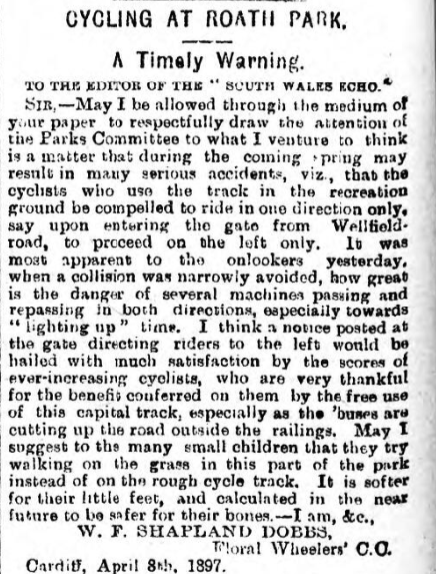
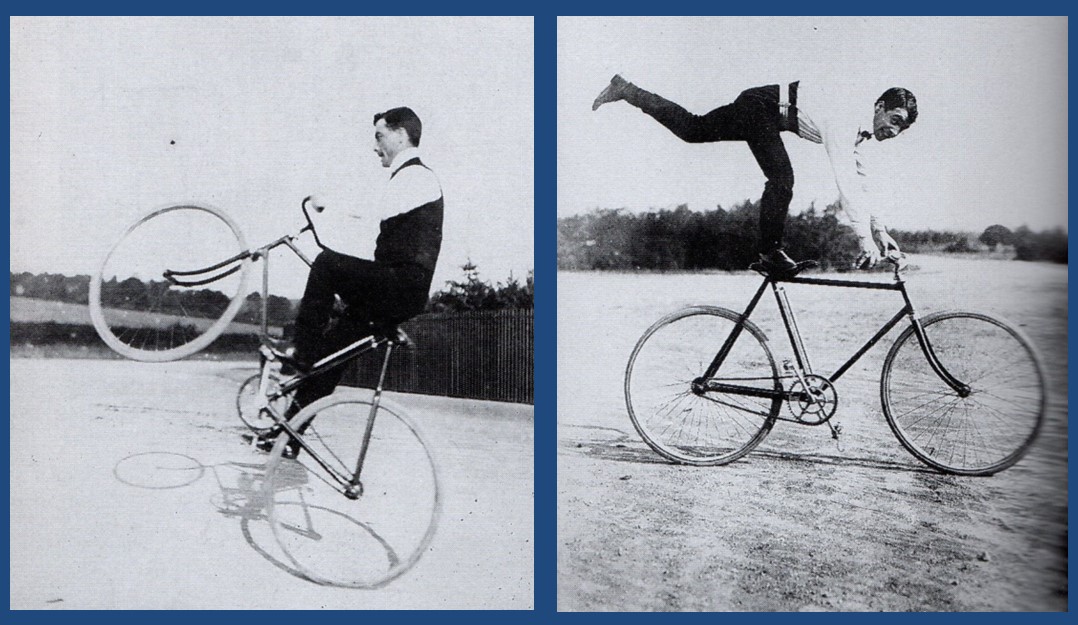
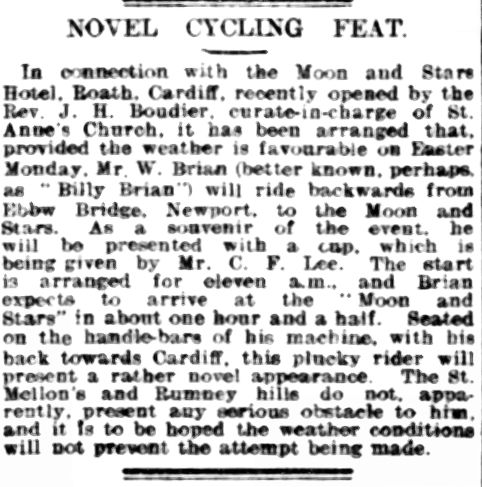
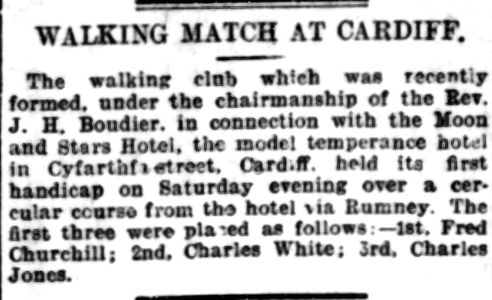

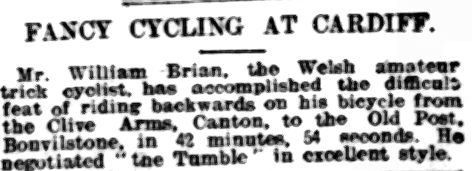

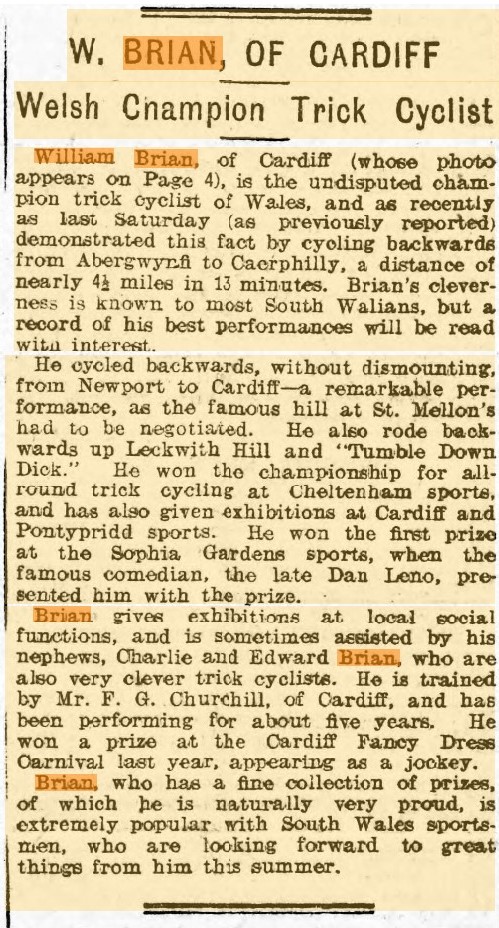
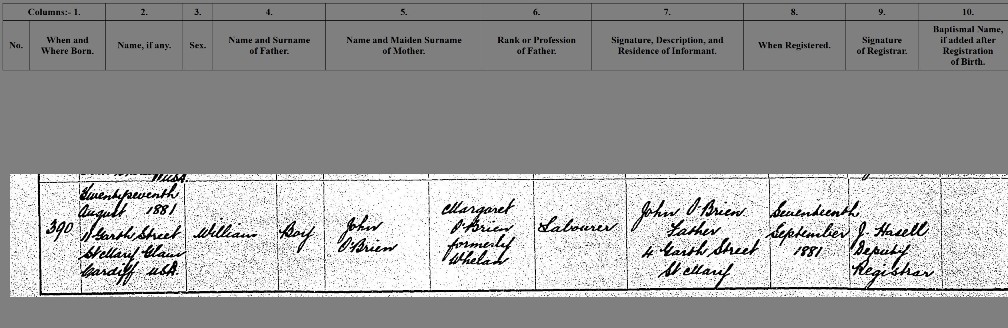
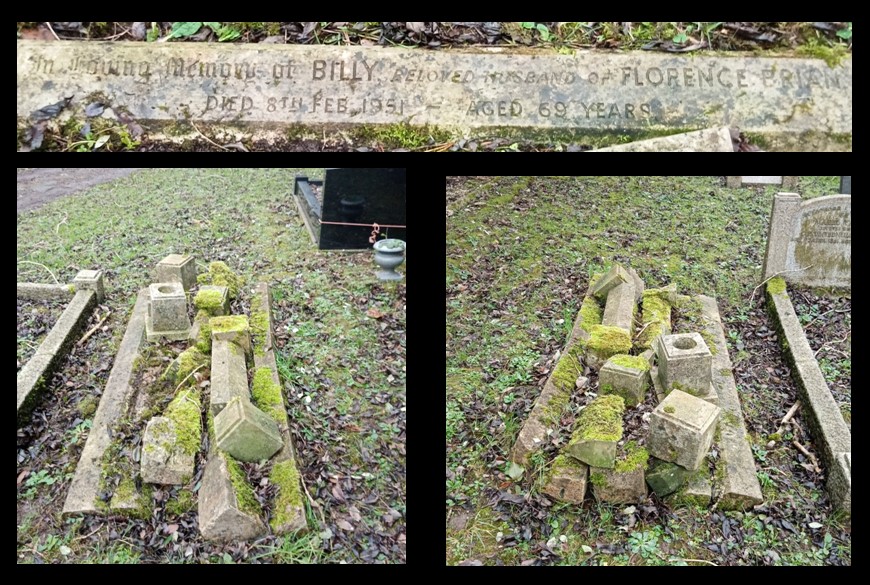


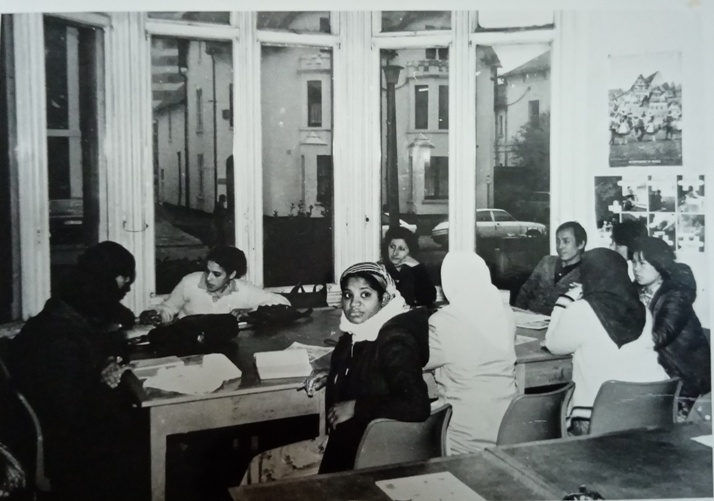


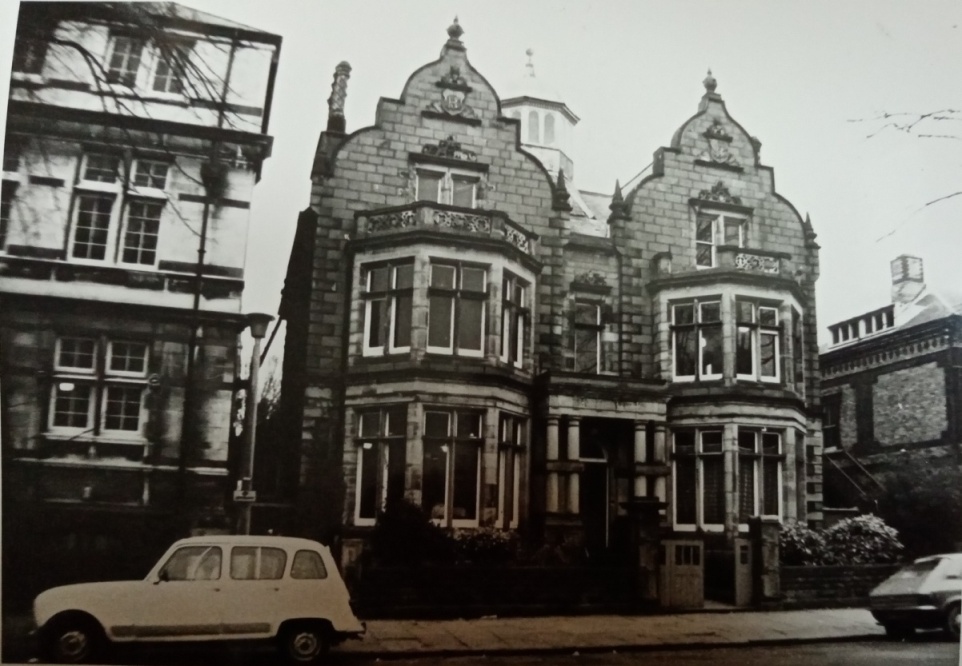

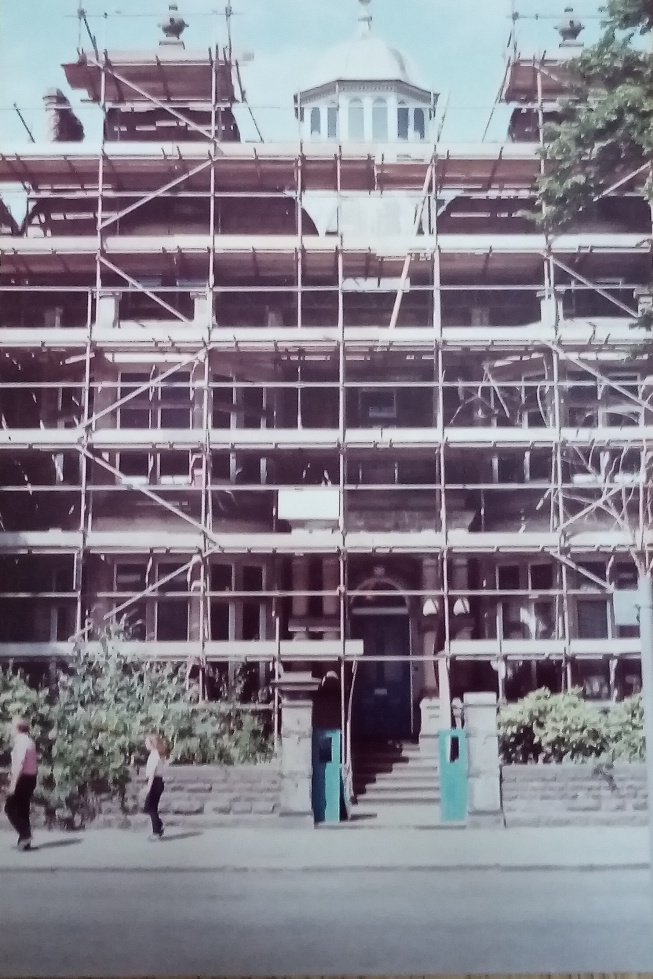
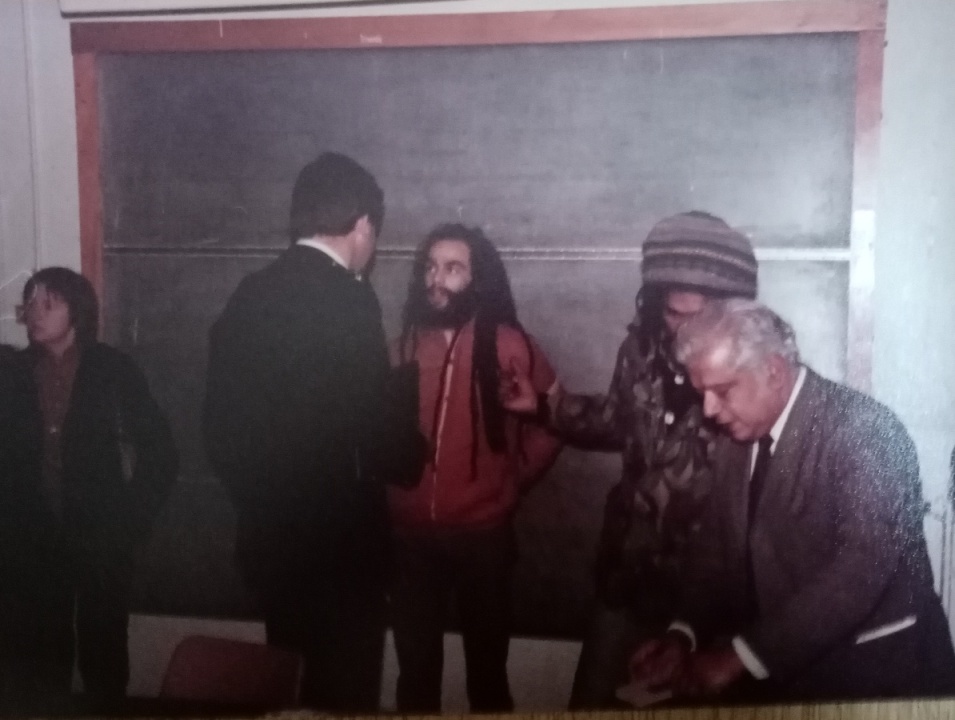
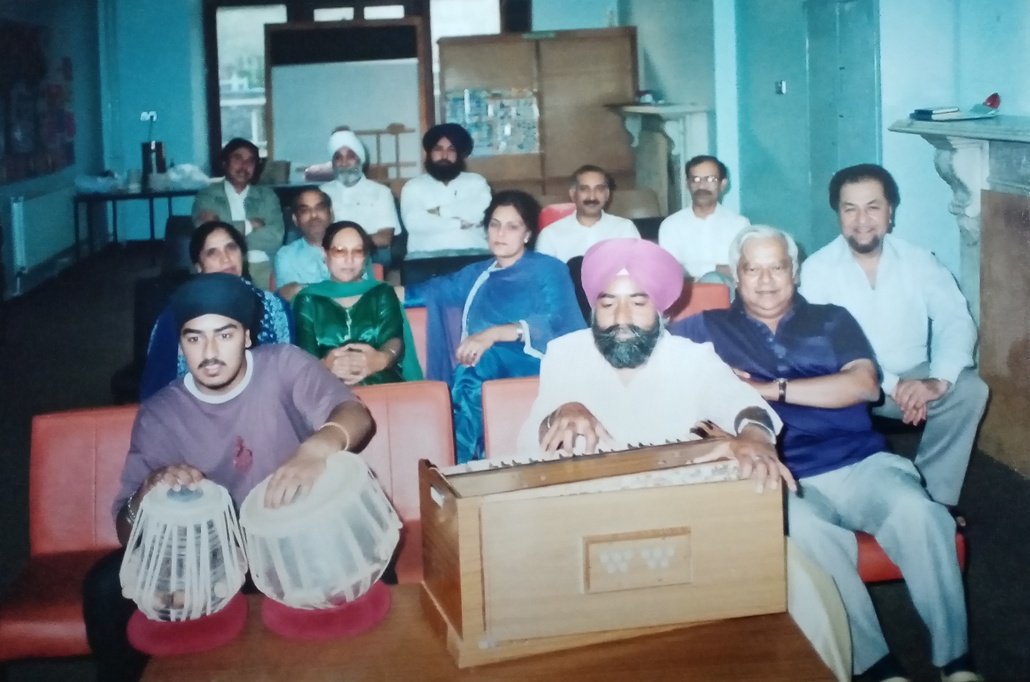


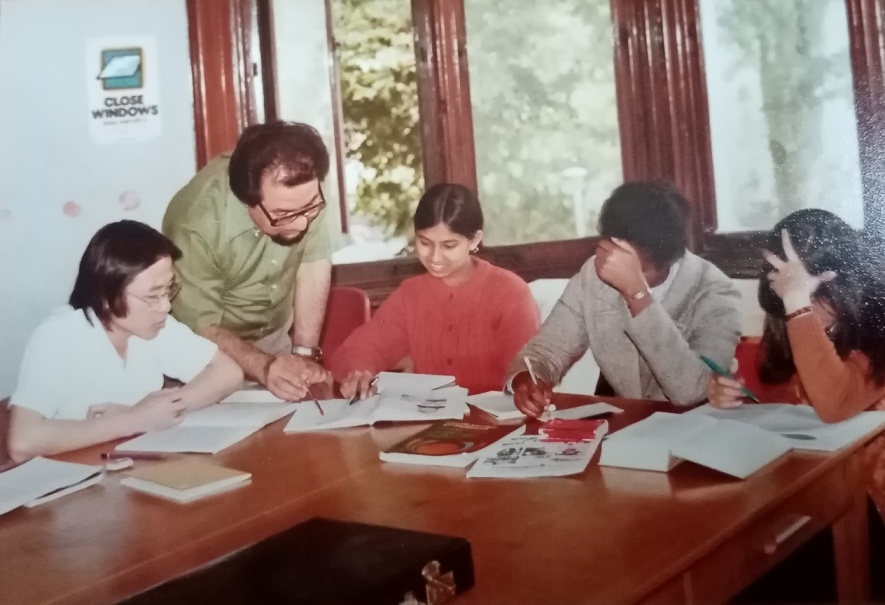


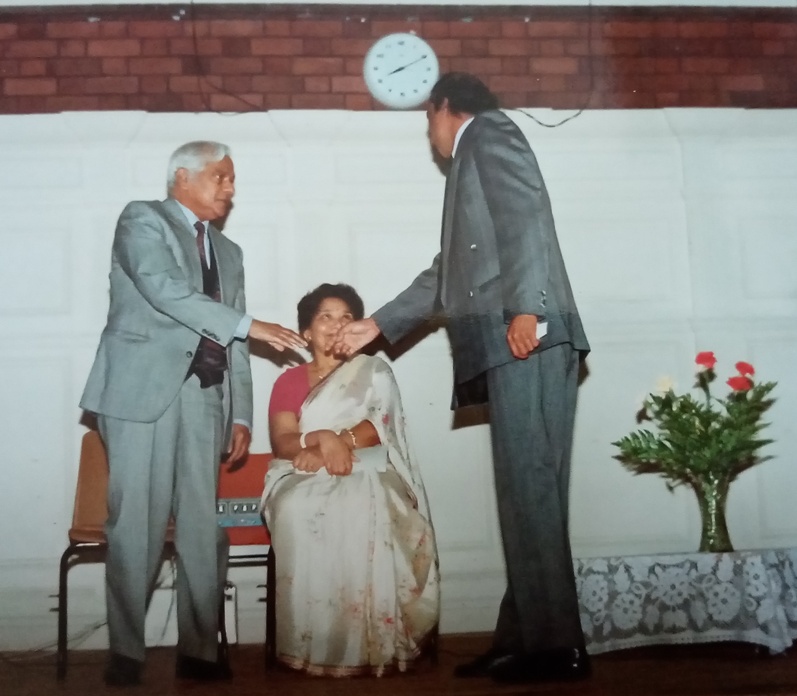

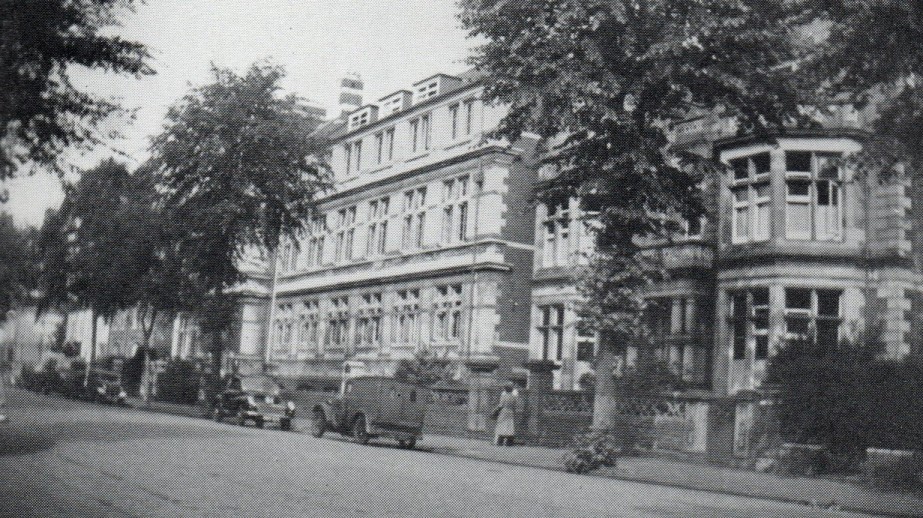
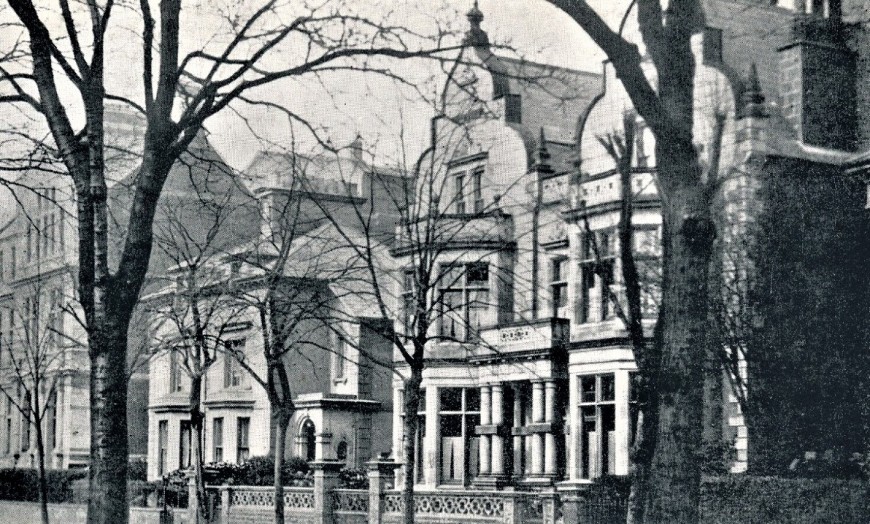

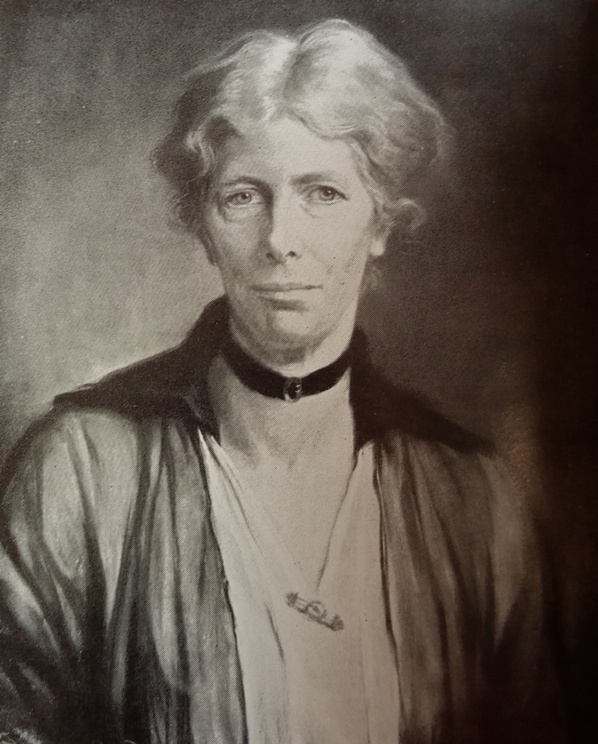


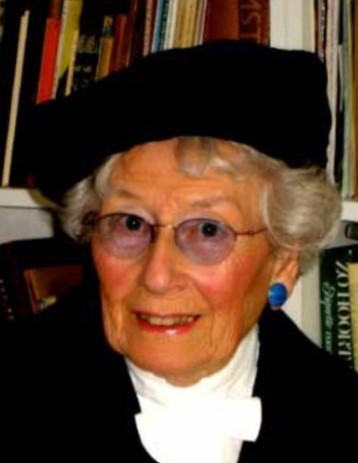
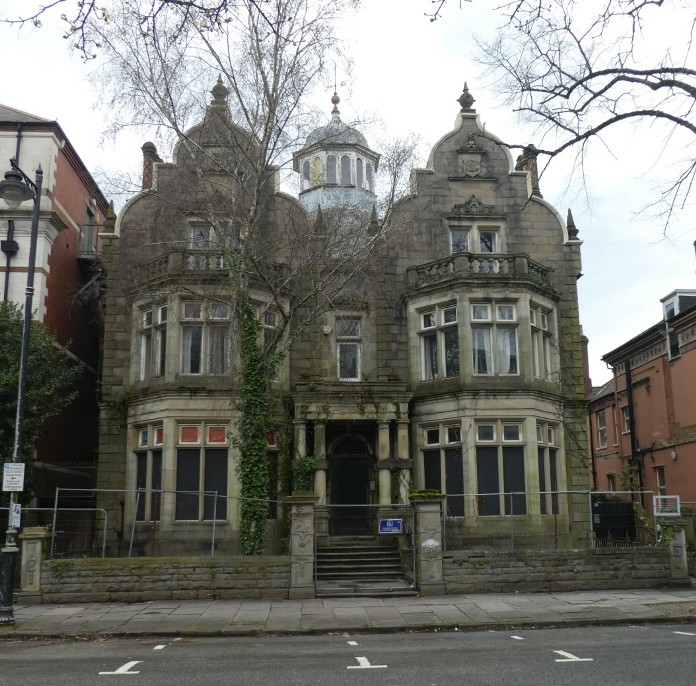
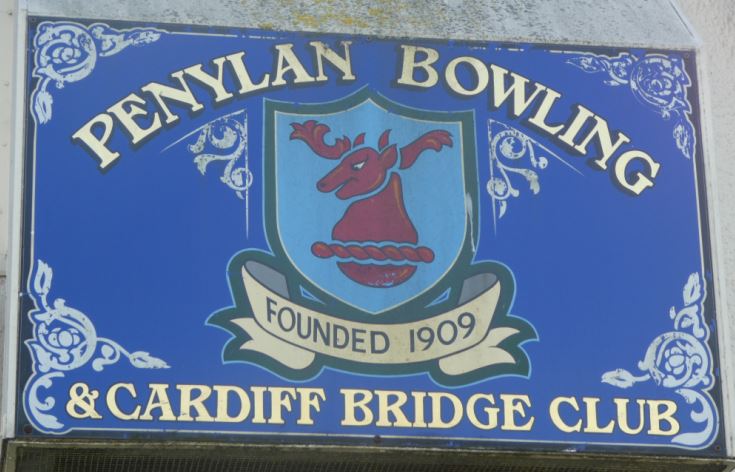
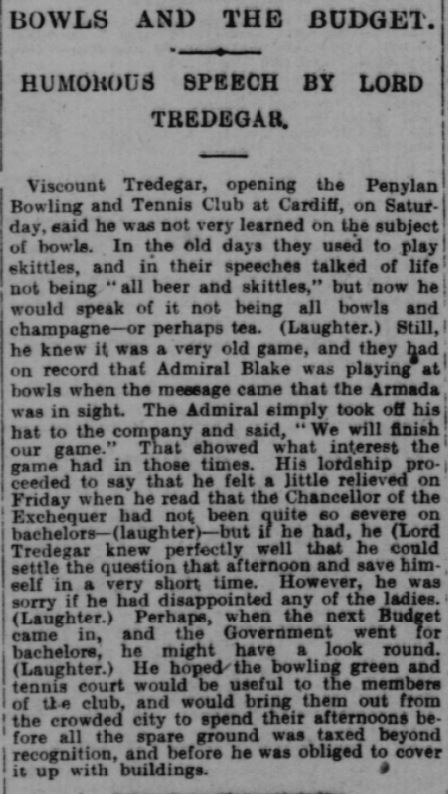
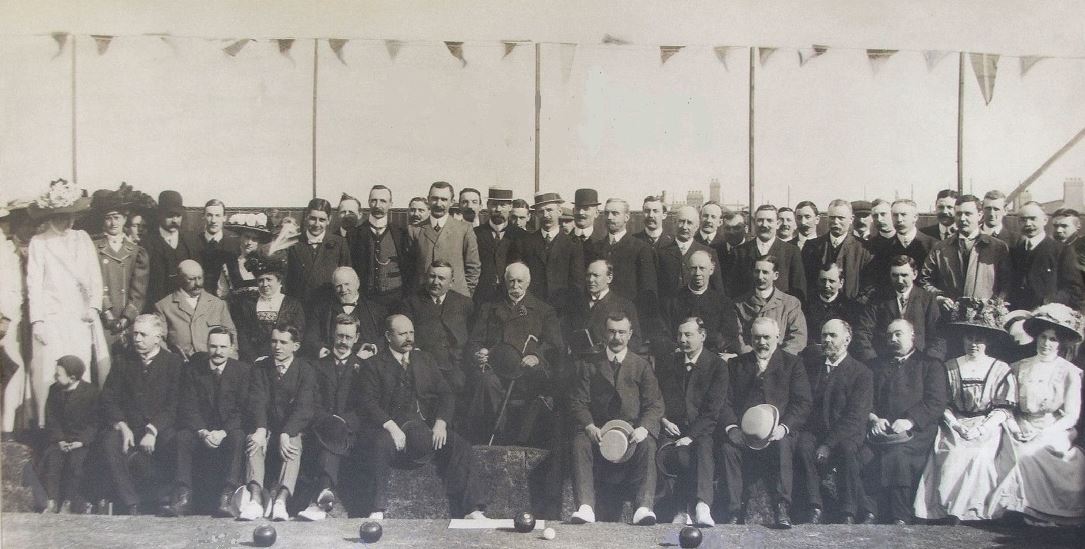
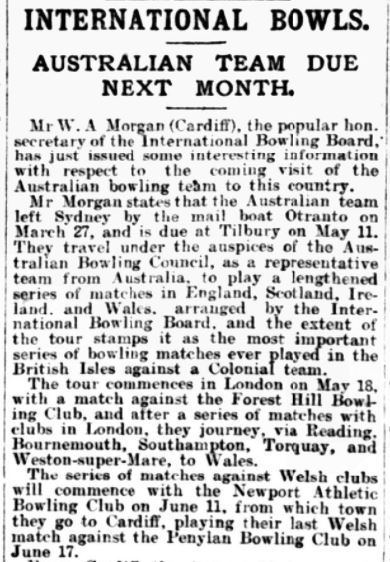
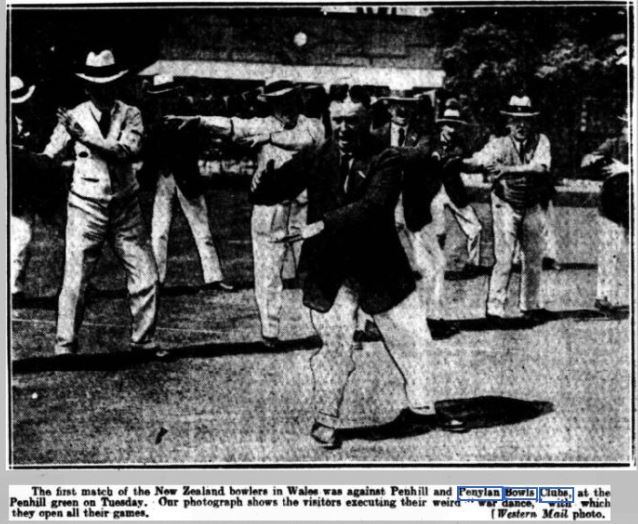
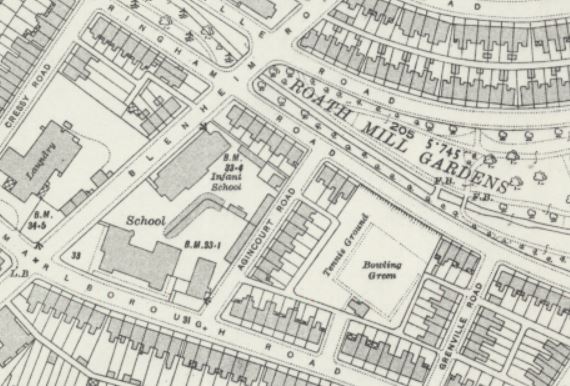
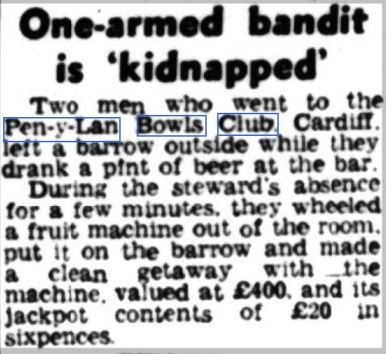
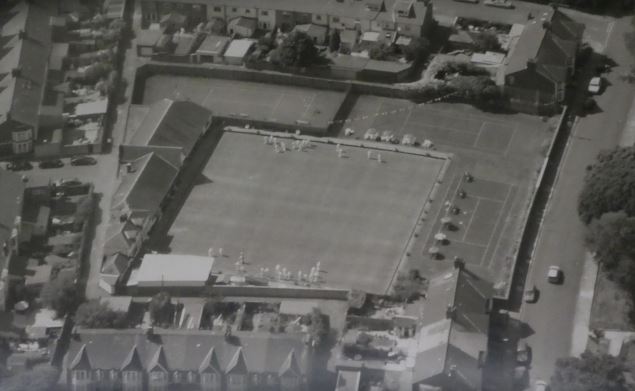
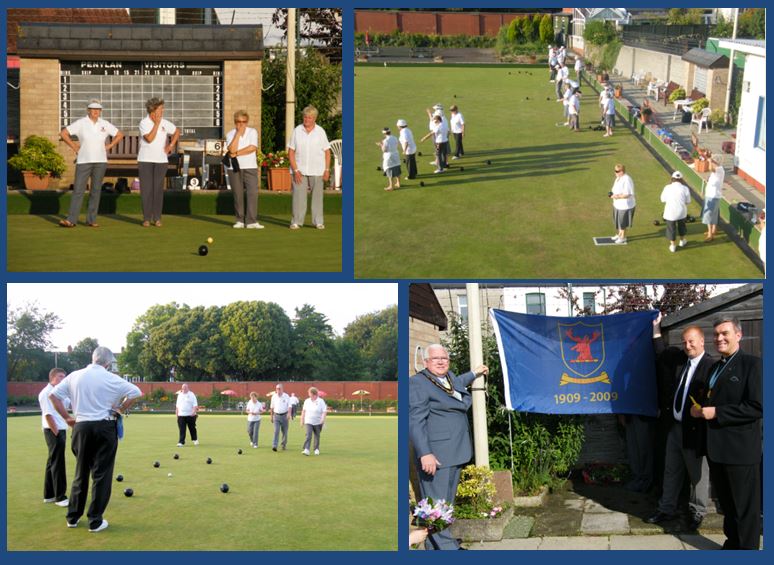
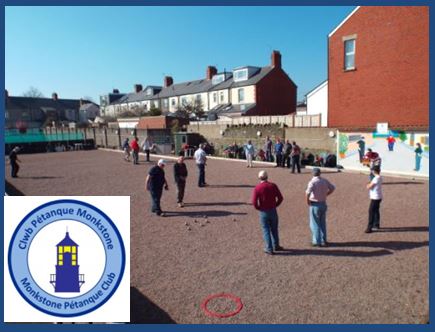
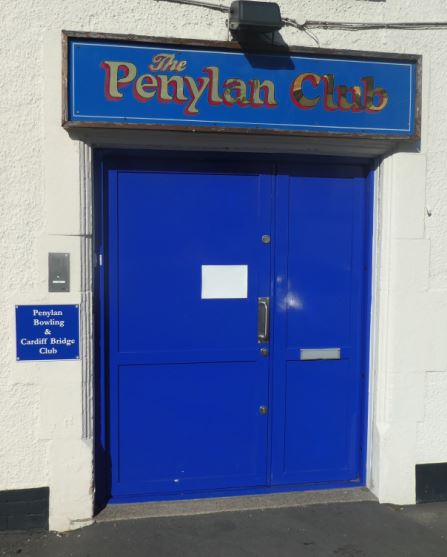
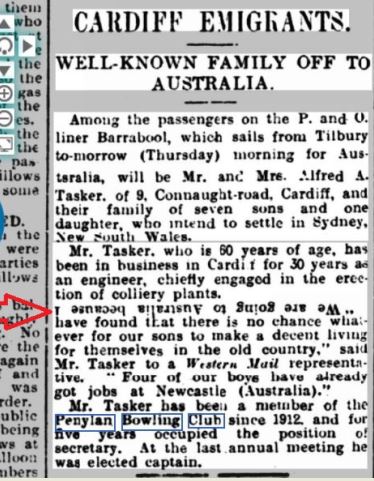

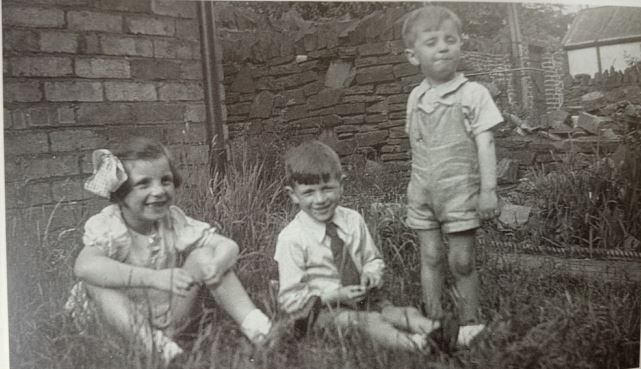


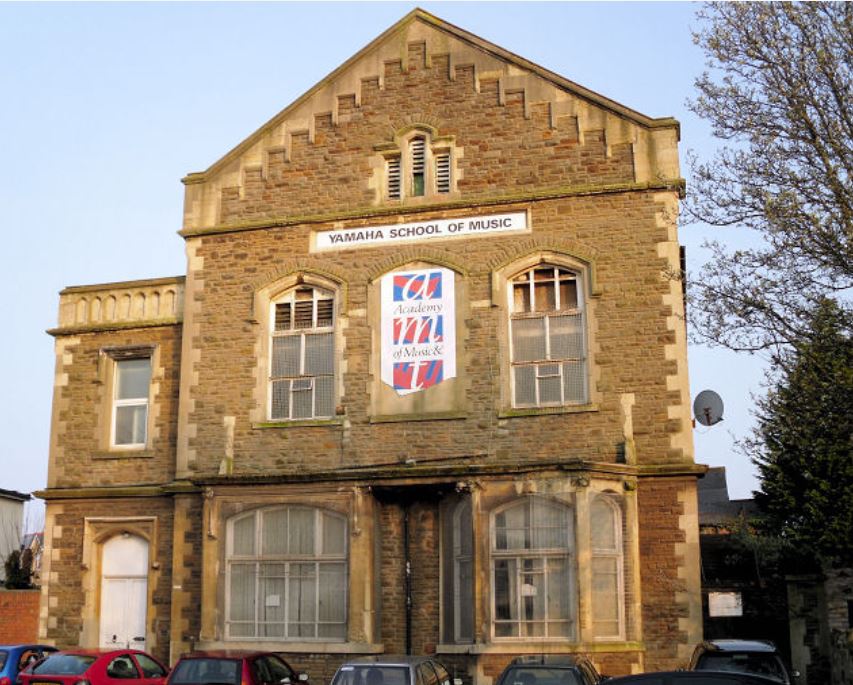
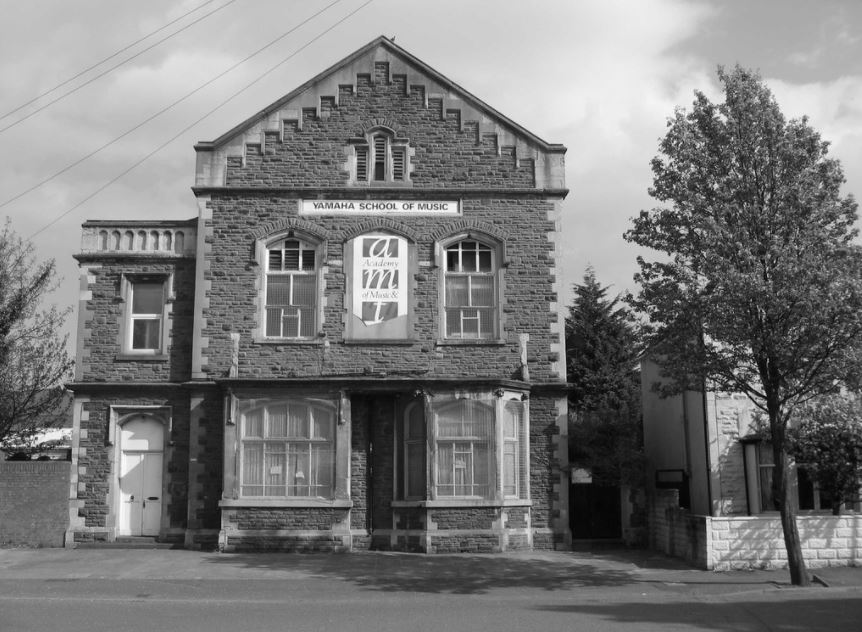
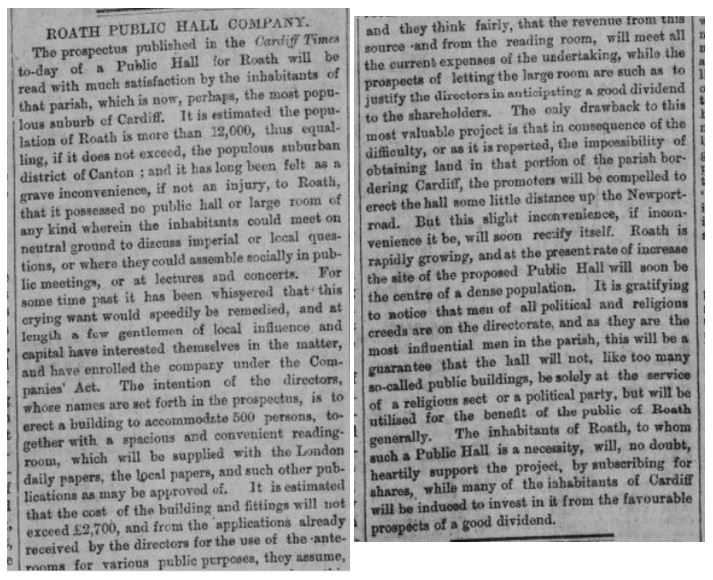
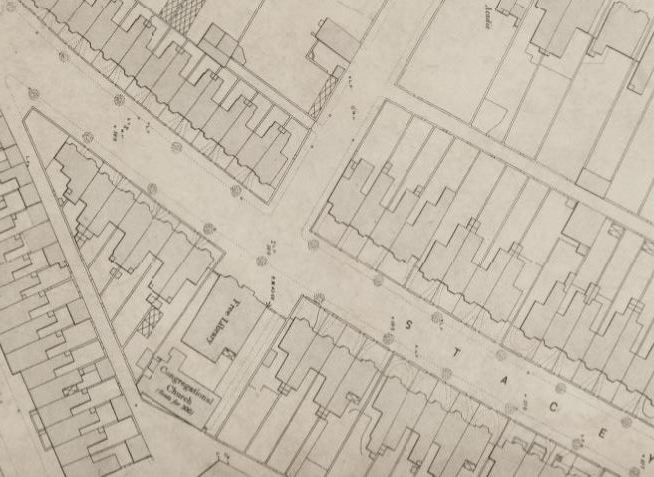
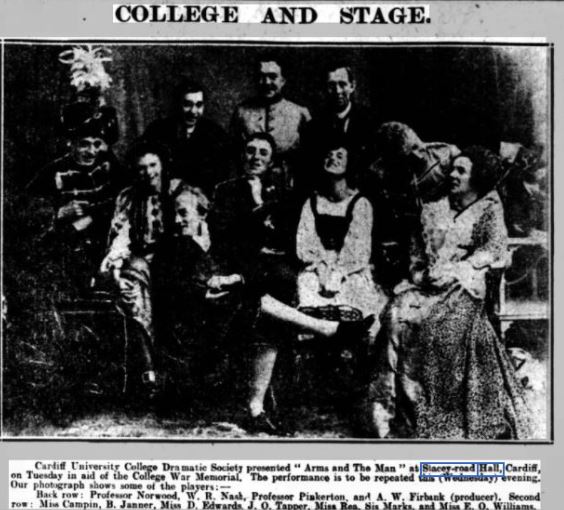
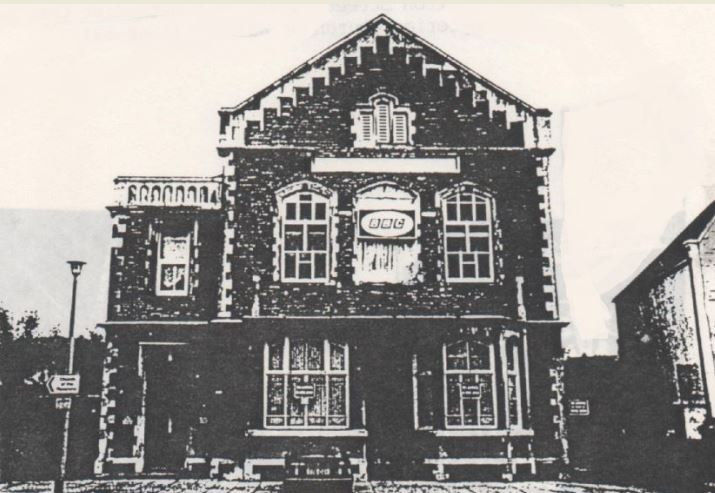
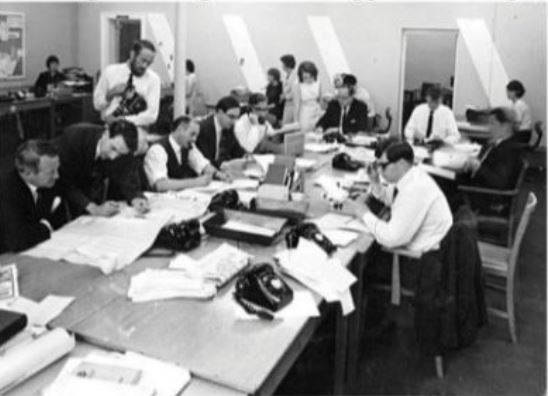
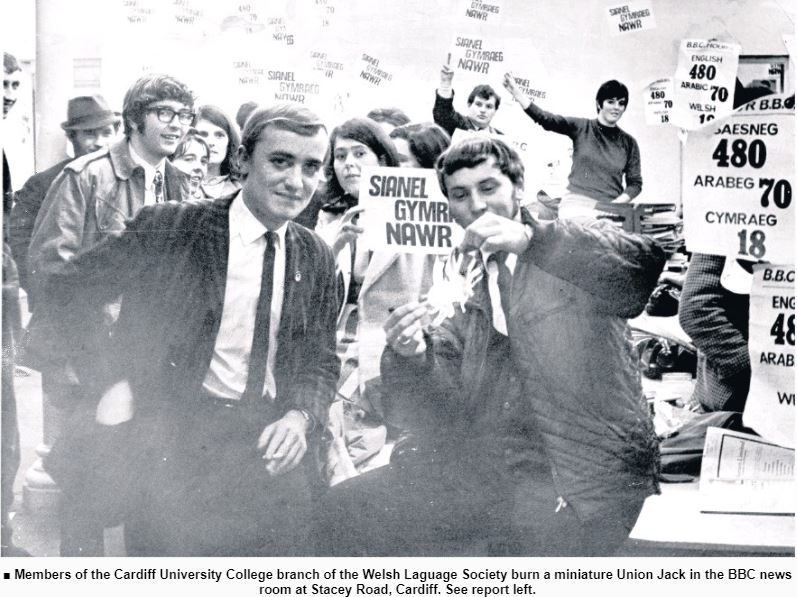
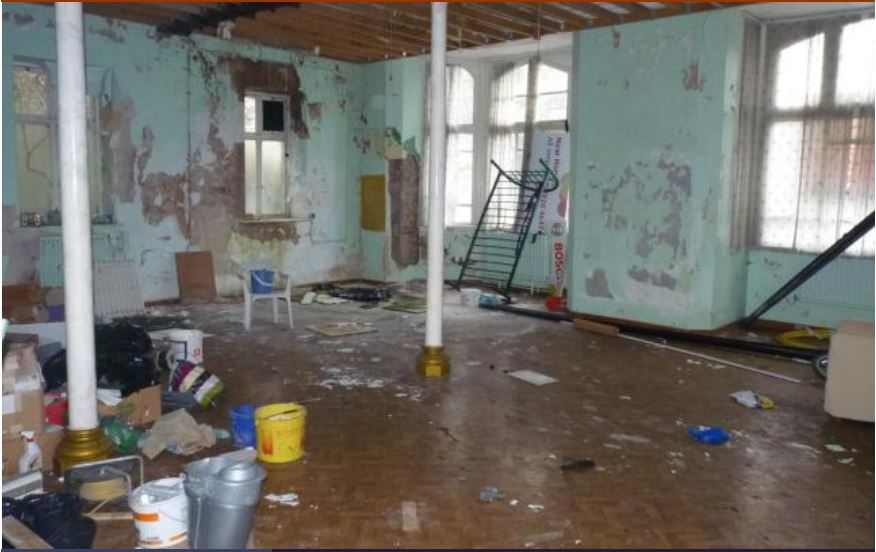
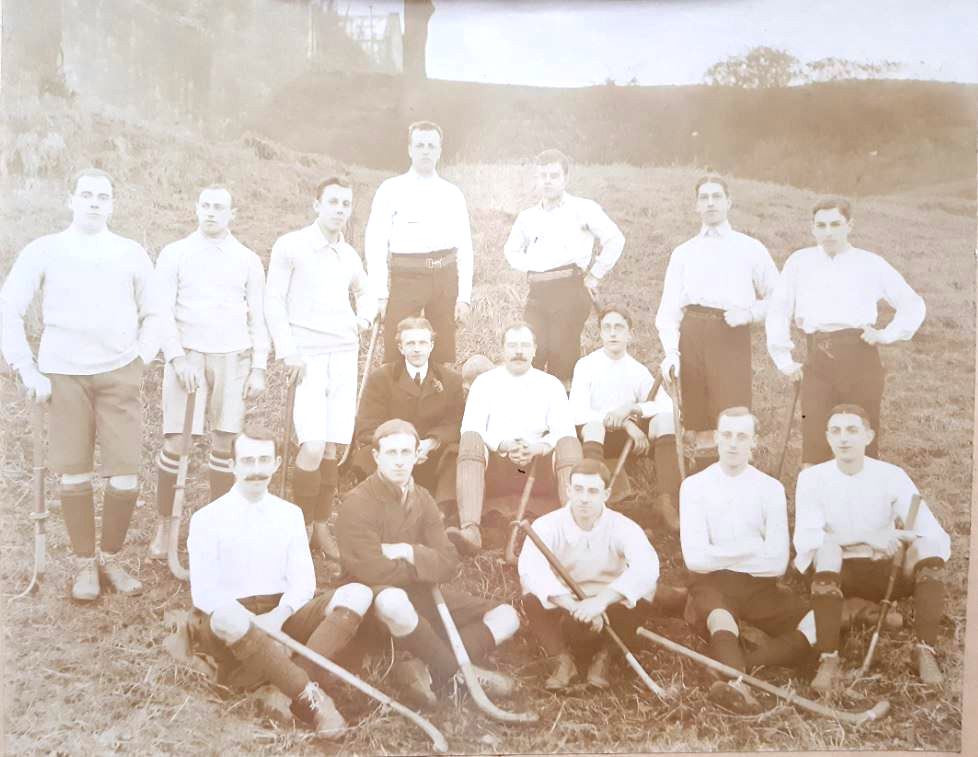

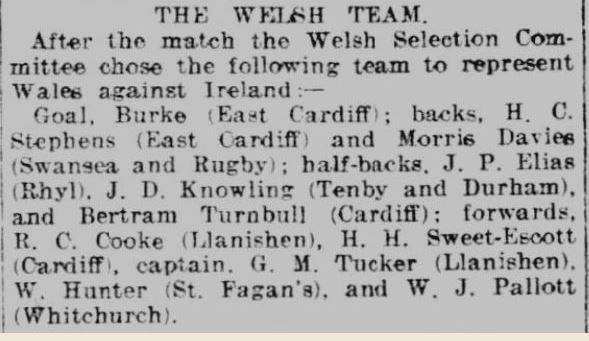

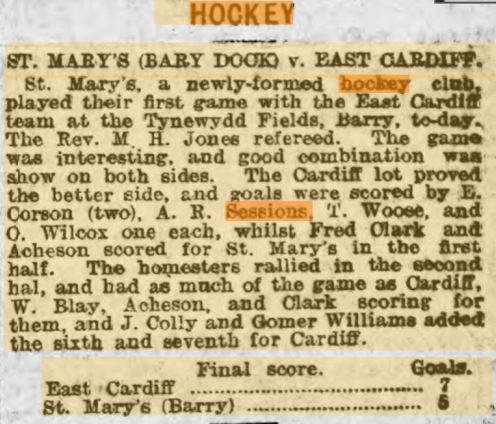


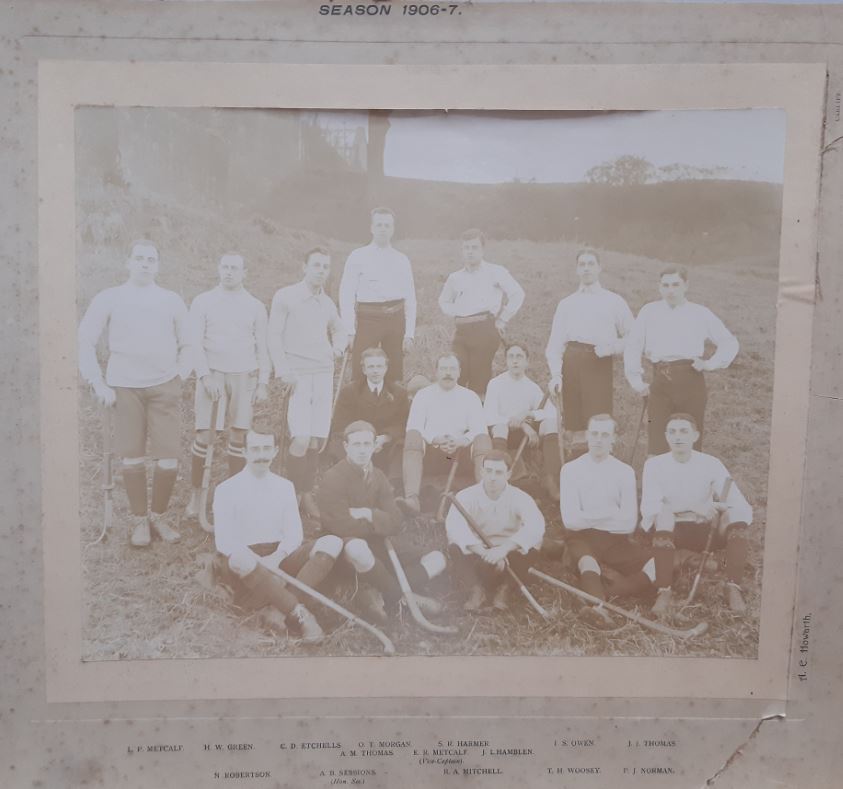

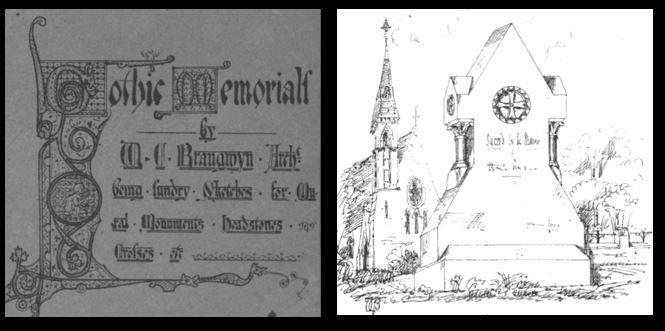


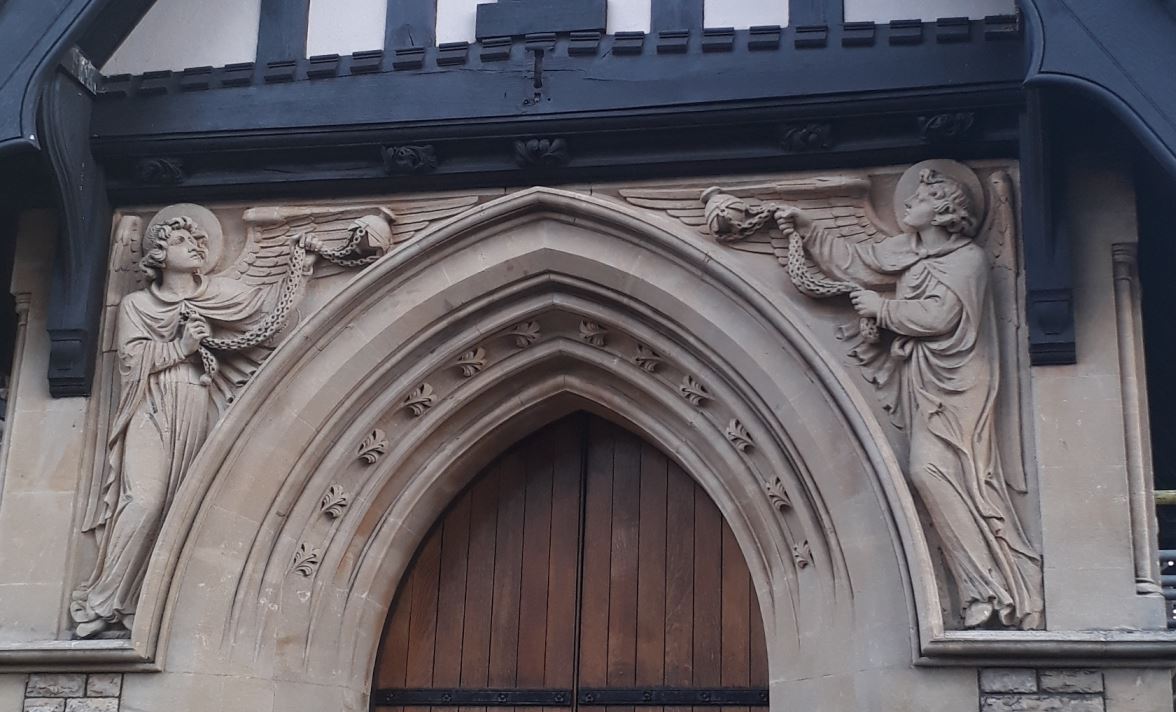
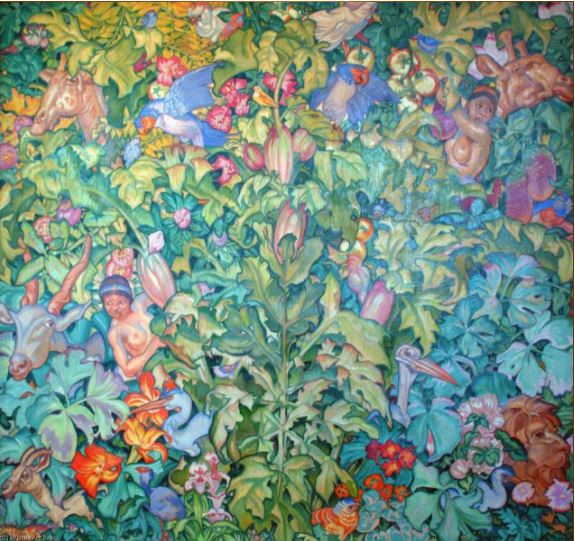

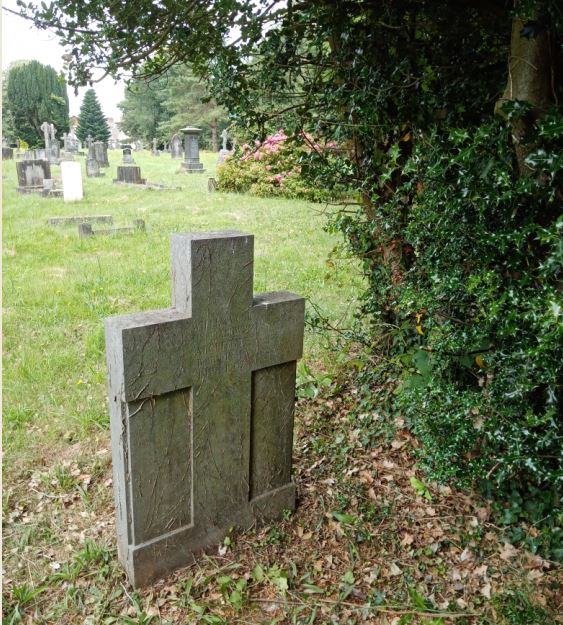
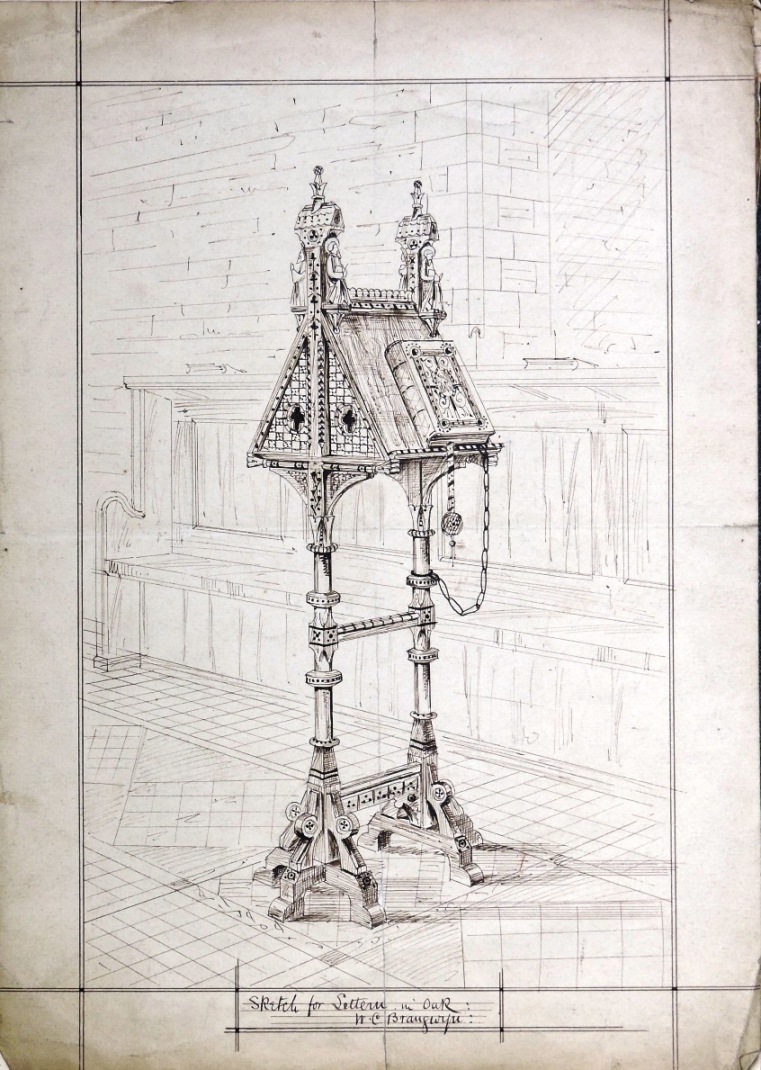
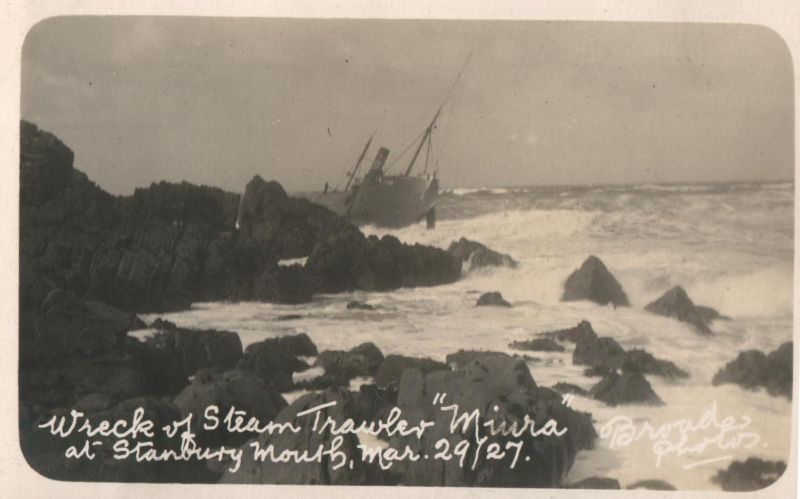
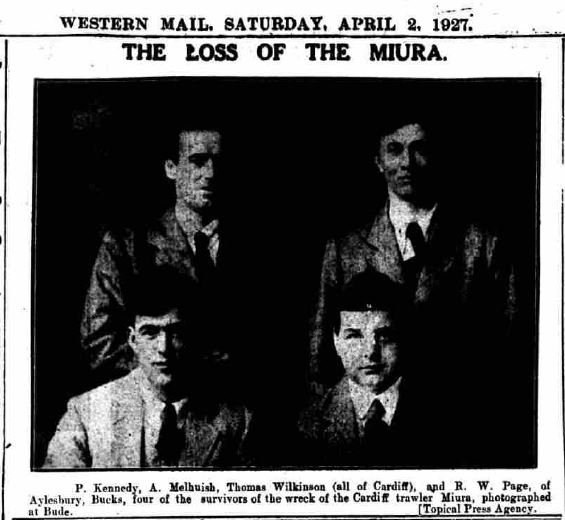
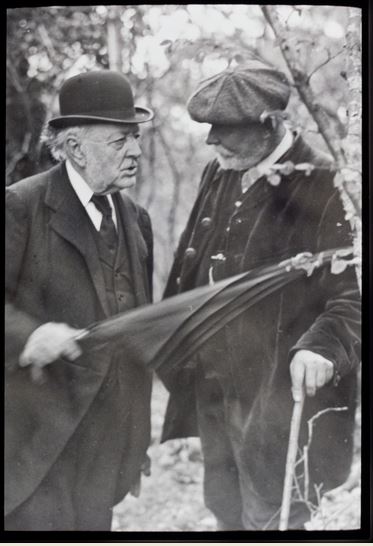
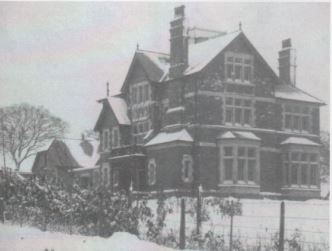
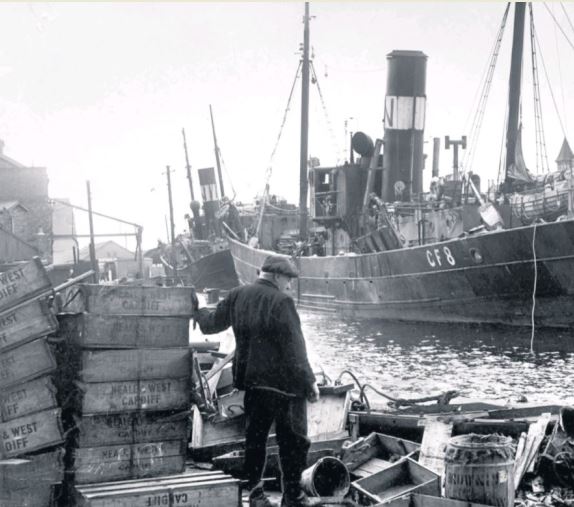
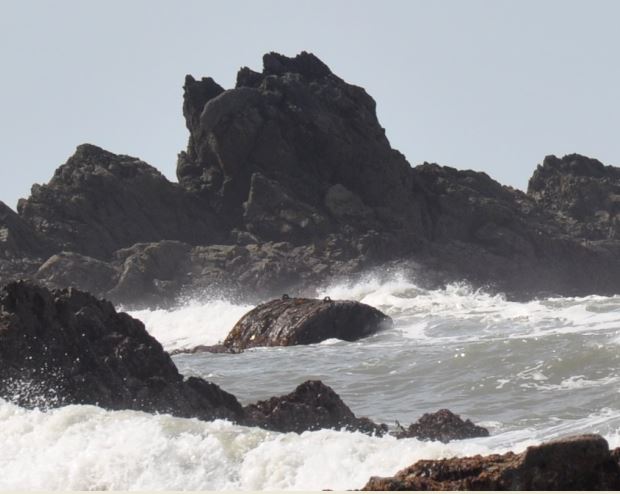
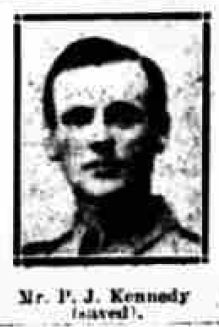 The first bit of luck I had was finding a newspaper report about the wreck that mentioned Mr Kennedy and some key facts about him. He was Mr P J Kennedy and came from Great Yarmouth, used to be boxer when young and served in WWI in Mesopotamia and he was married and lived in 119 Arram Street (presumably a mis-spelling of Arran Street). Using that information I was able do some research and piece together some of his life story.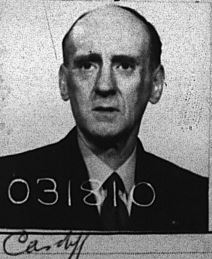
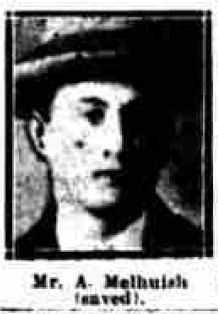 Alfred Melhuish was born in Crediton, Devon on 24 Jun 1895 to William Melhuish, an agricultural labourer, and Ellen Melhuish née Burridge, both originally from Cheriton Fitzpaine, Devon.
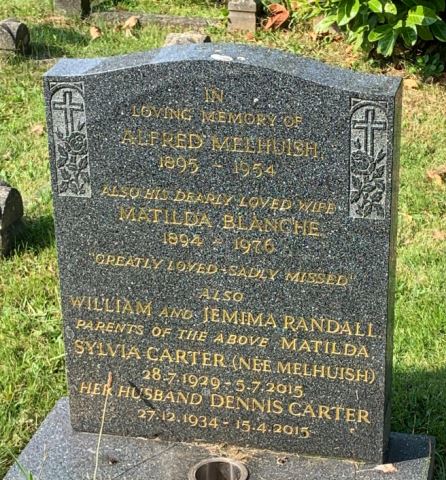 Alfred moved to Cardiff and marries Matilda Blanche Randall from Splott, Cardiff in 1923. They go on to have five children together, two born prior to the Miura disaster and three afterwards. The 1939 Register records that Alfred Melhuish still working as a deck hand fisherman and living in Carlisle Street. He died in 1954 and is buried in Cathays Cemetery. His wife Matilda passes away in 1976. Her address in the 1901 census was Carlisle Street, Splott as it was when she died in 1976.
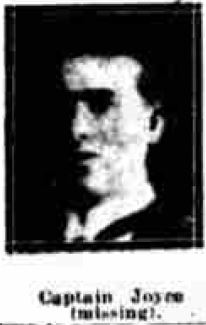 In 1911 he was living in the family home and working as a fish-dock labourer.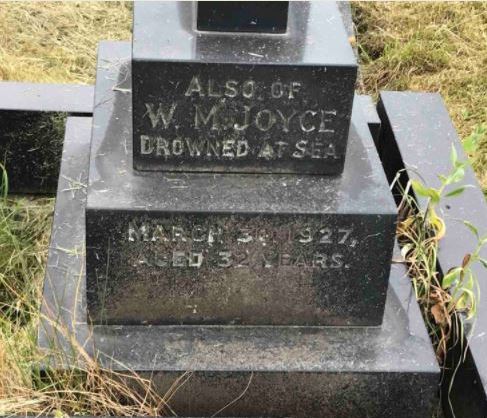
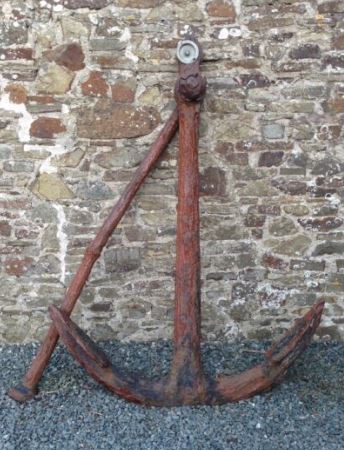


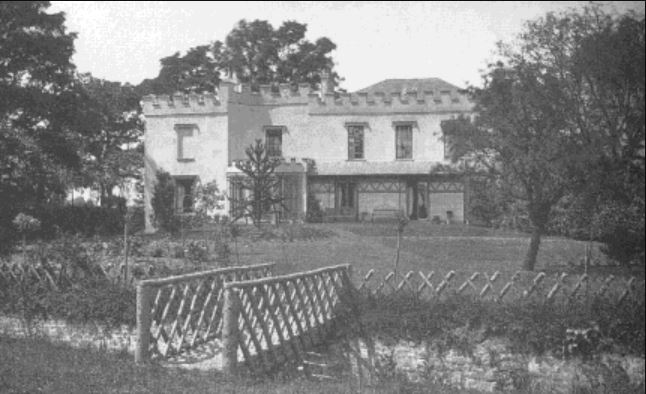
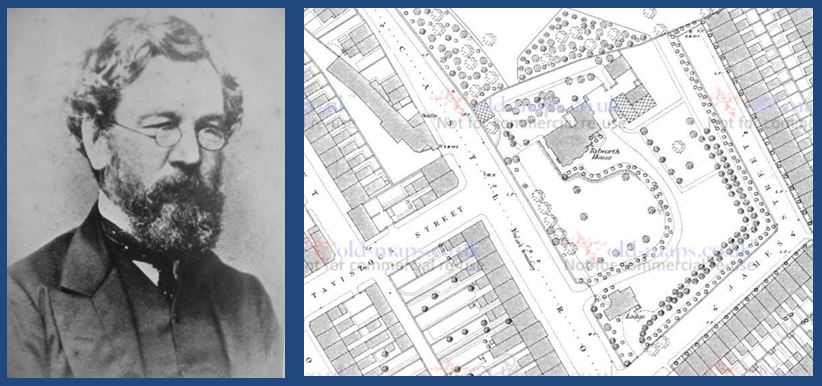


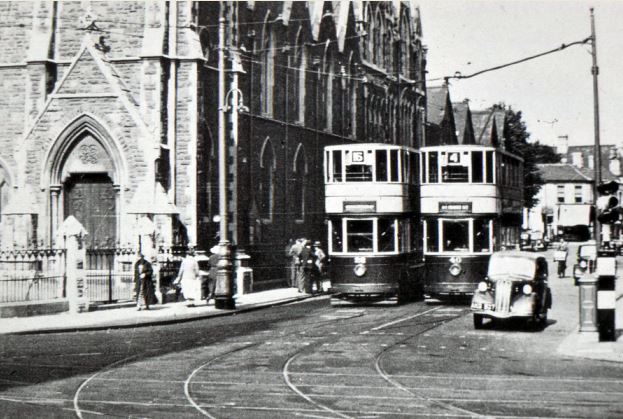
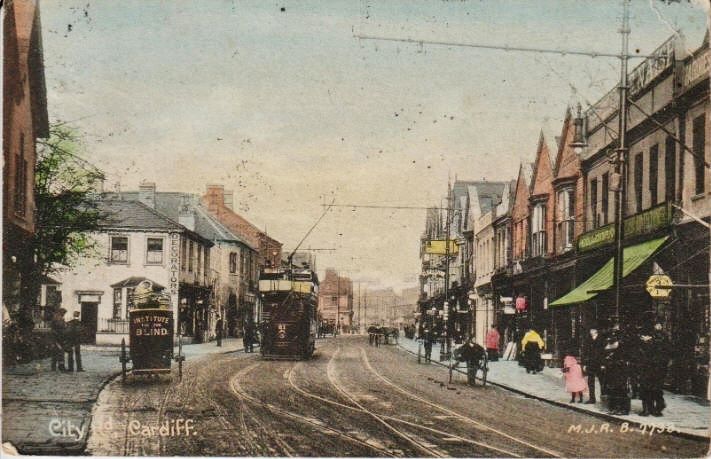

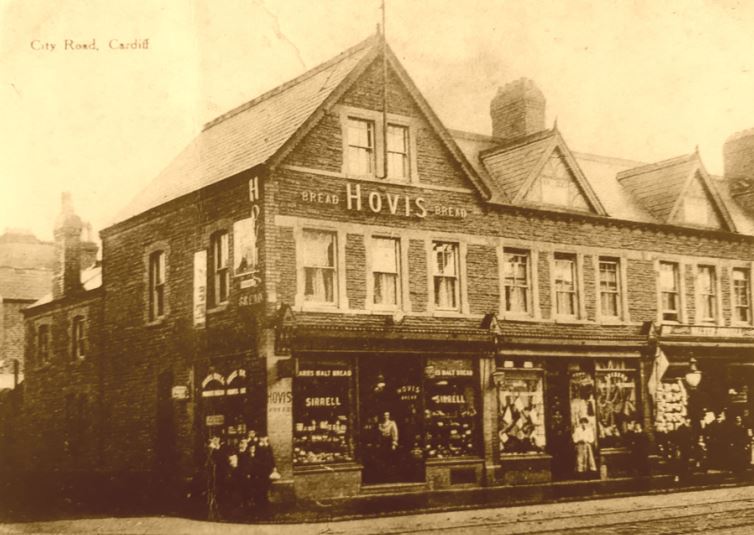
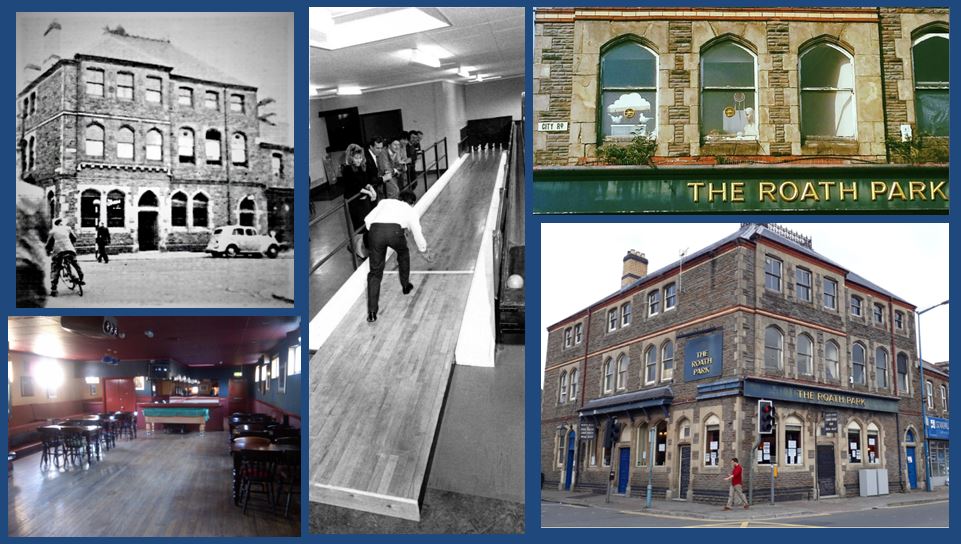

 Roath Local History Society